
Expert Local Water Heater Repair in Los Angeles 2026
Your shower just turned cold, there's a puddle under the heater, or the unit started making a noise you've never heard before. In Los Angeles, that usually means you don't have time to guess, because a small leak or a weak component can turn into water damage, no hot water, or a full replacement decision fast. Good local water heater repair starts with a calm diagnosis, clear safety steps, and a plumber who knows when a repair makes sense and when it doesn't.
Table of Contents
- Warning Signs Your Water Heater Needs Repair
- What to Do in a Water Heater Emergency
- Deciding Between Water Heater Repair and Replacement
- Understanding Local Water Heater Repair Costs in Los Angeles
- How to Choose a Qualified Los Angeles Plumber
- Proactive Maintenance to Extend Your Water Heater's Life
Warning Signs Your Water Heater Needs Repair
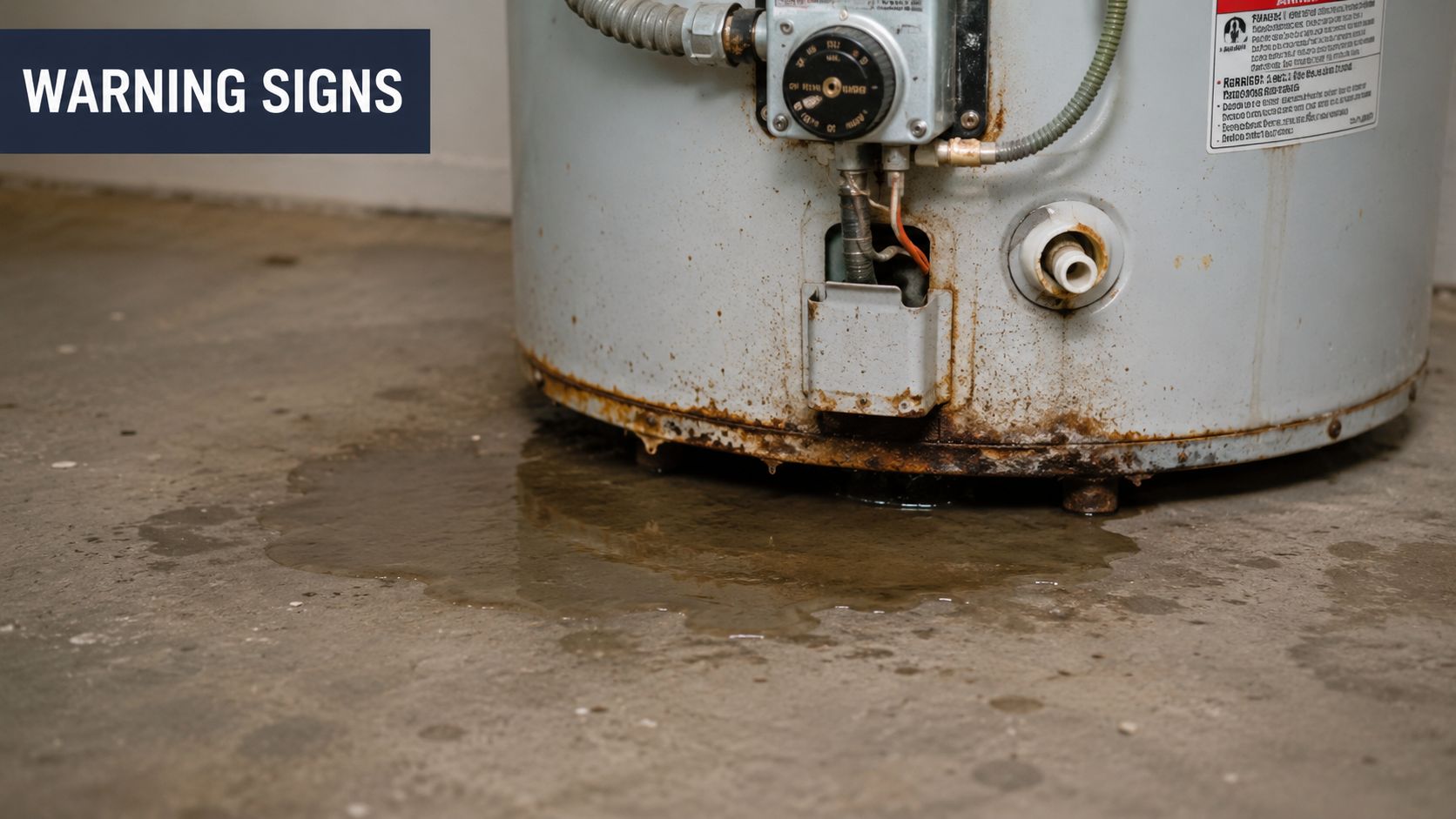
A water heater usually gives off warning signs before it quits. Homeowners in Los Angeles often notice the symptoms first, while property managers have to decide whether the problem is limited to one unit or tied to age, hard-water buildup, or repeated wear across a building. The first step is to identify the unit's energy source and age, because the repair path changes across gas, electric, heat pump, and tankless systems, and manufacturers often hide the manufacture date in the serial number. That quick check helps narrow the problem before anyone opens panels or starts draining the tank.
What the symptoms usually mean
Practical rule: describe the symptom, not just the complaint. “No hot water” gives less useful information than “hot for a minute, then cold,” or “water smells metallic and the tank is popping.”
Temperature swings usually point to a thermostat, heating element, burner, or control issue. If the water starts hot and turns lukewarm quickly, that points in a different direction than a unit that never heats at all, and it helps a technician decide whether to focus on electrical, combustion, or sediment-related causes.
Popping, rumbling, or banging often means sediment has settled at the bottom of the tank and hardened. That buildup changes how the burner or element transfers heat, so the system works harder while giving worse performance. In hard-water parts of Los Angeles, that symptom deserves early attention, especially in older buildings where sediment can shorten the life of more than one heater.
Rust-colored water or a metallic smell can point to internal corrosion or a worn anode rod. If the discoloration appears only on the hot side, the heater is a more likely source than the supply line.
Moisture at the base, corrosion around fittings, or a wet pan under the unit means the problem should be treated seriously. A small seep at a valve is one issue, but water coming from the tank itself often shifts the decision from repair to replacement. In that situation, signs you need a new water heater can help you judge whether the unit is still worth fixing.
If you need to check shutoff and warning information before a service visit, understanding water heater safety labels is a useful place to start. It helps you identify the basic safety information on the unit without guessing your way through the panel or rating plate.
What to Do in a Water Heater Emergency
If the heater is leaking, sparking, or smelling like gas, the goal is containment, not diagnosis. Move fast, keep the area clear, and shut the system down before you worry about the repair itself. A bad reaction here can turn a manageable service call into a flood, a burned-out control, or a safety hazard.
Shut down the system in the right order
First, shut off the water supply to the heater. Close the cold-water inlet valve above the tank so the unit stops feeding the leak. If the leak is active, that step limits the amount of water that can escape while you wait for service.
Next, turn off the energy source. For gas units, use the gas control on the heater if you know exactly what you're doing, and if there's any doubt, leave the area and call for help. For electric units, switch off the dedicated breaker at the panel. Don't open access panels or reach into wet electrical compartments.
Don't try to relight a gas unit, tighten fittings under pressure, or drain a tank that's still hot and leaking. That's how small problems become bigger ones.
After that, clear the surrounding area. Pull stored items away from the heater, keep children and pets out of the space, and use towels or a shallow container only if it's safe to do so. If water is spreading across finished flooring, shutting the supply quickly matters more than trying to clean as you go.
If you need a quick reference while the unit is down, the emergency guidance at water heater broken is a practical place to verify the shutdown sequence. Once the system is secured, wait for a technician who can test the fault without creating more damage.
Deciding Between Water Heater Repair and Replacement
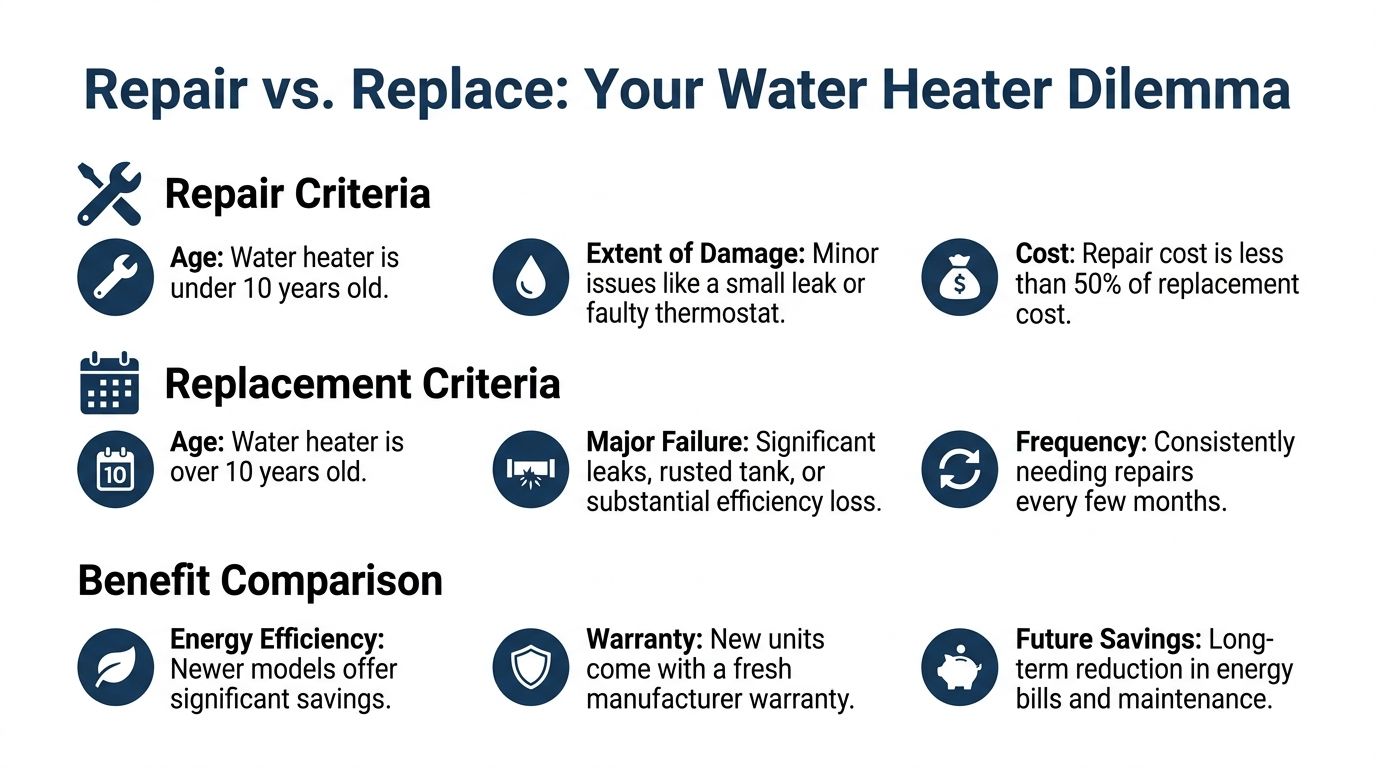
The smartest decision on a failing heater isn't always the cheapest repair. In Los Angeles, I look at age, condition, leak severity, past service history, and what the building stands to lose if the unit fails again. That's especially important in multi-unit buildings, where downtime affects more than one person and a bad call can create repeat callbacks, tenant complaints, and avoidable damage.
Repair makes sense when the failure is isolated
Small component failures usually belong in the repair category. Manufacturer-oriented guidance places faulty thermostats and pressure relief valves around $150 to $300, heating elements or gas valve problems around $200 to $500, and major issues like tank leaks or heat-exchanger failures as high as $500 to $1,500, which often pushes the decision toward replacement State Water Heaters.
That cost spread matters because a heater with a healthy tank and one bad part can still be worth saving. If the issue is localized, and the unit hasn't been calling for service every few months, repair usually gives you a cleaner short-term outcome.
Replacement makes more sense when the system is failing as a whole
Replacement starts to win when the tank is leaking, corrosion is spreading, or the same unit keeps breaking down. That's the point where you're no longer paying to fix a single failure. You're paying to keep an aging system alive.
For managers and HOAs, a better question is how much useful life is left after the repair. A resource on calculate remaining useful life can help frame that discussion in maintenance terms instead of gut feel. That approach is useful when you need a defensible decision for a board, a tenant file, or a capital plan.
| Factor | Lean Towards Repair | Lean Towards Replacement |
|---|---|---|
| Age | Unit is still relatively young and components are serviceable | Unit is older and showing broader wear |
| Damage | One failed part or minor leak | Tank leak, corrosion, or major efficiency loss |
| Service history | First or rare repair | Repeated callbacks and recurring faults |
| Building impact | Low disruption if the unit is down briefly | High disruption in a multi-unit or occupied property |
| Long-term risk | Repair restores stable performance | Replacement reduces future downtime |
A practical read on the market angle is simple. If the repair is narrow and the unit is structurally sound, fix it. If the leak is coming from the tank, or the unit keeps cycling through failures, replacement is usually the safer business decision.
Understanding Local Water Heater Repair Costs in Los Angeles
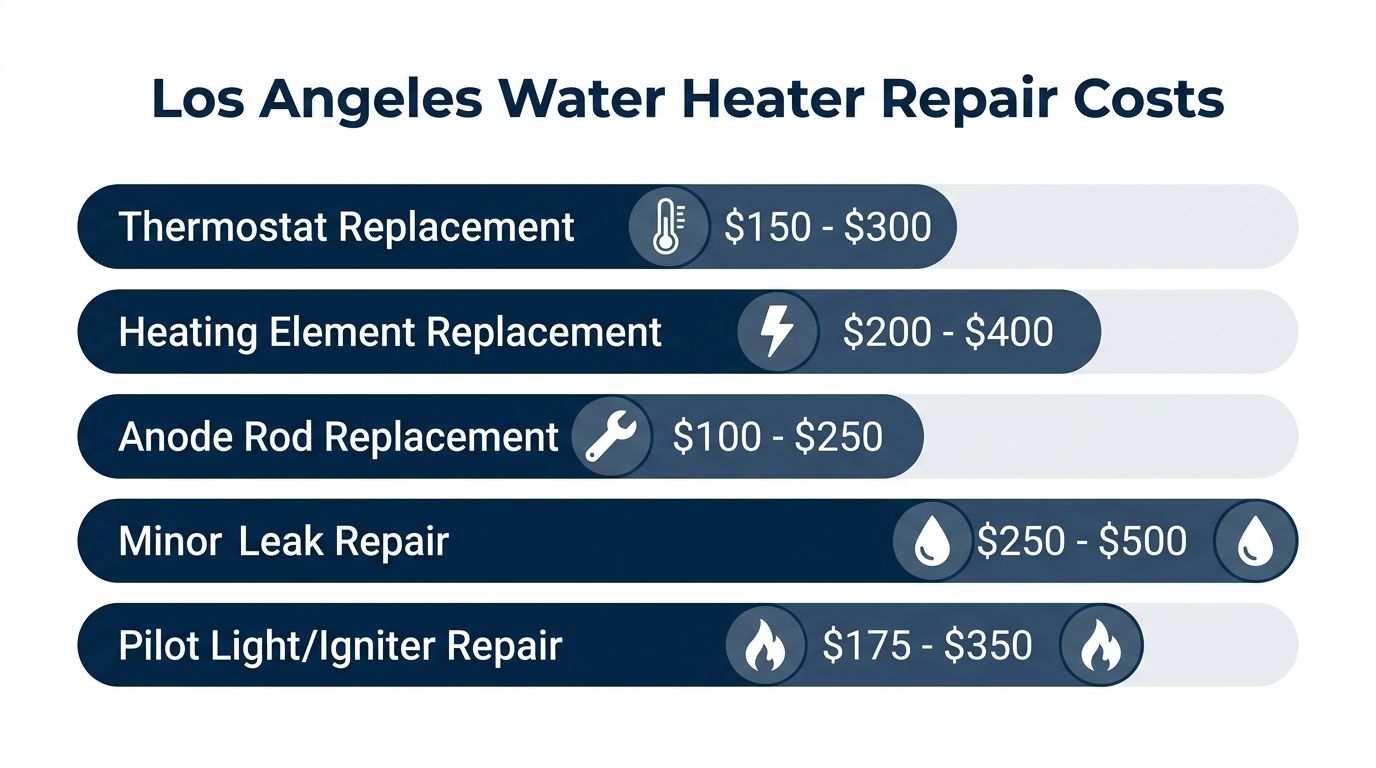
Repair pricing in Los Angeles isn't a single number, because the bill is made up of parts, labor, access, urgency, and the exact failure. The national average repair price clusters around $515 to $615, with typical repairs falling in the $228 to $1,017 range, plumber labor running from $45 to $150+ per hour, and emergency service adding 10% to 50% to the final cost Angi. That's why one homeowner hears a manageable estimate while another sees a much higher one for what sounds like the same problem.
What usually drives the quote
The first cost driver is the diagnostic visit. A technician has to identify whether the heater is gas, electric, tank, or tankless, then test the failed component and confirm that the problem isn't caused by sediment, scale, or a wiring issue. The second driver is labor time, because cramped closets, attic installs, and tight mechanical rooms take longer than an easy garage swap.
Parts are the next variable. A thermostat or relief valve replacement is a very different job from a leaking tank connection or a failed control on a tankless unit. If the technician has to return for a special-order part, that can also change the final invoice.
Why emergency calls cost more
After-hours work costs more because the plumber is rearranging a schedule, sending a truck out fast, and dealing with a problem that can't wait until morning. That premium is common on leak calls, especially when a wet floor or active discharge pipe makes the property vulnerable.
A clean way to think about it is this. The repair bill reflects both the fault and the urgency. If you catch the problem early, you usually buy yourself more options, and that often keeps the job in the repair range instead of the replacement range.
How to Choose a Qualified Los Angeles Plumber
The right plumber doesn't just show up with tools. They show up with licensing, insurance, diagnostic discipline, and enough field experience to tell you when not to spend money. For homeowners and property managers, that matters because a water heater repair affects not just comfort, but safety and liability.
What to verify before anyone starts work
Start with California licensing and active insurance. Ask for the contractor license number, make sure the company carries liability coverage, and confirm workers' compensation if there are employees on site. That protects you if something gets damaged or someone gets hurt during the job.
Next, ask how they diagnose the fault. A competent plumber should be able to explain whether they're checking the burner, element, valve, thermostat, or sediment condition, and why that order matters. If the answer is vague, the estimate probably will be too.
A good service call reduces uncertainty. It doesn't create it.
You should also read recent reviews with an eye for response time, communication, and whether the technician respected the property. For urgent jobs, same-day availability matters, but fast service still needs to be paired with a real diagnosis and a clear scope of work.
If you're comparing options, the local service page at reliable plumber near me is a useful benchmark for how a professional contractor presents emergency response and service coverage. In practice, the best fit is the crew that can explain the fault, document the repair, and stand behind the work without pressure tactics.
Questions that separate pros from salespeople
- What exactly failed? A precise answer means the plumber tested the unit.
- Is the tank itself sound? That question matters more than the headline repair.
- Will the repair change the safe operating setup? If so, ask how they'll verify it.
- What warranty applies to the part and labor? Get that in writing.
- How soon can they finish if a second visit is needed? That's critical for occupied properties.
In Los Angeles, where access, permitting, and building type can complicate a simple heater job, the best plumber is the one who gives you a straight recommendation and doesn't overpromise on a failing system.
Proactive Maintenance to Extend Your Water Heater's Life
Most water heater failures build over time. Sediment settles in the tank, corrosion starts at fittings and seams, and loose connections or worn safety parts turn a minor issue into a shutdown. In Southern California, routine maintenance matters even more because mineral buildup can shorten service life and make a heater seem defective when it mainly needs cleaning and inspection. In buildings where hard water keeps showing up, water filtration for hard water should be part of the protection plan.
The maintenance work that actually prevents repeat repairs
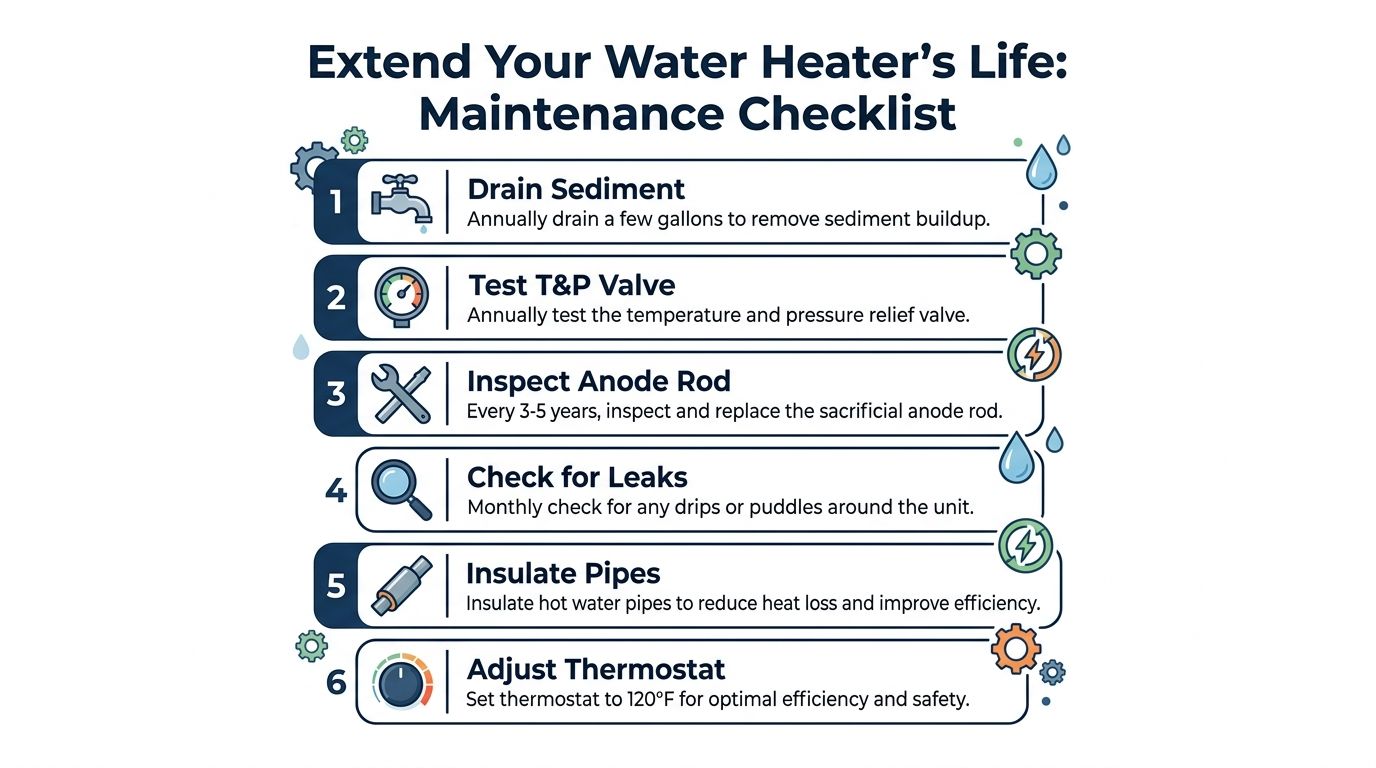
Flush the tank at least once a year so sediment does not keep building up. Trapped minerals cut efficiency and create the rumbling sound many homeowners hear before they call for service. Practical repair guidance also recommends shutting off power or gas, draining the tank through the bottom valve, and flushing until the water runs clear when scale is present iFixit.
Test the temperature and pressure relief valve during service so you know it opens and closes the way it should. If that valve sticks, the unit loses its main pressure release path. Inspect the anode rod on a regular schedule as well, because once that sacrificial part is worn out, the tank lining begins to take the damage.
A few other checks are simple and useful:
- Look for drips monthly. Puddles, rust streaks, or damp pipe joints usually show up before a major leak.
- Insulate accessible hot-water lines. That helps reduce heat loss in exposed runs.
- Keep the thermostat reasonable. Manufacturers and repair authorities commonly point to 120°F to 140°F as the normal operating range for verification after service, and that range is a practical target for safe performance Plumbing Repair Authority.
For property managers, the payoff is consistency. A scheduled flush, a valve test, and a quick visual inspection cost far less than emergency service, floor damage, or a shutdown that affects multiple units.
A maintenance checklist can also help staff stay on schedule without guessing which task comes next. A maintenance checklist infographic outlining six essential steps to extend the life of a water heater. gives a clear starting point for that kind of routine.