
Sewer Pipe Repair: A Los Angeles Homeowner’s Guide
A sewer problem usually starts small. A toilet bubbles when the shower drains. The kitchen sink takes longer to clear. There's a faint smell outside near the side yard, or one patch of grass looks healthier than the rest for the wrong reason.
In Los Angeles, property owners often wait because they're hoping it's just a clog. Sometimes it is. A lot of times, it's the sewer line telling you it needs attention before the problem turns into interior damage, slab concerns, or a messy backup. That's the part worth taking seriously, especially because exposure to sewage brings real sanitation concerns, including the health hazards from sewage water if wastewater makes it back into living space.
You're not dealing with some rare issue. Aging sewer infrastructure is a national problem, and the U.S. Sewer & Pipeline Rehabilitation industry is projected to reach $18.4 billion in 2026 according to IBISWorld's sewer and pipeline rehabilitation industry data. For homeowners in older parts of Los Angeles, that tracks with what plumbers see in the field every week. Old clay laterals, root intrusion, shifting soil, and heavy use all catch up with these lines.
The good news is that modern sewer pipe repair is far better than commonly assumed. You don't always need a full trench across the yard. You don't always need to guess. And you don't have to choose a repair method blind.
Table of Contents
- That Unmistakable Sign Something Is Wrong
- Warning Signs Your Sewer Line Needs Repair
- The Sewer Camera Inspection A Look Inside Your Pipes
- Your Sewer Pipe Repair Options Explained
- Comparing Methods Cost Timeline and Property Impact
- Why Los Angeles Sewer Lines Are Prone to Failure
- How to Choose a Licensed Sewer Contractor in LA
That Unmistakable Sign Something Is Wrong
Most owners call after a pattern shows up, not after a single event. The downstairs toilet backs up once, then works again. A tenant mentions a drain smell. Someone runs the laundry and another bathroom starts gurgling. Those details matter because sewer line failures rarely announce themselves with perfect clarity.
In a Los Angeles house with an older lateral, the first clue is often inconsistency. The line may still pass water, but not the way it should. Roots can catch paper. A cracked clay joint can hold grease. A sag can trap waste and create repeat stoppages. By the time you're noticing symptoms in more than one fixture, the problem usually isn't isolated to one sink or one branch drain.
What property owners usually get wrong
The most common mistake is treating a sewer issue like a simple fixture clog. A hand snake might buy time. It won't solve a cracked line in the yard or a pipe that has lost proper slope.
Another mistake is waiting until sewage shows up indoors. At that point, the job becomes about cleanup and repair, not just repair.
Practical rule: If multiple fixtures are reacting to each other, think main sewer line first.
Why this is fixable
Sewer pipe repair sounds bigger than it often is. Once the line is inspected, the decision usually becomes straightforward. If the pipe is intact enough, trenchless rehabilitation may work. If a section is broken, offset, or sagging badly, targeted excavation or replacement may be the right answer.
The stress comes from not knowing which problem you have. The solution starts when someone looks inside the pipe and maps the defect instead of guessing from the surface symptoms.
Warning Signs Your Sewer Line Needs Repair
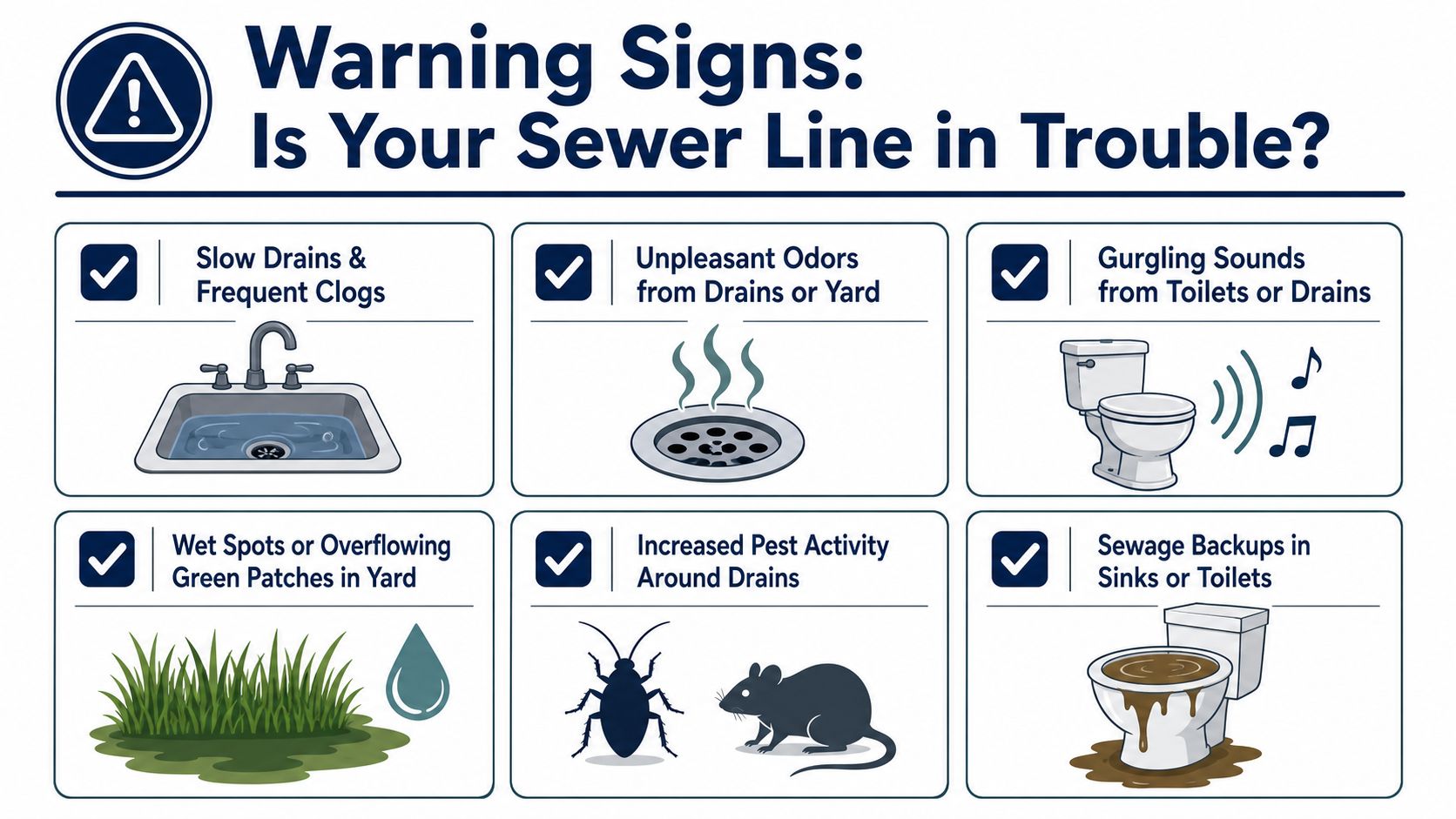
A failing sewer line leaves clues through smell, sound, and sight. When owners miss the pattern, they keep paying for repeat drain cleaning without addressing the underlying issue below the house or yard.
What you smell
A sewer odor inside the house is never something to ignore. If the smell comes and goes near floor drains, showers, or a utility room, that can point to sewer gases escaping because wastewater isn't moving through the line cleanly.
Outside, a persistent sewage smell near a cleanout, sidewalk, planter, or side yard often means leakage or a chronic blockage below grade. In Los Angeles, owners sometimes notice it first during warm afternoons when odors rise more easily.
What you hear
Toilets and drains shouldn't talk back. Gurgling usually means air is being displaced by water that's struggling to move through a restricted line.
Watch for these combinations:
- Toilet gurgles when the tub drains: That often points to pressure changes in the main line.
- Kitchen sink backs up when laundry runs: Wastewater may be meeting resistance downstream.
- Repeated bubbling after snaking: A temporary opening was made, but the line still has a structural or root problem.
If one fixture is slow, check that fixture. If several fixtures react together, check the sewer.
What you see
Some warning signs show up away from plumbing fixtures.
- Slow drains across the house: One slow sink can be local. Several slow drains at once usually aren't.
- Wet or unusually green yard areas: Wastewater can feed grass and soften soil above the damaged section.
- Pest activity near drains or damp soil: Roaches and rodents are drawn to moisture and waste.
- Sewage backup in tubs, showers, toilets, or floor drains: That's an active sewer problem, not a maintenance issue to postpone.
For owners who want confirmation before approving repair work, a professional sewer line inspection is the cleanest next step. It separates a recurring stoppage from a broken pipe, root intrusion, or sagging section.
When to stop waiting
If you're seeing symptoms weekly, if tenants are reporting recurring drain issues, or if backups happen when water use is heavy, the line needs to be inspected now. Sewer problems almost never get cheaper by being ignored. They just become easier to see.
The Sewer Camera Inspection A Look Inside Your Pipes
A camera inspection is how you stop guessing and start making the right repair decision. In Los Angeles, that matters more than people think. A 1930s home with clay pipe and ficus roots calls for a different fix than a mid-century property with worn cast iron under a slab.
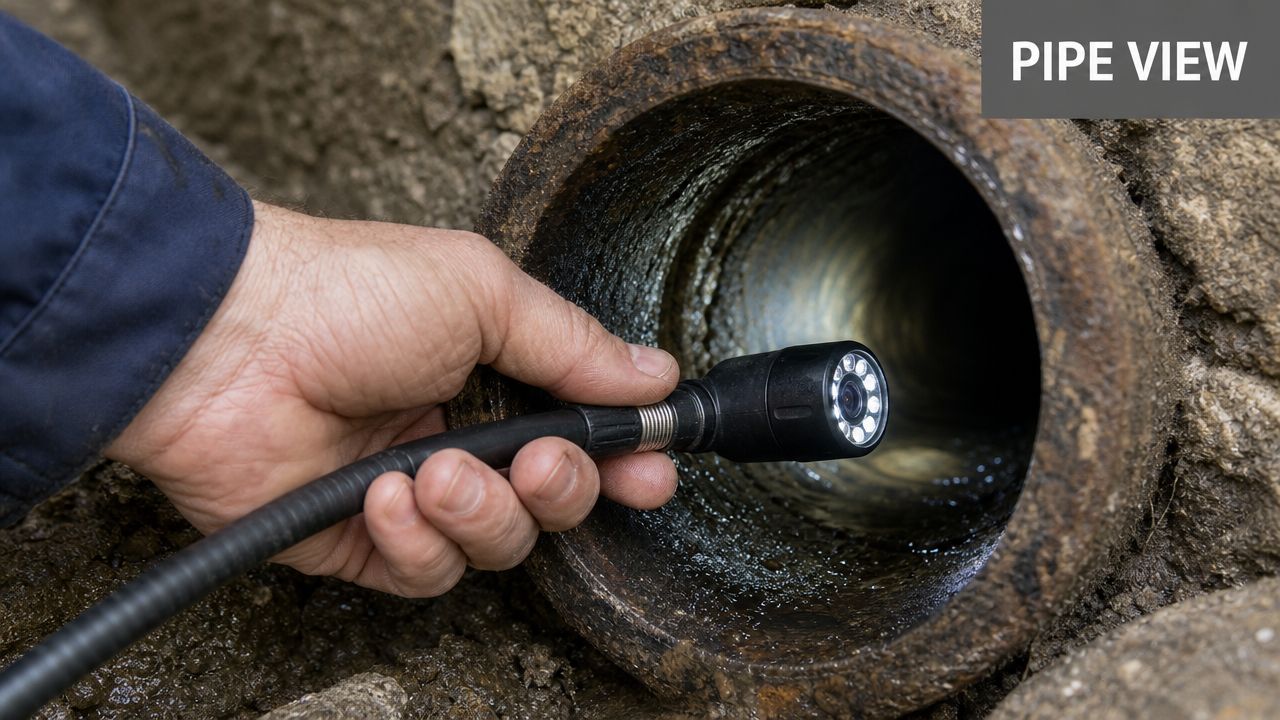
The camera usually goes in through a cleanout and gives a live view of the line from the house toward the street. A good inspection shows more than a clog. It shows whether roots are entering at joints, whether old clay has cracked or shifted, whether cast iron has scaled shut, and whether there is standing water from a low spot. Those details decide whether cleaning, lining, spot repair, or full replacement makes sense.
For LA property owners, location matters too. A root break under a front lawn is one problem. A bad section under a driveway, patio, garage approach, or slab edge changes cost and disruption fast.
What a good inspection should tell you
A proper camera inspection should answer the questions that affect your repair plan and your budget:
- Where the problem starts and ends: You need to know whether the defect is near the house, mid-run, or close to the city connection.
- What material is in the ground: Clay, cast iron, ABS, Orangeburg, or a patched-together mix each fail differently.
- Whether the issue is buildup or damage: Grease and roots can block flow, but separated joints, cracks, offsets, and bellies point to a repair problem.
- Whether trenchless methods are realistic: Lining works only if the pipe still has a usable path and enough structural integrity to support the new liner.
- Whether access will affect the job: Some lines are straightforward. Others need extra prep because of limited cleanout access, tenant occupancy, or hardscape above the line.
That last point gets missed in generic articles. In Los Angeles, many sewer decisions are not just about pipe condition. They are also about what sits over the pipe and how much property you want to disturb to fix it right.
Remote visual tools help contractors and engineers make better decisions before heavy work starts. You can see a similar approach in TruTec's insights on drone assessments, where imaging is used to inspect hard-to-reach conditions before anyone starts cutting, digging, or rebuilding.
Why the inspection changes the repair choice
I have seen plenty of owners spend money on repeat snaking because the line opens up for a few weeks and then backs up again. The cable got through the obstruction. It did not solve the reason the obstruction keeps coming back.
A camera inspection catches that difference. If roots are feeding through separated clay joints, hydro jetting may buy time but will not stop regrowth. If cast iron is heavily scaled but still structurally sound, cleaning and lining may be worth discussing. If the pipe has dropped out of grade or partially collapsed, it is better to know that before approving a trenchless method that cannot solve the actual defect.
That is why an inspection is not just a diagnostic step. It is the point where the repair path becomes clear.
If you want a practical overview before booking service, this guide on what every homeowner should know about sewer camera inspection explains what to expect, what questions to ask, and what the footage should help you decide.
Here's what that equipment looks like in action:
Your Sewer Pipe Repair Options Explained
Once the camera pinpoints the defect, the choice usually comes down to three repair paths. In Los Angeles, that decision often hinges on two things generic articles skip over. How much root damage has old clay pipe already taken, and whether the line still has the shape and slope needed for a trenchless repair to work.
Traditional excavation
Excavation means exposing the damaged line, cutting out the failed section, and installing new pipe directly. It is still the right call for a collapsed line, a bad offset, a major belly, or any section that has lost grade.
This method is also practical when the damaged area is short and easy to reach. If the break is near the front yard cleanout or a small section under open soil, digging one area can be the most honest repair and the cleanest long-term fix.
The trade-off is disruption. Concrete, landscaping, tile, irrigation, and access routes may all need repair after the pipe work is done. On older LA properties, restoration can cost as much attention as the plumbing itself.
Trenchless pipe lining
Cured-in-place pipe lining, or CIPP, installs a resin-saturated liner inside the existing pipe and cures it in place to form a new inner wall.
It works well for cracks, root intrusion through joints, and aging pipe that is worn but still structurally continuous. That comes up a lot in Los Angeles with older clay sewer lines. The joints leak, roots get in, and backups keep returning, but the pipe path is still intact enough to line.
Lining has limits. It does not rebuild a pipe that has flattened, fully collapsed, or dropped so badly that water already sits in the line. It also slightly reduces the inside diameter, which is usually acceptable in a residential sewer, but it should still be part of the discussion before approval.
Pipe bursting
Pipe bursting replaces the old sewer by pulling new pipe through the same path while breaking the existing pipe outward. It is often the better trenchless option when the old line is too damaged to preserve but the route itself is still usable.
For LA owners dealing with brittle clay pipe and heavy root corridors, this can be a smart middle ground. You avoid a full-length open trench, but you still end up with a brand-new pipe rather than a liner inside a failing one.
It is not universal. Bursting needs enough access for insertion and pulling equipment, and it will not fix every slope problem. If the line has a serious belly or a route issue, part of the job may still need excavation.
The repair choice owners get wrong most often
The biggest mistake I see is approving lining for a line that really needs grade correction. A sewer belly is a sagging section that holds water. If the camera shows standing water, repeated waste buildup in the same spot, or deformation around that low area, the question is no longer whether trenchless sounds less invasive. The question is whether that method can restore reliable flow.
That distinction highlights why camera footage is more reliable than sales language.
Lining can seal cracks and block root entry. It cannot make wastewater run uphill or restore proper pitch where the soil has shifted. In many older Los Angeles neighborhoods, that is the underlying issue under the root problem. Roots found the joint first, but settlement and aging clay pipe are what turned a nuisance into a repeat backup.
For owners weighing these methods side by side, what trenchless sewer repair is gives useful background before you approve a proposal. EZ Plumbing also performs sewer replacements, sewer relining, and spot repairs in Los Angeles, which makes a method-by-method evaluation possible when more than one repair path is on the table.
Comparing Methods Cost Timeline and Property Impact
A homeowner in Los Feliz with a ficus over the side yard has a different sewer decision than a duplex owner in Mid-City with a cracked driveway over the line. In Los Angeles, the repair method is never just about pipe condition. It is also about what sits above the pipe, how fast the job needs to move, and whether the line is old clay, corroded cast iron, or a section that has already started to sink.
That is why I tell owners to compare the whole job, not just the pipe price.
Sewer Repair Method Comparison
| Method | Property Disruption | Typical Cost | Project Duration | Best For |
|---|---|---|---|---|
| Traditional excavation | Highest. Requires digging along the pipe path and then restoring what was opened | Cost varies widely based on depth, access, shoring, and surface restoration | Usually the longest schedule because digging, repair, backfill, and restoration all take time | Collapsed pipe, severe offset, major slope correction |
| Trenchless pipe lining | Low to moderate. Usually limits digging to access points | Often competitive when the line is structurally suitable and surface restoration would be expensive | Often faster than excavation because there is less demolition and finish work | Cracks, root intrusion, leaking joints, structurally sound enough for lining |
| Pipe bursting | Moderate. Requires access pits, but usually avoids opening the full pipe path | Best judged as a full project price after a site review | Often faster than full replacement when site conditions allow it | Full replacement along the same route when the old pipe is too deteriorated for lining |
What owners miss when they compare bids
In Los Angeles, surface restoration can swing the actual cost more than owners expect. A low trenching bid can stop looking low once you add concrete replacement, pavers, irrigation repairs, hauling, patching, and cleanup. On older properties, access can also drive price. Tight side yards, mature trees, detached garages, and finished patios all slow the job down and add labor.
Trenchless work often pencils out better for that reason. The pipe repair itself may not look cheap at first glance, but avoiding major demolition can protect the overall budget.
The opposite can also be true. If the camera shows a belly, a crushed section, or a route that needs correction, excavation may cost more up front and still be the smarter spend because it fixes the actual failure instead of working around it.
Timeline affects more than convenience
A one-bath house, an occupied duplex, and a small apartment building do not tolerate long sewer interruptions the same way. Faster methods reduce disruption, but speed only matters if the method fits the pipe.
For many lining and bursting jobs, the active repair portion can be completed quickly once access is ready and the line has been cleaned and inspected. Traditional excavation usually takes longer because the pipe repair is only one phase of the job. Digging, spoil removal, inspections, backfill, compaction, and surface restoration all add time.
Permits and city inspections can also affect schedule in LA. So can access restrictions, alley work, and concrete that cannot be reopened until it cures.
Owner's shortcut: Ask each contractor for total days on site, days without normal sewer use, and what restoration is included in writing.
Property impact is where the method choice gets real
This is the part generic sewer guides usually miss. Two estimates can describe the same line and still lead to very different property outcomes.
If the sewer runs under a lawn with clear access, excavation may be straightforward. If it runs under a decorative driveway, stone patio, or established landscaping, trenchless methods can save a lot of mess and a lot of follow-up repair. In neighborhoods with old clay laterals and aggressive roots, that difference matters because the line often passes directly through the most expensive parts of the yard.
I have also seen owners choose trenchless to protect hardscape, then learn the line had a grade problem that still required digging. That is why the right question is not which method sounds easier. The right question is which method solves the defect with the least total damage to the property and the lowest chance of doing the job twice.
Durability has to lead the decision
Convenience matters. Long-term performance matters more.
A strong proposal should tie the recommended method to what the camera found, the pipe material, the line depth, and the surfaces above it. On many Los Angeles properties, tree roots and aging clay make trenchless a very good fit. On others, settlement or collapse makes excavation the cleaner answer in the long run.
Good sewer work is not about selling the least invasive option. It is about choosing the repair that gives the property a reliable line and a predictable result.
Why Los Angeles Sewer Lines Are Prone to Failure
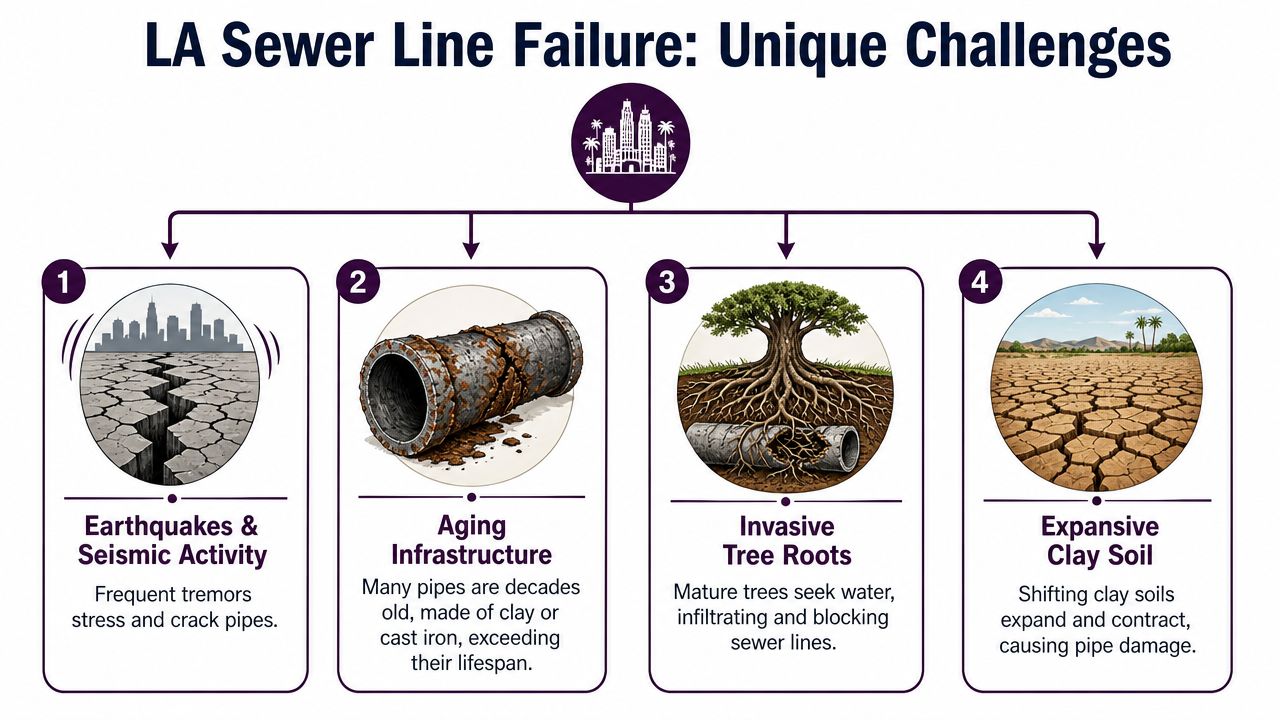
A lot of Los Angeles owners do not have a sewer problem because they did something wrong. They have one because the line under the property was built decades ago, runs through root-heavy landscaping, and has been shifting slowly for years.
Older pipe materials are a big part of it
Many LA homes still have original clay or cast-iron sewer laterals. That matters because both materials fail in familiar ways.
Clay pipe often separates at the joints. Once a joint opens up, roots find the moisture and keep coming back. Cast iron has a different problem. It rusts from the inside, the pipe wall gets rough, and waste starts hanging up instead of flowing cleanly. Owners usually see this as recurring backups, frequent drain cleaning, or one bathroom that always seems slower than the rest.
Age alone does not decide the repair. Pipe material does. A root-filled clay line may still be a good trenchless candidate if the pipe shape is mostly intact. A heavily scaled or misshapen cast-iron line may point toward replacement instead.
Trees are one of the biggest local factors
In Los Angeles, mature trees are often part of the value of the property. They are also part of the sewer risk.
Ficus, pepper trees, and other established landscaping send roots toward any consistent water source. Older clay lines give them plenty of entry points. On many lots, the sewer lateral passes right through the oldest planting beds or near large shade trees that have been in place longer than the current owner. That is why a sewer estimate in LA has to account for more than the pipe itself. The root pattern around the line often affects both the cause of the failure and the repair approach.
This is also why some owners end up deciding between protecting hardscape and fixing the line permanently. The local conditions force that choice more often here than generic guides admit.
Ground movement changes the shape of the line
Los Angeles soil does not stay perfectly still. Seasonal movement, settlement, and seismic activity can pull joints apart, create offsets, or leave parts of a sewer line holding water.
A pipe does not need to be fully collapsed to fail in practice. If part of the line has dropped, lost proper grade, or started to belly, solids can collect in that section and trigger repeat stoppages. I see this on older properties where the original line has been in the ground for a long time, and also on homes that had piecemeal repairs years ago.
That is what makes sewer decisions in LA more specific than they look at first. One property may need root removal and lining. The next may have the same symptoms but need excavation because the pipe has shifted out of alignment. The cause under the yard is what determines the right fix, not just the backup inside the house.
How to Choose a Licensed Sewer Contractor in LA
A bad sewer repair in Los Angeles usually does not fail on day one. It fails six months later, after the roots grow back, the low spot still holds waste, or the patch never matched the actual condition of the line. That is why the contractor matters as much as the repair method.
In LA, I would be especially careful with older homes that still have clay sewer lines or lots with mature trees near the lateral. Those are the properties where a sales pitch can sound convincing, but the wrong method leaves the original problem in the ground. A liner can make sense. So can pipe bursting or excavation. The right answer depends on what the camera shows, where the line runs, and whether the pipe has shifted, cracked, or lost grade.
What to verify before you sign
Start with the company, then move to the repair plan.
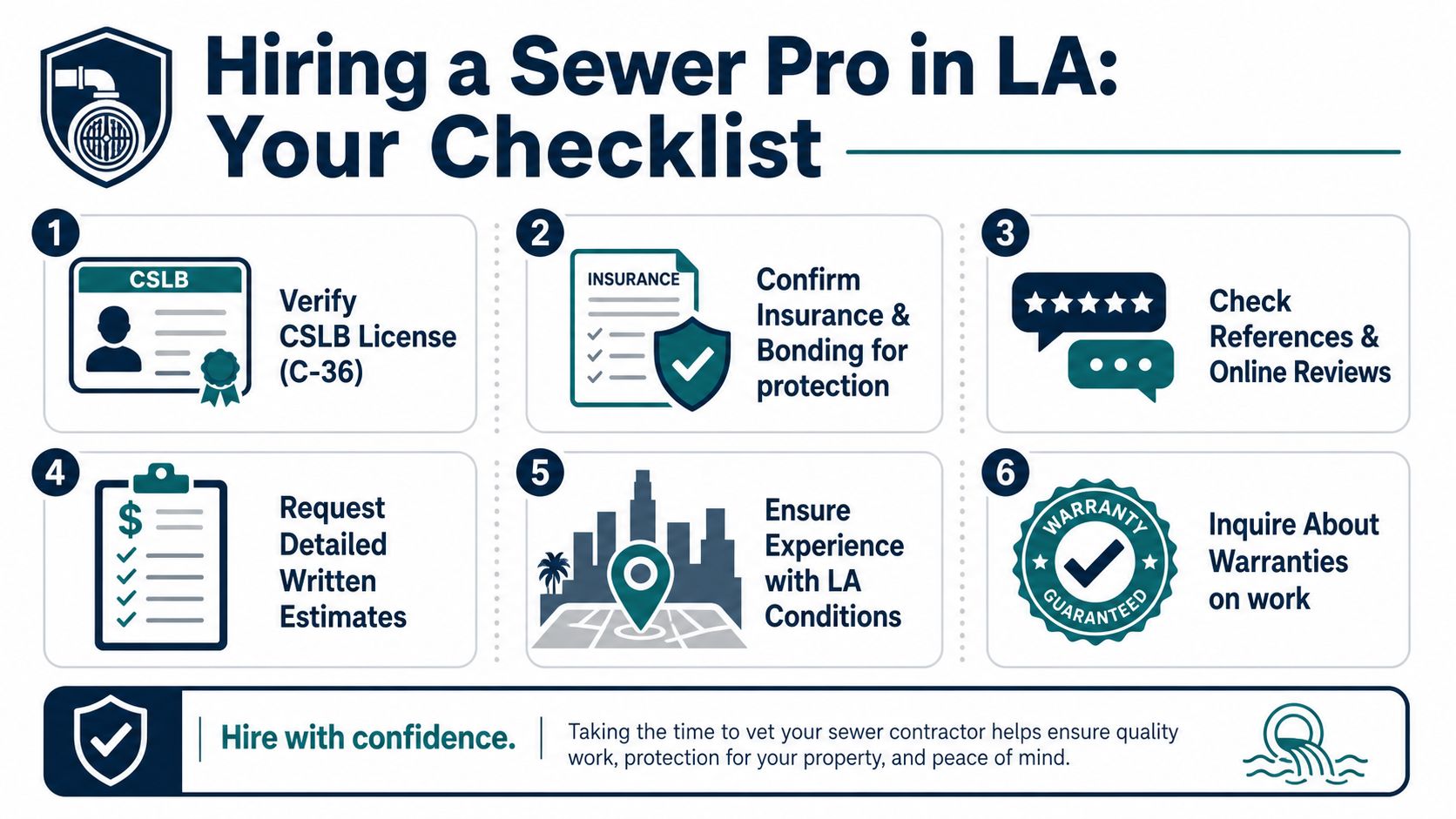
- License and insurance: Confirm the contractor is licensed for plumbing work in California and carries current insurance.
- Video-based diagnosis: Ask to see the actual camera footage. A summary alone is not enough for a major sewer decision.
- Written scope: The estimate should clearly state whether the job is cleaning, spot repair, lining, pipe bursting, or full replacement.
- Permit handling: Ask who pulls the permit, whether city inspections are required, and what paperwork you will receive at the end.
- Warranty terms: Get the workmanship and material warranty in writing, with dates and limits spelled out.
Questions that separate a real sewer contractor from a sales crew
Ask direct questions and listen for direct answers.
Can this repair method fix a grade problem, or does it only restore the inside of the existing pipe?
In LA, that matters. If the line has a belly or offset from settlement, lining may leave the flow problem in place.What in the camera inspection makes this line a good candidate for lining or bursting?
A qualified contractor should point to the actual footage, not just repeat that trenchless is less invasive.How will you confirm the pipe is clean and properly prepared before repair?
Root-heavy clay lines often need more prep than homeowners expect. If that step is rushed, the repair quality suffers.What testing or post-repair inspection do you include?
The answer should involve verification after the work is done, not “you'll know because it drains.”If you open the yard and find a worse condition than expected, how do you handle change orders?
This tells you a lot about how the company operates under pressure.
Sewer work is expensive. A contractor should be able to explain the problem, the limitations of each option, and why the proposed fix fits your property.
What good repair documentation looks like
Good documentation is simple and specific. You should receive the original camera findings, a written scope, permit information if required, and some form of post-repair verification. If the contractor cannot show what was wrong before the job and what changed after the job, you are being asked to trust too much.
For LA property owners, I would also want the contractor to explain how the plan accounts for local conditions. If roots caused the failure, ask whether the repair removes root entry points or only clears them. If the home has an older clay or cast iron line, ask how much sound pipe remains and whether the proposed method depends on that pipe still holding its shape. Those details affect service life more than the sales brochure.
If your property has recurring backups, root intrusion, or an aging line that needs a real diagnosis, EZ Plumbing is one Los Angeles option for camera inspection, trenchless repair evaluation, and conventional sewer replacement. The key is getting clear footage, a clear scope, and a contractor who can explain the trade-offs without ducking hard questions.