
Best Foaming Drain Cleaner: Expert 2026 Guide
You're probably here because water is sitting in the sink, the shower is turning into a foot bath, or a bathroom drain keeps smelling bad no matter how much hot water you run. At that moment, a foaming cleaner sounds like the smart upgrade. It promises to expand through the pipe, coat the walls, and melt away the mess without taking anything apart.
That pitch is appealing because it matches what homeowners want. Fast relief, no tools, no mess, no service call. Sometimes a foaming product does help, especially when the problem is light organic buildup near the opening. But “foaming” and “best” aren't the same thing, and the wrong product or the wrong next step can waste time, damage plumbing, or create a safety hazard.
The question isn't which bottle has the boldest label. It's what kind of clog you have, what foam can do well, where it falls short, and when a professional method is the safer and more complete fix.
Table of Contents
- The Foaming Fix That Might Not Be a Fix at All
- How Foaming Drain Cleaners Create Their Fizz
- Marketing Hype vs Drain Reality The Limits of Foam
- Safety Precautions and Environmental Concerns
- DIY Cleaners vs Professional Drain Services
- Five Signs You Need to Call a Plumber Immediately
- Your Los Angeles Expert for Any Clogged Drain
The Foaming Fix That Might Not Be a Fix at All
A common homeowner move goes like this. The tub starts draining slowly, you try hot water, maybe a little dish soap, then you stand in the hardware aisle looking at bottles that promise deep foaming action. The label makes it sound like the foam will travel everywhere the clog is hiding and solve the problem while you wait.
Sometimes that works. More often, it works halfway.
A foaming drain cleaner can be useful when the blockage is mostly soft organic residue, soap scum, grease film, or the slimy coating that builds up inside a line over time. In those situations, the foam has a real advantage because it can spread across pipe surfaces instead of just cutting a narrow channel through standing water.
But homeowners get into trouble when they assume foam means stronger on every kind of clog. It doesn't. A drain packed with dense hair, a foreign object, scale buildup, or a blockage farther down the branch line won't magically disappear because the product came out as foam.
Practical rule: If the drain problem developed slowly and stays limited to one fixture, a foaming cleaner might be worth trying once. If the drain is fully blocked, backing up into another fixture, or has already defeated one treatment, stop escalating with more chemicals.
That's the difference between maintenance chemistry and real obstruction removal. One treats buildup. The other removes a blockage.
If you're looking for the best foaming drain cleaner, the better approach is to judge foam by situation, not marketing. Good for light buildup and some recurring odor issues. Unreliable for tough hair masses. A poor choice when the drain already shows signs of a deeper line problem.
How Foaming Drain Cleaners Create Their Fizz
Open a bottle of foaming drain cleaner and the product sounds aggressive. The fizz makes it seem like the clog is being attacked from every angle. What is happening is simpler. The ingredients react, release gas, and expand into foam that spreads farther than a plain liquid pour.
Some formulas use ingredients that start bubbling once they combine with each other or with water in the drain. One example of that reaction is discussed in this foaming drain cleaner chemistry discussion, which describes gas formation during the reaction. That bubbling is what creates the foam layer homeowners see as “action.”
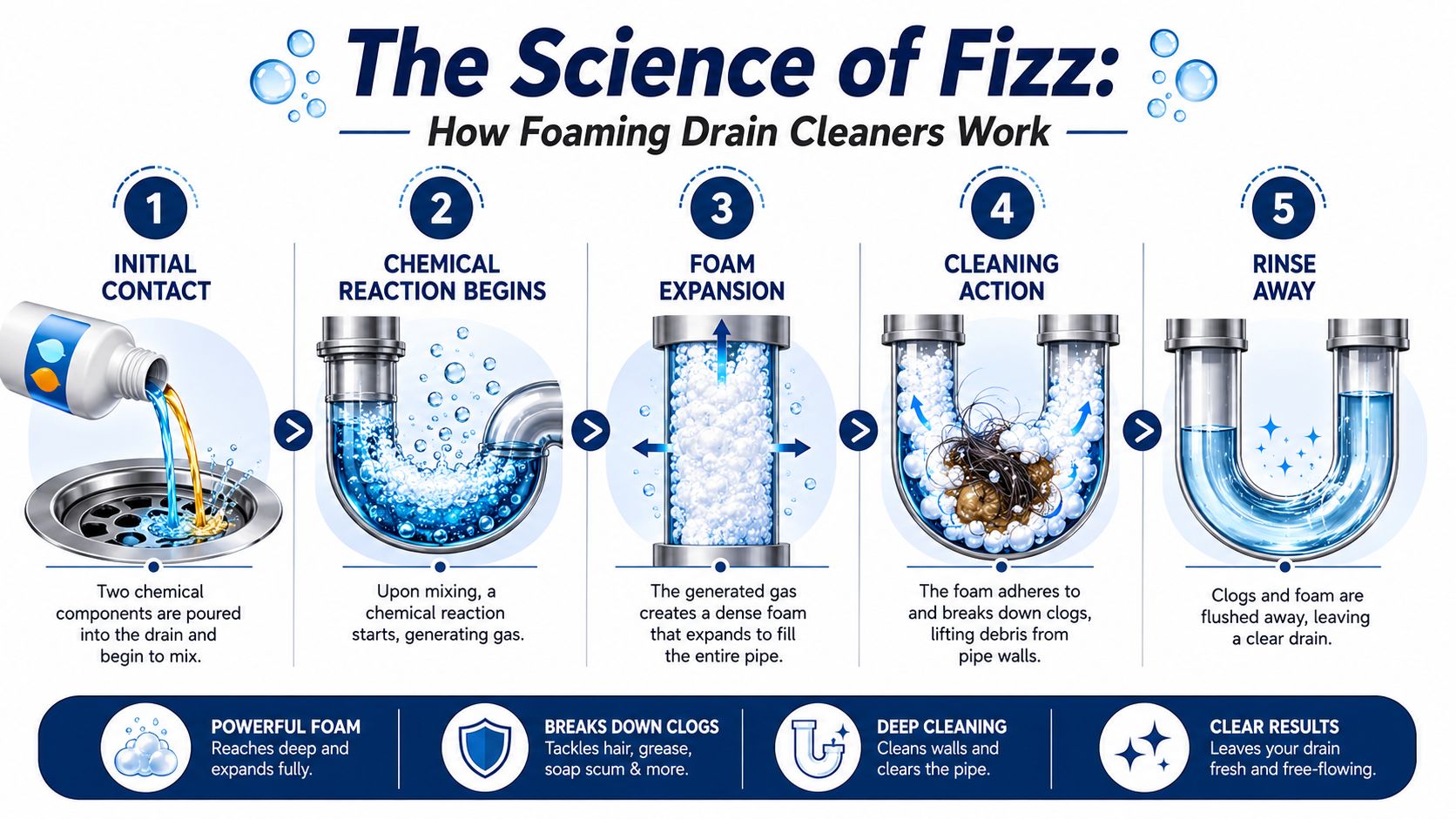
A key advantage is pipe-wall contact. A straight liquid often runs through the easiest open path, especially if there is standing water. Foam can coat more of the pipe interior, which gives it a better shot at soft residue stuck above the water line.
That makes foaming cleaners more useful against buildup such as:
- biofilm on the inside of the pipe
- greasy film in kitchen drains
- soap residue around bathroom lines
- light organic sludge holding small debris in place
Roto-Rooter explains this point well in its overview of how foaming drain cleaners target biofilm. In practice, that wider coverage is the main reason a foaming product can help a slow drain even when a basic liquid cleaner does very little.
Coverage still is not removal.
Foam can soften residue and loosen some of the material stuck to pipe walls, but it does not pull out a packed hair mass, cut through heavy scale, or retrieve an object lodged in the trap or branch line. That is where homeowners get misled by the marketing. The fizz looks dramatic, but the mechanism is still chemical softening, not mechanical clearing.
If you want a better comparison of product-based treatments and methods that do remove blockages, this guide to effective drain cleaning methods for your home helps show where foam fits and where professional tools take over.
Foam works best on residue spread along the pipe wall. It works poorly on anything dense enough to need a cable, a retrieval tool, or hydro-jetting.
That is the trade-off. Foam can reach more surface area than a liquid cleaner, but it still depends on the clog being soft enough to dissolve and loose enough to move.
Marketing Hype vs Drain Reality The Limits of Foam
A homeowner pours in a foaming cleaner, hears fizzing for a few minutes, and assumes the pipe is opening up. Then the sink backs up again the next day. I see that pattern all the time.
Foam gets marketed like proof of action. In real drains, it is only one delivery method. The question is not whether the product expands. The question is whether it can break down what is blocking the line.
Foaming cleaners do have a place. They can help with residue spread along the pipe wall, especially in drains that are slow but still moving water. In those cases, the product has time to coat the inside of the pipe and soften buildup instead of sitting on top of a fully stopped clog.
For a side-by-side look at where bottle treatments stop helping and where tools or service calls make more sense, this guide to effective drain cleaning methods for your home gives a clearer comparison than most product labels do.
Where foam earns its keep
Used in the right situation, foam can improve flow for a while. The best cases are usually drains with a broad layer of residue rather than one dense blockage.
- Bathroom sink lines with light buildup: Foam can reach around the inside of the pipe where paste, soap, and organic residue collect.
- Kitchen drains with greasy coating: A foaming product can cling better than a thin liquid and soften some of that film.
- Maintenance on a mildly slow drain: If water still drains and the issue is early buildup, foam may buy time.
That is the upside. It is limited, but it is real.
Where the claims outrun the results
The problem starts when the label suggests that foam means full removal. It does not. A packed clog behaves very differently from surface residue.
Hair clogs are the best example. In the field, hair usually binds together with soap scum and wraps around the drain assembly or sits compacted in the trap. Chemical action may soften part of that mass. It often does not clear the whole obstruction.
Consumer Reports saw that kind of limit in its review of Yugou foaming drain cleaner. In its test, the product removed no hair from the drain. One test does not settle the whole category, but it matches what plumbers run into regularly. Foam is poor at removing anything that needs to be pulled out, cut apart, or blasted free.
That distinction matters. Foam treats residue. It does not replace mechanical cleaning.
A drain opens when the blockage is removed or broken apart enough to move. Foam alone often cannot do that on a tough clog.
Homeowners get into trouble when they let the packaging diagnose the problem. If the drain is only sluggish from light wall buildup, a foaming cleaner may help. If the clog keeps returning, affects more than one fixture, or stops draining almost completely, the better answer is usually a cable machine, a camera inspection, or hydro-jetting. Those methods do the work marketing copy only hints at.
Safety Precautions and Environmental Concerns
The most dangerous drain cleaning mistake isn't choosing the wrong product. It's combining a harsh chemical treatment with the wrong follow-up action.
The mistake that sends people to urgent care
If a chemical cleaner fails, many homeowners reach for a plunger, zip tool, or snake. That sounds logical. In reality, it can be the worst possible next move.
A documented warning from plumbing discussions and safety guidance is clear: after chemical cleaner use, the standing water in the fixture can become a hazardous mix of strong acid or base. Trying to snake that drain can splash the chemical back toward your face, hands, and eyes. This risk is described directly in this discussion about drain cleaner hazards after failed chemical use.
That's one reason I'm firm about this rule. If you've already poured chemical cleaner into a drain and it didn't clear, don't switch casually to mechanical force.
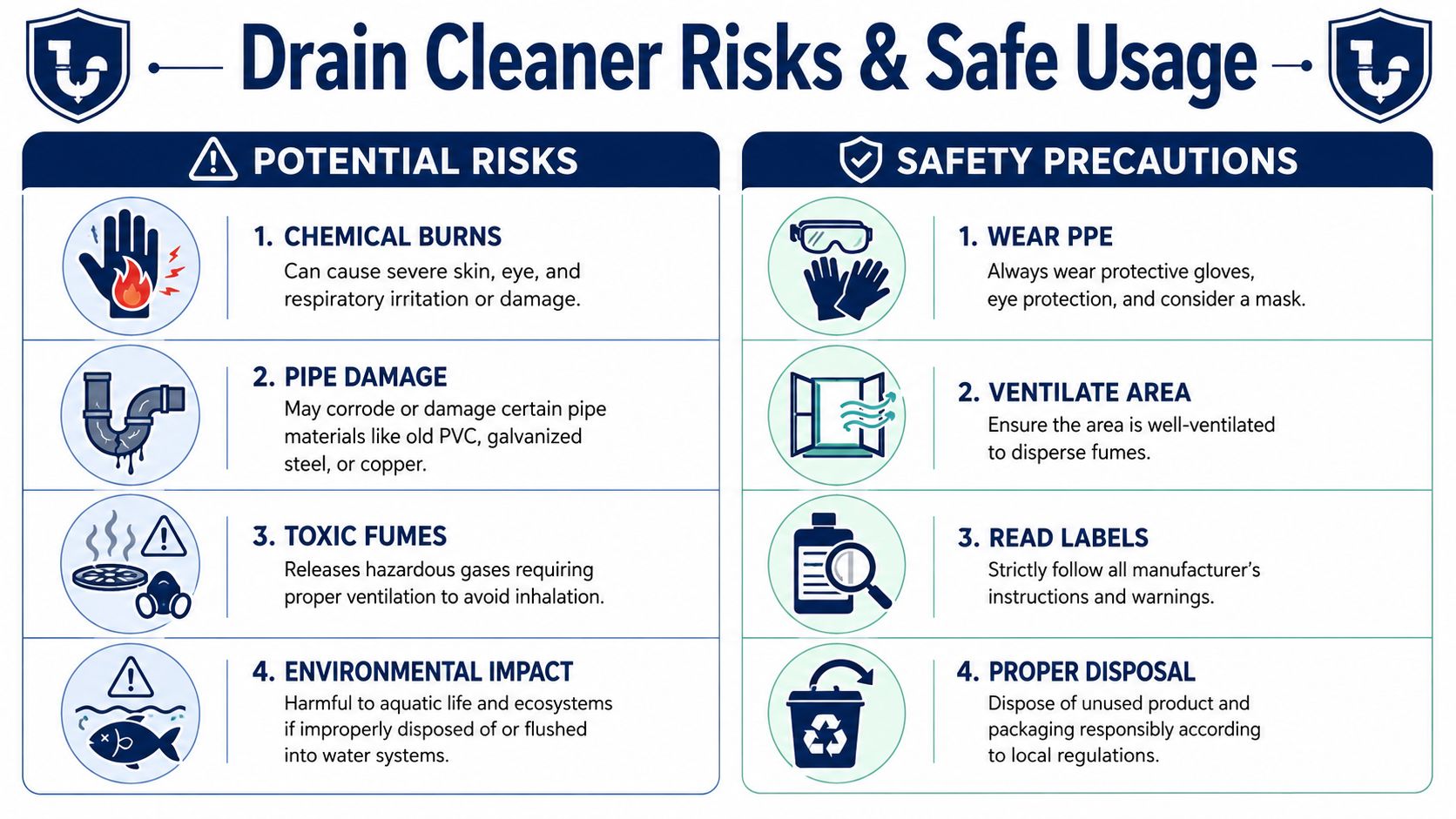
Use this safety checklist before you do anything else:
- Wear proper protection: Gloves and eye protection aren't optional around chemical cleaners.
- Ventilate the room: Bathroom and kitchen drains can release harsh fumes during treatment.
- Read the product label closely: Different formulas have different wait times, flushing directions, and material warnings.
- Don't mix products: Adding another cleaner can create a more dangerous reaction, not a stronger fix.
- Don't use a plunger or snake right after a failed chemical attempt: Residual cleaner may still be sitting in the trap or standing water.
If you want a more detailed plumbing-specific discussion of chemical risk, this article on whether Drano is safe for pipes gives homeowners useful context before they reach for another bottle.
Pipe and disposal concerns
Chemical cleaners also create a plumbing trade-off. They can help with buildup, but they aren't gentle by default. Older metal lines, weakened joints, and already-stressed piping systems don't benefit from repeated exposure to aggressive chemistry.
The environmental side matters too. Harsh drain cleaners don't become harmless just because they disappeared down the opening. Homeowners should follow label directions carefully and avoid casual overuse, especially when the actual issue is mechanical and the product was never likely to solve it.
If a cleaner has become a repeated monthly ritual on the same drain, the product isn't maintaining the line. It's masking a problem that still needs to be identified.
DIY Cleaners vs Professional Drain Services
A homeowner usually notices the difference after the second or third clog. The foam made the sink drain for a while, but the slowdown came back. That is the point where the true comparison starts. You are no longer choosing between cheap and expensive. You are choosing between a temporary chemical response, a mechanical opening, or cleaning the line.
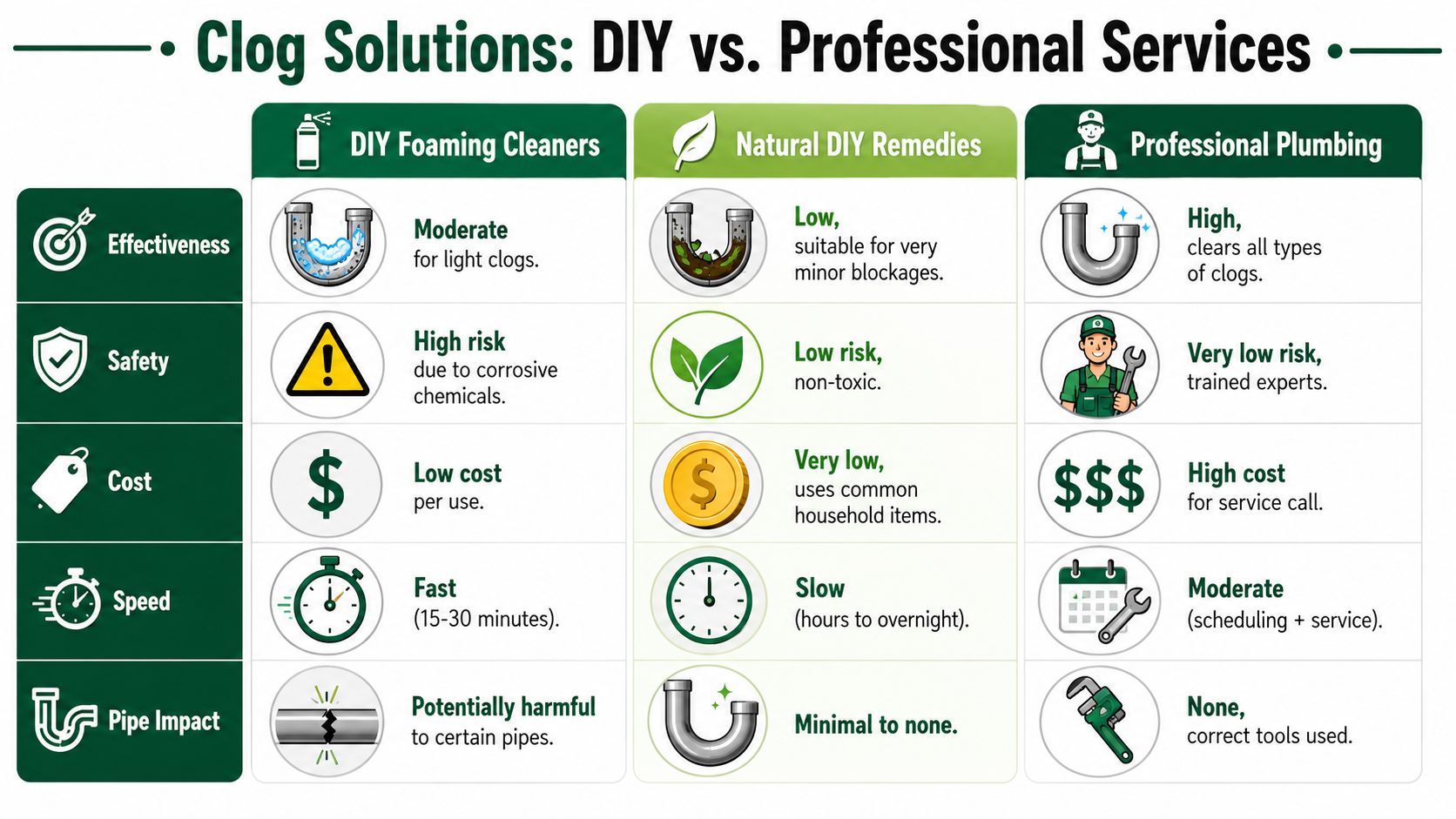
Drain Cleaning Method Comparison
| Method | Best For | Effectiveness | Cost | Safety Risk |
|---|---|---|---|---|
| DIY foaming cleaner | Light buildup, odor, grease film, early slow drains | Moderate on soft organic residue, limited on dense blockages | Low | Moderate to high if misused |
| Hand snake or auger | Localized hair clogs near the fixture or trap | Good when the clog can be hooked or broken apart | Low to moderate | Moderate if used after chemicals |
| Professional hydro-jetting | Heavy buildup, recurring grease, long pipe-wall contamination | High because it cleans the pipe interior, not just one opening | Higher service cost | Low in trained hands |
The phrase best foaming drain cleaner only makes sense if the drain problem is mild and local. Marketing often treats foam like a full cleaning method. In the field, it is usually a limited treatment for limited conditions.
Why professional cleaning is a different category
Foaming products can help when residue is soft and the line is still mostly open. They do not scrub a long drain line clean in the way many labels imply. At best, they improve flow enough to buy time.
Professional service is different because the goal changes. A snake can remove a hair mass or punch through a stoppage. Hydro-jetting cleans the pipe wall itself, which matters in kitchen lines, recurring shower drains, and branch lines that keep collecting sludge. That is the trade-off. DIY products may restore movement. Professional cleaning is meant to remove the material that keeps causing the slowdown.
I tell homeowners to be careful with the word “worked.” If water goes down again, the drain may be open. It does not mean the pipe is clean.
A hand snake is the best middle-ground tool for many simple clogs near the fixture. It is more direct than pouring in another chemical, and it avoids exposing the piping to repeated harsh treatments. If you want to try a lower-risk first step, this guide on how to unclog a drain without chemicals is a better place to start than another bottle.
Here is the practical way to size up the options:
- Use foam once for a minor slowdown: Reasonable for light organic buildup, odor, or soap residue when there are no signs of a deeper blockage.
- Use a snake for a local clog: Better for hair, stopper tangles, and stoppages close to the drain opening.
- Call for professional cleaning when the same drain keeps failing: Recurrent clogs usually mean buildup farther down the line, grease on the pipe walls, or a blockage a bottle will not reach.
- Choose hydro-jetting when the goal is lasting pipe cleaning: It costs more up front, but it removes wall buildup much more thoroughly than chemical cleaners or a basic punch-through.
For plumbing companies trying to explain that difference clearly online, this plumbing SEO guide shows how service education can help homeowners make better decisions before a small clog turns into a larger repair.
The short version is simple. Foam has a place. It is not a substitute for diagnosis, mechanical removal, or full-line cleaning when the drain has a repeat problem.
Five Signs You Need to Call a Plumber Immediately
You pour in a foaming cleaner, wait for the fizz to do its job, and the sink seems better for a day. Then the tub gurgles when the toilet flushes, or dirty water shows up in the shower. At that point, the problem has moved past a simple DIY clog.
Foaming drain cleaners can buy time on light buildup near the fixture. They do not diagnose the line, and they do not remove every type of blockage. If any of the signs below show up, stop adding chemicals and get a plumber involved before the problem turns into water damage, a backup, or a damaged drain line.
When the clog is no longer a simple fixture problem
Call a plumber right away if you notice any of these:
- More than one drain is acting up: A slow sink by itself can be local. A slow sink, tub, and toilet at the same time usually points to a shared line problem farther down the system.
- Water backs up into another fixture: If running one fixture sends water into another, the drainage path is restricted beyond the trap. Foam in one drain will not fix that.
- The smell is strong and persistent: A foul odor that keeps coming back can mean rotting buildup, sewer gas, or standing waste in the line. That needs diagnosis, not another bottle.
- The clog comes back quickly: A drain that improves briefly and then slows again usually still has grease, scale, roots, or a heavy mass of debris in the pipe.
- A strong chemical product already failed: If a serious cleaner did not open the drain, the blockage may be too dense, too deep, or too solid for a chemical approach. Repeating the treatment only adds risk for the next person who has to open the line.
One more sign gets missed. If you manage rental units, HOA properties, or service businesses and the same drain complaint keeps coming back in work orders, treat it as a system problem. Property teams that want a better way to identify the right specialist may also find this plumbing SEO guide useful because it shows how plumbing companies organize service information for faster decision-making.
I tell homeowners this all the time. A failed DIY attempt does not mean you chose the wrong brand or did not use enough product. It usually means the drain needs a cable, a camera inspection, or hydro-jetting to clean the pipe wall properly and find out what is causing the blockage.
Your Los Angeles Expert for Any Clogged Drain
Los Angeles plumbing systems aren't all the same. Older homes, remodeled additions, multi-unit properties, grease-heavy kitchen lines, and long lateral runs all create different drain problems. That's why local experience matters when a clog turns out to be more than simple hair or residue near the fixture.
A dependable plumbing contractor should be able to do more than run a snake and hope for the best. For serious or recurring drain trouble, you want a team that can clean the line properly, diagnose what's causing the repeat blockage, and respond quickly if the problem escalates after hours.
When local experience matters
EZ Plumbing has served Los Angeles since 1989 and works with homeowners, HOAs, property managers, landlords, and commercial properties throughout the area. The company provides 24/7 emergency response and same-day scheduling for planned repairs, which matters when a clogged drain becomes a backup risk instead of a routine inconvenience.
For tougher drain situations, the right professional solution may include hydro jetting, sewer line diagnostics, or targeted repair rather than repeated chemical use. That kind of work is especially important when the drain issue isn't isolated, keeps returning, or affects multiple fixtures.
If you want to see the kind of service approach that supports those jobs, this short overview gives a helpful visual look:
EZ Plumbing also covers a wide Los Angeles service area, including Beverly Hills, Santa Monica, West Hollywood, Pasadena, Glendale, Burbank, and the San Fernando Valley. For property owners, that means one licensed, insured team can handle urgent drain issues and broader plumbing needs without the confusion of patchwork vendors.
The best foaming drain cleaner has a place. It just doesn't solve every drain problem, and it shouldn't be the final step when the warning signs are already there. When the clog is stubborn, recurring, or unsafe to handle, a professional diagnosis is the smarter move.
If your drain still isn't clearing, or you'd rather skip the chemical guesswork, contact EZ Plumbing for professional help. They offer 24/7 emergency response, same-day scheduling for many calls, and experienced drain cleaning solutions for Los Angeles homes, HOAs, property managers, and commercial properties. You can call (818) 908-2710 or schedule service online.