
The Role of Plumbing in Health: What Families Need to Know
Most people think of plumbing as pipes and fixtures. In reality, the role of plumbing in health is as significant as any medical intervention your family will ever benefit from. Functional plumbing separates clean water from waste, prevents disease-causing pathogens from reaching your tap, and protects the air inside your home. When plumbing works correctly, you barely notice it. When it fails, the consequences show up fast, in the form of waterborne illness, mold exposure, and contaminated living conditions. Understanding how your plumbing system protects your family is the first step toward maintaining it properly.
Table of Contents
- Key takeaways
- How plumbing prevents waterborne disease
- Sustainable plumbing and home safety
- Plumbing problems that threaten your health
- Plumbing’s effect on indoor air quality
- My perspective on plumbing as a health priority
- Protect your family with Ez-plumbing services
- FAQ
Key takeaways
| Point | Details |
|---|---|
| Plumbing prevents disease | Separating potable water from wastewater stops pathogens like cholera and giardia from reaching your tap. |
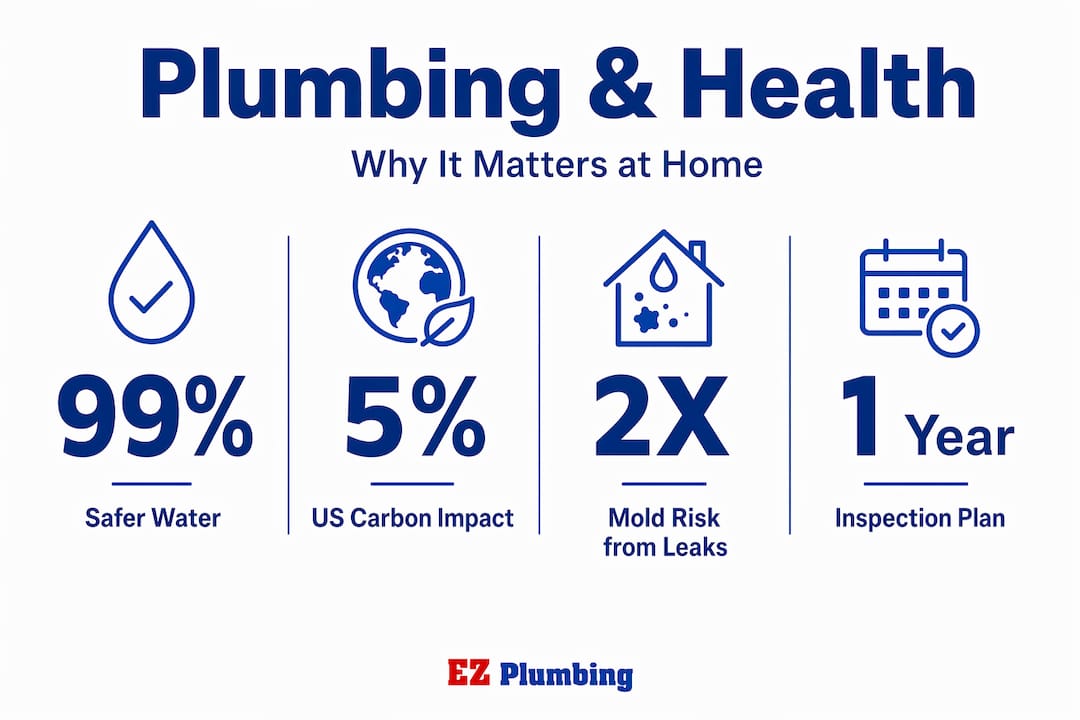
| Sustainable fixtures save water and money | Low-flow and water-efficient fixtures can cut household water use by 30 to 50 percent. |
| Faulty plumbing creates hidden health risks | Leaks, clogs, and sewer backups contribute to mold growth, contamination, and poor indoor air quality. |
| Indoor air quality is also at stake | Sewage gases and mold from plumbing failures are documented causes of respiratory problems. |
| Proactive maintenance protects your family | Regular inspections and professional service prevent the failures that create health and safety hazards. |
How plumbing prevents waterborne disease
The most direct way plumbing and public health connect is through the separation of clean water and waste. Your home’s plumbing system runs two parallel networks: one that delivers treated potable water to your faucets, and one that removes waste and used water safely from your home. The moment those two systems mix, even slightly, you face a genuine health emergency.
Waterborne pathogens, including bacteria like E. coli and Salmonella, parasites like Giardia lamblia, and viruses responsible for hepatitis A, travel through contaminated water. Reliable water infrastructure reduces infection risk in ways that are comparable to direct medical care. The importance of plumbing sanitation becomes obvious when you look at what happens in its absence: cholera outbreaks, typhoid, and dysentery are still active health threats in communities without functioning sanitation systems.
In your own home, the plumbing fixtures you may overlook daily do serious work. Functioning P-traps under sinks block sewer gases from backing up into living spaces. Properly vented drain lines prevent the siphoning of water seals that would otherwise let those gases through. Toilets that flush completely and seal correctly prevent pathogen exposure every single use.
- Separation of potable and wastewater lines keeps drinking water free from fecal contamination, one of the most common sources of household illness.
- Drain traps and vent stacks block methane and hydrogen sulfide gases that cause headaches, nausea, and in prolonged exposure, more serious respiratory damage.
- Functional sanitation fixtures reduce direct contact with pathogens that cause gastrointestinal disease in children and adults.
- Pressure-regulated supply lines prevent back-siphonage events where negative pressure pulls contaminated water backward into potable lines.
Pro Tip: If you notice a sulfur or “rotten egg” smell near your drains, that is hydrogen sulfide gas escaping through a dry or failing P-trap. Run water in infrequently used drains monthly to maintain the water seal.
Sustainable plumbing and home safety
The role of plumbing in sustainability has moved from a niche consideration to a practical priority for families who want lower bills and a healthier home environment. Water-efficient fixtures are the most accessible starting point. Water-efficient fixtures like dual-flush toilets and low-flow showerheads can reduce household water consumption by 30 to 50 percent. That reduction directly lowers your utility costs and decreases the volume of wastewater your local treatment system must process.
Greywater recycling adds another layer of sustainability. Water from sinks, showers, and laundry can be safely redirected for toilet flushing or landscape irrigation, with greywater reuse cutting household water demand by 30 percent or more. Proper installation of greywater systems requires physical separation from potable supply lines and compliance with local health codes to prevent contamination risks. In Los Angeles, the Department of Building and Safety has specific requirements for permitted greywater systems, and working with a licensed plumber keeps you code-compliant.
Energy efficiency connects directly to the role of plumbing in home safety and household wellness. Water heating accounts for a significant portion of home energy use. Modern properties with updated plumbing and heating systems emit 61% less carbon and can lower energy bills by up to 55 percent compared to older builds. Tankless water heaters deliver hot water on demand rather than maintaining a storage tank at temperature continuously, which removes the standing risk of legionella bacteria growth in stagnant heated water.
| System type | Energy efficiency | Health consideration |
|---|---|---|
| Traditional tank water heater | Lower efficiency, constant heating | Stagnant water can harbor Legionella if temperature is not maintained |
| Tankless water heater | Higher efficiency, on-demand heating | Eliminates standing water risk, consistent temperature delivery |
| Low-flow fixtures | Reduces water waste by 30 to 50% | Decreases wastewater volume entering your household system |
| Greywater recycling system | Cuts fresh water demand by 30%+ | Requires code-compliant installation to avoid cross-contamination |
Pro Tip: Plumbing accounts for roughly 5% of US carbon emissions. Upgrading to water-efficient fixtures and an energy-saving water heater is one of the highest-return home improvements you can make for both your wallet and the environment.
Plumbing problems that threaten your health
The impact of plumbing on hygiene goes negative fast when systems start to fail. Leaks are the most common problem, and they cause far more damage than wet drywall. Plumbing leaks waste hundreds of liters daily and create consistently damp conditions where mold colonies establish within 24 to 48 hours of moisture exposure. Mold is not just a cosmetic problem. Certain strains produce mycotoxins that cause chronic respiratory irritation, allergic reactions, and neurological symptoms in prolonged exposure.
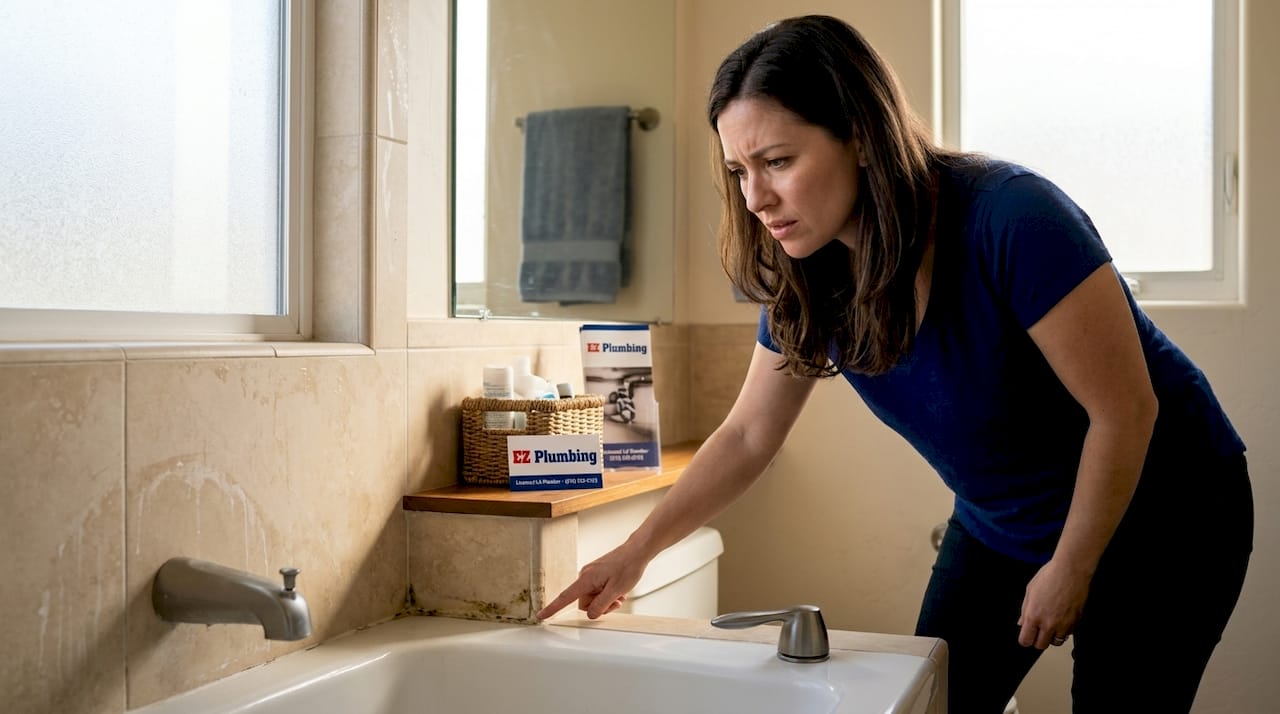
Clogged drains and sewer backups present a more immediate contamination risk. Raw sewage contains a significant concentration of bacteria, viruses, and parasites. When a sewer line backs up into a bathtub or floor drain, every surface in contact with that water becomes a contamination source. Homes with clay sewer laterals, common in many older Los Angeles neighborhoods, are particularly vulnerable to root intrusion that gradually restricts and then blocks flow completely.
Here are the warning signs and prevention steps that protect your household:
- Slow drains throughout the home signal a developing main line blockage, not just a localized clog. Address this with professional hydro-jetting before a full backup occurs.
- Discolored or foul-smelling water from any faucet indicates a supply line problem, possibly galvanized corrosion in older pipes releasing rust and sediment into your water.
- Water stains on ceilings or walls point to an active leak behind your structure. Schedule a camera inspection to locate the source before mold establishes.
- Gurgling sounds from drains after flushing a toilet indicate venting issues that allow sewer gas to enter living spaces.
- Only flush human waste and toilet paper. Flushable wipes accumulate and cause blockages in sewer lines, and their removal often requires professional intervention.
Scheduling a professional plumbing inspection annually gives you a current picture of your system’s condition. Los Angeles homes built before 1970 frequently have galvanized steel or cast iron pipes that have reached or exceeded their design life. A camera inspection confirms what you actually have without guesswork. You can find detailed guidance on LA home plumbing maintenance that covers inspection schedules and what to prioritize by age of construction.
Plumbing’s effect on indoor air quality
Most families think about indoor air quality in terms of ventilation and allergens. Plumbing’s role in that equation rarely gets the attention it deserves. Plumbing leaks contribute directly to indoor air pollutants through mold growth and the release of sewage gases, both of which create documented respiratory risks according to EPA research.
The specific gases of concern include methane, hydrogen sulfide, and ammonia, all byproducts of organic decomposition in sewer lines. When drain seals fail or vent pipes crack, these gases migrate into your living space at concentrations well below what you would smell but high enough to cause headaches, fatigue, and irritation of the airways over time.
- Sewage gases from failed drain traps introduce hydrogen sulfide and methane into habitable spaces, causing headaches and respiratory irritation.
- Mold from hidden leaks releases spores that aggravate asthma, trigger allergic responses, and in some cases produce mycotoxins harmful to children and immunocompromised adults.
- Touchless and sensor-operated faucets reduce hand-to-fixture contact, cutting the transmission of bacteria in bathrooms and kitchens where cross-contamination is most common.
- Water temperature consistency from properly maintained systems prevents cold-to-hot fluctuations that reduce handwashing effectiveness, since most pathogens on hands require consistent warm water and soap contact to be removed.
The plumbing systems health benefits extend to every room in your home. Solving common plumbing problems before they become air quality issues is a more direct health investment than most people realize.
My perspective on plumbing as a health priority
I’ve been in homes across Los Angeles where the family had spent thousands on air purifiers and HEPA filters while a slow slab leak was quietly feeding a mold colony inside their walls. The air purifiers were capturing the spores. The leak was generating them. That is the disconnect I see most often: people address symptoms while the plumbing cause goes undiagnosed.
What I’ve learned over years of licensed plumbing work is that the families who treat plumbing as infrastructure, meaning something that requires scheduled attention rather than emergency response, stay healthier and spend less. A camera inspection that costs a few hundred dollars routinely prevents a sewer backup remediation that costs several thousand, not counting the health exposure during cleanup.
Sustainable upgrades like tankless water heaters and low-flow fixtures are not just environmental choices. They reduce your household’s exposure to stagnant water, temperature inconsistency, and water quality problems from aging infrastructure. Technical trades like plumbing are central to health outcomes in ways that often exceed what we credit them for. My honest advice: schedule that inspection, upgrade the fixtures that are past their service life, and treat your plumbing as the health system it actually is.
— EZ
Protect your family with Ez-plumbing services
At Ez-plumbing, we see every day how directly plumbing condition affects the health and comfort of Los Angeles families. If your home has aging pipes, slow drains, or a water heater that’s past its recommended service life, those are not minor inconveniences. They are active health considerations. Our licensed team handles professional drain cleaning and sewer line repair to eliminate the backup and contamination risks described above. We also specialize in tankless water heater installation, which removes the legionella risk associated with storage tank systems while cutting your energy costs significantly. Ez-plumbing is fully licensed (C-36 License #583868), insured, and code-compliant with LA municipal requirements. Call us to schedule an inspection and get a clear picture of where your system stands.
FAQ
How does plumbing directly affect my family’s health?
Plumbing separates potable water from waste, preventing pathogens like E. coli, Giardia, and viruses from contaminating your drinking water. Faulty plumbing can also introduce sewage gases and mold into your home, causing respiratory problems and illness.
What plumbing issues pose the biggest health risks?
Sewer backups, hidden leaks that cause mold, and failing drain traps that allow sewage gases into living spaces are the highest-risk plumbing failures for household health. Annual inspections catch these problems before they create a health hazard.
Can sustainable plumbing actually improve health outcomes?
Yes. Tankless water heaters eliminate the stagnant warm water conditions that allow Legionella bacteria to grow. Low-flow fixtures reduce wastewater volume, and greywater systems lower demand on treated water supplies, all contributing to cleaner water delivery and reduced environmental contamination.
How often should I have my home plumbing inspected?
Once a year is the standard recommendation for most homes. If your property was built before 1970 or has clay or galvanized pipes, twice-yearly inspections are worth considering given the higher probability of corrosion and root intrusion.
What everyday habits protect my plumbing and my health?
Run water in unused drains monthly to maintain P-trap seals, flush only human waste and toilet paper, check under sinks for moisture regularly, and schedule professional service when you notice slow drains or unusual odors rather than waiting for a full failure.