
Residential plumbing explained: essential guide for LA homeowners
Most homeowners know their home has pipes, but very few can explain what those pipes actually do or why problems keep coming back. Residential plumbing is more than just the faucets you see and the drains you use every day. It includes a network of supply lines, drain pipes, and vent stacks that all work together, and when even one part is misunderstood or improperly installed, the results can range from a slow drain to significant water damage. In Los Angeles especially, local codes, older infrastructure, and unique soil conditions add another layer of complexity that every homeowner deserves to understand.
Table of Contents
- Understanding residential plumbing systems
- Major plumbing subsystems and how they work
- Local plumbing codes and regulations in Los Angeles
- Common issues and maintenance tips for LA homes
- Why understanding your home’s plumbing pays off
- Need help? Expert plumbing services for Los Angeles homes
- Frequently asked questions
Key Takeaways
| Point | Details |
|---|---|
| Residential plumbing basics | It includes water supply, waste removal, venting, and fixtures in your home. |
| Local code compliance | Permits, inspections, and LADBS rules are vital for safe and legal plumbing work in Los Angeles. |
| Venting issues cause clogs | Improper venting is behind many recurring drainage problems in LA homes. |
| Maintenance prevents emergencies | Regular checks on supply, drains, and vents save you from costly repairs and damages. |
| Professional help available | Expert plumbers can solve complex problems and assure code compliance for LA homeowners. |
Understanding residential plumbing systems
Residential plumbing refers to all the water-related systems inside and immediately around your home, including everything that brings clean water in, carries wastewater out, and keeps the air pressure balanced so drainage works correctly. For a single-family home in Los Angeles, this typically means three main subsystems working in coordination: the supply system, the drain-waste system, and the vent system.
The supply system delivers pressurized cold and hot water to every fixture in your home, from kitchen faucets and bathroom sinks to dishwashers and outdoor hose bibs. The drain-waste system removes used water and waste through a series of sloped pipes that rely on gravity. The vent system, which is the one most homeowners forget about entirely, runs pipes through your walls and roof to allow air into the drain lines, preventing the vacuum that would otherwise slow or stop drainage altogether.
Understanding these parts also means understanding the rules that govern them. Residential plumbing work is regulated locally, and in Los Angeles the Los Angeles Department of Building and Safety (LADBS) handles all permits and inspections for plumbing work. That means any alterations beyond basic fixture repairs typically require a permit before work begins and an inspection before walls are closed up.
Here is a quick overview of the main plumbing components found in most LA homes:
| Component | Function | Common material in LA homes |
|---|---|---|
| Supply lines | Deliver pressurized water | Copper, PEX, galvanized steel (older) |
| Drain pipes | Remove wastewater by gravity | ABS plastic, cast iron, clay (older) |
| Vent stack | Balance air pressure in drains | ABS plastic, galvanized steel |
| P-traps | Seal out sewer gases at fixtures | PVC, chrome brass |
| Water heater | Heat and store water | Tank-style or tankless |
| Shut-off valves | Control water flow | Brass ball valves |
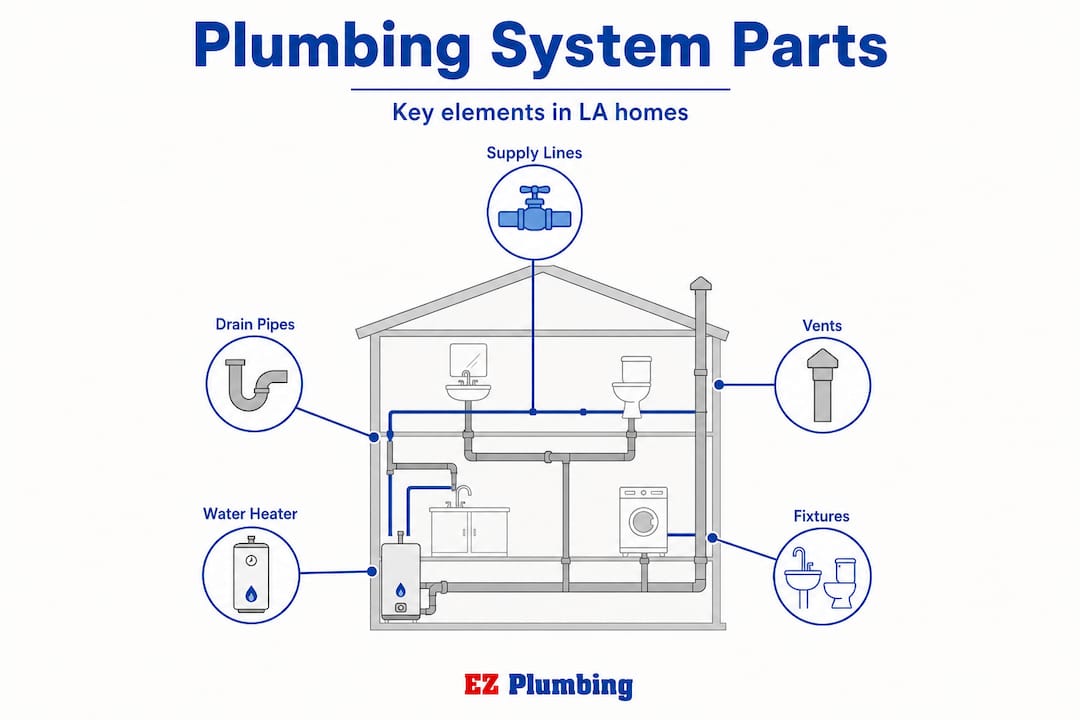
Knowing where each of these components lives in your home puts you in a much stronger position when something goes wrong. For a broader range of topics that apply to homeowners across LA, you can explore plumbing help topics that cover everything from fixture installation to water pressure issues.
Major plumbing subsystems and how they work
With the big picture in mind, it helps to understand exactly how each subsystem functions and where it connects to the others.
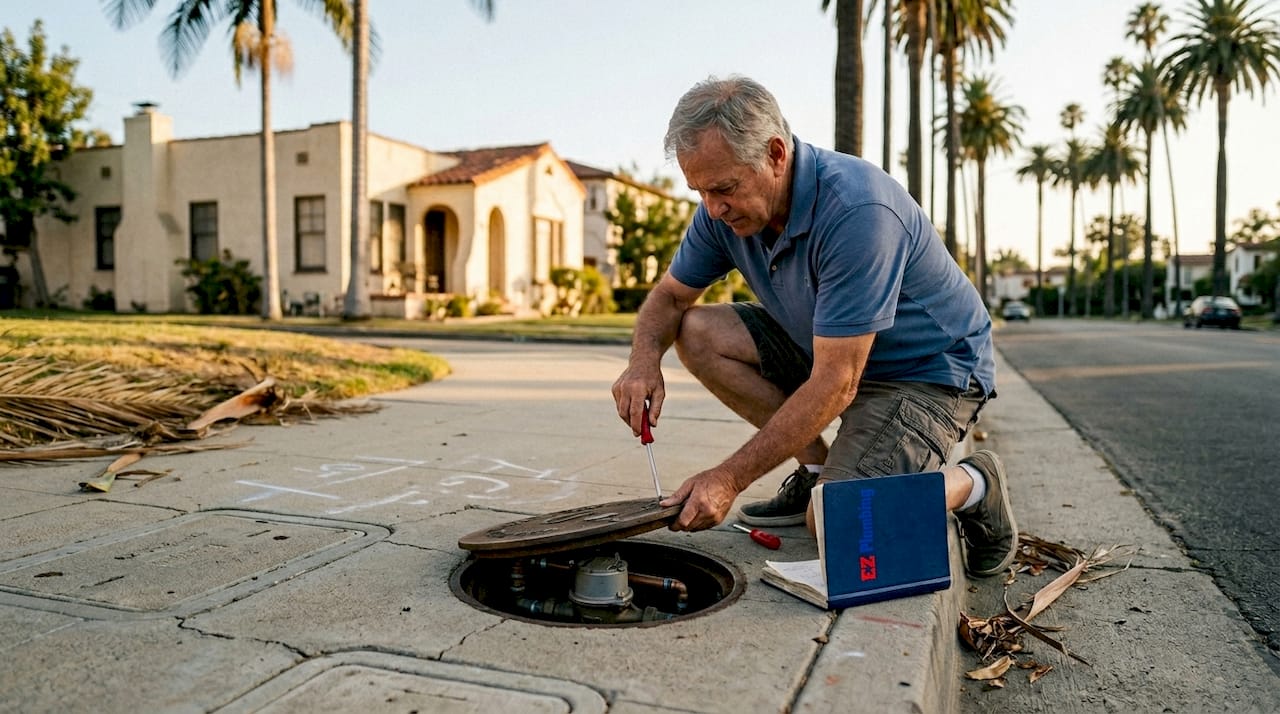
The supply system begins at your water meter, usually located near the street or property line. From there, a main supply line runs into your home and branches out to every fixture and appliance that needs water. Cold water goes directly to fixtures, while a separate branch feeds your water heater before distributing hot water through a parallel set of pipes. The entire supply system operates under pressure, which is why a burst pipe can discharge water so quickly and cause extensive damage in a short amount of time.
The drain-waste system works on an entirely different principle. There is no pressure here; instead, drain pipes are installed at a slight downward slope, typically one quarter inch per foot of horizontal run, so gravity carries wastewater toward the main sewer line and out to the municipal system. In older Los Angeles neighborhoods, these lateral lines connecting homes to the city sewer are often made of clay, which is prone to cracking, root intrusion, and joint separation over decades of use.
The vent system is where most residential plumbing misunderstandings begin. Every drain fixture in your home, whether it is a toilet, sink, or shower, must be connected to a vent pipe that allows air to enter the drain line as water flows through it. Without this air, the draining water creates a suction effect that pulls water out of the P-traps (the curved pipe sections beneath sinks and drains). When a P-trap loses its water seal, sewer gases including hydrogen sulfide and methane flow freely into your living space.
Venting mistakes are a frequent cause of recurring drainage problems that homeowners often misdiagnose as simple clogs. A drain that clears briefly after snaking but clogs again within days is almost always a sign of inadequate venting, not just debris buildup.
The three subsystems connect at every fixture location. Here is how they compare:
| Subsystem | Pressure type | Failure signs | Repair complexity |
|---|---|---|---|
| Supply | Pressurized | Leaks, low pressure, no water | Moderate |
| Drain-waste | Gravity-fed | Slow drains, backups, odors | Moderate to high |
| Vent | Atmospheric | Gurgling, odors, slow drains | High (requires roof access) |
Pro Tip: When you are troubleshooting any recurring drain problem, ask your plumber specifically whether the venting has been inspected. Many plumbers focus on the drain itself and overlook inadequate vent pipe sizing or blocked vent stacks, which are the actual root cause of persistent issues.
For a detailed look at how these subsystem failures show up in real homes across the city, the guide on common plumbing problems is worth reading before you call for a repair.
The three most important things to remember about how your plumbing subsystems interact are:
- Supply and drain systems are completely separate; they share a home but never share pipes.
- Drain lines only function correctly when the vent system is working properly and providing adequate air pressure.
- Every fixture must have both a drain connection and a vent connection to comply with code and function safely.
Local plumbing codes and regulations in Los Angeles
Once you understand how residential plumbing works, the next step is understanding the rules that govern how it must be installed and maintained in Los Angeles. These rules are not arbitrary; they exist because improperly installed plumbing creates health hazards, structural damage, and legal liability that can affect your household for years.
LADBS maintains resources for plumbing permits and inspections throughout the city. In practical terms, this means that any time you want to add a bathroom, relocate a fixture, replace a sewer lateral, or repipe a section of your home, you need a permit before work begins. The permit process ensures that a licensed contractor is doing the work and that an inspector will verify it meets current code before anything is concealed inside walls or underground.
Here is what you need to know about the permit and inspection process in LA:
- When permits are required: Adding or moving fixtures, replacing water heaters, repiping, sewer line repair or replacement, and any work that requires opening walls or ceilings.
- When permits are typically not required: Like-for-like fixture replacements, minor repairs such as replacing a faucet or toilet seat, or unclogging drains.
- Who can pull permits: Licensed contractors (like a C-36 licensed plumber) or homeowners doing work on their own primary residence.
- What happens at inspection: An LADBS inspector visits the site to verify that installed work matches approved plans and meets the Los Angeles Plumbing Code.
- Consequences of skipping permits: Fines, required demolition of completed work, failed real estate sales disclosures, and potential insurance claim denials.
Unpermitted plumbing work is one of the most common issues that surfaces during home sales in Los Angeles. Buyers and their inspectors routinely identify work that was done without permits, and this can delay or kill a sale entirely.
The permit process might feel like an inconvenience, but it protects you. A licensed plumber who knows the local code will handle the permit process as part of the job, so you do not need to navigate LADBS on your own. For a practical overview of how to handle repairs the right way, the guide on managing plumbing repairs covers the process clearly. If you are planning a renovation, understanding the role plumbers play in LA renovations will help you budget and plan more accurately.
Common issues and maintenance tips for LA homes
Knowing how plumbing works and what the rules require is useful, but day-to-day maintenance is where homeowners in Los Angeles can make the most meaningful difference in how their systems perform over time.
Los Angeles homes face a specific set of plumbing challenges driven by the age of the housing stock, local water quality, tree root pressure from large street trees, and years of deferred maintenance in many neighborhoods. The water supply in LA is moderately hard, meaning it contains elevated levels of dissolved calcium and magnesium that gradually build up inside pipes, water heaters, and fixture aerators. Over time, this mineral scale reduces water flow and shortens appliance life.
Venting errors are a common cause of the recurring drainage problems that homeowners across LA deal with more frequently than they realize. If you have had a drain snaked multiple times in the same year without lasting results, the vent system should be the next thing your plumber investigates.
Here are the most important warning signs to watch for in your home:
- Slow drains throughout the house, not just in one fixture, which suggests a main line blockage or venting issue rather than a localized clog.
- Gurgling sounds coming from toilets or drains after water is used nearby, which indicates air is being pulled through the trap instead of through the vent stack.
- Sulfur or sewage odors indoors, which points to a failed P-trap seal, a dry trap in a seldom-used fixture, or a cracked drain pipe.
- Water stains on ceilings or walls, which may indicate a slow supply line leak or a faulty seal around a fixture above.
- Low water pressure at multiple fixtures, which could indicate galvanized corrosion inside aging supply pipes restricting flow.
- Discolored water, especially at the hot water tap first thing in the morning, which can signal sediment buildup inside a water heater tank.
Preventative maintenance steps that LA homeowners should take at least once a year include flushing the water heater to remove sediment, checking under sinks and at appliance connections for slow drips, running water in infrequently used fixtures to keep P-traps sealed, and having a professional inspect accessible vent cleanouts.
Pro Tip: Schedule a camera inspection of your sewer lateral every few years, especially if your home is in a neighborhood with large mature trees. Ficus, oak, and eucalyptus roots actively seek moisture and can infiltrate clay sewer lines through even the smallest joint gap, causing recurring blockages that no amount of snaking will permanently fix.
For a full overview of what professional services are available to address these issues in your home, the residential plumbing services page outlines the options clearly.
Why understanding your home’s plumbing pays off
Here is something we have observed consistently working with homeowners across Los Angeles: the ones who understand their plumbing systems make dramatically better decisions than those who do not, and those better decisions translate directly into money saved and problems avoided.
Most homeowners underestimate the vent system until the day they have paid to snake a drain three times in six months and still have a slow drain. By the time a plumber finally inspects the vent stack and finds an obstruction or an undersized vent pipe that was never installed to code, the homeowner has spent several hundred dollars on temporary fixes that never addressed the real issue. A basic understanding of how venting works would have led them to ask the right question on the first service call.
The same logic applies to permits. Homeowners who understand that unpermitted work creates real liability do not skip the permit process to save a few hundred dollars, only to face a failed sale inspection five years later where they have to retroactively permit or remove completed work at a cost of thousands.
Investing in knowledge also helps you ask better questions when getting estimates. Understanding how plumbing estimates work allows you to compare proposals accurately and identify when a quoted scope of work is incomplete or when a price is unrealistically low because it omits necessary steps like venting corrections or permit fees.
Our perspective is straightforward: a homeowner who understands the basics of their plumbing system is a better customer, gets better results, and spends less money over time. That is good for everyone involved.
Need help? Expert plumbing services for Los Angeles homes
Whether you have identified a problem after reading this guide or you simply want a professional to assess your system before issues develop, EZ Plumbing is ready to help.
We are a licensed Los Angeles plumbing company (C-36 License #583868) providing drain cleaning, leak detection, water heater installation and repair, repiping, sewer line repair, and emergency plumbing services for residential customers throughout the greater LA area. Every job we complete meets current LADBS code requirements, and we handle the permit process so you do not have to navigate it on your own. If your home has recurring clogs, aging galvanized pipes, or a water heater that has been running for more than ten years, contact EZ Plumbing at ez-plumbing.com to schedule an estimate or get same-day assistance with urgent repairs.
Frequently asked questions
Do Los Angeles homeowners need permits for plumbing work?
Yes, permits and inspections are handled by LADBS for most plumbing alterations in Los Angeles, and skipping this step can result in fines or complications during a home sale.
How can I spot venting issues in my plumbing?
Look for recurring slow drains, gurgling noises from toilets, or persistent sewer odors indoors, since recurring drainage problems are usually tied to venting errors rather than simple clogs.
What should I do if I have a plumbing leak?
Shut off your main water supply valve immediately to stop the flow of water, then contact a licensed plumber to inspect the source and perform a proper repair.
Does LA have unique plumbing codes?
Yes, Los Angeles uses region-specific plumbing codes enforced by LADBS local plumbing resources, and these requirements can differ from surrounding cities and counties in ways that affect materials, permit thresholds, and inspection procedures.
How often should drains and vents be checked?
Annual inspections are the standard recommendation, and regular vent checks are important for preventing recurring clogs and keeping your drainage system functioning safely year-round.