
Cleanout for Sewer Line: LA Guide
If you're managing a Los Angeles property, this is probably the scenario you want to avoid. A tenant calls about a gurgling toilet. Another unit reports a shower that won't drain. Then the lowest drain in the building starts pushing dirty water back into the property. At that point, you're not dealing with a simple clog. You're dealing with a main line problem, and whether that turns into a controlled service call or a disruptive mess often comes down to one thing.
A cleanout for sewer line access is one of the most important pieces of plumbing infrastructure on the property. It doesn't clean the pipe by itself. It gives a plumber the direct entry point needed to inspect, rod, snake, or hydro jet the line without tearing into walls, pulling toilets unnecessarily, or digging before it's truly needed. For property managers, that makes it less of a plumbing accessory and more of a risk-management feature.
Table of Contents
- The Difference Between a Minor Inconvenience and a Major Disaster
- What Is a Sewer Cleanout and Why It Is Your Most Important Pipe
- How to Find and Identify Your Sewer Cleanout
- LA Code Requirements and Installation Best Practices
- Sewer Cleanout Costs and Recommended Maintenance
- When to Call EZ Plumbing Immediately
- Frequently Asked Questions for LA Property Owners
The Difference Between a Minor Inconvenience and a Major Disaster
A backed-up sink is annoying. A backed-up main sewer line can shut down bathrooms, affect multiple units, trigger tenant complaints, and leave you dealing with cleanup instead of maintenance. That's the distinction property managers run into in Los Angeles. The symptom starts small, but the consequences don't stay small for long.
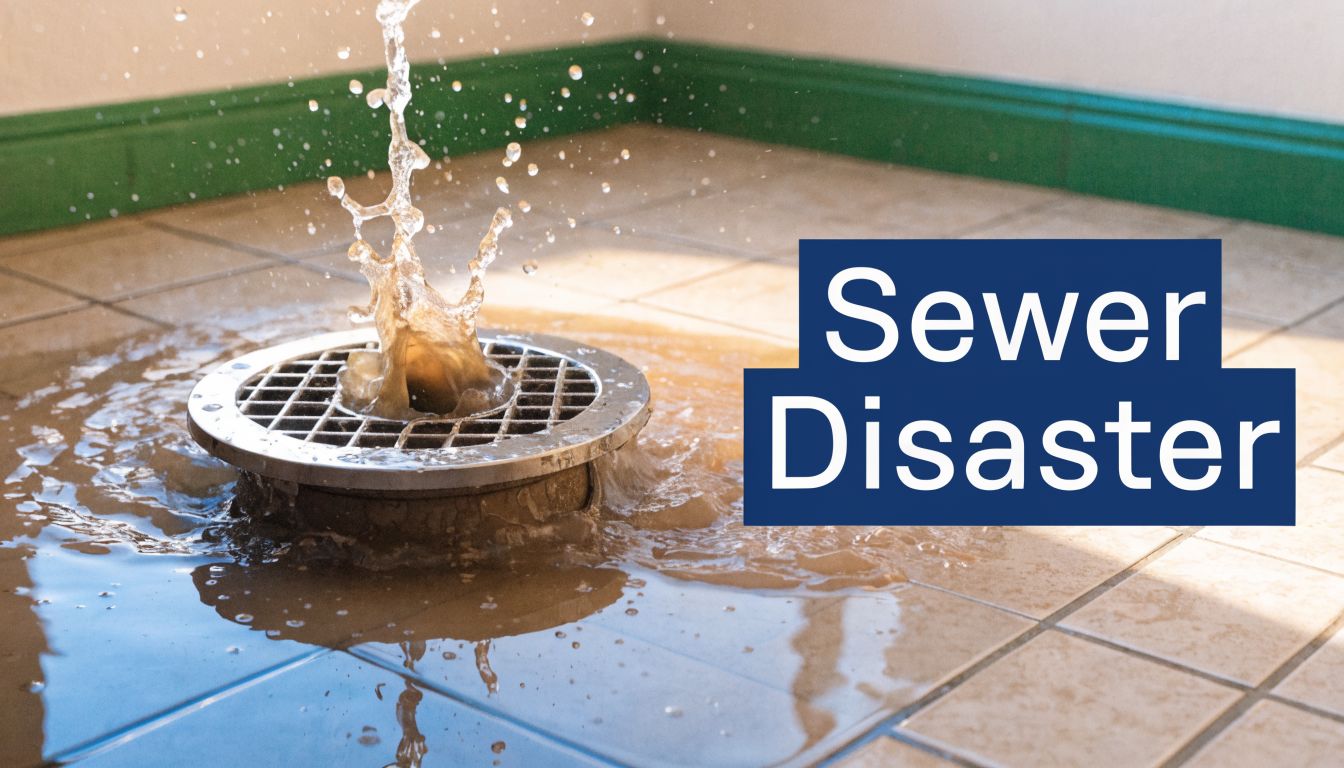
A common pattern looks like this. Someone reports slow drains early in the day. By afternoon, toilets start bubbling. By evening, wastewater shows up at the lowest fixture or floor drain because the line has nowhere else to relieve pressure. If the property has a usable cleanout, a plumber can usually get direct access to the main line and start diagnosing right away. If it doesn't, the job gets slower, dirtier, and more invasive.
A cleanout is not just a convenience feature. It is a maintenance control point that can determine whether a sewer issue is resolved the same day or escalates into excavation, tenant disruption, or repeated backups, as noted in this discussion of outside sewer line cleanouts.
That's why experienced plumbers pay attention to cleanouts before there's an emergency. The cleanout is what lets the crew attack the blockage from the right point, verify what's happening in the line, and avoid unnecessary demolition. Without it, even a straightforward stoppage can turn into a hunt through toilets, crawlspaces, or buried yard lines.
If sewage has already entered the building, treat it like an active property-damage event. This practical guide on what to do when your basement floods is worth keeping handy because the first response matters.
What changes when a cleanout is available
- Access gets faster. The technician can open the line at the intended service point instead of creating access through a fixture.
- Diagnosis gets cleaner. It's easier to tell whether the stoppage is downstream or closer to the structure.
- Damage stays more contained. You're less likely to start with destructive methods when the line is reachable from the outside.
For an LA property manager, that's the difference between a bad plumbing day and a full operational problem.
What Is a Sewer Cleanout and Why It Is Your Most Important Pipe
A tenant reports multiple toilets backing up on the first floor, and now the lowest shower is filling with dark water. At that point, the cleanout is not a small plumbing detail. It is the access point that often decides whether the line is cleared in place or the property ends up with exploratory digging, fixture removal, and a much larger repair bill.
A sewer cleanout is a capped opening connected to the building drain or main sewer line. It gives a plumber direct entry for cabling, hydro jetting, and inspection without cutting into the system. On an LA property, that access has real management value because it shortens diagnosis time, supports cleaner service work, and reduces the odds of unnecessary excavation around concrete, landscaping, or tenant-use areas.
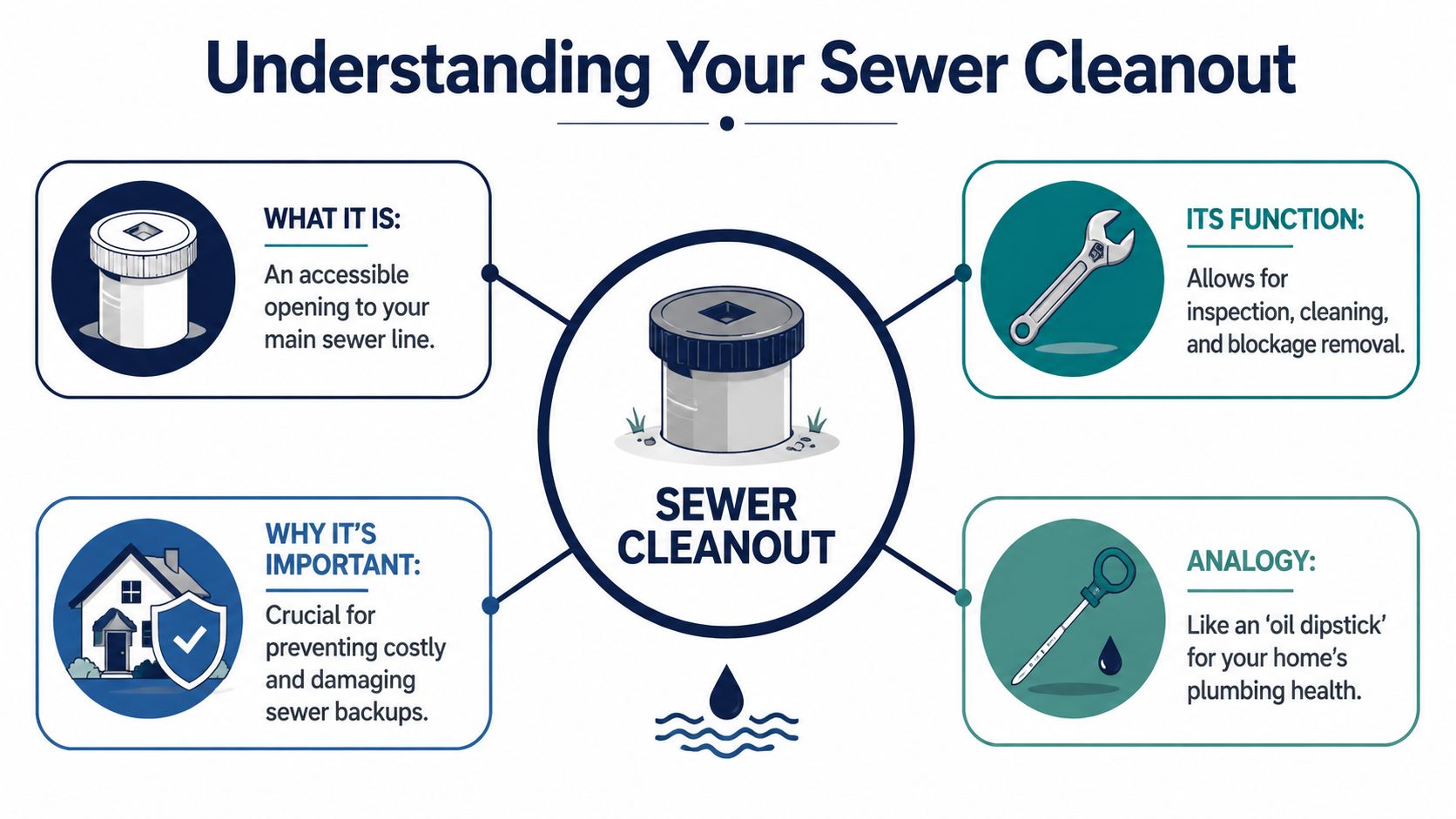
Owners often hear “cleanout” and think of it as a simple cap near the yard or wall. In the field, it functions more like a control point for the whole drainage system. If it is installed in the right location and kept accessible, the plumber can approach the stoppage from the proper direction, test the condition of the line, and verify whether the problem is grease buildup, roots, scale, a sag, or a broken section. If that access is missing or buried, the job gets slower and more destructive.
That is why I treat the cleanout as one of the most important risk-management features on the property.
Why plumbers depend on it
Main line service is not just about punching a small opening through a clog. The goal is to restore flow through as much of the line as possible and confirm whether the pipe is serviceable or failing. A fixture opening may allow a temporary pass with a cable, but it is a poor substitute for a proper cleanout when the problem sits deeper in the building sewer.
A correctly placed cleanout helps the technician:
- Enter the main line directly. That avoids routing equipment through toilets or other branch fixtures.
- Clean in the intended direction. That matters when working long runs or trying to pull roots and heavy debris back safely.
- Use hydro jetting more effectively. Jetting works best when the hose enters from a point that allows full cleaning of the pipe wall.
- Run a camera with better results. A professional sewer line inspection is far more useful when the camera starts from proper access instead of an improvised entry point.
Why it is your most important pipe access point
Toilets, sinks, and floor drains are where backups show up. The cleanout is where the problem gets handled. That distinction matters to property managers because sewer issues are rarely isolated to one fixture. Once the main line is restricted, the entire building drainage system is at risk.
On older Los Angeles properties, the trade-offs are real. Many sites have long laterals, added units, patched remodels, narrow side yards, or hardscape that is expensive to open and repair. In those conditions, a proper cleanout does more than save labor. It protects access, supports code-compliant maintenance, and gives the next service crew a controlled way to address the line before anyone starts cutting concrete or chasing the blockage from inside the building.
If a property has one and it is in the right place, service is usually faster and cleaner. If it does not, a routine stoppage can turn into a much bigger event.
How to Find and Identify Your Sewer Cleanout
A tenant calls with sewage backing up into a first-floor shower. The first question on-site is simple. Where is the cleanout, and can we get to it without tearing into the property?
That is why property managers should locate the cleanout before there is a problem. On Los Angeles properties, access is part of risk control. If the cleanout is visible, usable, and placed where service equipment can reach the line, stoppages are usually faster to diagnose and less likely to turn into wall openings, fixture removal, or exploratory digging.
Start with the likely path of the building sewer
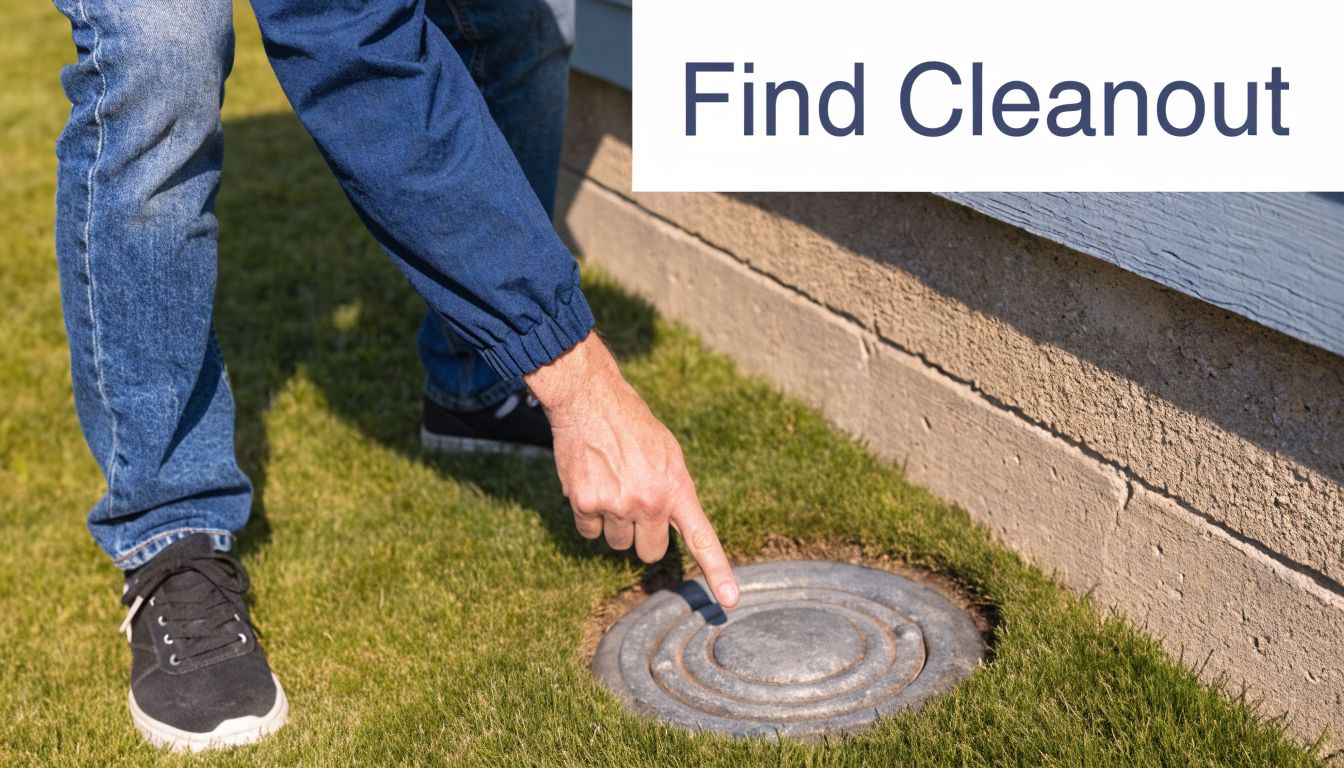
On many LA homes and small multi-unit properties, the first place to check is outside near the foundation on the sewer side of the building. In practical terms, that often means the side yard facing the street, alley, or known sewer connection. On some lots, the cleanout is closer to a walkway, driveway edge, planter bed, or near the property line where the building sewer heads out toward the city connection.
Look for a round threaded cap, a short vertical pipe, a rectangular or round utility box, or an older metal cover set into concrete or soil. Newer cleanouts are often ABS or PVC. Older ones may be brass, cast iron, or mixed materials from past repairs.
Do not assume it will be obvious.
I see cleanouts buried under bark, hidden in ivy, paved over by a patio expansion, or painted to match the wall so completely that owners walk past them for years. On older properties, a cleanout may exist and still be poor for service because it is too close to a wall, below grade, or trapped under hardscape.
How to tell you found the cleanout and not something else
A sewer cleanout usually has a few identifying signs:
- A threaded cap or plug sized for line access, not a small trap or fixture connection
- A location that follows the main drain path from the building toward the street or sewer tie-in
- Material consistent with the property's plumbing history, such as ABS, PVC, brass, or older cast components
- Clear service intent, meaning it appears positioned for drain equipment rather than for water shutoff, irrigation, or electrical access
Some properties have more than one. A front cleanout may serve the building sewer, while another may be installed at a branch line or a later addition. That matters because the right opening saves time during a backup. The wrong one can send a cable or camera into a short branch and waste the service call.
If the history of the property is unclear, a camera inspection of the sewer line can confirm whether the access point you found reaches the main run and whether it is still usable.
This video gives a helpful visual sense of what you're trying to locate on-site.
Common places cleanouts get missed
Indoor access does exist on some properties, especially older buildings, basements, utility rooms, garages, and crawlspaces. Still, exterior access is usually the first place to search because it is safer and more practical for sewer work.
If you cannot find one outside, check these problem areas carefully:
- Along the side yard near the foundation
- Inside planter beds or under ground cover
- At the edge of a driveway or walkway
- In a utility room, basement, garage, or crawlspace
- Under a loose box lid or metal cover flush with grade
- Near remodeled areas where original access may have been concealed
A missing cleanout and a buried cleanout create the same field problem. Both slow down service and raise the chance that a routine blockage turns into invasive access work.
When to stop searching and bring in a plumber
If the property has repeat stoppages, unknown sewer routing, or signs that the cleanout was paved over or buried during past work, guessing wastes time. Have the line mapped and the access points identified. That gives you a record for future service calls and helps you decide whether the existing cleanout is acceptable or whether relocation or added access would reduce risk on the property.
For a property manager, that is the primary value here. Finding the cleanout is not just housekeeping. It is how you avoid avoidable excavation, shorten emergency response time, and keep a sewer problem from spreading through occupied units.
LA Code Requirements and Installation Best Practices
A backup at a fully occupied LA property is bad enough. It gets much worse when the crew arrives, the cleanout is buried under landscaping or hardscape, and the only real access left is invasive work. That is why cleanout placement is a risk-management decision, not a cosmetic one.
Los Angeles properties create real installation constraints. Tight side yards, slab construction, older clay or cast-iron laterals, tenant improvements, and decorative hardscape all compete with service access. A cleanout has to be installed where it can be used under pressure, by a drain machine or camera crew, without tearing up the site to reach it.
Placement is about usable access, not just passing inspection
Code rules around cleanout spacing, directional changes, and working clearance exist because sewer equipment needs a straight, workable path into the line. A cleanout tucked behind a planter, set too close to a wall, or installed where a machine cable has to make a hard turn may still exist on paper and still fail you in the field.
A good reference point is this code review of drainage system cleanouts, which explains the common standards for interval spacing, change-of-direction triggers, and rodding clearance. For owners sorting out local requirements, this guide to Los Angeles plumbing code compliance for homeowners gives useful local context.
For property managers, the practical question is simple. Can a plumber open it, set equipment, and work the line cleanly on the first visit? If the answer is no, the cleanout is in the wrong place, even if someone technically installed one.
Grade height and visibility matter more than owners expect
The cleanout should remain visible and reachable after landscaping, paving, and exterior upgrades. Hiding it usually creates the next service problem.
Some jurisdictions require the cap to terminate above grade for exactly that reason. The point is not appearance. The point is keeping runoff, dirt, and buried finishes from turning an access point into a digging project during an emergency.
I see this mistake often on rentals and small apartment buildings. A side-yard cleanout starts out serviceable, then an outdoor renovation, walkway replacement, or decorative stone install leaves the cap flush, buried, or boxed in. The property looks cleaner for a while, but the next stoppage takes longer to diagnose and costs more to handle.
A cleanout that saves a few inches of visual clutter but adds an hour of access work is a liability.
What good installation looks like in the field
A properly installed cleanout for sewer line service should support maintenance, inspection, and emergency response without extra demolition. In practice, that means a few things:
- Accessible location: Place it where a technician can remove the cap and operate equipment without moving walls, fences, planters, or stored materials.
- Correct orientation: Use fittings that allow cleaning in the direction the line runs, especially on long laterals or where the line changes direction.
- Protected but visible finish: Use a box or grade treatment that keeps the cleanout identifiable and reachable after future landscaping or concrete work.
- Service clearance: Leave enough room around the opening for cables, jetting hose, or camera equipment to enter the line without fighting the building or hardscape.
Field cleaning standards reinforce the same point. Sewer cleaning crews work best when access points are spaced logically and positioned where equipment can enter the line with control. On larger properties, that can be the difference between routine maintenance and exploratory excavation.
The best installation is the one the next plumber can use fast, in poor conditions, with tenants waiting and damage already starting. That is the standard I would use on any LA property.
Sewer Cleanout Costs and Recommended Maintenance
A property usually does not get into trouble because the cleanout cap was expensive. It gets into trouble because access was missing, buried, or in the wrong place when the main line needed service fast. For an LA property manager, that makes cleanout spending a risk-control decision, not just a plumbing line item.
What installation costs usually include
The installation price depends less on the fitting itself and more on what it takes to reach the sewer line, tie in properly, and restore the area afterward. Depth matters. Hardscape matters. So does whether the crew can work in open soil or has to cut concrete, protect landscaping, or deal with a crowded side yard.
As noted earlier, published national pricing for two-way cleanout installation varies widely. In the field, that range makes sense. A straightforward install near grade can be manageable. A deeper install with difficult access, patching, and traffic control can climb quickly.
That is why I tell property managers to price the whole job, not the cap and fitting. The actual cost usually includes:
- locating and exposing the line
- excavation or concrete cutting
- proper fittings and tie-in work
- code-compliant placement and termination
- testing, backfill, and surface restoration
A cheap install in the wrong spot is expensive later. If a plumber still has to pull a toilet, open a wall, or start exploratory digging during a backup, the property paid for a cleanout and still did not get the protection it needed.
Cost of Action Proactive Maintenance vs Emergency Repair
| Service | Typical Cost | Key Consideration |
|---|---|---|
| Two-way sewer cleanout installation | Varies by access, depth, and restoration | Planned infrastructure that can reduce emergency labor and destructive access later |
| Main sewer line clog repair | Usually lower than excavation, but reactive | You are paying after symptoms show up, often under time pressure |
| Hydro jetting through an accessible cleanout | Common maintenance cost on problem lines | Faster and more controlled when the property has direct line access |
Analysts at HomeAdvisor's sewer line cleaning cost guide list typical price ranges for main line clog clearing and hydro jetting. The exact number matters less than the pattern. Routine service through an accessible cleanout is usually cheaper than emergency work that starts with poor access and ends with extra labor, fixture removal, or digging.
Budget view: A planned cleanout install is often the smaller expense compared with a sewage backup, tenant disruption, restoration work, and emergency excavation.
How often to plan service
There is no single schedule that fits every property. A newer single-family rental with no tree root history does not need the same maintenance plan as a prewar multifamily building with older clay or cast-iron sewer lines. Use the property's history, pipe material, occupancy load, and root exposure to set the interval.
HomeAdvisor notes that many main sewer lines benefit from periodic cleaning on roughly an every-18-to-22-month cycle, while commercial or heavier-use properties often need more frequent attention. Lee Company makes the same point from the commercial side. High-demand facilities may need service every few months, according to its commercial sewer maintenance guidance.
For LA properties, I would treat those numbers as planning references, not automatic rules. Buildings with recurring root intrusion, heavy kitchen use, or a history of backups should be inspected and scheduled more aggressively. Buildings with stable line performance may only need periodic camera review and cleaning based on findings.
The cleanout is what makes that plan workable. It shortens setup time, improves camera and jetting access, and lowers the chance that routine maintenance turns into concrete cutting or emergency excavation. That is the actual return on the investment.
When to Call EZ Plumbing Immediately
Main line problems usually announce themselves before a total backup. The mistake is waiting until the sewage appears. By then, the property is already paying the price in disruption.
Warning signs that point to the main line
One slow sink by itself is often a local blockage. A cluster of symptoms is different. Call for professional sewer service quickly if you notice any combination of the following:
- Multiple drains slowing down at once: Bathrooms, kitchen drains, or floor drains start acting up in different parts of the property.
- Toilets gurgling or bubbling: Air is being displaced in the system because wastewater isn't moving normally.
- Odors coming from more than one drain area: That often points to a larger system issue, not a single fixture trap problem.
- Backup at the lowest point: Shower drains, floor drains, or ground-level fixtures are where sewage often shows up first.
If that's happening, a plumber will usually want direct line access, proper cleaning equipment, and camera capability to see what's blocking flow. One local option is EZ Plumbing, which provides sewer line drain cleaning and camera inspection for Los Angeles properties.
Why DIY often makes this worse
Property managers sometimes try the fast workaround first. They send maintenance staff to pull a toilet, rent a machine, or try chemical drain products. That can waste time and create new problems.
A main line stoppage isn't just a clogged sink on a bigger scale. If the cable is used from the wrong access point, the line may only be partially opened. If the actual issue involves roots, heavy buildup, or a damaged section, guesswork doesn't solve it. It just delays the proper repair while the building continues using water.
A safer decision framework is simple:
- If multiple fixtures are involved, treat it like a main line issue.
- If sewage is visible, stop water use where possible.
- If the cleanout is buried, damaged, or missing, don't force a workaround through random fixtures.
- Get the line accessed, cleared, and inspected with the right tools.
When the symptoms point to the main sewer, speed matters. So does the access point. That's why a well-placed cleanout pays for itself long before anyone talks about replacement.
Frequently Asked Questions for LA Property Owners
Is a sewer cleanout the same thing as sewer cleaning
No. The cleanout is the access point. Cleaning is the service performed through that access point using tools like augers or hydro jetting equipment.
Should the cleanout cap be flush with the ground
Usually, that's not the safest assumption. Some jurisdictions require the cap to remain raised above grade because that helps emergency access and reduces intrusion from runoff and sediment. Burying it for appearance often makes future service harder.
What if my property has an old cleanout but plumbers don't use it
That usually means the cleanout is poorly placed, blocked, damaged, too small, or doesn't give useful access to the section of line that needs service. The presence of a cap alone doesn't guarantee good access.
Is a two-way cleanout better than a one-way cleanout
In many situations, yes, because it gives better directional access. But the right choice depends on the line layout, the property, and what kind of service access is missing now.
How do I know if I should install a cleanout
If the property has recurring main line problems, no obvious exterior access point, or a history of invasive service methods, it's worth having a plumber evaluate whether adding or relocating a cleanout would reduce future risk.
A sewer backup doesn't wait for a convenient time, and the right access point can decide whether the fix is straightforward or disruptive. If you need help locating, evaluating, installing, or using a cleanout for sewer line service in Los Angeles, contact EZ Plumbing for practical guidance, emergency response, or scheduled maintenance.