
Will Frozen Pipes Thaw on Their Own? Dangers & Safe Thawing
Yes, frozen pipes will thaw on their own once temperatures rise above 32°F (0°C), but that can take days to weeks and waiting is often what turns a simple freeze into a burst pipe. If your home gets cold enough that indoor temperatures aren't staying near 55°F (12.8°C) when outdoor temperatures drop below 28°F (-2.2°C), you shouldn't count on a safe, natural thaw.
If you woke up in Los Angeles, turned the kitchen tap, and got a weak trickle or nothing at all, your first instinct might be to wait until the sun comes up and the problem fixes itself. Sometimes that does happen. The dangerous part is what may be happening inside the pipe while you wait.
This matters even more in older LA homes. A lot of houses in neighborhoods with original plumbing still have galvanized or copper lines, and those materials don't forgive pressure the way newer PEX does. Generic winter plumbing advice often skips that detail. It shouldn't.
Table of Contents
- That Sinking Feeling When the Faucet Runs Dry
- The Slow Thaw Why Waiting Is a Gamble
- Identifying the Freeze and Understanding the Risks
- Safe DIY Methods to Thaw Exposed Pipes
- When to Stop and Call an Emergency Plumber
- Frozen Pipe Prevention for Los Angeles Properties
That Sinking Feeling When the Faucet Runs Dry
A rare cold morning in LA catches people off guard because most winters here don't train you to think about frozen plumbing. You step into the kitchen, turn the handle, and hear almost nothing. Maybe the bathroom sink still works a little. Maybe one side of the house is dead quiet.
That's usually when the question hits. Will frozen pipes thaw on their own?
Yes, they can. But in the field, waiting is the part that causes trouble. A frozen pipe isn't just “cold water that stopped moving.” It's a sealed section of plumbing holding ice, pressure, and stress all at once. If the freeze is in an exposed wall, garage, crawl space, or exterior line, that pressure can sit there until the pipe or fitting gives way.
Practical rule: No water at one fixture during a cold snap is a plumbing warning, not a reason to wait and hope.
A lot of homeowners assume the danger passes once temperatures rise. That's backwards. Many pipes fail during the thaw, not during the freeze, because melting water starts moving again inside a pipe that may already be cracked or badly stressed.
In Los Angeles, the risk is easy to underestimate because freezes are less common than in colder states. That doesn't make the damage smaller. It often makes it worse because people don't shut off water fast enough, don't open faucets to relieve pressure, or don't realize their older metal piping needs immediate attention.
The Slow Thaw Why Waiting Is a Gamble
Frozen pipes can thaw on their own. That does not make waiting safe.
What matters is what type of pipe is frozen and where it sits. In Los Angeles, I worry more about older homes with galvanized steel or aging copper than newer repipes with PEX. Galvanized lines already have corrosion and narrowed interiors. Older copper often has weak spots at joints, pinhole-prone sections, or thin wall areas that do not handle freeze stress well. A slow warm-up can be the moment those older materials fail.
What's happening inside the pipe
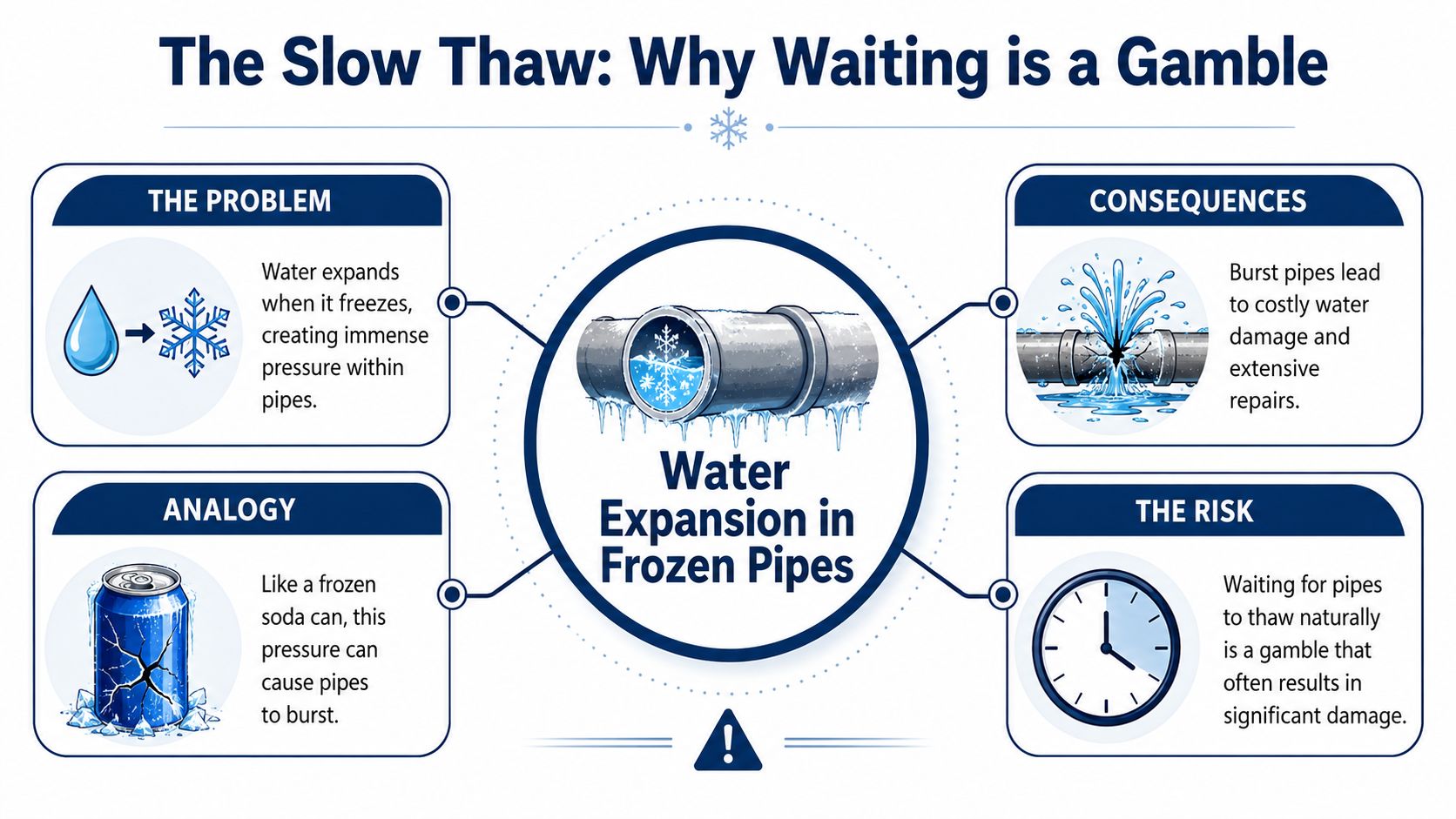
Ice blocks flow, but the bigger problem is pressure. Water expands as it freezes, and that pressure pushes against the pipe wall, shutoff valves, soldered joints, threaded fittings, and bends in the line. If the frozen section is trapped between closed points, the stress can build fast.
The pipe does not have to burst while it is still frozen. Many failures show up during thawing, when water starts moving again through a line that is already cracked or stretched. If you want the mechanics behind that, our guide on how pipes burst during a freeze breaks it down clearly.
Older LA homes have another problem. A lot of them were built before anyone was thinking much about rare cold snaps, and the piping may run through garages, crawl spaces, exterior walls, or add-on rooms with poor insulation. In a house with old galvanized or copper, waiting gives that stressed section more time to fail where you cannot see it.
Why natural thawing can take longer than homeowners expect
A frozen line behind stucco, near concrete, or inside an uninsulated wall does not warm up as fast as the kitchen air. The room can feel comfortable while the pipe cavity stays cold for hours. In some homes, one section thaws while another stays blocked, which creates uneven pressure across the branch line.
These conditions slow the process:
- Pipe runs inside cold building materials: Concrete, plaster, and exterior wall assemblies hold cold longer than indoor air.
- Exposed metal piping: Copper and galvanized pipe lose heat fast in garages, service areas, and under raised floors.
- Drafty older construction: Gaps around vents, wall penetrations, and aging windows can keep one pocket of the house cold enough to hold a freeze.
- Partially blocked older lines: Galvanized pipes with internal buildup have less room for water movement, which can make a freeze more stubborn and more damaging.
This is why waiting is a gamble, especially in older Los Angeles properties. You are not just waiting for ice to melt. You are waiting to find out whether the pipe survived.
If water starts flowing again, do not assume the problem is over. Check for stains, drips, damp cabinets, warped flooring, and unexplained sounds in the wall. If anything seems off after the thaw, it helps to find water leaks in your house before a small split turns into a much larger repair.
Identifying the Freeze and Understanding the Risks
The most useful clue is simple. One fixture stops flowing, or one part of the house loses water while the rest still works. That usually points to a localized freeze instead of a whole-house supply problem.
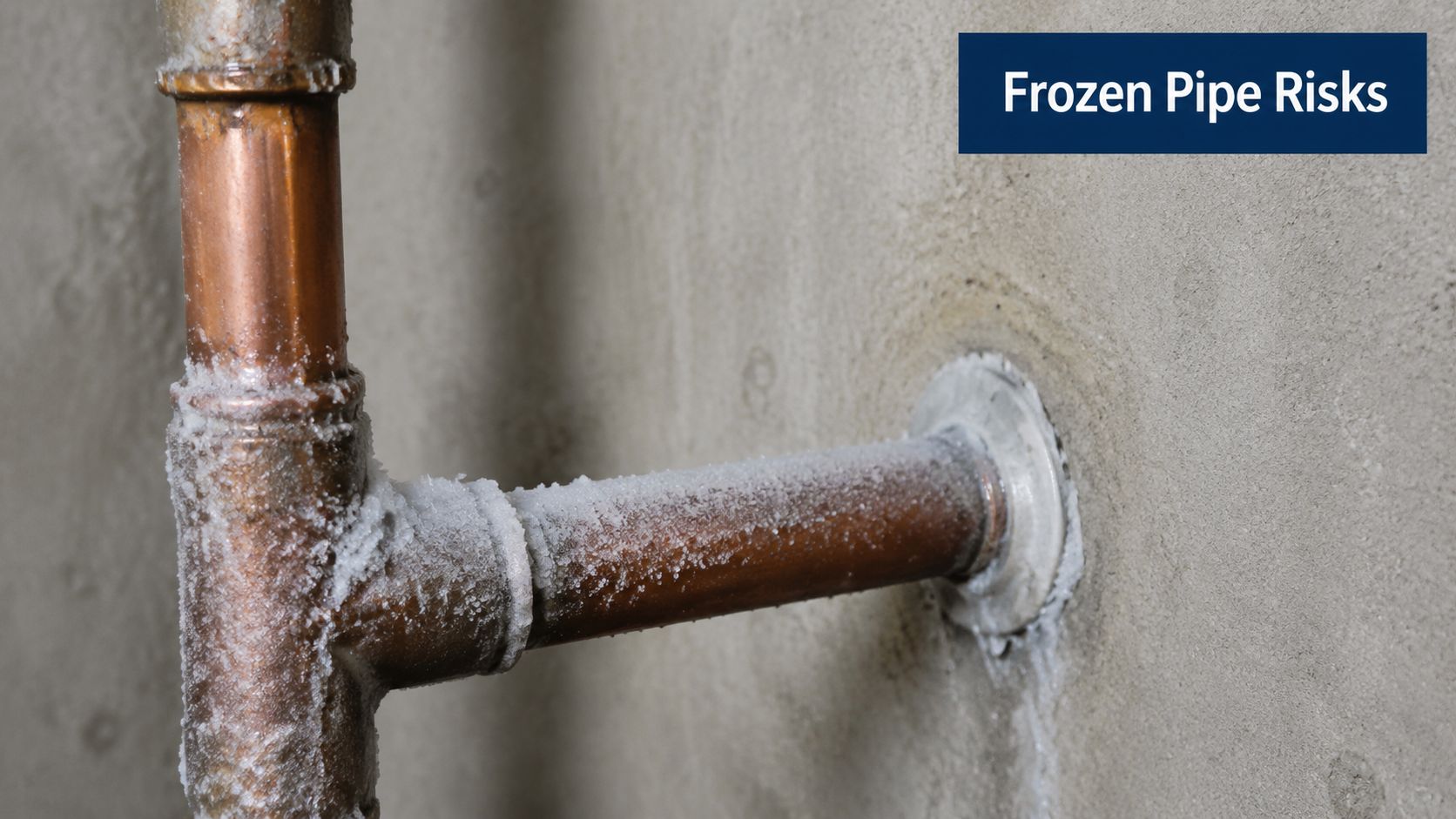
Signs you're dealing with a frozen line
Check for a pattern, not just one symptom. Frozen pipes often leave a trail of clues.
- Little or no water flow: A trickle at the kitchen sink or a dead bathroom faucet after a cold night is the classic sign.
- Frost on exposed pipe: If you can see piping in a garage, crawl space, utility room, or exterior wall access panel, visible frost is a strong indicator.
- One branch affected, others normal: If upstairs works but the laundry line doesn't, the freeze is likely isolated.
- Strange odor from a drain or faucet area: Sometimes a blocked line changes airflow enough that odd smells become noticeable.
- Unusual drips or staining after flow returns: That can mean the pipe or joint didn't survive the freeze cleanly.
If water comes back after warming and you suspect a hidden leak, it helps to know how to find water leaks in your house before damage spreads behind walls or under flooring.
Why older LA homes need to act faster
This is the part many articles miss. Not all pipe materials handle a freeze the same way.
Homes with older galvanized or copper piping need to take a frozen line more seriously than a house plumbed with newer PEX. In a discussion referencing recent Midwest freeze experience, 68% of burst pipe claims involved copper or galvanized lines, compared with 19% for PEX, which is why homeowners with legacy metal piping should prioritize active thawing instead of waiting (material-specific burst risk details).
Rigid metal pipe doesn't flex much. When pressure builds and then shifts during thawing, those systems are more likely to crack at weak points, fittings, and older joints. That matters in Los Angeles because many homes built in earlier decades still have original or partially original metal plumbing.
A quick explanation of how pipes burst helps here. The failure often isn't dramatic at first. It can start as a hairline split or stressed joint that only reveals itself once flow resumes.
Watch this before you start guessing where the danger is:
If your house was built decades ago and still has metal supply lines, “wait and see” is the wrong approach.
Safe DIY Methods to Thaw Exposed Pipes
You can thaw an exposed pipe yourself if you can see the full section, keep heat controlled, and watch it the whole time. In older Los Angeles homes with copper or galvanized lines, go slower than you think you need to. Metal pipe and old fittings do not tolerate rushed heating well, especially under sinks, in garages, and along exterior walls where freezes often show up first.
Before you apply any heat, make the area safe and set yourself up to catch a leak. As noted in municipal thawing guidelines for frozen pipes, shut off the water supply before thawing and open the affected faucet so you can tell when flow starts returning. Put down towels, keep a bucket nearby, and look closely at valves, elbows, and joints. On older copper, I pay extra attention to green corrosion, pinhole staining, and repaired sections. On galvanized pipe, rusted threads and swollen fittings are the weak spots.
Use this order:
- Shut off the main water valve. Do this first so a hidden split does not turn into a full spray the moment ice loosens.
- Open the affected faucet. If you are not sure which branch is frozen, open the nearest hot and cold taps.
- Lay out towels and a bucket. Small leaks often show up as the line starts to open.
- Inspect the exposed pipe. If you see a crack, bulge, active dripping, or heavy corrosion at a joint, stop and call a Los Angeles emergency plumber for frozen or burst pipes.
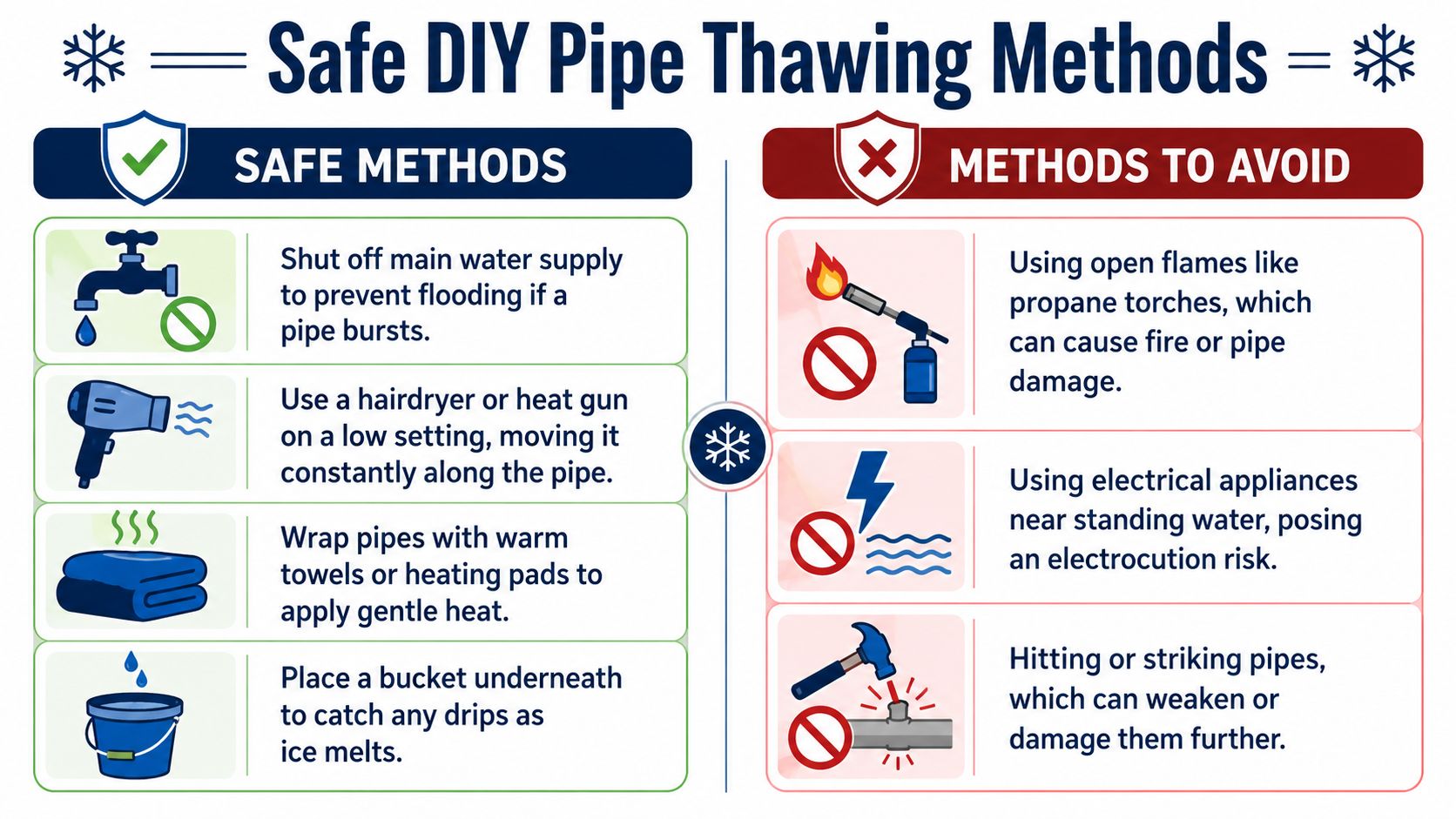
Safe ways to add heat
Use low, even heat. The goal is to warm the pipe gradually from the faucet side back toward the frozen section so meltwater has a path to escape.
Here are the DIY methods that are usually safe for exposed residential piping:
| Method | How to use it | Best for |
|---|---|---|
| Hairdryer | Keep it moving and start at the faucet side, then work back toward the blockage | Short exposed runs under sinks or in laundry areas |
| Space heater | Use it to warm the surrounding air, with clearance from cabinets, cardboard, and anything flammable | Open garages or service areas |
| Thermostat-controlled heating tape | Install it exactly as the manufacturer directs | Exposed sections that freeze repeatedly |
| Warm towels | Wrap the pipe, then re-wet and replace as they cool | Mild freezes on easy-to-reach pipe |
A few field-tested rules matter here.
- Keep the heat moving. One hot spot on old copper can do damage.
- Warm the room, not just the pipe. Open sink and vanity cabinets so house heat can reach the line.
- Stay with the job. Do not leave a heater or hairdryer running unattended.
- Watch the joints first. Older galvanized and copper systems often fail at fittings before the straight run shows a problem.
- Stop the moment you see moisture. A drip at a solder joint or threaded connection means the thaw may have exposed a break.
What not to do
Some methods create a second emergency.
- Do not use an open flame. Torches, lighters, propane heaters, and heat guns can scorch materials and crack pipe.
- Do not dump boiling water on the line. Fast temperature change is hard on older metal pipe and can damage surrounding finishes.
- Do not hit or bend the pipe. Frozen sections are rigid, and older fittings can snap.
- Do not use electrical tools around standing water. Dry the area first or stop.
One more caution for Los Angeles homeowners. A lot of older houses have partial repipes, which means newer tubing may connect to original galvanized or aging copper somewhere nearby. That mixed system can fool you into thinking the exposed section is safe to heat aggressively because one part of the line looks newer. It is safer to assume the weakest joint is close by and thaw the pipe gently.
When to Stop and Call an Emergency Plumber
There's a point where trying one more DIY step stops being practical and starts being expensive. Frozen plumbing is manageable when you can reach the affected section, control the heat, and watch for leaks. It stops being manageable when any of those pieces are missing.
A simple call-now checklist
Call for professional help right away if any of these apply:
- You can't locate the frozen section. No-flow problems inside walls or ceilings aren't good DIY candidates.
- The pipe is hidden. If the suspected freeze is behind drywall, in a ceiling cavity, or under the structure, you can't monitor it safely.
- You already see leakage. Damp drywall, bubbling paint, active dripping, or water stains mean the pipe may already be cracked.
- You found a split or bulge. At that point, thawing can trigger immediate water release.
- You don't feel safe using heat. That's a valid reason to stop.
- The home has older metal piping. With galvanized or copper, hesitation can make the eventual damage worse.
A lot of homeowners wait because they think calling for help means they've “lost” the DIY option. That's not how to look at it. The smart move is protecting the house before a manageable freeze becomes interior water damage.
If the situation is active, hidden, or uncertain, contact a Los Angeles emergency plumber instead of trying to force a thaw you can't control.
Frozen Pipe Prevention for Los Angeles Properties
Los Angeles doesn't freeze often, which is exactly why properties get caught unprepared. Homes, apartment buildings, and small commercial spaces here often have exposed piping in garages, crawl spaces, utility closets, exterior walls, and older additions that were never built with hard-freeze protection in mind.
Prevention is simpler than emergency repair. It also works better because it removes the pressure problem before it starts.
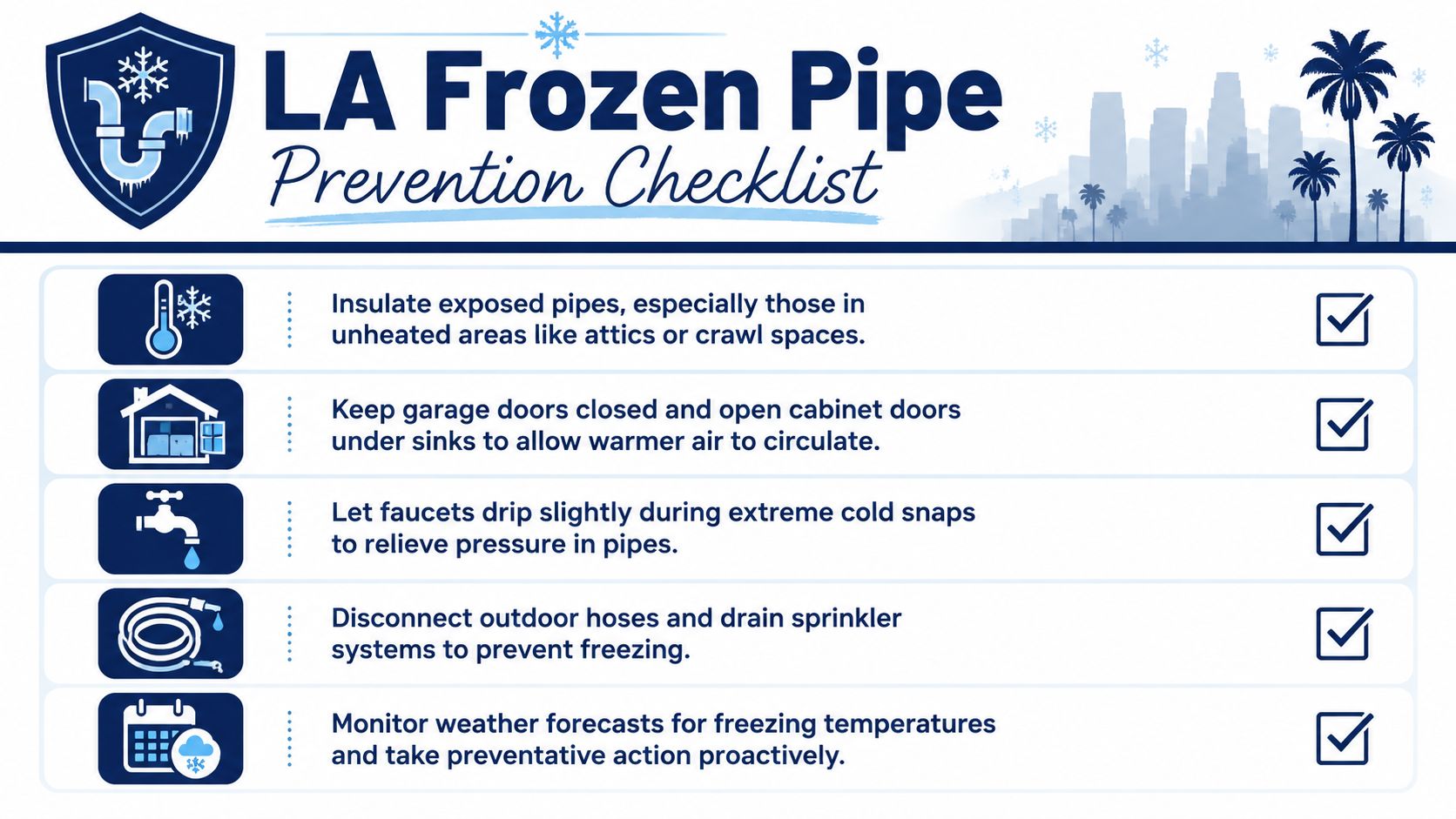
A practical prevention checklist
Use this checklist before the next cold snap, especially if you manage an older property or a building with original metal plumbing:
- Insulate exposed pipes: Focus on garages, crawl spaces, attics, and exterior-facing utility areas.
- Keep indoor heat steady: Don't let the house get too cold overnight when freezing weather is in the forecast.
- Open sink cabinet doors: This helps warmer indoor air reach supply lines along exterior walls.
- Let faucets drip slightly during a freeze: Moving water can reduce the chance of a hard blockage.
- Disconnect outdoor hoses: Hose bibs and exterior lines are common trouble spots.
- Drain vulnerable outdoor lines where possible: Irrigation and exposed branches need attention before temperatures drop.
For mountain-area owners or anyone maintaining properties in colder parts of Southern California, these Big Bear frozen pipe prevention tips add useful cold-weather habits that also apply to LA homes during unusual freezes.
Property managers and HOAs should treat freeze prep like any other seasonal risk. Walk the property, identify exposed pipe runs, check insulation, and confirm shutoff access before temperatures dip. For homeowners, the biggest win is knowing where your main shutoff is and not discovering it during a plumbing emergency.
If you want a broader plan for cold-weather protection, this guide on how to prevent pipes from bursting is a solid next step.
If you're dealing with a frozen pipe, a hidden leak after thawing, or an older Los Angeles home with galvanized or copper plumbing, EZ Plumbing can help. They've served Los Angeles since 1989 with 24/7 emergency response, same-day scheduling for planned repairs, and experienced technicians who know how to protect homes, HOAs, and commercial properties from avoidable water damage. Call (818) 908-2710 or schedule online for fast, professional service.