
How to Prevent Pipes from Bursting: Winter Prep
A lot of Los Angeles owners don't think about frozen pipes until the one cold night that drops harder than expected. The heat's off in a vacant unit, a draft cuts through an exterior wall cavity, and by morning there's water running through drywall, under flooring, and into the unit below.
That's the problem with burst pipes in Southern California. They're not an every-week winter issue, so people treat them like someone else's problem. But LA has exactly the kind of building stock and weather pattern that catches owners off guard: older copper in outside walls, exposed lines in garages and crawl spaces, attic runs with thin insulation, and short cold snaps that hit properties not designed or operated like cold-climate buildings.
Table of Contents
- The Hidden Risk of Burst Pipes in Los Angeles
- Your Proactive Pipe Inspection Checklist
- Insulation and Heat Strategies for LA Winters
- Smart Water and Pressure Management Tactics
- Creating a Year-Round Plumbing Maintenance Schedule
- Emergency Response and When to Call a Pro
The Hidden Risk of Burst Pipes in Los Angeles
The usual assumption is simple: LA doesn't freeze like Chicago, so pipes don't burst here. That assumption is expensive.
What happens in Los Angeles is more uneven. A hillside property gets hit by colder overnight air than the owner expected. A small apartment building has plumbing in a drafty garage ceiling. A vacant condo gets set too cool because nobody wants a high gas bill. The freeze isn't long, but it's long enough.
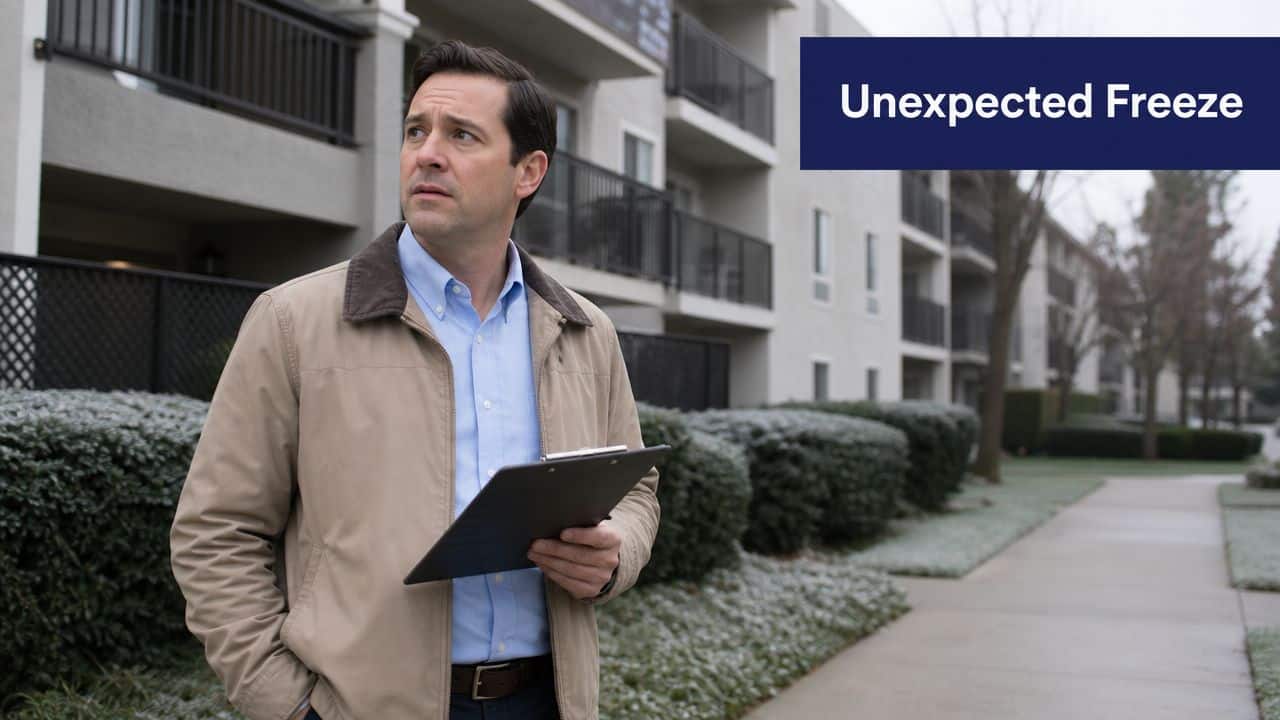
I've seen the same pattern over and over in Southern California properties. The pipe that fails usually isn't out in the open where everyone can see it. It's tucked behind a vanity on an exterior wall, above a carport ceiling, inside a poorly insulated attic chase, or at a riser in a multi-unit building where cold air sneaks in through unsealed penetrations.
The cost side is what surprises owners most. An Insurance Information Institute analysis summarized here found that plumbing system failures account for about 22% of all residential property insurance claims, and the average paid claim for water damage events exceeded $10,000 per incident. That's before you get into lost rent, tenant disruption, restoration scheduling, and the headache of opening walls to find the full extent of the damage.
Why LA properties are vulnerable in a different way
Los Angeles doesn't need months of deep freeze to create a burst-pipe problem. It only needs the wrong pipe in the wrong location during a sharp overnight cold spell.
Common weak points in this market include:
- Older homes with copper in exterior walls that were never upgraded with proper insulation
- Small multi-unit buildings with exposed piping in tuck-under garages and utility rooms
- Vacant or lightly occupied properties where indoor temperatures are allowed to drift too low
- Commercial spaces with backflow lines, irrigation feeds, or under-maintained mechanical rooms
Practical rule: In Los Angeles, burst-pipe prevention is less about surviving a long winter and more about identifying the few vulnerable sections that can fail during a brief cold snap.
That's why generic national advice often misses the mark here. You don't need to winterize your entire property like a mountain cabin. You do need to know exactly where your weak spots are and handle them before the next cold night exposes them.
Your Proactive Pipe Inspection Checklist
The best prevention work starts with a walk-through, not a shopping trip. Before you buy foam sleeves, heat cable, or smart devices, find the pipes that are at risk.
For a single-family house, that usually means a room-by-room perimeter check. For an HOA or apartment building, it means checking representative units plus every shared mechanical or exposed plumbing zone. Commercial properties need the same discipline, but with more attention on utility rooms, risers, service sinks, and any line feeding exterior equipment.
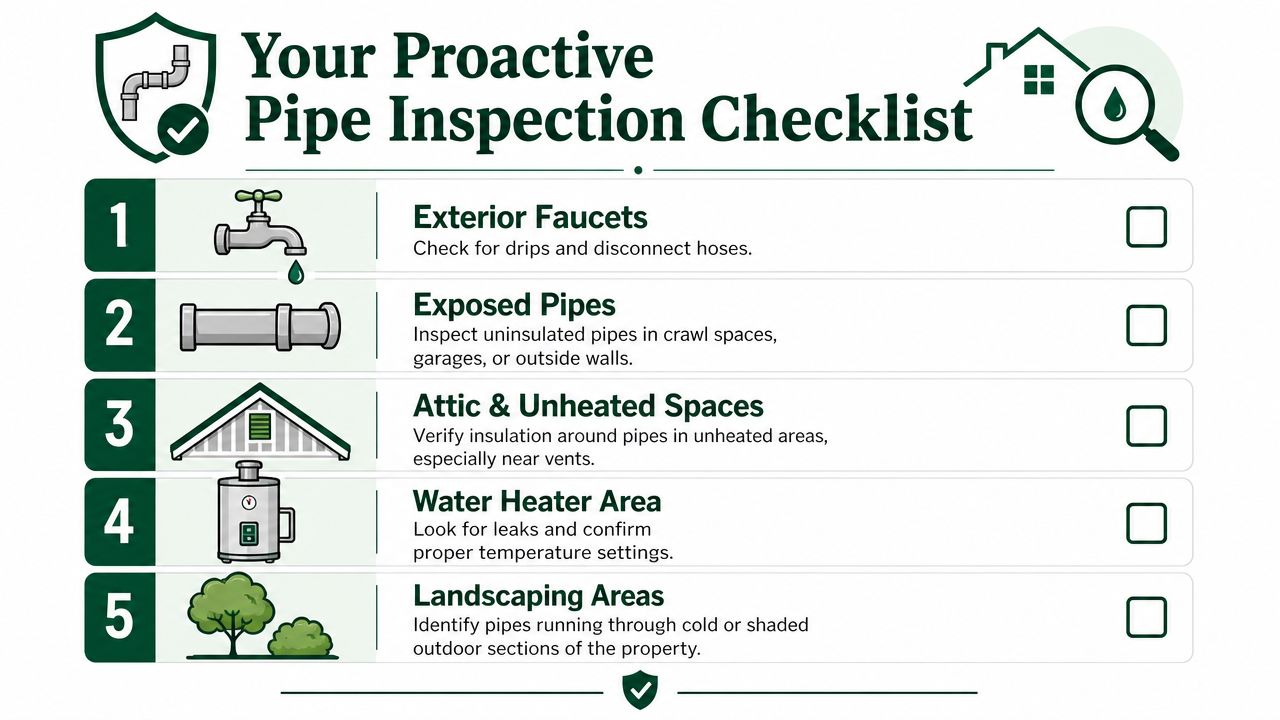
Start outside and work inward
Begin where cold air reaches the property first.
- Hose bibs and exterior faucets. Disconnect hoses, check for drips, and look for cracked vacuum breakers or old shutoff assemblies.
- Garage walls and ceilings. In Los Angeles, garages are one of the most overlooked risk zones because they feel “indoors” even when they're not temperature controlled.
- Planted edges and service yards. Irrigation feeds, pool equipment lines, and exposed branch lines often sit in shaded areas that stay colder longer.
Then move inside and follow the plumbing path.
What to look for at each vulnerable area
Don't just ask whether a pipe has insulation. Ask whether that insulation is doing anything useful.
Here's what matters most:
- Exposed piping near exterior walls. If you can touch pipe in a cold cavity or cabinet against an outside wall, treat it as a candidate for protection.
- Drafts at penetrations. Gaps around pipe entries, gas lines, dryer vents, and cable penetrations let in focused cold air. That's often what pushes one small section of pipe below a safe temperature.
- Corrosion or pinhole history. Older copper with visible oxidation, staining, or past patchwork is a weaker system to begin with.
- Previous leak evidence. Bubbling paint, warped cabinet bottoms, stained drywall, or mineral buildup around fittings usually means that area deserves attention before winter.
A pipe doesn't have to be fully outdoors to freeze. In Los Angeles, a drafty wall cavity can be enough.
Property type changes the checklist
A house, a condo building, and a commercial site don't fail in the same places.
| Property type | Check first | Why it matters |
|---|---|---|
| Single-family home | Exterior wall plumbing, attic runs, garage laundry hookups | These are the most common hidden cold spots |
| HOA or apartment building | Shared risers, tuck-under garages, top-floor units, vacant units | One failure can affect multiple homes fast |
| Commercial property | Mechanical rooms, janitor sinks, irrigation feeds, backflow areas | Cold exposure often combines with higher pressure and less daily visibility |
For buildings with recurring mystery leaks, it helps to compare your meter when no water should be in use. A simple water meter leak check guide can help owners and managers spot ongoing loss before a cold snap turns a weak section into a full break.
Make a priority list, not a giant repair list
Most owners don't need to rebuild the whole plumbing system before winter. They need a ranked list.
Put each issue into one of these buckets:
- Fix now. Active leaks, badly corroded exposed pipe, failed shutoffs, open wall penetrations.
- Protect before the next cold snap. Uninsulated vulnerable lines, attic runs, garage ceiling piping, outdoor branches.
- Plan and budget. Larger repipes, reroutes, enclosure improvements, or upgrades in common areas.
That's how to prevent pipes from bursting without wasting money on the wrong fixes. Find the few sections most likely to fail, and deal with those first.
Insulation and Heat Strategies for LA Winters
A Los Angeles cold snap usually does not freeze an entire house. It finds one neglected spot. A copper line in a garage wall. A laundry branch under a drafty cabinet. A riser beside an exterior chase in a top-floor unit. That is why insulation work here needs to be targeted and complete, not broad and sloppy.
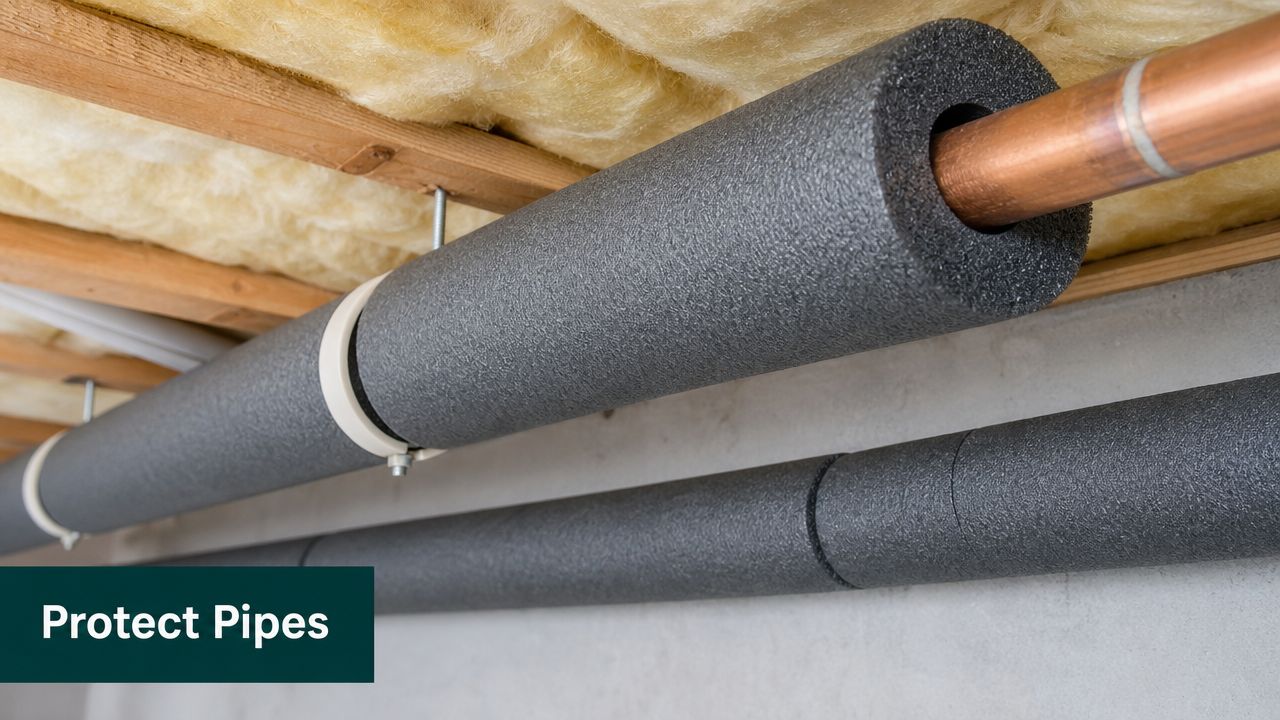
The mistake I see all over LA properties is partial protection. Someone wraps the exposed section they can reach and leaves the cold-air path untouched. Then the pipe still gets hit by outside air through an open wall gap, a loose access panel, or an unsealed garage door edge.
Start with the air leak.
Pipe insulation slows heat loss, but it cannot do much if cold outside air keeps washing over the line. In older Los Angeles homes and small apartment buildings, the weak point is often the opening around the pipe, not the pipe itself. Under kitchen sinks on exterior walls, behind laundry boxes, in attics, and above garage ceilings, a small gap can create a cold pocket that drops pipe temperature fast.
The first layer of protection is building-envelope work that supports the plumbing:
- Seal wall penetrations around supply lines with low-expansion foam or flexible sealant
- Tighten access panels, crawl-space entries, and utility-room doors
- Weather-strip garage and service doors where cold air gets pulled through overnight
- Insulate the surrounding cavity if the pipe sits in a consistently drafty wall or ceiling space
That approach fits Los Angeles better than generic cold-climate advice. Most local properties are dealing with isolated exposure, not weeks of deep freeze. Fixing the specific draft and insulating the specific run usually protects the line without wasting water or overcorrecting the whole building.
Which insulation approach fits which pipe
Use the product that matches the location, pipe material, and level of exposure. If you are unsure what is running through the building, this homeowner's guide to common plumbing pipe types helps identify older materials and sections that deserve closer attention before a cold night.
| Insulation option | Best use | What works well | Where it falls short |
|---|---|---|---|
| Foam pipe sleeves | Accessible straight runs in garages, attics, under sinks | Low cost, quick install, easy to replace | Gaps around elbows, tees, valves, and clamps |
| Fiberglass wrap | Irregular sections, larger pipe, fittings, older layouts | Conforms better around awkward shapes | Needs clean installation and a proper outer covering |
| Electric heat tape or heat cable | High-risk exposed sections that cannot be rerouted or enclosed | Adds direct heat during short cold events | Wrong product choice or bad installation can create safety and maintenance problems |
Foam sleeves are fine for simple runs. They are not enough by themselves on a line with multiple fittings, a draft behind it, and no enclosure. In those cases, wrap the difficult areas properly and fix the opening that is feeding cold air into the space.
Chubb's summary of Building Research Establishment guidance explains the point well in its advice on preventing frozen pipes. Insulation works best when exposed sections are covered consistently rather than in isolated patches.
Use heat where it solves a real problem
Heat tape has a place in Los Angeles, but it is not a blanket recommendation. I reserve it for sections that stay vulnerable even after sealing and insulating, such as a short exposed run in a service area, a backflow enclosure, or piping in a garage ceiling that cannot be opened up and rerouted without major work.
That trade-off matters. Heat cable can protect a problem section during a short overnight freeze, but it adds equipment that has to be selected correctly, plugged into a suitable power source, and checked before winter. For many homes, better air sealing and insulation are the cleaner fix. For HOAs and commercial buildings with known trouble spots, a controlled heat solution may be cheaper than repeated repairs.
Keep minimum indoor heat consistent
Vacant homes, empty units, and little-used common areas are where I see preventable failures. Owners cut the thermostat too far because Los Angeles usually stays mild. Then one hard overnight dip hits a wall cavity or utility room that already runs colder than the rest of the building.
Set a minimum temperature and hold it through the cold event. Last-minute thermostat changes do not warm up a pipe that has been sitting in a cold draft for hours.
For single-family homes, that may mean keeping the house at a modest protective setting instead of shutting heat off overnight. In multi-unit and commercial properties, it means treating utility rooms, maintenance spaces, corridors with wet walls, and vacant units as part of the plumbing protection plan. A tenant's comfort setting is one issue. A building's freeze-risk setting is another.
A short video walkthrough can help if you're evaluating basic freeze-prevention steps for a home or small property:
Smart Water and Pressure Management Tactics
“Let the faucets drip” is common advice because it can help. But in Los Angeles, it shouldn't be the first tool you reach for.
The reason is simple. Water is expensive, conservation matters, and many local properties aren't dealing with all-day hard freeze conditions. They're dealing with isolated vulnerable sections. If you tell every tenant in a multi-unit building to drip every tap overnight, you may protect some piping while wasting a lot of water you didn't need to waste.
Why dripping faucets isn't the first move in Los Angeles
The U.S. Geological Survey estimate summarized here says that a continuously dripping faucet can waste roughly 1–3 gallons per hour. In one house, for one night, that may feel manageable. In a larger building, during several cold nights, that adds up fast.
For California owners and managers, that creates a real trade-off:
- Water protection goal. Keep water moving so ice is less likely to form and pressure is less likely to spike.
- Water conservation goal. Avoid sending thousands of unnecessary gallons down the drain during a precaution that may be broader than the actual risk.
That's why the better question isn't “Should all faucets drip?” It's “Which lines are exposed enough that controlled dripping is justified?”
If only one branch line on the north side of the building is vulnerable, treat that branch. Don't run every faucet in the property just because the forecast looks cold.
Better ways to reduce burst risk
Before you start dripping faucets, handle the things that waste less water and create more durable protection.
- Shut off and drain outdoor systems. Hose bibs, irrigation branches, decorative fountain feeds, and little-used outdoor sinks are frequent failure points.
- Reduce exposure, not just symptoms. Seal drafts, insulate the problem section, and protect pipes in cabinets or service chases.
- Check pressure control hardware. A plumbing system that already runs at problematic pressure has less room for stress when freezing conditions create localized blockages.
- Use leak detection where it makes sense. Smart water monitors and automatic shutoff devices can limit damage if a line fails when no one is on site.
There are times when dripping is still the right call. If a sharp overnight freeze is coming and you've identified a specific vulnerable branch you can't insulate in time, use a targeted drip at the faucet farthest from the main water entry point. Keep it limited to the exposed line you're trying to protect, not the whole property.
What property managers should standardize
For HOAs, apartment buildings, and mixed-use sites, procedure outperforms improvisation.
Create a cold-weather checklist that answers:
- Which exterior or semi-exterior lines get shut off and drained?
- Which units or risers have known exposure?
- Who confirms heat is maintained in vacant spaces?
- Which faucets, if any, are approved for controlled dripping during a severe cold event?
- Who checks the property the next morning?
That's a smarter approach to how to prevent pipes from bursting in a water-conscious city. Use dripping as a narrow tactical tool, not as the entire strategy.
Creating a Year-Round Plumbing Maintenance Schedule
In Los Angeles, burst-pipe prevention is usually won or lost before the cold night arrives. The properties that avoid winter damage are the ones with a maintenance routine in place for the whole year, especially older homes, hillside properties, small apartment buildings, and complexes with a mix of exposed and concealed piping.
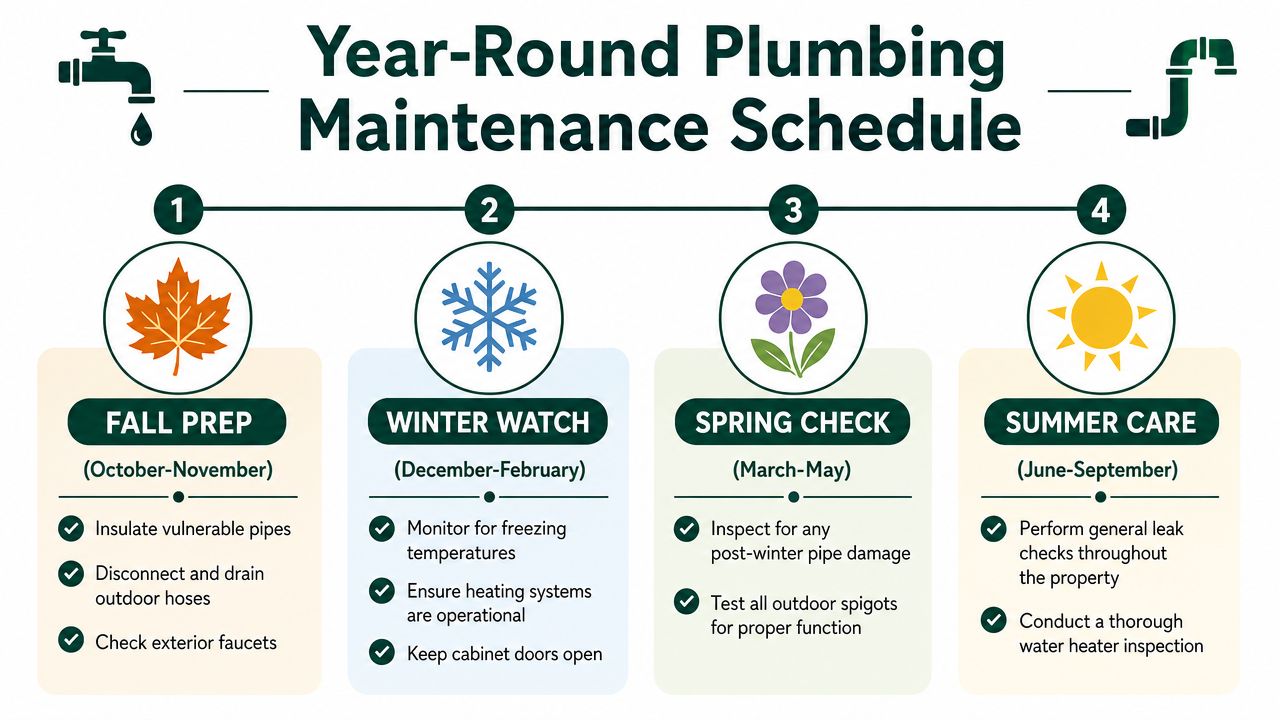
I tell owners and managers the same thing all the time. Freeze damage rarely starts as a one-night problem. It usually traces back to deferred maintenance, poor documentation, or nobody being assigned to check a vulnerable area when the temperature drops.
For a single-family home, that schedule can be simple. For an HOA, duplex, or mixed-use building, it needs assigned responsibility, written notes, and follow-through.
Fall prep
Fall is the time to fix the small problems that turn expensive in January.
- Walk the property and log vulnerable pipe locations so you are not relying on memory during a cold snap.
- Exercise shutoff valves at fixtures, branch lines, and the main. A valve that sticks in October is a repair job. A valve that sticks during a leak is a crisis.
- Inspect exterior hose bibbs, laundry boxes, garage lines, and irrigation backflow areas for wear, seepage, and aging insulation.
- Schedule repairs while access is easy and before every plumber in town starts getting emergency calls.
Winter watch
Winter in Los Angeles is usually mild, which is exactly why owners get caught off guard. Buildings here often are not built or maintained with hard freezes in mind.
- Check vacant units, utility rooms, and low-traffic common areas on cold weeks.
- Confirm heating plans for unoccupied spaces instead of assuming a tenant, caretaker, or maintenance tech handled it.
- Use a written cold-weather response sheet with names, phone numbers, valve locations, and the specific areas that need inspection the next morning.
- Treat faucet dripping as a limited tactic, not a building-wide habit. In a water-conscious city, it makes more sense to protect the known weak points and keep the rest of the system tight.
That last point matters for larger properties. A 20-unit building should not be improvising at 10 p.m. because a forecast suddenly dips.
Spring check
Spring is where good operators learn from the winter they just had.
- Look for slow signs of leakage under sinks, at wall bases, around water heaters, and above ceilings in common corridors.
- Test exterior fixtures and exposed branches that may have taken stress during cold weather.
- Review maintenance logs and update your problem-area list based on what happened, not what you assumed was risky.
- Close out deferred repairs before they roll into another year.
Summer care
Summer is the best time to handle the work nobody wants to do during an emergency call.
- Replace aging shutoff valves, hose bibbs, and failed insulation while walls, garages, and service areas are dry and accessible.
- Update plumbing maps for managers and maintenance staff so risers, branch shutoffs, and unit isolation points are clearly marked.
- Review emergency contacts and response vendors before the next cold event. If you manage a larger property or want a backup plan in place, keep a trusted Los Angeles emergency plumber on your call list.
A maintenance schedule like this is not complicated. It is disciplined. That is what keeps a cold snap from turning into soaked drywall, insurance claims, tenant disruption, and a much bigger repair than the pipe itself.
Emergency Response and When to Call a Pro
If a pipe freezes or bursts, speed matters more than almost anything else. The right first moves can save walls, flooring, cabinets, and neighboring units.
Start with this order:
- Shut off the main water supply immediately. Every owner, tenant, superintendent, and building manager should know where that valve is.
- Cut power if water is near outlets, equipment, or appliances and it's safe to do so.
- Open faucets after shutoff to help drain remaining water from the system.
- Move contents out of the wet area if you can do it safely.
- Call an emergency plumber if there's an active break, a hidden leak, or uncertainty about where the failure occurred.
A lot of prevention work is reasonable DIY territory. Foam sleeves, hose disconnection, cabinet opening, and draft sealing around accessible penetrations are all manageable for many owners.
The line gets crossed when you're dealing with any of the following:
- A visible pipe crack or active leak
- A frozen section inside a wall or ceiling
- A pressure problem you can't diagnose
- A multi-unit impact, where one failed line may be affecting several homes
- Recurring winter leaks, which usually point to a deeper routing, insulation, or pressure-control issue
Don't guess with a hidden freeze in a wall cavity. If you thaw the wrong area the wrong way, you can turn a contained problem into a much larger leak.
If you need immediate help in the middle of a cold-weather plumbing emergency, contact a Los Angeles emergency plumber who can isolate the break, repair the failed section, and identify why that pipe was vulnerable in the first place.
EZ Plumbing has served Los Angeles since 1989, helping homeowners, HOAs, landlords, and commercial property managers protect buildings from avoidable plumbing damage. If you need fast help with a frozen line, a burst pipe, or a cold-weather inspection plan, EZ Plumbing provides 24/7 emergency response, same-day service for many repairs, and experienced technicians who know LA building stock.