
Why Repipe Old Homes: Stop Leaks, Protect Your Value
If your older home has low water pressure at multiple fixtures, brown water from the tap, or a growing list of leak repairs, a whole-house repipe is likely the most reliable fix available to you. Patching individual leaks in aging pipe systems delays the inevitable while adding cost and complexity. Homes built before about 1980 frequently contain original piping that is at or past its useful service life, and the symptoms tend to compound rather than resolve on their own.
The three clearest triggers for repiping are: low pressure or discolored water across multiple fixtures simultaneously, two or more pinhole leaks in different locations within 12 months, and confirmed presence of known-failure materials such as polybutylene or severely corroded galvanized steel. Any one of these warrants a professional inspection. Two or more appearing together points to systemic failure, not an isolated plumbing problem.
One more factor that often accelerates the decision: insurance. Carriers sometimes refuse coverage or demand replacement when older materials or a pattern of claims raise underwriting risk, which makes a repipe a precondition for insurability rather than a discretionary upgrade. Buyers’ agents and home inspectors flag the same materials, so resale implications are real.
Table of Contents
- Seven signs it’s time to repipe your old house
- What pipe materials are hiding in your walls?
- Is repiping worth it? The financial case for older homes
- How the repiping process works, from inspection to final walkthrough
- What does repiping cost, and what drives the price?
- Repair vs. repipe: how to decide
- How to choose a contractor and what to ask before you hire
- Permits, regulations, and code compliance for repiping older homes
- Key Takeaways
- Why planned repiping beats the patch-and-wait approach
- Ez-plumbing serves greater Los Angeles homeowners with whole-house repipes
- Useful sources and further reading
Seven signs it’s time to repipe your old house
Knowing whether your plumbing has a localized problem or a system-wide failure changes everything about how you respond. These seven signs help you make that distinction.
-
Pipe age exceeds the material’s service life. Galvanized steel pipes installed before 1980 are typically well beyond their usual useful life. Copper can last 50 or more years, but water chemistry and installation quality affect that range considerably. If you don’t know what’s in your walls, a licensed plumber can identify the material from exposed runs, fittings, or fixture connections.
-
Low water pressure at multiple fixtures. Isolated low pressure at one faucet usually means a clogged aerator or a partially closed valve. When multiple fixtures across the house show reduced flow, the cause is typically internal pipe narrowing from mineral scale or corrosion, which no spot repair can reverse.
-
Discolored or rusty water. Brown or orange-tinted water from hot and cold taps points to internal corrosion, most often in galvanized steel pipes that corrode from the inside out. If the discoloration clears after running the tap for a minute, the corrosion is already advanced enough to shed particles into your water supply.
-
Recurring leaks in different locations. One leak in one place is a repair. Leaks appearing in separate locations within months of each other signal that the pipe material itself is degrading throughout the system.
-
Two or more pinhole leaks within 12 months. This is a practical industry threshold. Two pinhole leaks in different locations within a year is a strong indicator of systemic material degradation, and continuing to patch is typically economically irrational because the rest of the distribution system is at similar risk.
-
Noisy or banging pipes. Water hammer, rattling, and persistent knocking can indicate pressure irregularities caused by internal pipe damage or scale buildup. While not always a standalone repipe trigger, noisy pipes combined with other symptoms on this list deserve a professional assessment.
-
Escalating repair frequency and cost. Keep a simple log of every plumbing repair: date, location, cost, and what was fixed. If you’ve called a plumber three or more times in two years for pipe-related issues, the cumulative cost and disruption are already approaching repipe territory.
Pro Tip: Before calling for an estimate, pull together your repair invoices and note which fixtures were affected each time. A licensed plumber can use that pattern to identify whether failures are concentrated in one pipe run or spread across the system, which directly affects the scope and cost of the work.
Check Ez-plumbing’s warning signs of plumbing problems resource for a broader diagnostic checklist you can work through before scheduling an inspection.
What pipe materials are hiding in your walls?
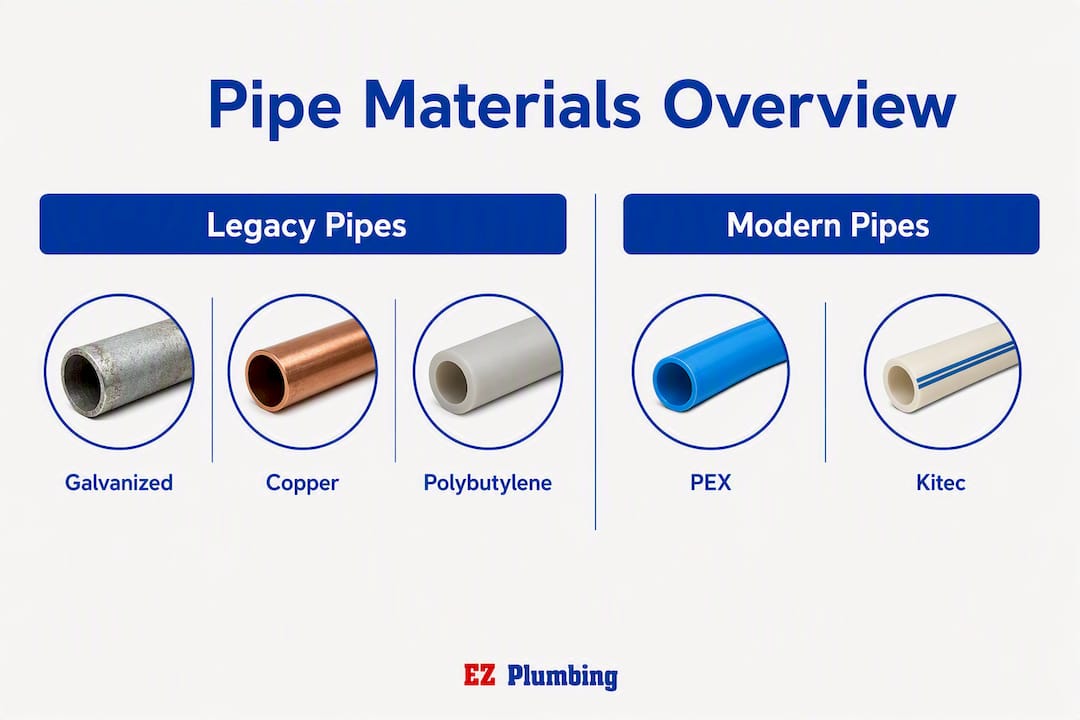
Older homes contain a short list of piping materials, and each one fails in a predictable way. Knowing which material you have tells you how urgent the situation is.
Galvanized steel
Galvanized steel was the standard residential pipe material through the mid-20th century. Its typical useful life is roughly 40–60 years, after which internal corrosion narrows the bore, reduces pressure, and sheds rust particles into the water supply. You can identify it by its dull gray color and threaded fittings. Any galvanized pipe in a pre-1980 home should be inspected promptly if symptoms are present.
Copper
Copper piping often lasts 50 or more years, making it the most durable of the legacy materials. It is identifiable by its reddish-orange color and soldered or compression fittings. That said, aggressive water chemistry, flux residue from poor installation, and decades of use can thin copper walls to the point of pinhole leaks. Copper in good condition may not need replacement, but copper showing pitting or green patina at joints warrants a closer look.
Polybutylene
Polybutylene pipe, installed widely from the late 1970s through the mid-1990s, has a history of premature failure and is widely considered a problematic material. It is gray or blue-gray in color with plastic push-fit or crimp fittings. If your home has polybutylene, replacement is the standard recommendation regardless of whether active symptoms are present, because insurers and buyers treat it as a liability.
Kitec
Kitec is an aluminum-core pipe with plastic inner and outer layers, typically orange (hot) and blue (cold), installed from roughly 1995 to 2007. It was recalled due to fitting failures and premature degradation. Homes in that construction window should be checked for Kitec, particularly in the Southwest where it was common. Its presence is a repipe trigger for insurance and resale purposes.
PEX (the modern replacement)
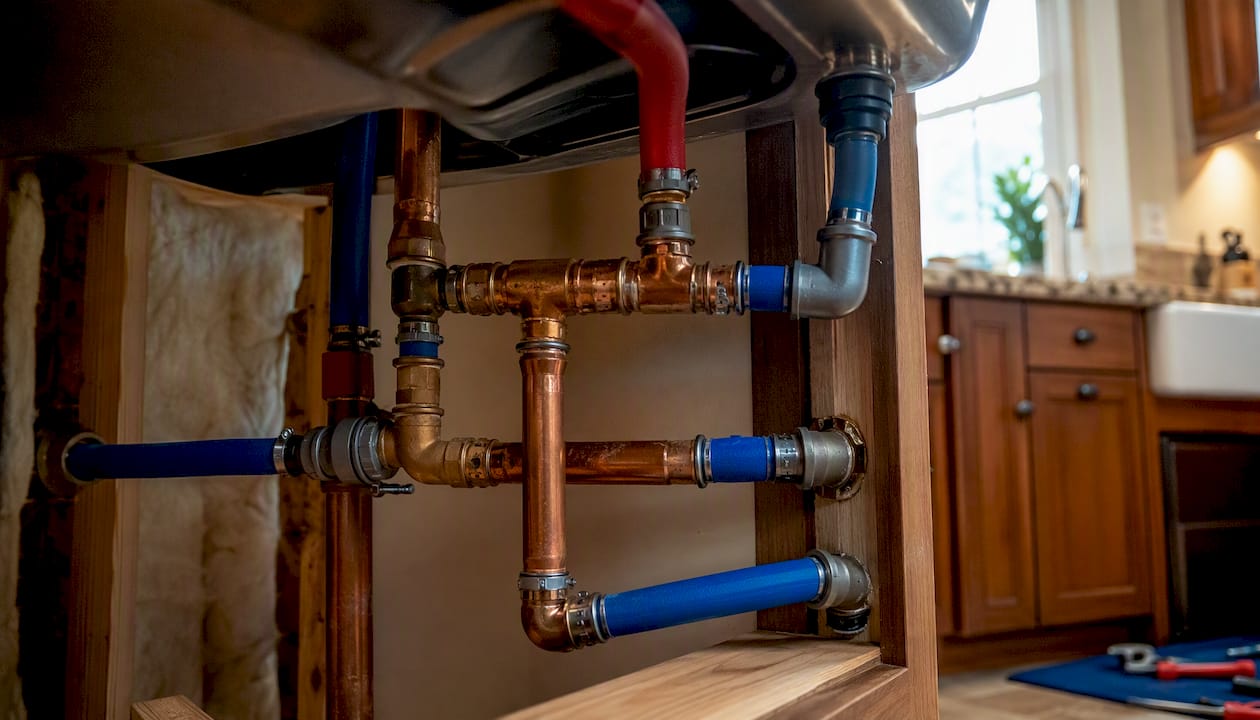
Cross-linked polyethylene, or PEX, is the prevalent replacement material today. It is flexible, resistant to scale and corrosion, and reduces wall openings during installation because it can be routed through existing framing cavities without straight runs. PEX comes in red (hot), blue (cold), and white (either). Copper remains preferred in specific applications such as hot-water recirculation returns, but PEX handles the majority of residential distribution work efficiently.
The table below summarizes the key characteristics of each material.
| Material | Typical Lifespan | Common Failure Mode | Repipe Urgency |
|---|---|---|---|
| Galvanized steel | 40–60 years | Internal corrosion, scale buildup, brown water | High if symptomatic or over 40 years old |
| Copper | 50+ years | Pinhole leaks from pitting, joint failures | Moderate; inspect if symptoms present |
| Polybutylene | 20 years | Brittle cracking, fitting failures | High; replace regardless of symptoms |
| Kitec | 10–20 years | Fitting degradation, delamination | High; insurance and resale liability |
| PEX | 50+ years (projected) | Minimal under normal conditions | Replacement material, not a failure risk |
For a broader look at how midcentury home plumbing and structural red flags show up during inspections, the Upchurch Inspection resource is worth reviewing before you schedule an estimate.
Is repiping worth it? The financial case for older homes
Repiping is best understood as a capital investment in risk management, not a repair bill. The alternative, a piecemeal patch strategy, multiplies points of failure because each repair adds joints. Over a 3–5 year window, cumulative repair costs on a failing system can approach or exceed the cost of full replacement, without the benefit of a clean, warranted system at the end.
The core financial and practical benefits of repiping include:
- Predictable maintenance budget. A repiped home on modern materials has minimal plumbing maintenance costs for years. Emergency repair calls become rare rather than routine.
- Fewer emergency repairs. Emergency plumbing calls carry premium labor rates and often involve water damage remediation on top of the pipe fix. Eliminating the conditions that cause those calls has compounding value.
- Improved inspection outcomes. Buyers’ agents and home inspectors flag galvanized steel, polybutylene, and Kitec as material defects. A repiped home removes those red flags and can support a stronger asking price. See how plumbing condition affects buyer confidence and resale for more detail.
- Better water quality. Eliminating corroded galvanized pipe removes the source of brown, metallic-tasting water. The improvement is immediate and measurable.
- Single system warranty. A full repipe typically produces one system warranty rather than a collection of separate repair invoices with fragmented coverage. That simplifies maintenance and transfers cleanly to a new owner.
- Insurance compliance. Carriers may require replacement of polybutylene or severely corroded galvanized pipe as a condition of coverage renewal. Addressing it proactively avoids a forced, rushed replacement under insurer deadline pressure.
Repiping makes clear financial sense when the pipe material is past its service life, when repair frequency is accelerating, or when an upcoming sale or insurance renewal will surface the issue anyway. Waiting rarely reduces the total cost.
How the repiping process works, from inspection to final walkthrough
A whole-house repipe follows a consistent sequence, though the timeline and invasiveness vary by home size, layout, and material choice.
-
Inspection and scope definition. A licensed plumber inspects exposed pipe runs, checks fixture connections, tests water pressure at multiple points, and reviews any repair history you can provide. Camera inspection may be used for hard-to-access areas. The output is a written scope covering which lines are being replaced, what material will be used, and what access points are required.
-
Material selection. PEX is the standard choice for most residential repipes because it reduces installation time and minimizes drywall removal. Copper is specified for certain applications, particularly hot-water recirculation returns or where local code or homeowner preference requires it.
-
Access and routing plan. The contractor identifies the minimum number of wall and ceiling openings needed to route new pipe. PEX’s flexibility allows it to be fished through wall cavities in ways rigid copper cannot, which is why PEX routing and targeted access points are the standard technique for minimizing disruption.
-
Demolition and installation. Old pipe is isolated and new pipe is run. Water is shut off to the home or to sections being worked. In multi-story homes, contractors typically work by bathroom cluster or plumbing stack to minimize the time any area is without water.
-
Pressure testing. Before any walls are closed, the new system is pressure-tested to confirm there are no leaks at connections or fittings. This step is required for permit sign-off in most jurisdictions.
-
Finish repairs and permit inspection. Drywall patches are made, surfaces are prepared for paint, and the permit inspection is scheduled. The inspector verifies that the work meets local code before the permit is closed.
The table below gives realistic timeline estimates by home type.
| Home Type | Typical Duration | Invasiveness Level |
|---|---|---|
| Small single-story (1–2 baths) | 1–2 days | Low to moderate |
| Average two-story (2–3 baths) | 2–4 days | Moderate |
| Larger or complex layout (3+ baths, slab) | 4–7 days | Moderate to high |
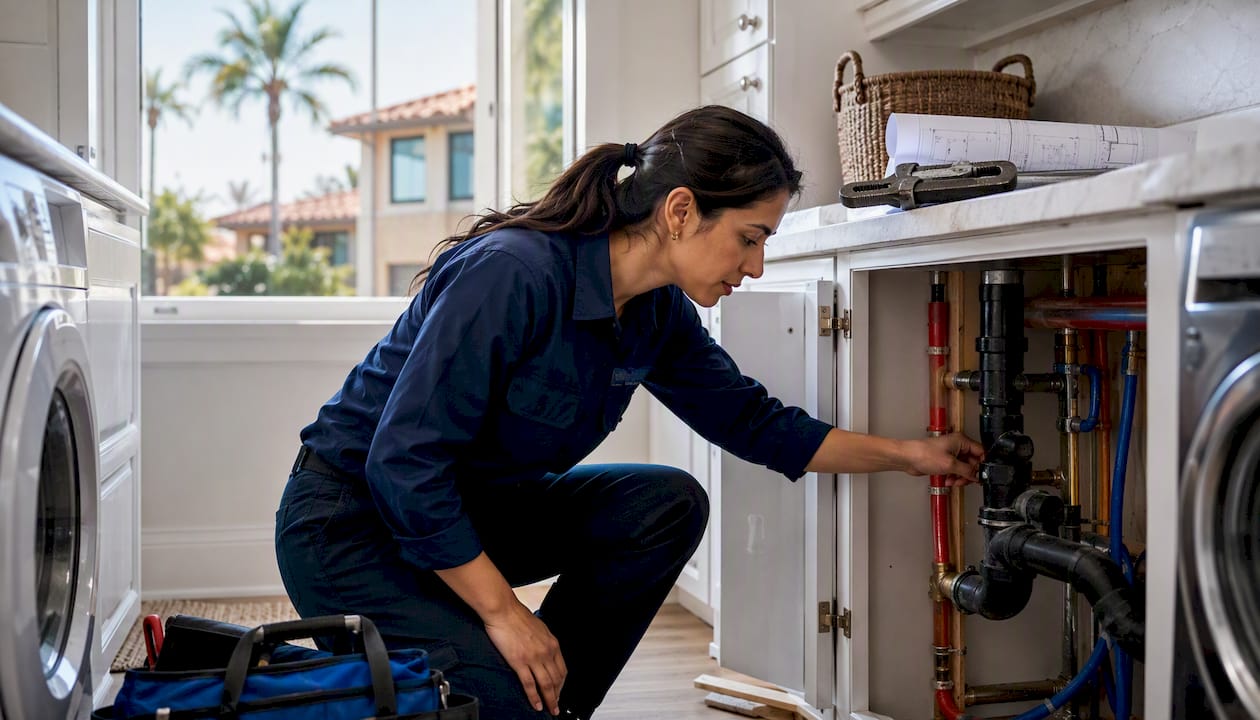
Most homeowners can remain in the home during a repipe, though water will be off for portions of each workday. Contractors typically restore water service each evening.
What does repiping cost, and what drives the price?
Whole-house repipe costs vary considerably based on home size, material choice, and local labor rates. For a general reference point, pipe repair and replacement cost comparisons show that full system replacement consistently outperforms repeated patching on a total-cost basis over a 5–10 year horizon, even when the upfront repipe cost is higher.
The primary cost drivers are:
- Home size and fixture count. More square footage and more bathrooms mean more linear feet of pipe and more connection points. A two-bath home costs meaningfully less than a four-bath home of the same age.
- Material choice. PEX is generally less expensive to purchase and faster to install than copper, which reduces both material and labor costs. Copper commands a premium but is appropriate for specific applications.
- Accessibility. Slab foundations, finished basements, and tight crawl spaces add labor time. Homes with accessible attic runs or open framing are faster and less expensive to work in.
- Permit fees and code requirements. Los Angeles requires permits for whole-house repipes, and permit fees vary by municipality within the greater LA area. Code upgrades (pressure regulators, seismic strapping, updated shutoffs) may be required and add to the total.
- Finish repairs. Drywall patching, texture matching, and painting are often quoted separately. Clarify whether finish work is included in the base bid or priced as an add-on.
- Local labor rates. Labor in Los Angeles is priced at a premium compared to national averages. Get at least two written bids from licensed contractors to understand the local range for your specific home.
On financing: some contractors offer payment plans, and home equity lines of credit are a common vehicle for funding a repipe. Phasing the work (replacing the most critical lines first, completing the rest in a second visit) is possible but adds mobilization cost and leaves the unfinished portion at continued risk.
Before requesting quotes, have ready: your home’s square footage, number of bathrooms, approximate year built, known pipe material if identified, and any repair history you’ve documented.
Repair vs. repipe: how to decide
The decision comes down to frequency, material, and cumulative cost. Use this checklist to assess where you stand.
Repipe is the stronger choice when:
- The pipe material is galvanized steel, polybutylene, or Kitec, regardless of current symptom severity
- You’ve had two or more leaks in different locations within the past 12 months
- Multiple fixtures show low pressure or discolored water simultaneously
- An insurer, home inspector, or buyer’s agent has flagged the plumbing as a material concern
- Cumulative repair costs over the past three years are approaching a significant fraction of a full repipe estimate
- The home is being prepared for sale and plumbing condition will affect the inspection or appraisal
Patching remains reasonable when:
- The pipe material is copper in good condition with no pattern of recurring leaks
- Only one isolated leak has occurred, at a single known location, with no other symptoms present
- The home is newer construction and the pipe is well within its expected service life
The practical rule of thumb: if you’ve repaired the same system more than twice in three years, or if two or more of the repipe triggers above apply simultaneously, the math on continued patching rarely works in your favor. Each repair adds a joint, and a patchwork configuration becomes harder and costlier to maintain over time.
How to choose a contractor and what to ask before you hire
A repipe is a significant project, and the contractor you choose determines the quality of the work, the permit compliance, and the warranty you receive. Ask these questions before signing anything.
On qualifications and experience:
- Are you licensed in California with a C-36 plumbing contractor license? Can I verify your license number?
- How many whole-house repipes have you completed in the past year?
- Do you have experience with both PEX and copper installations?
- Who supervises the crew on-site, and will the same team complete the project start to finish?
On scope and permits:
- Does your bid include pulling the required permits, and will you handle the inspection scheduling?
- What access points are planned, and how will finish repairs be handled?
- Is drywall patching included, or is it a separate line item?
On warranty and documentation:
- What warranty do you provide on materials and labor, and is it in writing?
- Will I receive a written scope of work before the project starts?
- Can you provide references or photos from comparable recent projects?
Red flags to watch for in any bid:
- No mention of permits or a suggestion that permits aren’t necessary
- A very low bid with no written scope or itemized breakdown
- Vague warranty language (“we stand behind our work”) with no specific terms or duration
- Pressure to sign immediately without time to compare bids
- No proof of liability insurance or workers’ compensation coverage
A written scope, a permit plan, and a clear warranty are non-negotiable. Any contractor who resists providing these in writing is not the right choice for a project of this scope.
For a professional leak detection assessment before committing to a full repipe scope, Ez-plumbing provides diagnostic services that can confirm whether failures are isolated or systemic.
Permits, regulations, and code compliance for repiping older homes
Repiping in Los Angeles and throughout California requires permits, and that requirement protects you as the homeowner. A permit creates an official record of the work, triggers a code inspection, and ensures the installation meets current California Plumbing Code standards. Unpermitted repipe work can create title issues, void homeowner’s insurance claims, and require costly remediation if discovered during a future sale.
In Los Angeles, the Department of Building and Safety (LADBS) issues plumbing permits for whole-house repipes. The permit fee is calculated based on the scope of work and the number of fixtures involved. Your contractor should pull the permit before work begins, not after. If a contractor suggests skipping the permit to save money, that is a disqualifying red flag.
Code compliance for a repipe in an older home often involves more than just swapping pipe. Inspectors may require:
- Pressure-reducing valves (PRVs) if the incoming water pressure exceeds code limits
- Seismic strapping on water heaters and certain pipe runs, per California requirements
- Updated main shutoff valves that meet current accessibility standards
- Backflow prevention devices at specific connection points
These code upgrades add cost, but they also add value. A home with a permitted, code-compliant repipe is a cleaner asset for insurance purposes and for resale. Ask your contractor to walk you through any required code upgrades as part of the initial estimate so there are no surprises at inspection.
If the repipe surfaces related concerns, such as slab leak indicators or sewer line deterioration, those require separate permits and scopes. Ez-plumbing’s sewer line repair services cover that work if it surfaces during a repipe diagnostic.
Key Takeaways
Repiping an older home is a risk-management decision: the cost of a planned whole-house repipe is predictable, while the cost of continued patching on a failing system is not.
| Point | Details |
|---|---|
| Age and material are the first screen | Homes built before 1980 with galvanized steel, polybutylene, or Kitec pipe should be inspected promptly. |
| Two or more symptoms mean systemic failure | Low pressure and discolored water at multiple fixtures, or two pinhole leaks in 12 months, indicate the whole system is degrading. |
| Patching multiplies failure points | Each repair adds a joint; cumulative repair costs over 3–5 years can approach the cost of full replacement without a warranted result. |
| Permits and code compliance protect you | A permitted repipe creates a legal record, satisfies insurers, and removes inspection red flags for buyers. |
| Ez-plumbing serves greater Los Angeles | Licensed (C-36 #583868), permit-compliant, and experienced in whole-house repipes across the LA area. |
Why planned repiping beats the patch-and-wait approach
The conventional framing around repiping tends to focus on symptoms: brown water, low pressure, visible leaks. Those are real triggers, but they’re actually late-stage signals. By the time a galvanized steel system is producing rust-colored water at multiple taps, the internal corrosion has been progressing for years. The pipe didn’t fail suddenly; it degraded on a schedule that was predictable from the day it was installed.
What gets underestimated is the cost structure of the alternative. Every patch repair on a failing system is a transaction that buys a short window of stability at a location that was already the weakest point. The next weakest point fails next, and the repair cycle accelerates. The homeowner ends up spending real money, absorbing real disruption, and still facing the same repipe decision at the end of it, except now the system has more joints, more repair history, and possibly water damage in the walls.
The risk-management framing is more honest: a whole-house repipe is a capital expenditure that eliminates a category of operating risk. It produces a single warranted system, removes insurance and resale liabilities, and ends the pattern of emergency calls. For a home that will be owned for another decade or sold within the next few years, the math on planned replacement is almost always cleaner than the math on continued patching.
The one thing worth emphasizing for homeowners going through this process: get a documented diagnosis before committing to a scope. A camera inspection and pressure test from a licensed contractor will tell you whether you’re dealing with isolated deterioration or a system-wide condition, and that distinction should drive the scope and the budget. Vet your contractor carefully, verify the license, and insist on a written scope with permit handling included.
Ez-plumbing serves greater Los Angeles homeowners with whole-house repipes
When you’re ready to move from diagnosis to a real plan, Ez-plumbing is the licensed local resource for homeowners across the greater Los Angeles area. A first visit from our team includes a thorough inspection of your pipe material, pressure readings at multiple fixtures, and a review of your repair history. You leave with a written scope, phased options if budget staging makes sense, and clear permit and warranty terms before any work begins.

Ez-plumbing holds a California C-36 Plumbing Contractor License (#583868) and has served Los Angeles neighborhoods from Pasadena to Van Nuys with code-compliant residential and commercial plumbing work. Our repipe estimates are itemized: labor, materials, finish repairs, and permit fees are broken out separately so you can compare bids accurately. Many homeowners also use the diagnostic visit to address related concerns, such as water heater replacement or leak detection, as part of a single coordinated project.
To schedule an inspection or request a written estimate, contact Ez-plumbing directly through our website at ez-plumbing.com.
Useful sources and further reading
The sources below were used to build this article and are worth reviewing if you want to go deeper on specific topics.
- Aging plumbing: what multifamily owners need to know — Rental Housing Journal: Covers PEX installation techniques, insurance underwriting pressure, and staging strategies for minimizing disruption.
- 1960s–1970s homes: plumbing, wiring, and structural red flags — Upchurch Inspection: Inspection-focused resource on common defects in midcentury homes, useful for material identification before scheduling an estimate.
- Comparing pipe repair costs: Homeowner’s 2026 guide — Trenchless Maine: Long-term cost comparison between repeated repairs and full replacement, with context on when replacement becomes the lower-cost option.