
Why regular drain cleaning matters for LA homeowners
Most Los Angeles homeowners don’t think about their drains until water is backing up into the sink. That’s exactly the problem. Understanding why regular drain cleaning matters can prevent the kind of emergency service call that costs four times what routine maintenance would have. LA’s older housing stock, hard water conditions, and dense tree canopy create drain challenges that are more persistent than in most American cities. This article breaks down how clogs actually form, which cleaning methods work best, and what you can do right now to keep your plumbing running efficiently year-round.
Table of Contents
- How grease and buildup cause recurring drain problems
- Comparing common drain cleaning methods: snaking vs. hydro-jetting
- The benefits of regular professional drain cleaning for homeowners
- Proven habits and early warning signs to schedule drain cleaning
- Why waiting for a clog wastes money: a proactive plumbing approach
- Professional drain cleaning services to protect your Los Angeles home
- Frequently asked questions
Key Takeaways
| Point | Details |
|---|---|
| Grease causes buildup | Fats, oils, and grease solidify inside pipes, progressively narrowing drains and leading to clogs. |
| Hydro-jetting cleans best | High-pressure hydro-jetting removes buildup on pipe walls, reducing repeat blockages compared to snaking. |
| Regular cleaning saves money | Consistent professional drain cleaning improves flow, lowers energy use, and prevents costly repairs. |
| Watch for early signs | Slow drains, odors, or gurgling sounds signal the need for professional drain cleaning before serious clogs occur. |
| Be proactive not reactive | Scheduling regular maintenance avoids expensive emergencies and extends your plumbing system’s lifespan. |
How grease and buildup cause recurring drain problems
Understanding how grease accumulates reveals why clogs so often reoccur without proper cleaning. When you wash dishes or rinse a pan, fats, oils, and grease enter the drain as warm liquids. The moment they contact cooler pipe walls, they begin to solidify, coating the interior surface the same way fat congeals in a cold skillet. That layer doesn’t stay thin.
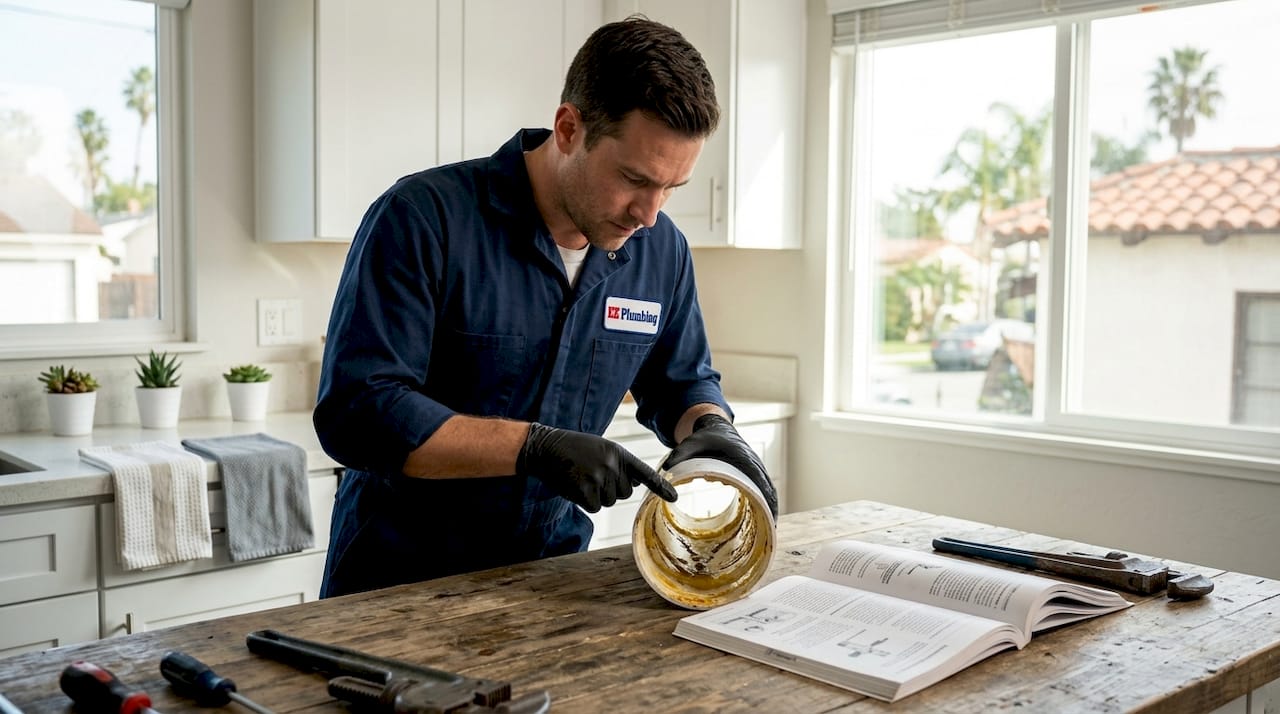
Each time grease coats the pipe walls, it catches food particles, soap scum, and hair. Those trapped materials create a rougher surface that attracts even more debris, and the cycle compounds. In a kitchen drain that sees daily cooking, FOG causes sewer overflows (SSOs), and the same buildup dynamic plays out inside residential pipes before it ever reaches the municipal system.
Pipe slope matters more than most homeowners realize. Code requires a minimum grade so wastewater flows by gravity, but in older Los Angeles homes, settled foundations or amateur repairs often leave drain lines flatter than they should be. Less slope means liquid moves more slowly, giving grease more contact time with pipe walls and accelerating buildup significantly.
The result is predictable: you notice slow draining first, then standing water, then a full blockage. Common drain problems from FOG buildup include:
- Slow-draining kitchen sinks caused by grease layers narrowing the pipe diameter
- Recurring bathroom clogs where soap scum and hair bond to existing grease deposits
- Gurgling sounds from partial blockages trapping air pockets as water forces past them
- Foul odors from decomposing organic matter caught in solidified grease layers
- Backups in multiple fixtures when the main line is affected rather than a single branch
Reviewing our drain cleaning guide for LA homeowners gives you a clear picture of how these patterns develop specifically in Southern California plumbing conditions.
Comparing common drain cleaning methods: snaking vs. hydro-jetting
Knowing how buildup forms explains why certain cleaning methods perform better for long-term maintenance. Not all drain cleaning produces the same result, and the difference matters considerably for how quickly a clog returns.
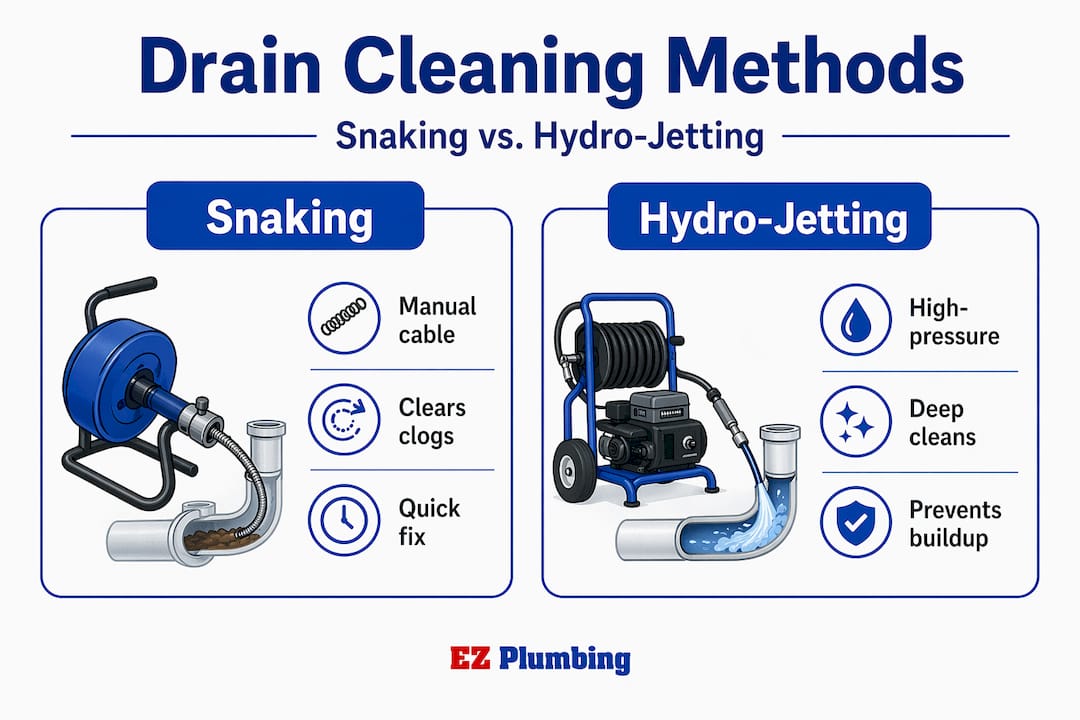
Snaking, also called mechanical augering, works by sending a flexible metal cable into the pipe to physically break through or retrieve the blockage. It clears a path through the clog. What it does not do is remove the grease layer coating the pipe walls on either side of that cleared path. That residual buildup becomes the foundation for the next clog, which is why many homeowners who get a drain snaked see the same problem return within weeks or months.
Hydro-jetting works differently. A licensed technician inserts a specialized nozzle into the drain and releases a pressurized water stream. Hydro-jetting reaches up to 4,000 PSI, cleaning the full circumference of the pipe wall rather than just boring a hole through the blockage. Grease, mineral scale, and even small root intrusions get flushed out completely rather than left behind to accumulate.
| Feature | Snaking | Hydro-jetting |
|---|---|---|
| Clears immediate blockage | Yes | Yes |
| Removes pipe wall buildup | No | Yes |
| Effective on grease | Limited | Highly effective |
| Addresses root intrusion | Partial | Yes |
| Requires professional equipment | No | Yes |
| Long-term recurrence prevention | Low | High |
The right choice depends on your pipe condition and the nature of the clog. A simple hair clog in a bathroom drain may respond perfectly well to snaking your kitchen sink or a bathroom line. But for grease-heavy kitchen drains, aging sewer laterals, or any situation with a history of repeat blockages, hydro-jetting is the more thorough and cost-effective option over time.
Pro Tip: Before any hydro-jetting service, ask for a camera inspection of the line. Older Los Angeles homes often have clay sewer laterals or pipes with galvanized corrosion that need to be assessed before high-pressure water is introduced. A qualified technician will identify any vulnerabilities before starting, protecting you from unintended damage.
The benefits of regular professional drain cleaning for homeowners
This effectiveness translates into clear homeowner advantages that make regular cleaning genuinely worthwhile, not just a precaution.
The most immediate benefit is water flow. Regular drain cleaning prevents buildup that can reduce water flow by up to 15%, which affects everything from how quickly your sinks drain to how efficiently your dishwasher and washing machine operate. Appliances that drain slowly work harder, which shortens their service life.
Four tangible advantages stand out for LA homeowners:
- Consistent water pressure and flow throughout the home, supporting proper appliance function and everyday convenience
- Reduced strain on pipes and pumps, which translates directly to longer equipment life and fewer unexpected repair calls
- Lower plumbing emergency risk, since proactive cleaning saves 30% annually on plumbing repairs compared to reactive service
- Prevention of water damage, because backed-up drains can cause overflow events that damage cabinetry, flooring, and subfloor materials
“Preventing buildup before it becomes a blockage is always more cost-effective than clearing it after the fact. In our experience serving Los Angeles homes, the homeowners who schedule annual professional cleaning rarely face plumbing emergencies.” — EZ Plumbing
Understanding the full range of costly plumbing damage connected to blocked drains makes the case for proactive service even stronger. A backed-up drain is not just a convenience problem. It is a potential structural and financial one.
Proven habits and early warning signs to schedule drain cleaning
Building good habits and recognizing warning signs helps you take timely action before a slow drain becomes an emergency service call.
Daily behavior in the kitchen and bathroom is where most clogs begin. The drain cleaning importance of these habits is easy to underestimate because grease and hair accumulate gradually, without any immediate signal. Weekly maintenance combined with annual professional cleaning measurably reduces both the frequency and severity of clogs. That is a meaningful result from habits that cost nothing.
Practical habits worth building:
- Install mesh strainers in every sink and shower to capture hair and food particles before they enter the pipe
- Pour used cooking grease into a jar or can and dispose of it in the trash, never down the drain
- Run hot water for 30 seconds after washing greasy dishes to help carry residual oils further into the line
- Use enzyme-based drain treatments monthly rather than harsh chemical drain cleaners, which can degrade pipe materials and rarely reach deep buildup
- Flush floor drains in laundry rooms or garages quarterly, since these are often forgotten and prone to sediment buildup
The signs you need drain cleaning are worth knowing clearly. Slow drainage is the first signal, but many homeowners dismiss it. Gurgling sounds from a drain after you run water elsewhere in the house indicate a partial blockage creating pressure changes in the line. Foul odors, particularly sulfur or sewage smells, point to decomposing material lodged in the pipe. And if multiple fixtures drain slowly at the same time, the blockage is likely in the main line rather than a single branch, which calls for professional attention immediately.
Pro Tip: Don’t wait for all the warning signs to appear together. A single slow drain that persists for more than a week despite basic maintenance is enough reason to schedule an inspection. Catching it early keeps the job simple and inexpensive.
Our drain maintenance guide covers additional steps specific to LA’s hard water and aging pipe conditions.
Why waiting for a clog wastes money: a proactive plumbing approach
Here is a perspective most plumbing articles won’t give you: the reactive approach to drain problems is not just inconvenient. It is structurally more expensive, and the math is not even close.
When you call a plumber after a full blockage, you typically pay for emergency or priority service, the technician clears what is visible, and you get partial relief. Recurring clogs signal incomplete clearing of persistent underlying buildup that the reactive service never addressed. So the clog returns in two months, you pay again, and the cycle continues. Each service call treats a symptom. None of them treat the cause.
The homeowners who get the most value from their plumbing investment are the ones who schedule a hydro-jet cleaning once a year before a problem develops. That single service removes the grease layer from the pipe walls, flushes out mineral accumulation, and often reveals early signs of root intrusion or pipe deterioration that can be addressed while they are minor. It is the difference between a $150 maintenance visit and a $1,200 emergency repair.
Los Angeles adds its own complexity. Mature ficus, liquidambar, and pepper trees throughout older neighborhoods like Silverlake, Echo Park, and the San Fernando Valley send roots directly into aging clay sewer laterals. You won’t feel that intrusion until the line is 60 or 70 percent blocked. At that point, snaking buys you a few months at best. A proactive camera inspection followed by hydro-jetting, scheduled through a drain cleaning guide for LA homeowners, is what actually solves the problem.
The real cost of a reactive mindset is not just the money. It is the disrupted household, the water damage risk, and the shortened life of your pipes. Proactive maintenance addresses the root buildup driving those costs, not just the visible symptom sitting in front of you.
Professional drain cleaning services to protect your Los Angeles home
Now that you understand the methods and the real cost of waiting, the next step is straightforward.
EZ Plumbing provides professional drain cleaning services tailored to the specific challenges Los Angeles homes present, including older pipe materials, hard water deposits, and tree root intrusion. Our licensed technicians offer advanced hydro-jetting services that clean pipe walls completely rather than just clearing a path through the blockage. We assess pipe condition before every service to make sure the method matches your plumbing. Routine service plans are available so you never have to think about scheduling. When your drains are professionally maintained on a consistent cycle, plumbing emergencies become genuinely rare. Call EZ Plumbing today to schedule an inspection and keep your home’s plumbing running the way it should.
Frequently asked questions
How often should I schedule professional drain cleaning for my home?
Most homeowners benefit from annual professional cleaning to prevent buildup and recurring clogs, though high-use kitchens or homes with older pipes may need service every six months.
Can I prevent grease clogs by using chemical drain cleaners?
Chemical drain cleaners have limited effectiveness on hardened grease and can damage pipe materials over time; hydro-jetting or mechanical cleaning by a licensed technician is far more effective for grease-related blockages.
What signs indicate I need professional drain cleaning?
Slow drains and gurgling sounds often precede complete blockages, and recurring odors or multiple slow fixtures at once are clear signals that professional cleaning is overdue.
Is hydro-jetting safe for all types of residential pipes?
Hydro-jetting is safe when a licensed technician conducts a pre-service pipe inspection beforehand; pipes with significant corrosion or deterioration may require a different approach to avoid damage.