
Why Does Water Heater Make Popping Sounds? Fixes
You're lying in bed, the house is quiet, and then the water heater starts making a popping sound from the garage or closet. It's easy to wonder if that noise means the tank is about to fail, or if it's just one of those normal home sounds you can ignore until morning.
The short answer is that why does water heater make popping sounds usually comes down to what's happening inside the tank, not outside it. Most of the time, it's mineral sediment. Sometimes it's an electric element, thermal expansion, or a tankless heat exchanger. The trick is telling which one you're hearing, and whether the sound is a mild maintenance issue or a warning that needs fast attention.
Table of Contents
- Hearing Popping From Your Water Heater at Night
- How Sediment Creates Popping and Crackling Noises
- Other Common Causes Beyond Tank Sediment
- Safe DIY Checks You Can Do Before Calling a Plumber
- Flushing the Tank and Descaling Tankless Systems
- When Popping Becomes a Real Warning Sign
- Calling a Licensed Plumber for Diagnosis and Repair
- Quick Answers for Los Angeles Homeowners
Hearing Popping From Your Water Heater at Night
A water heater that starts popping after bedtime feels louder than it should. That's because the sound usually comes during a heating cycle, when the unit is working hard and the house is otherwise still. A mild crackle can sound alarming even when the underlying problem is just a layer of minerals sitting where water should be heating smoothly.
The first thing to do is keep the problem simple. If the noise is a deep pop, crackle, or low rumble, think about sediment at the bottom of the tank. If it's more of a tick near the piping, the sound may be coming from expansion in the lines. If the heater is electric, the culprit might be scale on the element instead of tank sediment.
Practical rule: match the sound to the source before you fix anything. The bottom of the tank, the element area, and the nearby pipes each point to a different repair.
A calm homeowner can usually sort that out without tools. Listen near the tank, then listen near the pipes and fittings. If the noise is only present while the heater is actively firing or the electric element is cycling, that detail matters. It narrows the cause fast and keeps you from doing the wrong repair.
If you want a broader maintenance checklist after you identify the sound, the water heater noise solutions guide is a useful reference point for comparing symptoms before you schedule service. For regular upkeep, this water heater maintenance guide is also helpful once you know whether your unit is a tank or tankless model.
How Sediment Creates Popping and Crackling Noises
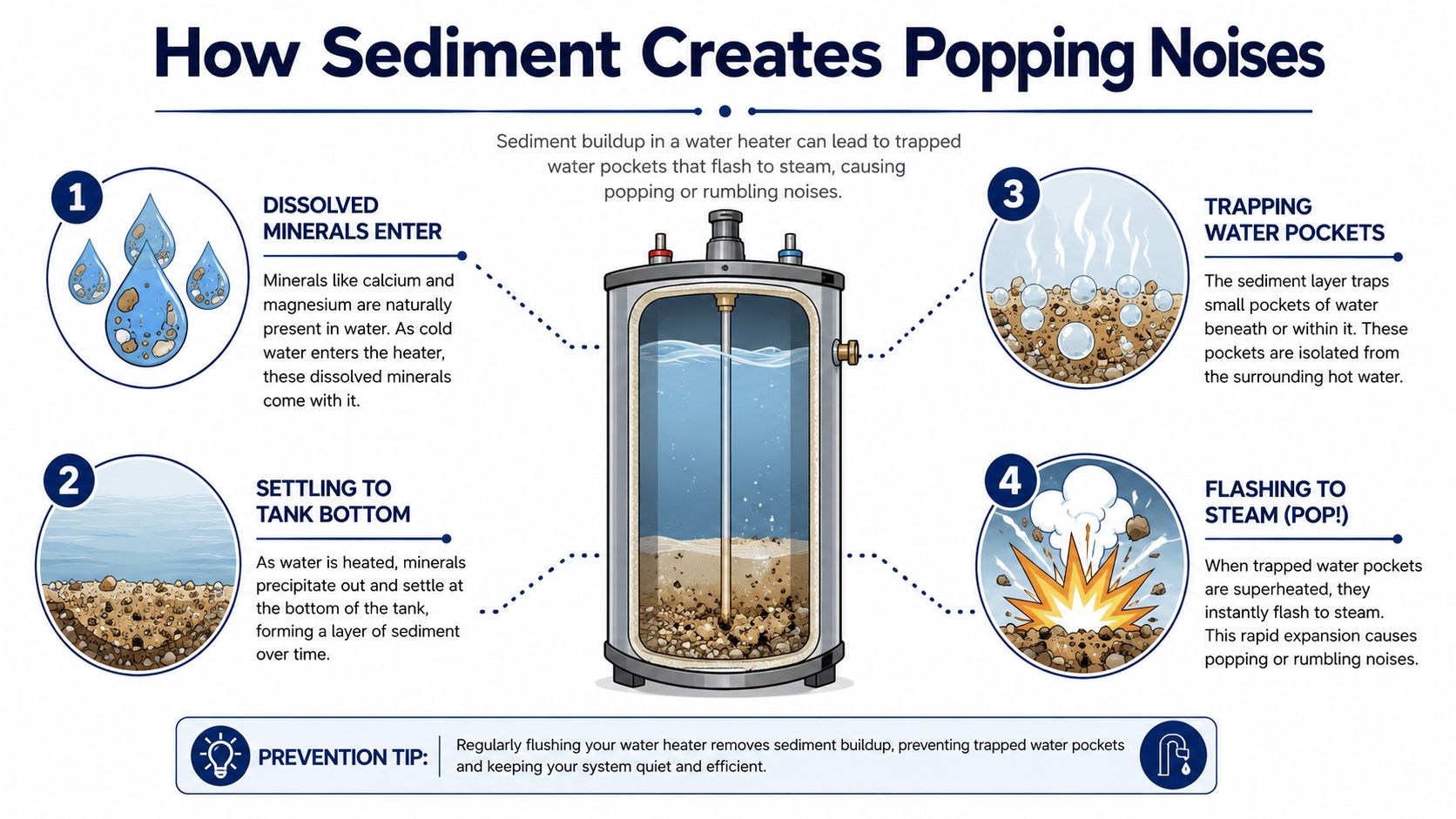
A water heater can sound healthy one minute and start popping the next when minerals settle on the bottom of the tank. In hard-water systems, dissolved calcium and magnesium drop out of the water and collect as sediment. When the burner or electric element heats that layer, water trapped underneath can superheat and flash into steam. That steam breaks through the deposit, and the result is the sharp pop or crackle you hear. ABC Home & Commercial
A simple way to picture it is a pot with a thick crust on the bottom. The water still heats, but the crust changes how steam escapes. Inside a water heater, the sediment layer works the same way. It traps pockets of water, then forces them to push through mineral buildup all at once, which makes the sound abrupt instead of smooth.
Why the noise gets worse over time
The sound usually gets louder because the deposit keeps growing. As more minerals collect, the layer at the bottom of the tank becomes thicker and harder, so heat has to push through more material before it reaches the water. That extra buildup also holds heat in the wrong place, which makes the heater work harder and can make the popping happen more often. A similar explanation appears in the National Water Heater Authority discussion of strange heater noises, and the physics is straightforward, more mineral mass means more trapped water and more abrupt steam release.
That is why a small crackle can turn into repeated popping. The heater is not becoming noisy for no reason. The sediment layer is changing the way heat moves through the tank, and each trapped pocket of water has more buildup to burst through before it can escape.
The shortest version is this. Sediment traps water. Heat turns that trapped water into steam. Steam escaping through minerals makes the pop.
A popping tank is often telling you it's working harder than it should. The sound is the symptom, not the whole problem.
For homeowners comparing maintenance options, the water heater noise solutions guide is a useful reference point for matching the sound to the cause. For routine upkeep, the annual tank flushing routine is the better starting point when the noise points to sediment at the bottom of a storage tank.
Other Common Causes Beyond Tank Sediment
Sediment is the usual suspect, but it's not the only one. A homeowner can waste time flushing a tank that isn't really the problem if the sound is coming from something else. That's why sound quality matters. Deep rumbling points one way, sharp clicking points another, and ticking in the pipes usually has a separate cause.
Electric elements and thermal expansion
When limescale coats an electric element, the scale can crack and pop intermittently during element operation. That sound is often sharper and more closely tied to the element turning on and off. Expansion-related noises are different again. They come from the tank or connected piping expanding as they heat, and they usually sound like occasional ticking or popping rather than the deeper rumbling associated with sediment. (Washington Plumbers)
Matching the sound you hear to the likely cause
| Noise You Hear | Most Likely Cause | First Fix to Try |
|---|---|---|
| Deep popping or crackling from the tank bottom | Tank sediment or scale | Drain and flush the tank |
| Sharper popping tied to element cycling | Electric-element limescale | Inspect or descale the element |
| Light ticking from the pipes | Thermal expansion in piping | Check pipe supports and contact points |
| Repeating noise after a flush | Bonded mineral encrustation | Professional inspection and deeper descaling |
Gas units can also make noise from burner-area or flue-related deposits, which is why a blanket answer misses some cases. A sound that seems like tank sediment may be coming from the heating path around the burner, especially if the tank itself doesn't seem to be the loudest point. If the noise doesn't match the common tank-bottom pattern, that's when a different diagnosis matters.
For a second opinion on whether the pattern looks like a repair issue, the signs your water heater needs repair guide is useful for comparing symptoms before you decide what to do next.
Safe DIY Checks You Can Do Before Calling a Plumber
Start with your ears, not your tools. Stand near the heater and listen for where the sound is strongest. If the pop is loudest at the bottom of the tank, sediment is more likely. If it's closer to the top, at the pipes, or around the element access points, the problem may be different.
Check the temperature setting next. A heater set unnecessarily high can make any heating-related noise more noticeable because the unit is working harder. Then look around the base, fittings, and nearby floor for visible water, rust, or corrosion. If you see moisture or crusted mineral deposits near the relief valve, don't keep poking around.
Stop immediately if you smell gas, see active leaking, or hear hissing near a gas line. Those are not “wait and see” conditions.
A quick safety check around the pressure-relief valve is worth doing, but don't force anything. If the valve drips continuously, that's not the same as a harmless pop inside the tank. It's a sign the system needs attention. You can also confirm the area around a gas unit has clear airflow and no clutter pressing against the heater, since tight storage around the unit makes inspection harder and can hide other issues.
If the heater is clearly sweating, leaking, or producing a burning smell, skip the rest of the DIY checklist. That's when a simple noise problem can be masking a larger fault.
Flushing the Tank and Descaling Tankless Systems
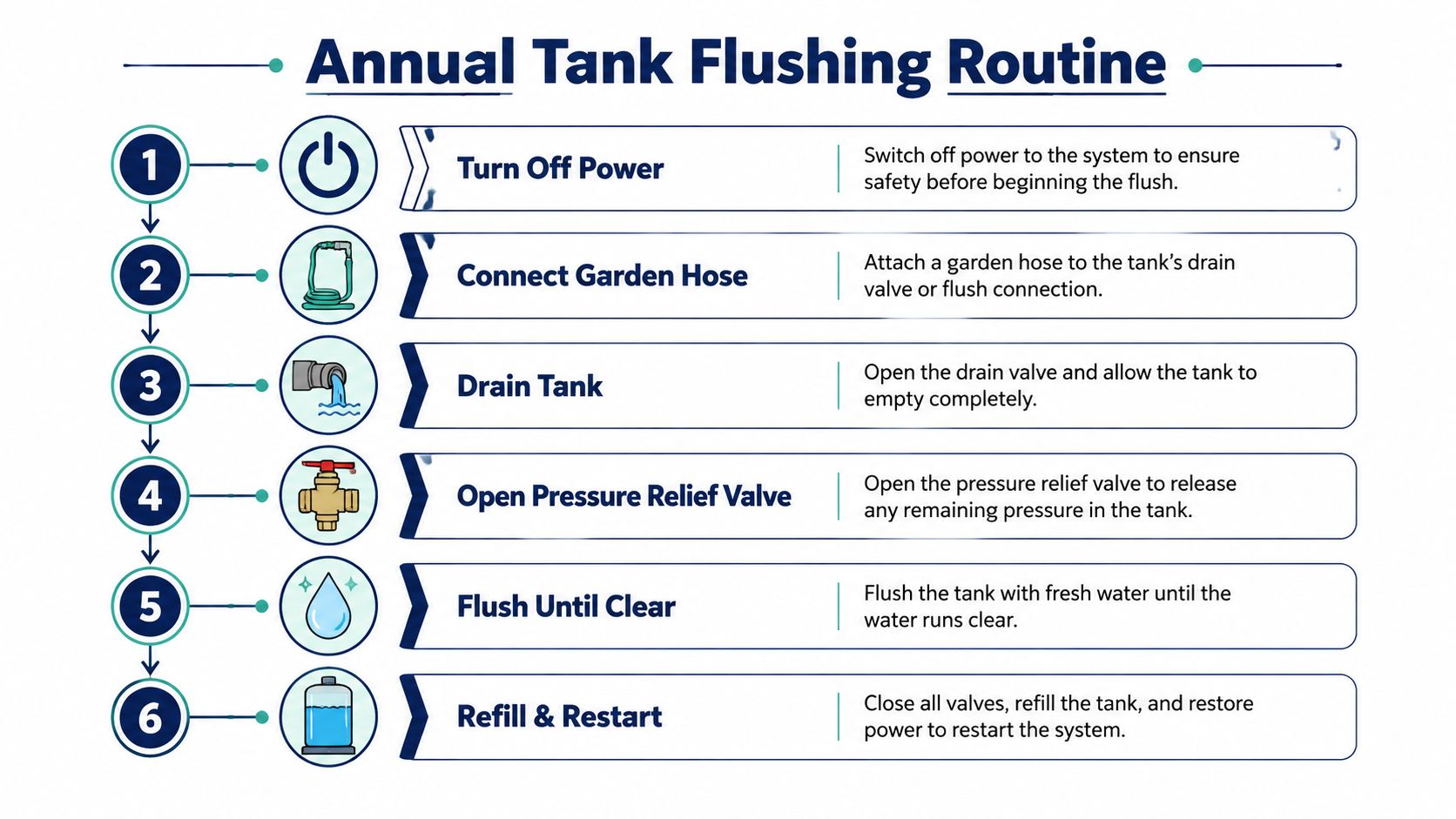
A popping tank often points to loose sediment at the bottom, and flushing is the maintenance step that clears it out. Shut off the power or gas first, attach a garden hose to the drain valve, and route the water to a safe drain point. Let the tank empty until the flow runs clear, then open the cold inlet for a moment to lift any leftover grit before you refill and restart it. That removes the loose mineral layer before it can bake onto the tank bottom.
What changes with tankless units
Tankless systems need a different kind of cleaning because there is no storage tank collecting sediment. The job shifts to descaling the heat exchanger, which means moving a cleaning solution through the unit instead of draining a tank. If you treat a tankless heater like a storage model, you can miss the actual source of the noise. In many cases, the sound comes from scale on the exchanger, not from sediment sitting at the bottom of a tank.
That difference matters because the mineral buildup is sitting in a different place and needs a different fix. Flushing a tank clears out settled debris. Descaling a tankless unit clears the water path the heat depends on, which is why a dedicated EZ Plumbing tankless cleaning guide can be useful when you are working through the process. When mineral coating bonds to the surfaces, the cleaning step has to reach those surfaces directly.
This kind of maintenance does more than quiet the pop. It helps the heater move heat more cleanly through the system, which is the point of removing mineral deposits before they harden and cling to the parts that do the work.
When Popping Becomes a Real Warning Sign
A little sediment noise is one thing. A heater that keeps getting louder from week to week is something else. The sound is only part of the story. Sediment insulates the heating surface, so the unit has to work harder to push heat through the buildup, and that added strain can lead to overheating and pressure concerns when the heat cannot move through the tank cleanly.
That is why early, mild popping is usually less urgent than a sound that changes. If the heater starts hissing near the relief valve, leaking at the base, or giving off a sulfur or burning smell, it needs attention right away. The same goes for popping that gets louder after a flush instead of quieter. That pattern often means the problem is no longer loose sediment, it may be bonded scale, a pressure issue, or another fault that needs a closer look. A pressure relief valve water heater guide can help you understand why that valve matters when pressure starts to rise.
The signs that justify urgent action
- Hissing near the relief valve, because that can point to pressure management trouble.
- Water at the base of the unit, because a leak turns a maintenance issue into a repair.
- Burning or sulfur smells, because those are not normal operating sounds or odors.
- Noise that grows week to week, because worsening sound usually means buildup or damage is getting worse.
The homeowner mistake is treating every pop like a harmless annoyance. Some are. Others are the first warning that the heater is overheating against a mineral barrier, or that pressure is not being released the way it should. Electric units can also make the same kind of noise when an element is working against scale. In some homes, thermal expansion adds stress to the piping and valve setup, so the noise is not coming from sediment alone. Tankless systems can make their own popping or crackling sounds when scale collects on the heat exchanger, and that is a different problem from a storage tank full of settled debris.
The difference is in the pattern, not just the sound. If the noise changes, spreads, or comes with heat, smell, or moisture, the heater is telling you more than “there is sediment in the tank.”
Calling a Licensed Plumber for Diagnosis and Repair
A heater that still pops after a flush usually needs more than a quick drain-and-refill. A licensed plumber can listen to the sound, check where it starts, and test the parts that a homeowner cannot easily inspect, including pressure and temperature, electric elements, gas burners, venting, and any valves or piping that may be amplifying the noise. In tankless systems, the plumber can isolate the unit and descale the heat exchanger so the cleaner reaches the part that is carrying the buildup.

The clue that matters most is repetition. If the sound comes back after flushing, the problem may be mineral that has bonded to the tank or the heating surface, where ordinary draining cannot lift it away. At that point, the fix often shifts from simple sediment removal to element inspection or a deeper descaling process.
A good diagnosis also looks for why the buildup formed in the first place. A plumber may inspect the anode rod, check pressure-reducer performance, and compare the heater's operation with the home's water conditions and usage pattern. For Los Angeles homeowners, that matters because it helps stop the same popping from returning right after the next cleaning. If you want a reference point for what professional service can include, MG Drain Services LLC's expert water heater service page shows the kind of repair support homeowners may need when the noise is tied to more than loose sediment.
EZ Plumbing serves Los Angeles homes, HOAs, property managers, and commercial spaces with 24/7 emergency response and same-day scheduling for planned repairs. If your heater is popping, rumbling, or suddenly losing hot water, a licensed tech can inspect the unit and decide whether the fix is sediment removal, descaling, element work, or a larger repair.
Quick Answers for Los Angeles Homeowners
Does popping always mean sediment?
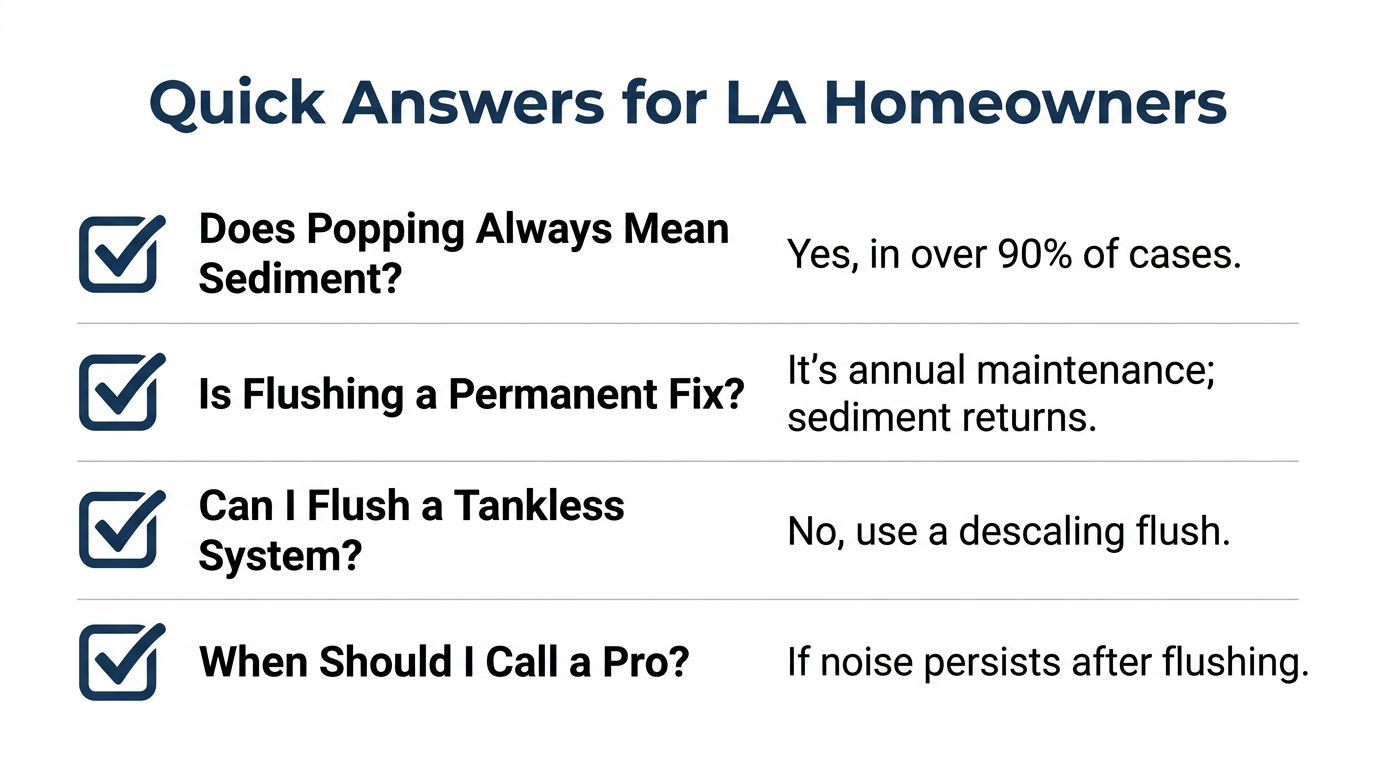
No, but sediment is the most common cause. Electric-element scale, thermal expansion in the pipes, and tankless heat-exchanger scale can create similar noises, so the sound has to be matched to the location and timing before you assume one fix fits every unit.
Is flushing a permanent fix?
No. Flushing is maintenance, not a cure-all. It clears loose buildup, but sediment can return, and bonded mineral deposits may need deeper descaling or part inspection if the sound comes back.
Can I flush a tankless system?
Not in the same way you flush a storage tank. Tankless units need a descaling flush that circulates cleaning solution through the heat exchanger. That's a different process from draining sediment out of a tank.
When should I call a pro?
Call when the sound persists after flushing, gets louder over time, or comes with leaks, odors, or relief-valve noise. If you want another reference point for comparing service options, MG Drain Services LLC's expert water heater service page shows the kind of specialized repair homeowners often look for when the noise won't go away.
If your water heater is still popping after a flush, or you're hearing hissing, leaking, or a stronger rumble than before, EZ Plumbing can inspect the tank, test the components, and handle the right repair the first time. Visit EZ Plumbing to schedule service and get a licensed plumber on the job before a small noise turns into a bigger problem.