
What Is Plumbing Insulation and Why It Matters
Plumbing insulation is a protective material wrapped around pipes to maintain water temperature, prevent condensation, and reduce energy loss across your entire plumbing system. In North America, the term “pipe insulation” is the standard industry label, though you may also encounter “pipe lagging,” which is the same material used more commonly in the UK and Australia. The benefits of plumbing insulation extend well beyond comfort: properly insulated pipes reduce heat loss, protect against freeze damage, and cut water heater run times. For homeowners and property managers in Los Angeles, where older infrastructure and temperature swings create real plumbing stress, pipe insulation is a practical, low-cost upgrade with measurable returns.
How does plumbing insulation work to regulate temperature and prevent damage?
Pipe insulation works by slowing heat transfer through two physical processes: conduction and convection. Conduction moves heat directly through a material, while convection transfers it through air movement around the pipe. A layer of insulation traps air and creates a thermal barrier that interrupts both processes, keeping hot water hotter and cold water from sweating.
Hot water pipes lose temperature as water travels from your water heater to the faucet. Insulation retains that heat longer, which means your water heater runs fewer cycles to maintain the set temperature. Fewer cycles translate directly to lower utility bills and less mechanical wear on the unit.
Cold water pipes face a different problem: condensation. When a cold pipe sits in warm, humid air, moisture forms on the pipe surface. Over time, that moisture causes mold, mildew, and corrosion, particularly in basements, crawl spaces, and utility rooms. Insulation keeps the pipe surface temperature above the dew point, stopping condensation before it starts.
In colder climates or during rare Los Angeles cold snaps, exposed pipes in attics, garages, and exterior walls face freeze risk. Insulation acts as a thermal buffer, slowing the rate at which pipe temperature drops. This delay gives you time to respond before a pipe reaches the freezing point.
Pro Tip: Insulate both hot and cold water lines. Homeowners often skip cold pipes, but condensation damage on cold lines is one of the most common causes of hidden mold behind walls.
What are the common types of plumbing insulation and their ideal uses?
The right insulation material depends on your pipe type, location, and the temperature range the pipe handles. Each material has a distinct performance profile.
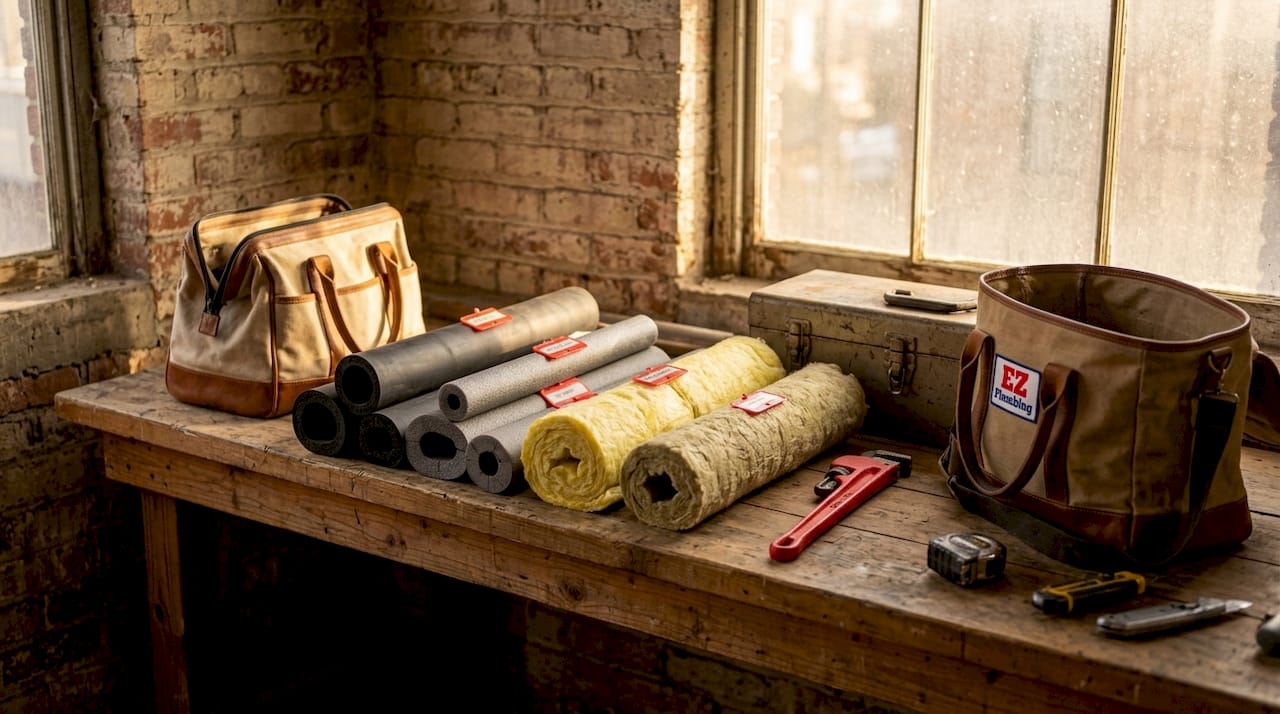
Foam pipe insulation is the most widely used option for residential plumbing. It comes pre-slit for easy installation and fits standard copper and PVC pipe diameters. Foam insulation costs between $0.25 and $1.50 per linear foot, making it the most affordable entry point for most homeowners. It handles moderate temperatures well and installs without tools.
Elastomeric rubber insulation uses a closed-cell structure that resists moisture penetration. Elastomeric rubber is preferred in humid environments and on air conditioning lines where condensation is a constant concern. Its flexibility makes it easier to wrap around irregular pipe configurations.
Fiberglass insulation is affordable and handles higher temperatures than foam, making it a solid choice for hot water supply lines and pipes near heating equipment. It requires a vapor barrier jacket in humid areas because fiberglass absorbs moisture when left exposed.
Mineral wool withstands temperatures above 1,200°F, which places it firmly in the commercial and industrial category. Residential plumbers rarely specify it, but property managers overseeing mixed-use buildings with boiler rooms or industrial kitchens may encounter it.
Spray foam fills gaps and irregular spaces where pre-formed sleeves cannot reach, such as around pipe penetrations through walls. It provides excellent air sealing alongside insulation value, though it is harder to remove if pipe access is needed later.
Pro Tip: For pipes in a humid crawl space, choose elastomeric rubber over standard foam. Foam can absorb surface moisture over time and lose effectiveness, while elastomeric rubber’s closed-cell structure holds up.
When selecting a material, match the product’s rated temperature range to your pipe’s actual operating conditions. A hot water recirculation line runs hotter than a standard supply line and needs a material rated accordingly. For water quality and pipe care considerations that go beyond insulation, reviewing your full plumbing system health is worth the time.
How to properly insulate plumbing pipes: best practices and common mistakes to avoid
Installation quality determines whether your insulation actually performs. A well-chosen material installed incorrectly delivers far less protection than the product’s specifications suggest.
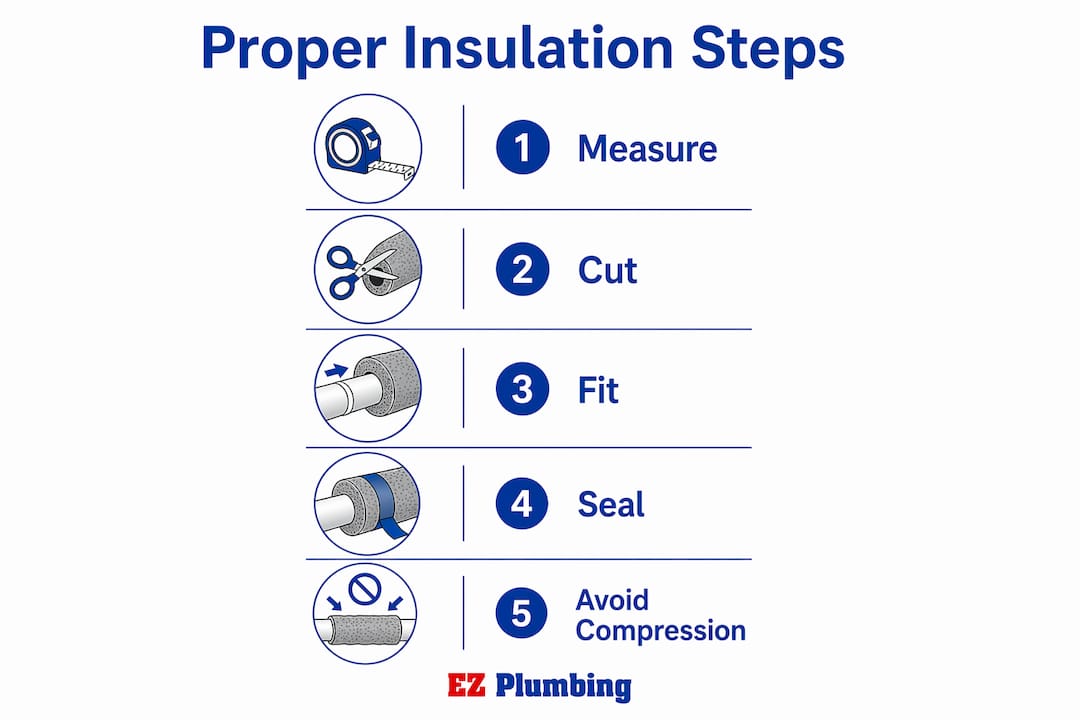
Step 1: Measure and cut accurately. Measure each pipe run and cut insulation sleeves to length before fitting. Clean cuts at joints and elbows prevent gaps that become thermal bridges.
Step 2: Slit and fit foam sleeves. Pre-slit foam sleeves open along their length and snap around the pipe. Press the adhesive edges firmly together along the full length of the sleeve. Do not stretch the material to cover a longer run than it is designed for.
Step 3: Cover elbows, tees, and joints. Continuous coverage over fittings is the single most important installation rule. Elbows and tee joints are the most common points where installers skip coverage, and those gaps become the exact spots where condensation forms and freezing starts.
Step 4: Seal all seams. Use foil tape or the manufacturer’s recommended adhesive to seal every seam and joint. Tape prevents air infiltration that would bypass the insulation layer entirely.
Step 5: Avoid compression. Compressing insulation during installation reduces its R-value by collapsing the air pockets that create the thermal barrier. Never force a sleeve into a tight space or wrap it so tightly that it flattens.
Pro Tip: Use pre-formed elbow covers rather than trying to miter-cut straight sleeves around bends. Pre-formed covers maintain consistent thickness and seal more reliably.
One critical limit to understand: insulation alone cannot fully prevent freezing in extreme cold. It delays the temperature drop, but pipes in unheated spaces during a hard freeze still need additional protection. Pair insulation with draft sealing around penetrations and, for pipes in particularly exposed locations, electrical heat tape rated for the pipe material. For more on what happens when pipes do freeze, Ez-plumbing covers frozen pipe risks and safe thawing in detail.
What are the practical benefits and cost considerations for homeowners and property managers?
Pipe insulation delivers returns across three categories: energy savings, damage prevention, and reduced repair costs. Understanding each helps you prioritize which pipes to insulate first.
Energy savings come from two sources. Insulated hot water pipes retain heat longer between uses, so your water heater does not cycle on as frequently. Insulated cold water pipes prevent condensation, which means less moisture-related damage that would otherwise require energy-intensive remediation.
Damage prevention is where the financial case becomes most compelling. Condensation on cold pipes in basements and crawl spaces creates the conditions for mold growth and galvanized corrosion. A single burst pipe from freeze damage can cause thousands of dollars in water damage to floors, walls, and personal property. Insulation is a fraction of that cost. Reviewing warning signs of plumbing problems early, alongside insulating vulnerable pipes, is the most cost-effective approach to protecting your property.
Cost to insulate varies by material and scope. Foam sleeves run $0.25–$1.50 per linear foot. A typical home with 50 linear feet of exposed pipe in a crawl space or basement costs $15–$75 in materials for a DIY project. Professional installation adds labor costs but ensures proper coverage at fittings and in hard-to-reach areas. For property managers overseeing multiple units, professional assessment of pipe runs is worth the investment. The value of professional inspections extends to identifying which pipe sections carry the highest risk before damage occurs.
Prioritization strategy: Start with the pipes that carry the greatest risk or the highest energy cost. Long hot water supply runs from the water heater to distant fixtures lose the most heat. Pipes in unheated garages, attics, or crawl spaces face the highest freeze risk. Cold water pipes in humid basements are the most likely to develop condensation problems. Address those three categories first, then work outward to less vulnerable sections.
Key Takeaways
Plumbing insulation is the most cost-effective single upgrade a homeowner or property manager can make to reduce energy loss, prevent condensation damage, and protect pipes from freeze risk.
| Point | Details |
|---|---|
| Core function | Pipe insulation slows heat transfer to maintain water temperature and stop condensation. |
| Best material by environment | Use elastomeric rubber in humid areas; foam sleeves work well in dry, moderate-temperature locations. |
| Installation integrity | Never compress insulation or skip elbows and joints, as gaps cause thermal bridging and freeze risk. |
| Freeze protection limits | Insulation delays freezing but must be paired with draft sealing and heat tape in extreme cold. |
| Cost and ROI | Foam insulation starts at $0.25 per linear foot, making it one of the lowest-cost damage prevention upgrades available. |
What I’ve learned after years of seeing insulation done wrong
The most common mistake I see is treating pipe insulation as an afterthought. Homeowners buy foam sleeves, wrap the straight runs they can easily reach, and call it done. The elbows, the tee joints, the spots where pipes pass through a wall plate — those get skipped. And those are exactly the spots where moisture collects and where a cold night does the most damage.
Material selection matters, but installation continuity matters more. A perfectly chosen elastomeric rubber sleeve that stops two inches short of a fitting gives you almost no protection at that fitting. I have seen condensation damage concentrated precisely at those gaps, with the surrounding insulated pipe in perfect condition.
For Los Angeles properties specifically, the freeze risk is lower than in colder climates, but it is not zero. Pipes in uninsulated attic spaces and exterior walls in the San Fernando Valley have frozen during cold snaps. The cost to address a burst pipe, including water extraction, drywall repair, and replumbing, far exceeds the cost of insulating those runs properly in the first place.
My recommendation: if you cannot physically access all your pipe runs to verify coverage at every fitting, have a licensed plumber assess the system. Insulation you cannot see is insulation you cannot trust.
— EZ
Ez-plumbing can help protect your plumbing system
Pipe insulation works best as part of a complete plumbing maintenance plan. Ez-plumbing serves homeowners and property managers across greater Los Angeles with licensed residential and commercial plumbing services, including water heater repair, repiping, and system assessments that identify where your pipes are most vulnerable.
If your water heater is working harder than it should, or if you have noticed condensation, corrosion, or unexplained moisture near your pipes, those are signs your system needs attention. Ez-plumbing’s licensed technicians (C-36 License #583868) can assess your pipe runs, recommend the right insulation approach, and handle any water heater repair issues that insulation alone cannot solve. Contact Ez-plumbing to schedule a professional assessment and protect your plumbing before the next cold snap or utility bill arrives.
FAQ
What is plumbing insulation made of?
Plumbing insulation is made from materials including foam, elastomeric rubber, fiberglass, mineral wool, and spray foam, each selected based on temperature range, moisture exposure, and pipe location.
Is plumbing insulation necessary for Los Angeles homes?
Pipe insulation is necessary for any home with exposed pipes in unheated spaces, humid crawl spaces, or long hot water supply runs, regardless of climate, because it prevents condensation damage and reduces energy loss year-round.
How do I know which pipe insulation type to use?
Choose elastomeric rubber for humid or moisture-heavy areas, foam sleeves for standard residential supply lines in dry locations, and fiberglass for high-temperature hot water pipes near heating equipment.
Can pipe insulation prevent pipes from freezing?
Pipe insulation delays freezing by slowing the rate of temperature drop, but it cannot fully prevent freezing in extreme cold. Pair it with draft sealing and heat tape on exposed pipes in unheated spaces for full protection.
How much does it cost to insulate pipes?
Foam pipe insulation starts at $0.25 per linear foot, making a basic DIY project for a typical home very affordable. Professional installation adds labor costs but delivers reliable coverage at fittings and in hard-to-reach areas.