
Municipal Sewer Connection: What Homeowners Need to Know
A municipal sewer connection is the official link between your property’s private sanitary drainage system and the public sewer main managed by your local utility or public works authority. It consists of two key parts: the lateral line, which is the private pipe running from your building to the property line or public right-of-way, and the public sewer main, the larger pipe buried under the street that the municipality owns and maintains. Together, they route all household wastewater to a centralized treatment plant, where it is processed before being discharged safely.
Core elements of a municipal sewer connection include:
- The sanitary lateral: Your private pipe, typically 4-inch SDR-35 PVC for a single-family home, running from the building foundation to the public main.
- The public sewer main: The municipality’s pipe, usually running beneath the street, that collects wastewater from multiple laterals.
- The tap or wye fitting: The physical point where your lateral meets the main, usually installed or supervised by the municipality.
- Permits and inspections: Required by the authority having jurisdiction before any trench is backfilled.
- Connection fees: Charged by the municipality for the right to access the public system.
What is the municipal sewer connection process, step by step?
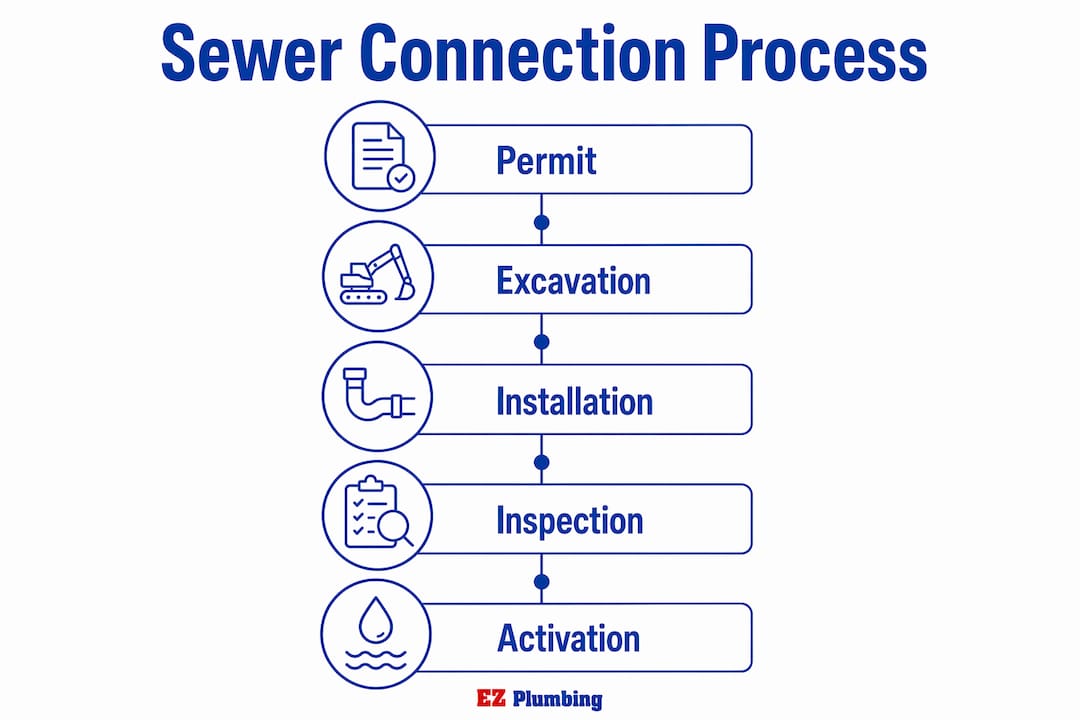
Connecting your property to the public sewer system follows a defined sequence. Skipping any step typically results in permit violations, failed inspections, or costly re-excavation.
- Confirm sewer availability. Contact your local public works department or utility to verify that a sewer main runs within reach of your property. Most ordinances require connection when the main is within a short walking distance of the property line.
- Hire a licensed contractor. A licensed plumber or excavation contractor designs the lateral route, calculates slope, and pulls the necessary permits. Unlicensed work constitutes a code violation and can result in fines and mandatory rework.
- Submit the permit application. Your contractor files a permit application with the building or public works department, including a site plan showing the lateral route, utility easements, and any underground obstructions.
- Pay connection fees. Tap-in fees, permit fees, and any road-cut fees are typically due at permit issuance. Budget these into your project cost from the start.
- Install the lateral line. Your contractor excavates the trench, lays the pipe at the correct slope (a minimum of one-quarter inch of drop per foot of horizontal run), and prepares the connection point at the main.
- Schedule and pass the municipal inspection. A city or county inspector examines the exposed pipe before any backfill occurs, checking depth, slope, bedding, and joint integrity. Some jurisdictions also require a pressure test or CCTV camera inspection of the completed line.
- Municipality performs or supervises the tap. The physical connection into the sewer main is typically made by municipal crews or under their direct supervision. You cannot tap the main yourself.
- Receive final approval and activate service. Once the inspector issues a Certificate of Completion, your contractor backfills the trench, restores the surface, and sewer service charges begin appearing on your utility bill.
Regulatory requirements and inspections you need to understand
Local codes govern every detail of a residential sewer hookup, from the pipe material to the inspection sequence. Getting these right the first time saves you from expensive surprises.
- Mandatory connection ordinances: If a sewer main runs within the required distance of your property, connection is typically not optional. Most jurisdictions give you 90 days to one year after written notice to complete the hookup. Ignoring the notice can lead to daily fines or a lien on your property.
- Approved pipe materials: Most jurisdictions require SDR-35 PVC or Schedule 40 ABS pipe. Both resist root intrusion and hold up well underground over decades of use.
- Slope requirements: The standard minimum slope is a gentle downward gradient per foot of horizontal run to ensure proper flow. Too flat and solids settle; too steep and liquids outrun solids, both of which cause blockages.
- Inspection sequence: Inspectors check pipe material, slope, bedding, and joint integrity before backfill. Many jurisdictions also require a pressure or air test, and some require a video inspection for new connections.
- Road-cut permits: If the lateral crosses a public street, a separate road-cut permit is required, along with certified pavement restoration after excavation.
- Unauthorized taps: Connecting to the main without a permit is a code violation. Municipalities can require full removal and reinstallation at the property owner’s expense.
Pro Tip: Never allow your contractor to backfill the trench before the municipal inspector has signed off. Re-excavating a buried lateral to correct a slope or joint failure can cost more than the original installation.
Common homeowner questions about sewer connections
Are “municipal sewer” and “city sewer” the same thing? Yes. The terms refer to the same public wastewater infrastructure. “Sewer connected” simply means your property’s plumbing is officially linked to it.
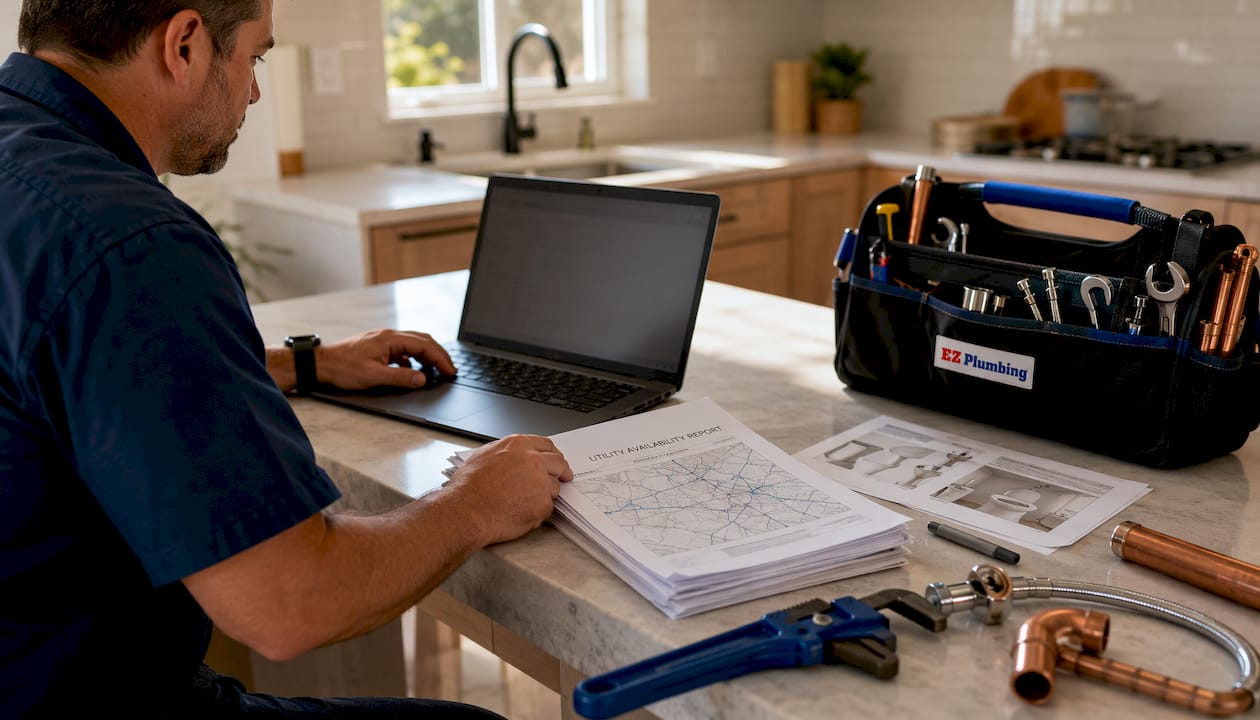
How do you verify whether your property is already connected? Request a utility availability report from your local public works department. Most jurisdictions process these within a few business days. Property records and prior inspection certificates can also confirm connection status.
What does a residential sewer connection typically cost? Costs vary widely for a typical residential project depending on lateral length, soil conditions, local tap fees, road restoration requirements, and whether a septic system needs to be decommissioned. Get itemized quotes from at least two licensed contractors before committing.
What if you prefer to stay on septic? If a sewer main is within the required distance of your property, local ordinance usually leaves no room for exemption. Septic exemptions are rare and typically limited to rural properties far from any existing main.
How long does the full process take? From permit application to active connection, a straightforward residential project can take several weeks, though durations vary. Complex sites, understaffed departments, or road-cut coordination can push that longer.
Maintenance responsibilities after your connection is active
Homeowners consistently underestimate how much of the lateral line they actually own. Your responsibility extends from the building foundation all the way to the point where your lateral meets the public main, including any section running under the sidewalk or street. The municipality maintains the sewer main itself, but every inch of the lateral is yours to repair if it cracks, clogs, or suffers root intrusion.
Practical maintenance actions that protect your lateral include:
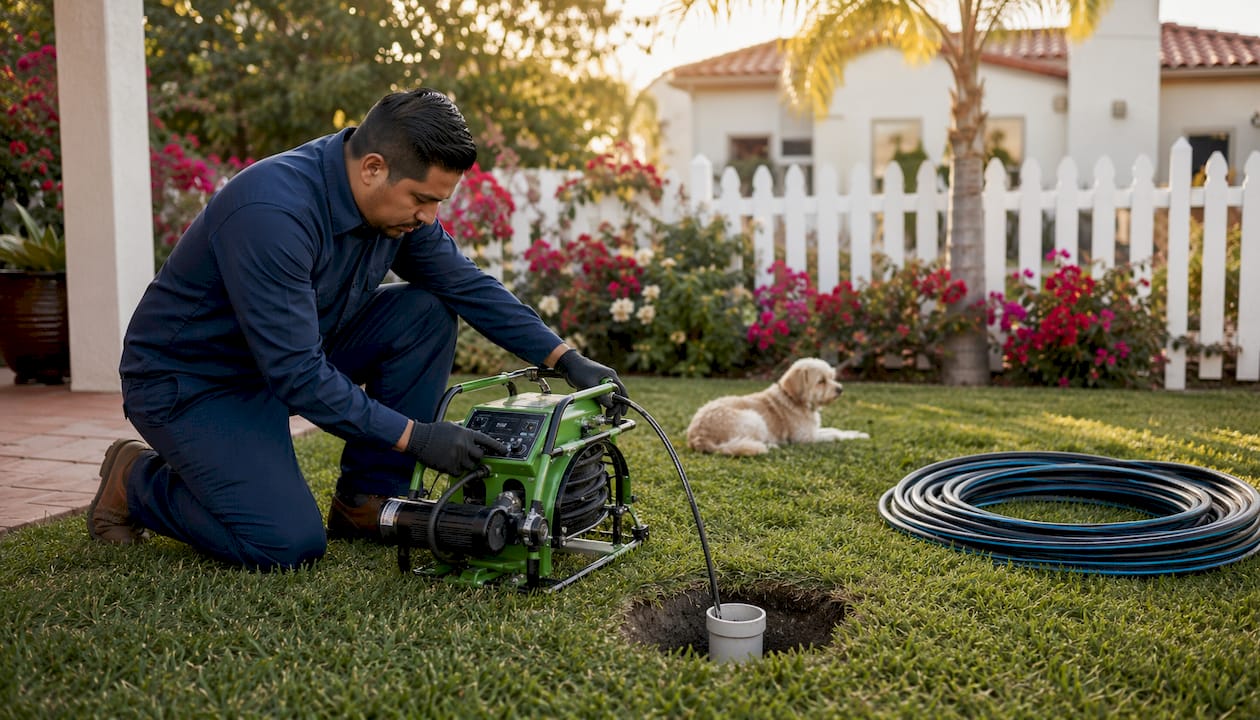
- Annual or biennial camera inspections to catch root intrusion, offset joints, or pipe deterioration before they become emergencies. A sewer line inspection is the single most effective way to stay ahead of lateral failures.
- Prompt response to slow drains or gurgling fixtures, which often signal a partial blockage or root intrusion in the lateral before a full backup occurs.
- Avoiding flushing wipes, grease, or non-biodegradable materials, all of which accelerate buildup in the lateral and at the connection point.
- Tree root management near the lateral route, particularly with older clay or cast-iron pipe that roots can penetrate through joint gaps.
Lateral failures can be costly surprises for property owners, especially when the damaged section runs under a public sidewalk or street, where excavation requires road-cut permits and pavement restoration on top of the pipe repair itself.
Troubleshooting common issues after connection
Slow drains, sewage odors, and gurgling sounds are the most common complaints after a new connection is activated. A slow drain across multiple fixtures usually points to a blockage or partial root intrusion in the lateral, not the main. A single slow fixture is more likely a localized clog. Sewage odors inside the home often trace back to a dry P-trap or a cracked cleanout cap rather than a lateral failure, so check those first before assuming a pipe problem.
Backups that push sewage up through floor drains or tub drains indicate a blockage downstream in the lateral or at the connection point. If the backup clears when the municipality flushes the main, the problem is on their side. If it persists, the lateral is the likely culprit and needs professional inspection. Recognizing the warning signs of plumbing problems early keeps a manageable maintenance issue from becoming an emergency excavation.
Ez-plumbing holds C-36 License #583868 and serves the greater Los Angeles area with sewer line repair and inspection services built around LA municipal requirements. If you are planning a new connection or dealing with a lateral issue, contact Ez-plumbing for a professional assessment.
Key Takeaways
A municipal sewer connection requires a permitted lateral line, licensed installation, mandatory inspection before backfill, and ongoing homeowner responsibility for the full lateral from building to public main.
| Point | Details |
|---|---|
| Lateral ownership | You own and maintain the entire lateral line, including sections under sidewalks and streets. |
| Mandatory connection | Most ordinances require connection within a defined distance of the main, with deadlines often set between a few months up to a year. |
| Typical cost range | Residential connections typically cost $3,000–$20,000 depending on distance, soil, and local fees. |
| Inspection before backfill | Municipal inspection of slope, joints, and pipe material is required before any trench is covered. |
| Troubleshooting first steps | Multi-fixture slow drains point to the lateral; single-fixture issues usually indicate a localized clog. |