
What Is Industrial Plumbing? A Facility Manager’s Guide
Industrial plumbing is defined as the specialized design, installation, and maintenance of large-scale piping systems built for industrial facilities such as manufacturing plants, refineries, and processing centers. Unlike residential or commercial plumbing, industrial plumbing systems manage high-volume water distribution, chemical transport, hazardous waste drainage, and process fluids under strict regulatory frameworks set by bodies including ASME, OSHA, and the EPA. For construction professionals and facility managers, understanding what is industrial plumbing means recognizing it as a critical operational system, not a background utility.
What are the key components of industrial plumbing systems?
Industrial plumbing extends well beyond water supply and drainage. Process piping transports high-pressure steam, chemicals, compressed air, and coolants directly integrated with manufacturing operations. That integration makes industrial plumbing fundamentally different from any other plumbing category.
The core components of an industrial plumbing network include:
- Potable water distribution systems. These are engineered for high flow rates and built with pressure-rated materials to serve large workforces and process needs simultaneously.
- Process piping. Carries industrial fluids including acids, solvents, steam, and compressed gases. Material selection here is critical. Stainless steel, CPVC, and high-density polyethylene are standard choices depending on the fluid chemistry.
- Industrial drainage systems. Designed to handle hazardous and process wastewater, these systems route effluent to treatment or containment before discharge, keeping facilities compliant with EPA regulations.
- Backflow prevention devices. These protect potable water supplies from contamination by process fluids or chemicals. In industrial settings, backflow events can trigger immediate regulatory violations.
- Grease, oil, and chemical interceptors. Separators capture contaminants before they enter municipal sewer systems. Facilities processing food, petroleum, or industrial chemicals rely on these as a compliance baseline.
- Sump and ejector pumps. Used in below-grade areas where gravity drainage is not possible, these pumps manage groundwater intrusion and process fluid collection.
- Emergency safety fixtures. OSHA standards require emergency eyewash stations and safety showers in facilities where workers handle hazardous chemicals. These fixtures are plumbing installations, not optional add-ons.
Each component carries its own material specification, pressure rating, and inspection schedule. Treating any one of them as a secondary concern creates compounding risk across the entire system.
How does industrial plumbing differ from commercial and residential plumbing?
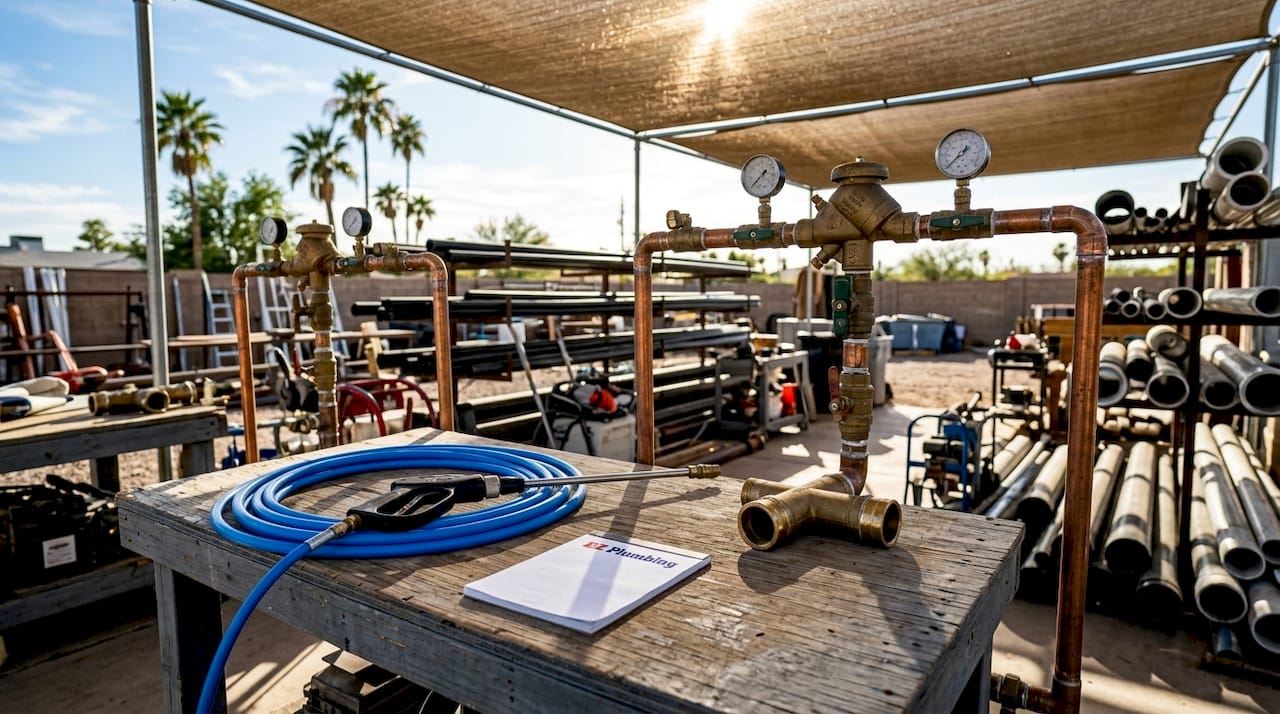
Scale is the most visible difference, but it is not the only one. Industrial plumbing systems handle flow volumes and operating pressures that commercial or residential systems are never designed to meet. A single manufacturing line may demand more water per hour than an entire office building uses in a day.
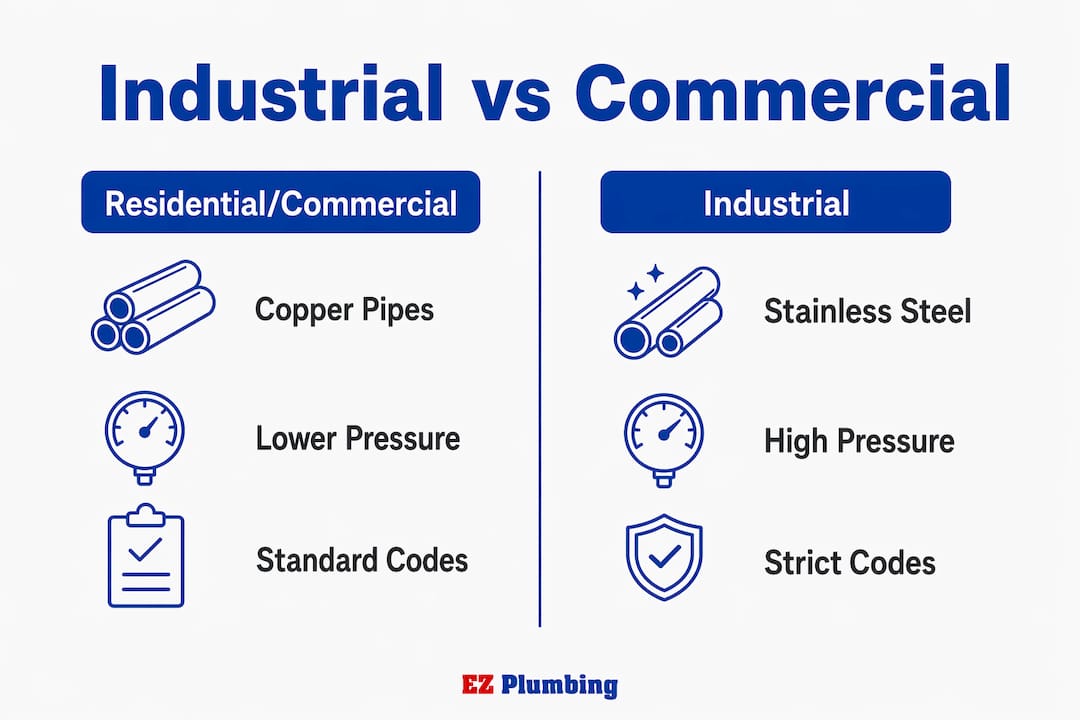
| Factor | Residential and commercial | Industrial |
|---|---|---|
| Pipe materials | Copper, PVC, CPVC | Stainless steel, HDPE, carbon steel |
| Operating pressure | Standard municipal pressure | High-pressure process requirements |
| Fluid types | Potable water and wastewater | Chemicals, steam, coolants, gases |
| Regulatory oversight | Local building codes | ASME, OSHA, EPA, and process-specific codes |
| Maintenance frequency | Annual or as-needed | Scheduled quarterly and annual programs |
Material selection separates industrial plumbing from everything else. Poor material selection and failure to account for thermal expansion can reduce effective system lifespan by up to 40%. That figure reflects a real cost: replacing a process piping network in an active facility is expensive and operationally disruptive.
Regulatory complexity is another defining factor. Industrial facilities must satisfy ASME pressure vessel and piping codes, OSHA worker safety requirements, and EPA discharge standards simultaneously. A commercial building typically answers only to local building codes and the International Plumbing Code.
Pro Tip: When specifying pipe materials for a new industrial installation, always cross-reference the fluid’s pH, temperature range, and pressure against the manufacturer’s chemical compatibility chart. A material that works for water may fail within months when carrying acidic process fluids.
For a broader view of how plumbing codes and service standards apply across facility types, the overlap between commercial and industrial requirements is worth understanding before any specification work begins.
What are the maintenance requirements unique to industrial plumbing?
Maintenance in industrial plumbing is not optional or informal. 2026 engineering standards mandate quarterly inspections of industrial water pumps and annual fire sprinkler system testing for compliance. Missing either creates both a safety gap and a regulatory liability.
A structured maintenance program for industrial plumbing typically covers:
- Quarterly pump inspections. Check impeller condition, seal integrity, and motor performance. Pump failure in a process facility can halt production within hours.
- Annual fire suppression system testing. Required by code, this confirms that sprinkler heads, valves, and water supply pressure meet NFPA standards.
- Biannual backflow preventer testing. Most jurisdictions require certified testing of backflow assemblies to confirm they protect the potable water supply.
- Continuous pressure monitoring. Building Management Systems integrated with plumbing networks provide real-time pressure data, flagging anomalies before they become failures.
- Annual pipe condition assessments. Camera inspection and ultrasonic thickness testing identify corrosion, scaling, or joint degradation in process piping before leaks develop.
“Proactive scheduled maintenance programs are key to avoiding unsustainable financial risks due to unplanned downtime in industrial plumbing.” — Industry engineering guidance on industrial facility management
Industrial plumbing failures can cause cascading consequences including immediate production downtime, health hazards, and regulatory violations lasting weeks. That is not a recoverable situation for most facilities. The cost of a scheduled inspection is a fraction of the cost of a single unplanned shutdown.
Asset mapping and early warning systems for leak detection and performance monitoring are now standard practice in well-managed facilities. Asset mapping creates a documented record of every pipe run, valve, and connection point. Early warning systems, often tied to a BMS, alert facility teams to pressure drops or flow anomalies before a leak becomes visible. For facility managers overseeing large footprints, this combination is the most reliable path from reactive repairs to predictive maintenance.
You can find parallel inspection principles applied at a smaller scale in this plumbing maintenance guide that covers critical protocols useful across facility sizes.
What benefits do well-designed industrial plumbing systems deliver?
The benefits of industrial plumbing done correctly are measurable and direct. Over 30% of water used in industrial manufacturing is wasted due to leaks and poor system management. A well-designed and maintained system eliminates most of that loss, reducing both utility costs and environmental impact.
The operational advantages extend across several areas:
- Resource efficiency. Properly sealed, pressure-balanced systems reduce water waste and lower energy costs associated with pumping and heating process water.
- Extended infrastructure lifespan. Correct material selection and regular maintenance prevent the premature pipe failures that reduce piping lifespan by up to 40% in neglected systems.
- Worker health and safety. Emergency eyewash stations and safety showers, properly plumbed and maintained, protect workers from chemical exposure. OSHA citations for non-functional safety fixtures carry significant penalties.
- Regulatory compliance. Systems designed to ASME and EPA standards avoid the fines, shutdowns, and remediation costs that follow compliance failures.
- Operational continuity. Proactive maintenance prevents the unplanned downtime that costs industrial facilities far more than any scheduled repair program.
Facility managers who treat industrial plumbing as a core operational asset rather than a maintenance line item consistently see lower total cost of ownership over the life of the facility. The investment in quality installation and scheduled upkeep pays back through avoided failures and uninterrupted production.
For facilities managing complex drainage needs, professional sewer line repair services are a direct extension of keeping industrial drainage systems compliant and functional.
Key Takeaways
Industrial plumbing is a specialized engineering discipline that directly determines whether a facility operates safely, efficiently, and in compliance with ASME, OSHA, and EPA standards.
| Point | Details |
|---|---|
| Industrial plumbing definition | Specialized large-scale piping systems for industrial facilities managing water, chemicals, and process fluids. |
| Material selection matters | Poor material choices reduce pipe lifespan by up to 40%; stainless steel and HDPE are standard for process piping. |
| Maintenance is mandatory | 2026 standards require quarterly pump inspections and annual fire sprinkler testing for compliance. |
| Failures carry cascading costs | Plumbing failures cause production downtime, safety hazards, and regulatory violations that can last weeks. |
| Proactive systems save money | Asset mapping, BMS integration, and early warning systems prevent failures before they disrupt operations. |
Why facility managers need to rethink industrial plumbing
Most facility managers I work with initially treat plumbing as a background system. It runs, nobody complains, and it stays off the priority list. That approach works until it doesn’t, and when it fails in an industrial setting, the consequences are rarely contained.
What I have seen consistently is that the facilities with the lowest plumbing-related downtime are the ones that treat their piping networks the same way they treat production equipment. They map every asset, they schedule inspections before problems surface, and they integrate pressure monitoring into their BMS. The integration of plumbing with Building Management Systems is not a luxury feature. It is the difference between catching a failing pump seal on a Tuesday afternoon and discovering a flooded production floor on a Monday morning.
The shift toward industrial IoT is accelerating this. Sensors embedded in pipe runs now flag micro-pressure drops that precede leaks by days. Facilities that have adopted this technology report fewer emergency callouts and more predictable maintenance budgets. The technology is not complicated. The barrier is usually organizational: someone has to decide that plumbing is worth monitoring in real time.
My honest recommendation is to audit your current maintenance schedule against the 2026 engineering standards before your next compliance review. If you cannot answer when your pumps were last inspected or whether your backflow preventers have been tested this year, you are already behind. Plumbing is a critical-path utility. Treat it accordingly.
— EZ
Ez-plumbing: expert support for complex plumbing needs
Ez-plumbing brings licensed expertise to plumbing projects that go beyond the standard residential call. With a C-36 License and full compliance with Los Angeles municipal codes, Ez-plumbing handles installation, maintenance, and repair work on systems that demand precision and accountability.
Whether you are managing a facility upgrade, dealing with a drainage issue that has resisted standard fixes, or planning a new installation, Ez-plumbing has the technical background to assess the situation accurately and execute the work correctly. From leak detection services that identify hidden failures before they escalate, to full sewer line repair, the team is equipped for the complexity that large-scale plumbing demands. Contact Ez-plumbing to discuss your facility’s specific needs and get a clear assessment from a licensed professional.
FAQ
What is the industrial plumbing definition?
Industrial plumbing is the specialized design, installation, and maintenance of large-scale piping systems in industrial facilities, managing potable water, process fluids, chemicals, and hazardous wastewater under ASME, OSHA, and EPA regulatory standards.
How is industrial plumbing different from commercial plumbing?
Industrial plumbing handles higher pressures, hazardous process fluids, and stricter regulatory requirements than commercial plumbing. It uses materials like stainless steel and HDPE rather than standard copper or PVC, and requires more frequent scheduled inspections.
What are the main components of industrial plumbing?
The main components include potable water distribution, process piping, industrial drainage, backflow prevention devices, oil and chemical interceptors, sump pumps, and OSHA-required emergency safety fixtures such as eyewash stations and safety showers.
How often should industrial plumbing systems be inspected?
2026 engineering standards require quarterly inspections of industrial water pumps and annual testing of fire sprinkler systems. Backflow preventers typically require biannual certified testing under most local jurisdictions.
What happens when industrial plumbing is neglected?
Neglected industrial plumbing systems lose up to 30% of water to leaks and can see pipe lifespan reduced by up to 40%. Failures trigger cascading consequences including production downtime, worker safety hazards, and regulatory violations that can last weeks.