
Drain cleaning guide for LA homeowners: protect your pipes
If your drains need professional attention now, our Los Angeles drain cleaning service is available same-day.
Most homeowners reach for a bottle of liquid drain cleaner the moment water starts pooling in the sink. It seems like the obvious fix, and it’s cheap. But here’s the reality: those store-bought chemicals often dissolve just enough of a clog to restore flow, leaving the rest of the buildup firmly in place. Over time, that partial blockage grows, and what started as a slow drain becomes a backed-up sewer line. Professional drain cleaning addresses the actual cause of the problem, not just the surface symptoms, and that distinction makes a significant difference for the long-term health of your plumbing.
Table of Contents
- What is drain cleaning? Basics and misconceptions
- Signs you need drain cleaning
- Professional drain cleaning methods explained
- Drain maintenance: Preventative steps for lasting results
- Why professional drain cleaning beats DIY approaches
- Choose the right solution for your drains
- Frequently asked questions
Key Takeaways
| Point | Details |
|---|---|
| Recognize warning signs | Watch for slow drains, recurring clogs, and bad odors before major plumbing issues develop. |
| Professional methods matter | Snaking and hydro jetting offer superior cleaning and prevent costly repairs compared to DIY chemicals. |
| Routine maintenance saves money | Scheduling annual drain inspections and maintenance avoids expensive emergency repairs. |
| Expert help beats DIY | Professional drain cleaning addresses root causes and prolongs the lifespan of your plumbing system. |
| Los Angeles specialists available | Local experts offer reliable drain cleaning and maintenance solutions tailored to your property. |
What is drain cleaning? Basics and misconceptions
Drain cleaning refers to the process of removing blockages, organic buildup, grease accumulation, mineral scale, and debris from your drain lines to restore proper flow and maintain the overall condition of your plumbing system. It goes well beyond pouring something down a pipe and hoping for the best.
Professional drain cleaning uses specialized tools and techniques to physically clear obstructions and inspect the interior of pipes, rather than relying on chemical reactions that may or may not fully break down whatever is causing the problem. When you schedule drain cleaning services with a licensed plumber, you’re getting a thorough assessment alongside the actual cleaning work.
There are several persistent myths worth addressing head-on. The first is that store-bought chemical cleaners are a reliable long-term solution. In practice, they work by generating heat or caustic reactions to eat through organic material, but they rarely clear the full blockage and can actually accelerate pipe corrosion in older plumbing systems. The second myth is that a slow drain isn’t urgent. A slow drain is almost always the early warning sign of a growing blockage, and ignoring it gives buildup more time to solidify and widen its grip on the pipe walls.
Professional drain cleaning helps avoid major plumbing issues by catching and clearing these problems before they escalate into pipe damage, sewage backflow, or structural issues caused by leaking water inside walls.
Pro Tip: Never pour boiling water down a PVC pipe. PVC softens at high temperatures, and the repeated shock can loosen joints over time, creating small leaks that go undetected for months.
Now that we’ve established the importance of professional solutions, let’s examine the signs that indicate when drain cleaning is needed.
Signs you need drain cleaning
Recognizing the early symptoms of a drain problem is one of the most valuable things you can do as a homeowner or property manager. The plumbing in Los Angeles properties, especially older homes in neighborhoods like Silver Lake, Echo Park, and the San Fernando Valley, often runs through clay sewer laterals that have been in the ground for 50 or more years. These systems are more vulnerable to root intrusion and buildup, which means warning signs tend to appear faster than they would in newer construction.
Here are the most common indicators that your drains need professional attention:
-
Slow draining in one or more fixtures. Water that takes more than 15 to 20 seconds to drain from a sink or tub suggests partial blockage. When multiple fixtures drain slowly at the same time, the problem is likely in the main line rather than an individual branch.
-
Recurring clogs. If you’ve cleared a drain more than twice in a single month and it keeps coming back, the clog isn’t fully clearing. You’re dealing with a stubborn accumulation that needs professional tools to remove.
-
Foul odors coming from drains. Hydrogen sulfide gas, the compound responsible for that rotten egg smell, is produced by decomposing organic matter trapped inside drain lines. Persistent odor after cleaning is a reliable sign of deep-seated buildup.
-
Gurgling sounds. When water flowing down one drain causes gurgling in a nearby toilet or fixture, it indicates a partial blockage creating air pressure changes throughout the system.
-
Water backup. This is the most urgent sign. Water backing up into a shower, tub, or floor drain means the blockage has reached a critical level and requires immediate professional service to avoid costly damage to your home.
Following drain maintenance tips consistently is the most effective way to catch these signs early and address them before they escalate. Routine drain upkeep is essential to prevent plumbing issues from turning into expensive repairs, and most drain problems that reach emergency status started as minor, correctable blockages weeks or months earlier.
Recognizing these signs is foundational, but it’s equally vital to understand the methods and tools used to clean drains effectively.
Professional drain cleaning methods explained
Professionals use several distinct approaches to clean drains, and choosing the right method depends on the type of blockage, the pipe material, the pipe diameter, and how far into the system the problem is located. Understanding these methods helps you have a more informed conversation with your plumber and know what to expect when a technician arrives.
Drain snaking (mechanical augering) is the most common starting point. A motorized or hand-operated cable with a cutting head is fed into the drain and rotated to break apart the clog. Snaking works well for straightforward organic clogs caused by hair, soap, and food debris in branch lines. It’s a fast and effective solution for isolated blockages.
Hydro jetting is a more powerful option. It uses high-pressure water, typically between 1,500 and 4,000 PSI (pounds per square inch), delivered through a specialized nozzle to scour the interior walls of the pipe. Hydro jetting and mechanical methods are standard in professional drain cleaning, but hydro jetting is particularly effective for grease buildup, mineral scale, and recurring clogs in main sewer lines. It doesn’t just punch through the blockage; it cleans the full circumference of the pipe.
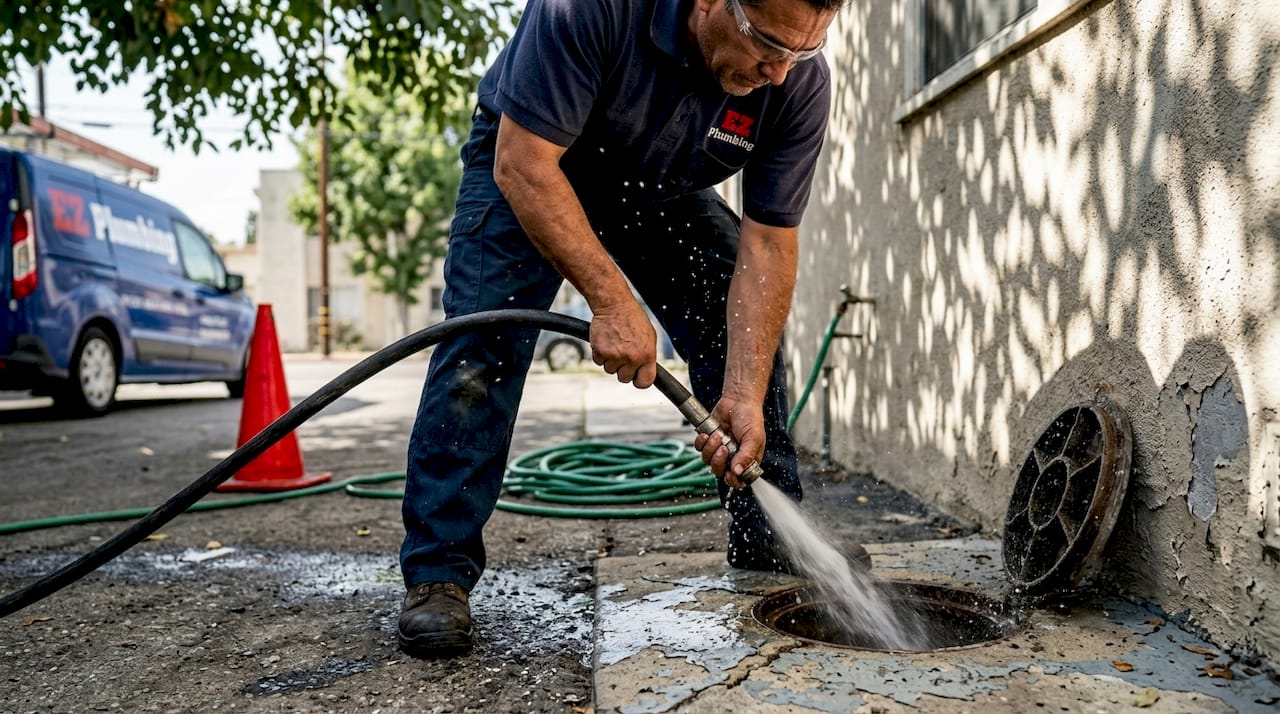
Camera inspection involves running a waterproof camera through the drain line to get a real-time view of what’s inside the pipe. This method is essential for diagnosing root intrusion, pipe cracks, offset joints, and other structural issues that can’t be detected from the outside. It’s also used after cleaning to confirm the line is clear.
| Method | Best for | Pipe types | Effectiveness |
|---|---|---|---|
| Drain snaking | Hair, soap, food clogs | All types | Moderate for simple clogs |
| Hydro jetting | Grease, scale, severe buildup | Cast iron, PVC | High for thorough cleaning |
| Camera inspection | Diagnosing hidden issues | All types | Diagnostic only |
For properties with older drain replacement considerations or clay sewer laterals, camera inspection is especially important because it reveals whether the pipe itself needs repair or replacement rather than just cleaning.
Pro Tip: Request a camera inspection before purchasing any property in Los Angeles. A drain camera can reveal root intrusion, cracked pipes, or deteriorating clay laterals that would cost thousands to repair after closing.
Understanding the methods empowers homeowners and managers, but routine maintenance holds the key to preventing recurring issues.
Drain maintenance: Preventative steps for lasting results
The most cost-effective approach to drain care is prevention. By keeping organic buildup, grease, and debris from accumulating in the first place, you extend the life of your pipes and reduce the frequency of service calls. This is particularly relevant in Los Angeles, where hard water leaves mineral deposits inside pipes that compound with other buildup over time.
Routine drain maintenance prevents costly repairs and is one of the highest-return investments a homeowner can make in their property’s plumbing infrastructure. Proactive upkeep consistently costs far less than reactive emergency service.
Several straightforward habits protect your drains every day. Never pour cooking grease or oil down the kitchen drain, even with hot water running, because grease solidifies as it cools further down the line. Use mesh strainers in kitchen and bathroom drains to catch debris before it enters the pipe. Flush bathroom drains with hot water for 30 to 60 seconds after each use to help carry soap scum further into the system before it can cling to pipe walls.
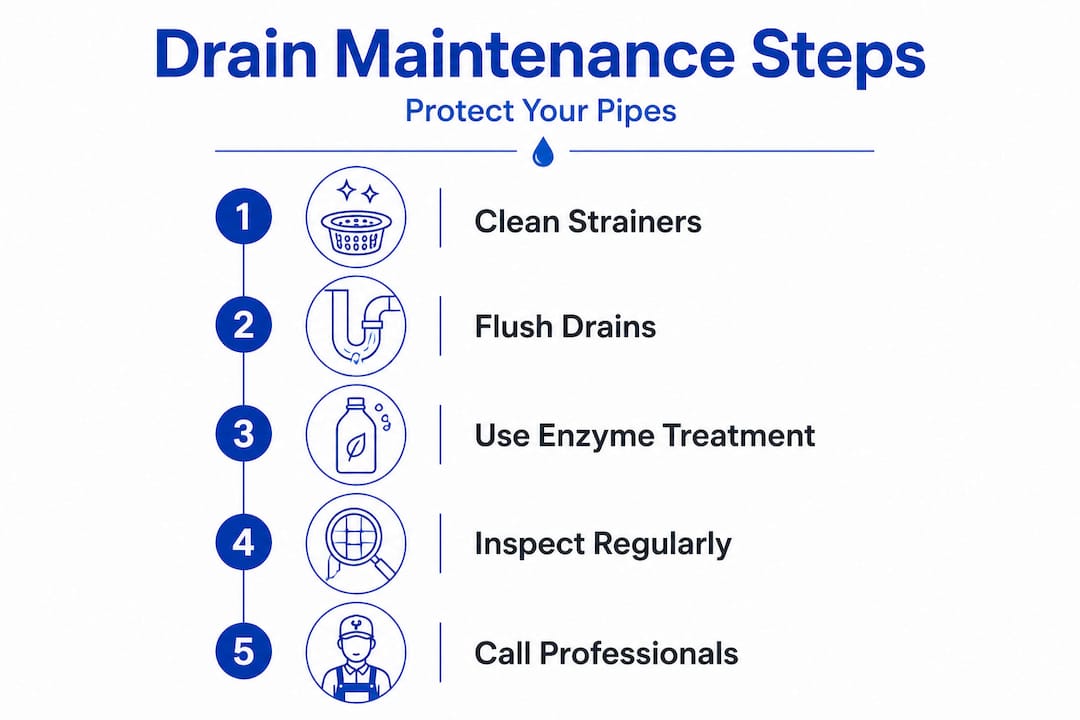
For property managers overseeing multi-unit buildings, the maintenance stakes are even higher. A single grease-clogged main line affects every tenant in the building, and emergency calls on weekends or holidays carry premium service rates. Routine maintenance eliminates most of those scenarios.
| Task | Recommended frequency |
|---|---|
| Check and clean drain strainers | Monthly |
| Flush drains with hot water | Weekly |
| Apply enzyme-based drain treatment | Quarterly |
| Schedule professional camera inspection | Annually |
| Full hydro-jetting service for main lines | Every 1 to 2 years |
Enzyme-based drain treatments, which use naturally occurring bacteria to break down organic material, are a practical and pipe-safe alternative to chemical cleaners for routine upkeep between professional visits. They won’t clear a full blockage, but they help keep buildup from forming in the first place.
Consulting with drain repair experts gives you a clear picture of your system’s current condition and what maintenance schedule makes sense for your specific property.
Effective maintenance pairs with expert service, and here’s how professional support goes above and beyond DIY efforts.
Why professional drain cleaning beats DIY approaches
After years of working on plumbing systems throughout Los Angeles, from Hollywood Hills bungalows to large commercial properties in Downtown, we’ve seen a consistent pattern. Homeowners who rely exclusively on DIY methods tend to call us when the problem has already become expensive. The liquid drain cleaner bought six months ago gave temporary relief, but the root cause, whether a root intrusion, collapsed pipe section, or years of compacted grease, was never addressed.
The core issue with chemical DIY cleaners is that they treat symptoms. They generate a chemical reaction strong enough to dissolve a portion of an organic clog, and flow returns temporarily. But that same chemical reaction, especially with caustic lye-based products, degrades older pipe materials over repeated applications. Galvanized steel pipes, which are common in pre-1970 Los Angeles homes, are particularly vulnerable to this kind of accelerated corrosion.
Our position is clear: professional drain cleaning services provide solutions beyond what DIY can achieve, not because we’re biased toward our own work, but because the tools and training required to fully clear a drain line and confirm it’s clean simply aren’t available in a hardware store aisle. Hydro jetting equipment alone costs tens of thousands of dollars and requires training to use correctly.
What we consistently tell property managers is this: don’t wait for a backup to schedule service. Expert drain cleaning done proactively, on a schedule, costs a fraction of what emergency service and water damage repair costs when a clog finally gives way at the worst possible time. Scheduling an annual inspection isn’t pessimism about your plumbing; it’s sound property management.
The other advantage professionals bring is documentation. A camera inspection report gives you a dated record of your pipe’s condition, which is useful for insurance claims, property sales, and tracking the rate of deterioration in older lines. No DIY method offers that.
Choose the right solution for your drains
When drain problems show up, the response matters as much as the speed. Acting on solid information from a licensed professional protects both your property and your budget.
EZ Plumbing provides Los Angeles drain cleaning services for residential and commercial properties throughout the greater LA area. Whether you’re dealing with a stubborn kitchen drain, a slow bathroom line, or a main sewer blockage, our licensed technicians use camera inspection, hydro jetting, and mechanical augering to deliver a thorough and lasting result. We also offer a preventive maintenance guide to help you stay ahead of problems between service visits. Call us to schedule an assessment, and we’ll give you a clear picture of exactly what your system needs.
Frequently asked questions
How often should I schedule professional drain cleaning?
Most homes benefit from annual drain cleaning, but high-use systems or properties with older clay sewer laterals should be serviced more frequently. Routine drain maintenance prevents costly repairs and keeps your plumbing operating at full capacity.
Can store-bought drain cleaners damage my pipes?
Frequent use of chemical drain cleaners can corrode pipes and harm plumbing systems, particularly older galvanized or clay pipes. Professional drain cleaning is a safer and more effective alternative for recurring blockages.
Is hydro jetting safe for older pipes?
Hydro jetting is powerful and may not be suitable for fragile or already-damaged pipes. Professionals assess pipe condition before applying high-pressure jetting to make sure the method matches the pipe’s current structural integrity.
What’s the difference between snaking and hydro jetting?
Snaking breaks up basic clogs using a rotating cable, while hydro jetting uses high-pressure water to clear severe blockages and scour pipe walls. Hydro jetting methods are generally reserved for more stubborn buildup or main line cleaning.
Are preventative drain maintenance steps effective?
Yes, consistent maintenance habits significantly reduce the frequency and severity of drain problems. Routine drain upkeep is essential to prevent plumbing issues and extends the functional lifespan of your pipes.