
15–20 Minute Monthly Checks: Property Manager Plumbing Checklist
Run leak checks regularly, drainage and water heater checks periodically, and arrange full professional inspections each year. Those three categories catch the failures that cause the most damage: silent leaks, slow drains, and aging water heaters. Every inspection should include a written record and have an emergency shutoff plan accessible. From there, a maintenance plan or a licensed inspection turns this checklist into a routine your team can actually keep.
TL;DR:
- Monthly leak and drain checks by staff help identify early issues like slow drains, moisture, or corrosion that can escalate into costly damage if ignored.
- Quarterly outdoor and utility inspections include testing hose bibs, gutters, laundry hoses, and sump pumps to prevent more extensive repairs due to seasonal changes or debris buildup.
- Annual professional inspections should focus on flushing water heaters, testing pressure valves, and inspecting sewer lines, which prevent major failures and are best handled by licensed plumbers.
- Proper documentation of inspections, including photos, dates, and action items, allows for effective tracking of systemic issues and defensible maintenance records.
- Emergency shutoff valves must be labeled, mapped, and accessible, with a preassembled kit in each building to minimize damage during urgent pipe bursts or backups.
Table of Contents
- Building Your Property Manager Plumbing Checklist by Season
- What to Inspect in Bathrooms, Kitchens, and Utility Areas
- How Should You Document Plumbing Inspections?
- What Should You Do in a Plumbing Emergency?
- Essential Tools Every Maintenance Team Should Stock
- When Does a Plumbing Job Require a Licensed Professional?
- How Much Should You Budget for Plumbing Maintenance?
- What a Facilities Lead Learns From Routine Plumbing PM
- Get Help Keeping Your Property’s Plumbing on Schedule
- Primary Sources for Plumbing Inspection Standards
- Sources
- FAQ
Building Your Property Manager Plumbing Checklist by Season
A property manager plumbing checklist only works if it matches how often problems actually develop. A running toilet can waste water for weeks before anyone notices the bill. A water heater’s anode rod corrodes over years. Tying each task to the right interval, rather than treating everything as an annual chore, is what separates a working maintenance program from a binder nobody opens.
Here’s how to structure the cadence:
- Monthly (a brief 15 to 20 minutes per unit, low urgency but high value). Have a maintenance tech or on-site staff member run water in every sink and tub, flush toilets, and note anything slow to drain. Check under kitchen and bathroom sinks for moisture or mineral buildup on supply lines. Glance at visible water heater connections for corrosion.
- Quarterly or seasonal (30 to 45 minutes per building, medium urgency). Test exterior hose bibs and irrigation shutoffs before the first freeze, and again when you reopen them in spring. Inspect roof drains and gutters for debris that redirects water toward foundations. Check laundry room supply hoses for bulging or cracking. Test sump pumps if the property has them.
- Annual (half a day to a full day, scheduled with a licensed plumber, high value). Have a professional flush and inspect every water heater, test pressure-reducing valves at the main, and run a camera inspection on sewer laterals older than 20 years or with a history of backups. This is also the point to verify backflow preventers, which many municipalities require to be tested annually regardless of property type.
Assign monthly checks to on-site staff or a maintenance coordinator since they don’t require licensing. Quarterly tasks can go to the same team if they’re trained on shutoffs and basic diagnostics, or to a plumbing contractor on a maintenance visit. Annual tasks belong to a licensed plumber, both for liability reasons and because tools like sewer cameras and pressure gauges aren’t standard maintenance equipment.
The payoff shows up over time, not immediately. Fixture issues that go unnoticed for a full year, like a worn diverter or a slow leak in a wall, tend to cost far more in water damage and utility bills than the ten minutes it takes to check them monthly.
What to Inspect in Bathrooms, Kitchens, and Utility Areas
Generic walkthroughs miss problems because they don’t specify what “check the bathroom” actually means. Here’s what a real inspection looks like, area by area.
Bathrooms and restrooms:
- Drop a dye tablet in the toilet tank and wait 10 minutes without flushing; any color in the bowl means the flapper is leaking.
- Time flushometer valves in commercial restrooms. They should shut off cleanly within a few seconds, not continue trickling.
- Unscrew faucet aerators and check for mineral buildup that restricts flow or masks a slow drip.
- Run the shower and check whether the diverter fully redirects water to the showerhead. A diverter leaking past a threshold of roughly 0.1 gallons per minute at the tub spout wastes real money over a year, according to EPA WaterSense’s bathroom inspection guidance.
Kitchens and laundry:
- Inspect dishwasher and ice-maker supply lines for kinks or brittle rubber. These are among the most common sources of sudden water damage in a unit.
- Check the garbage disposal mounting for leaks at the sink flange, a spot that loosens over time with vibration.
- Look at washing machine hoses for bulging; braided stainless replacements last far longer than the rubber hoses builders often install.
Water heaters: Check the temperature and pressure relief valve by lifting the test lever briefly. It should discharge water and reseal cleanly. If it doesn’t reseal or discharges continuously, that unit needs a licensed technician, not a DIY fix. Sediment buildup, rust at fittings, and a pilot light that won’t hold are all signs it’s time for full service.
Drains and sewers: Gurgling sounds from one fixture when another runs usually mean a partial blockage. Check that floor drain traps still hold water. Confirm sewer cleanouts are accessible, not paved over or buried under landscaping, so a camera crew can actually reach them.
Outdoor plumbing: Test backflow preventers if your property has an irrigation system. Before the first cold snap, drain and disconnect hoses from exterior bibs. Check that grading still slopes water away from the foundation rather than toward it.
Pro Tip: Keep a small bottle of dye tablets and a cheap water pressure gauge in the maintenance office. Both cost under $15 and let staff run two of the most useful diagnostic checks on this entire list without waiting on a contractor.
How Should You Document Plumbing Inspections?
Documentation is what turns a one-time walkthrough into a defensible maintenance history, especially if a tenant ever disputes responsibility for damage. A spreadsheet works for a handful of units. A CMMS (computerized maintenance management system) works better once you’re managing multiple buildings, because it timestamps entries and assigns follow-up automatically.
Every inspection record should capture:
- Date, unit or building area, and inspector name
- Photos of anything flagged, especially active leaks or corrosion
- Action items with a target repair date and assigned vendor
For hidden leaks, meter reads matter more than a visual walkthrough. Recording monthly water use in ENERGY STAR Portfolio Manager gives you a baseline, so a sudden spike flags a problem before a tenant even notices wet carpet. Set a repair SLA, something like 24 hours for active leaks and 5 business days for non-urgent items, and triage tickets by whether water is actively running, contained, or resolved.
What Should You Do in a Plumbing Emergency?
Every property needs main and zone shutoff valves labeled and mapped, with copies posted in the maintenance office and saved to every manager’s phone. When a pipe bursts, minutes matter more than which vendor you eventually call.
- Shut off the water at the nearest valve, or the main if the source isn’t obvious.
- Isolate the area by moving furniture and shutting doors to slow water spread to adjacent units.
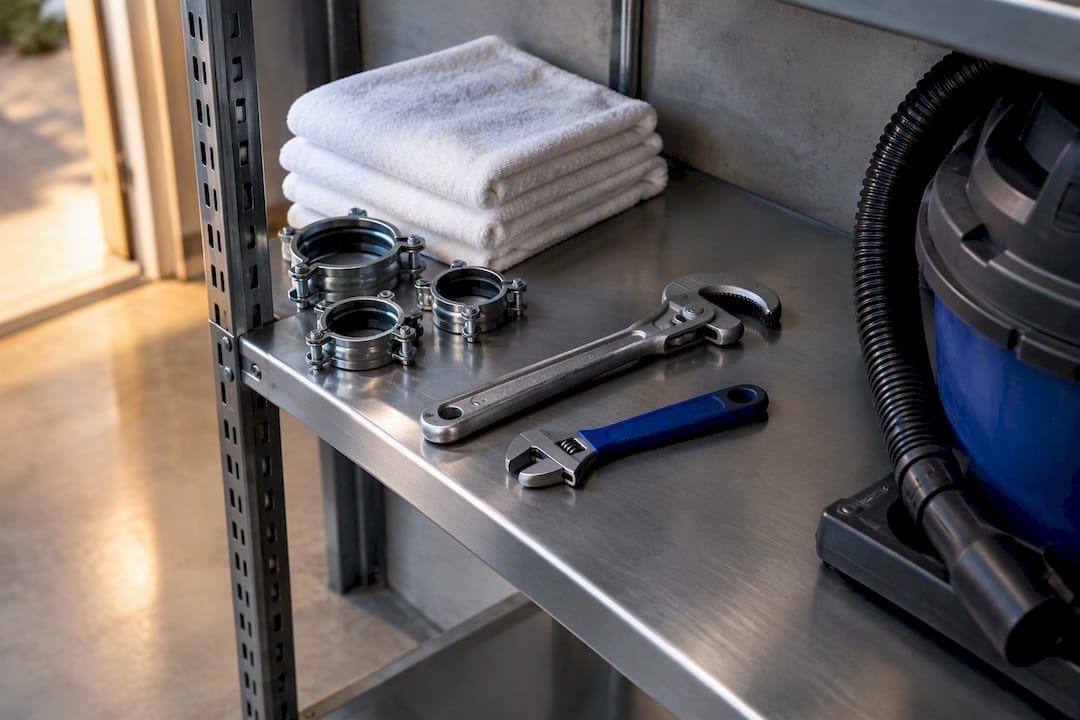
- Contain what you can with towels, buckets, or a wet vac while waiting for help.
- Call for service, choosing emergency dispatch over a scheduled appointment for anything involving active flooding, sewage backup, or gas odor.
Standard repairs, like a slow drain or a dripping faucet, can wait for a normal appointment. Anything actively flooding a unit, a gas smell, or sewage backing up into a fixture needs emergency response immediately.
Pro Tip: Assembling a basic emergency plumbing kit, pipe clamps, a shutoff wrench, towels, and a wet vac, in each building’s utility closet costs less than $100 and buys crucial time before a technician arrives.
Notify affected tenants immediately with a short message: the issue, expected timeline, and any temporary relocation if needed. Photograph damage before cleanup starts, since insurers typically require documentation of the original condition.
Essential Tools Every Maintenance Team Should Stock
A well-equipped maintenance closet cuts response time and catches problems before they escalate.
- A water pressure gauge to check main line pressure against the 40 to 80 psi range most codes require.
- Dye tablets for toilet leak testing and a spare flapper or two, since it’s the single most common toilet failure.
- Replacement aerators, since older ones restrict flow and hide slow drips.
- A smart leak detector or two placed near water heaters and washing machines, which alert staff before a slow leak becomes a flood.
- Automatic shutoff valves for high-risk units, particularly vacant ones where nobody will notice a leak for days.
- Submeters on larger properties, useful for isolating which building or wing is driving an unexplained usage spike.
Restock dye tablets and aerators every quarter; check detector batteries twice a year, ideally alongside your seasonal inspection round.
When Does a Plumbing Job Require a Licensed Professional?
Some tasks on this checklist are within reach for a competent maintenance team. Others carry real liability if handled by anyone without a plumbing license. Sewer camera inspections, gas line work, major water heater replacement, and full repiping projects all fall into the second category, not because the work is impossible to learn, but because mistakes here cause property damage, code violations, or safety hazards that dwarf the cost of hiring it out correctly.
A fully licensed and insured plumbing company often works regularly with property managers, HOAs, and commercial clients on both scheduled maintenance and emergency calls. Major replacements, water heaters, sewer lines, repiping, almost always require permits and code-compliant installation, and an uninspected job can create problems at resale or refinancing that cost far more than the repair itself. When your checklist flags something beyond a simple fixture fix, that’s the point to bring in a licensed technician rather than stretch in-house staff past what they’re trained for.
How Much Should You Budget for Plumbing Maintenance?
Plumbing costs on a property break into two buckets: routine maintenance and reactive repairs, and the ratio between them tells you a lot about how well your checklist is working. Properties with a consistent inspection cadence tend to spend more predictably and less overall, because small issues get fixed while they’re still small issues.
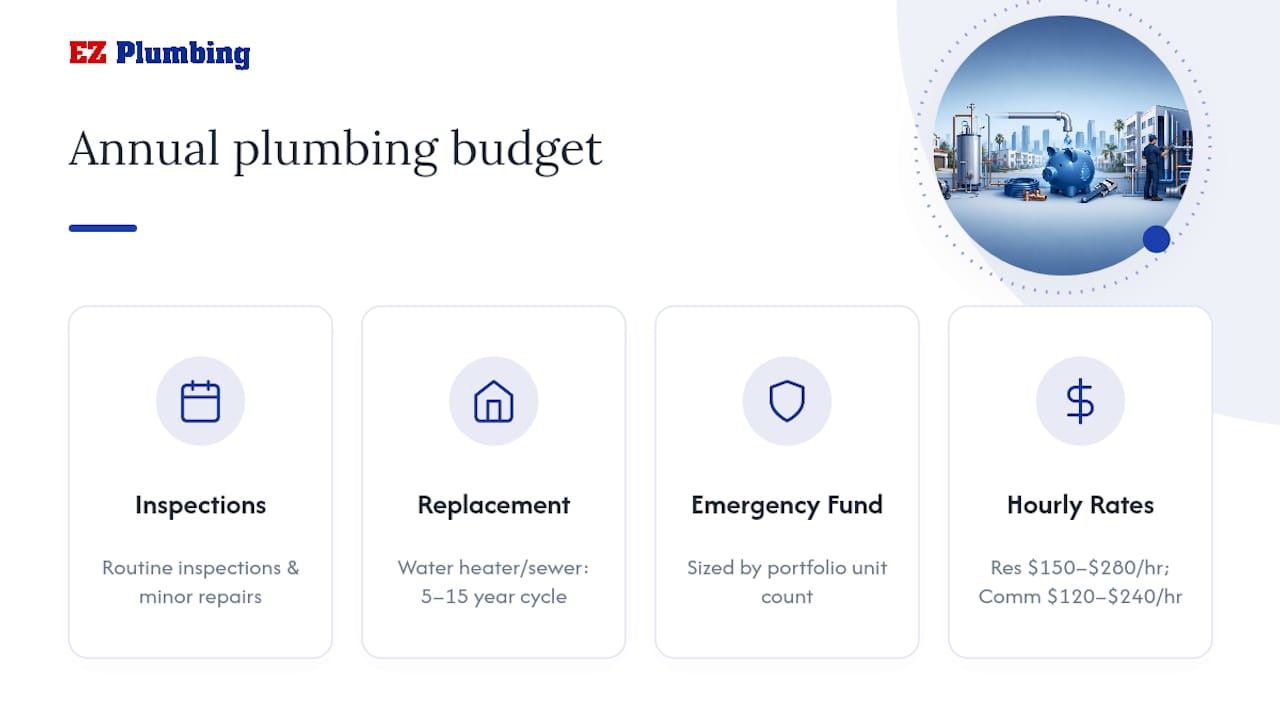
For budgeting purposes, licensed plumber rates in the Los Angeles market generally run $150 to $280 per hour for residential work and $120 to $240 per hour for commercial jobs, though exact pricing depends on the scope and urgency of the job. Emergency calls, especially after hours, typically cost more than scheduled visits, which is another argument for catching issues during a routine quarterly check rather than waiting for a 2 a.m. failure.
Build your annual plumbing budget around three lines: routine inspections and minor repairs (predictable, scheduled), a reserve for water heater or sewer line replacement (a five to fifteen year cycle depending on age and materials), and an emergency contingency fund sized to your portfolio’s unit count. Commercial maintenance contracts often smooth this out further by bundling scheduled visits at a set rate, which makes budgeting easier than pricing each call individually.
What a Facilities Lead Learns From Routine Plumbing PM
A building we worked with once caught a slab leak during a routine quarterly walk, before it undermined a foundation wall. The fix cost a fraction of what emergency excavation would have run, purely because someone noticed a damp baseboard on schedule rather than after a tenant complaint.
Three things stick from running a preventive maintenance program: start with leaks and drains, since they’re cheap to check and expensive to ignore; document everything, because patterns across units reveal systemic problems single inspections miss; and don’t wait for a perfect system before starting. A simple monthly walkthrough beats an elaborate CMMS rollout that never launches. Scale the cadence once the basics are running.
— EZ
Get Help Keeping Your Property’s Plumbing on Schedule
Running this checklist consistently across multiple units or buildings takes staff hours that most property management teams don’t have to spare. Ez-plumbing offers commercial maintenance contracts built specifically for property managers, HOAs, and restaurants, covering the annual professional inspections this checklist calls for, water heater service, sewer camera work, and backflow testing, on a schedule your team doesn’t have to manage manually.
Beyond scheduled maintenance, plumbing companies may provide 24/7 emergency plumbing response for urgent issues such as burst pipes, sewage backups, or water heater failures. Technicians are typically licensed and insured, with documentation for every job to help keep compliance records clean. If you’re managing a portfolio and want a maintenance partner rather than a one-off repair call, request a quote through Ez-plumbing’s commercial plumbing page and get your inspection cadence on the calendar.
Primary Sources for Plumbing Inspection Standards
The EPA WaterSense commercial bathroom resource guide covers dye tests, diverter leak thresholds, and fixture retrofit standards in detail, useful for building your own inspection form. ENERGY STAR Portfolio Manager gives properties a free tool for tracking water and energy baselines over time. For a broader look at unit-level inspection steps, Ez-plumbing’s guide to rental property plumbing tips covers additional checklist items specific to leased units.
Sources
- EPA: Fix a Leak — WaterSense
- EPA WaterSense: Bathroom suite resource guide (commercial buildings)
- ENERGY STAR: Portfolio Manager resources
- This Old House: Plumbing emergency tips
FAQ
What should a property manager’s plumbing checklist include?
A complete checklist covers monthly visual checks for leaks and slow drains, quarterly seasonal tasks like freeze protection and hose bib checks, and annual professional service for water heaters, sewer lines, and pressure-reducing valves. It should also require documentation of every inspection and clearly labeled emergency shutoffs.
What’s the most overlooked plumbing maintenance task?
Water heater pressure relief valve testing gets skipped more than almost any other task, largely because it’s out of sight in a closet or garage. A valve that won’t reseal or discharge properly signals a failure risk that a licensed plumber should address before it becomes a water heater repair emergency.
How often should a plumbing inspection happen?
Run visual leak and drain checks monthly, seasonal outdoor and freeze-protection checks quarterly, and a full professional inspection annually. Properties in older buildings or with a history of sewer backups often benefit from more frequent camera inspections than the annual baseline.
What are common signs of plumbing problems property managers should watch for?
Slow drains, gurgling sounds, unexplained spikes in the water bill, and damp spots near baseboards or under sinks are the earliest warning signs. Catching these during a routine check, rather than waiting for a tenant complaint, is what a working property manager plumbing checklist is designed to do.
How much does routine plumbing maintenance cost for a property?
Costs vary by scope, but licensed plumber rates in the Los Angeles market typically run $150 to $280 per hour for residential work and $120 to $240 per hour for commercial jobs. Many property managers reduce unpredictability by using a commercial maintenance contract that bundles scheduled visits into a set arrangement.