
Main Line Drain Cleaning: What LA Homeowners Need to Know
You don't usually think about the main sewer line until the house tells on itself. The bathtub starts holding water, the toilet gurgles after a shower, and then the washing machine kicks on and wastewater shows up where it shouldn't. That's when main line drain cleaning stops being a maintenance item and turns into a same-day problem.
Most homeowners waste time on the wrong clue first. They clean a single sink trap, swap a stopper, or pour in a bottle of something harsh, then wonder why the backup keeps coming back. In Los Angeles, that delay can turn a manageable clog into a messy cleanup, especially when the blockage is deeper in the system and every fixture shares the same line.
Table of Contents
- Recognizing a Main Line Blockage Before It Becomes an Emergency
- How to Tell a Main Line Clog from a Branch Line Problem
- Cable Machines Versus Hydro Jetting Explained
- What Main Line Drain Cleaning Costs
- What to Expect During a Professional Service Visit
- Preventive Maintenance Schedules That Save Money
- Choosing a Reliable Plumber for Main Line Work in Los Angeles
Recognizing a Main Line Blockage Before It Becomes an Emergency
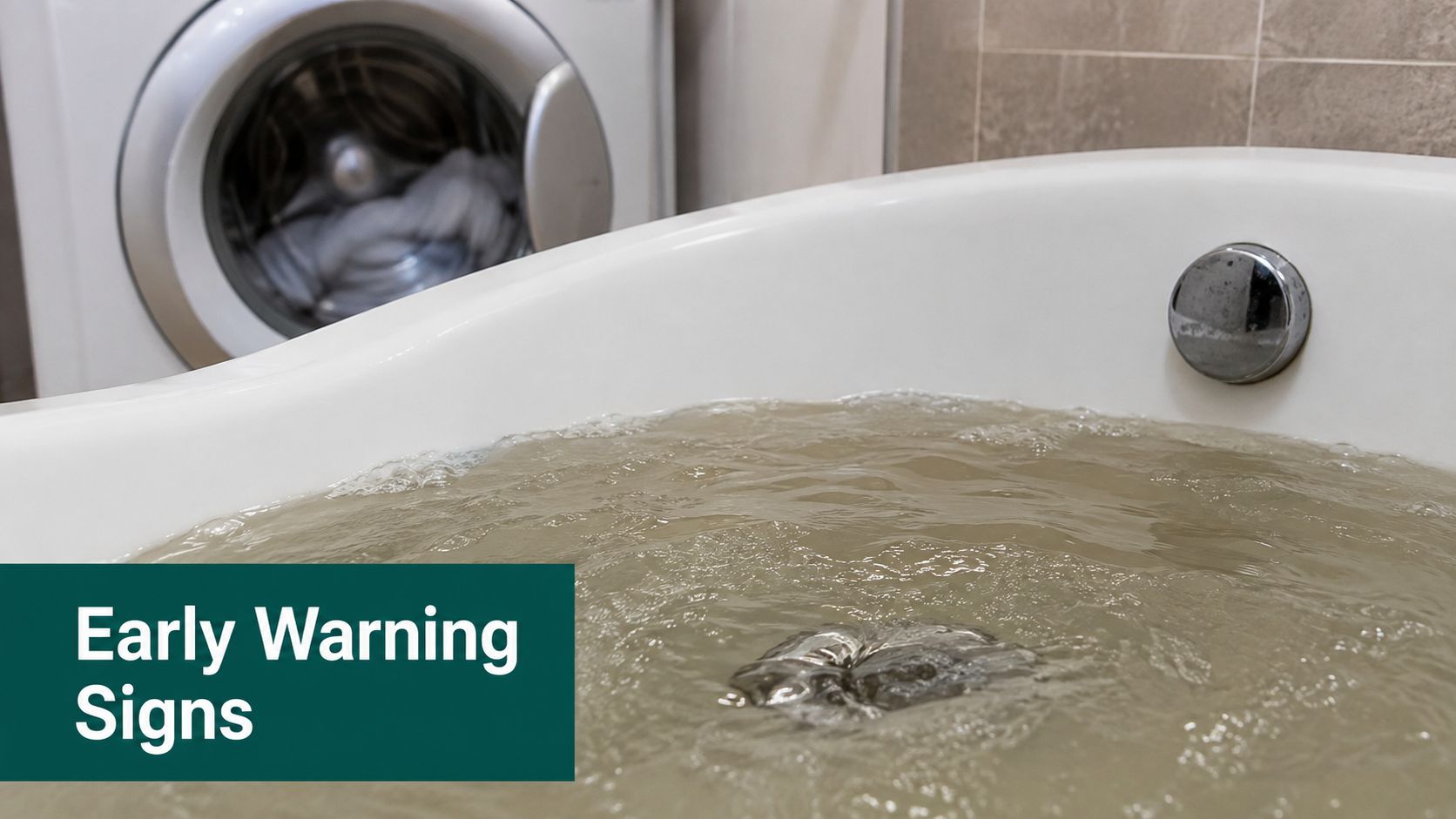
A homeowner calls after the washing machine drains and the hall tub starts filling. The kitchen sink is slow, the toilet burps, and the floor drain smells like something's gone wrong in the walls. That pattern usually points past the fixture itself and into the line that carries everything out of the house.
What multi-fixture symptoms really mean
A single clogged sink often stays local. A main line problem tends to show up in more than one place because the restriction sits after the branch drains join together. That's why a toilet flush can cause a tub to gurgle, or why a washer cycle can push water back into a shower.
The sequence usually starts with slow drainage and odd sounds. It gets worse when water use stacks up, then it crosses into backups, odors, and overflows at the lowest fixtures. If you're seeing that pattern, the issue is bigger than a hairball in one trap.
A useful reference for homeowners comparing building layouts is common building riser types, because vertical stacking and shared pathways help explain why one fixture can affect several others.
When wastewater shows up in multiple fixtures at once, stop treating it like a local drain problem.
The signs people miss
The early clues are easy to shrug off. Gurgling from a floor drain, sewage odor near a cleanout, or water pooling around the foundation cleanout are all warnings that the system is under stress. If you keep using water after those signs appear, the line can go from partly restricted to fully backed up in a hurry.
I've also seen homeowners ignore the first hint because one fixture still drains well enough to seem normal. That's the trap. A fast fixture can hide a partially blocked line, and the backup only announces itself when enough water hits the restriction at once.
For more symptom patterns, see these sewer line problem signs. If those signs sound familiar, the house is already giving you a diagnosis before anyone opens a tool bag.
How to Tell a Main Line Clog from a Branch Line Problem
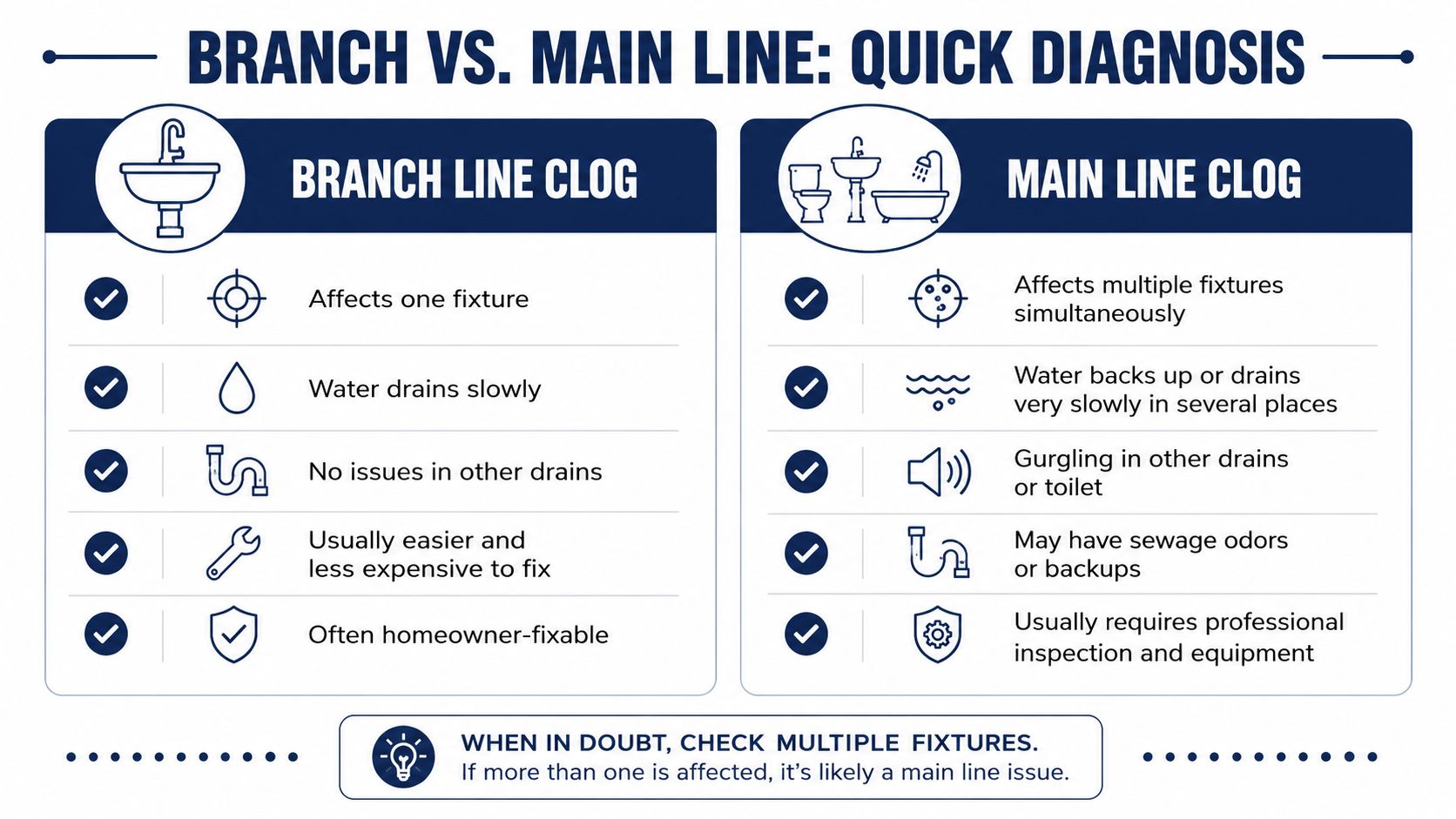
A branch-line clog usually shows up in one place. One sink, one tub, or one shower drains slowly, but the rest of the house keeps working normally. A true main-line blockage affects shared plumbing, so the warning signs spread across multiple fixtures that rely on the same exit path.
Start with the symptom pattern
The fastest way to sort it out is by scope. If only one fixture is slow, the problem is usually in that fixture's branch. If the toilet gurgles when the washer drains, or the tub backs up when the kitchen sink runs, the shared main line needs attention. That pattern is the practical clue homeowners can see before anyone opens a tool bag.
The cleanout is the next checkpoint. A main cleanout gives access to the sewer path leaving the house, and opening it without knowing what is in the line can send wastewater out fast. The safe move is to stop using water first, then locate the cleanout and open it carefully only if you know the setup and can control what comes out.
Practical rule: one slow drain points to a fixture issue, several fixtures misbehaving together point to the shared line.
The cleanout test and what it tells you
If the cleanout is accessible, standing water in it usually means the restriction is downstream of that point. That is a stronger clue than guessing from one sink or tub. If the pipe looks open and the trouble stays limited to one fixture, the branch line is more likely the source.
A partial main-line blockage can still fool you. One fixture may drain well enough to suggest the line is clear, then fail as soon as a larger volume of water reaches the restriction. That is why homeowners who test only one sink often end up paying for the wrong service first.
The common mistake is treating every backup like a quick snake-and-go job. A branch-line fix may be enough for a single fixture, but a main-line problem often needs the right access point, the right tool, and enough cleaning to remove the buildup, not just poke a hole through it. That matters even more when the cleanout is buried, the yard is tight, or the blockage sits past the point where the branches combine.
Cable Machines Versus Hydro Jetting Explained
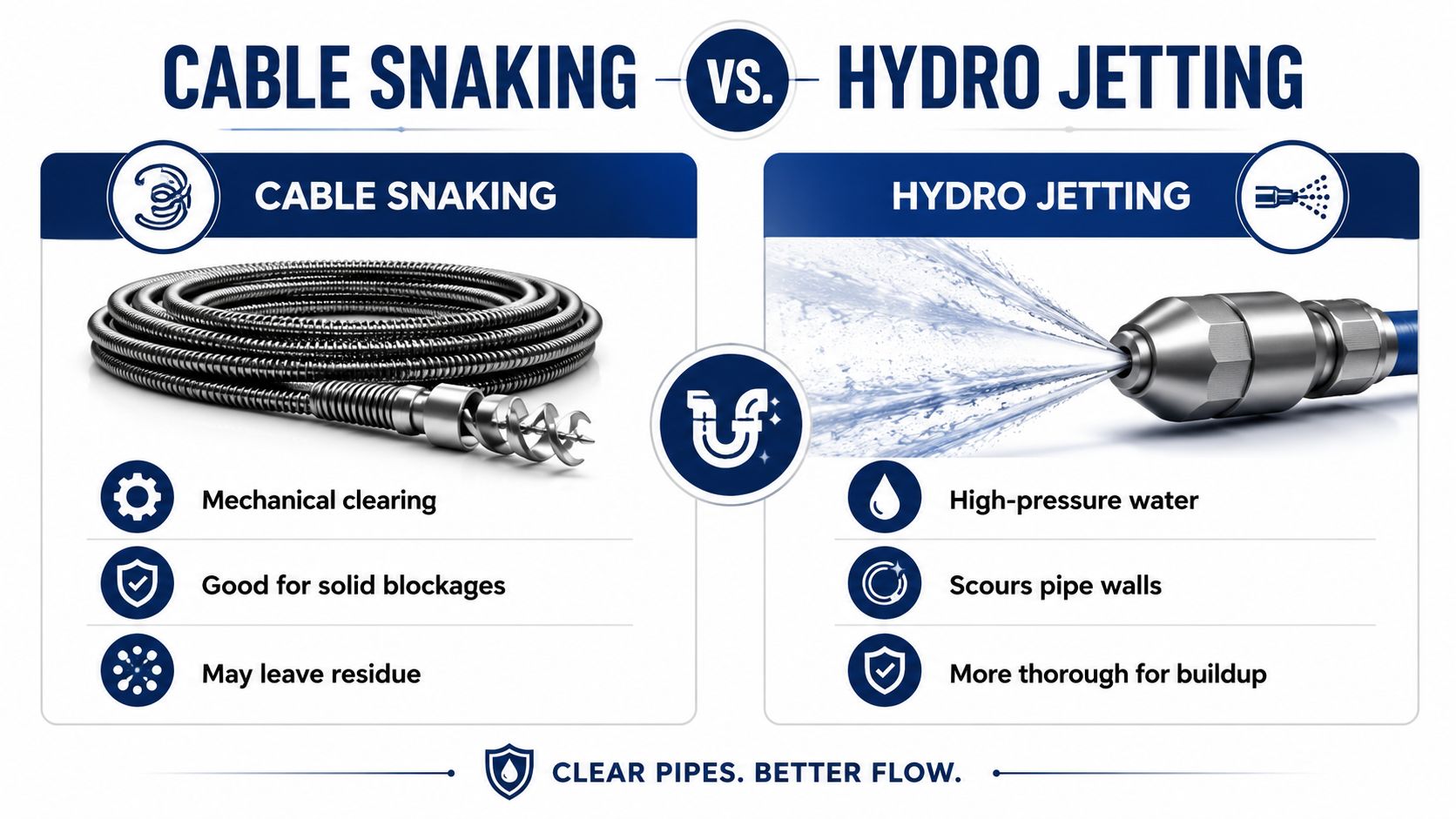
A cable machine opens a line by cutting a path through a blockage. Hydro jetting does something different, it strips the inside of the pipe so the buildup that caused the clog doesn't stay behind. That distinction matters because a line can look clear and still be coated enough to fail again soon.
What each method actually does
Mechanical cable equipment is good at localized obstructions. It can cut through rags, roots, and grease plugs when the blockage is concentrated in one spot. What it doesn't always do is clean the pipe wall from end to end.
Hydro jetting uses forward and rear-facing jets to scour the pipe wall and restore more of the internal diameter. Industry guidance places typical operating ranges at about 1,500 to 4,000 PSI and 2 to 18 GPM (public utility equipment specs). That range lets the technician match nozzle and flow to the pipe size and the type of obstruction.
If you want a homeowner-friendly overview of the tool itself, this hydro-jetting guide is a useful companion.
Why the choice changes the result
A cable can restore flow today, but leave grease or scale on the walls. That leftover buildup is what causes the repeat call. Jetting is the smarter move when the pipe has widespread narrowing, not just one bad plug.
Utility standards also show that high-velocity sewer cleaning systems may need to deliver at least 50 GPM at 1,500 PSI for sanitary sewer work (public utility cleaning specs). That benchmark is useful because it separates real cleaning capacity from simple opening power.
A drain that flows again isn't automatically a drain that's clean.
The trade-off is straightforward. Cable work can be faster and cheaper for a discrete clog. Jetting costs more up front, but it often makes sense when the same line has been clogging repeatedly because the pipe wall still has the stuff that caused the problem in the first place.
What Main Line Drain Cleaning Costs
A main-line clog usually costs more to clear because the problem sits past the point where the fixtures tie together. The plumber has to find the access point, confirm whether the blockage is in the main or a branch line, and then spend the time to clear it correctly. For a homeowner comparing estimates, the question is what the quote covers, not just the headline number.
A standard drain unclogging often lands around $242, while a main sewer line clog commonly falls in the $175 to $800 range, according to the pricing guide. Severe stoppages that call for hydro jetting can run $300 to $800+, and a job that combines camera work with jetting can reach about $1,600. Those figures sound wide because the work can be very different from one house to the next. A simple cable job is one thing, but a line full of grease, roots, or heavy scale takes more time and more equipment.
| Main Line Drain Cleaning Service | Typical Cost Range | What It Usually Covers |
|---|---|---|
| Standard main line clearing | $175 to $800 | Access, clearing, and flow check |
| Hydro jetting for severe blockage | $300 to $800+ | Higher-pressure cleaning for heavy buildup |
| Video inspection plus jetting | About $1,600 | Camera diagnosis, cleaning, and verification |
That kind of pricing makes more sense once you look at the hidden work behind it. If the plumber has to verify whether the clog is in the branch line or the main, pull a camera, or open a tougher access point, the labor climbs fast. A quote that only covers a quick opening pass can look cheaper at first, then become the expensive option when the line backs up again.
The time on site matters too. Main sewer line cleaning commonly takes 1 to 4 hours, which reflects diagnosis, access, and removal of deeper obstructions like roots or damaged pipe sections, as noted in the same pricing guide. Short jobs are usually the ones where the clog is close to the cleanout and easy to reach. Once the problem is deeper in the line, the visit gets longer and the price follows.
For the cost of cleanup after a backup, Restore Heroes cleanup cost guide helps put the plumbing bill in context. That is the part many homeowners miss when they are comparing estimates. A partial cleaning may seem cheaper, but if the line still has buildup on the walls, the same emergency can come back a few weeks later. A fair quote should reflect the actual condition of the line, not just the first sign of flow returning.
What to Expect During a Professional Service Visit
A solid service call starts with the right questions, not with a machine shoved down the line. A technician should ask which fixtures are backing up, whether there are sewer odors, and whether the home has an accessible cleanout. Those details point the inspection in the right direction, so the plumber can check the part of the system that is causing the trouble.
The visit should follow a clear order
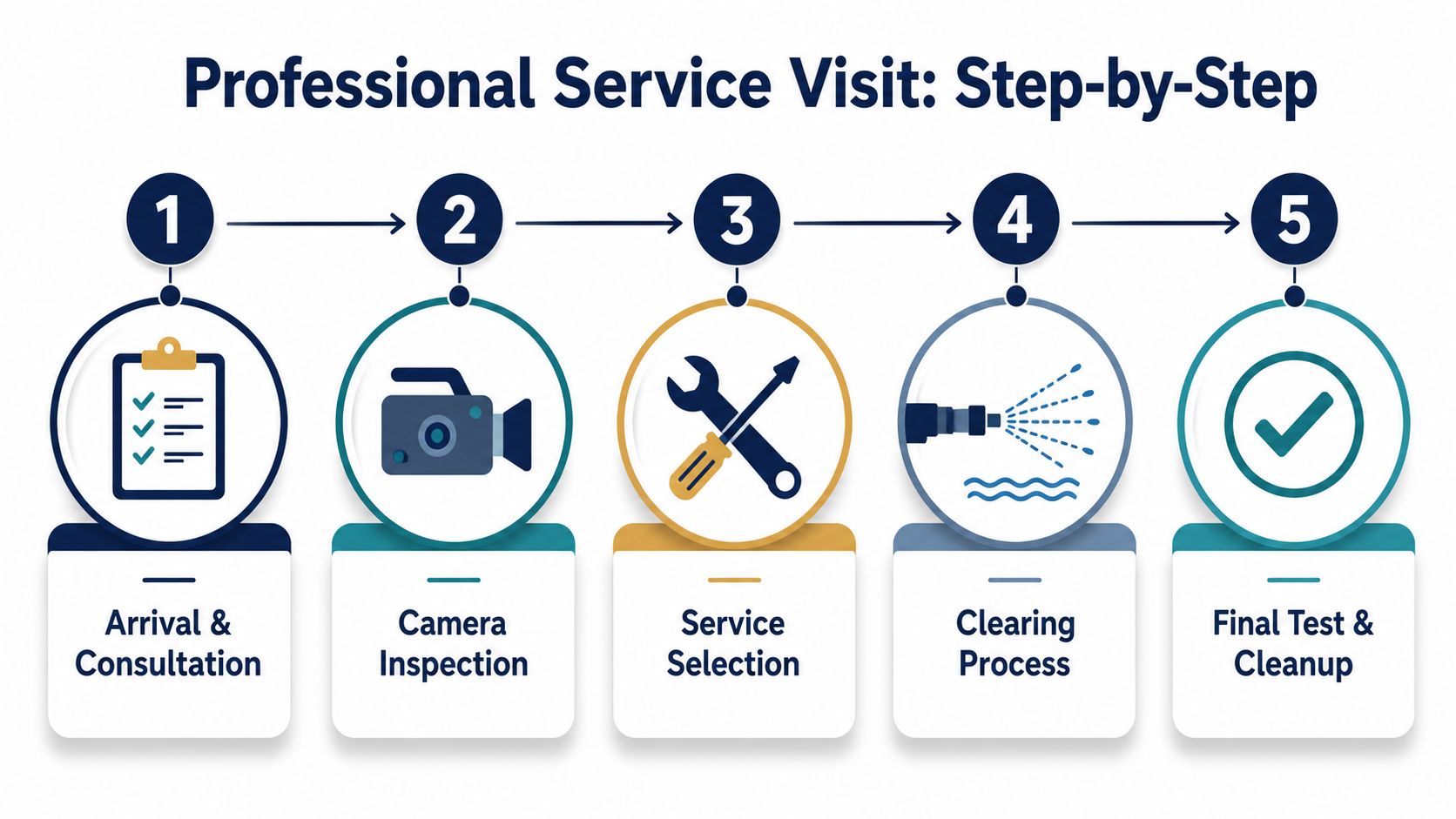
The call usually begins with an arrival and a brief consultation. After that, the technician opens the cleanout, then uses camera inspection if the blockage type or pipe condition is not obvious. From there, the cleaner is selected, the equipment runs, and the line is checked again to make sure flow has returned.
That last check matters because a drain can look open and still hold enough buildup to fail again. NASSCO sewer-cleaning guidance sets removal benchmarks for Deposits Settled by pipe diameter, with a maximum of 25% for pipes up to 12 inches, 15% for 13 to 24 inches, and 10% for 25 to 30 inches (NASSCO guidance). Those benchmarks come from NASSCO materials, and they explain why a quick pass that only restores partial flow can leave a homeowner with another backup soon after.
What a thorough plumber leaves behind
A proper job ends with a plain explanation of what was found and what was removed. If the line had roots, grease, or attached encrustation, the technician should say that directly and recommend the next step without turning the visit into a sales pitch.
Iowa DOT specifications separate light sewer cleaning from heavy sewer cleaning. Light cleaning uses a hydraulic flusher, while heavy cleaning allows unlimited passes with high-velocity hydro-cleaning equipment or spinner nozzles to cut roots and remove attached buildup (Iowa DOT specs). That distinction helps homeowners understand why one pass may clear the line for the moment, yet still leave enough residue for the same problem to come back.
A reputable company leaves you with a practical summary. You should know whether the line is open, whether residue is still clinging to the pipe, and whether follow-up maintenance makes sense for the condition of the system.
Preventive Maintenance Schedules That Save Money
A smart maintenance plan starts before the first backup. In main-line work, waiting for a slow drain to turn into a flooded floor usually costs more than a planned service visit, because emergency calls bring after-hours labor, cleanup, and more pressure on the pipe. A homeowner gets better results by treating the line like part of the house that needs regular attention, not a problem that can sit until it fails.
According to the maintenance guidelines, residential main sewer lines are commonly cleaned every 18 to 24 months. For many homes, that same guidance also treats 1 to 3 years as a workable interval, with 18 to 22 months used as a steady target when the goal is routine prevention.
When the schedule should tighten
Some properties need service sooner. Older housing stock built before 1970, especially when large-root trees are nearby, may need cleaning every 6 to 12 months. Commercial food service operations often need grease-line cleaning every 30 to 90 days. Those shorter intervals are not overkill, they reflect the way grease, roots, and heavy use rebuild the blockage faster than a standard residential line.
The reason partial cleaning causes repeat emergencies is simple. If the line is only opened enough to get water moving, residue stays on the pipe wall, roots keep growing into the opening, and grease hardens again. That is how a homeowner pays twice, once for the first visit and again when the same spot closes back up.
For property managers and HOAs, the better approach is to put the main line on a calendar instead of waiting for resident complaints. A planned schedule protects shared areas, cuts down on after-hours calls, and gives you a record when you compare service providers from one year to the next.
Practical rule: if the same line has clogged more than once, stop treating cleaning as a rescue call and start treating it like maintenance.
A planned cleaning usually costs less than the cleanup after a spill, and far less than replacing damaged flooring or drywall. It also lowers the chance that one unit's backup becomes a building-wide complaint.
Choosing a Reliable Plumber for Main Line Work in Los Angeles
Main-line work is not the place for guesswork or bargain-bin service. You want a plumber with proper licensing, insurance, and real Los Angeles experience, because older homes, shared laterals, and tight access all change the job. A contractor who knows local infrastructure is less likely to misread the symptoms or use the wrong tool.
If you're comparing companies, this local plumber checklist is a practical place to start. For a broader sense of how sewer cleanup work is handled after a backup, Eagle Restoration's sewage cleanup page shows why response time and cleanup coordination matter once wastewater has entered the property.
What to ask before you book
Ask whether the company can inspect the line, clear it, and verify the result. Ask what they'll do if the blockage is roots, grease, or a structural issue, and ask for transparent pricing before they start. If the estimate is vague or the technician won't explain the method, keep looking.
EZ Plumbing offers licensed main line clearing, hydro jetting, and camera inspection in Los Angeles, along with 24/7 response for urgent backups. That mix matters when you need the line opened now, not tomorrow.
Trust the plumber who tells you what the line needs, not the one who promises a quick fix without looking. When the same fixtures keep backing up, call EZ Plumbing and get the line diagnosed properly before the next spill turns into a bigger repair. Visit EZ Plumbing to schedule service with a team that handles main line drain cleaning, inspection, and cleanup-focused repair work across Los Angeles.