
How to Test a Backflow Preventer the Right Way
You're standing by the meter or the irrigation tie-in, and there's a brass assembly with test cocks, shutoff valves, and a relief port that's a little too familiar for comfort. Then the compliance notice shows up, or the HOA forwards a letter, and now the question isn't whether the device matters, it's whether the reading you get back will mean anything.
That's where many get tripped up. A backflow test isn't just a technician connecting gauges and calling it good, it's a validity check on the device, the setup, and the reading itself. If you're dealing with a backflow preventer on a commercial service line, an irrigation tie-in, or a mixed-use property, knowing what you're looking at saves time, money, and a lot of unnecessary panic.
Table of Contents
- Spotting the Brass Box on Your Property
- Identifying Your Backflow Preventer Type
- Running a Calibrated RPZ Test Step by Step
- Testing Double-Check and PVB Assemblies
- How to Know Your Test Is Actually Valid
- LA Testing Frequency and Who Can Sign the Report
- Cost to Test in LA and Why EZ Plumbing Is Worth the Call
Spotting the Brass Box on Your Property
A homeowner in Los Angeles usually notices the device the same way they notice a roof leak, too late and in the middle of a deadline. The brass box is sitting near the meter, or tucked into the irrigation line, and nobody has thought about it until the compliance email lands in the inbox. The first job is simple, identify the assembly and confirm that it's not just random plumbing hardware.
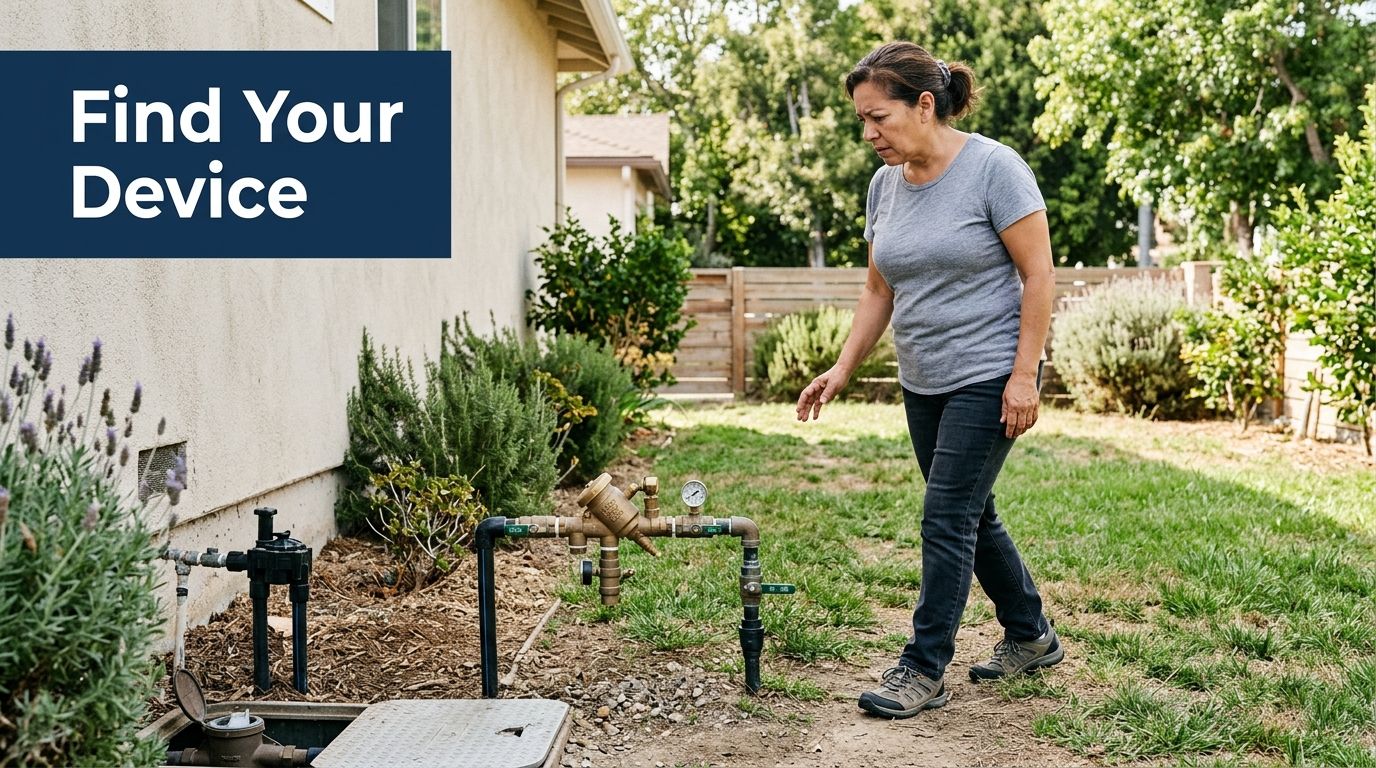
Backflow testing exists for one reason, to keep contaminated water from reversing into the potable supply. In plain terms, a backflow preventer is a mechanical barrier that protects the city side when pressure changes or cross-connections create a risk. If you want the mechanics first, the simplest background read is how a backflow preventer works.
What property owners usually miss
It's a common misconception that this device is only relevant to irrigation systems. That perspective is too limited. Commercial water service, fire protection lines, and higher-risk plumbing setups can all require a testable assembly, and the test schedule is part of the obligation, not an optional maintenance task.
A well-designed irrigation layout can reduce stress on the assembly by minimizing unnecessary pressure swings and service problems, which is one reason planners care about designed irrigation for high-traffic areas when they're trying to keep systems reliable. The backflow device still has to do its job, but the surrounding system makes a difference in how often it gets bothered by debris, service interruptions, and bad field conditions.
Practical rule: If you can't identify the assembly, don't guess at the test sequence. The device type determines the setup, the threshold, and whether the reading even means what you think it means.
A property manager should treat the brass assembly the same way they'd treat an electrical panel, know what it is before anyone starts flipping switches. That mindset keeps a routine inspection from turning into an expensive false alarm.
Identifying Your Backflow Preventer Type
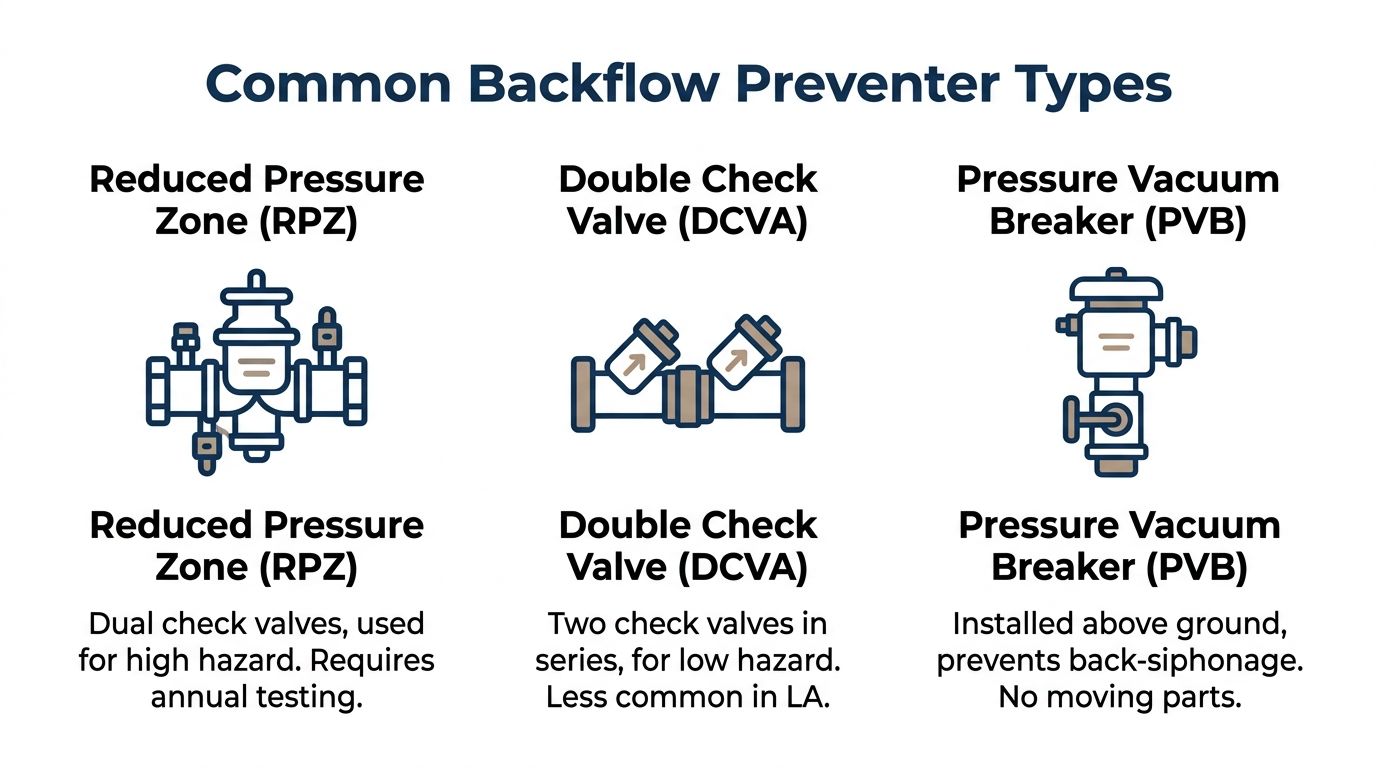
Before a tester cracks open a gauge case, the device has to be identified correctly. In Los Angeles, the three assemblies most commonly encountered are the RPZ, the double-check valve assembly, and the pressure vacuum breaker. They're not interchangeable, and a wrong assumption about the device type is one of the fastest ways to create a bogus reading.
RPZ assemblies
An RPZ, or reduced pressure zone assembly, is the one with the most obvious personality. It has two check valves and a relief valve, and that relief port is what sets it apart visually and functionally. These are common on higher-hazard applications because they're designed to dump pressure if the internal protection starts to fail.
Double-check valve assemblies
A double-check valve assembly, often called DCV or DCDA, is quieter and simpler on the outside. It has two check valves in series, but no relief valve. That matters because the test logic changes, there's no relief opening point to verify, so the technician focuses on whether each check holds under reverse pressure.
Pressure vacuum breakers
A PVB usually shows up on irrigation. It's installed above ground and is used to stop back-siphonage, not the same failure mode you'd be looking at on an RPZ. The setup is different enough that a tester who treats it like an RPZ can end up with nonsense readings or a rushed wrong call.
| Backflow Preventer Test Reference | Device Type | Test Cocks | Key Threshold | Pass Criteria |
|---|---|---|---|---|
| Reference snapshot | RPZ | Four | Relief valve opens at above 2 psid, second check holds at at least 1 psid | Stable differential behavior and no pressure loss at the checks |
| Reference snapshot | DCV or DCDA | Varies by assembly | Check-valve holding under reverse pressure | Each check holds as required, no relief test applies |
| Reference snapshot | PVB | Varies by assembly | Air-inlet and single-check behavior | Air inlet and check operate correctly under test conditions |
A useful way to think about it is this, RPZs are about controlled relief, double-checks are about holding pressure, and PVBs are about air and back-siphon protection. If you're comparing components for a water line project, selecting check valves for water systems is a decent way to understand why different assemblies fail in different ways.
A device label helps, but the body shape and the presence or absence of a relief port tell you more in the field than a half-faded tag ever will.
Running a Calibrated RPZ Test Step by Step
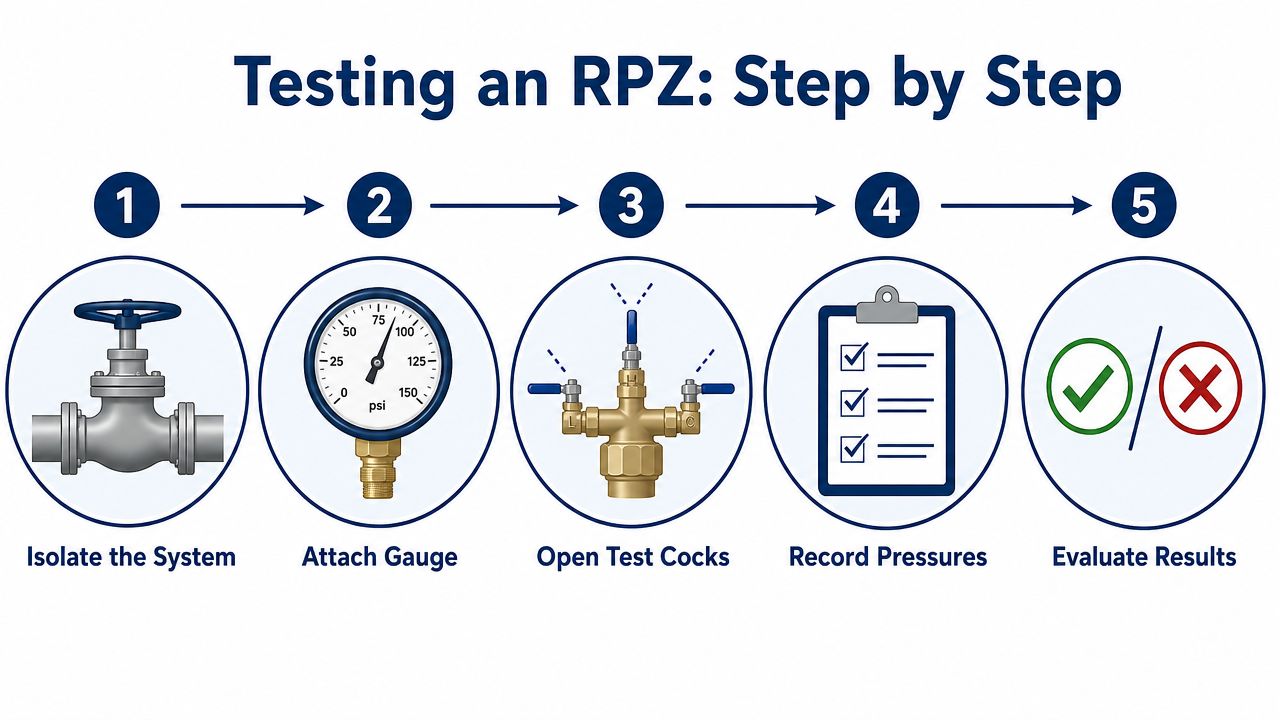
The RPZ is the assembly most people ask about because it's the one that turns a simple check into a calibrated pressure exercise. The tester isn't just opening ports and watching a needle, the tester is proving that the assembly behaves correctly across the check valves and the relief valve. The Lincoln, Nebraska utility procedure is a good example of how precise that field logic gets, with the low side bled last and the reading sequence used to avoid false results Lincoln RPZ testing procedure.
Start with the hose setup
The differential gauge has to be connected to the correct test cocks, high side to high side, low side to low side. That sounds basic, but the wrong hose on the wrong cock can make a good assembly look bad instantly. Air has to be bled from the hoses before you trust any reading, and the low side gets bled last so the pressure differential is established the right way.
Isolate and read the gauge trend
Once the assembly is isolated by closing the downstream shutoff valve, the tester watches how the pressure behaves across the checks and the relief port. The point isn't a single snapshot, it's the trend. A weak spring, a fouled check, or a sticky relief valve will often show up as unstable movement before the reading lands outside the acceptable range.
Watch the actual thresholds
For a typical RPZ field test, the relief valve should open at above 2 psid, and the second check should hold at at least 1 psid without pressure loss. The Lincoln procedure also calls for the second check to remain closed tight at 5 psid or higher, with at least 3 psid difference between the first check's loss and the relief valve opening point. Those numbers matter because they separate a healthy assembly from one that's starting to leak internally.
Field note: If the gauge wobbles, pause before you call the device bad. Bad hose purging, trapped air, or a dirty test cock can imitate a failing assembly almost perfectly.
That's why a clean, fully purged test kit matters more than most owners realize. A sloppy setup can make a serviceable RPZ look unstable, and once that happens, people start talking about replacement when all they really needed was a proper retest.
Testing Double-Check and PVB Assemblies
Double-check and PVB assemblies get treated like cousins of the RPZ, but the test logic is different enough that you can't copy-paste the same routine. The safer habit is to start from the device's function, then match the test to that function. A double-check assembly is about holding pressure through two checks, while a PVB is about verifying the air inlet and the single-check behavior on an irrigation line.
Double-check assemblies
A double-check valve assembly doesn't have a relief valve, so there's no relief opening point to chase. The test focuses on whether each check valve holds against reverse pressure and whether the differential across each check stays where it should. If one check leaks, the reading usually shows it through poor holding behavior rather than a visible relief event.
Pressure vacuum breakers
A PVB is typically used on irrigation and has to be installed above the highest downstream outlet, commonly 12 inches above it. The test is performed with the assembly under line pressure and the downstream valve closed, so the technician can see whether the air-inlet valve and the check respond properly. If the vacuum breaker can't admit air or the check won't behave, the irrigation line becomes a contamination risk.
| Backflow Preventer Test Reference | Device Type | Test Cocks | Key Threshold | Pass Criteria |
|---|---|---|---|---|
| Compact guide | DCV or DCDA | Assembly dependent | No relief opening point applies | Each check holds under reverse pressure |
| Compact guide | PVB | Assembly dependent | Above-grade installation and air-inlet response | Air inlet and single check operate correctly |
The device choice tells you a lot about how the system is expected to fail. If you're choosing components for a water line, the logic behind selecting check valves for water systems lines up with what field testers see every day, simpler assemblies can be easier to read, but they also leave less room for error when pressure conditions get ugly.
A manager looking at a PVB on an irrigation manifold should ask a simple question, is the assembly installed where it can breathe and drain the way it's supposed to. If not, the test reading may be the symptom, not the root cause.
How to Know Your Test Is Actually Valid
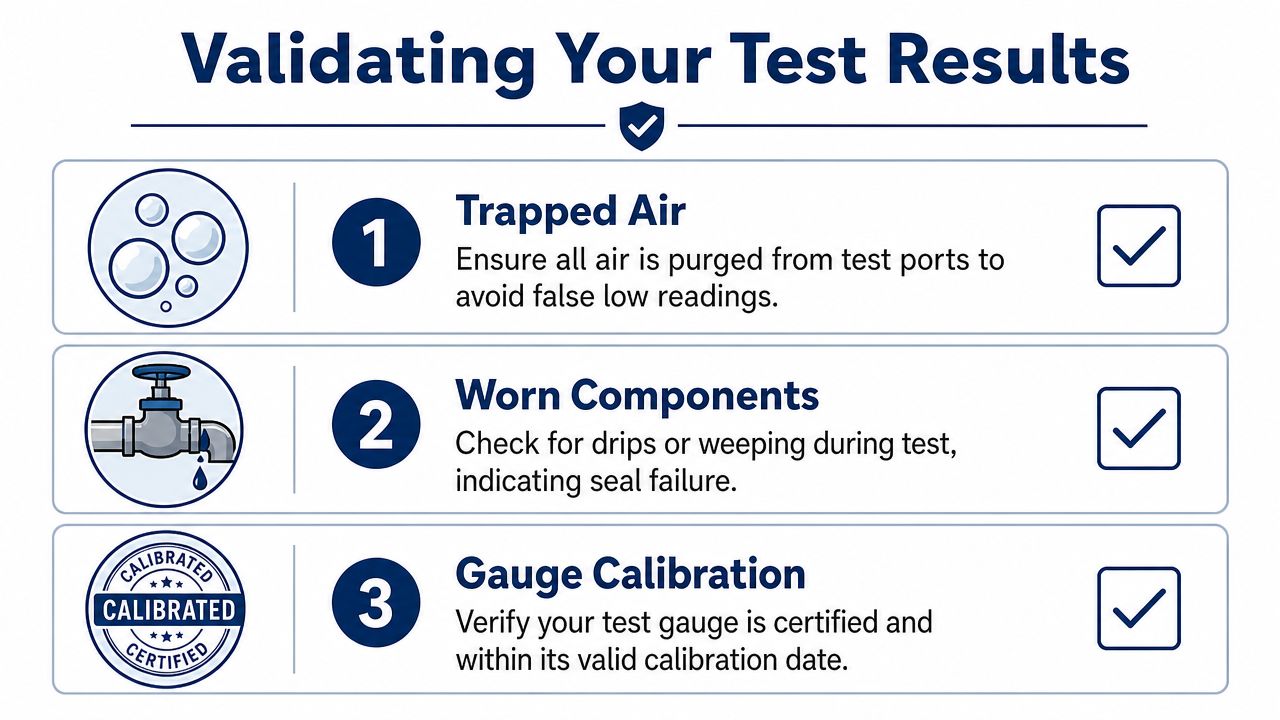
A bad-looking reading doesn't always mean a bad device. In the field, false failures usually come from three things, trapped air in the hoses, debris in the test cocks, or a hose swap that inverts the differential. That's why experienced testers spend time confirming the setup before they sign anything.
The setup checks that save good devices
Trapped air is the classic problem. The Lincoln procedure explicitly says to bleed the low side last so the pressure differential is established correctly, because air pockets can make the gauge drift or jump around Lincoln RPZ testing procedure. If the gauge won't settle, the first move is usually to re-bleed, not replace the assembly.
Debris in the test cocks is the next problem. Dirt, scale, and grease can block pressure equalization through the ports, which makes a healthy assembly look unstable. A field tech should inspect and clean the ports before concluding the device is the issue.
What to do with a shaky relief valve reading
A relief valve that drips under static pressure is a real problem. A drip that shows up only after the test sequence starts can point to a setup error or a port issue, especially if the hoses were misconnected or the air wasn't fully purged. That's the difference between a valid fail and a false fail, and it's the difference between a repair visit and an unnecessary replacement conversation.
Practical rule: Don't trust one number. Watch the gauge for a few seconds, confirm hose placement, then retest if the trend looks unstable.
For Los Angeles property owners, the better question isn't just whether the device failed, it's whether the test was valid enough to trust. If you're reviewing a report and something looks off, Los Angeles plumbing code compliance guidance can help frame what belongs in the record and what should trigger a retest before anyone signs off.
The cleanest way to avoid unnecessary panic is to treat the reading like evidence, not a verdict. If the ports are dirty, the hoses weren't purged, or the gauge behavior doesn't settle, the test needs another look before anyone calls the assembly dead.
LA Testing Frequency and Who Can Sign the Report
Los Angeles doesn't treat backflow testing like a casual maintenance task. The work sits inside the state and local cross-connection control framework, and the city expects the device to be tested on schedule. For many property owners, that means keeping the annual test current and keeping the records organized through the utility's compliance process backflow prevention inspection overview.
Who can certify it
A generic plumbing license isn't enough by itself to sign a backflow test report in California. The tester needs the proper backflow prevention tester certification from an AWWA-approved source, along with the plumbing license where required for the work being done. That distinction matters because the signature on the form isn't just administrative, it's a certification that the device was tested properly.
What paperwork should stay on file
Property owners should keep the test report, the tester's certification information, and any repair paperwork tied to a failed or retested device. If the report is incomplete, the city can treat the property as out of compliance even if the device itself is serviceable. Missing a deadline is a bad place to be, because the utility can escalate the issue and, in serious cases, issue a service interruption order.
The practical move is to keep the backflow file together with the rest of your property compliance documents. That way, when the utility asks for proof, you're not digging through old emails or calling three vendors to reconstruct a simple paper trail.
Cost to Test in LA and Why EZ Plumbing Is Worth the Call
The price for a backflow test in Los Angeles usually depends on the device type, how accessible it is, whether the tester has to repair anything, and whether the appointment is after-hours or urgent. A basic annual test on a straightforward residential or light commercial assembly costs less than a complicated commercial setup, but the true cost shows up when the first tester gives a false fail or a false pass because the setup wasn't clean.
That's why the cheapest quote isn't always the cheapest outcome. A rushed tech who skips hose purging, misreads the gauge, or ignores a dirty test cock can send you down the wrong path fast. A valid test is worth more than a fast one, because it keeps you from paying twice for the same problem.
EZ Plumbing is one local option for property owners who want the test, the repair, and the paperwork handled by one licensed, insured contractor serving Los Angeles since 1989. They offer same-day scheduling and 24/7 response, which helps when a compliance deadline is already staring at you and the assembly still needs a valid report.
If you need a backflow test in Los Angeles, call EZ Plumbing or book online and ask for a licensed backflow tester who will verify the setup before the report gets signed. That's the cleanest way to get the device tested, the paperwork handled, and the next compliance deadline off your desk.