
How to Detect a Gas Leak in Your Home: A Safety Guide
You walk into the kitchen, catch a faint sulfur smell, and immediately start second-guessing yourself. Is it a real gas leak, a pilot light issue, something from the drain, or just last night's cooking hanging in the air? That uncertainty is common, and it's exactly why gas leak detection needs a calm process instead of guesswork.
A lot of homeowners still rely on one test alone: smell. That's useful, but it isn't enough. If you're trying to figure out how to detect a gas leak in your home, you need to use your nose, ears, eyes, and better yet, know when to stop investigating and get the house cleared professionally.
Table of Contents
- Is That Smell a Gas Leak? First Steps and What's at Stake
- Using Your Senses to Recognize a Gas Leak
- Immediate Safety Actions If You Suspect a Leak
- Simple DIY Gas Leak Detection Methods You Can Use
- When to Call a Professional Gas Leak Detection Service
- Gas Leak Prevention Tips and Frequently Asked Questions
- Prevention habits that matter
- Common questions from homeowners
- Is every sulfur smell a gas leak
- If I don't smell gas, am I safe
- Can I use a gas detector instead of calling for help
- What if the alarm goes off but nobody smells anything
- Is natural gas different from propane when it comes to detection
- How do professionals find leaks under slabs, walls, or outside
Is That Smell a Gas Leak? First Steps and What's at Stake
That first moment matters. If you notice a strange sulfur or rotten egg smell and it doesn't make sense, treat it seriously right away. Don't wait for the odor to get stronger before you act.
The reason is simple. According to the U.S. Consumer Product Safety Commission, from 1981 to 1995, natural gas leaks and explosions in residential homes caused an average of 52 deaths, 1,352 injuries, and $63.9 million in property damage annually (CPSC data cited here). Gas leaks aren't rare household nuisances. They can turn into fire, explosion, and health hazards quickly.
What counts as a warning sign
A gas leak doesn't always announce itself the same way. Sometimes it's obvious. Sometimes it's a faint smell near a stove, furnace, meter, or water heater. Sometimes it's a noise, a visual clue outside, or a change in how an appliance burns.
If you're trying to sort out whether that odor could be gas, this guide on identifying house gas leak risks is useful because it helps separate normal household smells from signs that deserve immediate action.
Practical rule: If a smell is unusual, persistent, and strongest near a gas appliance or gas line, assume it needs attention until proven otherwise.
What actually works
The most reliable approach is layered. Start with immediate safety thinking, then check for sensory clues, then use a limited DIY method only if the situation feels minor and stable. If anything feels strong, active, or uncertain, stop and get professional help.
What doesn't work is trying to "confirm" a gas leak by waiting around for the smell to come back. Gas doesn't need your certainty to be dangerous.
Using Your Senses to Recognize a Gas Leak
Your senses are the first line of defense, but they aren't the final word. Gas leak detection starts with smell, sound, and sight. Each can help. Each can also miss the problem.

Smell can help, but it can also fail
Natural gas is odorless by itself, which is why suppliers add a sulfur-like odor so people can notice leaks. That rotten egg smell is the sign most homeowners know.
But smell has limits. Approximately 10 to 15% of the population has anosmia, meaning an inability to smell odors, which creates an obvious safety gap (Safewise summary). Even for people with a normal sense of smell, colds, sinus problems, medication, smoking, and strong cooking odors can interfere.
That matters in real homes. If you've got a gas range, a nearby gas water heater repair issue can also confuse the situation because people often blame appliance smells on "normal startup odor" longer than they should.
Sound gives you another clue
A leak under pressure can create a hissing or whistling sound near a supply line, shutoff valve, flex connector, regulator, or appliance connection. This is often easier to notice in a quiet utility room than in a busy kitchen.
Listen when an appliance is off. If you hear a steady hiss at a line or fitting, that's not something to ignore. Still, silence doesn't clear the system. Small leaks and concealed leaks often make no sound a homeowner can detect.
If you only trust your nose and ears, you can still miss a real leak.
Visual signs are often overlooked
Some leaks show themselves with your eyes before anything else. Watch for:
- Dead or stressed vegetation over a buried gas line
- Bubbling in standing water outside
- White dust or residue near gas piping
- Pilot or burner flame changes, especially orange or red instead of a clean blue flame with yellow tips
A quick comparison helps:
| Sign | What it can mean | Limitation |
|---|---|---|
| Rotten egg odor | Gas may be present | Some people can't smell it well |
| Hissing sound | Pressurized leak near a line or fitting | Small leaks may be silent |
| Dying plants or bubbling soil water | Possible underground leak | Can be mistaken for irrigation or soil issues |
| Flame color changes | Combustion or gas supply problem | Doesn't pinpoint the exact leak location |
Meter changes can support suspicion
If gas usage seems out of line with how the home is being used, that can justify a closer inspection. But usage isn't a perfect diagnostic tool, especially for leaks in places a homeowner can't see or access.
Use your senses as an alert system, not as proof that everything is safe.
Immediate Safety Actions If You Suspect a Leak
If you suspect a gas leak, this is not the moment to troubleshoot thoroughly. The priority is reducing ignition risk and getting people out safely.
Start with this checklist.
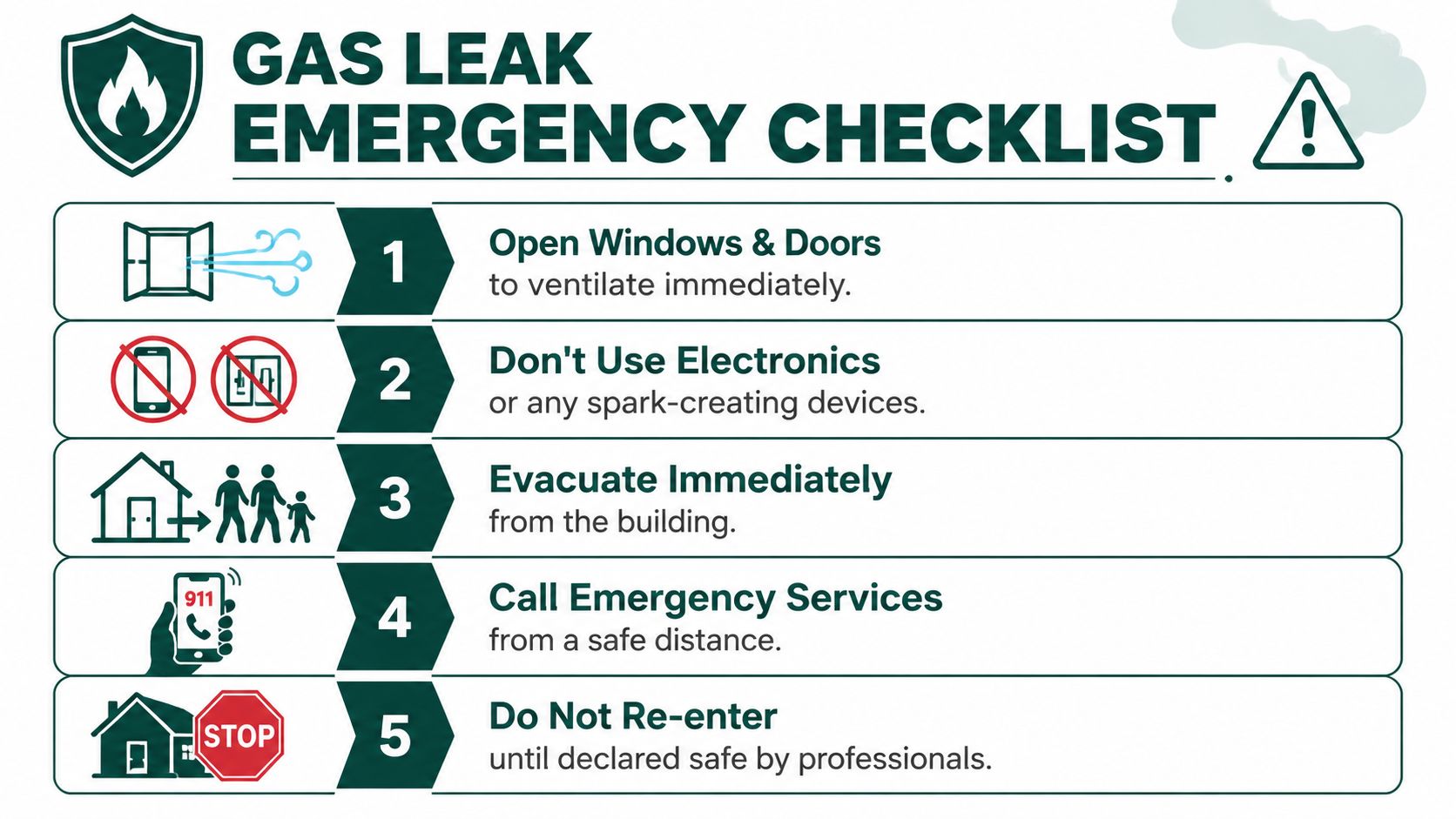
Emergency checklist
Open the way out if you can do it quickly
If doors or windows are right there, open them on your way out. Don't stay inside trying to ventilate the whole house.
Don't touch switches, plugs, thermostats, or electronics
Don't turn lights on or off. Don't use garage door openers. Don't charge a phone. Anything that could create a spark is off-limits.
Get everyone out
Move people and pets outside immediately. Don't stop to gather belongings.
Call from a safe distance
Once you're well away from the house, contact emergency services and your gas utility. If the issue appears to involve a branch line or appliance connection, you'll likely also need licensed gas line repair support.
A lot of homeowners also ask about shutoff valves. If you want a basic mechanical overview, this explanation of understanding gas isolation for boiler safety helps clarify what an isolation valve does. But if you smell active gas strongly, don't stay inside trying to become your own gas tech.
For a quick visual walkthrough, this short video covers the same emergency mindset:
What not to do
- Don't hunt room to room trying to identify the exact source
- Don't relight pilots
- Don't assume the smell will dissipate on its own
- Don't re-enter until the property has been cleared
Leave first. Diagnosis comes second.
Simple DIY Gas Leak Detection Methods You Can Use
DIY checks have a place, but only in narrow situations. Use them when the concern is faint, localized, and you feel safe staying near the suspected connection. If the odor is strong, spreading, or paired with a hissing sound, skip DIY completely and evacuate.
The soapy water test
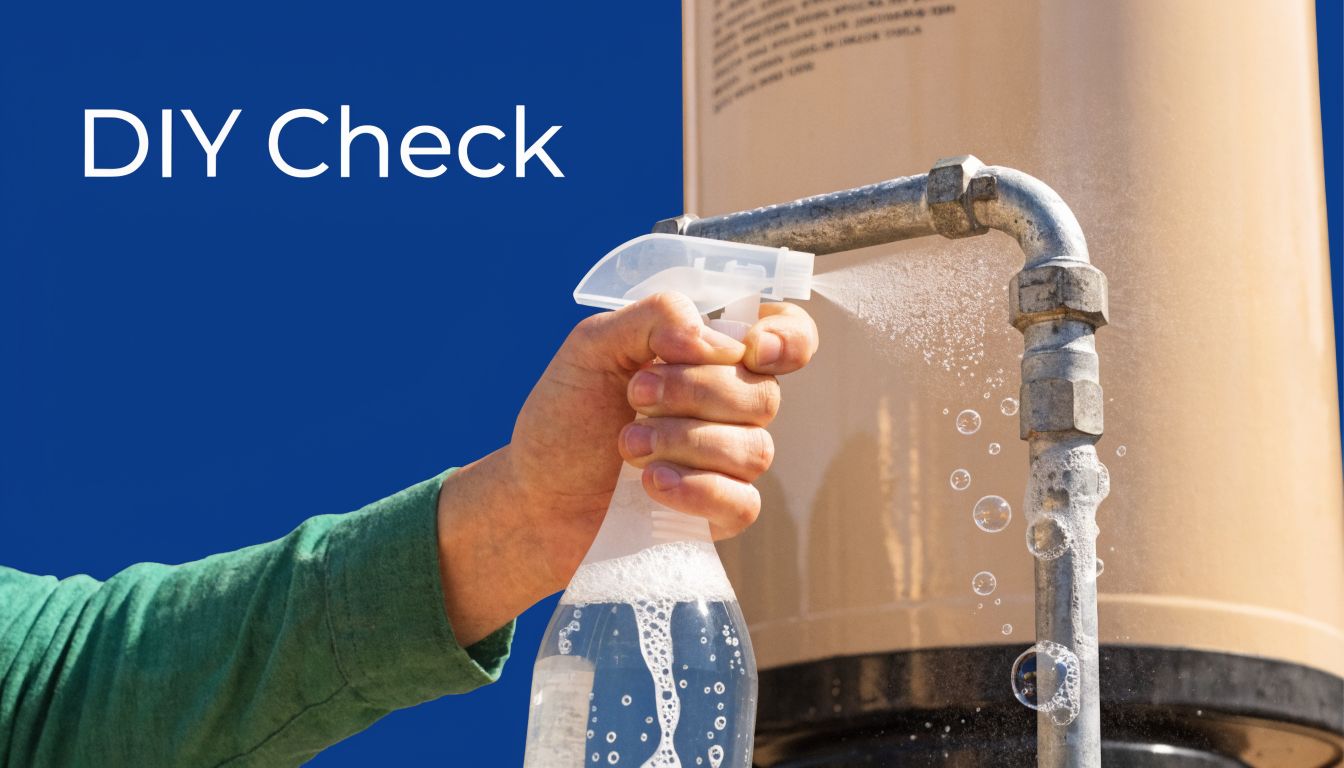
This is the most practical homeowner screening method for exposed fittings. The formula matters. Mix one teaspoon of dish detergent with one cup of water, apply it to a suspected connection point, and if bubbles form, gas is escaping (General Tools guidance).
Use it like this:
- Target exposed joints where a flex connector meets an appliance, shutoff valve, or threaded fitting
- Apply the solution gently with a spray bottle, brush, or cloth
- Watch for growing bubbles, not just surface foam from spraying
- Stop there if bubbles appear and move to professional service
What homeowners often miss
The common mistake is assuming the visible fitting is the whole system. It isn't. A stove connector may be easy to inspect, but concealed piping, crawlspace runs, wall penetrations, and underground sections can leak without giving you any accessible spot to test.
That's why the soapy water method is a screening tool, not a final answer.
Handheld gas detectors
Consumer combustible gas detectors can give you another layer beyond smell. These tools sample the air and alarm when gas concentration reaches their trigger level. Some handheld models are designed around lower explosive limit readings, which is useful because they give you a measurable warning instead of relying on human senses alone.
What they do well:
- Check around accessible appliances
- Help compare one area to another
- Alert on faint gas presence you might not smell
What they don't do well:
- Pinpoint hidden underground leaks
- Replace a full pressure test
- Clear a house as safe just because the detector stays quiet in one room
A DIY detector is better than guesswork. It's still not certainty.
When to Call a Professional Gas Leak Detection Service
There are situations where professional testing isn't optional. It's the only reliable way to move from suspicion to certainty.
The biggest reason is simple. A major gap in home safety is over-reliance on smell. Research summarized here notes that many people can't reliably detect gas by smell because of colds, sinus congestion, medication, or other factors, and slow leaks may not produce a noticeable odor at all, which creates real liability issues for property managers and multi-unit buildings (Constellation gas safety guidance).
Call a pro when any of these are true
The smell is strong or persistent
If the odor is obvious and repeating, stop treating it like a maybe.
You hear hissing near a line or appliance
A pressurized leak needs skilled diagnosis, not trial and error.
A detector alarmed
Even if nobody smells anything, the alarm deserves a proper inspection.
You shut off gas during an emergency
The system should be checked before it's put back into normal service.
You manage a rental, HOA, or multi-unit property
Shared walls, multiple appliances, and buried lines raise the stakes.
There was recent seismic activity or construction
In Los Angeles, ground movement and exterior work can affect older piping and connections.
What professional testing adds
A trained technician doesn't just look where the smell seems strongest. They use multiple methods based on the property and the symptoms.
Common professional tools and methods include:
| Method | What it helps with |
|---|---|
| Electronic combustible gas detector | Checking accessible areas for ambient gas |
| Ultrasonic detection | Finding pressurized leaks by sound |
| Pressure testing | Confirming whether a gas line is losing pressure |
| Tracer gas or specialty leak tracing | Investigating concealed or underground sections |
The trade-off becomes clear here. DIY methods are good at checking a fitting you can see. Professional diagnostics are built to answer the harder question: is there a hidden leak anywhere in the system?
Los Angeles homes need a more cautious standard
Older housing stock, remodel history, additions, slab lines, and earthquake movement all complicate leak tracing in Los Angeles. Property managers and landlords have another problem: if a tenant reports an intermittent smell, you can't rely on one person's nose to decide the building is fine.
That's when a dedicated gas leak detection inspection makes sense. A proper visit should verify the system condition, isolate likely problem areas, and determine whether the issue is appliance-related, line-related, or a false alarm caused by something else.
Professional leak detection isn't just about repair. It's about ruling out the dangerous unknowns that a homeowner can't test for on their own.
Gas Leak Prevention Tips and Frequently Asked Questions
Prevention matters because the consequences of missed gas problems are so high. The National Fire Protection Association reports that between 2014 and 2018, there were an estimated 47,000 home structure fires annually involving flammable gases, resulting in 250 deaths and $1.1 billion in damages (NFPA figures cited here). That's why routine inspection and maintenance aren't optional extras. They're part of basic home safety.
Prevention habits that matter
Keep prevention simple and repeatable.
Use licensed installation for gas appliances
Stoves, dryers, furnaces, fireplaces, and water heaters need correct connections, venting, and shutoff access from the start.Pay attention after any appliance replacement
New equipment often means disturbed fittings, moved connectors, or altered clearances.Know where the gas shutoff is
You don't need to practice operating it in a panic, but you should know its location.Treat odd burner behavior seriously
A flame that's suddenly off-color or unstable deserves inspection.Schedule professional inspections for older systems
This is especially important for landlords, HOAs, and owners of homes with additions or long gas runs.
If you want a broader home-safety maintenance list, this resource on preventing household fires through professional inspection is a practical companion to gas-specific maintenance.
Common questions from homeowners
Is every sulfur smell a gas leak
No. Drain odors, sewer gas issues, and some appliance byproducts can confuse the picture. But if the smell is strongest near a gas appliance, gas line, or meter, treat it as suspicious until someone qualified rules it out.
If I don't smell gas, am I safe
Not necessarily. As covered earlier, smell can fail for several reasons. That's why a detector alarm, a hissing sound, unusual outdoor signs, or appliance changes still matter.
Can I use a gas detector instead of calling for help
A handheld detector is useful for screening. It isn't a substitute for a professional pressure test or concealed-line diagnosis.
What if the alarm goes off but nobody smells anything
Take the alarm seriously. Leave the area, follow the emergency steps, and get the system checked. A missing smell does not mean the alarm is wrong.
Is natural gas different from propane when it comes to detection
The homeowner response is basically the same. If you suspect escaping fuel gas of any type, avoid ignition sources, get out, and call from a safe distance.
How do professionals find leaks under slabs, walls, or outside
They combine tools and methods rather than guessing. Depending on the property, that may include electronic sensing, ultrasonic detection, pressure testing, and tracer-based leak location for concealed lines.
If you're dealing with a suspected gas leak in Los Angeles, don't sit with uncertainty. EZ Plumbing provides licensed gas leak detection and repair, 24/7 emergency response, and clear next steps for homeowners, landlords, HOAs, and property managers. Call (818) 908-2710 or schedule service through EZ Plumbing for fast, professional help.