
How to Clean Grease Traps in a Commercial Kitchen
Grease trap cleaning is defined as the systematic removal of fats, oils, and grease (FOG) from an interceptor device installed between kitchen drains and the municipal sewer line. Every commercial kitchen in Los Angeles must manage this process correctly. The 25% fill rule mandates cleaning before grease and solids reach one quarter of the trap’s total capacity. Skipping this step puts your kitchen at risk of backups, regulatory fines, and emergency shutdowns. This grease trap cleaning guide covers every step you need to stay compliant and keep operations running.
How to clean grease traps: tools and safety gear you need first
Cleaning a grease trap without the right equipment turns a manageable task into a hazardous one. Gather everything before you open the lid.
Required tools and materials:
- A set of stiff-bristle scrub brushes for scrubbing baffle walls and outlet pipes
- A grease scoop or ladle for removing the top FOG layer
- A shop vacuum rated for wet and dry use, which prevents grease from sticking to trap walls as water lowers
- Sealed, leak-proof containers or heavy-duty buckets for collecting waste
- A putty knife or scraper for hardened deposits on walls and baffles
- Clean water and a hose for rinsing after solids are removed
- Disposal bags rated for grease waste
Personal protective equipment (PPE) per OSHA standards:
- Nitrile or rubber gloves rated for chemical and biological exposure
- Safety goggles or a face shield to protect against splatter
- A respirator or N95 mask, since decomposing FOG releases hydrogen sulfide gas
- Waterproof apron or coveralls
- Non-slip, waterproof boots
Pro Tip: Buy a dedicated shop vacuum for grease trap use only. Cross-contaminating a general-purpose vacuum spreads FOG residue and odors throughout your facility.
Proper containment matters as much as the tools themselves. Grease waste is classified as a non-hazardous but regulated material in most jurisdictions. You need sealed containers that prevent spills during transport to an approved disposal site. Check with your local Los Angeles sanitation authority for approved FOG disposal locations before your first cleaning.
Step-by-step process for cleaning a commercial grease trap
Follow this sequence every time. Skipping steps creates incomplete cleaning and leaves residue that accelerates refilling.
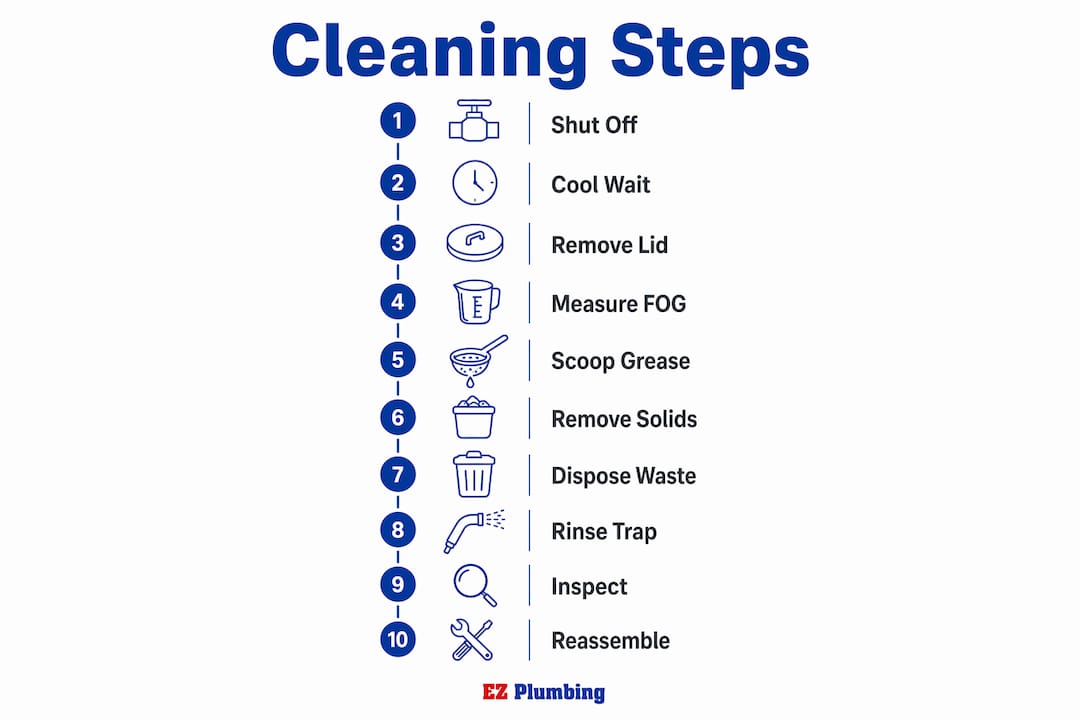
1. Shut off all kitchen equipment connected to the trap.
Turn off dishwashers, sinks, and any floor drains that feed into the interceptor. Running water during cleaning stirs up settled solids and makes removal much harder.
2. Wait for the grease to cool and congeal.
Waiting at least 10 minutes after the last dish cycle allows FOG to solidify at the surface. Solid grease lifts out cleanly. Liquid grease spreads, sticks to everything, and dramatically increases your cleanup time.
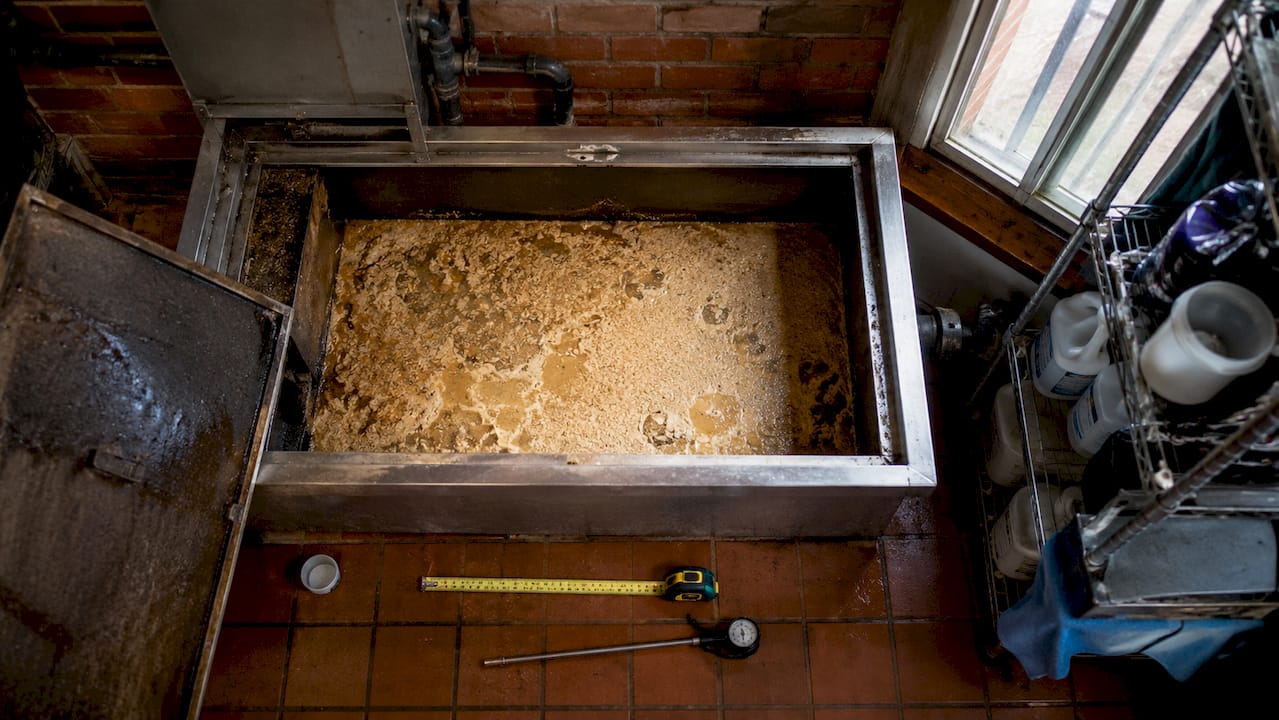
3. Remove the lid carefully.
Use a lid wrench or pry tool. Lift straight up to avoid cracking the seal. Set the lid aside on a clean surface and inspect the gasket for cracks or wear.
4. Measure the FOG and solids depth.
Insert a ruler or depth gauge to measure how much of the trap’s capacity is occupied. Document this reading in your maintenance log before you remove anything. This record protects you during regulatory audits.
5. Scoop out the top FOG layer.
Use your grease scoop to remove the floating layer of fats, oils, and grease. Work from the edges inward. Deposit waste directly into your sealed containers. Do not pour it down any drain.
6. Vacuum out the remaining liquid and solids.
A shop vacuum pulls out the wastewater layer and the settled solids at the bottom simultaneously. This step reduces manual scraping by a significant margin and keeps the work area cleaner.
7. Scrape the walls, baffles, and inlet and outlet pipes.
Use your putty knife and stiff brush to remove all residue from every interior surface. Pay close attention to the baffles. Grease that builds up on baffles restricts flow and causes the trap to fill faster between cleanings.
“The baffles and outlet pipe are the two most neglected surfaces during grease trap cleaning. Residue left on these components accelerates FOG buildup and creates the conditions for a backup within days of cleaning.”
8. Rinse the interior with clean, cool water.
Use cool water only. Hot water temporarily dissolves grease but causes it to re-solidify further down the drain line, creating a worse blockage downstream. Rinse until the water runs clear.
9. Inspect components before reassembly.
Check the inlet pipe, outlet pipe, and both baffles for cracks, corrosion, or blockages. A cracked baffle defeats the purpose of the trap entirely. Replace damaged parts before sealing the lid.
10. Reassemble and record.
Reseat the lid and tighten the seal. Log the date, the FOG depth measurement you recorded in step 4, any parts you inspected or replaced, and the name of the person who performed the cleaning.
Pro Tip: Schedule cleaning at the end of a shift, not the beginning. Grease has more time to cool and congeal, and you avoid disrupting active kitchen operations.
How often should grease traps be cleaned?
Cleaning frequency depends on your trap size, kitchen volume, and local regulations. The 25% fill rule is the universal standard: clean the trap before grease and solids reach 25% of total capacity, and re-clean within 48–72 hours if a violation is found. Some Los Angeles jurisdictions require cleaning on a fixed schedule regardless of fill level, which aligns with Clean Water Act enforcement requirements.
Weekly monitoring detects 90% of violations before they result in citations. That single habit separates kitchens that stay compliant from those that face fines. Weekly checks take less than five minutes and require only a depth gauge and your maintenance log.
Warning signs that your trap needs immediate attention:
- A sulfur or rotten-egg odor coming from floor drains or the trap area
- Slow drainage from sinks or dishwashers connected to the interceptor
- Visible grease or solids backing up into floor drains
- Gurgling sounds from drain lines after water use
- Water pooling around floor drains during normal kitchen operations
Maintaining documented maintenance logs reduces regulatory fines by up to 50% during audits. Inspectors treat a complete log as evidence of good-faith compliance. A kitchen with no records gets the maximum penalty; a kitchen with thorough records often negotiates reduced fines.
| Monitoring action | Recommended frequency |
|---|---|
| Visual check and depth measurement | Weekly |
| Full cleaning (standard volume kitchen) | Monthly |
| Full cleaning (high-volume kitchen) | Every 1–2 weeks |
| Maintenance log review | Monthly |
| Baffle and pipe inspection | Every cleaning |
Reactive cleaning, meaning waiting until something goes wrong, leads to costly emergency plumbing and operational interruptions. A single emergency service call costs far more than a year of scheduled maintenance.
Common mistakes that make grease trap cleaning harder
Most cleaning failures come from a handful of repeatable errors. Knowing them in advance saves you time, money, and compliance headaches.
Mistakes to avoid:
- Cleaning while grease is still liquid. Hot grease spreads across every surface and coats your tools. Always wait for the cooling period described in step 2 above.
- Using soap or hot water to dissolve grease. Soap and hot water emulsify grease temporarily, but it re-solidifies further down the drain line and creates a blockage that is harder to clear than the original buildup.
- Skipping baffle and outlet pipe inspection. Damaged baffles allow FOG to pass directly into the sewer line, triggering regulatory violations even when the trap appears clean.
- Disposing of grease waste down any drain. This is illegal in most jurisdictions and defeats the entire purpose of the interceptor.
- Failing to log the cleaning. An undocumented cleaning provides no protection during an audit.
Pro Tip: Train your kitchen staff on “scrape-don’t-rinse” protocols. Staff training on this practice reduces FOG violations by 65% within six months and cuts maintenance costs by 40%.
When you encounter a blockage that does not clear with standard cleaning, the problem is usually in the outlet pipe or the drain line beyond the trap. Do not force water through a blocked outlet. Call a licensed plumber for professional drain cleaning before the blockage migrates further into your sewer lateral. Persistent odors after a thorough cleaning also signal a problem beyond the trap itself, often a cracked pipe or a blocked vent stack that requires camera inspection.
For broader kitchen plumbing maintenance that supports grease trap performance, pay attention to what goes down every drain in your facility. The trap is the last line of defense, not the first.
Key Takeaways
Consistent grease trap maintenance is the single most effective way to prevent FOG-related violations, emergency plumbing costs, and kitchen shutdowns.
| Point | Details |
|---|---|
| Follow the 25% fill rule | Clean before grease and solids reach 25% of trap capacity to stay compliant. |
| Cool grease before cleaning | Wait at least 10 minutes after dish cycles so FOG congeals and lifts out cleanly. |
| Never use hot water or soap | Hot water and soap push re-solidified grease downstream, creating worse blockages. |
| Log every cleaning | Documented maintenance records reduce regulatory fines by up to 50% during audits. |
| Train staff on scrape-don’t-rinse | This single protocol reduces FOG violations by 65% within six months. |
What consistent maintenance actually looks like in practice
After years of responding to commercial kitchen plumbing calls across Los Angeles, the pattern is clear. The kitchens that call us for emergencies almost always have the same story: the trap was cleaned “when it smelled bad” or “when the drain slowed down.” That is reactive maintenance, and it costs two to three times more than a scheduled approach over the course of a year.
The kitchens that run cleanly have a different culture. They treat the grease trap like any other piece of equipment with a service interval. The staff knows the scrape-don’t-rinse rule. Someone checks the trap depth every week and writes it down. The cleaning happens on a calendar, not in response to a crisis.
One thing I see operators underestimate is the baffle inspection. A cracked baffle looks fine from the outside. The trap gets cleaned on schedule, the log looks perfect, and then an inspector finds FOG in the sewer lateral and issues a citation. The baffle was the problem the whole time. Check it every single cleaning.
The other mistake worth calling out directly: operators who hire the cheapest available grease trap cleaning services without verifying that the waste is being disposed of properly. In California, FOG waste must go to an approved facility. If your vendor dumps it illegally, the liability can come back to your business. Ask for disposal manifests every time.
— EZ
Ez-plumbing supports your kitchen’s plumbing compliance
Commercial kitchens in the greater Los Angeles area face some of the strictest FOG compliance requirements in the country. When a grease trap backup turns into a drain line blockage or a sewer lateral problem, you need a licensed plumber who understands both the plumbing system and the regulatory environment.

Ez-plumbing (C-36 License #583868) provides professional drain cleaning services for commercial kitchens, including hydro-jetting and camera inspection for lines affected by FOG buildup. When a trap-related issue escalates to a sewer line problem, our team handles emergency plumbing around the clock. Schedule a maintenance inspection with Ez-plumbing before a small buildup becomes a costly shutdown.
FAQ
What is the 25% fill rule for grease traps?
The 25% fill rule requires cleaning a grease trap when the combined depth of grease and settled solids reaches 25% of the trap’s total liquid capacity. Re-cleaning is required within 48–72 hours if a violation is found during inspection.
How often should a commercial grease trap be cleaned?
Most standard-volume commercial kitchens clean monthly, while high-volume operations clean every one to two weeks. Local regulations may require a fixed schedule regardless of fill level, so check with your Los Angeles sanitation authority.
Can I use hot water or soap to clean a grease trap?
No. Hot water and soap temporarily emulsify grease, but it re-solidifies further down the drain line and creates a blockage that is harder to clear than the original buildup. Use cool water only for rinsing.
What are the signs a grease trap needs immediate cleaning?
Sulfur odors from floor drains, slow drainage from connected sinks, visible grease backing up into drains, and gurgling sounds from drain lines all indicate the trap needs attention before the next scheduled cleaning.
Do I need to keep records of grease trap cleaning?
Yes. Documented maintenance logs reduce regulatory fines by up to 50% during audits. Record the date, FOG depth measurement, any parts inspected or replaced, and the name of the person who performed the cleaning.