
Garbage Disposal Stopped Working: Quick Fixes Guide
You flip the wall switch, expecting the usual growl, and instead get nothing. Or worse, the sink is full of cloudy water, the disposal hums once, then goes dead. That's the moment most homeowners assume the unit is finished.
Usually, it isn't.
When a garbage disposal stopped working, the first job is to figure out whether you're dealing with a simple safety shutdown, a jam inside the unit, or a drain problem that only looks like a disposal failure. That distinction matters. The fix for a popped reset button is very different from the fix for a blocked kitchen branch line.
Table of Contents
- Why Your Garbage Disposal Suddenly Quit
- First Steps for a Safe and Simple Diagnosis
- How to Reset the Motor and Clear a Jam
- Advanced Diagnostics for Persistent Problems
- Repair or Replace A Cost and Effort Breakdown
- When to Call EZ Plumbing for Same-Day Service
- Garbage Disposal Troubleshooting FAQs
Why Your Garbage Disposal Suddenly Quit
A typical call starts the same way. Dinner cleanup is halfway done, the sink won't drain, and the disposal either goes silent or makes one strained sound. Homeowners often think the motor burned out on the spot. In plenty of cases, the unit did what it was built to do. It shut itself down before something worse happened.
That's important because these units are everywhere. Consumer Reports says just over half of U.S. households had a garbage disposal in a February 2020 nationally representative survey, which makes this one of the most common kitchen appliance trouble calls plumbers see (Consumer Reports garbage disposal buying guide). The same guidance notes the most common stopped-working causes are electrical protection events and mechanical jams.
The two most common reasons
Most sudden failures fall into one of these buckets:
- A protection shutdown. The motor overheated, overloaded, or sensed enough resistance to trip its internal protection.
- A physical jam. Something inside the grinding chamber stopped the moving parts from turning freely.
Neither one automatically means the disposal is ruined.
Practical rule: A disposal that stops abruptly is often protecting itself, not announcing total failure.
If your sink is also draining poorly, don't focus only on the unit under the sink. The disposal is part of a larger drain path. A helpful overview of how that piping comes together appears in this Big Bear kitchen sink drain plumbing resource from Bear Valley Plumbing & Heating. Understanding that layout helps when the visible symptom is at the disposal, but the restriction may be farther downstream.
For prevention, regular cleaning and sensible use matter more than is generally understood. A basic drain maintenance guide for preventing costly plumbing issues is worth bookmarking after you get the sink moving again.
First Steps for a Safe and Simple Diagnosis
Before you touch the disposal, cut power to it. Not just at the wall switch. Go to the electrical panel and turn off the breaker that serves the kitchen disposal circuit. If the unit plugs into an outlet under the sink, you can also unplug it, but I still prefer confirming the breaker is off first.
That step matters because disposals can restart the instant a jam clears or a switch gets bumped.
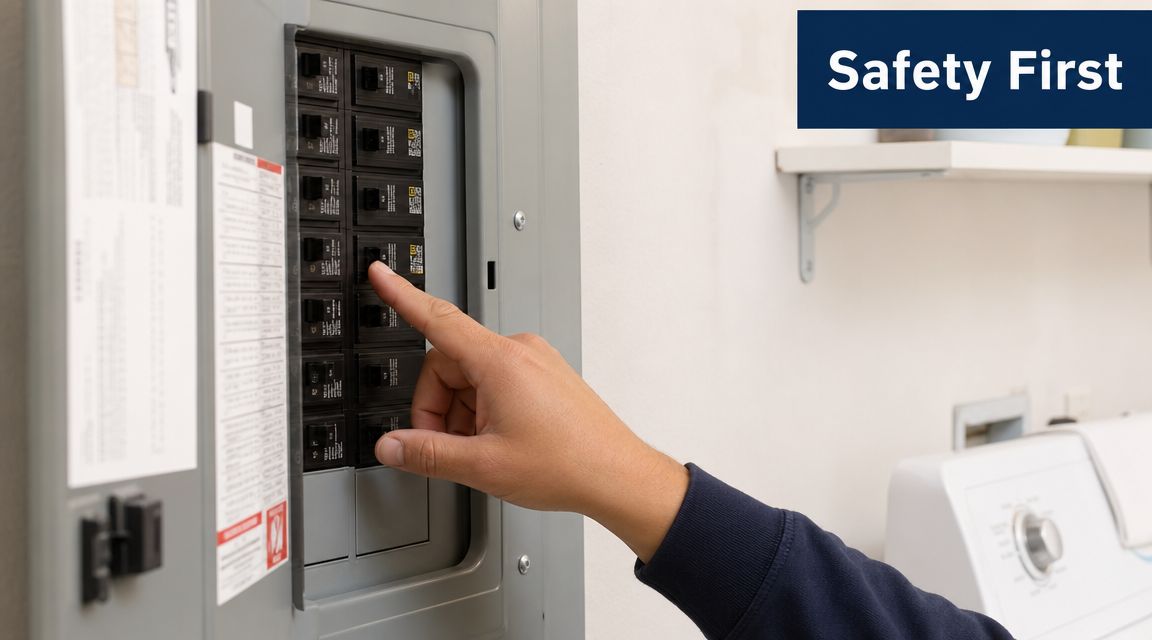
Check the power path first
A dead disposal isn't always a disposal problem. Start outside the unit.
- Breaker. Look for a tripped kitchen circuit. Some breakers sit slightly out of line rather than fully flipping to off.
- GFCI outlet. Many kitchens have a GFCI receptacle that protects nearby outlets. Press reset if it has tripped.
- Plug connection. If your disposal uses a cord and plug, make sure it didn't shake loose under the sink.
- Wall switch. Toggle it firmly a few times. A worn switch can fail to pass power even when it feels normal.
Use your eyes before your hands
With the power off, shine a flashlight down into the disposal opening. Don't put your hand inside. Ever. I don't care if the switch is off and the breaker is off. Use a flashlight so you can spot a spoon, bottle cap, fruit pit, or other obvious obstruction.
What you're looking for is simple:
- Large foreign object visible. Leave it for removal with tongs or pliers.
- Standing water only. The issue may still be a jam, but it may also be in the drain line.
- Burn marks or melted plastic smell. Stop there and plan for professional service.
If you can't confirm the power is off, don't move to the next step.
How to Reset the Motor and Clear a Jam
Once power is off and you've done the external checks, the next two moves are the ones that solve the most calls. Reset the overload protection. Then manually free the motor if it's stuck.
Roto-Rooter notes that a disposal often stops because of a built-in safety shutdown. When overloaded or jammed, the motor can stop completely and the red reset button on the bottom may pop out. If power to the unit is fine, the next check is manually turning the flywheel with an Allen wrench. It also notes this overload protection is a standard feature across nearly all modern disposals (Roto-Rooter garbage disposal reset guidance).
A quick visual walkthrough helps here:
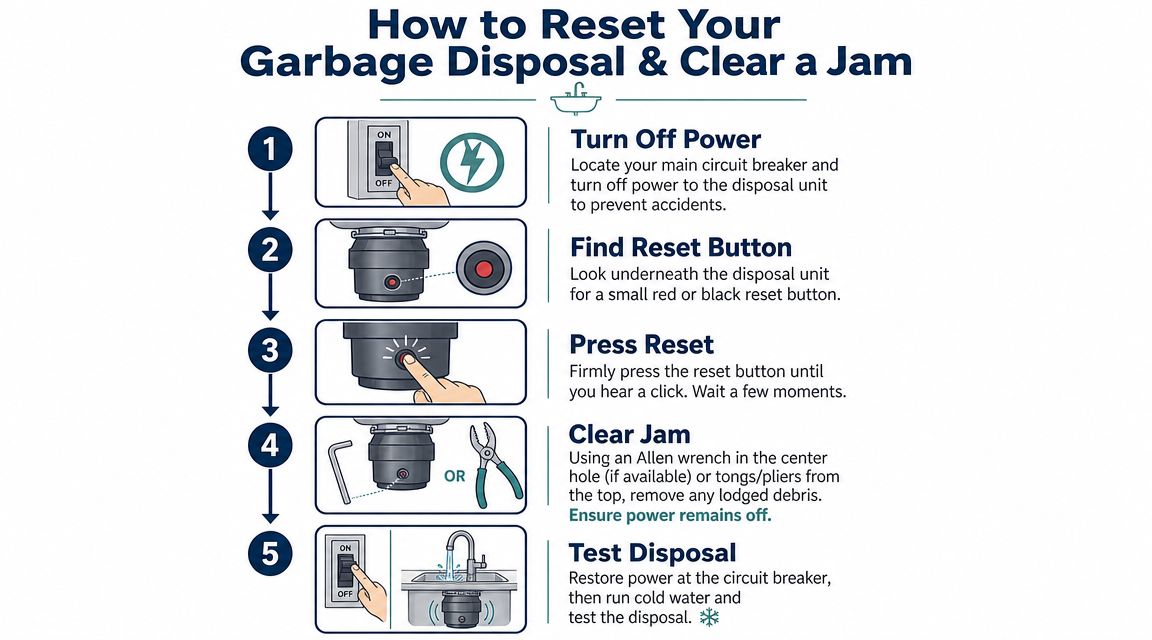
Press the reset button
Get under the sink with a flashlight. On the bottom of the disposal body, you'll usually find a small red or black reset button.
Do this in order:
- Confirm power is still off before touching the unit.
- Press the button firmly. If it had tripped, you may feel or hear a click.
- Wait a moment. If the motor overheated, give it a little time to cool before testing.
- Restore power and test briefly with cold water running.
If it runs normally after that, the failure was likely a one-time overload. If it trips again right away, stop. Repeated reset trips usually mean there's still a jam or the motor is struggling for another reason.
Free the jam from below
Most disposals have a hex socket in the center of the bottom plate. Into this, a disposal wrench or standard 1/4-inch Allen wrench is inserted.
Turn the wrench back and forth. You're not trying to spin it fast. You're trying to break the resistance and free the stuck mechanism. It often starts with a hard stop, then loosens.
After that:
- Look down from the sink opening with a flashlight.
- Use tongs or needle-nose pliers to remove any dislodged object.
- Press the reset button again if needed.
- Turn power back on and test with a steady stream of cold water.
If the sink is still slow after the disposal spins, don't assume you're done. The clog may be in the drain line, not the unit. If you need a separate walkthrough for that side of the problem, this guide on how to snake a kitchen sink is the right next step.
Never use your fingers to fish inside the chamber. Tongs, pliers, and a flashlight are the safe combination.
Advanced Diagnostics for Persistent Problems
When the reset and wrench trick don't solve it, the disposal starts telling you more through sound, smell, and drain behavior. At this point, homeowners either save time by diagnosing correctly, or waste time treating the wrong problem.
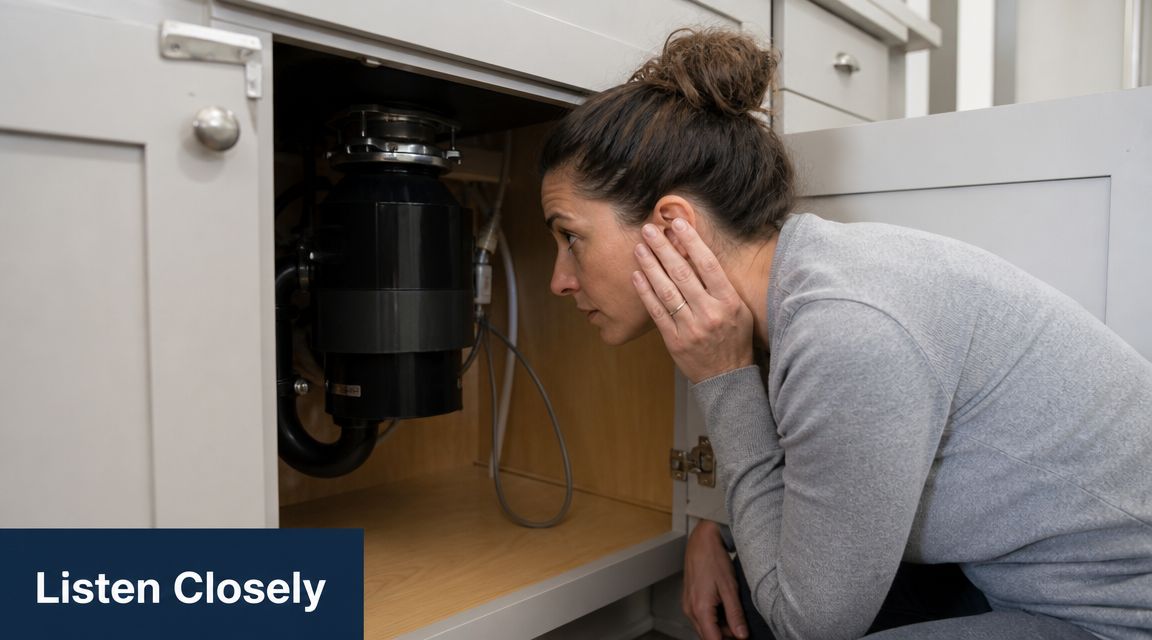
What the sound usually means
A low hum without grinding usually means the motor is getting power but can't turn freely. That can point to a stubborn jam or a motor that's seizing.
Complete silence usually points back to power delivery, a failed switch, a tripped protective component that won't reset, or a motor that has stopped responding.
Loud grinding or metal-on-metal noise is different. That often means something hard is inside, or an internal component is damaged or loose. If the sound is harsh and sudden, shut it off right away.
When the disposal is not the real problem
This is the part many DIY guides miss. A disposal can look like the problem when the actual issue is farther down the kitchen line.
Independent plumbing guidance notes that persistent slow draining, recurring clogs, or a humming disposal while the sink still backs up can indicate a broader kitchen drain issue, such as a partially blocked branch line or grease buildup, rather than a simple appliance fault (American Mains & Drains on disposal problems versus drain blockages).
That distinction changes what “fix” means.
| Symptom | More likely disposal issue | More likely drain issue |
|---|---|---|
| Unit hums but won't turn | Yes | Sometimes |
| Unit spins but water stands in sink | Less likely | Yes |
| Repeated resets after minor use | Yes | Sometimes |
| Recurring backup in one or both sink bowls | Less likely | Yes |
| Burning smell from unit body | Yes | No |
A simple way to think through it
Ask yourself three questions:
- Does the unit have power? If not, stay on the electrical side.
- Does the motor turn? If not, look for a jam or failed motor.
- Does water leave the sink normally after the unit runs? If not, suspect the drain path.
A disposal can be working and the sink can still back up. That usually means the plumbing line isn't clearing what the disposal sends into it.
If you've cleared the chamber, reset the motor, and the sink still drains poorly, stop blaming the appliance alone. That's when drain cleaning or line inspection becomes the smarter next move.
Repair or Replace A Cost and Effort Breakdown
Once you know the likely failure type, the next question is practical. Is this worth fixing, or is it time to swap the unit out?
The answer depends less on brand loyalty and more on symptom pattern. A disposal with one jam and no leak is a very different situation from a unit that leaks from the body, trips repeatedly, and sounds rough every time it runs.
When repair makes sense
Repair usually makes sense when the problem is limited and the rest of the unit feels solid.
Good candidates for repair:
- A one-time jam caused by a foreign object
- A simple reset event after overload
- A loose connection at the sink flange, discharge tube, or dishwasher hose
- A minor external issue that doesn't involve internal motor damage
In those cases, the work is straightforward and often less disruptive than replacing the whole unit.
When replacement is the better call
Replacement usually wins when the failure is inside the sealed body or when the unit shows several problems at once.
I tell homeowners to lean toward replacement when they see:
- Leaks from the disposal body itself
- Persistent breaker trips or resets
- Harsh grinding from internal damage
- A motor that's dead even after the basic checks
- Recurring trouble that keeps coming back after short-term fixes
Here's a simple field guide.
Garbage Disposal Repair vs Replace Decision Guide
| Symptom | Likely Cause | Recommended Action | Estimated Pro Cost (2026) |
|---|---|---|---|
| Silent unit with a tripped reset | Overload protection event | Repair | Varies by diagnosis |
| Humming unit that frees up with wrench | Mechanical jam | Repair | Varies by diagnosis |
| Spins normally but sink still backs up | Downstream drain blockage | Repair the drain issue, not necessarily the disposal | Varies by diagnosis |
| Leak at hose or mounting connection | Loose or worn connection point | Repair | Varies by diagnosis |
| Leak from disposal body | Cracked housing or failed internal seal | Replace | Varies by unit and install scope |
| Repeated grinding, repeated resets, or dead motor | Internal mechanical or electrical failure | Usually replace | Varies by diagnosis |
The main trade-off is simple. Repairs are best for isolated problems. Replacement is best for repeated problems or internal failure. If the unit has become unpredictable, replacing it is often the cleaner long-term answer.
When to Call EZ Plumbing for Same-Day Service
There's a point where DIY stops being useful and starts increasing risk. If you're dealing with wiring you aren't comfortable touching, a leak under the sink, repeated breaker trips, or a disposal that stays dead after the safe checks, it's time to hand it off.
The same goes for a sink that keeps backing up even after the disposal runs freely. That points toward a line problem, not just an appliance problem. If you want a good example of how professionals approach blocked drains as a system issue, these drainage solutions show the broader logic well.
For Los Angeles homeowners and property managers, same-day help matters because a backed-up kitchen sink can shut down normal use fast. If the issue looks deeper than a reset or jam, professional garbage disposal repair service is the safer next move.
EZ Plumbing serves Los Angeles with 24/7 emergency response, same-day scheduling for non-emergencies, and experienced technicians who know how to tell the difference between a bad disposal, a blocked drain, and an electrical issue. Call (818) 908-2710 if the job has moved past the quick-fix stage.
Garbage Disposal Troubleshooting FAQs
What should never go down a garbage disposal
Keep out anything that wraps, hardens, or refuses to break down cleanly. That includes grease, fibrous vegetable scraps, bones, fruit pits, shells, coffee grounds, and starchy foods that swell and cling. A disposal can grind some material without helping the drain carry it away.
How do you clean a disposal without damaging it
Use cold water, mild dish soap, and common sense. Ice can help knock residue loose, and small citrus pieces can help with odor. Don't treat harsh chemical cleaners as routine maintenance, especially if the actual issue may be buildup in the trap or branch line.
If it smells bad, is it broken
Not necessarily. Odor usually means food residue is hanging up somewhere in the disposal chamber, splash guard, trap, or nearby piping. A bad smell by itself doesn't prove the motor has failed.
Should you call a plumber or an emergency plumber
If water is actively leaking, the sink is unusable, or you suspect a serious blockage that could affect the kitchen quickly, don't wait too long. Homeowners outside our area can use local emergency resources too. For example, San Antonio readers could contact Stultz Plumbing for emergencies when a disposal issue turns into an urgent sink or drain problem.
If your garbage disposal stopped working and you want a clear answer fast, EZ Plumbing can help. We've served Los Angeles since 1989 with same-day service, 24/7 emergency response, and technicians who diagnose the underlying problem instead of guessing. Call (818) 908-2710 to schedule service and get your kitchen back in working order.