
Dishwasher Backing Up Into the Sink? Check the Air Gap and Plug
Most often a dishwasher backs up into the sink because something downstream is blocking the wastewater: a clogged sink or disposal drain, a disposal inlet still sealed by its knockout plug, or a blocked air gap or missing high loop. Stop running the dishwasher and the sink, then run the short tests below. If you see sewage or standing water that won’t clear, stop and call a plumber.
TL;DR:
- If water rises only during dishwasher draining, inspect the air gap, disposal inlet, and hose; sink use alone points to the trap or branch line.
- After a new disposal or dishwasher installation, check that the disposal knockout plug was removed; the dishwasher cannot drain through a sealed inlet.
- A high loop can prevent backflow, but homes under Uniform Plumbing Code rules, including California, generally need a physical air gap instead.
- Keep the drain hose at 10 feet or less, and keep the section between an above counter air gap and disposal under 18 inches.
- Call a licensed plumber if backups return after trap cleaning and snaking, other drains gurgle, or sewage appears; stop using the dishwasher meanwhile.
Table of Contents
- How can you tell what is blocking the drain?
- What are the step-by-step fixes, from easiest to hardest?
- When should you call a licensed plumber?
- How do you keep it from happening again?
- Why we say DIY first, licensed work when it repeats
- Need a professional to clear it for good?
- FAQ
- Sources
How can you tell what is blocking the drain?
Start by noticing when the water appears. If it only shows up while the dishwasher drains, the problem likely sits in the connection between the dishwasher, the disposal and the sink drain. If water rises whenever you use the sink, the P-trap or the drain line itself is the more likely culprit. As a manufacturer help page notes, a sink that does not drain when tested points to the home’s plumbing rather than the dishwasher.
Before you touch anything near the disposal, switch off its power at the wall switch or unplug it. Then run these checks in order:
- Empty the sink, then run the garbage disposal with cold water. If the water level drops normally, the sink drain is probably clear and the issue lies between the dishwasher and the disposal.
- Fill one side of the sink a few inches and pull the stopper. A slow drain or gurgling points to a clogged trap or branch line.
- Start a drain cycle on the dishwasher and watch the sink. Note exactly where water appears: at the air gap cap on the countertop, or bubbling up through the sink drain.
- If water spills out around an air gap, that usually signals a blockage further down the line. If it bubbles at the strainer, suspect the trap or drain line.
- Check under the sink for a hose that sags, kinks or lies flat against the cabinet floor.
Pro Tip: Take a photo of the under-sink plumbing before you start. It gives you a reassembly reference and helps a plumber diagnose the setup quickly if you end up calling us.
What are the step-by-step fixes, from easiest to hardest?
Work through these in order. Each one rules out a common cause, and the simpler checks can be quick.
Clear the air gap
If your sink has a small chrome or plastic cylinder beside the faucet, that is the air gap. Pull off the cap, lift out any inner cover, and look for gunk. Flush it with warm water and a bottle brush. Overflow from the air gap during a drain cycle usually indicates a downstream blockage, often in the short hose between the air gap and the disposal or in the P-trap, so cleaning the cylinder alone may not end the problem.
Check the disposal and its knockout plug
Run the disposal with cold water to clear any jam, using the hex-key socket at the bottom to free a stuck flywheel once the power is off. If the dishwasher or the disposal is newly installed, confirm the knockout plug was removed. Leaving it in place is one of the most common installation errors, and the dishwasher cannot drain while the plug blocks the inlet. To test, disconnect the short dishwasher hose from the disposal, point it into a bucket, run a drain cycle, and see whether water flows out freely.
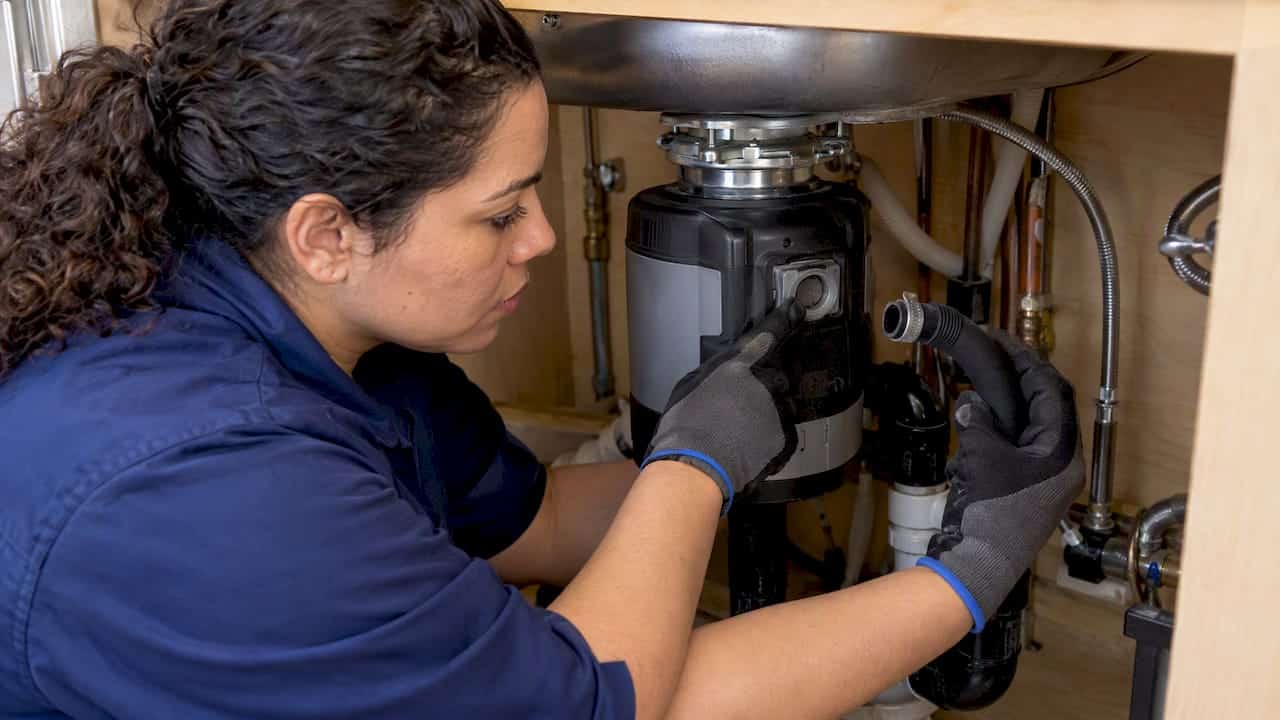
Check the hose routing and high loop
The drain hose should rise in a loop and be clamped to the underside of the countertop before it reaches the disposal or tailpiece. A high loop or a working air gap keeps wastewater from flowing back into the dishwasher. Make sure the crest sits above the disposal inlet. One note for our area: jurisdictions that follow the Uniform Plumbing Code, California among them, generally require a physical air gap, so a high loop alone may not meet code. If you are unsure which applies to your home, ask a licensed plumber before relying on one method.
Clean the P-trap
- Put a bucket under the trap and lay down a towel.
- Loosen the slip nuts by hand or with channel locks and slide the trap off.
- Empty it into the bucket and clear out grease, food and sludge.
- Rinse the trap, reassemble with the washers seated, and hand-tighten.
- Run water and check every joint for drips.
Cleaning the trap is a standard step in clearing dishwasher backflow, and it also helps with the odors described in our guide to fixing sink drain smells.
Snake the trap arm and drain line
With the trap off, feed a hand auger into the wall stub-out. Crank steadily. Firm, springy resistance usually means a soft clog you can break through. A hard stop may be a bend or a fitting, so back off and try again rather than forcing it. Pull the auger out, wipe off what it collects, and repeat until it moves freely.
Inspect the dishwasher drain hose
Slide the hose clamps back, detach the hose from the disposal, and look for kinks or crushed spots. Flush it into a bucket with a running tap. The total drain hose run should not exceed 10 feet, and the segment from an above-counter air gap to the disposal should stay under 18 inches. Reattach with secure clamps.
- Skip chemical drain cleaners. They can damage plastic hoses and disposal inlets, and they leave caustic water in the trap for whoever opens it next.
- Wear gloves and eye protection when you open any trap or hose.
- Keep towels and a bucket nearby: trap water is dirty and there is usually more of it than you expect.
Pro Tip: Test with the sink empty first. Run a full drain cycle, then fill the basin and drain it while the dishwasher is also draining. If the water stays down in both tests, the repair worked.
When should you call a licensed plumber?
Stop the DIY work when the symptoms point past the kitchen. We recommend calling a pro if any of these apply:
- The backup returns after you have cleaned the trap and snaked the line.
- Other drains in the house gurgle, slow down or back up at the same time, which suggests a mainline or sewer problem.
- You smell sewage or see dark, foul water in the sink or around the air gap.
- You cannot find a clog you can reach, or the hoses and fittings under the sink look damaged.
On a visit, we typically run a camera inspection to see the actual obstruction, then clear it by cable or hydro-jetting, and replace failed fittings or install an air gap where the setup calls for it. When you phone, tell us exactly when the backup happens, what you already tried, whether you have an air gap or a disposal, and send photos of the under-sink plumbing. If you need to know what to do before help arrives with a serious blockage, our page on emergency drain cleaning walks through it. We are a licensed plumbing company, and drain cleaning and emergency plumbing are part of our everyday work.
How do you keep it from happening again?
Most repeat backups come from small habits and a hose that was never routed correctly. A few routines head them off:
- Pull the dishwasher filter periodically, rinse off the trapped food, and run an occasional hot cycle to flush grease from the lines.
- Keep grease, coffee grounds and fibrous scraps like celery and potato peels out of the sink, and run cold water while the disposal is working.
- Confirm that the high loop is clamped under the countertop, or that your air gap is installed and clear, and look for kinks whenever you pull the dishwasher out.
- Keep the total hose run reasonable, within the 10-foot limit noted above.
- If your home is older or you clog often, schedule a periodic professional cleaning or a camera inspection before the next backup, not after.
Pro Tip: Pop the cap off your air gap periodically and look inside. It is a useful place to check for a slow clog.
For more routine upkeep, see our kitchen plumbing tips for homeowners.
Why we say DIY first, licensed work when it repeats
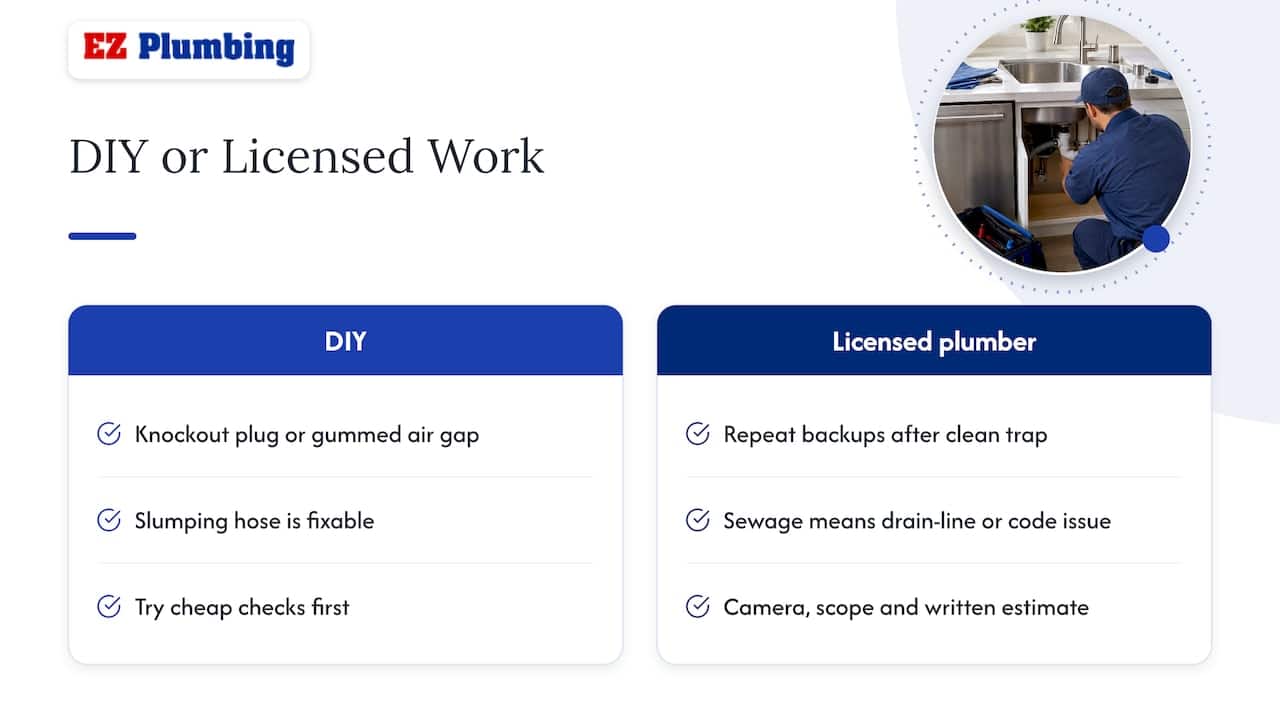
Plenty of dishwasher backups are honest, fixable household problems. A knockout plug, a gummed-up air gap or a slumping hose is the kind of thing you can sort out on a Saturday morning with a bucket and a screwdriver, and we would rather you learn that than pay for a visit you didn’t need. The line we draw is repetition and smell. A backup that keeps coming back after a clean trap, or anything involving sewage, is no longer a kitchen problem. It is a drain-line or code problem, and it deserves a camera, a written scope and someone accountable for the work.
When we visit, we document what we find with the diagnostic camera, explain the scope of work, and give a written estimate before starting. Diagnosis is usually the quick part, and the remedy depends on what the camera shows: a cable clearing, hydro-jetting, or a repaired fitting. That is the stance we would want from a plumber in our own kitchen: try the cheap checks first, and bring in a licensed professional the moment the evidence says the cause is deeper.
— EZ
Need a professional to clear it for good?
If the checks above did not solve it, or you would rather skip the bucket and the auger, we can handle it. Persistent backups often trace to the drain line rather than the appliance, and fixing the line is what stops the cycle. Here is what we offer for this problem:
- Drain cleaning for kitchen and branch lines, including hydro-jetting and camera inspection
- Emergency plumbing when a backup involves sewage or won’t wait
- Up-front written pricing, from a licensed and insured team

The next step is simple: call us or request dispatch, and describe when the backup happens and what you have already tried. If you want a sense of cost first, our rate calculator lists residential plumber rates of $150–280 per hour.
FAQ
Why does water come back up into my sink when the dishwasher runs?
The dishwasher’s wastewater is meeting a blockage on its way out, so it has nowhere to go but back up through the sink drain or air gap. The usual causes are a clogged trap or drain line, a disposal inlet still sealed by its knockout plug, or a hose that is kinked or routed without a high loop. Running the diagnostic tests above will show you which one.
Is it normal for a dishwasher to drain into the sink?
Yes, in the sense that most dishwashers are plumbed to share the sink’s drain, either through the garbage disposal or a tailpiece connection. What is not normal is water coming back up. A properly installed high loop or air gap is what prevents wastewater from flowing the wrong way.
Why is my dishwasher backing up into the sink without a garbage disposal?
Without a disposal, the dishwasher hose connects to a tailpiece on the sink drain, so a clog in the tailpiece, trap or branch line backs water up the same way. Check the tailpiece fitting and clean the P-trap first. If the sink drains fine on its own but backs up during a dishwasher cycle, inspect the hose for kinks and confirm the high loop is secure.
Should I run the dishwasher again after a backup?
Not until you have found the cause. Running another cycle sends more water into a blocked line and can push dirty water onto your countertop or cabinet floor. Clear the clog, run a short drain-only test, and then resume normal use.
Sources
- Dishwasher Air Gap Installation: Step-by-Step (2026)
- Dishwasher Not Draining – Product Help | Maytag
- How To Fix A Dishwasher Overflowing Into A Sink