
Broken Water Heater? an LA Homeowner’s Emergency Guide
You turn on the shower, wait for the water to warm up, and it never does. Or you hear a rumbling sound from the garage, then notice a damp ring spreading under the tank. A broken water heater gets your attention fast because it disrupts the whole house at once.
In Los Angeles, the stress is usually a mix of urgency and uncertainty. Is it dangerous. Is it repairable. Who do you even call first. The answer depends on what kind of unit you have, what symptom showed up first, and whether the problem is plumbing, gas, or electrical.
A calm response matters. The right first steps can limit water damage, avoid unsafe guesswork, and shorten the time it takes to get hot water back.
Table of Contents
- That Cold Shower Was Your First Warning Sign
- Immediate Safety Steps for a Broken Water Heater
- Troubleshooting Common Water Heater Failures
- The Repair vs Replace Decision Matrix
- Why You Need a Licensed Plumber in Los Angeles
- Your Solution EZ Plumbing Emergency and Repair Service
- Frequently Asked Questions About Water Heaters
That Cold Shower Was Your First Warning Sign
Most homeowners don't need a manual to know something's wrong. The cold shower tells you immediately. So does a puddle around the unit, a metallic smell near the utility area, or a tank that suddenly starts popping and hissing louder than usual.
Those symptoms usually don't show up out of nowhere. Water heaters often give smaller warnings first. If you want a quick checklist of what those early clues look like, this guide on how to identify failing water heater signs is useful because it matches what plumbers see in real homes, not just ideal conditions.
What matters now is resisting the urge to guess. Homeowners lose the most time when they start relighting, resetting, or opening panels before they've made the unit safe. If your heater has gone from annoying to clearly broken, start with shutdown and containment.
If you're seeing symptoms that haven't become an emergency yet, it also helps to compare them against common water heater problems and causes before they become a larger repair.
A broken water heater is sometimes a small parts issue. It's sometimes a replacement decision. The first few minutes tell you which direction you're heading.
Immediate Safety Steps for a Broken Water Heater
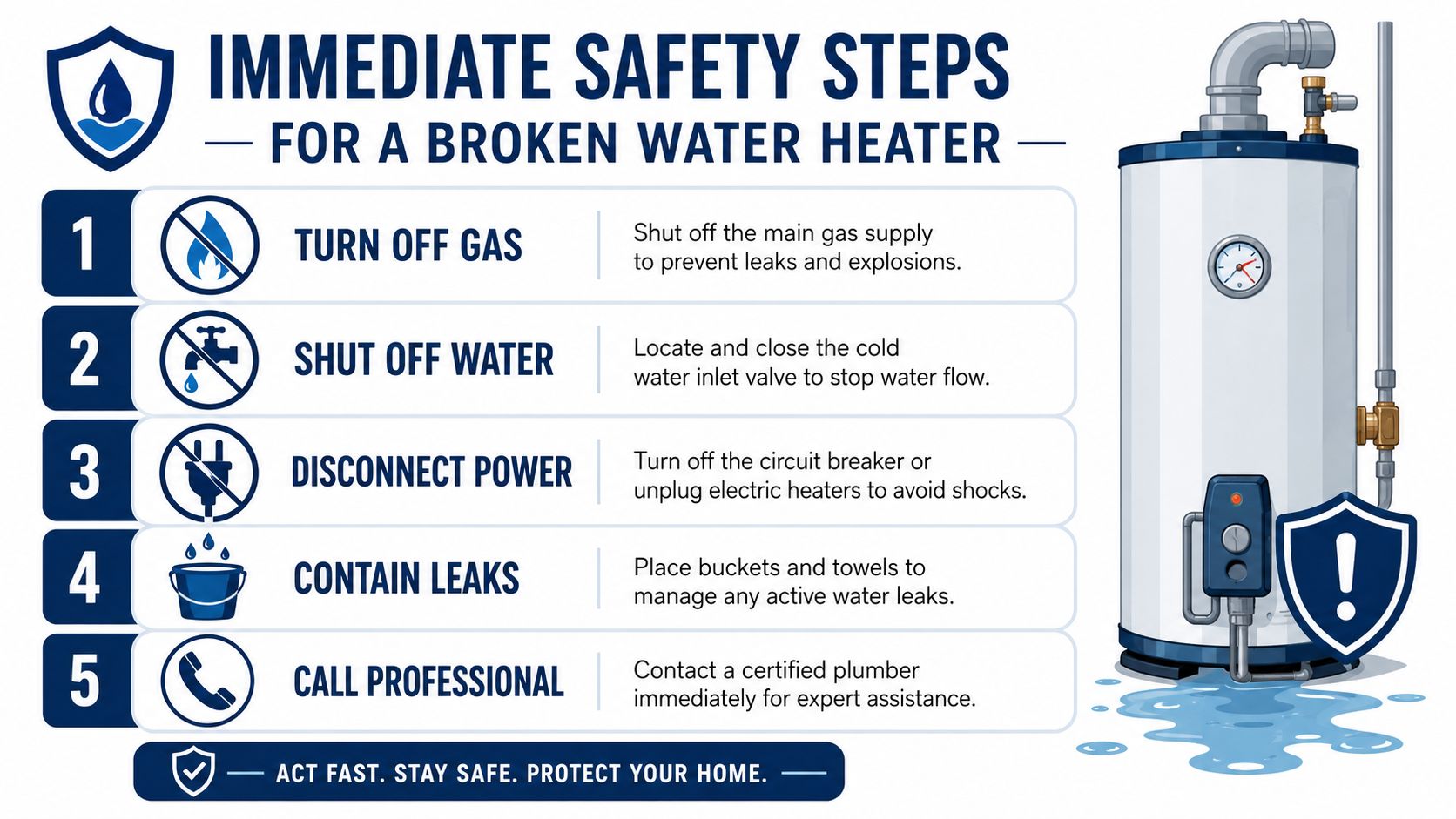
When a water heater fails, the safest move is simple. Stop the fuel or power source, stop the water flow, and keep people away from the unit until you know what failed.
Start with shutdown, not diagnosis
Take these steps in order:
Shut off the cold water supply to the heater. Look for the valve on the cold inlet line above the unit. Closing it limits flooding and prevents more water from feeding an active leak.
Cut electrical power if the unit is electric. Turn the breaker off. Don't remove access panels or touch wiring. Water around the base changes the risk.
Shut off gas if the unit is gas-fired. Turn the gas control to off only if you can do it safely and there is no gas odor.
Contain visible leaking water. Use towels, pans, or a bucket to keep water away from drywall, flooring, and nearby outlets.
Clear the area. Keep kids and pets away. Wet floors and exposed utility equipment don't mix.
If you suspect a gas issue and need a reference on warning signs, this page on how to detect a gas leak in your home gives homeowners a practical baseline.
Know what not to touch
Some homeowner actions create bigger problems than the original failure.
- Don't relight a gas unit if you smell gas. Leave the house and contact the gas utility from outside.
- Don't reset an electric breaker repeatedly. A breaker that trips again is telling you something is wrong.
- Don't cap, tape, or patch a leaking tank shell. Temporary patch attempts don't hold under heat and pressure.
- Don't drain a hot tank unless you know what you're doing. Scalding water can cause serious burns.
If you smell gas, leave immediately. Don't flip switches, don't use a lighter, and don't stay inside trying to confirm where it's coming from.
A leaking valve, failed connector, or thermostat issue may still be repairable. A compromised tank body is a different category. The goal in the first few minutes isn't fixing it. It's preventing injury and limiting property damage.
Troubleshooting Common Water Heater Failures
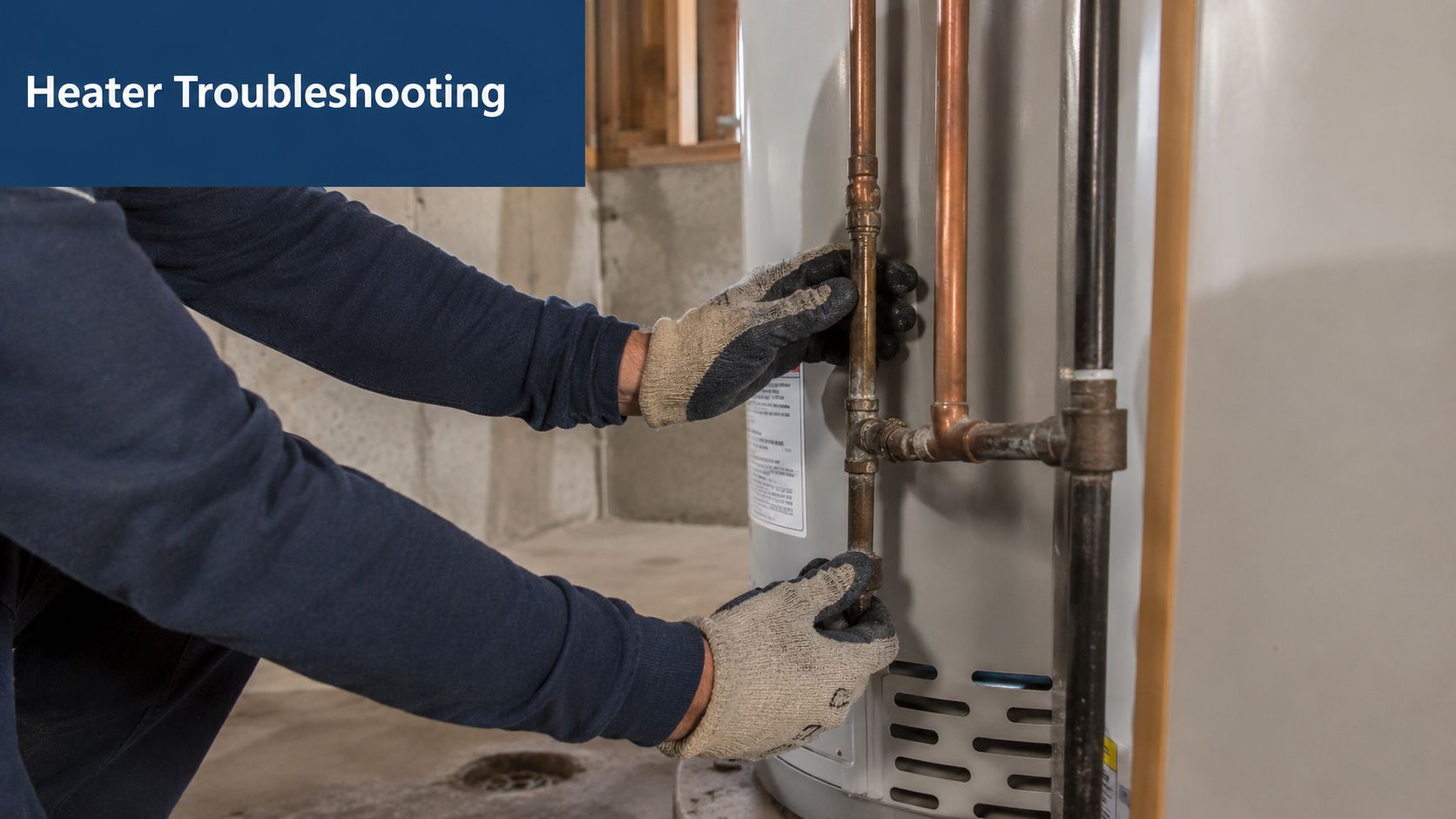
Once the area is safe, the symptom pattern usually points you in the right direction. A broken water heater doesn't fail in one uniform way. The difference between no hot water, noisy operation, and an active leak matters because each symptom suggests a different repair path.
No hot water or not enough hot water
If the water is completely cold, start with the unit type.
On an electric tank water heater, the failure often sits in the heating side of the system. That can mean a tripped breaker, a failed heating element, or a thermostat problem. On an electric tankless unit, scale buildup and internal component faults can also choke performance.
On a gas tank unit, look at the burner side. A pilot issue, burner problem, or gas control failure can leave you with no heat at all. On a gas tankless unit, ignition and flow-related problems are common failure points.
Los Angeles adds another wrinkle. According to Affordable Air LA's discussion of local water heater repair issues, the average Los Angeles home is affected by hard water, and that mineral buildup reduces efficiency, shortens lifespan, and is a primary cause of broken water heaters. The same source notes that this buildup leads to reduced heating capacity, strange noises, and premature failure of parts such as heating elements and thermostats. It also notes that water heaters over 7 years old are at higher risk of failure.
If your unit is gas-fired and you're trying to narrow down burner or pilot-related trouble before the service call, this practical guide on troubleshooting a gas water heater can help you recognize what you're looking at.
Noise, discoloration, and warning signs from hard water
Popping, rumbling, or hissing usually means one thing in LA. Mineral scale has collected where it shouldn't. In tank models, sediment settles and hardens. In tankless systems, scale can restrict internal water paths and heat transfer surfaces.
That buildup changes how the heater operates. The unit works harder, heats less evenly, and starts cooking debris against metal surfaces. Homeowners hear that as rumbling or popping.
A few common symptom patterns:
- Popping or rumbling: Often points to sediment accumulation in a tank.
- Hissing: Can suggest escaping steam, a leak, or scale-related overheating.
- Rust-colored hot water: Often signals corrosion inside the system or deterioration of internal protective components.
- Hot water that fades quickly: Often means reduced effective capacity from buildup or failing heating parts.
Here's a quick visual walkthrough of common failure patterns and what technicians check first.
Hard water doesn't just make a heater noisy. It shortens the working life of the components homeowners usually hope are simple fixes.
Leaks and what they usually mean
Not every leak means the tank itself has failed. That's the first distinction to make.
Water around the unit can come from fittings, valves, supply lines, or the temperature and pressure relief side of the system. Those can be repairable. But when the tank shell itself is leaking, the problem is usually internal corrosion, and that changes the conversation fast.
The leak location matters more than the puddle size. A small drip from a fitting may stay a repair. Moisture from the body of the tank usually points toward replacement.
The Repair vs Replace Decision Matrix
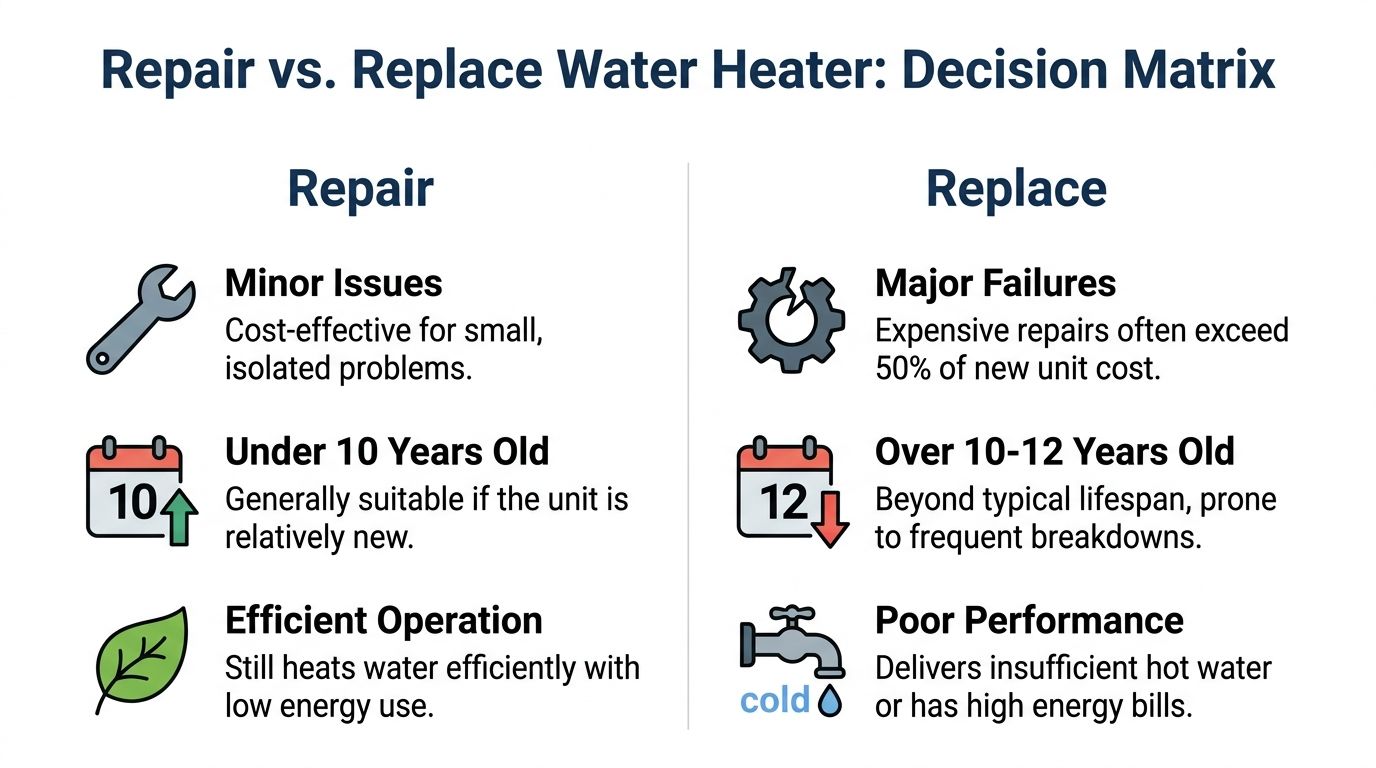
Deciding between repair and replacement comes down to three things: the age of the heater, the type of failure, and whether the tank itself is still sound.
In Los Angeles, I see homeowners lose money when they focus only on today's invoice. A $250 to $400 parts repair can be reasonable on a newer unit. The same repair on an older heater with heavy scale, rust at the fittings, and inconsistent performance often turns into a short-term patch.
When a repair still makes sense
Repair is usually the right call when the problem is limited to a replaceable component and the tank body is in good condition. Common examples include a bad thermostat, a failed heating element, a pressure relief valve, or an anode rod that has reached the end of its service life.
That is especially true if the heater is still relatively young and has not started showing multiple symptoms at once.
For LA homes, hard water matters here. A single failed part does not always mean the whole heater is done, but mineral buildup can shorten the life of the next part too. That is why a good plumber should inspect the tank condition, not just swap the failed component and leave.
When replacement is the smarter call
Replacement makes more financial sense when the quoted repair starts approaching half the installed cost of a comparable new unit. Any Hour Services' repair versus replacement guide uses that 50% benchmark and notes that comparable new units often run about $1,200 to $2,800 installed, while common non-tank repairs such as thermostats or T&P valves usually fall in the $150 to $400 range. The same guide also notes that a tank shell leak caused by internal corrosion is not repairable.
That last part needs to be plain. If the steel tank itself is leaking, replacement is the only fix.
I tell homeowners to lean toward replacement when any of these conditions are present:
- The tank shell is leaking
- The repair quote is more than half the cost of a comparable new heater
- The unit has a history of repeated breakdowns
- The heater shows multiple age-related signs at once, such as rust-colored water, reduced hot water volume, and noise from heavy sediment
- Parts are available, but the tank condition makes the repair a gamble
Aging tanks are where judgment matters. On paper, one more repair can look cheaper. In the field, an older heater with corrosion and hard water wear often has very little reserve life left.
A quick cost view for Los Angeles
The LA pricing discussed earlier helps frame the decision. Lower-cost part replacements can be worthwhile. Leak repairs, repeated service calls, or major work on an older tank usually push the math toward replacement.
| Repair or replacement item | Typical LA cost |
|---|---|
| Average repair | $662 |
| Typical repair range | $229 to $1,121 |
| Thermostat replacement | $10 to $250 |
| Heating element | Under $20 |
| Pressure relief valve | $15 to $150 |
| Leak repair | $370 to $570 |
| Anode rod replacement | $85 to $180 |
| Full gas water heater replacement | $1,800 to $2,100 |
Use the table as a screening tool, not the final answer. The right decision depends on where the leak is, how old the unit is, and whether you are paying for a fix or postponing a replacement by a few weeks.
Why You Need a Licensed Plumber in Los Angeles
The biggest delay I see isn't always the failed part. It's the wrong first phone call. Homeowners often call the trade they think matches the symptom, then learn the actual fault sits on the other side of the system.
The wrong first call costs time
This confusion isn't small. A 2025 analysis of 208 repair calls found that 34% of initial misdiagnoses came from calling the wrong professional type, and homeowners waited 2 to 4 extra days for correct service, according to AHS Home Matters.
That happens because water heaters overlap trades.
A homeowner sees no hot water and thinks electrician. But if it's a gas unit with burner trouble, that's the wrong call. Another homeowner sees pilot or ignition trouble and thinks plumber, while the actual issue on an electric unit sits in the power side. Newer hybrid and tankless systems make this even murkier because they combine components and may carry warranty requirements tied to brand-approved or certified service.
A handyman is not the same as the right trade
A handyman may be able to spot a puddle. That isn't the same as diagnosing a gas control issue, an element failure, a venting concern, or a tankless error path correctly.
Use a licensed plumber when the water heater problem involves:
- Gas piping or burner operation
- Water supply lines, shutoffs, or valve failures
- Tank leaks or pressure relief concerns
- Tankless service that blends plumbing and appliance diagnostics
Bring in an electrician when a plumber determines the fault is strictly branch-circuit or panel related. That's the right sequence. Diagnosis first, specialist second if needed.
The cheapest service call is the one that identifies the right failure the first time.
Your Solution EZ Plumbing Emergency and Repair Service
When hot water fails, the service visit should be straightforward. The technician should identify the heater type, confirm whether the problem is in the tank, controls, fuel supply, or electrical side, and then tell you plainly whether you're looking at repair or replacement.
What a proper service visit should look like
A useful emergency visit isn't just fast. It has to be methodical.
You want a company that can handle water heater repair for tank and tankless systems, understands Los Angeles property types, and can respond when the issue affects flooring, walls, tenants, or shared building areas. EZ Plumbing is one local option for that kind of work. The company is licensed and insured, serves Los Angeles, and provides emergency plumbing, water heater repair, tankless service, and gas leak detection from one dispatch operation.
Homeowners also underestimate how often communication breaks down during emergencies. Missed calls from basements, garages, and crawl spaces are a real service problem in this trade. This article on how to stop losing plumber calls explains why water heater emergencies often turn into callback delays before a technician is even booked.
When to call right away
Don't wait until morning if any of these are happening:
- Water is actively leaking onto finished surfaces
- The tank body appears to be sweating or dripping from the shell
- You smell gas anywhere near the heater
- The breaker trips again after reset
- You manage a rental, HOA, or commercial property and loss of hot water affects multiple occupants
Good service should leave you with a clear decision, not a vague maybe. Repairable issue. Replaceable component. Failed tank. That's the level of clarity you need when the house is already under stress.
Frequently Asked Questions About Water Heaters
Homeowners usually ask the same three questions once the hot water stops. How much will this cost, is the unit worth fixing, and do I need a plumber or an electrician?
FAQ Quick Answers
| Question | Answer |
|---|---|
| How much does a full gas water heater replacement cost in Los Angeles | In Los Angeles, a full gas water heater replacement often lands around $1,800 to $2,100, as noted earlier in this article. Final price depends on venting, code upgrades, access, and whether the old unit caused damage around it. |
| Is it ever worth repairing an older water heater | Yes, if the problem is limited to a replaceable part and the tank body is still intact. If the unit is older, full of scale, or showing multiple symptoms at once, repair money is often better put toward replacement. |
| Are solar water heater repairs handled differently | Yes. Solar systems have added components, so diagnosis is different from a standard tank or tankless heater. In Los Angeles, repairs commonly run $200 to $700 depending on what failed and how accessible the system is. |
A practical question comes up right behind those. Who should you call first?
For a leaking tank, low hot water output, rumbling, pilot problems, burner issues, pressure concerns, or visible corrosion, call a plumber. For a tripped circuit tied to an electric water heater, damaged wiring, or a breaker panel problem, an electrician may also be needed. In many Los Angeles homes, the fastest path is still starting with a licensed plumber, because the plumber can tell whether the failure is in the heater itself or in the electrical supply before you pay for the wrong service call.
How long does a water heater last in Los Angeles conditions
Los Angeles water is hard on tanks. Mineral buildup settles in the bottom, coats heating surfaces, and shortens the life of parts that would last longer in softer water.
Age still matters, but condition matters more. I have seen younger units fail early from neglect and older units keep going because they were flushed regularly and caught before sediment turned into internal damage.
What are the most serious warning signs
Water leaking from the tank body is at the top of the list. So is any gas smell near the heater.
Repeated breaker trips matter too, especially on electric units. That can point to a bad element, wiring trouble, or a larger electrical issue, which is exactly where homeowners lose time deciding who to call. Loud popping or banging is another common warning in LA homes. Those sounds usually mean scale buildup, and once that buildup gets heavy, efficiency drops and internal wear speeds up.
Should you switch to tankless after a broken water heater
Sometimes. Sometimes a standard tank is still the better fit.
Tankless makes sense for some LA households that want to free up garage or closet space and avoid running out of hot water during back-to-back showers. But the install is not plug-and-play. Gas line size, venting path, electrical requirements, and the number of fixtures used at the same time all need to pencil out first. A good recommendation should match the property, not the trend.
If your water heater has stopped working, is leaking, or you're not sure whether to call a plumber or an electrician, contact EZ Plumbing. A licensed team can identify the failure point, explain whether the problem is plumbing or electrical, and help you make a safe decision before water damage gets worse.