
What Causes Water Hammer in Pipes and How to Stop It
You know the sound. The washer finishes its cycle, a faucet snaps shut, or the dishwasher stops filling, and a sharp bang jumps through the wall like someone hit the pipe with a wrench. If it's happening in your house, you're hearing water hammer, and the problem usually isn't random. It's the plumbing telling you that moving water stopped too fast, and something in the system is absorbing the hit badly.
That matters because a quick fix can quiet the noise for a while and still leave the underlying cause untouched. The best way to stop the bang is to understand where it starts, how to localize it, and which repairs hold up. If you want a practical starting point while you read, some homeowners also look up questions for HVAC plumbers when the noise seems tied to shared mechanical systems or utility piping, especially in larger buildings.
Table of Contents
- That Sudden Bang Is Telling You Something
- The Physics Behind the Bang
- The Most Common Triggers in Residential Plumbing
- How to Pinpoint Where the Hammer Is Coming From
- Safe DIY Fixes You Can Try This Weekend
- Professional Fixes That Actually Last
- When to Call EZ Plumbing for Water Hammer in Los Angeles
That Sudden Bang Is Telling You Something
The noise usually shows up at the worst possible moment. The washing machine solenoid clicks off, the dishwasher stops filling, or you shut a lavatory faucet with a quick twist, and the pipe behind the wall answers with a crack that makes you turn around. That bang isn't the pipe “being loud,” it's a pressure event, and it's one of the clearest clues your plumbing can give you.
In plain terms, water hammer happens when water moving through a pipe is forced to stop or change direction too fast. The moving water has momentum, and when a valve closes sharply, that momentum turns into a shock wave instead of a smooth slowdown. Engineering references describe that wave as traveling through the pipe at near sonic speed in water, which is why the sound can feel immediate even if the cause is a fixture several feet away. TAMU engineering reference
Practical rule: if the bang happens right as the fixture shuts off, think rapid closure first. If it happens later, think about valve slam, pressure problems, or movement in the piping.
That's why a one-time fix often disappoints. An arrestor can help at one fixture, but if the pipe is loose, the pressure is high, or a valve is closing too aggressively, the noise can come right back. Homeowners usually need a diagnosis, not a single part swap, because the symptom and the cause aren't always in the same place.
For a homeowner, the task is to narrow the problem. Is it one appliance, one wall, or the whole house? Is the bang instant, or does it arrive a moment after shutoff? Those details point you toward the right repair instead of sending you in circles.
The Physics Behind the Bang
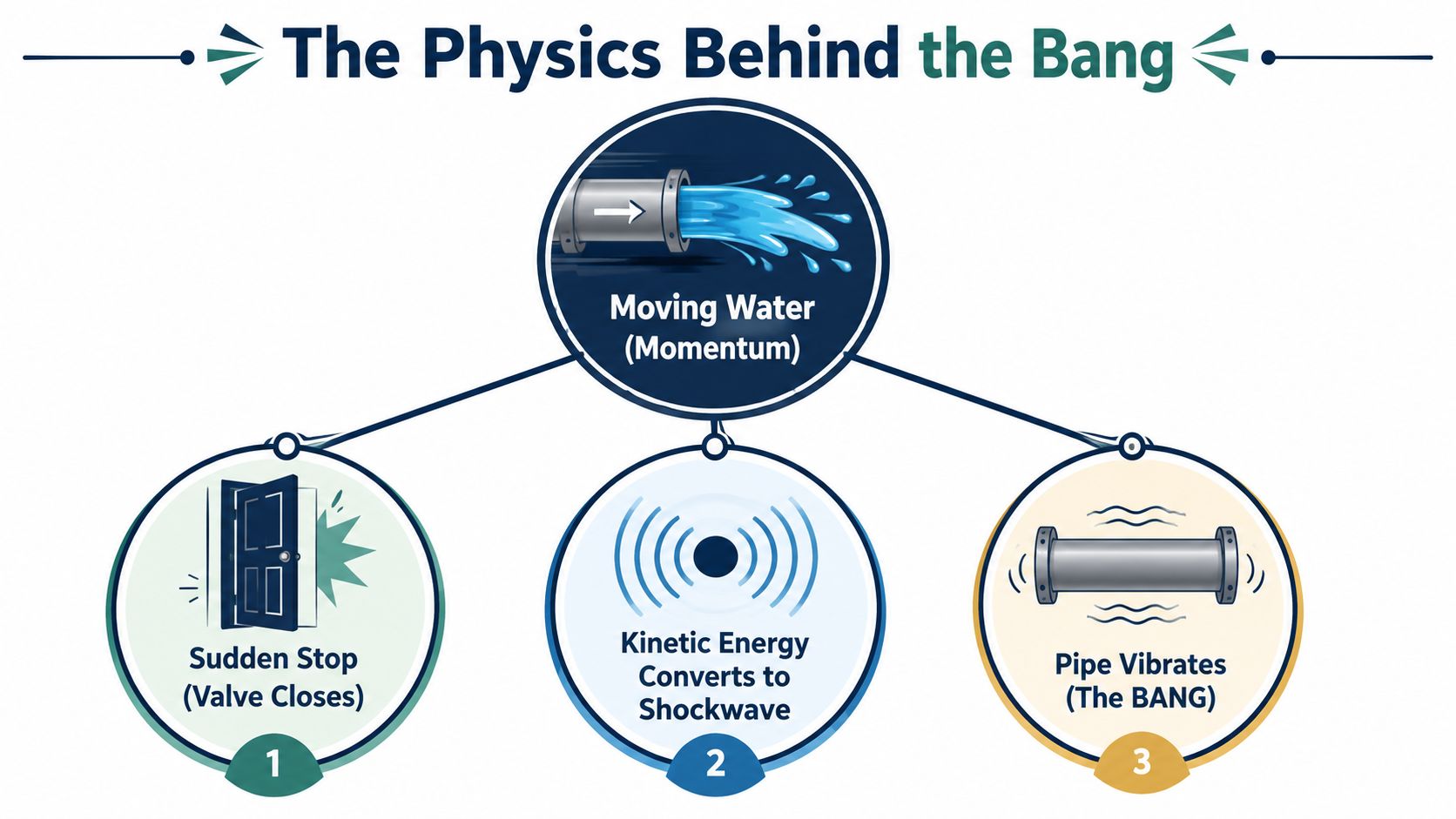
The sound usually starts with a simple pressure change. Water in a pipe is already moving as a continuous column, so when a valve shuts too fast, that moving column has to stop almost all at once. The result is not a neat stop, it is a pressure wave that rebounds through the plumbing, much like a line of people pressing forward when the front row hits a closed door.
That rebound is water hammer. The water's kinetic energy turns into pressure energy, and the pipe has to absorb that change. In plumbing references, the wave travels very quickly through the line, which is why the bang can sound instant even when the fixture that caused it is on the other side of the house. ASPE plumbing reference
Why Some Fixtures Are Worse Than Others
A hand-closed faucet usually gives water more time to slow down. A washing machine valve, dishwasher valve, or another solenoid-controlled fixture can shut much more abruptly, so the pressure wave has less time to soften before it hits the rest of the system. A pump that shuts off suddenly can create the same kind of shock.
That difference matters because plumbing reacts to the speed of the stop, not just the amount of water involved. A quick closure sends a hard pressure spike into the line, while a slower shutdown lets the flow taper off more gently. The same idea is described in broader water-hammer references, which also note that closed piping systems can carry that shock through fittings, branches, and nearby runs. Burkert water hammer glossary
The key idea is critical closure time. If a valve shuts faster than the pressure wave can move through the pipe and back, the plumbing behaves as if it struck a wall instead of coasting to a stop. That is why quick-closing fixtures, pump trips, check-valve slam, and trapped air pockets keep showing up as common triggers in fluid-system guidance.
For homeowners, the takeaway is simple. Fast closure creates the bang. Slow, controlled closure usually does not. Once you understand that, diagnosis gets easier, because you are no longer chasing noise, you are looking for the part of the system that is stopping flow too abruptly.
If you want a broader look at how pipe material and layout can affect the way a system reacts, this practical guide to types of plumbing pipes is useful context.
A pipe does not “decide” to bang. It reacts to a sudden change in momentum, and that reaction is what you hear.
The Most Common Triggers in Residential Plumbing
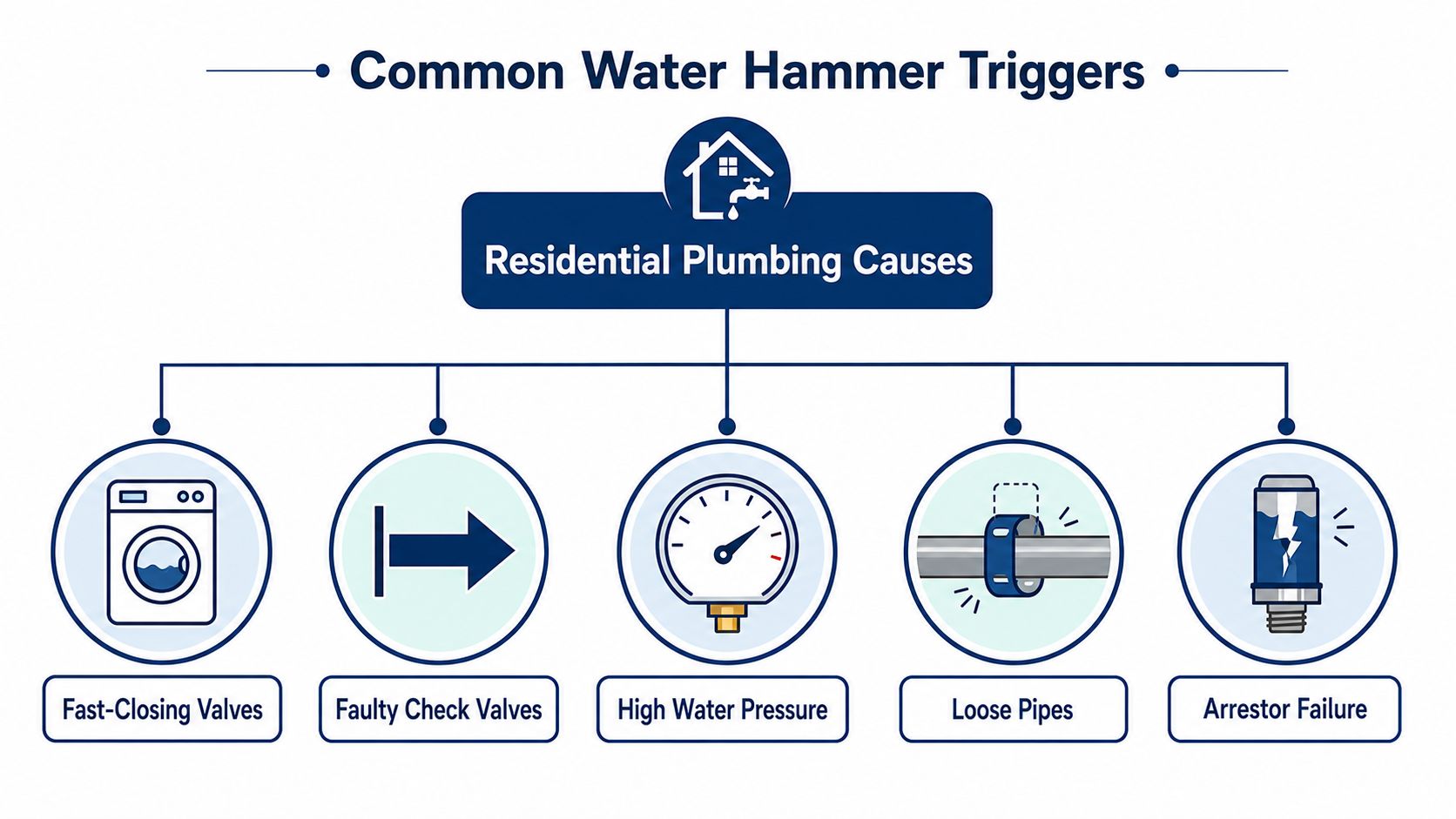
A water hammer problem usually starts with a fixture or valve that shuts water off too abruptly. In a home, the usual suspects are appliances and fittings that stop flow in a split second, while the pipe run itself decides whether that shock stays quiet or turns into a bang.
The pattern is easier to understand if you separate the trigger from the noise. One part of the system creates the pressure spike, and another part lets you hear it. A washing machine valve can slam shut, for example, while a loose pipe strap turns that jolt into a knock inside the wall.
What tends to start the noise
Here's the short list homeowners run into most often:
- Fast-closing solenoid valves: Washing machines and dishwashers can shut water off very abruptly, especially when the cycle changes.
- Check-valve slam: A check valve that snaps shut can send a sharp shock back into the line instead of easing flow down.
- Waterlogged air chambers or arrestors: Air chambers can lose their cushion when they become filled with water or blocked by debris, so the same bang returns.
- High static pressure: If the supply pressure is high, the system has less tolerance for sudden changes and tends to bang more easily. Measure it instead of guessing, because pressure that is too high makes every quick closure hit harder. Oatey piping and noise reference
- Loose or missing supports: A pipe that can move will jump when the pressure wave hits it, which turns a hydraulic problem into a noise problem too.
Sediment in a water heater, worn washers, and partially restricted valves can also keep the system noisy. They matter because they change the way water moves through the line or make a valve behave unpredictably. In older homes, that problem gets worse when pipe straps loosen over time, or when a past repair only quieted the symptom for a while.
Good clue: if the pipe jumps in the wall when the appliance stops, you may have both a pressure problem and a support problem.
The useful way to think about it is this. Some causes create the surge. Others make the surge audible. An arrestor can quiet one fixture for a while, but if the pipe is loose, the pressure is still high, or the arrestor's air cushion has already been lost, the bang usually comes back.
Air chambers are a good example. They can help for a time, then fill with water and stop acting like a cushion. That is why water hammer often behaves like a maintenance problem, not a one-time fix. The long-term answer is to correct the pressure, support the pipe properly, and address the fixture or valve that is shutting too fast in the first place.
If you need a quick refresher on shutting water off before checking a fixture or pressure issue, this guide to how to shut off the main water supply is a useful starting point.
How to Pinpoint Where the Hammer Is Coming From
Start with the sound itself. If only one faucet, appliance, or toilet fill line causes the bang, the problem is probably local to that fixture or its branch line. If the whole house seems to answer with noise, the issue is more likely systemic, which means pressure, a main-line valve, or a check valve somewhere upstream.
Listen for timing and location
The timing of the bang tells you a lot. An immediate bang at shutoff usually points to a fast-closing valve or a local arrestor issue. A slight delay can point to a line that moves after the surge arrives, which is often a support issue or a pressure issue showing itself after the initial shock.
Then check what's moving. Look in the basement, crawlspace, garage, or any exposed run for loose straps, missing hangers, or pipes touching framing members. After a bang, lightly feel accessible pipe runs. If the pipe jumps or rattles in your hand, the water hammer is strong enough that the physical movement is part of the noise.
A simple pressure test helps separate local trouble from house-wide trouble. An inexpensive hose-bib gauge on an outdoor spigot or laundry tap can tell you if the system pressure is behaving normally or if it's high enough to make banging more likely. If you're not sure where the main shutoff is before testing or before lowering pressure for a check, this guide on how to shut off the main water supply is a useful reference.
A quick decision tree
- One fixture only: suspect a solenoid valve, a local arrestor, or a short branch line with poor support.
- Several fixtures at once: suspect high pressure, a check valve, or a main supply issue.
- Noise plus visible pipe movement: suspect loose supports or piping that needs restraint.
That sequence keeps you from guessing. You're not trying to “fix water hammer” in the abstract, you're trying to identify the part of the system that's causing the pressure wave to become a bang.
Safe DIY Fixes You Can Try This Weekend
Start with the simplest fix that matches the symptom. If you have older-style air chambers, draining the lines can recharge them, at least temporarily. Shut off the water, open the highest and lowest fixtures in the house, and let air back into the chambers before restoring service. This works best when the chamber is still clear and hasn't been waterlogged for good.
Do the low-risk checks first
If one fixture is the problem, inspect the supply hoses, shutoff valves, and visible fittings. Make sure the valves are fully open and that nothing is partially restricting flow. If the noise is coming from a washing machine or dishwasher, the valve itself may be shutting too fast for the existing piping to absorb the shock cleanly.
If you find loose pipe straps on exposed runs, add cushion clamps or proper hangers so the pipe can't jump when the surge hits. Foam pipe insulation can also reduce contact noise where the pipe passes through framing or rests against another surface. These steps don't stop the pressure wave, but they do stop the pipe from turning that wave into a louder bang.
Safety line: lowering pressure at the main shutoff is a diagnostic move, not a permanent fix. If the noise improves when pressure drops, the system needs a real pressure solution, not just a partially closed valve.
If you have a pressure-reducing valve, don't start turning it without knowing what you're doing. That's a job where a small adjustment can affect the whole house. Soldering, opening walls, or replacing hidden valves belongs with a licensed plumber, especially if the problem is persistent or tied to a regulator.
| Likely Cause | DIY Fix | What to Expect |
|---|---|---|
| Fast-closing appliance valve | Check hoses and shutoff valves, add support near the branch line | Noise may drop at one fixture |
| Waterlogged air chamber | Drain and recharge the lines | Temporary improvement if the chamber still functions |
| Loose pipe | Add cushion clamps or secure accessible runs | Less rattling, less wall vibration |
| High pressure | Test by partially closing the main shutoff, then confirm with a gauge | Noise may ease, which points to a pressure problem |
The important part is knowing when to stop. If the same bang returns after you've handled the obvious access points, the problem is no longer a weekend task. It's usually a system issue waiting for the right repair.
Professional Fixes That Actually Last
A lasting repair usually targets the reason the surge keeps forming, not just the sound it makes. That's why a plumber may recommend a water hammer arrestor, but only after checking whether the problem is the valve, the pressure, or the pipe support. Arrestors work best when they're installed at the right fixture group and sized for the actual event they're meant to absorb.
Match the fix to the root cause
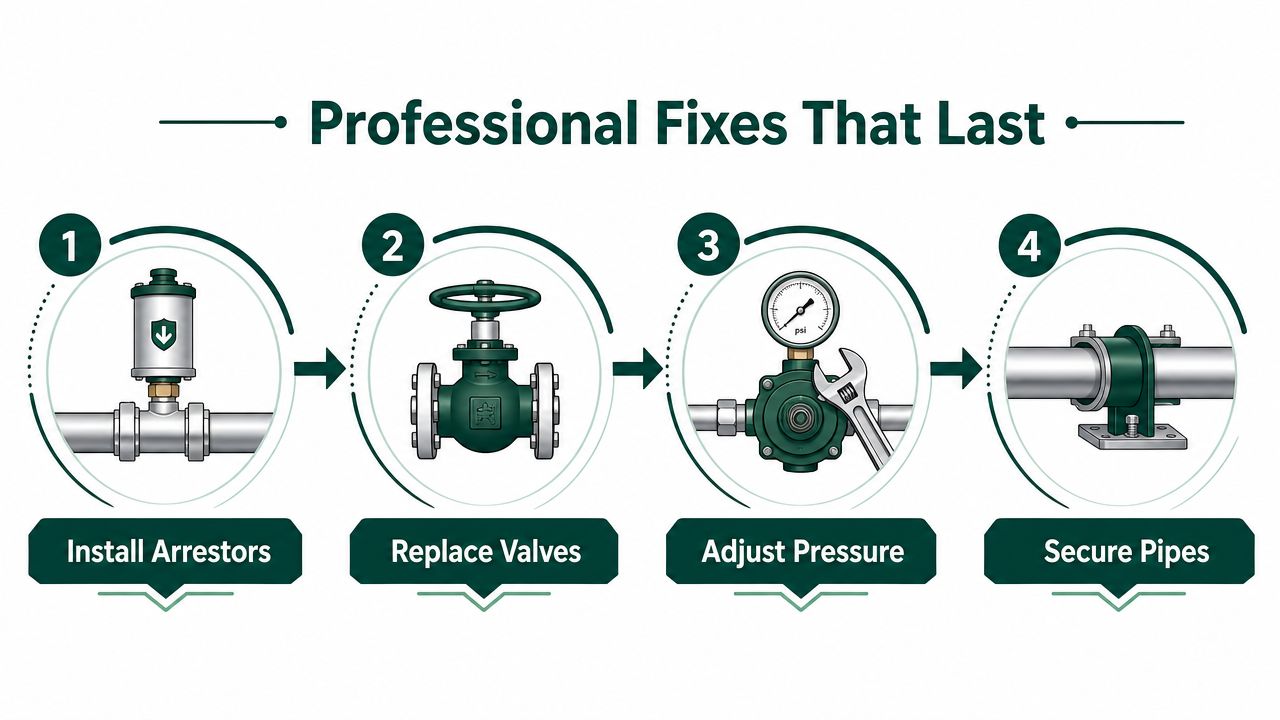
If the problem comes from a fast-closing appliance valve, a plumber may install an arrestor close to that branch or replace the valve with a slower-closing option. If the pressure is too high, the better answer is often a properly adjusted or replaced pressure-reducing valve. If the pipe moves, the fix is restraint, not more cushioning. EZ Plumbing repipe page is a helpful example of the kind of broader work that sometimes becomes necessary when an aging section of piping keeps failing.
The logic matters because a one-size-fits-all arrestor install can disappoint. An arrestor can absorb a surge, but it can't correct a bad pressure regulator, a pipe that's barely hanging on, or a valve that closes too violently every time the appliance cycles. In older homes, that's why the problem often returns until the actual weak link is addressed.
What a pro may replace or upgrade
- Arrestors at fixture groups: Best when the noise is tied to a specific appliance or branch.
- Pressure-reducing valves: Best when the whole house shows signs of pressure-related banging.
- Pipe restraints and hangers: Best when the line physically moves.
- Fast-closing valves: Best when the hardware itself is the trigger.
A professional also looks for the long-term math. Sometimes the cheapest repair is not repeated arrestor replacements, but a regulator replacement or a targeted re-pipe of the problem section. That's especially true when the system is older, the supports are failing, or the same symptom keeps returning after temporary fixes.
The best repair is the one that stops the repeat visit.
If you're talking with a plumber, ask what root cause they're correcting, not just what part they're installing. That question usually separates a quick noise bandaid from a repair that lasts.
When to Call EZ Plumbing for Water Hammer in Los Angeles
If the banging keeps coming back after the basic checks, the problem has probably moved beyond a simple homeowner fix. The same is true when a pressure test shows a high reading, when multiple fixtures react at once, or when pipes are visibly moving in the wall or ceiling. At that point, the system needs a licensed diagnosis, not another round of trial and error.

EZ Plumbing has been serving Los Angeles since 1989, with 24/7 emergency response and coverage that stretches from Beverly Hills and Santa Monica through Pasadena, Glendale, Burbank, and the San Fernando Valley. That kind of footprint matters when water hammer shows up in a home, HOA, or multi-unit property, because recurring noise often points to a system-level issue that needs more than a quick part swap. If you're comparing contractor options, the resources for plumbing businesses can also help you think about what good service and clear communication should look like.
Their scope matters here too. Pressure regulator replacement, drain and sewer diagnostics, water heater tuning, and licensed gas leak work all sit in the same toolbox as water hammer troubleshooting, which is useful when the noise turns out to be part of a broader plumbing condition. The goal is to stop the problem where it starts, not keep chasing it from fixture to fixture.
For property managers and homeowners alike, that's the smarter move when the same bang keeps returning. A satisfaction guarantee, transparent recommendations, and experience with recurring building issues can save time and prevent the kind of damage that comes from waiting too long.
If your pipes keep banging after the obvious fixes, it's time to bring in a team that can trace the cause instead of guessing at the symptom. EZ Plumbing handles water hammer, pressure problems, valve issues, and the hidden support and piping conditions that make the noise come back. Visit EZ Plumbing to schedule service and get a real diagnosis for the problem behind the bang.