
How to Detect a Gas Leak at Home: A Safety-First Guide
You walk into the kitchen and catch a faint rotten-egg smell. Maybe it's near the stove. Maybe it's by the water heater in the garage. Maybe you're not even sure if it's gas or just something stale in the drain. That uncertainty is where people make bad decisions.
When homeowners search for how to detect a gas leak at home, they usually want two answers at once. First, “Am I in danger right now?” Second, “Is this something simple, like a loose fitting, or do I need to get out and call for help?” Those are different questions, and the order matters.
I've seen people waste time sniffing around an appliance, checking burners, or trying to “confirm” the leak before they leave. That's the wrong instinct. Gas safety starts with one rule. Protect people first. Figure out the source later, and only if later is safe.
Table of Contents
- What to Do First If You Suspect a Gas Leak
- Using Your Senses to Detect a Gas Leak
- Simple DIY Methods for Pinpointing a Leak
- Understanding and Placing Home Gas Leak Detectors
- Gas Leak Prevention and Routine Maintenance Tips
- When to Stop and Call a Professional in Los Angeles
What to Do First If You Suspect a Gas Leak
If you think there may be a gas leak, leave the home first. Don't start checking knobs. Don't test appliances. Don't hunt for the source.
Public safety guidance is consistent on this point. If you notice a credible warning sign, the rule is to get out, avoid using phones and switches inside, and call 911 or the gas utility from a safe distance. One suspicious sign is enough to trigger evacuation and reporting, according to Constellation's home natural gas safety guidance.
Evacuate first, call from outside. If you suspect gas, your job is to move people away from the hazard, not diagnose it from inside the building.
Use a simple order of operations:
- Get everyone out. That includes children, older relatives, guests, and pets.
- Leave doors as they are if stopping would slow you down. Don't waste time “securing” the house.
- Don't touch switches or electronics inside. That means lights, doorbells, garage door buttons, chargers, and your phone.
- Don't light anything. No matches, candles, cigarettes, or stove ignition.
- Call from outside and away from the building. Contact 911 or your gas utility once you're at a safe distance.
- Stay out until responders or the utility tell you it's safe.
What not to do during those first minutes
People often make the situation worse by trying to be helpful.
- Don't “double-check” the smell. If it's gas, you've already got the information you need.
- Don't try a repair. A wrench in the wrong hands can turn a minor leak into a major release.
- Don't restart appliances. If a water heater, furnace, or stove is involved, leave it alone.
- Don't assume a faint smell means a small risk. A localized leak near an ignition source can still be dangerous.
In Los Angeles homes, I'd add one practical point. Detached garages, side yards, older water heater closets, and outdoor meter areas are common trouble spots. If the odor seems strongest in one of those places, that doesn't make it safer to investigate. It just helps explain what a technician will check once the area is cleared.
Using Your Senses to Detect a Gas Leak
Most homeowners don't own specialty leak detection equipment. That's fine. Your first line of detection is still smell, sound, and sight.
Utilities add mercaptan to natural gas because natural gas is naturally colorless and odorless. That additive gives it the familiar rotten-egg smell people are taught to treat seriously at home, as explained in Nationwide's gas leak safety article.
Smell is usually the first clue
That sulfur-like odor is the warning sign recognized fastest. If you smell it near a stove, furnace, dryer, fireplace key valve, water heater, or gas line connection, pay attention.
A few practical points matter here:
- A strong smell indoors means stop investigating. Leave.
- A faint smell in one small area still matters. It may point to a loose connector, valve issue, or appliance fitting.
- Intermittent odor is still odor. If it comes and goes, don't dismiss it just because it fades.
If the smell is near a water heater, the next step after the space is declared safe is usually a close inspection of the shutoff, sediment trap, flex connector, and control valve area. If your concern is tied to that appliance, it helps to understand related service issues around gas water heater repair.
Sound and sight matter more than people think
Not every leak announces itself with odor alone. You may hear it or see signs around the leak path.
A hissing or whistling sound near a line, valve, regulator, or appliance connection can mean gas is escaping under pressure. Indoors, that often shows up around utility closets, behind ranges, near furnaces, or at exposed pipe joints. Outdoors, it may be near the meter, along buried line routes, or by equipment fed from a branch line.
Visual clues can be just as useful, especially outside.
| Sense | Warning Sign | Common Locations |
|---|---|---|
| Smell | Rotten-egg or sulfur-like odor | Kitchens, garages, utility rooms, near meters |
| Sound | Hissing or whistling | Appliance shutoffs, pipe joints, meters, regulators |
| Sight | Bubbles in standing water | Yard low spots, wet soil, around buried line paths |
| Sight | Blowing dirt or loose soil movement | Exterior gas line routes, meter areas |
| Sight | Dead or stressed vegetation | Along buried gas piping or exterior supply runs |
If you notice any one of these signs and the situation feels off, treat it like a live safety issue, not a maintenance chore.
One thing homeowners often miss is that outdoor clues count too. Bubbling in puddled water, disturbed dirt, or a patch of vegetation that suddenly dies off near a buried line can point to a leak outside the structure. Those signs still call for the same basic decision. Keep your distance and report it.
Simple DIY Methods for Pinpointing a Leak
There is a narrow window where a DIY check makes sense. The smell is faint, clearly localized, there's no hissing, nobody feels unsafe, and the utility or emergency responders haven't told you to stay completely away from the area. In that limited situation, a homeowner can do a cautious preliminary check on an exposed fitting.
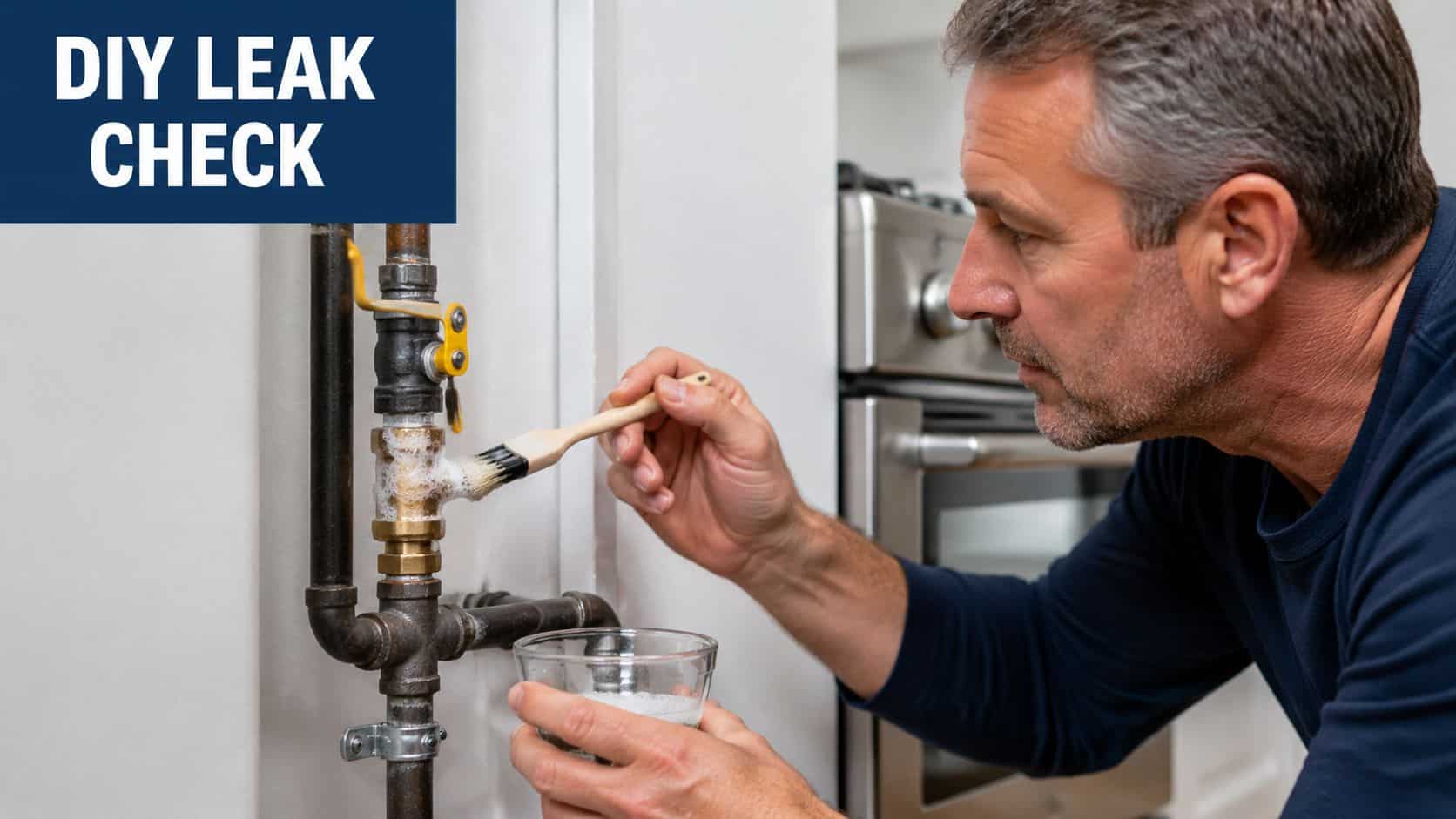
A practical home check combines three field methods: inspect appliance flame quality and visible fittings, apply a dish-soap solution of about 1 teaspoon detergent to 1 cup water to suspect joints and watch for steady bubble formation, then use a handheld gas detector for confirmation, based on the procedure described by BL3's guide to detecting a natural gas leak in your home.
When a DIY check is reasonable
This is for accessible, exposed connections only. Think appliance shutoff valves, unions, flex connectors, or a visible joint near a stove or dryer. It is not for hidden piping in walls, attic runs, crawlspaces, buried exterior lines, or anything near a strong odor.
A reasonable check can help answer one question: “Is this fitting visibly leaking?” It cannot certify that the whole system is safe.
Use DIY methods only when all of these are true:
- The odor is faint and localized. Not widespread through the house.
- There's no active hissing. If you hear gas moving, stop.
- The area is ventilated and calm. No panic, no ignition sources, no urgency to stay inside.
- You're checking an exposed joint only. Nothing concealed, nothing corroded, nothing damaged.
How to do the soap test correctly
The soap test works because escaping gas creates steady bubbles at the leak point. Random foam from over-sudsing doesn't tell you much, which is why technicians keep the mixture controlled.
- Look first. Check visible fittings and connector points. If an appliance flame has been acting oddly, note that, but don't relight anything just to test it.
- Mix the solution. Use about 1 teaspoon of dish detergent to 1 cup of water.
- Apply it to the suspect joint. A small brush or spray bottle works if it doesn't create excess foam.
- Watch closely. You're looking for continuous bubble growth at one spot, not a few surface suds.
- If bubbles form steadily, stop there. Don't tighten fittings under pressure unless you're qualified to do that safely.
- Move to professional repair. A confirmed leak is no longer a DIY mystery.
Field rule: Soap bubbles can confirm a leak at a fitting. They cannot rule out every leak in the system.
Homeowners also ask about meter checks. Those can help indicate whether gas is still flowing when appliances and pilots are off, but that's not a beginner test I'd recommend without clear utility guidance or a technician involved. It's easy to misread what you're seeing.
A quick visual overview can help if you want to see the basic logic of the process before trying anything:
Where handheld detectors help and where they mislead
Handheld combustible-gas detectors are useful for screening. They can help you narrow down whether the strongest reading is at a valve, union, flex line, or appliance body seam. They're especially handy for intermittent odor complaints where the smell disappears before a technician arrives.
They also create false confidence.
Here's where homeowners get tripped up:
- Sensor drift: Cheap detectors can react inconsistently.
- Poor technique: Moving too fast or too far from the fitting misses the leak path.
- Cross-sensitivity: Household vapors can confuse the reading.
- No repair answer: A detector can suggest a location, but it doesn't fix the connection or verify pipe integrity.
Use a handheld unit as a clue finder, not as permission to stay in a questionable environment. If the detector reacts repeatedly at a fitting, you've learned enough. Stop and escalate.
Understanding and Placing Home Gas Leak Detectors
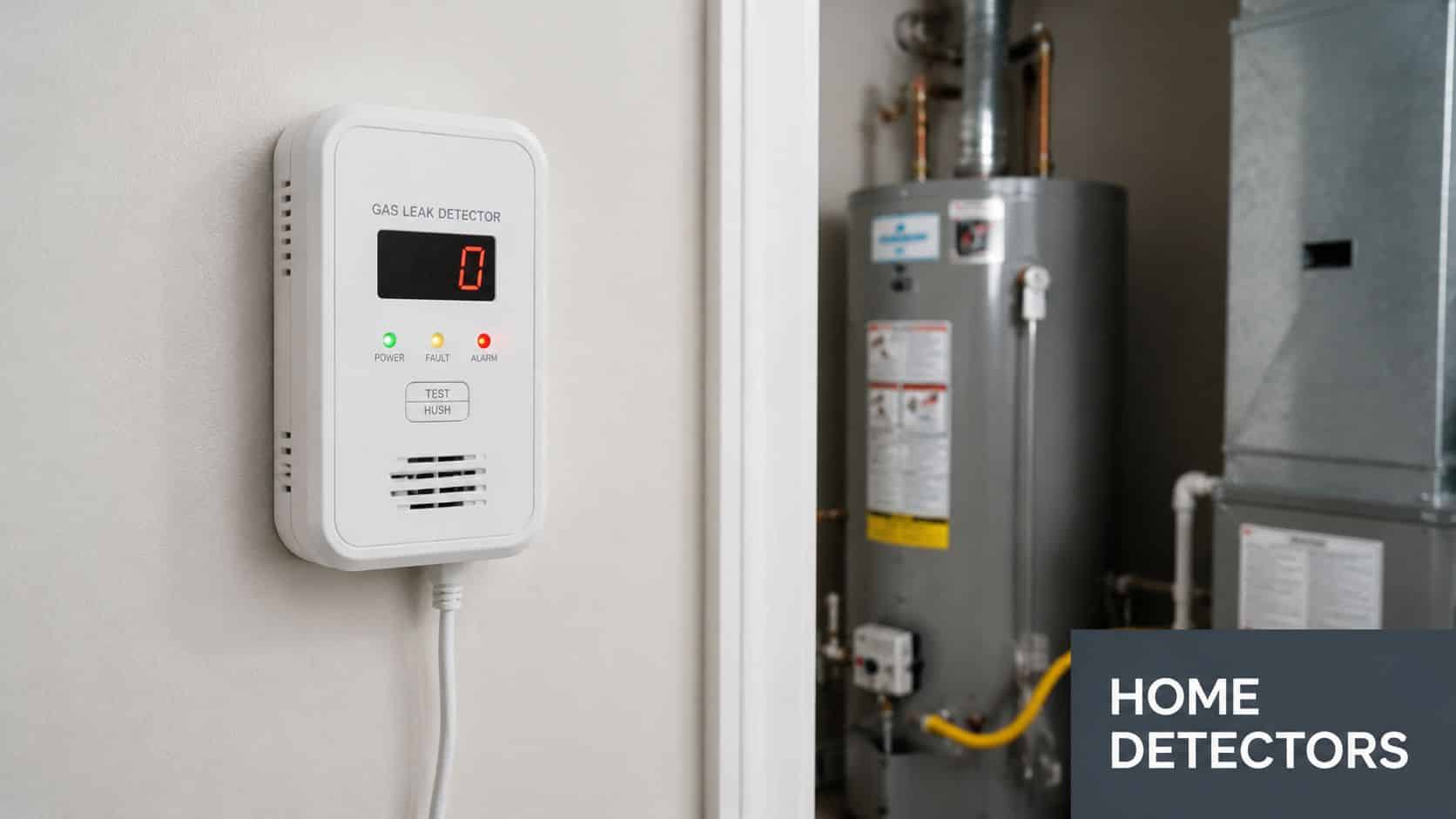
A fixed gas detector gives your home something your nose can't provide all day and all night. Constant monitoring. That matters in modern houses where appliances are tucked into closets, garages, laundry spaces, and sealed utility areas that people don't inspect often.
Independent guidance says homes using gas should have alarms, handheld devices are also useful, and homeowners are increasingly looking at meter readings and gas-usage changes as part of early detection. The broader shift is from “Can I smell gas?” to “Can I catch small or intermittent leaks early?” as noted in General Tools' home gas leak detection discussion.
What detectors are good at
Plug-in alarms, hardwired units, and smart-enabled detectors all serve the same basic purpose. They alert occupants to fuel gas in the air. The right choice depends on the layout of the home and how much coverage you want around likely problem areas.
A few practical distinctions:
- Plug-in alarms are easy to add near appliance zones.
- Battery-backed or hardwired units make more sense where uninterrupted monitoring matters.
- Smart-connected devices can be useful in rentals, second homes, or multi-unit oversight, but they still don't replace emergency response.
Gas detectors are one layer. They don't replace common sense, and they don't replace a licensed leak investigation.
Placement mistakes that reduce protection
The biggest mistake is treating a gas detector like a smoke alarm and putting one in a random hallway, then assuming the whole house is covered.
Place detection where gas is most likely to appear first:
- Near gas-burning appliances such as water heaters, furnaces, ranges, and dryers
- Near utility spaces where fittings, valves, and connectors are concentrated
- Where you can hear the alarm if it activates during the night or from another room
The exact mounting height can vary by product, so follow the manufacturer's instructions for that specific detector. What matters in practice is buying the correct device for fuel gas, not confusing it with a carbon monoxide alarm, which addresses a different hazard entirely.
A detector also won't tell you what failed. It can't distinguish a loose appliance connector from a degrading valve body or a problem in the branch piping. It tells you there may be gas present, which is exactly the kind of early warning many homes need.
For homeowners who want a layered approach, the combination that makes the most sense is fixed detectors for everyday monitoring, a handheld unit for limited spot checks, and a professional leak test when the issue is recurring or unclear.
Gas Leak Prevention and Routine Maintenance Tips
The safest gas leak is the one that never starts. Most emergency calls I'd rather prevent begin with small neglect. A worn connector nobody looked at. A valve that got bumped. An aging appliance that kept getting “one more year.”
The habits that prevent emergency calls
Routine maintenance is boring. That's why it works.
Keep these habits in place:
- Know your shutoff locations. Every adult in the home should know where the appliance shutoff and main gas shutoff are located.
- Visually inspect exposed connectors. Look for corrosion, kinks, abrasion, looseness, or anything that looks recently disturbed.
- Pay attention to appliance changes. New odor, odd burner behavior, or recurring relight issues deserve a closer look.
- Keep utility areas accessible. Don't bury valves and connectors behind storage.
If you're adding exterior gas features, prevention starts at installation. A guide to safe gas fire pit installation is useful because outdoor lines, shutoffs, and burner assemblies need the same respect as indoor equipment.
What owners and property managers should stay ahead of
Los Angeles owners, landlords, and HOA managers deal with a common problem. Small gas issues get ignored because no unit seems to have a “major” emergency yet. That's how minor leaks stay in service.
What helps most is a predictable maintenance rhythm:
- Schedule appliance and line inspections before trouble starts.
- Document complaints from tenants carefully. “Smelled gas once” is enough to take seriously.
- Replace questionable parts instead of stretching them.
- Use licensed gas line service when fittings, valves, or branch piping need repair.
For repair work on confirmed line issues, homeowners and managers should use a licensed provider for gas line repair. The point isn't convenience. It's making sure the system is tested and returned to service correctly.
Preventive maintenance costs less stress than emergency decision-making. Once people smell gas, the easy part is over.
When to Stop and Call a Professional in Los Angeles
There's a clear line here. If you have a strong odor, hear hissing, see clear bubble formation at a joint, can't isolate the source, or don't feel safe, stop the DIY process.
The emergency threshold is simple. One credible sign is enough to leave the building and report it from a safe distance, based on the utility guidance cited earlier. That rule matters because homeowners lose time trying to decide whether the leak is “serious enough.” If you're asking that question, you're already past the point of casual troubleshooting.
In Los Angeles, older homes, remodeled kitchens, garage water heaters, multi-unit buildings, and outdoor appliance branches all add complexity. A licensed gas technician can test the exposed fittings, isolate appliances, trace the line path, and determine whether the problem is a small connector issue or something deeper in the system. For residents who need that service, gas leak detection in Los Angeles is one available option.

If you're standing outside your house and wondering whether to go back in and “just check one more thing,” don't.
If you need a licensed plumber for a suspected gas issue in Los Angeles, contact EZ Plumbing. They've served Los Angeles since 1989, are licensed and insured, and provide 24/7 emergency response along with same-day scheduling for planned repairs. For a possible gas leak, the safest move is to stay outside and speak with a qualified professional before anyone re-enters the property.