
Unclogging Drains with Vinegar: A Plumber’s Guide
You hear the sink gurgle, watch the water hesitate, and start doing the same thing most homeowners do. You look under the cabinet for a quick fix. Somewhere between “I don't want to pour harsh chemicals down there” and “I need this drain working today,” vinegar and baking soda usually enter the conversation.
That method isn't useless, but it's often misunderstood. In real plumbing work, unclogging drains with vinegar is more of a light maintenance step than a true repair. It can help with mild odor and minor fresh buildup near the drain opening. It usually won't solve the clogs that actually frustrate people, especially the dense mix of hair, soap residue, grease, and sludge that sits deeper in the line.
A homeowner deserves the honest version, not just the recipe. If you're going to try vinegar, use it the right way, know what result is realistic, and know when to stop before a small drain problem turns into an overflow.
Table of Contents
- The Truth About the Vinegar Drain Cleaning Trick
- What Really Happens When You Pour Vinegar Down the Drain
- Your Guide to Using Vinegar for Drain Maintenance
- Signs Your Clog Needs More Than Vinegar
- Is Vinegar Safe for Your Pipes
- Don't Risk It Your Los Angeles Emergency Plumbers
The Truth About the Vinegar Drain Cleaning Trick
The vinegar trick stays popular for one reason. It feels safe, simple, and cheap. When a kitchen sink starts draining slowly or a shower begins to pool around your feet, pouring in pantry ingredients seems a lot less intimidating than using a cable machine or calling for service.
From a plumber's perspective, that's fine as long as you use it for the right problem. Unclogging drains with vinegar is not the same thing as clearing a real obstruction. It's closer to routine upkeep. It may freshen a drain and sometimes loosen light organic residue near the top of the line. It won't reliably remove a packed hair clog or a thick greasy buildup that's been collecting for a while.
The difference between maintenance and repair
A lot of DIY advice blurs that line. Homeowners get a fixed recipe, a wait time, and the impression that fizz equals progress. In the field, what matters is whether water moves freely afterward and keeps moving freely over time.
Practical rule: If the drain is only a little slow and there's no standing water, vinegar may be worth trying. If water is backing up and staying there, you're likely past the point where this method can help.
The biggest mistake is repeating the same weak remedy over and over while the clog gets worse. That wastes time and sometimes lets the blockage compact further.
Why plumbers sound skeptical
The skepticism isn't about being anti-DIY. It's about matching the tool to the problem. A mild drain odor, light residue, and early slow flow are one category. A recurring bathroom clog, a grease-heavy kitchen line, or several fixtures draining poorly at once are a different category entirely.
Homeowners do better when they treat vinegar as a band-aid for small issues, not a substitute for real drain cleaning.
What Really Happens When You Pour Vinegar Down the Drain
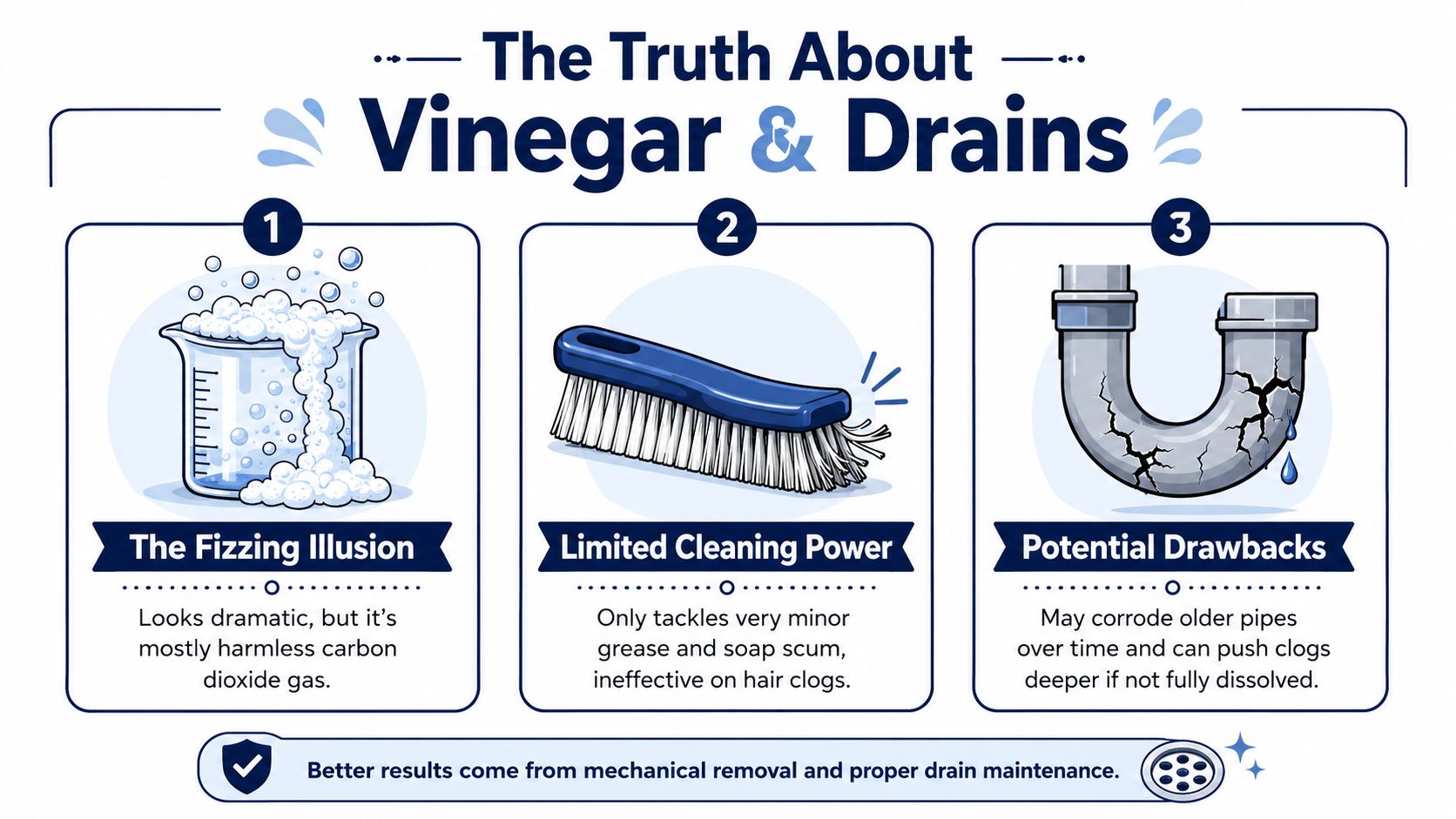
The dramatic part of the vinegar method is the fizz. That reaction makes people think something powerful is happening inside the pipe. In most cases, the reaction looks more impressive than it performs.
According to a detailed plumbing-focused explanation from Brendid's breakdown of baking soda and vinegar in clogged drains, vinegar and baking soda mainly form water plus dissolved salts, and the carbon dioxide fizz is not created in a sealed pipe system strongly enough to blast out blockages. The same explanation notes the mixture is ineffective against grease clogs because the ingredients are not surfactants that help water carry oil away.
Why the fizz looks stronger than it is
Drain lines aren't closed chemistry tubes. They're plumbing systems with openings, vents, traps, and imperfect seals. So even though you see bubbling at the drain, you usually aren't creating the kind of force needed to punch through a compact clog.
That matters because real clogs aren't fluffy. They're sticky, layered, and often anchored to the pipe wall.
A lot of homeowners also miss the obvious clue. Most DIY recipes finish with hot or very hot water. In practice, that final flush often does more work than the fizzing stage, especially when the issue is light residue close to the opening.
What this method can and cannot do
Here's the honest trade-off:
| Situation | What vinegar may do | What it usually won't do |
|---|---|---|
| Mild odor | Freshen the drain | Fix a deep source of decay |
| Light fresh buildup | Loosen some residue | Restore a badly restricted line |
| Heavy grease | Limited help at best | Break up a thick greasy clog |
| Hair and soap scum | Minimal effect | Remove a tangled blockage |
That's why I tell homeowners to think of this as light cleaning, not drain surgery.
For surface mineral spotting and residue in other parts of the home, vinegar has more obvious value. If you're dealing with hard water marks on glass as well, this guide for crystal-clear windows is a good example of where vinegar-type cleaning logic fits better than it does in a clogged drain.
The fizz is real. The drain-clearing power is usually overstated.
Your Guide to Using Vinegar for Drain Maintenance
If your drain is slow but not fully blocked, this method can still be useful as part of routine maintenance. The key is to use it with realistic expectations. Think deodorizing, light cleanup, and minor buildup control.
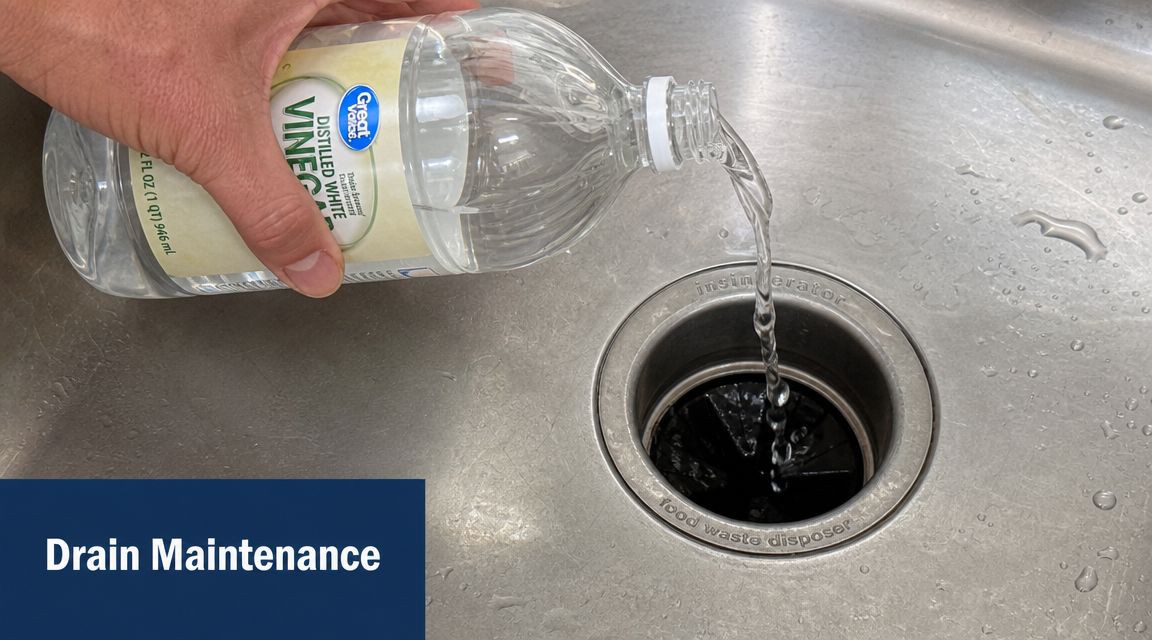
One commonly repeated DIY pattern uses fixed doses and wait times rather than proven unclogging performance. For example, Liquid-Plumr's overview of the method notes guides that recommend 1 cup of baking soda and 1 cup of vinegar with a 5 to 10-minute wait, while also advising repeat treatments or escalation for stubborn clogs. That tells you a lot. Even the standard recipes imply this isn't a one-shot answer for severe blockages.
When this method makes sense
Use it when the problem looks like maintenance, not failure:
- Slow but draining: Water still goes down, just more slowly than normal.
- Minor drain odor: The sink smells stale, but there's no backup.
- Recent buildup: The issue showed up recently and isn't getting worse by the hour.
- No multiple-fixture symptoms: Only one drain is affected.
If you want more non-caustic home methods beyond vinegar, this chemical-free drain unclogging guide is a practical next step.
How to do it properly
A technically defensible version of the method comes from Roto-Rooter's natural drain unclogging steps. The sequence is simple:
Remove standing water first. If water is sitting in the sink or tub, scoop out as much as you can. The mixture needs contact with the drain walls, not dilution in a bowl of dirty water.
Add about 1/2 cup baking soda directly into the drain.
Follow with 1 cup vinegar.
Seal the opening. Use a stopper or a wet cloth. That helps keep more of the reaction in the drain instead of letting it escape straight into the room.
Wait about 15 minutes.
Flush with boiling or very hot water.
That same guidance says you can repeat the cycle once or twice for stubborn clogs, which is another clue that this approach is best suited to light organic buildup rather than hard obstructions.
A quick visual can help if you want to see the general process before trying it:
What to do if the drain is still slow
Don't keep chasing the same result all afternoon.
Field advice: If you've done one careful treatment and a second attempt doesn't change the drain much, stop treating it like a cleaning problem. Start treating it like a blockage problem.
At that point, the next step is usually mechanical. A plunger, hand snake, trap cleaning, or a professional cable machine makes more sense than another round of pantry ingredients.
Signs Your Clog Needs More Than Vinegar
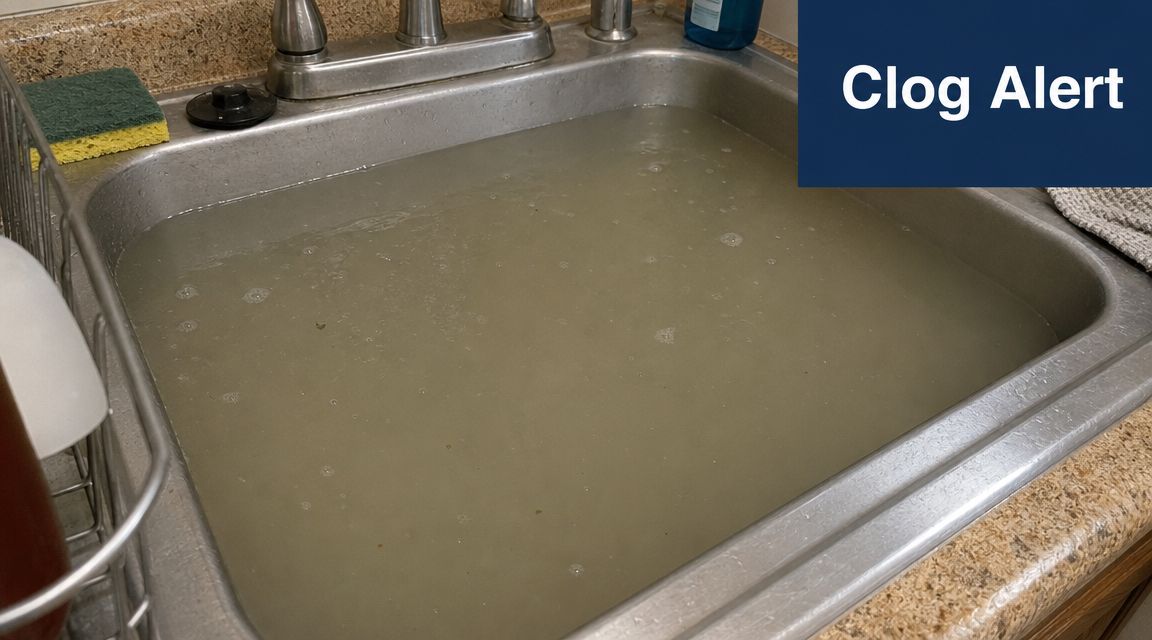
Some drains tell you right away that vinegar isn't enough. Others give you a short-lived “improvement” and then clog again two days later. That second pattern is common. The liquid found a narrow channel through the blockage, but the mass is still sitting there.
A major limitation shows up in bathrooms. Roto-Rooter's advice on lesser-known drain unclogging tips acknowledges that baking soda and vinegar may help with mild buildup but is ineffective against hair clogs and may not fix tough blockages on its own. That's a big gap, because many bathroom drain problems are hair-driven.
Clues that point to a real blockage
Watch for these signs:
- Standing water: The sink, shower, or tub holds water instead of slowly clearing.
- Fast return of the clog: The drain works briefly, then slows again.
- Bathroom fixture issues: Hair and soap scum are likely involved.
- Persistent odor after cleaning: Something deeper in the line is still collecting debris.
- Gurgling after flushing or draining: Air is struggling past a restriction.
A kitchen sink with recurring backups often needs more than a liquid treatment. In many cases, a cable or auger is the right next tool. This kitchen sink snaking guide gives a realistic sense of what that process involves.
When the problem may be bigger than one fixture
If more than one drain is acting up, stop thinking local clog and start thinking system issue. A single slow lavatory is one thing. A shower, toilet, and sink all behaving badly at the same time is different.
That's when overflow risk goes up. If wastewater starts backing up into living areas, it helps to understand why contaminated water is taken so seriously. This overview of understanding category 3 water damage gives useful context on why sewage-related backups need fast response and careful cleanup.
A recurring clog is rarely “gone.” It's usually waiting.
Is Vinegar Safe for Your Pipes
For many homes, vinegar is the safer option compared with harsh chemical drain openers. That's the practical truth. If the choice is between a mild pantry acid and a caustic cleaner that generates heat, vinegar is usually the gentler path.
Where vinegar is usually the lower-risk option
In modern plumbing systems that are in decent shape, occasional vinegar use for light maintenance usually isn't the main danger. The bigger hazard is often what homeowners try next when vinegar doesn't work. Strong chemical cleaners can create heat, leave corrosive residue, and make a later service call more hazardous for whoever has to open the line.
That's why a cautious homeowner often does better with simple maintenance first, then mechanical cleaning if needed.
Where caution matters
Older metal drain lines, worn assemblies, and aging seals deserve more care. Acidic solutions aren't something I'd use repeatedly on a system that already shows corrosion, leaks, or fragile fittings. Even when vinegar itself isn't catastrophic, repeated exposure isn't the same as repair.
There's also a broader housekeeping lesson here. Vinegar is often better at dealing with hard water residue than serious plumbing obstructions. For example, if you're fighting spotting on glass rather than a blocked pipe, this guide on how to remove hard water stains from windows shows a more appropriate use case for that kind of cleaning approach.
The safest long-term strategy is simple. Use vinegar sparingly for maintenance. Don't mix methods carelessly. Don't keep pouring things into a drain that keeps asking for mechanical cleaning.
Don't Risk It Your Los Angeles Emergency Plumbers
A stubborn clog becomes expensive when it turns into an overflow, damages cabinets, ruins flooring, or sends dirty water where it shouldn't go. That's why the decision point matters. Once a drain has moved beyond light maintenance, the goal is no longer “try one more trick.” The goal is to clear the obstruction without damaging the pipe.

Call for service when you notice these problems
Pick up the phone if you have any of the following:
- Water backing up instead of draining
- More than one fixture running slow
- A clog that comes back after DIY treatment
- Bad odors that don't clear out
- Overflow risk in a sink, tub, shower, or floor drain
If the situation is urgent, a local Los Angeles emergency plumber is the right move.
What professional drain cleaning changes
Professional service changes the approach from guessing to identifying. A plumber can determine whether the issue is near the trap, deeper in the branch line, or farther down the system. The fix might be a hand auger, a larger drain snake, hydro jetting, or inspection to see what's in the line.
In Los Angeles, one option is EZ Plumbing, a licensed contractor serving homes, HOAs, property managers, and commercial properties with drain cleaning, hydro jetting, sewer diagnostics, and emergency plumbing response. That matters when the problem isn't just a slow sink, but a property-risk issue that needs the line fully opened and checked.
If unclogging drains with vinegar didn't solve the problem, don't keep waiting for it to fix itself. EZ Plumbing handles drain clogs, sewer issues, and emergency backups across Los Angeles with professional tools that clear the line instead of just masking the symptom.