
Gas Water Heater Control Valve: A Homeowner’s Guide
You step into the shower, turn the handle, and wait for the usual burst of hot water. Instead, you get a cold slap across the shoulders. Then the questions start. Is the pilot out? Is the tank done? Is this dangerous?
A lot of homeowners first hear about the gas water heater control valve only when something goes wrong. That makes sense. It's not a part you look at every day. But when hot water disappears, the pilot won't stay lit, or you smell gas near the heater, this valve moves to the top of the suspect list. It acts like the brain of the unit, deciding when gas flows, when the burner fires, and when everything shuts down.
For homeowners trying to figure out whether this is a quick reset, a simple check, or a hard stop, the line matters. Some actions are safe. Some are not. If your home has a gas heater, knowing that difference can protect your family and keep a small problem from turning into a dangerous one.
If you're dealing with unreliable hot water and want a broader look at common system issues, gas water heater service and repair guidance can help you understand where the control valve fits into the bigger picture.
Table of Contents
- The Cold Shower Surprise An Introduction
- The Brain of Your Water Heater What the Control Valve Does
- Warning Signs Your Control Valve Is Failing
- Safe First Steps and Emergency Shutoff Procedures
- Repair or Replace Deciding the Fate of Your Water Heater
- Why Gas Valve Replacement Is a Job for a Licensed Pro
The Cold Shower Surprise An Introduction
You step into the shower expecting hot water, and within a minute it turns cold. Then the guessing starts. Is it a simple pilot issue, a thermostat setting, or something more serious involving gas?
That moment sends a lot of homeowners straight to the water heater in the garage, closet, or side yard. They stare at the controls, hoping for an obvious answer. Sometimes the pilot window is dark. Sometimes the unit is silent. Sometimes there is a gas odor, and that changes the job immediately.
The gas water heater control valve is often at the center of the problem. It controls whether the burner gets gas and whether the heater can keep water at the set temperature. If it stops responding the way it should, hot water can disappear fast.
Practical rule: No hot water is an inconvenience. A gas smell is a safety issue. Leave the area, avoid switches or flames, and call for help.
What makes this tricky is that several problems can look similar at first. A bumped temperature dial, a pilot outage, a loose thermopile connection, or a failing control valve can all lead to the same complaint: “We have no hot water.” Knowing the difference protects your family and keeps a small problem from turning into a dangerous one.
Homeowners can safely make a few basic checks, and our team at EZ Plumbing handles these calls every day on gas water heater service and repair. The line is simple. Look, listen, and smell. Do not take gas parts apart, force controls, or keep relighting a unit that is acting wrong. Gas appliances demand caution, especially after a problem occurs.
The Brain of Your Water Heater What the Control Valve Does
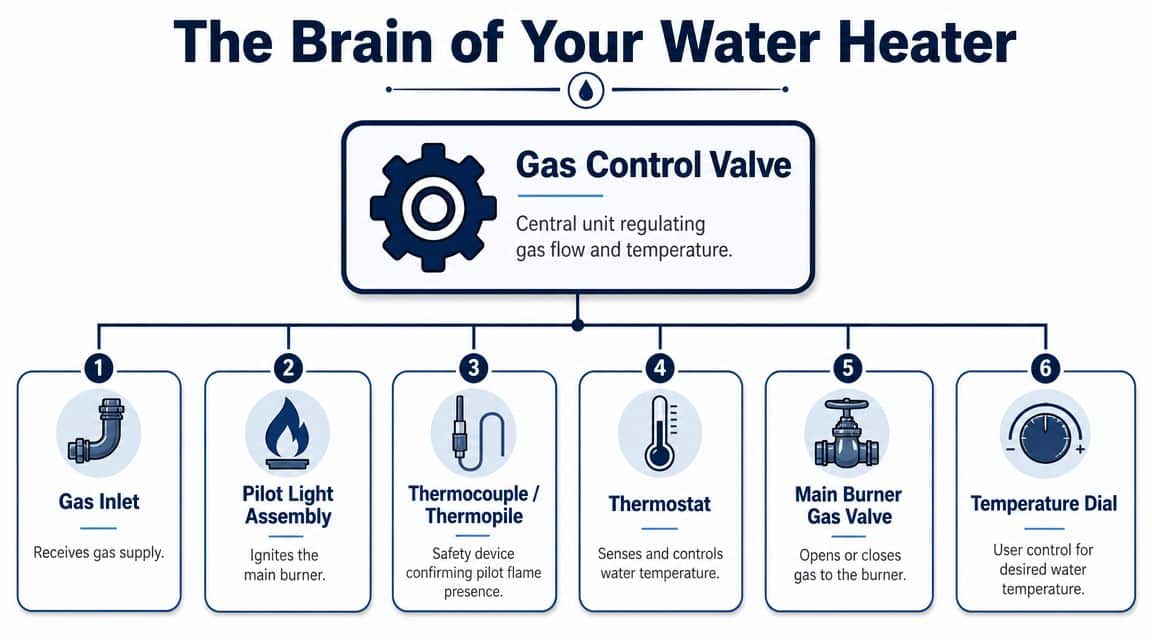
A gas water heater works because one part is constantly making small decisions. That part is the gas water heater control valve.
It's like the heater's traffic cop. It watches temperature, controls gas movement, and only allows the burner to run when conditions are right. Without it, the heater wouldn't know when to heat, when to stop, or when to stay locked down for safety.
The simple version
Inside the valve is the sensing and regulating function that responds to water temperature. When the tank water cools below the setting, the valve allows gas to flow so the burner can heat the tank. When the water reaches the target temperature, the valve shuts that flow back down.
That's why calling it the “brain” isn't just a nice analogy. It really does coordinate performance and safety at the same time. The thermal sensing portion tells the valve what the water needs. The gas control portion decides whether the burner gets fuel.
A major step toward the modern version came in 1889, when Edmund Rudd engineered an automatic storage tank-type gas water heater using a bottom gas heater and a temperature-control gas valve. His 1897 patent for an automatic water heater with thermostat-controlled gas valves is widely treated as a key milestone in the development of modern control systems, as noted in this history of water heater development and Rudd's design.
What you can see on the outside
Most homeowners won't see the inner workings, but they can usually identify a few exterior controls:
- Temperature dial that sets how hot the stored water should get.
- Pilot control knob with positions such as off, pilot, and on.
- Gas supply connection where fuel enters the valve body.
- Connections to the burner system that feed the pilot and main burner.
- Ignition components or leads depending on the model.
Those visible parts matter because they tell you what the valve is trying to do. If the pilot knob feels loose, if the setting has been turned down, or if the unit won't move from pilot operation to normal burner operation, the valve may be involved.
The control valve isn't just there to make hot water. It's there to decide when gas should never flow.
What works is careful observation. Look through the sight glass if your unit has one. Check the setting. Notice whether the burner ever lights. What doesn't work is removing panels, loosening gas connections, or forcing knobs.
When homeowners understand that this part is both a thermostat and a gatekeeper, a lot of the heater's behavior starts making sense.
Warning Signs Your Control Valve Is Failing
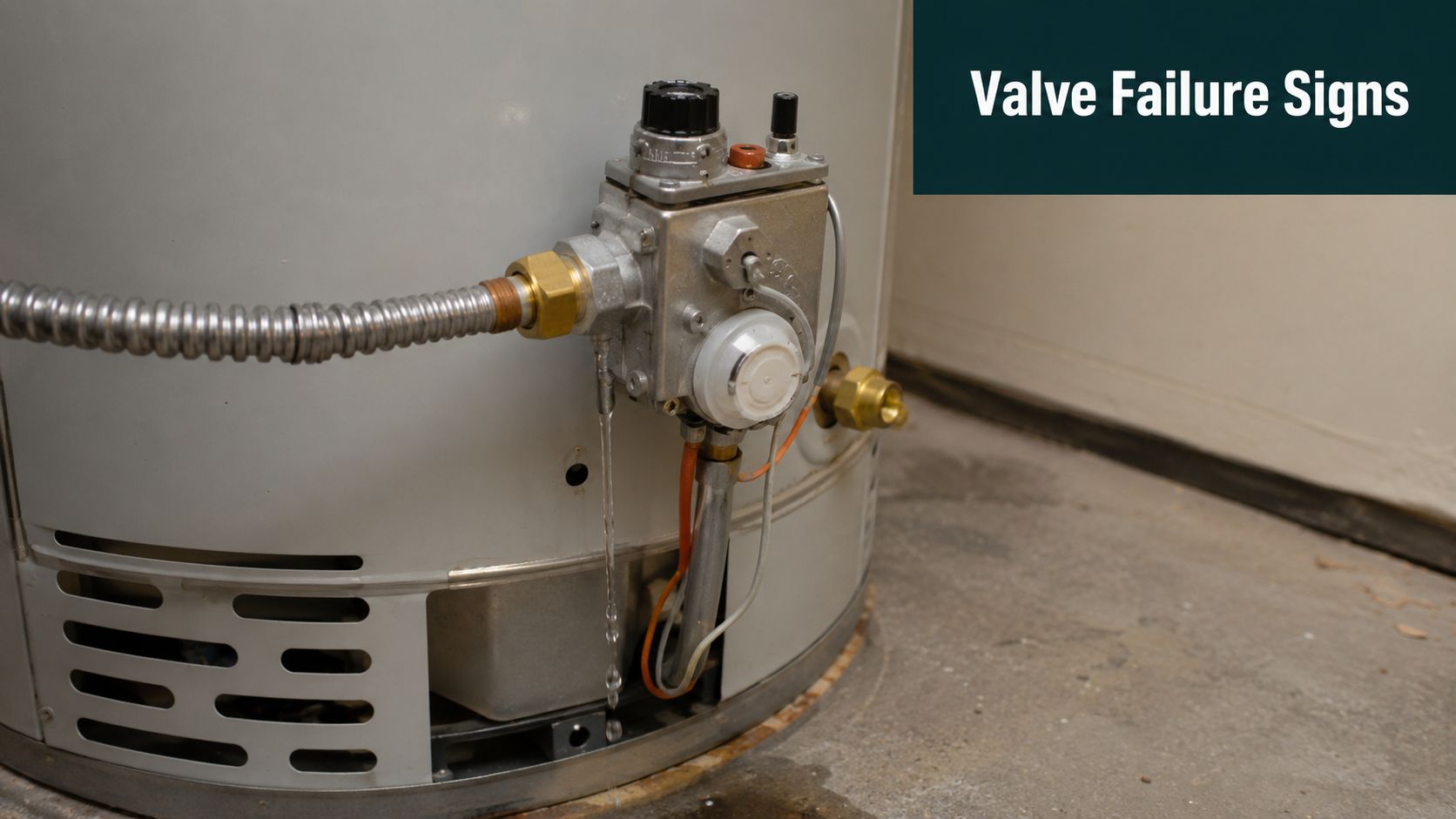
A bad control valve usually shows itself through odd heater behavior before it quits completely. Homeowners call us after a cold shower, a pilot that keeps dropping out, or a burner that starts and then acts erratically.
Symptoms that point to valve trouble
Start with the big one. No hot water at all often means the burner never lit, never stayed lit, or the valve never opened for normal burner operation. That does not confirm a failed valve by itself, but it puts the control system near the top of the suspect list.
A pilot light that won't stay lit is another common warning sign. Sometimes the trouble is in the pilot assembly or sensor circuit, not the valve body. From the homeowner side, though, the safe response is the same. Do not keep relighting it over and over.
Lukewarm water is another clue. The heater may fire for a short cycle and shut down too soon, or the valve may be regulating temperature poorly. In the field, this is one of the more misleading symptoms because it can look minor at first.
Physical clues matter too, especially if the heater is in a garage or utility room where small changes go unnoticed for weeks.
- Corrosion on or around the valve body can point to moisture exposure or a slow leak nearby.
- Soot or dark discoloration near the burner area can suggest a combustion problem.
- A gas smell near the heater means stop using the appliance and treat it as a safety issue right away.
- Knobs that stick, spin loosely, or feel damaged can signal wear or internal failure.
For a different type of appliance but a similar troubleshooting mindset, these RV water heater repair tips are useful because they show how ignition, gas supply, and control issues can overlap.
Control Valve Failure Symptoms & Actions
| Symptom | Possible Cause | Recommended Action |
|---|---|---|
| No hot water | Valve not opening to burner, pilot outage, control issue | Check the setting and pilot view window only. If normal operation doesn't return, call a pro. |
| Pilot won't stay lit | Control circuit fault, pilot assembly issue, failing valve | Stop repeated relighting attempts and have the system tested professionally. |
| Water only gets lukewarm | Faulty temperature regulation or interrupted burner operation | Verify the dial wasn't turned down. If the problem continues, schedule service. |
| Gas smell near heater | Leak at valve, fitting, or burner assembly | Leave the area if needed, shut gas off if safe, ventilate, and call for emergency help. |
| Corrosion or moisture near valve | Leak from above, tank issue, or compromised connection | Don't assume it's harmless. Have the source identified before using the unit normally. |
| Soot around burner area | Combustion or gas-flow problem | Stop using the heater until it's inspected. |
A short visual walkthrough can help you compare what you're seeing at home with normal heater behavior.
When one symptom means stop immediately
The symptom that overrides everything else is the smell of gas. At that point, the job is no longer troubleshooting. The job is safety.
Do not relight the pilot. Do not keep turning the knob. Do not assume the odor will clear on its own.
If you are not sure what a leak smells like or what to do first, review these signs of a gas leak in your home and then call for qualified help. If you can shut the gas off safely, do it. If not, leave the area and contact the gas utility or emergency service.
Older gas valve failures are part of the reason modern heaters use stricter safety controls and interlocks, as noted earlier in the article. That history is useful, but for a homeowner standing next to a heater with a sulfur smell, the practical line is simple. Stop using the unit and call a licensed plumber.
Safe First Steps and Emergency Shutoff Procedures
A homeowner doesn't need to fix a gas valve to make a smart first move. The right approach is simple. Check what you can see. Don't disassemble anything. If there's any sign of gas leakage, treat it as a safety event first.
Three checks a homeowner can make
These are reasonable first steps when there's no obvious emergency.
Look through the pilot viewing window
Don't remove the burner cover or disconnect anything. Just use the sight glass or viewport if your unit has one. If you can clearly see that the pilot isn't lit, that's useful information to give the technician.Check the temperature dial
People bump these more often than they think, especially in garages, utility closets, and shared spaces. If the dial was turned down accidentally, restoring it to the prior setting may solve the comfort problem. If you're not sure where it was, don't start guessing with extreme settings.Pay attention to smell and sound
A faint sulfur-like gas odor means you stop. A heater that's unusually quiet when it should be heating can also tell you the burner isn't firing, but smell always takes priority over everything else.
If you want a homeowner-focused overview of warning signs before taking any action, this guide on how to detect a gas leak in your home is a good safety reference.
Homeowner boundary: Looking is fine. Taking apart gas components is not.
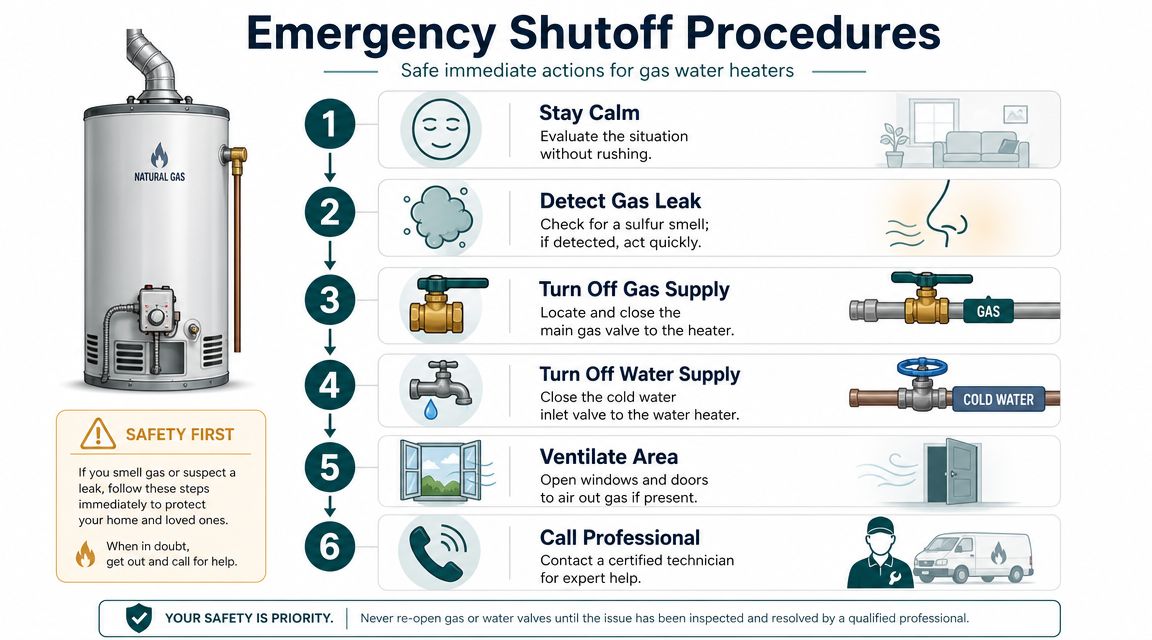
How to shut the heater down in an emergency
If you smell gas and it's safe to approach the unit, shut the system down calmly.
- Turn the control knob to off if your water heater design allows it and you can do it without forcing anything.
- Shut off the gas supply to the heater at the nearby gas shutoff valve on the supply line.
- Turn off the cold water supply to the heater if there's concern about leakage or you're waiting for service.
- Open doors and windows to ventilate the area.
- Leave the area if the odor is strong or conditions feel unsafe.
- Call a qualified professional rather than trying to relight or restart the unit yourself.
What doesn't work is using tools to force a stuck valve, checking for leaks with a flame, or standing around the heater while trying to decide whether the gas smell is “serious.” If you noticed it, it's serious enough to respond.
Repair or Replace Deciding the Fate of Your Water Heater
When the control valve is the problem, the next question is whether the heater deserves that repair. The answer depends less on one part and more on the overall condition of the unit.
When repair makes sense
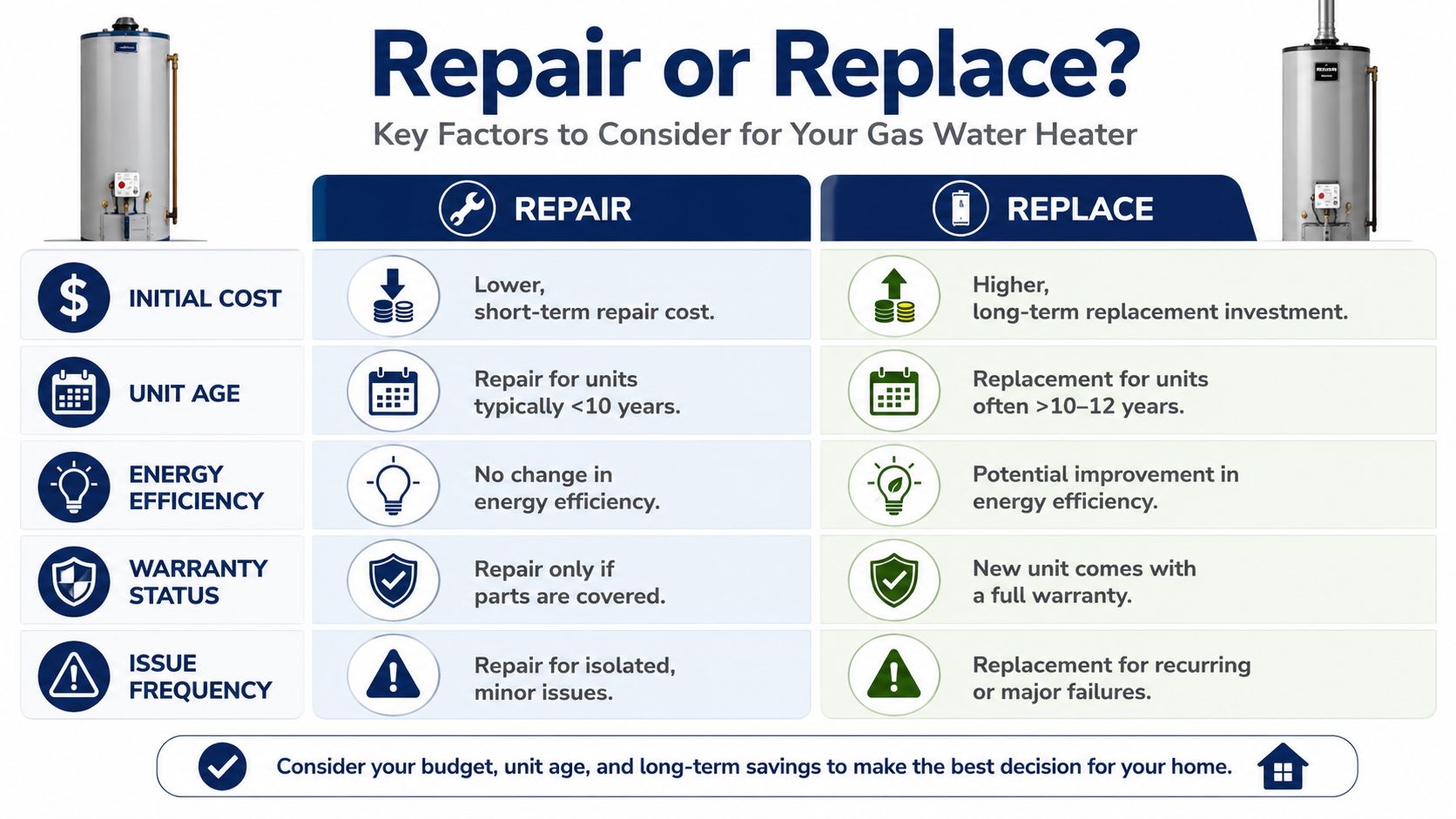
A valve replacement usually makes sense when the heater is still in solid shape overall. If the tank body is sound, there's no active tank leakage, parts are available, and this is the first major issue, repair is often the cleanest path.
You also look at how the heater has been behaving. A single control-related failure is different from a unit with a history of pilot trouble, inconsistent heating, corrosion, and recurring service calls. If the rest of the appliance is dependable, replacing the valve can be a practical fix.
A professional also checks whether the exact replacement valve is available and correct for the heater model. That matters more than homeowners realize. “Almost the same” is not good enough with gas controls.
When replacement is the smarter call
Replacement starts to look better when the heater is older, parts are hard to source, or the valve problem shows up alongside other signs of decline. A control valve can fail on its own, but it can also be the latest issue on a heater that's nearing the end of its useful life.
Use this kind of side-by-side thinking:
- Repair if the issue is isolated and the tank is otherwise healthy.
- Replace if the heater has multiple problems, visible age-related wear, or a tank condition that makes further investment hard to justify.
- Repair if you need the fastest path back to service and the unit still has life left.
- Replace if you want the reset that comes with a new system and fresh warranty protection.
A water heater shouldn't be judged by one failed part alone. Judge the whole machine.
What works is asking for a recommendation based on tank condition, combustion condition, valve availability, and whether this is a one-off issue or part of a pattern. What doesn't work is deciding only from the symptom you felt in the shower.
Why Gas Valve Replacement Is a Job for a Licensed Pro
A gas control valve swap looks simple from the outside. It isn't. This job crosses into gas piping, combustion safety, leak testing, manufacturer compatibility, and workmanship that has to be exact.
What goes wrong with DIY valve swaps
Gas control valves are torque-sensitive and leak-sensitive. Manufacturer replacement guidance specifies installing the new valve hand-tight and then tightening it 4 to 6 turns, with a maximum of 31 ft-lbs plus one additional turn, and then performing a full leak test at the gas valve and manifold joints with a noncorrosive leak-detection solution, according to these gas valve installation instructions from HD Supply. That's not a “snug it until it feels right” situation.
Over-tightening can damage the tank connection and create a leak. Under-tightening can leave a leak. Reconnecting the manifold, pilot, thermopile, and igniter leads incorrectly can leave you with intermittent operation or an unsafe appliance.
Why licensing matters
A licensed plumber or qualified gas appliance technician doesn't just replace the part. They verify the valve is the correct match, reinstall the connected components properly, and test the system before putting it back in service.
If you've ever wondered what separates a licensed tradesperson from someone who says they can do the job, this guide to master plumber licensing gives useful background on the training path behind that credential. That matters with gas work.
For homeowners, the practical takeaway is simple. If the problem involves a gas water heater control valve, DIY should end at observation and shutdown. Anything beyond that belongs to a licensed professional. If you want a broader look at why that standard matters in residential work, read this explanation of why to hire a licensed plumber for your home.
If your water heater has stopped producing hot water, the pilot won't stay lit, or you smell gas near the unit, contact EZ Plumbing for safe, professional help. EZ Plumbing is a licensed and insured plumbing contractor serving Los Angeles since 1989, with 24/7 emergency response, same-day scheduling for many repairs, and experienced technicians who handle gas water heater diagnostics the right way. Call (818) 908-2710 to schedule service or get urgent assistance.