
Water and Mold Remediation Guide for LA Homes
You notice it when the house gets quiet. The AC kicks off, the TV is muted, and there it is. A damp, earthy smell that wasn't there last week. Maybe there's also a faint yellow ring on the ceiling under an upstairs bathroom. Maybe the baseboard near the water heater looks swollen. Maybe a tenant calls and says, "The floor feels soft by the laundry room."
That moment matters.
In Los Angeles, a water problem often starts as a plumbing problem long before it becomes a mold problem. The mistake many homeowners make is calling a mold company first, or worse, waiting to see if the area dries on its own. If the leak is still active, cleanup is only temporary. Water and mold remediation works only when someone stops the source, dries the structure, and removes damaged material in the right order.
If you're dealing with this right now, focus on control, not panic. The first priority is to stop water from feeding the damage. Everything after that gets easier, cheaper, and cleaner.
Table of Contents
- That Damp Smell Is a Warning Sign
- Signs You Have a Water Problem and Why Mold Follows
- What to Do Immediately After Discovering Water Damage
- The Professional Water and Mold Remediation Process
- Estimating Remediation Costs and Timelines in Los Angeles
- Choosing Your Remediation Team and Navigating Insurance
- Preventing Future Mold Growth in Your LA Home
That Damp Smell Is a Warning Sign
A lot of serious jobs start with something small. Not standing water. Not drywall falling apart. Just a smell.
Homeowners often describe it the same way. The bathroom seems musty even after cleaning. A closet along an exterior wall smells stale. The cabinet under the kitchen sink feels humid. In multi-unit buildings, the first report may come from the unit below, where a tenant sees a bubble in the paint or a ceiling stain that seems to grow overnight.
That smell is a warning because water rarely stays where it starts. A supply line leak can run behind drywall. A drain line issue can wet subflooring long before you see drips. A failing water heater can slowly saturate nearby materials while the room still looks mostly normal.
Practical rule: If you can smell dampness and can't clearly explain why, treat it like an active water problem until proven otherwise.
Homeowners frequently lose time. They mop what they can see, spray a cleaner, open a window, and hope the issue passes. But water and mold remediation isn't about masking odor or drying the room surface. It's about finding where moisture is still being fed into the structure, stopping it, and then drying materials thoroughly enough that mold doesn't get established.
In real properties, the sequence matters. First stop the water. Then assess what got wet. Then dry, remove, or contain what can't be saved. If you reverse that order, the problem comes back.
A worried homeowner doesn't need a lecture. They need a clean plan. If the house smells damp, if a wall feels cool and soft, or if a ceiling stain appeared without an obvious cause, act as if time is short. In many cases, it is.
Signs You Have a Water Problem and Why Mold Follows
A homeowner hears a drip inside the wall at night, wipes up a little water under the sink in the morning, and assumes it can wait until the weekend. That is how a simple plumbing repair turns into a mold job.
The pattern is common in Los Angeles homes and apartments. A small supply line leak, a failed drain connection, or a slow pinhole in an older pipe keeps feeding moisture into drywall, cabinets, subflooring, or insulation. If the source stays active, drying efforts do not hold. The first priority is stopping the water at its source, which is why hidden leaks need to be identified early with leak detection for hidden plumbing problems.
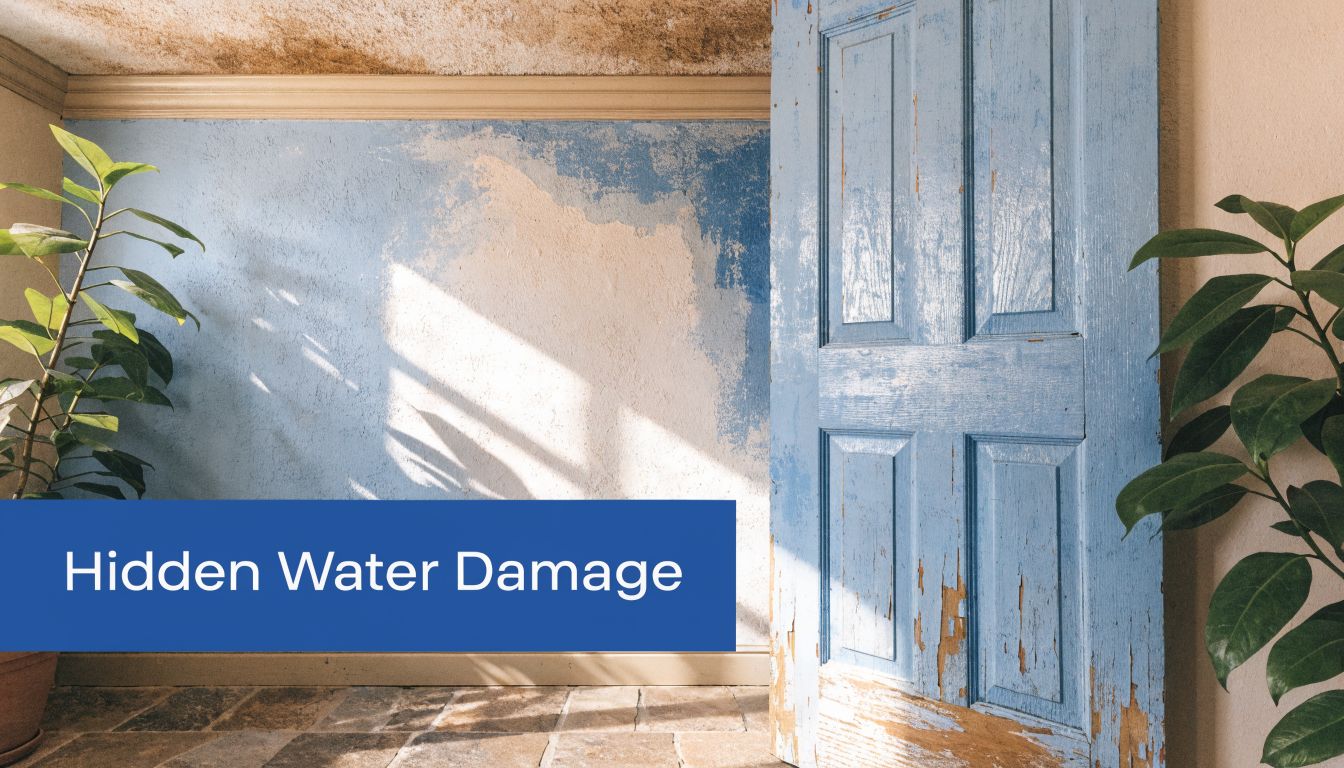
What water damage looks like before a pipe bursts
Early water damage usually shows up as a pattern, not a single dramatic event. One stain might be old. One humid cabinet might seem minor. Several of these signs at once usually point to an active plumbing or moisture problem that still needs attention:
- Musty indoor odor: Common near bathrooms, laundry areas, water heaters, kitchen sink bases, and closets that back up to plumbing lines.
- Peeling paint or bubbling drywall: Moisture weakens the surface bond and often means the material behind the finish is still damp.
- Warped flooring: Laminate swells at the seams, hardwood starts cupping, and vinyl can loosen when moisture sits underneath.
- Soft baseboards or trim: Finish carpentry often reacts before the larger wall field shows obvious damage.
- Damp cabinets or recurring moisture in enclosed spaces: That often points to an active leak, not normal indoor humidity.
- Unexplained stains: Ceiling rings, yellowing drywall, and dark patches near tubs, showers, or sinks deserve a real inspection.
The location matters. Water around a shower valve suggests something different than staining below an upstairs bathroom or swelling around a dishwasher. Good diagnosis saves time and limits demolition.
Why mold shows up after small leaks
Mold follows moisture. It does not require a major flood. It only needs a damp material and enough time.
The U.S. Environmental Protection Agency states that mold can grow within 24 to 48 hours on wet materials and recommends drying affected areas quickly to reduce the chance of growth. For homeowners, that short window is a significant challenge. Slow leaks stay hidden, so the clock often starts well before anyone sees a stain or smells the room change.
Porous materials hold water longer than people expect. Drywall paper, insulation, cabinet backing, framing lumber, and baseboards can stay wet behind a surface that looks almost normal. Once that happens, the job changes from stopping a leak to stopping a leak and addressing contamination.
Health concerns are part of that decision. The CDC's guidance on mold notes that exposure can cause symptoms such as a stuffy nose, sore throat, coughing, wheezing, burning eyes, or skin rash in some people. That is one reason a persistent leak should not be treated like a cosmetic issue.
If materials are swelling, staining, or giving off a musty odor, assume moisture is still present until a proper inspection proves otherwise.
The practical takeaway is simple. A remediation crew can dry and remove damaged material, but if a plumber has not stopped the source first, the same wet cycle continues inside the wall, floor, or cabinet. That is how minor water damage becomes a larger mold claim.
What to Do Immediately After Discovering Water Damage
You walk into the kitchen at 10 p.m., step into a wet floor, and realize the cabinet base is already swelling. In that moment, the priority is not cleanup. The priority is stopping the plumbing failure so water does not keep feeding the damage inside the wall, under the flooring, or behind the cabinets.
That is why the first call is usually a 24/7 plumber. A remediation company can dry and remove damaged material, but drying does not hold if the pipe, supply line, drain, or appliance connection is still leaking.
Your first moves in the house
Start with safety. If water is near outlets, appliances, or the electrical panel, keep people out of the area until it can be checked safely. If the leak is coming from a fixture shutoff, angle stop, supply line, or appliance connection and you know how to isolate it, shut it off. If you cannot identify the source quickly, shut off the home's main water line.
Then get an emergency plumber out to stop the source for good. A loose patch or a guess buys time at best. It does not protect drywall, subfloor, insulation, or cabinets from continued saturation.
The time window is short. The EPA states that mold can grow on wet materials within 24 to 48 hours, which is why source control comes before everything else. In the field, that is the turning point. Once the leak is stopped, the drying plan has a chance to work. If the leak keeps running, the remediation scope usually gets larger, not smaller.
Stop the water first. Every other step depends on that.
If the water event involves a basement, lower level, or heavy intrusion, this practical guide on what to do when your basement floods is a useful starting point while you're arranging professional help.
What to do while help is on the way
Once the source is under control, take a few practical steps that protect the property and make the next phase easier:
- Photograph the scene: Get clear photos of the leak source, affected materials, standing water, stains, and damaged contents before anything is moved.
- Remove what you can safely carry: Lift boxes, rugs, electronics, paper goods, and small furniture out of wet areas.
- Pick up standing water on hard surfaces: Towels, mops, and a wet vac can help, but visible dryness does not mean the materials underneath are dry.
- Create airflow if the area is clean and safe: Open cabinet doors and interior doors. Use fans only if you are not blowing air across visibly moldy material.
- Avoid common mistakes: Do not paint over staining, close up wet walls, or treat bleach as a fix for a moisture problem.
Some materials dry well. Some do not.
Tile may look fine while the subfloor below it is still wet. Drywall can feel solid at the surface while the paper backing and insulation behind it hold moisture. Cabinet toe-kicks, vanity bases, and engineered flooring often trap water longer than homeowners expect. That is why experienced crews rely on moisture readings, not appearance.
The practical order is simple. Stop the plumbing failure, protect the area, document the loss, and begin drying only after the source is confirmed under control. That sequence prevents a fresh water problem from becoming a mold job.
The Professional Water and Mold Remediation Process
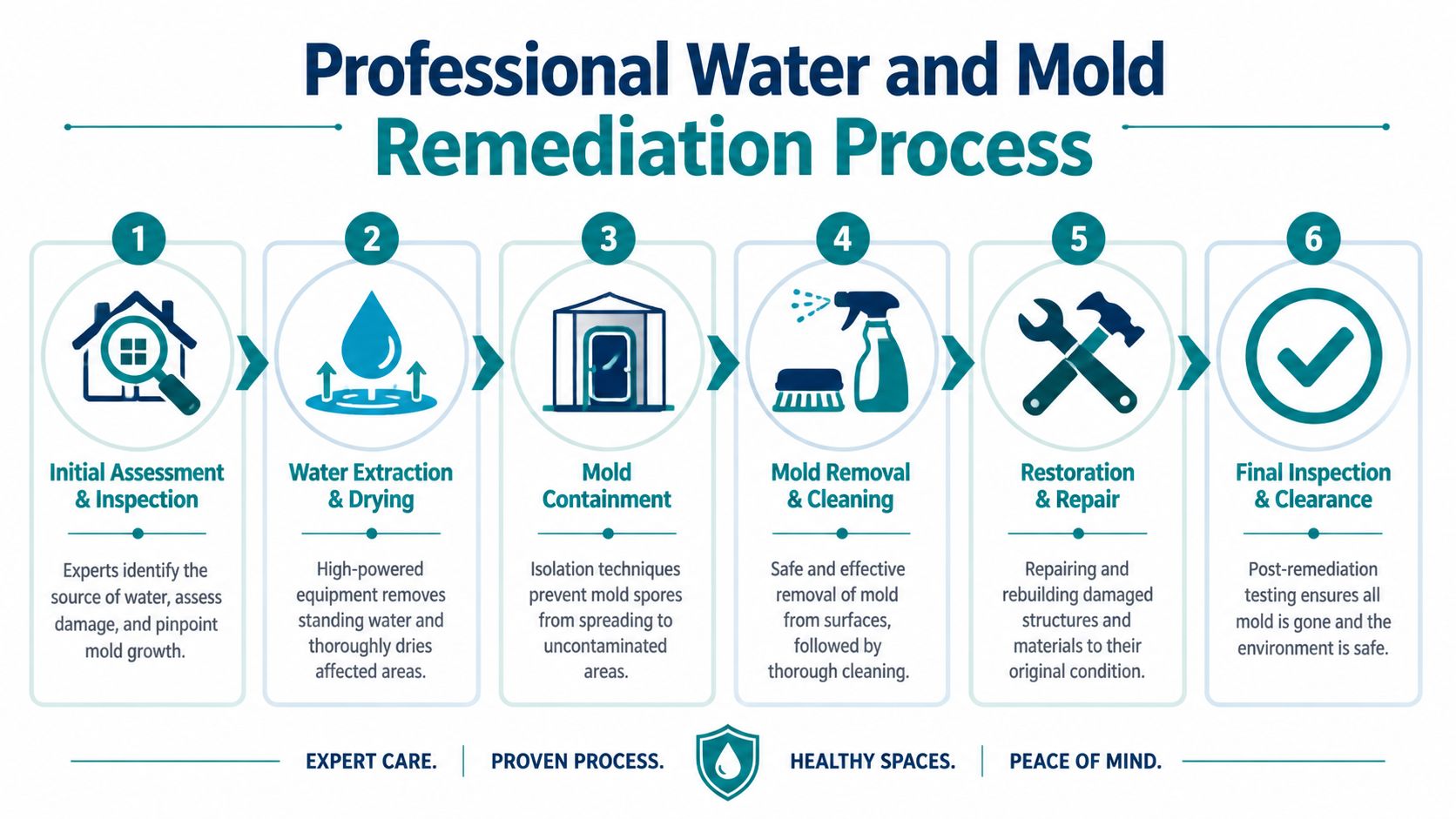
A good remediation job follows a clear sequence. First, the plumbing failure has to be confirmed under control. Then the remediation team can determine what got wet, what can be dried in place, and what has to come out before mold takes hold or spreads further.
In Los Angeles homes, that first handoff matters more than homeowners expect. If a supply line is still weeping behind a wall, if a drain line backs up again, or if a slab leak is still feeding moisture into the structure, drying equipment will only treat the symptom. Source control comes first. Remediation follows.
What the crew handles first
The opening phase is inspection and scoping. Technicians check where the water traveled, which materials absorbed it, whether hidden cavities are involved, and whether there are signs of active mold growth. They also verify that the cause of loss has been addressed. If the plumbing repair is still being priced or scheduled, homeowners should understand how plumbing estimates help LA homeowners make smart choices, because delays at that stage often widen the remediation scope.
Containment is the next decision point on mold jobs and on water losses that have sat too long. According to the WBDG summary of EPA mold remediation guidelines, larger contaminated areas call for 6-mil polyethylene containment under negative pressure with HEPA-filtered air control. That setup keeps spores and dust from drifting into bedrooms, hallways, closets, and HVAC returns.
Occupied properties need that control. Condo units need it. Homes with children, older adults, or anyone with respiratory issues need it even more.
How containment and cleaning work on site
Once the work area is isolated, the crew starts drying, removal, and cleaning based on the material, not guesswork. Hardwood, drywall, insulation, cabinet bases, and trim do not respond the same way. A crew with a moisture map and a plan will usually save more than a crew that starts tearing out everything in sight.
Typical steps include:
- Structural drying: Extraction, dehumidification, and air movement remove moisture from surfaces, cavities, and indoor air.
- Selective demolition: Wet drywall, insulation, or finish materials that cannot dry cleanly are removed in controlled sections.
- HEPA air filtration: Air scrubbers capture airborne particulate released during demolition and cleaning.
- Material-specific cleaning: Salvageable non-porous and semi-porous surfaces are cleaned according to the type of water exposure and visible growth.
- Moisture verification: Technicians keep checking readings until the affected materials reach acceptable dry standards before repairs begin.
Good remediation is methodical. The site should look organized, contained, and documented.
The 6 stages of professional mold remediation
| Stage | Objective | Key Activities |
|---|---|---|
| Assessment and inspection | Define scope and locate moisture source | Moisture checks, damage mapping, source confirmation |
| Water extraction and drying | Remove liquid water and trapped moisture | Extraction vacuums, dehumidifiers, air movers, monitoring |
| Containment | Prevent cross-contamination | 6-mil poly barriers, negative pressure, controlled access |
| Air filtration | Capture airborne particulate | HEPA-filtered air filtration devices |
| Mold and material removal | Eliminate unsalvageable contamination | Remove damaged drywall, insulation, flooring, debris handling |
| Cleaning and restoration | Return the area to safe use | Surface cleaning, sanitizing, repairs, rebuild prep or finish work |
Homeowners often ask whether every job turns into major demolition. It does not. The deciding factors are how quickly the leak was stopped, how long materials stayed wet, and whether moisture spread into enclosed spaces. If the plumbing problem is corrected fast, the remediation plan is usually smaller, cleaner, and less expensive. If the source stays active, a water loss can become a mold project with containment, removal, and a much longer dry-out.
Estimating Remediation Costs and Timelines in Los Angeles
A homeowner in Los Angeles usually asks the same two questions first. How much is this going to cost, and how long is my house going to be torn up?
The honest answer depends less on the stain you can see and more on whether the plumbing failure is still active. If water is still feeding the problem, every hour widens the dry-out area, raises the chance of mold inside walls or under flooring, and adds labor that could have been avoided. That is why the first call is often a 24/7 plumber, not the remediation crew. Stop the source first. Then the remediation scope can be measured accurately.

In practice, Los Angeles remediation costs usually break into separate parts:
- Emergency plumbing repair: locating and stopping the leak or failed drain line
- Water mitigation: extraction, drying equipment, monitoring, and moisture checks
- Mold remediation, if needed: containment, filtration, removal of affected materials, and cleaning
- Repairs and rebuild: drywall, insulation, flooring, paint, cabinetry, or finish work
- Testing or clearance, when appropriate: often added on larger or more sensitive jobs
That separation matters because homeowners often receive more than one estimate. A plumbing invoice does not cover containment. A drying invoice does not always include reconstruction. If you are comparing proposals, scope is just as important as price. This guide on how plumbing estimates help LA homeowners make smart choices can help you read those numbers more clearly.
What pushes the bill up or down
The biggest cost drivers are practical, not mysterious.
- How long materials stayed wet: Fresh water from a supply line caught early is a different job than moisture that sat for days behind cabinets or baseboards.
- Where the water traveled: A small laundry room loss is usually easier to control than water that moved into adjoining rooms, downstairs ceilings, or wall cavities.
- What materials were affected: Drywall, insulation, engineered wood, and particleboard cabinets often respond differently and do not all have the same salvage potential.
- Whether mold growth is present: Once visible growth or suspect contamination is involved, the work gets more controlled and more labor-intensive.
- Access: An exposed angle stop is quick to repair. A failed line inside a wall, ceiling, or slab-adjacent area usually adds time for detection and opening.
- Occupancy issues: In apartments, condos, and multi-unit buildings, coordination with neighbors, HOAs, or property managers can slow the schedule.
The trade-off is straightforward. Fast source control can keep a water loss in the drying category. Delayed plumbing repair can push the same event into containment, demolition, and mold remediation.
What timeline to expect
A small, contained water loss may be stabilized quickly, then spend several days in drying and monitoring before repairs start. A larger job with hidden moisture, mold growth, or multiple affected rooms can stretch much longer because the work happens in stages and each stage has to be documented before the next begins.
The timing usually follows this order:
- Stop the source
- Inspect and map the affected areas
- Extract water and set drying equipment
- Open or remove materials that cannot dry properly
- Remediate mold if contamination is present
- Confirm dry conditions
- Begin repair and rebuild
What slows jobs down in Los Angeles is rarely one dramatic issue. It is usually access, hidden moisture, permit or building coordination, insurance approvals, and waiting for materials after the area is dry.
This short video gives a useful overview of what homeowners typically face once mold enters the picture:
If you want the shortest path to lower cost and less demolition, act in the right order. Get the plumbing failure stopped first. Then let the remediation team price the damage based on a stable, controlled site instead of an active leak.
Choosing Your Remediation Team and Navigating Insurance
Hiring the wrong people can turn a manageable water loss into a recurring problem. The main risk isn't just poor workmanship. It's incomplete source repair, weak containment, missing documentation, and cleanup methods that spread contamination instead of controlling it.
How to vet the companies entering your home

A homeowner should know who is doing which part of the job. Plumbing repair and remediation are related, but they aren't identical trades. Ask direct questions.
- Who is stopping the leak: You want a licensed, insured plumbing contractor for the source problem.
- Who is handling remediation: Ask whether the team follows recognized remediation standards and uses containment when scope requires it.
- How will they document the job: Moisture readings, photos, scope notes, and drying progress records matter.
- What materials are being removed and why: Good crews can explain why a wall section is opened, why insulation is discarded, or why a floor may be saved.
- What happens after drying: Clarify whether rebuild is included or handed off to another contractor.
If a contractor can't explain the difference between stopping the water, drying the structure, and remediating contamination, keep looking.
For property managers and HOA boards, this is even more important. One bad decision in a shared wall or stacked plumbing line can spread cost and tenant disruption across several units.
Where insurance problems usually start
Insurance trouble often begins in the first day, when everyone is moving fast and approvals aren't yet clear. According to this discussion of emergency mitigation limits and mold claim complications, many standard homeowners' policies in California cap emergency mitigation services at around $3,000 without prior insurer authorization. The same source warns that delaying professional intervention to avoid that cap risks a near-100% chance of mold growth if the area isn't dried within 48 hours, which can trigger claim disputes or denials.
That creates a real trade-off for homeowners. Wait too long, and the property condition worsens. Approve work blindly, and you may create a billing fight. The practical answer is documentation and communication.
Do this early:
- Call the insurer quickly: Ask about emergency mitigation authorization and limits.
- Keep a decision log: Write down who you spoke with, when, and what was approved.
- Save photos and invoices: Don't rely on memory once multiple trades are involved.
- Separate source repair from remediation scope: It helps the claim make sense.
- Don't use DIY cleanup as your documentation plan: Surface drying without records often weakens your position later.
A good team doesn't just work fast. They make the file understandable.
Preventing Future Mold Growth in Your LA Home
A lot of mold jobs start with a plumbing problem that never fully stopped. A pinhole leak inside a wall, a loose supply line under a sink, or a slow drain backup can leave enough hidden moisture to restart the whole cycle weeks later. In Los Angeles homes, that is the part owners often miss. Drying the area matters, but source control comes first.
That is why the first prevention step is not mold treatment. It is getting a licensed plumber to find and stop the water source, especially if the leak is active, intermittent, or hidden behind finished surfaces. A remediation crew can remove wet material and dry the structure. If the plumbing failure is still feeding moisture into the wall, cabinet, or subfloor, mold has a path back in.
Long-term prevention is mostly disciplined maintenance.
- Fix small leaks while they are still small: Dripping angle stops, worn supply lines, bad toilet wax rings, and slow drain leaks are common starting points.
- Check the rooms that fail most often: Bathrooms, kitchens, laundry areas, under-sink cabinets, around refrigerators, and water heater closets deserve regular inspection.
- Vent moisture out of the house: Run bath fans during and after showers. Use kitchen exhaust when cooking. Keep enclosed damp areas from staying stagnant.
- Keep indoor humidity in a reasonable range: If the house feels damp, windows collect condensation, or closets smell musty, address the moisture load before drywall and contents start absorbing it.
- Inspect older plumbing before it breaks: Aging supply lines, shutoff valves, water heaters, and drain assemblies fail unnoticed before they fail dramatically.
- Watch repaired areas closely: Returning stains, soft drywall, swollen baseboards, and a musty odor usually mean moisture is still present somewhere.
There is a real trade-off here. Opening a wall to confirm a hidden leak costs money now. Waiting to see if the stain comes back often costs more later, especially if microbial growth spreads into insulation, framing, or adjacent rooms.
In practice, the homes with fewer repeat mold problems usually have one thing in common. Someone treated the plumbing issue as the main problem, not a side note. The best prevention plan is simple: stop the water fast, dry the affected materials correctly, and keep checking the area until you know it is staying dry.
If you have a leak, stain, musty odor, or active plumbing failure in Los Angeles, contact EZ Plumbing to stop the water source before the damage spreads. They provide licensed, insured plumbing service, 24/7 emergency response, sewer diagnostics, drain cleaning, water heater repair, and same-day scheduling for homes, HOAs, property managers, and commercial properties across Los Angeles. You can call (818) 908-2710 or schedule service online.