
Why You Should Inspect Pipes Regularly: Protect Your Home
Regular pipe inspections stop hidden leaks and early failures before they escalate into water damage, mold, or structural repairs that cost far more than the inspection itself. For many Los Angeles homeowners, a professional whole-house plumbing inspection annually is recommended, especially for older homes or those with galvanized, cast-iron, or clay sewer laterals. Newer homes in documented good condition may extend the interval to every other year. A licensed plumber using camera inspection equipment and delivering a written report gives you the clearest picture of what your system actually looks like inside, not just what you can see from the surface. Ez-plumbing provides documented, camera-assisted inspection for homeowners across the greater Los Angeles area.
Key Takeaways
Inspecting your pipes on a regular schedule is the single most effective way to prevent hidden leaks, avoid costly emergency repairs, and extend the life of your home’s plumbing system.
| Point | Details |
|---|---|
| Annual inspections for older homes | Older homes or those with galvanized, clay, or polybutylene pipes need yearly professional checks. |
| Camera inspection finds what eyes cannot | Video inspection of sewer laterals detects root intrusion, cracks, and bellies without excavation. |
| Act on warning signs immediately | Unexplained water bill increases, discolored water, or recurring clogs warrant an unscheduled inspection now. |
| Inspection cost vs. repair cost | A routine inspection costs far less than a single slab leak repair, sewer excavation, or emergency water heater replacement. |
| Ez-plumbing for documented LA inspections | Ez-plumbing (C-36 License #583868) provides camera-assisted, report-backed inspections across greater Los Angeles. |
Table of Contents
- Why inspect pipes regularly? The core reasons homeowners act
- What does a professional plumbing inspection actually check?
- How often should you inspect your home’s pipes?
- Warning signs that mean you should call now
- Are regular inspections worth the cost?
- What to expect when Ez-plumbing performs a whole-house inspection
- What licensed plumbers see that homeowners miss
- Schedule your whole-house inspection with Ez-plumbing
- Sources
Why inspect pipes regularly? The core reasons homeowners act
The case for scheduled pipe inspections comes down to one reality: most plumbing failures give almost no visible warning until the damage is already significant. Regular inspections help identify small issues early, reduce the likelihood of emergencies, save water, and extend the service life of plumbing systems and appliances. That single fact covers a lot of ground, so here is what it looks like in practice.
- Hidden leaks behind walls and under slabs. A pinhole leak in a copper supply line or a slow seep at a slab penetration can run for months before you notice a stain or a spike in your water bill. By then, the drywall, subfloor, or concrete may already be compromised.
- Water quality protection. Corroded galvanized pipes shed rust and sediment into your supply water. Older homes may also have cross-connections or degraded fittings that allow contaminants to enter the line. An inspection catches these before they reach your tap.
- Clogs and root intrusion. Tree roots grow toward moisture and can infiltrate clay or older PVC sewer laterals over several seasons. Older homes commonly have hidden pipe failures; camera inspections can identify cracks, root intrusions, and buildup before those problems cause expensive structural or sewer repairs. Catching root intrusion early means hydro-jetting and a patch, not a full sewer excavation.
- Appliance and pipe longevity. A water heater running on a corroded anode rod or a supply line with elevated pressure wears out faster than one that gets annual attention. Documented inspections let you defer replacements strategically rather than react to failures.
- Home value and transaction readiness. A documented inspection history signals to buyers and insurers that the home has been maintained. When you are preparing to sell or refinance, that paperwork matters. Plumbing documentation and inspections protect home value and simplify real-estate disclosures.
Pro Tip: Before your next inspection, run a quick home leak meter test: shut off every fixture and appliance, then watch the small triangle or dial on your water meter for 15 minutes. If it moves, you have an active leak that warrants a professional call.
What does a professional plumbing inspection actually check?
A professional inspection is a room-by-room evaluation covering fixtures, visible pipes, the water heater, the main shutoff, and drains, and it often uses a camera to produce a documented assessment of issues and priorities. Understanding the scope helps you know what you are paying for and what the report should contain.
Visual and fixture checks cover every accessible supply and drain line, shutoff valves, angle stops, traps, vent connections, and visible joints throughout the home. The plumber operates each shutoff to confirm it still turns fully and seals, checks for corrosion at supply connections, and looks for evidence of past leaks at drain traps and p-traps under sinks.
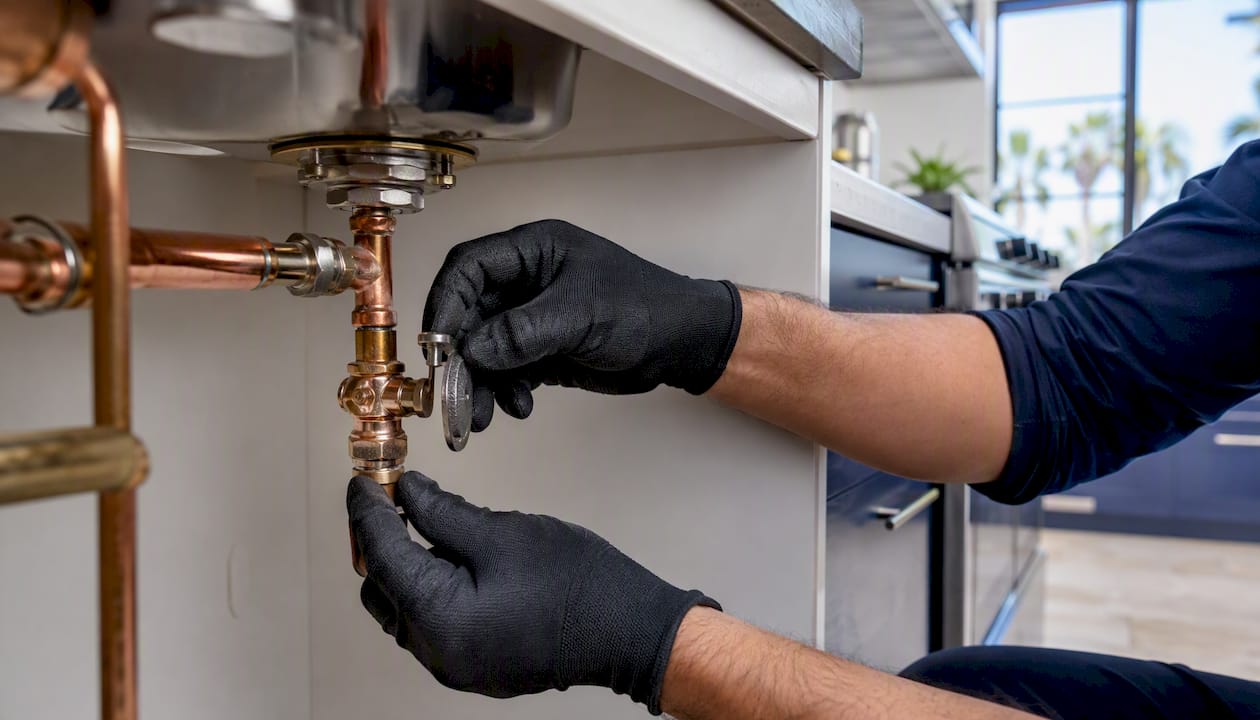
Water heater diagnostics include testing the pressure-relief valve, checking the anode rod condition, inspecting the flue or venting on gas units, and looking for sediment accumulation or corrosion at the tank base and connections. A water heater approaching the end of its service life shows clear signs during this step that a homeowner would not catch on their own.
Sewer and main line camera inspection is where the most consequential findings often surface. Video/camera pipe inspection is a non-invasive method contractors use to find blockages, cracks, and root intrusions in sewer and drainage lines without excavation. The camera travels the full length of the sewer lateral from the cleanout to the city connection, recording time-stamped video that shows pipe material, joint condition, any bellies or low spots where solids accumulate, and the presence of root intrusion or cracks. That recording becomes part of your inspection deliverable.
Camera inspections and recorded video make it far easier to prioritize repairs and show documented proof for real-estate disclosures or insurance claims. A written report with video stills gives you something concrete to act on, not just a verbal summary.
Leak detection rounds out the inspection when the visual and camera steps raise questions. Acoustic listening devices, tracer dye tests, and meter isolation tests can locate leaks behind walls or under slabs without opening drywall. Non-destructive testing methods, including ultrasonic testing and structured inspection protocols, are used to detect internal defects like pitting, cracks, and metal loss in pipes. For residential use, these tools let a plumber confirm a leak’s location before any cutting or excavation begins.
The deliverables from a thorough inspection should include an itemized written report, video stills or clips from the camera run, a prioritized list of findings (address now vs. monitor), and cost estimates for any recommended repairs. If your plumber hands you only a verbal summary, ask for the documentation in writing.
How often should you inspect your home’s pipes?
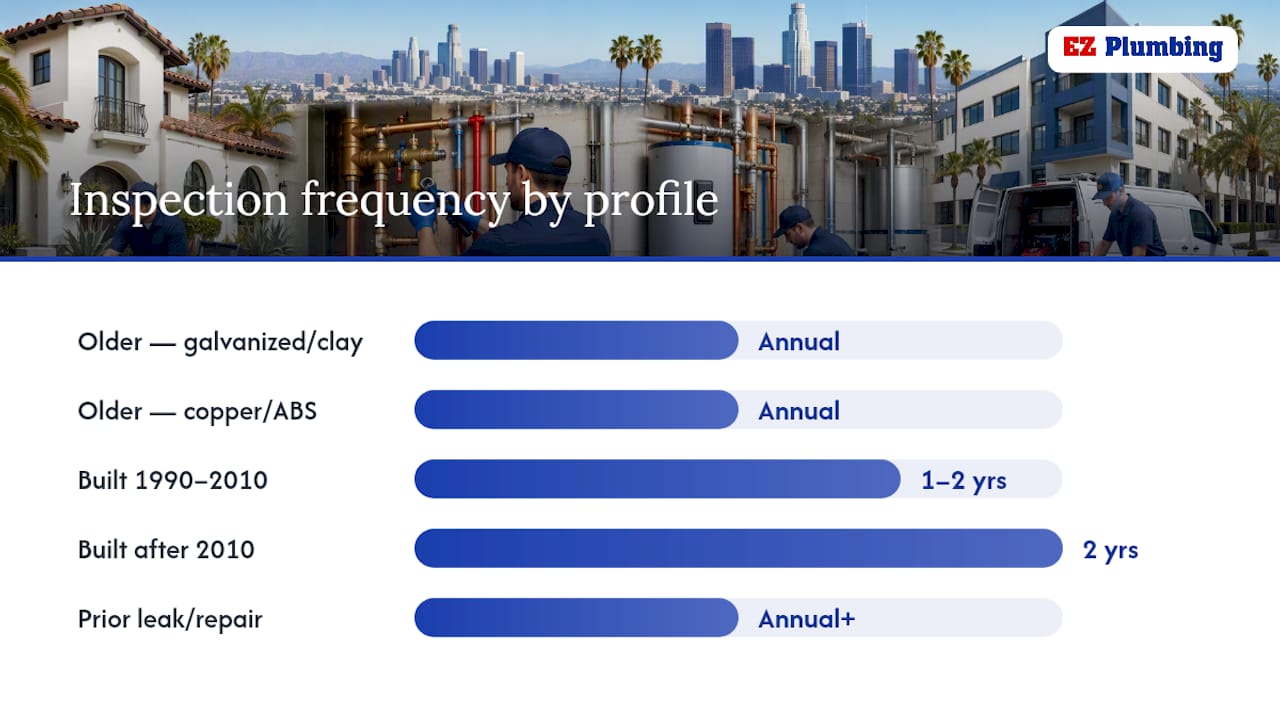
Frequency depends on three variables: home age, pipe materials, and local risk conditions. The table below gives a practical decision framework.
| Home profile | Recommended interval | Key risk factors to watch |
|---|---|---|
| Older homes, galvanized or clay pipes | Annual | Galvanized corrosion, root intrusion, slab leaks |
| Older homes, copper or ABS drain lines | Annual | Joint fatigue, older water heater, mature trees |
| Built 1990–2010, documented good condition | Every 1–2 years | Polybutylene supply lines if present, hard water |
| Built after 2010, modern materials, no prior issues | Every 2 years | Pressure fluctuations, appliance connections |
| Any age, prior leak or repair history | Annual or after each event | Recurrence, adjacent pipe stress |
Annual inspection frequency is common advice for older homes, and risk-based schedules depend on age and materials. In the greater Los Angeles area, additional local factors apply: hard water accelerates mineral buildup in supply lines and water heaters, mature ficus and pepper trees are notorious for sewer lateral intrusion, and slab foundations make leak detection harder because supply lines run beneath the concrete.
Seasonal timing matters too. After an unusually cold winter, check for stress fractures at exposed fittings. Before a major kitchen or bathroom renovation, an inspection confirms the existing supply and drain lines can handle the new load. Any unexplained jump in your water bill, even a modest one, is a trigger for an unscheduled check rather than a wait-and-see approach.
A practical cost-reduction move: schedule your inspection to coincide with a water heater flush or drain cleaning service. The plumber is already on-site, and the marginal cost of adding a camera run or a full visual check is lower than a standalone visit. Combining inspection with routine maintenance like drain cleaning protects your pipes and reduces per-visit cost.
Warning signs that mean you should call now
Some conditions do not wait for a scheduled inspection. If you notice any of the following, schedule a professional inspection promptly rather than monitoring further.
- Visible or recurring leaks at any fixture, valve, or connection, even a slow drip that seems minor.
- An unexplained increase in your water bill with no change in usage habits.
- Persistent low water pressure throughout the home, not just at one fixture.
- Recurring clogs in the same drain, or multiple slow drains at once, which often signal a partial blockage or belly in the main line.
- Discolored water, rust-colored or brown, at the tap after the line has been running for more than a few seconds.
- Damp spots, soft flooring, or staining on walls, ceilings, or floors with no obvious source.
- Musty smells or visible mold near plumbing fixtures, under sinks, or in utility areas.
- Gurgling sounds from drains or toilets, sewage odors inside the home, or any sewage backup in a fixture.
- New cracks in the slab, settling in floors, or soil movement near the sewer line cleanout.
Any one of these is enough to justify a call. Two or more together suggest an active problem that a camera inspection and leak detection should address without delay.
Are regular inspections worth the cost?
The short answer is yes, and the math is straightforward. A professional whole-house inspection in the Los Angeles area, including a camera run on the sewer lateral, typically costs a fraction of what a single major repair runs. Consider three concrete scenarios.
A slab leak that goes undetected for six months can require jackhammering through the concrete floor, rerouting supply lines, and repairing the subfloor and flooring above. Catching the same leak during a routine inspection, when it is still a pinhole at a fitting, means a targeted repair at a fraction of that cost.
A sewer lateral with early-stage root intrusion can be cleared with hydro-jetting and monitored annually. Left unaddressed, the same roots can collapse the pipe wall, requiring full excavation and replacement of the lateral from the house to the city connection, a significantly larger project.
A water heater showing sediment buildup and a corroded anode rod during inspection can be flushed and serviced, extending its useful life by several years. Skipping that step often means an emergency replacement when the tank fails, usually at the least convenient time.
Inspections reveal small leaks, inefficient fixtures, and opportunities for water-saving upgrades that compound over time. Documented inspection records can also support insurance claims when water damage does occur, and they strengthen a home’s position during a real-estate transaction. Plumbing documentation directly affects resale appeal and buyer confidence.
What to expect when Ez-plumbing performs a whole-house inspection
Ez-plumbing’s inspection process follows a structured sequence so nothing gets missed and you leave with clear documentation.
- Arrival and scope confirmation. The licensed plumber verifies credentials, walks you through the inspection scope and pricing, and documents your consent before any work begins. You know exactly what will be checked and what the deliverables are.
- Systematic visual walk-through. Every accessible fixture, shutoff valve, angle stop, supply line, drain trap, and vent connection gets checked room by room. The plumber operates each shutoff to confirm full function and looks for corrosion, mineral buildup, and evidence of past leaks.
- Water heater diagnostics. The pressure-relief valve is tested, the anode rod condition is assessed, venting is inspected on gas units, and the tank base and connections are checked for corrosion or sediment indicators.
- Camera inspection of the sewer and main line. A camera travels the full sewer lateral from the cleanout, producing live video with time-stamped recording. The plumber explains findings in real time: pipe material, joint condition, any bellies, root intrusion, or cracks. You see exactly what the camera sees.
- Leak detection when indicated. If the visual or camera steps raise questions, acoustic listening tools and meter isolation tests locate leaks behind walls or under the slab without opening any surfaces.
- Written report and prioritized recommendations. You receive an itemized report, video stills from the camera run, and a clear prioritization: what needs attention now, what to monitor, and what can wait. Cost estimates for recommended repairs are included.
- Follow-up scheduling. If repairs are needed, Ez-plumbing provides options including trenchless sewer repair, whole-house repiping, or targeted leak repair, with scheduling that fits your timeline.
Pro Tip: Ask your plumber to show you the location of your main water shutoff during the inspection and confirm it operates freely. In an emergency, knowing exactly where it is and that it works can prevent thousands of dollars in water damage.
What licensed plumbers see that homeowners miss
The most common misconception homeowners have about their plumbing is that no visible problem means no problem. Plumbers see the opposite regularly: systems that appear to be functioning normally but have slow leaks at slab penetrations, galvanized corrosion narrowing supply lines to a fraction of their original diameter, or sewer laterals that drain adequately while harboring cracks and root intrusion that are months away from a backup.
A small leak found during a routine inspection, one that had no visible surface sign, can prevent the kind of foundation repair that disrupts a home for weeks. The non-destructive nature of camera inspection and acoustic leak detection means that finding these problems does not require opening walls or digging. The documentation that comes with a professional inspection also changes how homeowners relate to their plumbing system: instead of reacting to failures, they manage a known condition on a schedule. That shift from reactive to condition-based maintenance is where the real financial benefit lives.
Schedule your whole-house inspection with Ez-plumbing
Ez-plumbing’s whole-house inspections cover every item in this guide: room-by-room visual checks, water heater diagnostics, sewer camera inspection with time-stamped video, and a written report with prioritized recommendations. Ez-plumbing holds C-36 License #583868, is fully insured, and operates throughout the greater Los Angeles area, serving homeowners from the San Fernando Valley to the Westside and beyond.
To book an inspection, combine it with professional leak detection or a drain cleaning visit to get the most from a single service call. If your water heater is approaching the end of its service life, ask about water heater inspection and replacement as part of the same appointment. Call Ez-plumbing directly or request a free estimate online to schedule your inspection and get a clear picture of your home’s plumbing condition.
Sources
These sources back the key claims in this guide and are worth consulting for more detail on specific topics.
- What Does a Plumbing Inspection Actually Check? And When Should You Get One? – Scardina Home Services
- Old Pipes: Why Every Home Needs a Plumbing Inspection
- Video pipe inspection — how it works & why it’s important
- The Benefits of Scheduling Regular Plumbing Inspections – C-True Ltd