
Avoid Callbacks: 3–4 Day Whole House Repipe, Permit First
A typical whole house repipe takes about 2 to 5 working days of trade time, with water shut off only during active work hours each day. Small single-bathroom homes with good access can finish quickly, while large multi-story or multi-bath homes with limited access can take significantly longer. The three biggest swing factors are home size, how easily the crew can reach your pipes, and whether you choose PEX or copper.
TL;DR:
- Smaller homes with good attic or crawlspace access typically complete repiping in one to two days, while larger homes may take up to a week.
- Water is only shut off during active work hours, usually 8 to 10 hours daily, resulting in multiple shorter outages rather than continuous water loss.
- PEX pipes can reduce install times by one to two days compared to copper because they do not require soldering, but material choice impacts overall project duration.
- Permit and inspection delays can add one or two days to the schedule, especially if inspection offices are backed up or scheduling is slow.
- An on-site estimate based on your home’s size, fixture count, and access points is necessary to determine a precise timeline, especially if drywall and paint work are included.
Table of Contents
- What Is the Average Repipe Time Frame by Home Size?
- What Happens Each Day During a Repipe Project?
- What Factors Change How Long a Repipe Takes?
- Does PEX or Copper Finish Faster?
- How Do Permits and Inspections Affect the Schedule?
- How Should You Prepare for a Repipe at Home?
- Why Rushed One-Day Repipes Usually Cost You Later
- Get an Accurate Repipe Timeline for Your Home
- Sources
- FAQ
What Is the Average Repipe Time Frame by Home Size?
Most single-family repipes fall inside a several-day window for the plumbing work itself, according to PermitDeck’s project timeline data. Here’s how that breaks down once you factor in square footage and bathroom count:
- Small home (1 to 2 bathrooms): Often 1 to 2 days, especially with PEX and attic or crawlspace access.
- Medium home (2 to 3 bathrooms): Usually 2 to 4 days, depending on how many fixtures need new branch lines.
- Large home (multi-story or 4+ bathrooms): Commonly 3 to 7 days once you add inspection and finish work.
One detail homeowners consistently misunderstand: the “days without water” figure isn’t a continuous outage. Crews typically shut water off only during active cutting and connection work, roughly 8 to 10 hours per day, then restore it each evening so you can shower and cook, according to Repipe Solutions’ breakdown of repipe timelines. A 4-day repipe means four separate daytime outages, not four straight days dry.
What Happens Each Day During a Repipe Project?
A repipe follows a predictable sequence, and knowing it in advance helps you plan around the noise, dust, and daily water windows.
- Pre-work (before day one): Your contractor pulls the permit and schedules the inspector. Confirm in writing who handles this step, since a missed permit call is the single most common reason projects stall before they start.
- Day 1, demo and access: Crews cut access points in drywall or ceilings, map existing runs, and begin removing old pipe. Water is off during active cutting.
- Days 2 to 4, install and connect: Main trunk lines go in first, followed by branch lines to each fixture. Hot side routing is often installed before cold because it involves trickier turns, according to PermitDeck’s sequencing notes.
- Pressure test: Once everything connects, the system is pressurized and held to check for leaks before anyone closes up a wall.
- Inspection: A local inspector verifies the pressure test and connections meet code before drywall goes back up.
- Post-install: Drywall patching, mud, sand, and paint follow, sometimes on a separate schedule from the plumbing crew.
Pro Tip: Ask your contractor whether the pressure test happens before or after the inspector’s visit is scheduled. Testing early gives you a buffer day to fix a fitting instead of waiting on a second inspection slot.
What Factors Change How Long a Repipe Takes?
Two identically sized homes can have wildly different repipe timelines, and the gap almost always traces back to a handful of variables your contractor should walk through during the estimate.
- Fixture count and total pipe run length. More bathrooms, a kitchen island sink, and a detached laundry room all add branch runs and connection points.
- Access type. Attic and crawlspace access let crews route pipe quickly; slab construction or fully finished walls without attic access require more cutting and patching, which extends the job, per PermitDeck’s access-related findings.
- Material choice. PEX installs faster than copper because it skips soldering entirely.
- Permit and inspector scheduling. A backed-up inspection office can add days you can’t control.
- Crew size and finish scope. A two-person crew doing plumbing only moves faster through rough-in but leaves you with a separate drywall schedule.
Does PEX or Copper Finish Faster?
Material choice is one of the clearest levers you have over your repipe time frame, and the difference is bigger than most homeowners expect.
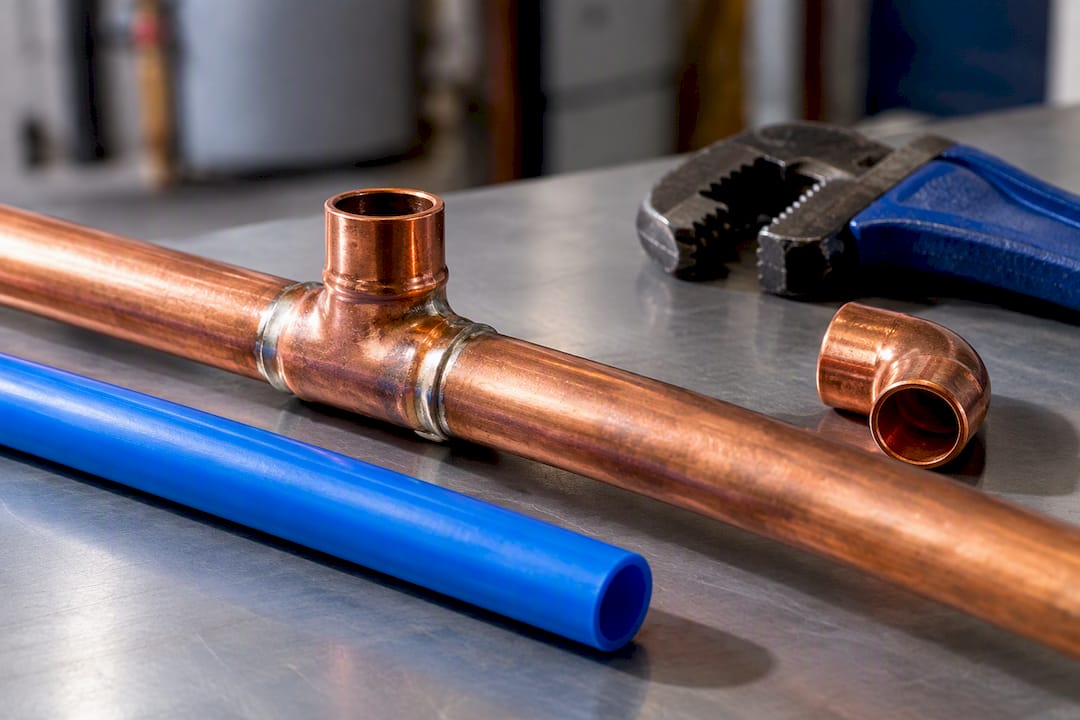
- PEX-A is the fastest option on the market. It comes in flexible coils that snake through joists and studs with far fewer rigid fittings than copper, and it’s durable across the temperature and pressure ranges typical homes see day to day. Because there’s no soldering, crews often shave 1 to 2 full days off the schedule compared to an equivalent copper job, according to Repipe Service’s material comparison.
- Copper requires soldered joints at every connection, which means more prep, more flame time, and a cooling period before pressure testing. It’s a proven material, but it’s the slower one to install.
- CPVC sits in between. It’s glued rather than soldered, which speeds things up versus copper, but it’s more rigid than PEX and can be a better fit in homes where local code or existing plumbing favors it.
If you want a deeper comparison of long-term performance, not just install speed, see our breakdown of top pipe materials for repiping.
Pro Tip: If your contractor quotes a dramatically faster timeline for copper than industry norms suggest, ask exactly how they’re managing solder drying time. Rushing that step is a common source of slow leaks that surface months later.
How Do Permits and Inspections Affect the Schedule?
Permits and inspections aren’t paperwork you can skip to save a day. They’re the checkpoints that confirm the job was done to code, and they set the floor under how fast a repipe can legally move.
- Your contractor typically pulls the permit before work starts. Confirm this at the estimate, since an unpermitted repipe can create real problems when you sell the home.
- Pressure testing usually means holding the system at an elevated psi for a set period, commonly around 15 minutes or longer, before an inspector signs off, according to PermitDeck’s inspection guidance.
- Inspector availability varies by jurisdiction. If the local office is backed up, that alone can add a day or two that has nothing to do with your plumber’s speed.
How Should You Prepare for a Repipe at Home?
A little prep work the week before your repipe starts keeps the crew moving and protects your belongings.
- Clear the work zones under sinks, in closets near plumbing walls, and in the attic or crawlspace access points.
- Move valuables and anything water-sensitive out of rooms where cuts will happen.
- Label your main shutoff and any secondary valves so you and the crew are working from the same map.
- Plan alternate shower or laundry arrangements for the active work hours each day, whether that’s a gym membership, a neighbor, or a laundromat run.
- Confirm in writing whether your contractor handles drywall and paint or whether that’s a separate call, since Repiping this single contract detail often determines whether your project wraps in days or drags into weeks.
- Ask at the estimate stage exactly which days water will be off and for how long, so you can plan meals and showers around it.
Small water-conservation habits, like the ones covered in this water efficiency guide, also help you stretch each evening’s restored water supply a little further while the project is underway.
Why Rushed One-Day Repipes Usually Cost You Later
A same-day repipe sounds appealing, but it usually means compressed pressure testing and finish work pushed off indefinitely. As a fully licensed plumbing company under C-36 License #583868, Ez-plumbing schedules around permits and inspector sign-off first, because a 3 to 4 day job done in the right order produces far fewer callbacks than a rushed one.
— EZ
Get an Accurate Repipe Timeline for Your Home
Every repipe estimate above is a range because your actual schedule depends on details specific to your house. You can get an on-site estimate built around your home’s real access points, fixture count, and pipe condition, with permit coordination and pressure testing built into the schedule from day one.

To get a real timeline instead of a ballpark, tell us your home’s size, number of bathrooms, access type (attic, crawlspace, or slab), and any leak history you’ve had. That’s enough for our team to scope the job accurately before a wrench touches a pipe. If drywall and paint need to be part of the plan, say so upfront, since that’s the detail that most often turns a 4-day estimate into a 4-week one. Start with our residential repipe page to request an estimate, or use the plumbing rate calculator to get a sense of hourly costs before your appointment.
Sources
- Whole-House Repipe in 2026: Cost, Timeline, and What to Expect | PermitDeck
- Repiping Timeline: How Long Will You Be Without Water?
- How Long Does a Whole-House Repipe Take? Timeline Explained — Repipe Services | America’s Repiping Resource
- Understanding PEX piping (technical overview) | BSESC
- Repiping
FAQ
How Long Does a Whole Home Repipe Take?
Most whole home repipes take 2 to 5 working days of active trade time, with larger or harder-to-access homes running 3 to 7 days. Water is typically off only during working hours each day, not continuously.
How Much Does It Cost to Repipe a 2,000 Sq Ft House?
Whole-house repiping typically runs $4,500 to $15,000 for most homes, with large or hard-to-access properties sometimes exceeding $20,000. Ez-plumbing’s residential rate runs $150 to $280 per hour, and an on-site estimate is the only way to get an exact number for your layout.
What Is the 135 Rule in Plumbing?
The “135 rule” isn’t a standardized plumbing code term, and definitions vary by source and region. Rather than guess at a figure that could mislead your project planning, ask your licensed contractor directly which local code thresholds apply to your specific repipe.
How Often Should a House Be Replumbed?
There’s no fixed replacement schedule, but recurring leaks in the same system, especially two leaks within 12 months, are a strong sign the pipe material has reached the end of its service life. Homes with original galvanized or aging copper lines are the most common candidates for a full repipe.