
What Is Trenchless Sewer Repair? A 2026 Homeowner’s Guide
Trenchless sewer repair is defined as a method of fixing or replacing damaged underground sewer pipes through one or two small access points, without digging a full trench across your yard. The industry term for this category of work is “trenchless pipe rehabilitation,” and it covers two primary techniques: Cured-In-Place Pipe (CIPP) lining and pipe bursting. Both methods preserve your landscaping, driveway, and hardscaping while solving serious sewer problems. For homeowners and property managers in Los Angeles, where mature tree roots and aging clay sewer laterals are common culprits, understanding this technology is the first step toward making a confident repair decision.
What is trenchless sewer repair and how does it work?
Trenchless sewer repair works by accessing the damaged pipe at one or two points, then rehabilitating or replacing the pipe entirely from those entry points. A licensed plumber creates small access holes at each end of the damaged section. No long trench is required. The two main trenchless sewer methods each take a different approach to the repair itself.
CIPP lining is the more common of the two techniques. A resin-saturated liner is inserted into the existing damaged pipe, then inflated and cured in place using heat, UV light, or ambient temperature. The result is a new pipe formed inside the old one. CIPP lining delivers a lifespan of up to 100 years when installed correctly. That kind of longevity makes it a genuinely long-term fix, not a temporary patch.
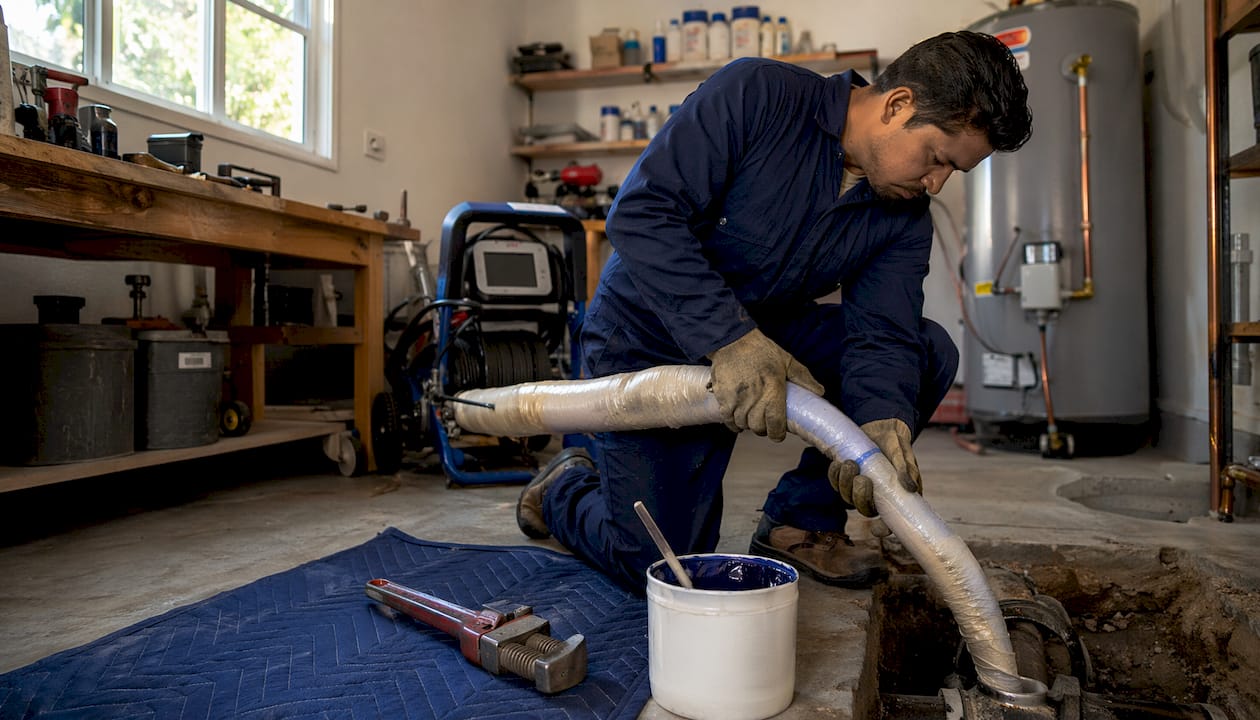
Pipe bursting takes a more aggressive approach. A bursting head is pulled through the old pipe, fracturing it outward while simultaneously pulling a new pipe into position behind it. Pipe bursting requires two small access points and is best suited for pipes that are severely damaged or need to be upsized. The choice between lining and bursting depends on the pipe’s current condition and the degree of structural failure.
The typical repair process follows a clear sequence. First, a technician runs a video camera through the pipe to assess damage, locate blockages, and confirm alignment. Second, the pipe is cleaned, often with hydro-jetting, to remove debris and root intrusion. Third, the chosen repair method is applied. Fourth, a post-repair camera inspection confirms the work is complete and the pipe is flowing correctly. Most residential trenchless repairs complete in 1–2 days, compared to traditional excavation projects that can stretch across multiple weeks.
Pro Tip: Schedule a sewer camera inspection before committing to any repair method. The video footage tells you exactly what you are dealing with and prevents costly surprises mid-project.
What are the benefits and limitations of trenchless sewer repair?
Trenchless pipe repair delivers real advantages for homeowners who want to protect their property while solving a serious plumbing problem. The benefits go beyond speed and convenience.
The major benefits include:
- Minimal excavation. Only 1–2 small access holes are needed instead of a trench running the full length of the damaged pipe. Your lawn, garden beds, and driveway stay largely intact.
- Faster completion. Trenchless repairs reduce downtime and disruption significantly compared to traditional digging, which matters especially for occupied homes and rental properties.
- Lower total project cost. Trenchless methods often cost less overall because you avoid paying to restore landscaping, replace concrete, or repair flooring after the job. The upfront plumbing labor may appear higher, but the total bill frequently comes out lower.
- Long pipe lifespan. A properly installed CIPP liner can last up to 100 years, making this a permanent solution rather than a stopgap.
- Integrated process. Trenchless rehabilitation combines cleaning, inspection, and structural repair into a single controlled process. That reduces the chance of recurring problems from root intrusion or buildup.
- Environmental benefit. Less excavation means less soil disruption, fewer materials hauled away, and reduced impact on surrounding vegetation and infrastructure.
Trenchless technology does have real limitations. It is not suitable for fully collapsed, misaligned, or severely offset pipes. If the pipe has lost its basic shape or alignment, a liner cannot be inserted, and pipe bursting cannot track a consistent path. In those cases, traditional excavation remains the correct and necessary choice.
Pro Tip: Do not assume trenchless is always the right call. Ask your plumber to show you the camera footage and explain exactly why they are recommending one method over another. A qualified professional will walk you through the reasoning.
How to decide between trenchless and traditional sewer repair
The decision between trenchless and traditional excavation comes down to pipe condition, site conditions, and total cost. No single factor determines the answer on its own.
A high-quality video camera inspection is the non-negotiable first step. The footage reveals whether the pipe retains enough structural integrity for lining or bursting. It also identifies root intrusion, corrosion, offset joints, and the precise location of damage. Without this diagnostic step, any repair recommendation is a guess.
Beyond pipe condition, consider these practical factors:
Pipe material. Clay sewer laterals, common in older Los Angeles neighborhoods, are prone to root intrusion and cracking but often still hold their shape, making them good candidates for CIPP lining. Severely corroded cast iron or galvanized pipe may need bursting or full replacement.
Damage severity. Partial cracks, root infiltration, and minor corrosion suit CIPP lining well. Complete pipe collapse or significant misalignment requires excavation. The choice between lining and bursting also depends on whether you need to increase pipe diameter, which only bursting can accomplish.
Underground obstacles. Existing utility lines, building foundations, or other buried infrastructure near the pipe can affect access and method selection.
Restoration costs. If the damaged pipe runs under a concrete driveway, a tiled patio, or mature landscaping, the cost to restore those surfaces after traditional excavation can easily exceed the plumbing labor itself. Trenchless total project costs are frequently lower in these scenarios.
| Factor | Trenchless repair | Traditional excavation |
|---|---|---|
| Project duration | 1–2 days typical | Several days to weeks |
| Property disruption | Minimal, 1–2 access holes | Significant, full trench required |
| Upfront labor cost | Higher | Lower |
| Total project cost | Often lower (less restoration) | Often higher (restoration included) |
| Best suited for | Intact but damaged pipes | Collapsed or severely misaligned pipes |
| Landscaping impact | Minimal | Extensive |
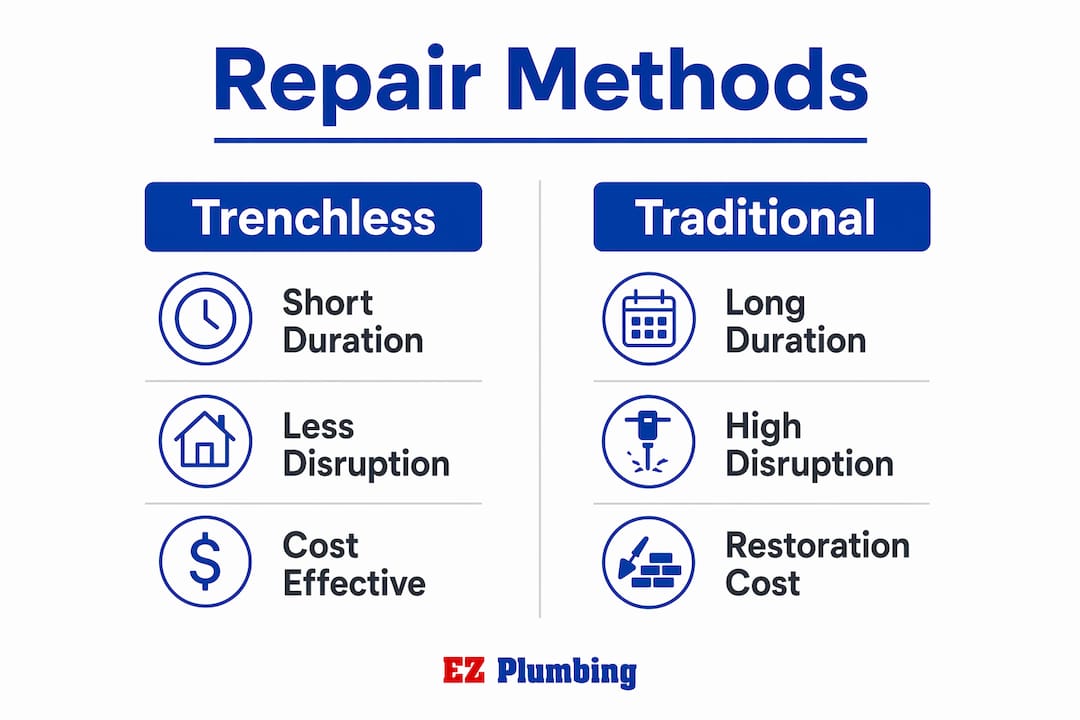
For property managers overseeing multi-unit buildings or commercial spaces, the operational disruption factor carries extra weight. Trenchless methods minimize operational downtime, which directly affects tenant satisfaction and business continuity. That is a consideration traditional excavation simply cannot match.
For more context on sewer lateral repair decisions, including when to involve your municipality, it helps to understand how your lateral connects to the main city line.
What to expect during a trenchless sewer repair project
A well-run trenchless project follows a predictable sequence, and knowing what to expect removes most of the stress from the process.
The project typically begins with a pre-repair camera inspection to confirm the diagnosis and map the pipe’s path. The crew then marks the access point locations, which are usually at a cleanout near the house and at the connection to the main sewer line. Digging these access holes takes a fraction of the time required for a full trench. For most residential properties, the excavation phase wraps up in a matter of hours.
Pipe cleaning comes next. Hydro-jetting clears root intrusion, grease buildup, and debris from the pipe walls. This step is critical because a liner inserted into a dirty pipe will not bond correctly and may fail prematurely. Once the pipe is clean and dry, the repair begins. For CIPP lining, the resin-saturated liner is pulled or inverted into position, inflated, and left to cure. Curing time varies by method and pipe diameter but typically runs two to four hours. For pipe bursting, the new pipe is pulled through in a single continuous pass.
After the repair, the crew runs a final camera inspection to confirm the liner has bonded fully, the pipe is clear, and water flows correctly. The access holes are then backfilled and compacted. Most homeowners report that their yard looks nearly identical to how it did before the crew arrived.
Post-repair, watch for these signs that may indicate a follow-up is needed:
- Slow drains that do not clear after a few days
- Gurgling sounds from toilets or floor drains
- Sewage odors near cleanouts or in the yard
- Wet patches in the lawn above the pipe path
Routine sewer line maintenance after a trenchless repair is straightforward. Avoid flushing wipes, grease, or debris that can accumulate in the new liner. A camera inspection every few years keeps you ahead of any developing issues.
Key Takeaways
Trenchless sewer repair is the most property-preserving method available for damaged pipes that retain structural alignment, delivering up to 100 years of service life with minimal disruption to landscaping, driveways, and daily routines.
| Point | Details |
|---|---|
| Two core methods | CIPP lining heals intact but damaged pipes; pipe bursting replaces severely damaged ones using two access points. |
| Camera inspection first | A video inspection is required before any repair to confirm pipe condition and method suitability. |
| Total cost advantage | Trenchless often costs less overall because it eliminates expensive landscaping and hardscape restoration. |
| Not universal | Fully collapsed or misaligned pipes require traditional excavation; trenchless is not always the right choice. |
| Fast turnaround | Most residential trenchless repairs complete in 1–2 days, compared to weeks for traditional digging. |
What I’ve learned after years of trenchless sewer work in Los Angeles
The most common misconception I see is that trenchless repair is always the cheaper option upfront. It is not. The labor cost for CIPP lining or pipe bursting is often higher than a basic excavation quote. What homeowners miss is the second invoice: the landscaper, the concrete contractor, the tile installer. When you add those back in, the math almost always flips in favor of trenchless.
The second thing I have learned is that the camera inspection is where the real work happens. I have seen properties where the homeowner was told they needed a full pipe replacement, but the footage showed a localized crack that a short liner section could fix for a fraction of the cost. I have also seen the reverse: a pipe that looked manageable on the surface but was completely offset underground, making trenchless impossible. The camera does not lie.
For property managers specifically, the speed factor is underrated. A tenant without working plumbing is a legal and financial problem. Getting a sewer line back online in one day instead of ten is not a luxury. It is a business necessity.
My honest recommendation: get the camera inspection done first, ask for the footage, and work with a plumber who can explain exactly what they see and why they are recommending a specific method. If a contractor skips the inspection and goes straight to a quote, that is a red flag worth taking seriously. You can read more about trenchless sewer line options in Los Angeles to get a clearer picture of what the process looks like locally.
— EZ
Ez-plumbing’s trenchless sewer repair services in Los Angeles
Ez-plumbing holds a C-36 plumbing license (#583868) and serves homeowners and property managers across the greater Los Angeles area with licensed, insured trenchless sewer repair services.
Every project starts with a professional camera inspection so you know exactly what condition your pipe is in before any work begins. Ez-plumbing’s technicians handle CIPP lining, pipe bursting, and traditional excavation when the situation calls for it, giving you the right solution rather than a one-size-fits-all approach. If you are dealing with slow drains, sewage odors, or a known sewer line problem, contact Ez-plumbing for a diagnostic inspection and a clear, honest recommendation. Visit our sewer line repair services page to learn more or schedule an evaluation.
FAQ
What is the difference between CIPP lining and pipe bursting?
CIPP lining inserts a resin-coated liner inside the existing pipe and cures it in place, best for pipes that are cracked or corroded but still hold their shape. Pipe bursting fractures the old pipe outward while pulling a new pipe through, suited for severely damaged or collapsed lines.
How long does a trenchless sewer repair last?
A properly installed CIPP liner can last up to 100 years. Pipe bursting installs a brand-new pipe, which carries a similarly long service life depending on the material used.
Is trenchless sewer repair more expensive than traditional digging?
The upfront plumbing labor for trenchless repair is often higher, but the total project cost is frequently lower because you avoid paying to restore landscaping, driveways, or flooring after excavation.
Can all damaged sewer pipes be repaired with trenchless methods?
No. Fully collapsed, severely misaligned, or structurally compromised pipes are not suitable for trenchless repair. A video camera inspection determines whether the pipe qualifies for lining or bursting, or whether traditional excavation is required.
How do I know if my sewer line needs repair?
Common warning signs include slow or gurgling drains, sewage odors inside or outside the home, wet patches in the yard above the pipe path, and recurring drain backups. A professional sewer inspection confirms the diagnosis and identifies the best repair path.