
What Is Dual Plumbing? a Homeowner’s Clear Guide
If you’ve searched “what is dual plumbing” and found yourself more confused after reading a few articles, you’re not alone. The term gets used to describe at least three different plumbing concepts, and mixing them up on a renovation project can cost you serious time and money. This guide cuts through the confusion. You’ll learn what dual plumbing actually means in the context of residential construction, how the different systems work, how they compare to traditional setups, and what you need to know before making any decisions about your home.
Table of Contents
- Key takeaways
- What is dual plumbing, exactly
- One-pipe vs two-pipe drainage systems
- How dual plumbing systems work in practice
- Benefits and drawbacks of dual plumbing
- When dual plumbing makes sense for your home
- My take on dual plumbing after years in the field
- Ez-plumbing can help with your plumbing upgrade
- FAQ
Key takeaways
| Point | Details |
|---|---|
| Term has multiple meanings | Dual plumbing can refer to waste separation, reclaimed water systems, or dual-flush toilets. |
| Two-pipe waste systems improve hygiene | Separating soil waste from greywater reduces backflow risk and makes maintenance easier. |
| Reclaimed water systems need full separation | Potable and recycled water supply lines must never share the same pipe network. |
| Installation costs are higher | Dual plumbing requires more materials, planning, and code compliance than single-pipe systems. |
| Local codes increasingly require it | California and other states mandate dual plumbing in new construction for water recycling. |
What is dual plumbing, exactly
Here is where most homeowners get tripped up. “Dual plumbing” is not a single, standardized term in the plumbing industry. Depending on who you ask or what context you’re reading in, it can refer to three distinct setups, and understanding dual plumbing starts with knowing which one applies to your situation.
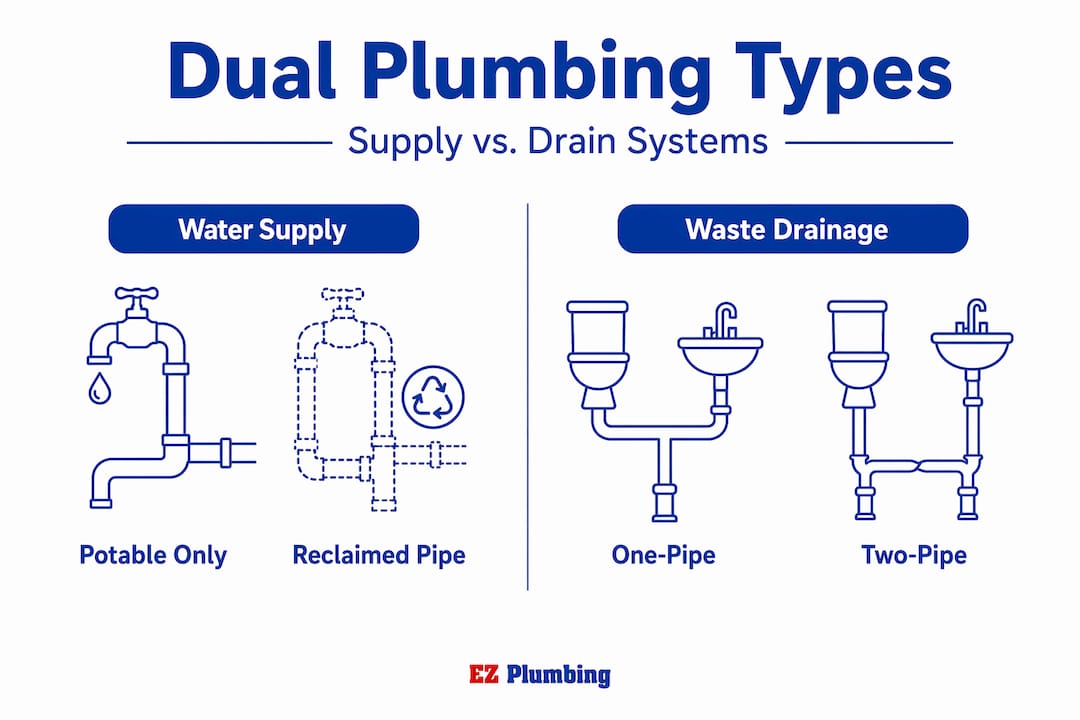
The first and most technically precise meaning refers to a dual piping system for water supply. This means your home has two completely separate pipe networks running side by side. One carries standard potable (drinking) water to your faucets, showers, and kitchen. The other carries reclaimed or recycled water to toilets, outdoor irrigation, and other non-drinking uses. These two systems must never connect or cross-contaminate.
The second meaning refers to a two-pipe waste and drainage system, which separates toilet waste (called soil waste) from sink, shower, and bath drainage (called greywater). This is a plumbing design choice that affects how waste leaves your home, not how water comes in.
The third meaning, which causes a lot of confusion, is simply dual-flush toilets. A dual-flush toilet gives you two flush volume options to save water. While the name sounds related, it has nothing to do with the pipe systems described above.
- Dual supply plumbing: potable water and reclaimed water in separate pipe systems
- Two-pipe drainage plumbing: soil waste and greywater handled by independent pipes and vents
- Dual-flush toilets: a fixture choice, not a pipe system
Pro Tip: Before you discuss dual plumbing with a contractor or inspector, clarify exactly which type you mean. Miscommunication here leads to incorrect permits, wrong materials ordered, and code violations.
One-pipe vs two-pipe drainage systems
Most older American homes use a one-pipe system. All wastewater, whether it comes from your toilet, shower, kitchen sink, or laundry, flows into a single vertical soil stack that runs through the building and exits to the sewer. The one-pipe system is simpler and costs less to install, but it comes with tradeoffs. Noise carries easily through the single stack, and if there’s a pressure imbalance or blockage, odors can work their way back through traps into living spaces.
A two-pipe system handles toilet waste and greywater through completely separate stacks. The soil pipe carries toilet waste directly to the sewer. A second pipe collects greywater from sinks, tubs, and washing machines. Two-pipe systems separate soil waste to reduce the risk of blockages and sewage backflow, which is a real hygiene benefit in multi-bathroom homes. Maintenance also becomes easier because you can isolate one system without shutting down the entire household plumbing.
Here is a direct comparison to help you decide which system fits your project:
| Feature | One-pipe system | Two-pipe system |
|---|---|---|
| Number of drain stacks | One combined stack | Two separate stacks |
| Backflow and odor risk | Higher | Lower |
| Installation cost | Lower | Higher |
| Space requirement | Less | More |
| Maintenance access | Limited | Easier |
| Best for | Small homes, simple renovations | Multi-bathroom homes, new builds |
| Noise level | Higher | Lower |
Pro Tip: If you’re renovating a bathroom in a home built before 1980, you almost certainly have a one-pipe system. Switching to two-pipe during a major renovation is far more cost-effective than retrofitting later.
How dual plumbing systems work in practice
Understanding how a dual plumbing system works means thinking beyond just pipes. Whether you’re dealing with a two-pipe waste system or a reclaimed water supply setup, the design involves several coordinated components.
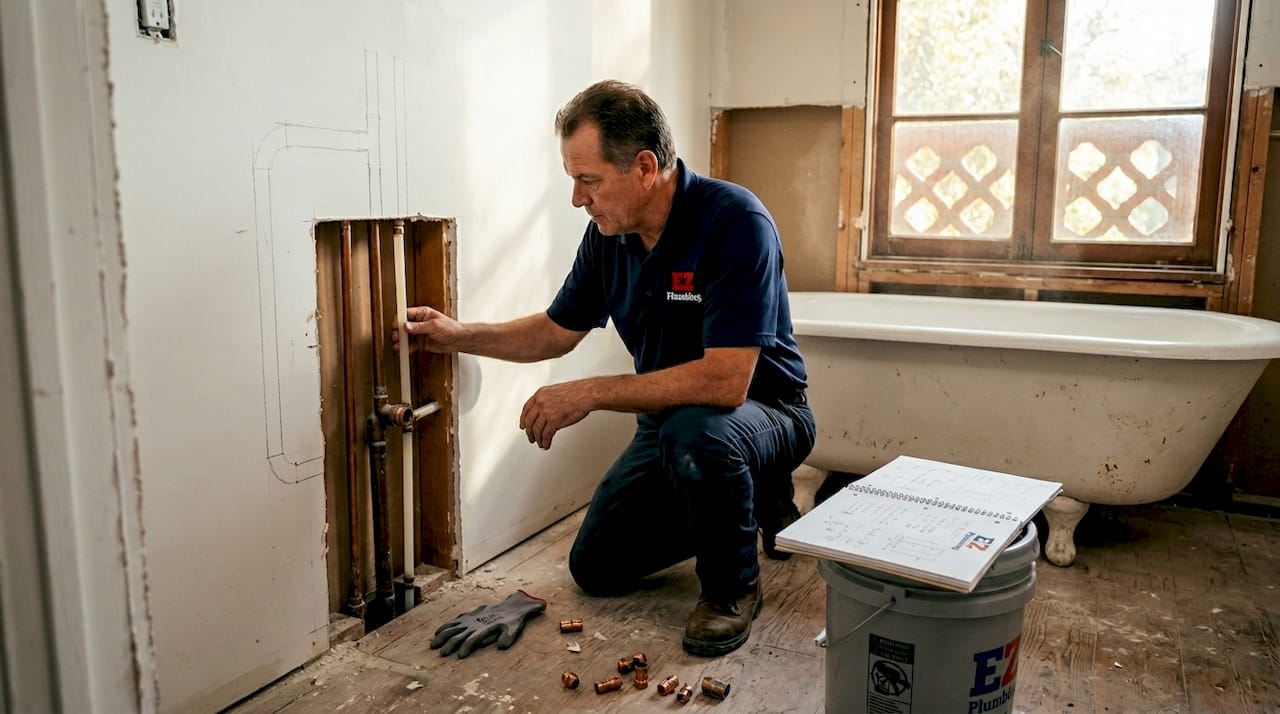
In a two-pipe waste system, the main components include separate soil and greywater stacks, individual branch pipes connecting each fixture to the correct stack, P-traps at every fixture to block sewer gases, and dedicated vent stacks for both the soil and greywater lines. The vents are not optional. They maintain the air pressure balance that keeps trap seals intact, which is what actually prevents sewer odors from entering your home. A system with two pipes but no proper venting will fail hygiene standards and likely fail inspection.
In a reclaimed water supply system, you have a fully independent pipe network, color-coded purple in most jurisdictions, that carries non-potable water from a municipal recycled water source or a greywater treatment unit. This network feeds toilets, drip irrigation, and sometimes cooling systems. The reclaimed water pipes must stay completely separate from your potable water lines at every point in the system.
Here are the key steps for planning a dual plumbing installation:
- Determine which type of dual plumbing your project requires and confirm the local code requirements before drawing any plans.
- Map your existing plumbing layout and identify where additional stacks or supply lines will run without compromising structural elements.
- Consult your local building department or a licensed plumber about permits, especially for reclaimed water systems, which require inspections at multiple stages.
- Select materials approved for each specific use. Reclaimed water lines use purple-marked pipe fittings to prevent any accidental cross-connection.
- Plan venting for both stacks from the start. Retrofitting vents after walls are closed is expensive and disruptive.
- Schedule a pressure balance test before closing up walls to confirm both systems function independently without affecting each other.
Pro Tip: One of the most common dual plumbing installation mistakes is assuming two pipes running side by side is all it takes. Without proper venting and pressure design, you will have odor problems within months.
Benefits and drawbacks of dual plumbing
The benefits of dual plumbing are real, but they are not evenly distributed across every homeowner’s situation. Understanding where the value lies helps you decide whether the investment makes sense for your home.
On the supply side, reclaimed water for irrigation and toilet flushing can meaningfully cut your potable water consumption. In drought-prone areas like Southern California, that translates to lower utility bills and reduced reliance on stressed water supplies. For a home with significant landscaping, the long-term savings can offset a portion of installation costs.
On the waste side, dual systems prevent sewer odors by maintaining stable trap seals through dedicated venting. That is a significant quality-of-life benefit in any multi-bathroom home. Greywater and soil waste staying in separate pipes also means a blockage in one system does not automatically compromise the other.
Pros of dual plumbing:
- Lower potable water use through reclaimed water integration
- Reduced odor and hygiene risks from waste separation
- Easier maintenance and diagnostics on individual systems
- Potential long-term savings on water bills
- Increased home value in markets where water efficiency matters
Cons of dual plumbing:
- Higher installation cost and complexity compared to single-pipe systems
- More physical space required inside walls and under floors
- Stricter code compliance requirements, especially for reclaimed water lines
- Ongoing maintenance of two separate systems instead of one
- Not always necessary for smaller homes with straightforward layouts
When dual plumbing makes sense for your home
Dual plumbing is not the right call for every project, but there are clear situations where it pays off. New construction is the most practical time to install it, since running two systems through open framing costs far less than cutting into finished walls later.
Homes with large outdoor spaces or water-intensive gardens benefit most from a reclaimed water supply system. California’s CALGreen code increasingly mandates dual plumbing for recycled water use in new commercial and some residential buildings, so checking your local requirements before you finalize plans is not optional. Los Angeles homeowners can review the LA plumbing code requirements to understand what applies to their specific project.
A few situations where dual plumbing deserves serious consideration:
- New builds in water-restricted regions or municipalities offering rebates for recycled water hookups
- Whole-house renovations where walls are already open and adding a second stack is relatively low cost
- Homes with chronic odor issues traced to inadequate venting in an aging one-pipe system
- Properties with irrigation systems that currently use potable water
Working with a licensed plumber from the start, not just at inspection time, saves money and prevents costly redesigns. You can also explore the residential plumbing guide that Ez-plumbing has put together for LA homeowners to get a clearer picture of what your local options look like.
My take on dual plumbing after years in the field
In my experience, the single biggest problem homeowners face with dual plumbing is not the installation itself. It is starting a project without clearly defining what “dual plumbing” means for their specific goals. I’ve walked into jobs where a homeowner wanted a reclaimed water system but the contractor installed a two-pipe waste setup and called it done. Those are fundamentally different projects with different permits, different materials, and different outcomes.
I’ve also seen DIY attempts where someone ran two parallel drain pipes without any venting because they assumed two pipes was the whole answer. Without proper venting design, that system will have pressure failures, trap siphoning, and odors inside the home. The pipe count is the least important part of the design.
What I’ve found actually works is this: get specific about your goal first. Are you trying to save water? Improve hygiene? Meet a code requirement? Each goal points to a different type of dual plumbing system, and each system has its own design rules. The future of residential plumbing in California is clearly moving toward mandatory water reuse, so homes designed with reclaimed water infrastructure today will have a real advantage in the years ahead. Consult a licensed plumber before you commit to any layout. The permit process will require it anyway, and early input prevents expensive mid-project changes.
— EZ
Ez-plumbing can help with your plumbing upgrade
If you’re planning a dual plumbing installation or a full residential plumbing upgrade in the Los Angeles area, Ez-plumbing has the licensed experience to get it done right. We hold a C-36 plumbing contractor license (#583868) and handle everything from new pipe system design to code-compliant permits and inspections.
As part of a broader plumbing upgrade, many homeowners also take the opportunity to replace aging water heaters with more efficient equipment. Ez-plumbing offers professional water heater installation services, including energy-efficient tankless water heater options that pair well with modernized pipe systems. If your drain lines need attention before or after a dual system installation, our drain cleaning services use hydro-jetting and camera inspection to clear and assess your existing lines. Contact Ez-plumbing to schedule a consultation and get a clear plan before your project breaks ground.
FAQ
What is the main difference between dual plumbing and a standard system?
A standard one-pipe system routes all wastewater through a single stack, while a dual plumbing system uses separate pipes for toilet waste and greywater, or separate supply lines for potable and reclaimed water. The key benefit is improved hygiene control and reduced backflow risk.
Is dual plumbing required by code in California?
California’s CALGreen code increasingly requires dual plumbing for recycled water use in new commercial and some residential buildings, though specific requirements vary by municipality. Check with your local building department before starting any new construction.
Can I add dual plumbing to an existing home?
Yes, but retrofitting is significantly more expensive than installing during new construction or a major renovation. It requires opening walls and floors to run additional pipes and vent stacks, so the best time to upgrade is when those surfaces are already accessible.
What is the difference between dual-flush toilets and dual plumbing?
Dual-flush toilets are simply fixtures that offer two flush volume settings to conserve water. They have no connection to a dual-pipe plumbing system, which refers to separate pipe networks for different waste streams or water supply types.
How much does dual plumbing installation cost compared to standard plumbing?
Dual plumbing installation costs more due to additional materials, labor, and code inspections. The exact difference depends on home size and system type, but homeowners should budget for at least 30 to 50 percent more than a comparable single-pipe installation.