
What Causes Plumbing Odors in Your Home: A Clear Guide
What causes plumbing odors, and where do they come from?
Plumbing odors are sewer gases and bacterial byproducts escaping into your living space through failures in your drainage system. The smell is almost always one of a handful of specific problems: a dry P-trap that has lost its water seal, a blocked vent stack forcing gases back indoors, a deteriorated toilet wax ring, biofilm buildup inside drain pipes, or a cracked sewer line. Knowing which one you are dealing with tells you exactly what to fix.
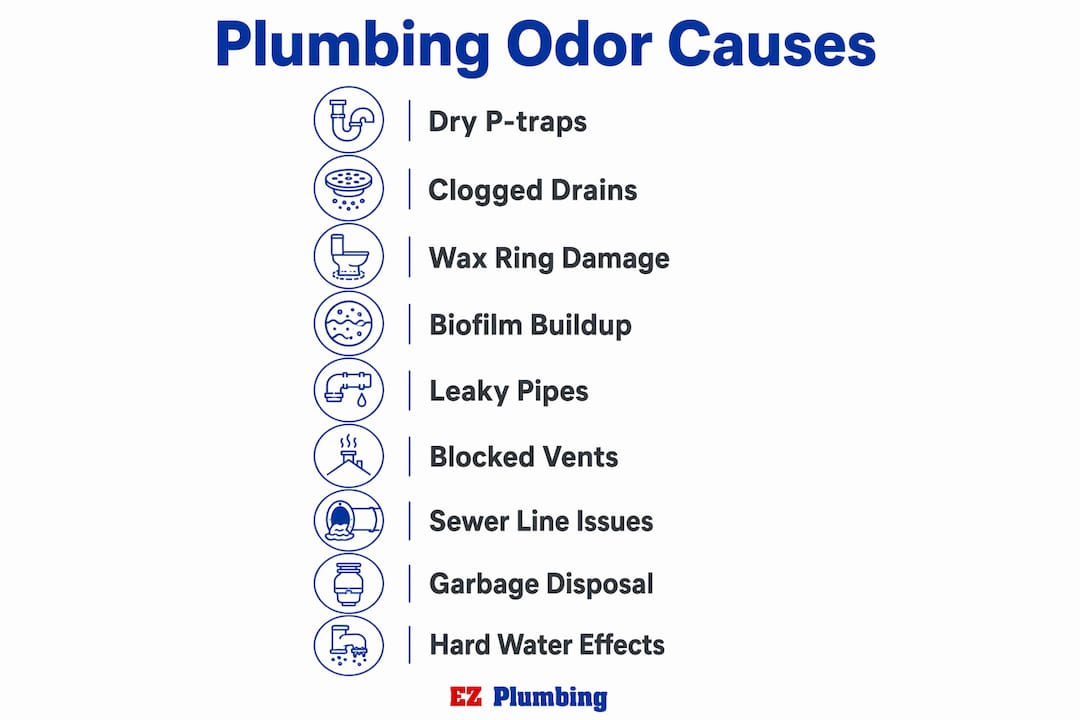
Here is a quick overview of the most common plumbing smell reasons:
- Dry P-trap: Water evaporates from the U-shaped pipe under a drain, removing the gas barrier. A dry P-trap is the single most frequent cause of sewer odors in homes.
- Blocked or clogged vent stack: Debris, bird nests, or ice block vent pipes, causing sewer gases to back up into the home.
- Damaged toilet wax ring: A failed or improperly installed seal lets gas seep around the toilet base.
- Biofilm and bacteria buildup: Soap residue, hair, and grease coat drain walls and decompose, producing musty or rotten odors.
- Pipe leaks or corrosion: Cracks in drain lines or galvanized corrosion release gases before they reach a trap.
- Sewer line damage: Cracked or blocked main sewer lines force odors back through every branch in the house.
- Abandoned or open drain pipes: Improperly capped pipes left after renovations leak sewer gas into wall and floor cavities.
A localized smell at one drain almost always points to a local problem like a dry trap or biofilm. When the odor spreads to multiple drains throughout the house, the issue is systemic, typically a blocked sewer line or a compromised vent stack.
Detailed causes of bad drain smells you should know
Understanding the mechanism behind each cause helps you diagnose the problem faster and avoid misdiagnosis.
Dry P-traps
The P-trap is the curved pipe section beneath every sink, shower, and floor drain. It holds a small amount of water that physically blocks sewer gas from traveling up into your home. When a drain goes unused for two to four weeks, that water evaporates, and the barrier disappears. Running water down the drain typically restores the seal and stops the odor within minutes. Guest bathrooms, basement floor drains, and laundry room sinks are the most common locations.
Clogged drains and blocked vent stacks
Hair, soap scum, grease, and food particles accumulate inside drain pipes and slow water flow. That slower flow accelerates biofilm growth, which produces the rotting smell. Separately, clogged vent pipes from leaves, animal nests, or ice create negative pressure in the drainage system that siphons water right out of P-traps, compounding the problem. Gurgling sounds when water drains are a reliable sign the vent stack needs attention.
Damaged toilet wax rings
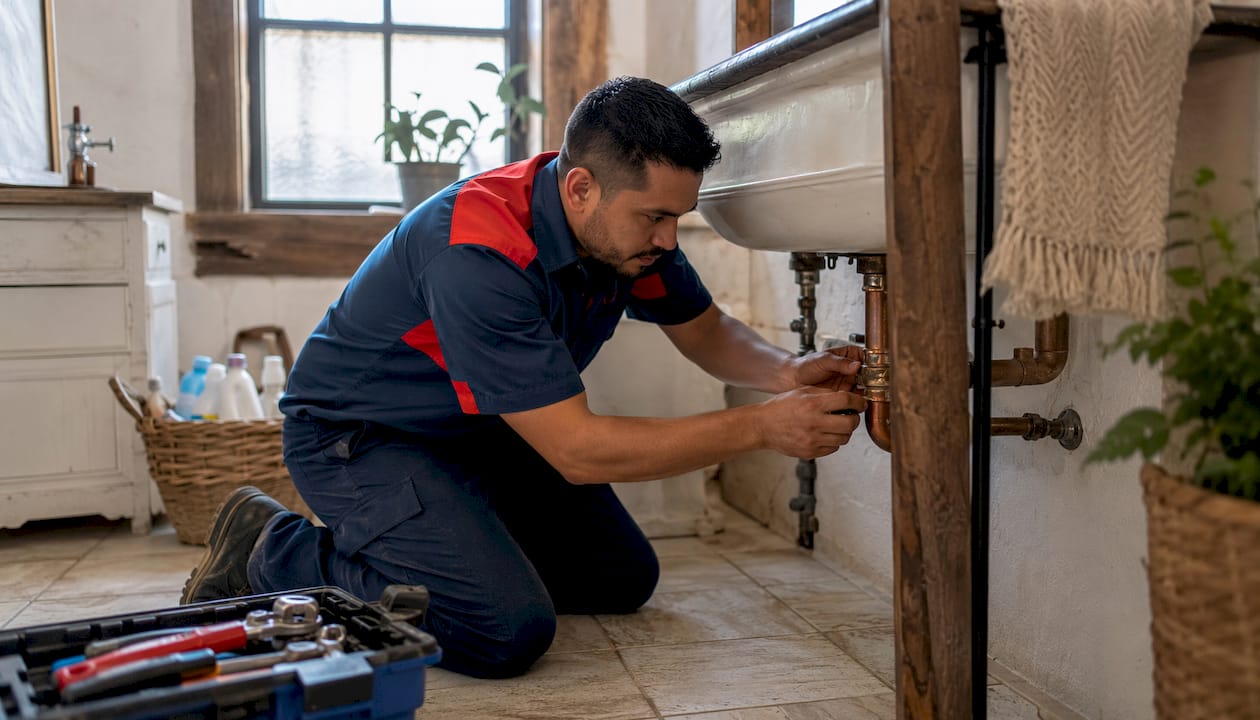
Every toilet sits on a wax ring that seals the base to the drain flange. When that ring compresses, cracks, or shifts over time, sewer gas escapes around the toilet base. A toilet installed with the flange set too low is especially prone to this failure because the wax cannot create proper compression. Signs include a persistent odor near the toilet base, visible moisture on the floor, or a toilet that rocks slightly when you sit on it.
Bacteria and biofilm buildup
Biofilm composed of bacteria, soap residue, hair, and grease coats the interior walls of drain pipes and produces musty or rotten odors as it decomposes. One location homeowners consistently overlook is the sink overflow channel, the small opening near the rim of the basin. That dark, damp passage rarely gets cleaned, and biofilm grows undisturbed there, releasing odor every time water splashes near the opening. Water heater bacterial activity is another source: sulfate-reducing bacteria react with the magnesium or aluminum anode rod inside the tank, producing hydrogen sulfide gas with a distinct rotten egg smell that appears only when you run hot water.
Pipe leaks, corrosion, and abandoned pipes
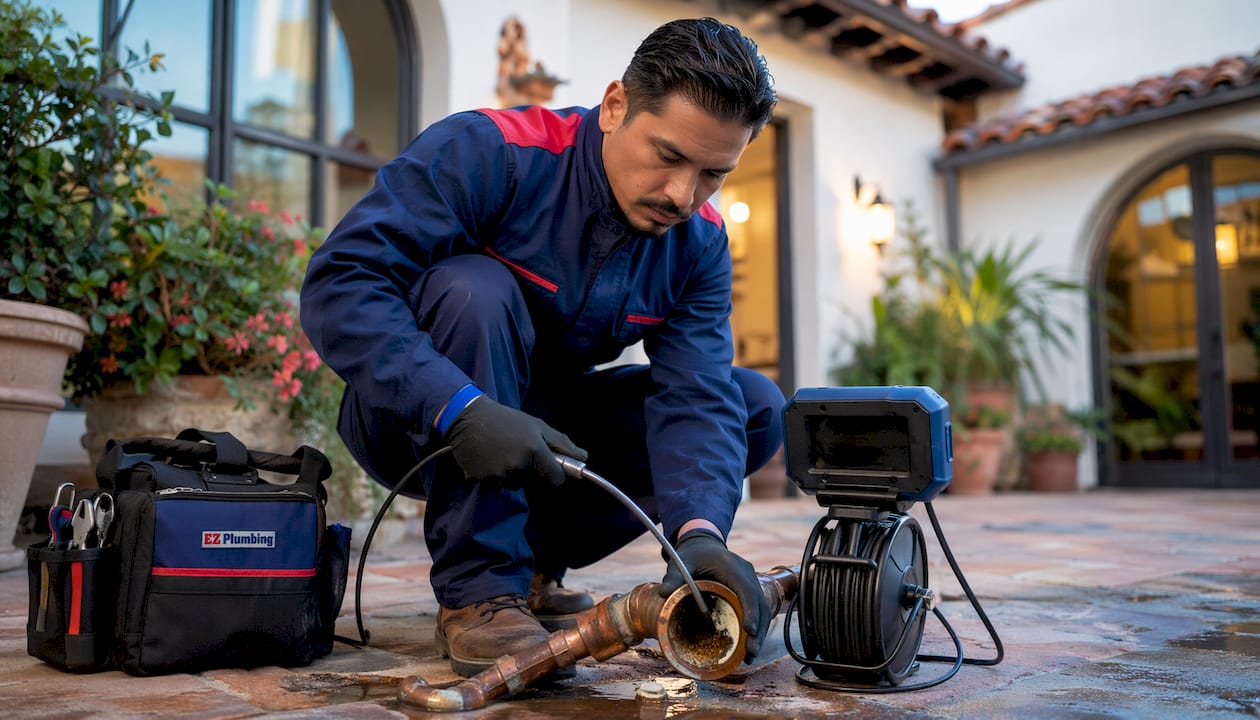
Cracks in drain lines, whether from age, shifting soil, or galvanized corrosion, allow sewer gas to escape before it reaches a trap. Older Los Angeles homes with original galvanized steel supply lines are particularly susceptible. Abandoned drain pipes left open after kitchen or bathroom renovations are a stealthy source: the pipe remains connected to the sewer system, and gas leaks invisibly into wall and floor cavities. A flashlight inspection behind cabinets and under sinks often reveals these overlooked openings.
Improperly installed or blocked plumbing vents
Plumbing vent pipes run from the drain system up through the roof, equalizing air pressure and routing sewer gases safely outside. When these vents are blocked or poorly installed, negative pressure pulls water from P-traps or forces gas back through fixtures. A cracked vent stack inside a wall is harder to find because the gas drifts into the attic and then down through ceiling penetrations.
Sewer line cracks and blockages
A damaged or blocked main sewer line is the most serious cause of widespread odors. Tree root invasion, debris accumulation, and deteriorating clay sewer laterals are the most common culprits in older Los Angeles neighborhoods. When the main line backs up, gases push back through every branch drain in the house. Professional sewer line repair and camera inspection are the only reliable ways to diagnose and fix this.
Garbage disposals
The rubber splash guard at the top of the disposal opening develops a biofilm on its underside that activates every time water splashes against it. Grease and food particles that pass through the disposal also coat pipe walls downstream, creating a sticky surface that traps organic matter and accelerates decomposition.
Hard water effects
Hard water, common throughout the greater Los Angeles area, leaves mineral deposits inside pipes that create rough surfaces where soap scum and biofilm anchor more easily. Over time, this buildup narrows the pipe interior, slows drainage, and creates conditions that accelerate odor development. Soap scum, a waxy film of calcium stearate that forms when bar soap reacts with hard water minerals, is a particularly effective biofilm anchor.
| Cause | Odor Type | Most Common Location |
|---|---|---|
| Dry P-trap | Rotten egg / sewage | Guest baths, basement drains, laundry rooms |
| Blocked vent stack | Sewage throughout home | Upper floors, multiple fixtures |
| Failed wax ring | Sewage near toilet base | Bathrooms |
| Biofilm / bacteria | Musty, rotting | Kitchen sinks, bathroom drains, overflow channels |
| Water heater bacteria | Rotten egg from hot water only | All hot water fixtures |
| Cracked sewer line | Raw sewage, widespread | Basement, crawl spaces, lower floors |
| Abandoned open pipe | Sewage from walls or cabinets | Kitchen, bathroom renovation areas |
How to eliminate and prevent plumbing odors at home
Most plumbing odor causes have straightforward fixes. The key is matching the remedy to the actual source rather than masking the smell.
- Run water in unused drains regularly. Pour water down floor drains, guest bathroom sinks, and basement drains at least once a month to keep P-traps filled and the gas barrier intact.
- Clean drains with baking soda and vinegar. Pour half a cup of baking soda followed by half a cup of white vinegar down the drain, let it fizz for 15 minutes, then flush with hot water. This breaks up light biofilm without damaging pipes.
- Clean the sink overflow channel. Use a small bottle brush or a pipe cleaner soaked in a diluted bleach solution to scrub the overflow opening. This step is frequently skipped and often the reason odors return after cleaning the main drain.
- Inspect and replace damaged wax rings. If the odor concentrates near a toilet base and you notice any rocking or moisture, the wax ring likely needs replacement. A new ring costs $5–$15 in parts; professional installation runs $100–$200 in labor.
- Clear vent pipe blockages. Roof access is required to inspect and clear vent openings. Leaves, bird nests, and debris are the usual culprits. If you are not comfortable on a roof, this is a job for a licensed plumber.
- Address pipe leaks promptly. A slow leak under a cabinet feeds mold growth and accelerates biofilm buildup. Professional leak detection using electronic equipment can locate hidden leaks inside walls before they cause structural damage.
- Avoid chemical drain cleaners. Sulfuric acid-based drain cleaners can off-gas for days and damage pipe joints, potentially worsening odors rather than resolving them. Enzyme-based cleaners are a safer alternative for routine biofilm control.
- Flush and maintain your water heater. Raising the water heater thermostat to 140°F (with a mixing valve installed for scald protection) eliminates the bacterial environment that produces hydrogen sulfide in the tank. Annual tank flushing removes sediment that feeds bacterial growth.
- Scrub the garbage disposal splash guard. Remove the rubber guard and scrub both sides with dish soap and a stiff brush. This takes two minutes and eliminates one of the most overlooked odor sources in a kitchen.
Pro Tip: To quickly determine whether a smell is coming from your drain or your water supply, fill a glass with tap water, then step away from the sink and swirl it. If the water in the glass has no odor, the smell is from drainage, not the water supply itself. This single test saves a lot of unnecessary troubleshooting.
For persistent odors that return within days of cleaning, professional drain cleaning using hydro-jetting removes biofilm and grease deposits that home remedies cannot reach. A camera inspection of the drain line confirms whether the pipe itself is cracked or partially collapsed.
When to call a licensed plumber for plumbing odors
Some odor problems are straightforward DIY fixes. Others signal conditions that worsen quickly or pose genuine health risks. Sewer gas contains flammable methane and toxic hydrogen sulfide, both of which become hazardous at higher concentrations or with prolonged exposure. Knowing when to stop troubleshooting and call a professional protects both your home and your health.
Call a licensed plumber when you notice any of the following:
- Odor persists after running water in all drains. If filling every P-trap does not resolve the smell within an hour, the source is structural: a cracked pipe, a failed wax ring, or a blocked vent stack.
- Multiple drains smell at the same time. One dry trap is a local problem. Three or four smelly drains point to a main sewer line issue or a compromised vent stack that requires professional diagnosis.
- Gurgling sounds or slow drainage throughout the home. Clogged vent pipes cause gurgling and slow drainage, signs that the vent needs clearing to prevent ongoing gas infiltration.
- Water backs up into a tub or shower when you flush the toilet. This is a main sewer line blockage, and it requires immediate professional attention.
- Visible moisture or water pooling near the toilet base. A leaking wax ring allows both gas and wastewater to escape, and the floor framing beneath can sustain damage quickly.
- Odor smells like natural gas or is strongest near utility areas. Sewer gas and natural gas can smell similar, particularly near water heaters, furnaces, and gas lines that run alongside drain pipes. When in doubt, treat it as a gas leak: leave the home and call your utility provider before calling a plumber.
- Smell comes from a wall, ceiling, or floor rather than a drain. Gas escaping from a cracked pipe inside a wall cavity indicates a structural failure, and mold typically follows within days.
- Odors return repeatedly despite home remedies. Recurring smells after cleaning usually mean the underlying cause, whether a partial sewer blockage, a cracked lateral, or a compromised vent, has not been addressed.
Expert insights from Ez-plumbing on diagnosing plumbing odors
Ez-plumbing holds a C-36 Plumbing Contractor License (#583868) and has served residential and commercial clients across the greater Los Angeles area for decades. The team handles everything from drain cleaning and leak detection to full sewer line repair and repiping, which means the technicians see the full range of odor causes on a daily basis.
A few patterns come up repeatedly in Los Angeles homes specifically:
- Older neighborhoods with clay sewer laterals experience root intrusion at a higher rate than areas with PVC lines. Tree roots exploit even hairline cracks and can cause persistent odors long before a full blockage develops.
- Homes built before 1970 with original galvanized steel supply lines often develop galvanized corrosion that narrows the pipe interior and creates rough surfaces where biofilm accumulates faster than in copper or PVC systems.
- The dry climate in the San Fernando Valley and surrounding areas accelerates P-trap evaporation, particularly in vacation properties or homes with infrequently used guest bathrooms. Monthly water runs in every drain are a practical preventive measure.
- Homeowners frequently mistake a blocked vent stack for a drain clog because the symptoms overlap. Slow drainage and gurgling are the key differentiators: if multiple fixtures drain slowly at the same time, the vent is the more likely culprit.
Ez-plumbing recommends scheduling a professional drain and vent inspection any time odors persist beyond 48 hours after home remedies, or whenever the smell is strong enough to be noticeable from another room. Early intervention prevents the kind of sewer line damage that requires excavation to repair. You can also review warning signs of plumbing problems to stay ahead of issues before they escalate.
Ready to eliminate the smell for good?

If you have worked through the home remedies and the odor keeps coming back, Ez-plumbing can identify the exact source and fix it correctly the first time. The team serves homeowners across Los Angeles with licensed drain cleaning, sewer line camera inspection, sewer line repair, leak detection, and water heater service. Bacterial odors from water heaters, in particular, often require a full tank flush or anode rod replacement. Ez-plumbing’s water heater installation and repair services cover both tank and tankless systems throughout the greater Los Angeles area.
Call Ez-plumbing or schedule online to get a licensed technician to your home quickly.
Key Takeaways
Plumbing odors almost always trace back to a specific, fixable failure in your drainage system, and identifying the source correctly is what makes the repair last.
| Point | Details |
|---|---|
| Dry P-trap is the top cause | Water evaporating from an unused drain removes the gas barrier; run water monthly to prevent it. |
| Localized vs. widespread odor | A single smelly drain points to a local issue; odors from multiple drains indicate a sewer line or vent stack problem. |
| Biofilm needs direct cleaning | Baking soda and vinegar address light buildup, but hydro-jetting is required for persistent biofilm in drain walls. |
| Sewer gas carries health risks | Methane and hydrogen sulfide in sewer gas are flammable and toxic at higher concentrations; persistent odors warrant professional assessment. |
| Vent stack blockages mimic drain clogs | Gurgling drains and slow drainage throughout the home often signal a blocked vent, not a clogged drain. |