
Water Line Leak: Signs, Causes, & Fast Repair in LA
A water line leak usually doesn't announce itself with a burst pipe and obvious flooding. In Los Angeles, it often starts with a higher-than-usual water bill, a patch of lawn that stays green when the rest of the yard dries out, or the sound of water moving when the house is quiet and every fixture is off.
That's the moment most property owners start doing mental math. Is this a minor repair under the yard, a slab issue, a city problem, or the start of a much bigger project? If you own a single-family home, manage a rental, or serve on an HOA board, the stress is real because the wrong first move can waste time, damage landscaping, or push a small leak into a major repair.
The good news is that a water line leak is manageable when you approach it in the right order. First confirm the leak. Then stop the water if needed. Then determine who owns the problem. After that, choose the repair method based on the age of the line, how accessible it is, and how much disruption your property can tolerate.
Table of Contents
- That Sinking Feeling Discovering a Water Line Leak
- How to Spot the Signs of a Hidden Water Line Leak
- Common Causes of Water Line Failures in Los Angeles
- Your First Moves What to Do Immediately
- Comparing Repair Methods Spot Repair vs Repiping vs Trenchless
- Understanding Water Line Repair Costs and Timelines
- Prevention and When to Call EZ Plumbing
That Sinking Feeling Discovering a Water Line Leak
It usually starts with one clue that doesn't quite fit. A homeowner in Los Feliz notices the side yard is soft even though the sprinklers haven't run. A small apartment owner in Glendale gets a utility bill that feels wrong. An HOA manager in the Valley hears from a resident that water pressure dropped in one building but not the next.
At that point, people often do one of two things. They either hope it goes away, or they rush into the first repair suggestion they hear. Neither approach helps much. Underground leaks don't fix themselves, and fast decisions without good diagnostics often lead to patching the symptom instead of the actual failure.
A water line leak is stressful because it touches three concerns at once. Water waste, property damage, and repair disruption all show up at the same time. On a single-family property, that might mean lawn damage, wet soil, or slab moisture. On an HOA property, it can turn into access issues, resident complaints, and pressure to restore service quickly without tearing up common areas.
Practical rule: The first goal isn't picking a repair method. The first goal is controlling the situation so you can make a good decision under less pressure.
That decision process matters in Los Angeles because properties vary so much. A hillside home with mature landscaping needs a different plan than a duplex with a short exposed service line. A condo association may care less about the pipe itself than about pavement cuts, resident access, and how long the water will be off.
The right approach is simple. Confirm the leak. Narrow down the location. Determine responsibility. Then weigh repair against replacement based on age, material, access, and how likely the line is to fail again. When you handle it in that order, the problem becomes more manageable and the conversation with a plumber gets a lot more productive.
How to Spot the Signs of a Hidden Water Line Leak
Some leaks are obvious. Many aren't. A hidden water line leak often shows up through secondary symptoms long before you see active water.
Early detection matters because even slow leaks add up. The Springfield Water and Sewer Commission says the average U.S. household's leaks can waste more than 10,000 gallons of water each year, and 10% of homes have leaks that waste 90 gallons or more per day on its household leak detection guidance.
Start with the meter
The most useful homeowner test is the water meter. Turn off faucets, appliances, irrigation, and anything else that uses water. Then check whether the meter is still moving. If it is, water is going somewhere.
If you've never done that before, this guide on how to read a water meter for leaks walks through what to look for.
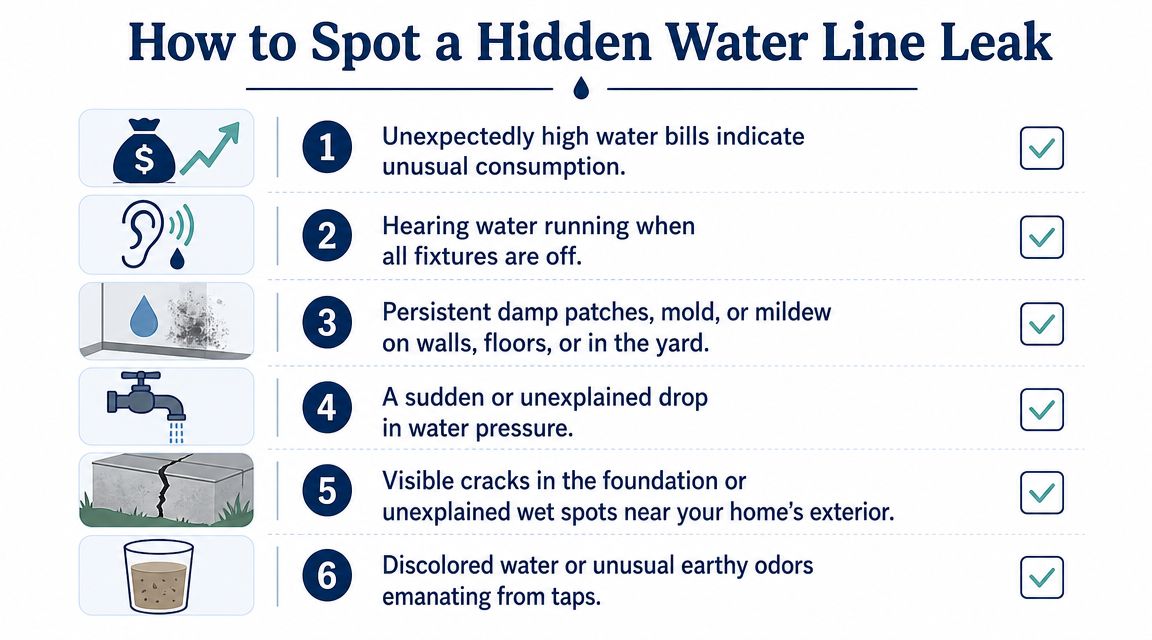
A visual checklist helps when you're trying to sort normal moisture from a real plumbing problem.
Look for physical clues inside and outside
A hidden supply leak often leaves a pattern. Watch for:
- Unexpected water bills: If usage hasn't changed but the bill has, that's one of the earliest warning signs.
- Running water sounds: Hearing movement in the pipes when fixtures are off usually means water is escaping somewhere.
- Wet ground or soggy strips: Pay attention to damp soil, especially along the likely path from the meter to the house.
- Pressure changes: A sudden drop in pressure can point to a compromised line or fitting.
- Mold, mildew, or damp finishes: Lower walls, flooring, and garage-adjacent areas can show moisture first.
- Warm or damp slab areas: On slab properties, moisture can migrate in ways that make the leak seem farther away than it is.
Later in the inspection process, video can also help owners understand what technicians are checking and why.
When subtle signs are enough to act
A lot of owners wait for a dramatic symptom. That's usually a mistake. If the meter moves when everything is off, or if you've got persistent wet soil and a pressure change, that's enough reason to call for leak detection.
Water line leaks rarely stay neat and localized. The water follows soil, concrete, and framing paths that can make the visible symptom misleading.
For owners of duplexes, fourplexes, and small multifamily properties, compare complaints unit by unit. If pressure issues show up throughout one building stack or one service area, that's a clue that the problem may be on the main supply side rather than at a single fixture.
Common Causes of Water Line Failures in Los Angeles
When a line fails, the repair only holds up if the cause is understood. Otherwise you can end up fixing one weak point while the rest of the system keeps deteriorating.
Aging pipe and pressure problems
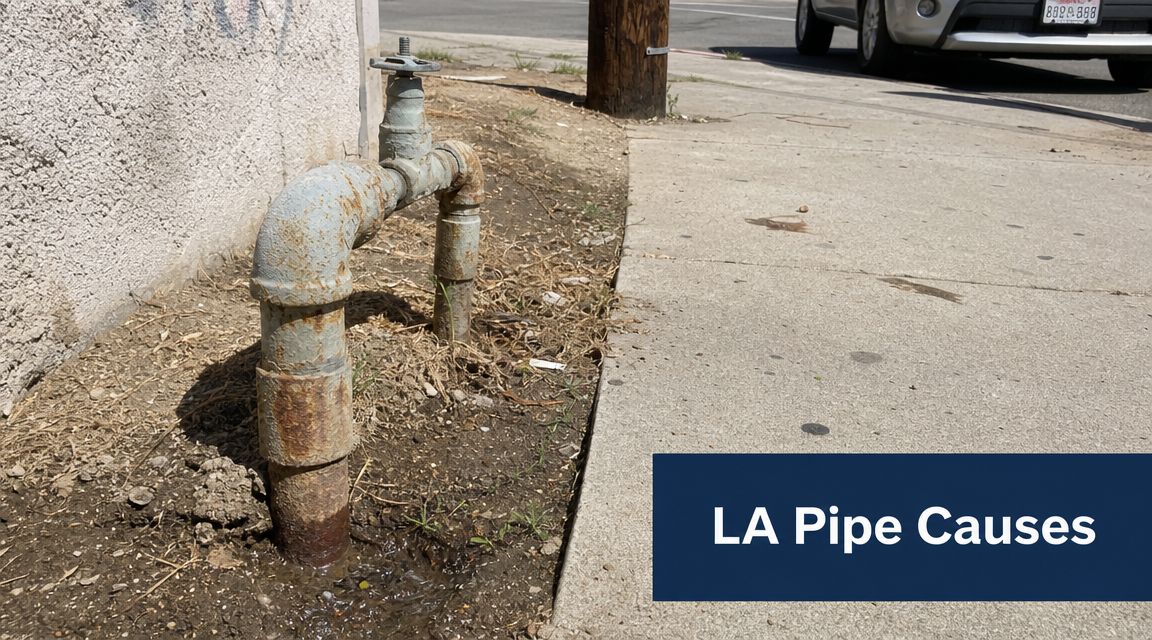
Older metal piping often fails because the material has reached the stage where corrosion wins. Corrosion weakens galvanized steel and iron piping until cracks form, and high water pressure adds strain at fittings and weak spots, as explained in this leaking pipe overview.
That combination shows up often in older Los Angeles housing stock. The line may look repairable at one break, but the larger issue is that the pipe wall is thinning or the fittings have been under stress for years.
Underground movement and installation issues
Not every failure comes from age. For buried lines, leaks commonly come from soil movement, freezing and thawing cycles, or installation defects, according to guidance on common causes of water line leakage. The same guidance notes that persistent wet soil, water in the meter box, or seepage near entry and exit points are practical field indicators of a supply-line leak.
In Los Angeles, soil movement matters even without harsh winter conditions. Hillside properties, settling soil, root activity, and old trench work can all shift a line enough to stress joints or create a fracture.
Why the cause matters before repair
Cause determines method. A line damaged by one isolated impact may be a good candidate for a local repair. A line failing because the material is corroded, the pressure is too high, or the original installation left weak points is a different conversation.
For property owners, the key question isn't just “Where is it leaking?” It's “Why did this line fail here, and what does that say about the next weak point?”
Your First Moves What to Do Immediately
Once you've confirmed a likely water line leak, move in order. Fast matters, but sequence matters more.
Shut off the water and protect the property
The first move is to stop the flow if water is actively damaging the property or the meter shows continuous movement. If you're not sure where your shutoff is, this guide on how to shut off the main water supply can help you find the right valve quickly.
After that, do basic damage control:
- Move vulnerable items: Get boxes, storage, and anything absorbent away from wet areas.
- Keep people out of soft ground: Saturated soil near walkways, driveways, or retaining areas can become unsafe.
- Pause irrigation timers: Don't add more water while you're trying to isolate the issue.
- Protect electrical safety: If water is entering a garage, basement-like area, or utility zone, use caution and call the right trade if needed.
Figure out whether it is yours or the citys
Many owners lose time determining leak responsibility. A key issue is whether the leak falls on the private service line or the public right-of-way. That distinction changes who you call first and who may be responsible, as noted in Home Water Works guidance on leaks.
A practical field approach looks like this:
- Leak in the street or sidewalk area: Start by contacting the water utility or city reporting line.
- Leak between your meter and your structure: That often points toward the private service line.
- Water in or around the meter box: Don't assume either way. It needs proper evaluation because the exact side of the meter matters.
If the leak is on public property, a private plumbing repair may not be the first step. If it's on your service line, waiting on the city can cost you time and added damage.
For HOAs and landlords, confirm who owns that segment before authorizing excavation. Shared systems, master-metered properties, and private drives can blur what seems obvious.
Document before cleanup changes the scene
Take clear photos of wet areas, meter readings, visible seepage, damaged flooring, and exterior conditions. Keep notes on when the problem was first noticed and whether pressure changed throughout the building.
That documentation helps with three things. It makes diagnosis easier, it gives property managers a record for owners or boards, and it can help if insurance questions come up later.
Comparing Repair Methods Spot Repair vs Repiping vs Trenchless
Once the emergency is contained, the decision starts. Most owners are choosing between spot repair, full repiping or line replacement, and trenchless methods. None is automatically right. The best option depends on pipe condition, location, surface restoration concerns, and how long you plan to keep the property.
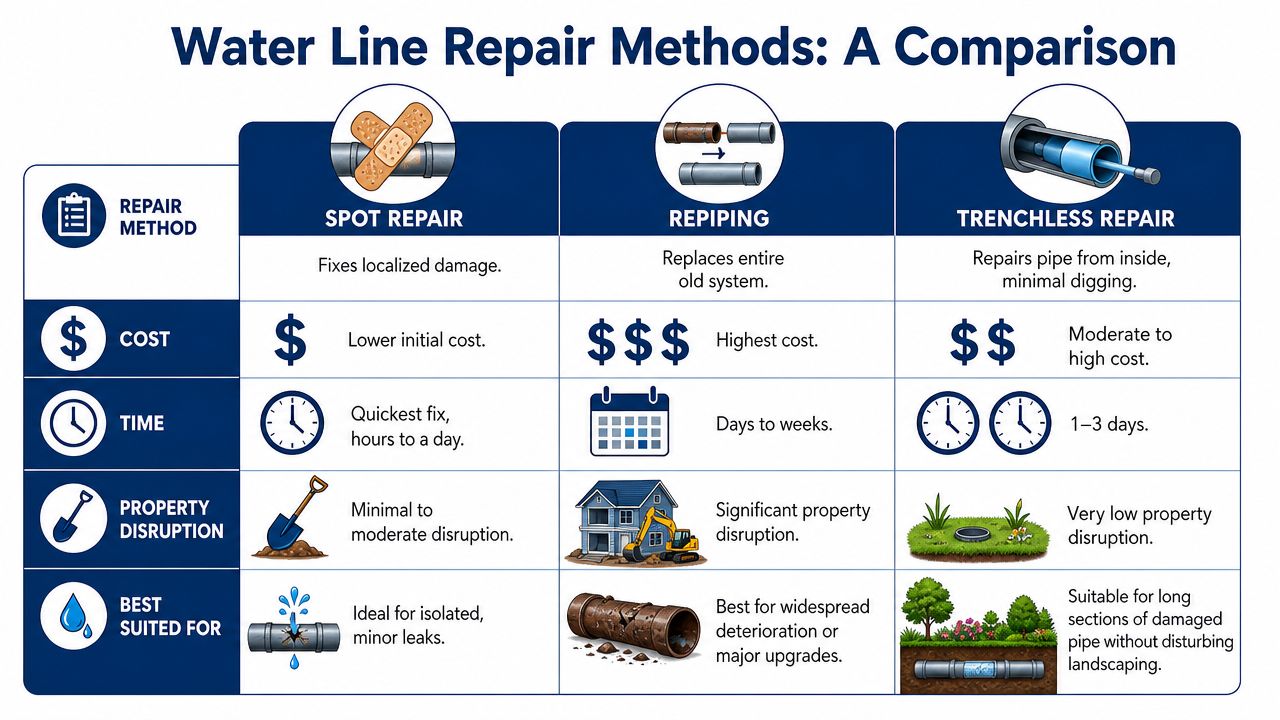
Water Line Repair Method Comparison
| Method | Best For | Disruption Level | Typical Lifespan |
|---|---|---|---|
| Spot Repair | Isolated damage on an otherwise sound line | Low to moderate | Depends heavily on condition of the remaining pipe |
| Repiping | Older lines with widespread deterioration or recurring failures | High | Long-term solution because the failing line is replaced |
| Trenchless | Longer damaged runs where surface disruption needs to stay low | Low | Long-term when the pipe and site conditions fit the method |
When spot repair makes sense
Spot repair is the simplest concept. Find the leak, expose the damaged section, and replace or repair that local area. On a newer line with a single failure point, it can be the right answer.
It also works when access is easy. If the leak is in a planter strip, a side yard, or another area where excavation is straightforward, the repair can be efficient and practical.
But spot repair has limits:
- It only solves the local break: If the rest of the line is worn out, another leak may be waiting.
- It can become repetitive: One repair can turn into several over time on an aging service line.
- Surface restoration still matters: Even a small excavation can affect hardscape, irrigation, or decorative landscaping.
When repiping is the smarter call
Full replacement costs more up front and creates more disruption, but sometimes it's the most conservative long-term decision. One industry source argues that partial repairs on older, corrosion-prone service lines often fail to prevent repeat leaks, making full replacement the lower-risk option over time in many cases, as discussed in this water line leak replacement analysis.
That matters most when the line is old, the material is known to degrade, or the leak history already shows a pattern. If you're repairing one section of a pipe that has several weak sections left, the lower invoice today may not be the lower ownership cost over the next few years.
For some Los Angeles properties, especially rentals and owner-occupied homes with older infrastructure, replacement reduces the uncertainty. For boards and property managers, it also reduces the risk of repeated emergency shutoffs and repeated resident disruption.
Where trenchless fits best in Los Angeles
Trenchless repair or replacement is often attractive when the line runs under driveways, patios, mature landscaping, walkways, or busy access areas. Instead of opening a full trench across the property, the work is done through limited access points when site conditions allow.
This option isn't universal. Pipe condition, alignment, depth, and access points all matter. But when it fits, trenchless work can reduce restoration headaches compared with traditional excavation.
It's also where service style matters. A contractor like EZ Plumbing repiping services may be part of that conversation when the problem isn't just a leak but an aging supply system that needs a broader solution.
The right repair is the one that fixes the leak and makes sense for the next failure risk, not just the current hole in the pipe.
How property type changes the decision
A single-family owner often focuses on two things. Can the yard or driveway be preserved, and is the pipe likely to fail again?
An HOA board usually has a wider checklist:
- Resident impact: How long will water service be interrupted?
- Common area damage: Will excavation affect paving, entrances, or landscaping?
- Future liability: Is a cheaper repair likely to create another emergency later?
- Approval process: Does the board need a durable option that's easier to justify in meeting records?
A small commercial or multifamily owner often prioritizes continuity. They may accept a higher upfront cost if it reduces downtime, access restrictions, and repeat service calls.
Understanding Water Line Repair Costs and Timelines
Owners always ask two fair questions. What's this going to cost, and how long will the property be disrupted? The honest answer is that both depend on the method and the site.
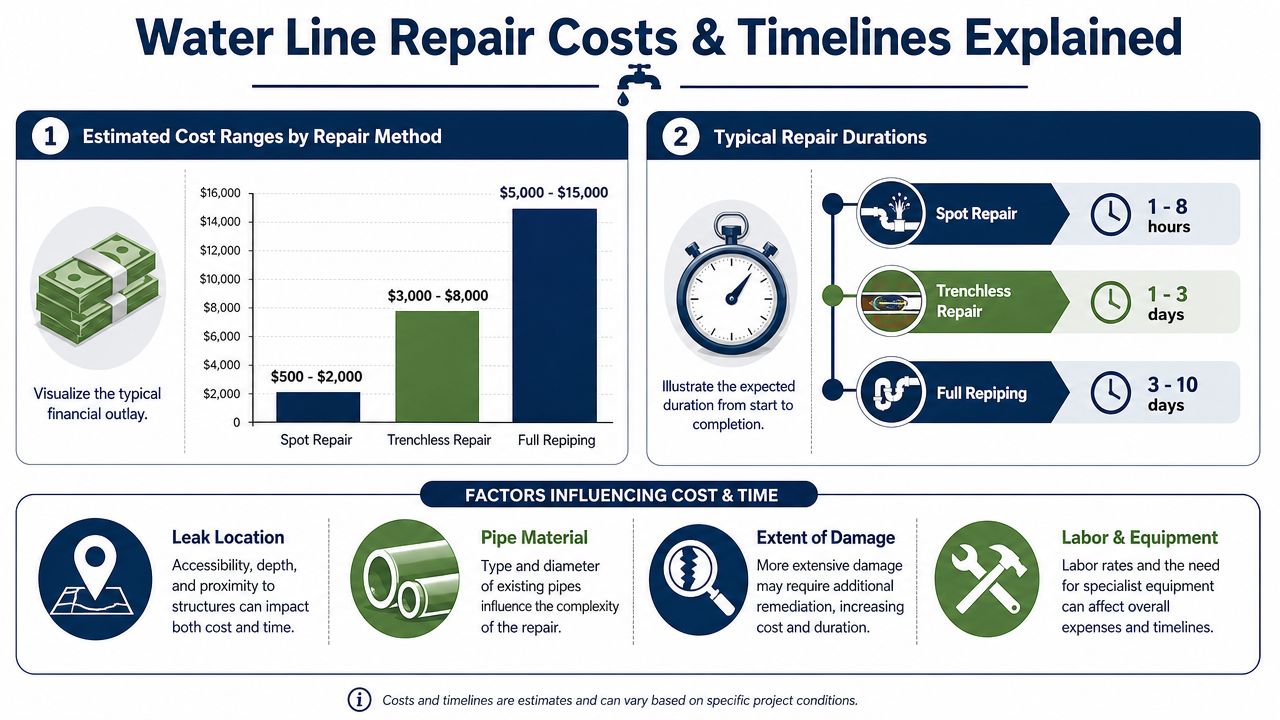
For a simple visual breakdown, this infographic summarizes common cost and timeline ranges used in residential repair discussions.
What actually moves the price
The biggest cost drivers are usually practical, not mysterious:
- Access difficulty: A shallow yard line is different from a line under concrete, stairs, or a retaining area.
- Repair method: Spot repair, trenchless work, and full replacement don't involve the same labor, equipment, or restoration.
- Pipe length and route: Longer runs and more complicated layouts take more time.
- Pipe material and diameter: What's already in the ground affects fittings, replacement strategy, and labor.
- Restoration scope: Concrete, tile, landscaping, fencing, and irrigation repairs can rival the plumbing work itself on some jobs.
A lower estimate isn't always cheaper in the long run if it leaves major restoration or repeat leak risk unaddressed.
What affects the schedule
Timeline depends on how quickly the leak can be located, how accessible the line is, and whether permits or utility coordination are needed. A straightforward exposed repair can move quickly. A more invasive or replacement-based project takes longer because the work includes access, testing, repair, and site restoration.
Occupied properties also slow things down in a necessary way. Technicians may need scheduled access, water shutoff windows, resident notices, or staging areas that avoid blocking garages and entries.
How to compare estimates without guessing
When you review proposals, ask each contractor the same questions:
- Is this a local repair or a system-level recommendation?
- What evidence shows the rest of the line is still sound or unsound?
- How much surface restoration is included?
- What shutoff time should occupants expect?
- If this is a spot repair, what would make replacement the better decision instead?
Those answers matter more than a single bottom-line number. A good estimate tells you what is being fixed, what is not being fixed, and where the risk remains.
Prevention and When to Call EZ Plumbing
Prevention starts with paying attention to conditions that stress water lines before they fail. Pressure problems, aging materials, and unnoticed small leaks tend to stay hidden until the damage gets expensive.
Prevention that reduces ugly surprises
A good prevention routine is basic but effective:
- Know your pipe material and age: If you own an older property and don't know what the service line is made of, find out.
- Check pressure conditions: Excessive pressure puts strain on weak points and fittings.
- Watch the yard and meter area: Persistent damp soil or unexplained moisture deserves follow-up.
- Be careful with exterior modifications: New trees, hardscape work, and digging projects can affect service lines.
- Treat leak detection like maintenance: Waiting for a visible failure is the expensive version of planning.
That last point matters because leak management has long been a measurement problem, not just a repair problem. In a UCLA survey of 10 Los Angeles region water retailers, researchers found there was “no way to know how much water is lost to leakage and breaks” because careful monitoring wasn't required, and the few retailers that did measure leakage reported only 3% to 4%, which researchers called “an improbably low percentage” compared with international benchmarks of about 10% in Israel and Australia, according to the UCLA report summary. For property owners, the lesson is straightforward. If you don't measure and inspect, you end up guessing.
If you want a homeowner-focused resource on broader cold-weather and pipe-risk habits, Restore Heroes has a practical guide on preventing burst pipes at home.
When professional help is the right move
Call for a professional diagnosis when the meter suggests continuous flow, when you have persistent wet soil, when pressure changes suddenly, or when the leak may be under hardscape or a slab. Those are not good DIY situations.
For single-family homes, that usually means getting the line located accurately before deciding between excavation and replacement. For HOAs and property managers, it means confirming ownership, reducing resident disruption, and choosing a repair that won't create another emergency in the same area a few months later.
A licensed plumbing contractor with leak detection capability can isolate the problem, explain the trade-offs, and help you decide whether local repair is reasonable or whether replacement is the safer call.
If you're dealing with a suspected water line leak in Los Angeles, EZ Plumbing can help you sort out the next step quickly. The company is licensed and insured, serves homes, HOAs, property managers, and commercial properties across Los Angeles, and offers 24/7 emergency response along with same-day scheduling for planned work. Call (818) 908-2710 if the leak is active, or schedule online to arrange diagnostics and repair planning.