
Unclogging a Toilet With Dish Soap: A Homeowner’s Fix
Yes, dish soap works on many minor toilet clogs, and the recipe is simple: pour a moderate amount of liquid dish soap into the bowl, wait a moderate time, then follow with about a gallon of hot tap water at a safe warm temperature, never boiling. If the bowl doesn’t drain after that, stop pouring liquids and call a licensed plumber before you try a second round.
This works because soap lubricates the clog and hot water softens what’s usually causing it: compacted toilet paper or soft organic waste. Most attempts show results within half an hour. If nothing changes after one or two tries, you’re likely dealing with something dish soap can’t touch, and repeated attempts just risk an overflow.
Key Takeaways
Dish soap and hot water clear soft toilet clogs by lubricating and softening the blockage, but the method has real limits and real safety rules.
| Point | Details |
|---|---|
| The one-line recipe | Pour 1/4 to 1/2 cup dish soap, wait 30 minutes, add a gallon of hot (not boiling) water. |
| Temperature limit | Keep water between 120 and 150°F; boiling water can crack porcelain or melt the wax ring. |
| Stop-and-escalate rule | Stop after two failed attempts, or immediately if the bowl rises toward the rim. |
| What it won’t fix | Solid objects, sewer main clogs, and root intrusions need a plumber, not more soap. |
| When to call Ez-plumbing | Recurring clogs, multiple slow drains, or an overflow risk mean it’s time for licensed drain cleaning. |
Table of Contents
- How Unclogging a Toilet With Dish Soap Actually Works
- Why Does Dish Soap Loosen a Toilet Clog?
- What Safety Mistakes Ruin This Method?
- What Should You Try If Dish Soap Doesn’t Clear It?
- When Do You Need a Licensed Plumber?
- Sources
How Unclogging a Toilet With Dish Soap Actually Works
The method is straightforward, but the sequence matters more than most people assume. Skip a step, or misjudge the water temperature, and you either waste an hour or risk damaging the bowl.
Here’s what you need before you start:
- A measuring cup (kitchen-grade is fine)
- A bucket with a pour spout, or a large pot you can pour steadily from
- Liquid dish soap, such as Dawn or a comparable grease-cutting formula
- A toilet brush, in case you need to break up softened material afterward
Step-by-step:
- If the bowl is already near full, skip ahead to the safety section below before adding anything.
- Pour a moderate amount of dish soap directly into the bowl, aiming for the drain opening at the bottom.
- Let it sit for a moderate time to work down into the trap. This is not optional. Soap needs time to work down into the trap.
- Heat about a gallon of tap water until it’s hot to the touch, within a safe warm range, and pour it in from waist height for added force.
- Wait about 5 minutes.
- Flush. If the water level drops and clears normally, you’re done.
| Measurement | Guidance |
|---|---|
| Dish soap amount | 1/4 to 1/2 cup for a standard clog |
| Wait time before hot water | 30 minutes |
| Water temperature | 120 to 150°F (never boiling) |
| Water volume | About 1 gallon |
| Wait time before flushing | About 5 minutes |
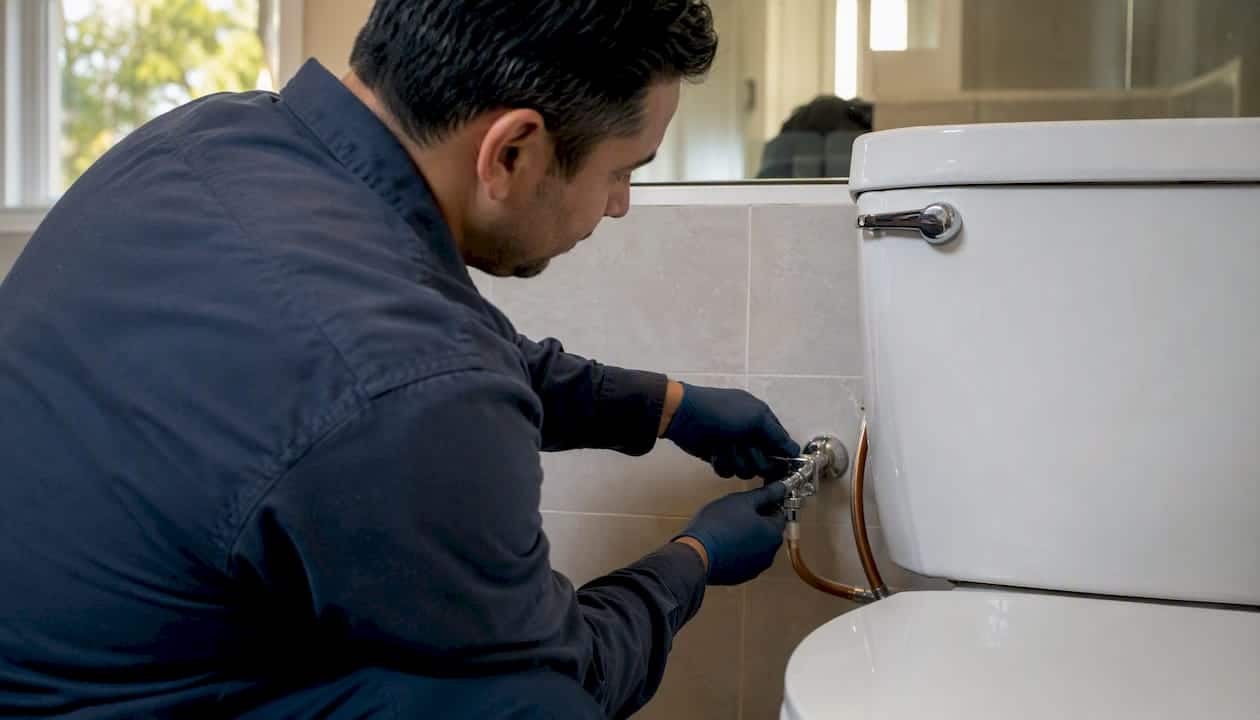
Pro Tip: If the bowl is already sitting high, shut off the supply valve behind the toilet and scoop out some water before you add soap. Pouring on top of a nearly full bowl is how a simple clog turns into a bathroom flood.
Some guides recommend up to a full cup of soap for stubborn clogs, but starting small is smarter. You can always repeat the process once, and it’s easier to add more soap than to clean up suds that overflowed because you used too much, according to The Spruce’s step-by-step method.
Why Does Dish Soap Loosen a Toilet Clog?
Two things are happening at once, and understanding them tells you exactly when this trick will and won’t work.
Dish soap is a surfactant. It reduces surface tension and coats whatever’s blocking the trap, letting water slip around and through the mass instead of pushing straight into it. That’s the same reason it cuts grease on a dinner plate. Hot water adds a second mechanism: it softens compacted toilet paper and organic waste, breaking down the fibers that are holding the clog together.
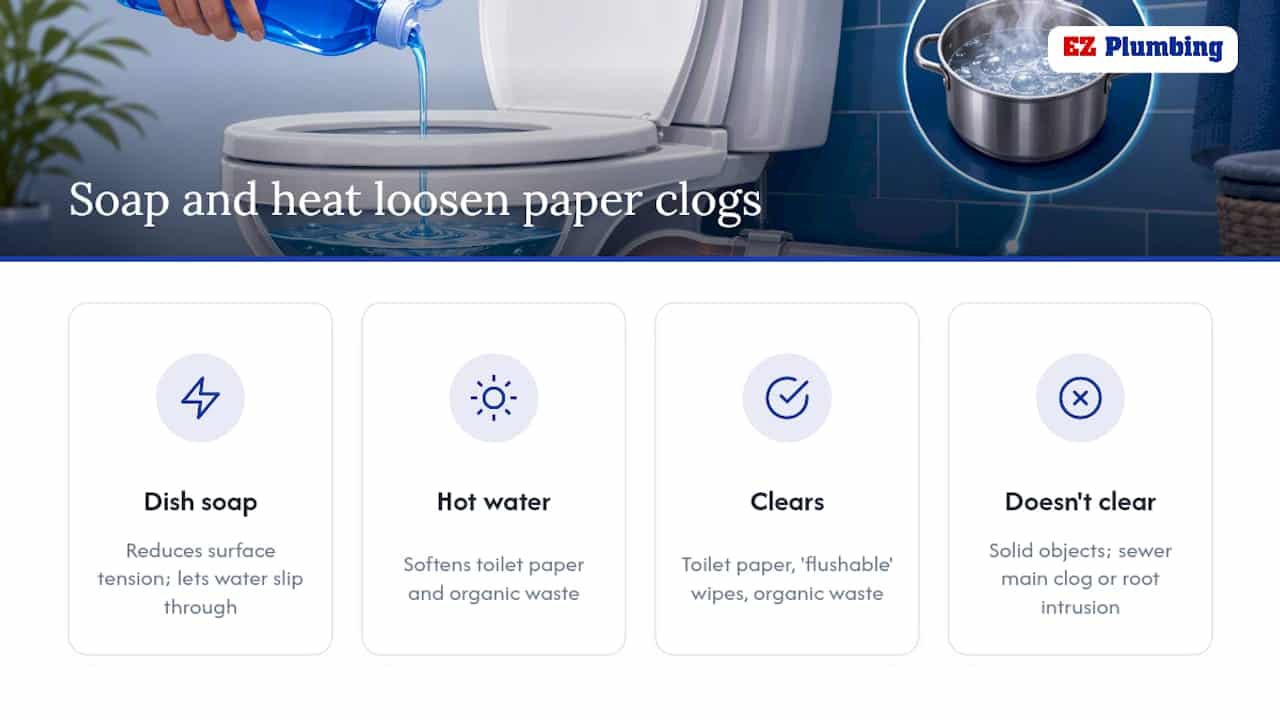
That combination clears a specific category of clog: toilet paper buildup, wipes marketed as “flushable,” and general organic waste. It does not clear solid objects (toys, toothbrushes, dental floss wads), and it won’t touch a blockage that’s actually further down the line, like a sewer main clog or root intrusion in an older clay lateral. Soap and hot water simply have nothing to lubricate against once the problem isn’t in the trap anymore.
The timing matters because both mechanisms are slow. Ten minutes might be enough for a light paper clog; a denser one benefits from the full 30 minutes before you add water, which is why Family Handyman’s guide treats that window as standard rather than optional.
What Safety Mistakes Ruin This Method?
The single most damaging mistake homeowners make is reaching for boiling water to “speed things up.” Never do this. Boiling water can crack porcelain and melt the wax ring that seals your toilet to the floor flange, according to Snopes’s fact check on the dish soap method. A cracked bowl or a failed wax seal turns a $5 fix into a repair job that costs far more than a service call would have.
Stick to hot tap water in the 120 to 150°F range, and pour it from waist height rather than dumping it in one violent motion, a technique detailed in Rick’s Plumbing Service’s guidance on safe pouring. That height gives the water enough force to help push through the softened clog without splashing it back at you.
Two other mistakes come up constantly:
Using too much soap. More isn’t faster. Excess soap creates thick suds that can rise with the water level and overflow, and it can mask a partial clear that leaves a smaller blockage sitting in the pipe, waiting to resurface days later, per PlumberLocator’s analysis of common dish soap mistakes. Roughly one in four DIY dish soap attempts fail to fully clear the line on the first try, which is why a quarter cup as a starting point beats guessing high.
Mixing chemical drain cleaners with the dish soap method. Combining products creates unpredictable chemical reactions and offers no real benefit over soap alone. If the bowl is already full or rising toward the rim, stop immediately. A toilet on the verge of overflow is a contamination risk, not a puzzle to keep working at with more liquid. Shut off the supply valve and step back before you call anyone.
What Should You Try If Dish Soap Doesn’t Clear It?
Move through these options in order, and don’t skip straight to chemicals out of frustration.
- Plunge with a flange-style toilet plunger. The extra flap creates a tighter seal against the bowl’s curve than a standard cup plunger. Push down slowly to force air out, then pull up sharply to create suction, repeating six to ten times in a steady rhythm.
- Use a toilet auger if plunging doesn’t move it. Feed the cable in gently and crank as you go. If you feel firm resistance, stop. Forcing an auger past real resistance can scratch porcelain or push a solid object further into the trap.
- Skip the chemical drain cleaners. They’re a last resort for good reason: caustic cleaners can degrade PVC over time, they’re genuinely unsafe for septic systems, and they leave a hazardous residue in a bowl you now have to work in if the clog doesn’t clear.
A few rules dictate when to stop trying altogether:
- Stop after two failed attempts with two different methods (soap, then plunging, for example).
- Stop immediately if water rises toward the rim at any point.
- Stop if more than one drain in the house starts backing up. That’s not a toilet problem anymore.
Plunging is generally the fastest fix for most clogs when a plunger is on hand, according to The Spruce’s comparison of toilet unclogging methods, so it’s worth keeping one in every bathroom rather than treating dish soap as the default first move.
When Do You Need a Licensed Plumber?
Certain signs mean you’re past the DIY stage, and pushing further just delays a call you were always going to have to make.
- The bowl overflowed or came close to it more than once.
- The same toilet clogs again within days or weeks of clearing it.
- Multiple fixtures (tub, sinks, other toilets) are draining slowly at the same time, which points to a sewer main issue rather than a single trap.
- You can see a solid object causing the blockage.
- Water is backing up from a drain that isn’t even connected to the toilet.
Pro Tip: Repeated plunging or soap attempts on a clog that isn’t actually clearing can hide a bigger problem underneath. A partial clear looks like success, but if the wax ring shifted during a rough plunging session or a PVC fitting weakened from years of hot water and pressure, you won’t see the damage until it fails completely, often at the worst possible time.
Once a professional is on site, expect a different toolkit than what’s under your sink: a motorized drain snake or auger for anything past the trap, a camera inspection if the clog is recurring or the cause isn’t obvious, and hydro-jetting for grease or root buildup that a cable alone won’t clear. If the inspection turns up a cracked lateral or root intrusion, that’s a sewer line repair conversation, not a drain-cleaning one.
A Plumber’s Take on the Dish Soap Method
Dish soap earns its place as a first attempt because it’s cheap, it’s already in every kitchen, and it genuinely clears the most common clog we see: compacted paper sitting in the trap. What changes our advice is repetition. A homeowner who calls after one failed soap attempt usually has a simple fix ahead. A homeowner who’s plunged, souped, and plunged again over three days usually has a hidden issue, a shifted wax ring, a partially cracked trap, or a clog that’s moved further down the line where soap can’t reach it. We’d rather see you after one honest try than after a week of workarounds that turned a $150 job into a $600 one.
Need a Faster Fix Than the Bucket-and-Soap Routine?
If you’ve already tried the dish soap method and the bowl still isn’t draining right, Ez-plumbing gets a licensed tech to your door the same day, not on a wait list. Unlike a second round of soap and hope, our drain cleaning service uses camera inspection and hydro-jetting to find and clear the actual blockage, whether it’s sitting in the trap or fifteen feet down the line.
We serve homeowners, property managers, and HOAs across the greater Los Angeles area, and we’re licensed (C-36 #583868) and insured for exactly this kind of call. If the clog keeps coming back or you’re staring at a bowl that won’t budge, book a same-day appointment and skip the guesswork.
Sources
- The secret to unclogging a toilet with dish soap | Family Handyman
- How to unclog a toilet with dish soap | The Spruce
- Does pouring dish soap in a toilet and tub remove clogs? | Snopes
- Hot water and dish soap for toilet clogs: what works and what to avoid | Rick’s Plumbing Service, Inc.
- Plumberlocator
For homeowners who want one more angle before calling a pro, Eutradesmen’s repair guide walks through signs that a toilet needs more than a home remedy.