
Types of Water Heaters: A 2026 Homeowner’s Guide
Types of water heaters refer to the distinct technologies designed to deliver hot water for household use, from traditional storage tanks to advanced heat pump systems. Choosing the right one affects your monthly utility bill, your home’s infrastructure, and how much hot water your household can actually use at once. Federal efficiency standards are tightening, with the DOE mandating heat pump technology for most electric tanks by 2029. Understanding your options now puts you ahead of those changes and helps you avoid a costly mismatch between the unit you buy and the home you live in.
1. Storage tank water heaters
Storage tank water heaters are the most common residential option in the United States. They hold a reservoir of preheated water, typically 30 to 80 gallons, ready for use at any time. Gas and electric models both exist, and the fuel type determines recovery speed and operating cost. These units are straightforward to install and replace, which keeps labor costs lower than specialty alternatives.
Key features:
- Available in gas and electric configurations
- Capacities range from 30 to 80 gallons for most households
- Installed costs run $600–$1,200 for electric and $800–$1,800 for gas
- Standby heat loss occurs because the tank maintains temperature around the clock
- Typical lifespan of 8–12 years for gas and 10–15 years for electric
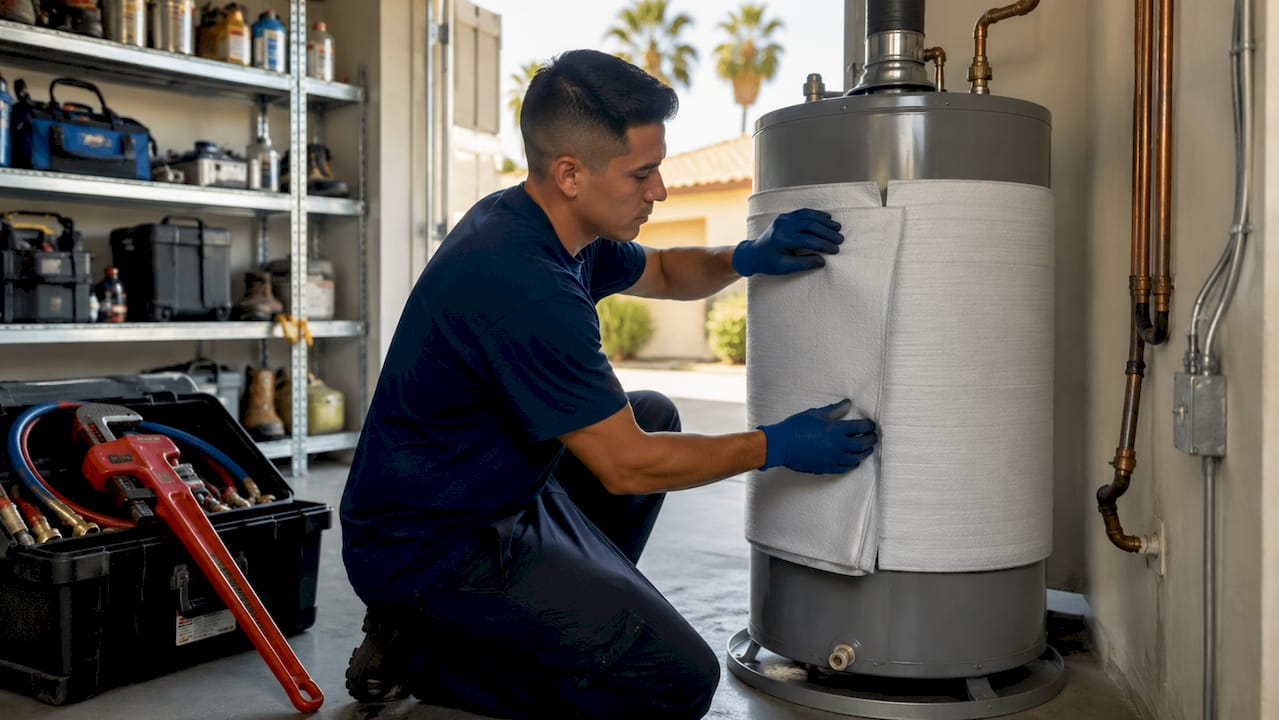
Pro Tip: Insulating your tank with a water heater blanket reduces standby heat loss and can cut energy use noticeably in older units.
2. Tankless water heaters
Tankless water heaters, also called on-demand or instantaneous heaters, heat water only when a tap opens. There is no storage tank, which eliminates standby heat loss entirely. The tradeoff is a limited flow rate, typically 2–5 gallons per minute depending on the unit and incoming water temperature. For households running multiple hot water sources simultaneously, a single unit may not keep up without careful sizing.
Key features:
- No storage tank means significant space savings
- Gas models generally deliver higher flow rates than electric models
- Installed costs range from $1,800 to $4,500+ depending on fuel type and complexity
- Lifespan often reaches 20 years with proper maintenance
- May require upgraded gas lines or electrical panels
You can review the full picture of tankless water heater benefits before committing to installation.
Pro Tip: In cold climates, size up by at least one unit tier. Cold incoming water reduces flow rate, so a unit rated for warmer regions may underperform in winter.
3. Heat pump (hybrid) water heaters
Heat pump water heaters, often called hybrid water heaters, move heat from surrounding air into the water rather than generating heat directly. This process uses dramatically less electricity than standard resistance heating. Heat pump water heaters consume roughly 29–33% of the electricity that a standard electric tank uses, which translates to annual operating costs near $255 versus $765 for a conventional electric tank.
Key features:
- Highest efficiency among all electric water heater types
- Require 700+ cubic feet of airflow and ambient temperatures between 40–90°F
- Best installed in garages, utility rooms, or unconditioned basements
- Include backup electric resistance elements for peak demand periods
- Installed costs typically fall in the $1,800–$5,500 range
The DOE rule taking effect in 2029 mandates that electric tanks over 20 gallons meet efficiency levels only achievable with heat pump technology. Buying a heat pump unit now positions you ahead of that transition.
4. Indirect water heaters
Indirect water heaters do not have their own burner or heating element. Instead, they use heat from a home’s boiler, circulating hot water or steam through a heat exchanger inside the storage tank. This makes them highly efficient in homes that already run a hydronic heating system. The boiler does the work, and the indirect tank stores the result.
These units work best in climates with long heating seasons where the boiler runs frequently. In mild climates like Los Angeles, a boiler-based system is uncommon, making indirect heaters a niche choice. Installation complexity is higher because it requires coordination between the boiler and the water heater controls. Lifespan is long, often exceeding 20 years, because there is no direct combustion inside the tank.
5. Solar water heaters
Solar water heaters use roof-mounted collectors to capture sunlight and transfer that energy to a storage tank. Active systems use pumps to circulate fluid; passive systems rely on natural convection. Both types require a backup heating source for cloudy days or high-demand periods. In sunny regions, solar water heaters can cover a substantial portion of annual hot water needs.
The upfront cost is the main barrier. Installation typically costs more than any other residential option, though federal tax credits have historically offset a portion of that expense. Homeowners in Los Angeles benefit from consistent sun exposure, which improves the return on that investment compared to cloudier regions. Maintenance involves periodic inspection of collectors, fluid levels, and pump components in active systems.
6. Point-of-use water heaters
Point-of-use water heaters are small, electric units installed directly at a single fixture, such as a bathroom sink or a kitchen tap. They do not replace a whole-home system. Instead, they eliminate the wait for hot water to travel from a distant central heater through long pipe runs. Renters and homeowners with older plumbing layouts find them practical for reducing water waste.
These units are inexpensive to purchase and simple to install under a sink or in a cabinet. They are not designed for showers or high-volume use. A point-of-use unit paired with a central tank or tankless system gives you instant hot water at remote fixtures without running a dedicated recirculation loop.
7. Electric vs gas water heaters: how do they compare?
The choice between electric and gas water heaters comes down to recovery rate, installation cost, and what your home already supports. Gas water heaters recover 30–50 gallons per hour, compared to 14–25 gallons per hour for electric tanks. That speed matters for large families who drain a tank before it can reheat.
| Feature | Electric tank | Gas tank |
|---|---|---|
| Recovery rate | 14–25 GPH | 30–50 GPH |
| Installed cost | $600–$1,200 | $800–$1,800 |
| Venting required | No | Yes |
| Safety risk | Lower | Higher (combustion) |
| Average lifespan | 10–15 years | 8–12 years |
Plumbing professionals advise prioritizing your existing fuel infrastructure when making this decision. Switching from gas to electric, or vice versa, adds significant installation cost through new gas lines, venting, or electrical panel upgrades. If your home already has a gas line at the water heater location, a gas tank or gas tankless unit is usually the most cost-effective path.
Pro Tip: Do not assume all electric water heaters are expensive to run. Heat pump models cost roughly $255 per year to operate, while standard electric resistance tanks cost closer to $765. The technology inside the unit matters as much as the fuel type.
8. Matching water heater types to your household
The best water heater for your home depends on household size, hot water demand, available space, and budget. A single-person apartment works well with a 30-gallon electric tank or a point-of-use unit. A family of five with two bathrooms needs either a large gas tank, a gas tankless unit, or an 80-gallon heat pump model.
Budget shapes the decision as much as performance. Electric tanks carry the lowest upfront cost but the highest operating cost among electric options. Heat pump units cost more to install but pay back that difference over time through lower utility bills. Reviewing a full water heater installation guide before purchasing helps you account for all costs, including venting, electrical upgrades, and permit fees.
For homeowners weighing broader home energy decisions, understanding how to choose an HVAC system alongside your water heater can reveal opportunities to coordinate fuel types and reduce overall utility costs.
Household matching at a glance:
- Renters and small households: 30–40 gallon electric tank or point-of-use unit
- Medium households (3–4 people): 50-gallon gas tank or mid-range tankless unit
- Large families (5+ people): 75–80 gallon gas tank, gas tankless, or 80-gallon heat pump
- Space-constrained homes: Tankless unit mounted on a wall
- Energy-focused buyers: Heat pump hybrid with adequate installation space
Key takeaways
The most cost-effective water heater matches your existing fuel infrastructure, household size, and available installation space rather than defaulting to the lowest upfront price.
| Point | Details |
|---|---|
| Fuel infrastructure first | Switching fuel types adds installation cost; work with what your home already has. |
| Heat pump efficiency | Heat pump water heaters use roughly 29–33% of the electricity a standard electric tank consumes. |
| Gas recovery advantage | Gas tanks recover 30–50 GPH versus 14–25 GPH for electric, benefiting large families. |
| DOE 2029 rule | Standard electric resistance tanks will be phased out for residential use; heat pump tech is the future. |
| Maintenance extends lifespan | Flushing sediment and replacing anode rods every 3–5 years adds years to any tank unit’s life. |
What I’ve learned after years of water heater installations in LA
Most homeowners walk into a water heater decision focused on the purchase price. That is the wrong starting point. The unit that costs $400 less upfront but requires a new gas line, a permit, and a venting modification ends up costing more than the alternative before the first shower runs.
The second mistake I see constantly is treating all electric water heaters as one category. A standard electric resistance tank and a heat pump water heater are fundamentally different machines. The operating cost difference between the two is significant enough that a homeowner who buys the cheaper electric tank thinking they are saving money will pay more over five years than someone who spent more upfront on a heat pump unit.
In Los Angeles specifically, heat pump water heaters perform well because our garages and utility rooms rarely drop below 40°F. That consistent ambient temperature keeps the heat pump running in its efficient mode rather than falling back on the resistance element. Homeowners in the Valley or coastal areas are in a good position to get full efficiency from these units year-round.
My consistent advice: get a licensed plumber to assess your existing infrastructure before you buy anything. The unit choice should follow the infrastructure assessment, not the other way around. Annual maintenance like flushing sediment and replacing anode rods every 3–5 years is not optional if you want a tank to reach its rated lifespan. Skipping it is the single most common reason tanks fail early.
— EZ
Water heater help from Ez-plumbing in Los Angeles
Ez-plumbing holds C-36 License #583868 and has served the greater Los Angeles area with water heater installation, repair, and troubleshooting across all fuel types and technologies. Whether you are replacing an aging gas tank, upgrading to a heat pump unit, or diagnosing a unit that stopped producing hot water, the team at Ez-plumbing works within LA municipal code requirements on every job.
If your current unit is underperforming, the water heater troubleshooting guide from Ez-plumbing walks through the most common failure points before you commit to a full replacement. For installations, repairs, or a professional assessment of which system fits your home, contact Ez-plumbing directly. Getting the right unit matched to your home’s infrastructure is what separates a good installation from one that causes problems two years later.
FAQ
What are the main types of water heaters for homes?
The main residential water heater types are storage tank, tankless, heat pump (hybrid), indirect, solar, and point-of-use units. Each differs in how it heats water, its fuel source, and the space and infrastructure it requires.
Which type of water heater is the most energy efficient?
Heat pump water heaters are the most energy-efficient electric option, consuming roughly 29–33% of the electricity a standard electric resistance tank uses. Among all fuel types, heat pump units carry the lowest annual operating cost for most households.
How do I choose between a gas and electric water heater?
Prioritize your existing home infrastructure. If a gas line already serves your water heater location, a gas unit avoids costly retrofits. If your home runs on electric, a heat pump water heater delivers the best long-term value over a standard resistance tank.
What size water heater does my household need?
A household of 1–2 people typically needs a 30–40 gallon tank. Three to four people need 50 gallons. Families of five or more should consider a 75–80 gallon tank or a properly sized tankless unit based on peak flow rate demand.
Are tankless water heaters worth the higher upfront cost?
Tankless water heaters suit space-conscious homes and households with consistent high demand, offering a lifespan that often reaches 20 years. The higher installed cost of $1,800–$4,500+ pays back over time through lower energy use and the elimination of standby heat loss.