
T&P Valve Discharge Pipe: Rules, Routing and Common Mistakes
The T&P valve discharge pipe is the line that carries hot water or steam away from your water heater’s relief valve when the tank gets too hot or the pressure climbs too high. In Los Angeles County it must be the same size as the valve outlet, run full size to its end, slope down by gravity, and finish through an air gap to a drain or outdoors, never into a water-heater pan. This guide explains each rule, shows the mistakes we see most often, and covers what it means when the pipe starts to drip.
TL;DR
- The discharge pipe must equal the valve outlet size, stay that size all the way to the end, and carry no valves, caps, plugs or threaded end.
- It must drain by gravity, with no traps or sags, through an air gap to an approved drain or to the outdoors. Los Angeles County prohibits discharge into a water-heater pan.
- Outdoors, the end points down and stops between 6 inches and 2 feet above the ground.
- A pipe that drips now and then points to thermal expansion, high pressure, or a failing valve. Do not cap it. Have a licensed plumber find the cause.
- Code details vary by jurisdiction and edition, so confirm with the local building department or a licensed plumber before you change anything.
Table of Contents
- What the discharge pipe does and why it matters
- The rules in Los Angeles County
- Size and materials
- Routing: gravity, no traps, no tees
- Where the pipe can end, and where it cannot
- Common mistakes we see in Los Angeles homes
- What it means when the pipe drips or runs
- Our perspective: treat the pipe as part of the safety system
- When to call a licensed plumber
- Frequently asked questions
- Sources
What the discharge pipe does and why it matters
Every tank-type water heater has a temperature and pressure (T&P) relief valve, usually threaded into the side or top of the tank. It is the last safety device. If the thermostat fails or pressure builds beyond what the tank can handle, the valve opens and lets water out so the tank does not rupture.
The valve is only half of the safety system. The water that leaves it can be scalding, and it needs somewhere safe to go. That is the job of the discharge pipe, sometimes called the relief valve drain, the TPR drain line, or the overflow pipe. A valve with no pipe, or a pipe that is blocked, undersized or capped, can turn a safety device into a hazard.
This is also why the pipe is a regular item in water heater inspections. If you are replacing a heater, selling a home or going through a permit, the inspector will look at the pipe’s size, material, slope and termination. Our guide to passing Los Angeles water heater inspections covers the wider checklist, and our pressure relief valve guide covers the valve itself.
The rules in Los Angeles County
Plumbing codes in California are adopted and amended locally, so the exact text depends on where your property sits. For unincorporated Los Angeles County, the requirements live in the county plumbing code’s section on relief valve discharge piping. The City of Los Angeles has its own code and amendments, and a city plan-check list from 2011 shows the same basic expectation: relief valves must discharge to an approved location, and inside a building that means a floor drain, floor sink or similar fixture. That document is old, so treat it as a sign of the long-standing intent and check the current city requirements for your permit.
Here is how the county rules break down.
| Requirement | What the code says |
|---|---|
| Size | Equal to the valve outlet, full size to the end |
| Fittings in the line | No valves, obstructions or means of isolation |
| End of pipe | Not threaded |
| Flow | By gravity, with no trap anywhere in the pipe |
| Termination | Through an air gap to the drainage system or outside |
| Outdoor height | Pointing down, 6 inches to 2 feet above ground |
| Water-heater pan | Discharge into the pan is prohibited |
| Freezing | Not installed where the pipe is subject to freezing |
All of these points come from the county code section linked above. The sections below explain what each one means on a real job.
Size and materials
The pipe must be the same size as the valve outlet and must discharge at full size. Most residential valves have a three-quarter inch outlet, so the pipe is typically three-quarter inch as well, but check the valve rather than assuming. The common mistake is a reducer or a smaller flexible line added to make a tight run easier. Any reduction restricts flow at the moment the valve most needs to pass water or steam freely.
The county requires material rated for at least the system’s operating temperature and approved for the use. The county public works department’s FAQ on relief valve drains says galvanized steel, hard-drawn copper, or listed tubing and fittings are acceptable as long as they do not reduce the bore. In practice, that is why we install copper on most replacements. Pipe that is not rated for hot water, such as ordinary PVC drain pipe, does not belong on this line. The residential-code formulation published by UpCodes also points to materials listed for water piping or tested and approved under ASME A112.4.1.
Three things must never be on the discharge pipe:
A valve or shutoff of any kind, because someone could close it and defeat the relief valve.
A cap, plug or threaded end, because a threaded end invites someone to screw on a cap to stop a drip.
A connection to another relief device or piece of equipment. The residential-code language calls for the pipe to serve one relief device only, so the water heater’s line should not be tied into a boiler relief line or other drain.
Routing: gravity, no traps, no tees
The pipe must drain by gravity. That means it starts at the valve and falls continuously down to the termination. Horizontal runs need a steady downward pitch, and there can be no low point where water can sit.
Traps and sags matter more than most owners expect. According to the ICC’s water heater safety guidance, a trapped or sagging line can hold water, encourage scale or corrosion, freeze, and eventually block the discharge. The Los Angeles County code prohibits trapping any part of the pipe. The residential-code formulation also prohibits tee fittings in the line.
Other routing points we check on every job:
- Supports. A long copper run should be supported so it does not sag over time. A sag is a trap.
- Direction at the end. The last section points down so water leaves cleanly and does not spray sideways.
- Where it goes. The termination should avoid injury and structural damage. Think about who might be standing near the end of the pipe, and what is under it.
- Visibility. ICC explains that the termination should be readily observable, so occupants notice if the valve has discharged. A pipe that ends behind a wall or under a slab hides a problem until it becomes a repair.
Where the pipe can end, and where it cannot
Outdoors
In Los Angeles County, a relief valve drain inside a building must extend outside in many installations, ending no more than 2 feet and no less than 6 inches above the ground or the flood level of the receiving area, pointing downward, per the county public works FAQ and the plumbing code. Outdoors is the most common answer for garage and closet installations on the ground floor of single-family homes and small buildings.
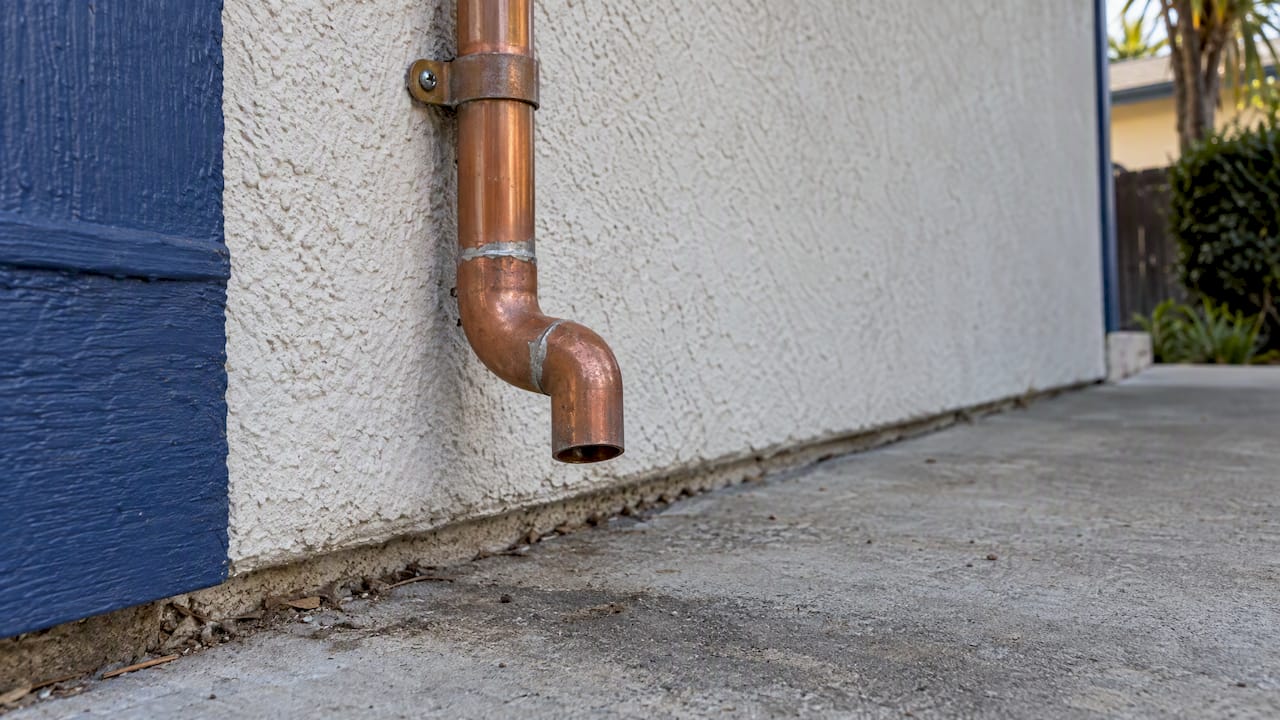
A few practical notes. Keep the end clear of plants, mulch and stored items that could block it or hide a discharge. Do not point it at a walkway or door. Check that it does not run toward the building foundation. And pay attention to rodents and insects: a loose screen or cap on the end is not allowed, but the outlet should be left open and unobstructed.
Into a drain through an air gap
The county allows discharge through an air gap into the drainage system. The air gap is a physical open space between the end of the pipe and the drain, so waste water can never be drawn back into the heater’s potable water supply. The ICC notes that the air-gap rule protects against a direct drainage connection, and the residential-code formulation says the pipe must not be directly connected to the drainage system and the air gap should be in the same room as the heater. In that formulation the end sits no more than 6 inches above the floor or the flood-level rim of the receptor and no less than twice the pipe diameter above it. For a three-quarter inch pipe, that is at least an inch and a half. Where the county’s stricter outdoor range applies, follow the county.
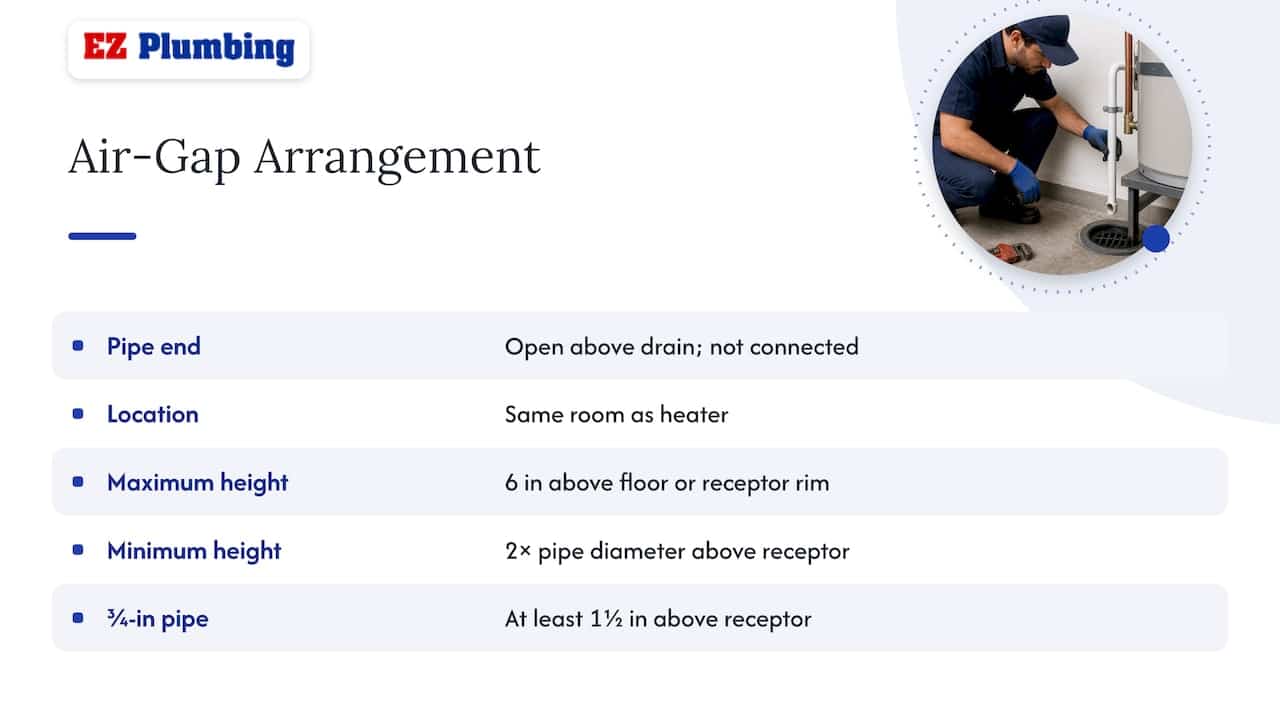
A floor drain, a floor sink or a similar fixture is the usual approved receptor. In apartment buildings, a floor drain in a mechanical or water-heater room is the typical solution.
Where it cannot end
The list of prohibited terminations is short and worth remembering.
A water-heater pan. Many online answers say a pan is fine, because the residential-code formulation permits discharge to the floor, a pan, a waste receptor or outdoors. Los Angeles County is stricter and prohibits discharge into a water-heater pan. If you read a forum answer that says otherwise, it may reflect a different jurisdiction.
A sink, tub, shower or laundry tray. ICC identifies shower floors, laundry trays, kitchen sinks and bathtubs as unsuitable, because hot water or steam could injure a person using them. There is also a sanitary reason: a relief line that ends in or connects to a drain or sink without an air gap can link potable water with the sewer.
A direct connection to a drain line. Even a neat, solid connection to a standpipe or waste line removes the air gap. It might look tidy, but it fails inspection.
Anywhere the pipe can freeze. Freezing is rare in much of Los Angeles but not unheard of in the foothills and higher-elevation areas, and the county code still prohibits installation where the pipe is subject to freezing.
Common mistakes we see in Los Angeles homes
Los Angeles has a wide mix of housing eras, from 1920s bungalows to postwar apartments to recent infill. Water heaters have often been replaced several times, and each replacement can leave behind its own discharge-pipe shortcuts.
The most common problems are these:
- A discharge pipe reduced to a half inch to squeeze past a framing member.
- A rubber or plastic hose clamped to the valve outlet instead of rigid pipe.
- A capped or plugged end, installed by someone tired of a drip.
- A line that ends in the water-heater pan, which the county prohibits.
- A line that stops short, only a few inches past the valve, with no route to a drain or outdoors.
- Horizontal runs with no pitch, or with a sag that makes a trap.
- A line taped or tied into a condensate or expansion line.
Most of these are quick fixes when found early. Several of them also appear at the time of a sale, when a buyer’s home inspector flags the heater. The county’s FAQ itself was written in response to this exact situation, so it is worth bringing to the conversation.
What it means when the pipe drips or runs
Water coming out of the discharge pipe is a symptom, not a fault on its own. The valve is doing something, or it is failing. A few causes account for most cases.
Thermal expansion. Heating water makes it expand. In a closed plumbing system, such as one with a pressure regulator or check valve at the meter, that extra volume has nowhere to go, so pressure rises each time the heater cycles. A small drip after a heating cycle often points here. An expansion tank is the usual fix, and our article on expansion tank requirements in Los Angeles explains when one is required.
High supply pressure. If street pressure is high or the regulator has failed, the valve may open even without much heating. A plumber can test pressure with a gauge at a hose bib.
Thermostat or element trouble. If the heater overheats, the valve can open on temperature. Steam, a hissing sound, or very hot water at the pipe’s end calls for immediate action: turn off the heater’s gas or power and call a plumber.
A worn valve. Mineral deposits and age can keep the valve seat from sealing, which causes a constant slow drip even when pressure and temperature are normal. The valve is inexpensive compared with the heater, but replacing it should be done properly, with the right temperature and pressure rating for the tank.
What to do, in order:
- Note when the drip happens: after showers, overnight, or constantly.
- Look at the pipe’s end, and keep people and pets away if the water is hot.
- Never cap, plug or shut off the discharge pipe, and do not tighten anything on the valve to stop it.
- If you see steam, hear rumbling, or the water is scalding, shut off the gas or power to the heater and call a licensed plumber right away.
- For a steady drip, schedule a diagnosis. The cause might be an expansion tank, a pressure regulator or the valve itself, and replacing only the valve will not solve the first two.
We do not recommend that owners test the valve by lifting the lever unless a plumber has shown them how. If the valve does not reseat, it will keep leaking.
Our perspective: treat the pipe as part of the safety system
We have worked on Los Angeles water heaters since 1989, and the discharge pipe is the part most often treated as an afterthought. On a replacement, a new heater goes in and the old, rusted or improvised relief line is reconnected because it “already works.” Then the inspector or the next owner finds it.
Our approach is simple. We replace the discharge pipe whenever we install a heater, size it to the valve outlet, route it so it falls without any low point, and finish it where the local code says it should end. We document the job so the permit record shows what was done. Our team is local, so we know the building types in Los Angeles and where a pipe can realistically be routed in an older garage, a tight closet or a multifamily utility room.
We also look at the cause, not just the pipe. A dripping discharge line usually has a reason, and replacing the valve without finding it means a repeat call. If you manage several buildings, the pipe is worth a look on every water heater you own, at least once.
— EZ
When to call a licensed plumber
Some owners ask whether this is a DIY job. Swapping a section of pipe sounds easy, but the work involves a pressure-bearing valve, hot water, gas or electric power, and a code requirement that affects permits and insurance. If the line needs rerouting to the outdoors, through a wall or to a floor drain, it is not a casual task.
Call a licensed plumber if the pipe runs constantly, if you see steam or scalding water, if the termination is a pan, sink or tub, or if you are preparing a property for sale or inspection. We handle this as part of water heater repair and water heater installation, with up-front written pricing. Our published hourly rates for plumbing work are on our rate calculator page: $150–$280 per hour for residential work and $120–$240 per hour for commercial work. For an urgent discharge, our emergency plumbing team is available 24/7.
Property managers and HOAs can also ask us about commercial maintenance contracts, which can include checking relief valves and discharge piping across a portfolio of water heaters.
Frequently asked questions
Can a T&P discharge pipe go into the water heater pan?
Not in Los Angeles County. The residential-code formulation published by UpCodes permits a pan as one option, but the county code is stricter and prohibits discharge into a water-heater pan. Use an air gap over an approved drain, or extend the pipe outdoors.
What size should the pipe be?
It must be the same size as the relief valve outlet and stay that size to the end. Most residential valves have a three-quarter inch outlet. No reducers, valves or threaded ends are allowed.
Can I use PVC for a relief valve discharge pipe?
Only if the material is rated for at least the system’s operating temperature and approved for this use. The county public works FAQ lists galvanized steel, hard-drawn copper or listed tubing and fittings. Ordinary PVC drain pipe is not rated for hot water, so it is not what we install.
How high above the ground should the pipe end?
Outdoors in Los Angeles County, the end points downward and sits between 6 inches and 2 feet above the ground. Where the pipe ends indoors over a floor drain or receptor, follow the air-gap rule for that fixture and your local building department.
Is it normal for the pipe to drip sometimes?
A small drip after a heating cycle often means thermal expansion, which a plumber can confirm and correct. A constant drip, hissing, or steam is not normal and points to pressure, temperature or valve trouble. Never cap the pipe, and call a licensed plumber.
Sources
- Los Angeles County plumbing code, relief valve discharge piping
- Los Angeles County Public Works FAQ on water heater relief valve drains
- City of Los Angeles plumbing and mechanical plan check list
- ICC: Water Heater Safety in the I-Codes
- UpCodes: Requirements for Discharge Piping