
Top Pipe Materials for Repiping: What Homeowners Should Pick
For most U.S. residential repipes, PEX is the best overall material. It installs faster than any rigid alternative, tolerates freeze cycles better than copper, and typically yields lower total installed cost in high-labor markets like Los Angeles. Copper Type L remains the right call for visible exterior runs, high-end resale properties, and any situation where code or a buyer’s inspector expects metal. CPVC and PVC serve narrower roles, and galvanized steel is almost always the pipe you’re replacing, not installing.
Quick picks by priority:
- Lowest total cost: PEX-A or PEX-B for whole-house supply repipes
- Longest proven track record / high-end resale: Copper Type L
- Drain, waste, and vent (DWV) lines: PVC
- Budget rigid supply where code allows: CPVC
- Legacy replacement target: Galvanized steel (replace, do not reuse)
One caveat worth knowing before you finalize a material: local water chemistry and municipal code can override the default. Homes on aggressive low-pH water or in areas with high chloramine levels may need a different copper strategy, and some California jurisdictions have specific restrictions on CPVC or require Type L copper for interior supply work.
Table of Contents
- How the top pipe materials for repiping compare side by side
- Material profiles: what you need to know about each pipe type
- How to choose the right pipe material for your home
- Realistic costs and timeline for a whole-house repipe
- Permits, water quality, and connection compatibility
- Why a licensed plumber makes a real difference on a repipe
- Key Takeaways
- What licensed plumbers actually see on repipe jobs
- Ez-plumbing handles the full repipe process in greater Los Angeles
- Useful sources for homeowners doing deeper research
How the top pipe materials for repiping compare side by side
The table below covers the materials you will actually encounter in a residential repipe conversation. Stainless steel and HDPE appear as specialty entries because they rarely come up in standard whole-house supply work.
| Material | Best for | Relative installed cost | Expected lifespan | Corrosion resistance | Hot water / boilers | Freeze resistance | Repairability | Code acceptance |
|---|---|---|---|---|---|---|---|---|
| PEX-A | Retrofit, finished homes, freeze-prone climates | Low (typically at the bottom end of the $4,500–$15,000 whole-house repipe range) | 50 years | Excellent (no metallic corrosion) | Yes, up to 200°F | Excellent | Easy; wide fittings availability | Accepted in all 50 states |
| PEX-B | New construction, open walls, cost-sensitive projects | Low (typically at the bottom end of the $4,500–$15,000 whole-house repipe range) | 50 years | Excellent | Yes | Very good | Easy | Accepted in all 50 states |
| Copper (Type L) | Visible runs, exterior risers, high-end resale | High (typically at the top end of the $4,500–$15,000 whole-house repipe range) | 50+ years | Good (vulnerable to aggressive water) | Yes, excellent | Poor (rigid; can crack) | Moderate; soldering required | Universal |
| CPVC | Budget rigid supply where local code allows | Medium | — | Good (no metallic corrosion) | Yes, up to 200°F | Poor (brittle when cold) | Moderate; solvent joints | Permitted in most states; declining use |
| PVC | DWV systems only | Low | — | Excellent | No (not for hot supply) | Poor | Easy | Universal for DWV |
| Galvanized steel | Replacement target only | N/A (not installed new) | 20–50 years (degrades) | Poor (internal rust) | Yes (legacy) | Fair | Difficult; corrosion at threads | Not used for new installs |
| Stainless steel | Corrosive-environment or exposed specialty runs | Very high | 50+ years | Excellent | Yes | Good | Difficult; specialty fittings | Limited; specialty use |
| HDPE | Underground exterior runs, fused pressure systems | Medium-high | 50+ years | Excellent | Limited | Excellent | Difficult; requires fusion tools | Specialty/commercial use |
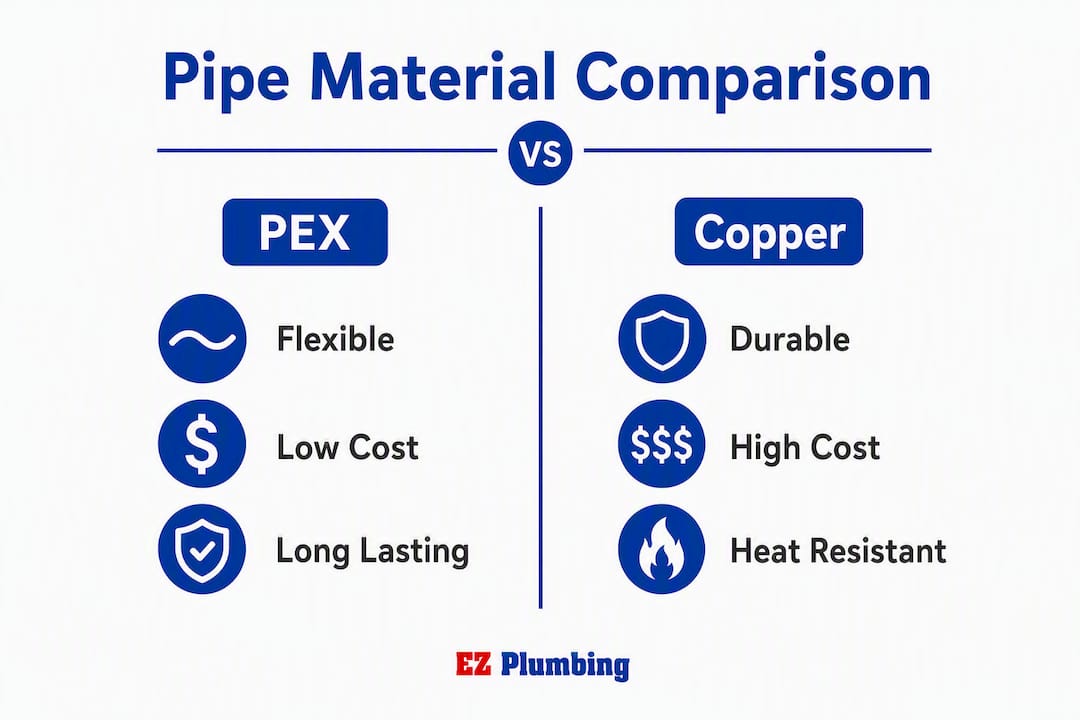
PEX-A is the default pick for most homes. The one exception to watch: if your water supply tests low in pH or high in chloramines, obtain a water-chemistry report before committing to copper.
Material profiles: what you need to know about each pipe type
PEX pipes (cross-linked polyethylene)
PEX is the dominant modern choice for whole-house repipes in North American markets, and the reason comes down to labor. In a city like Los Angeles, where plumber labor rates are high, the flexibility of PEX means fewer access cuts, fewer fittings, and significantly faster rough-in time compared with rigid systems.
PEX-A vs. PEX-B: PEX-A is made using the peroxide method, which produces a higher cross-link density and greater flexibility. Its cold-expansion fittings create joints that are often stronger than the pipe itself, which reduces leak risk and gives it documented freeze-burst tolerance. PEX-B uses crimp or clamp fittings, costs slightly less per foot, and is perfectly adequate for new construction with open walls. For retrofit work in a finished home, PEX-A’s superior flexibility is worth the small premium.
Pros: No metallic corrosion, freeze-tolerant, fast install, compatible with manifold systems that minimize joint count.
Cons: Degrades under UV exposure (must be protected outdoors), not rated for outdoor above-ground runs without sheathing, and some older fittings brands have had recall histories.
Pro Tip: Run continuous PEX lines from a central manifold to each fixture rather than branching with tees. Fewer joints means fewer potential leak points, and the manifold makes future shutoffs simple without disturbing the whole system.
Typical installed cost for a whole-house PEX repipe varies depending on home size, access, and local labor rates, with PEX generally at the lower end of the cost spectrum.
Copper pipes (Type L)
Copper Type L has a proven long lifespan and remains the standard for residential potable supply per the Copper Development Association. It performs exceptionally under high temperatures, handles boiler connections without concern, and carries strong resale perception with home inspectors and buyers.
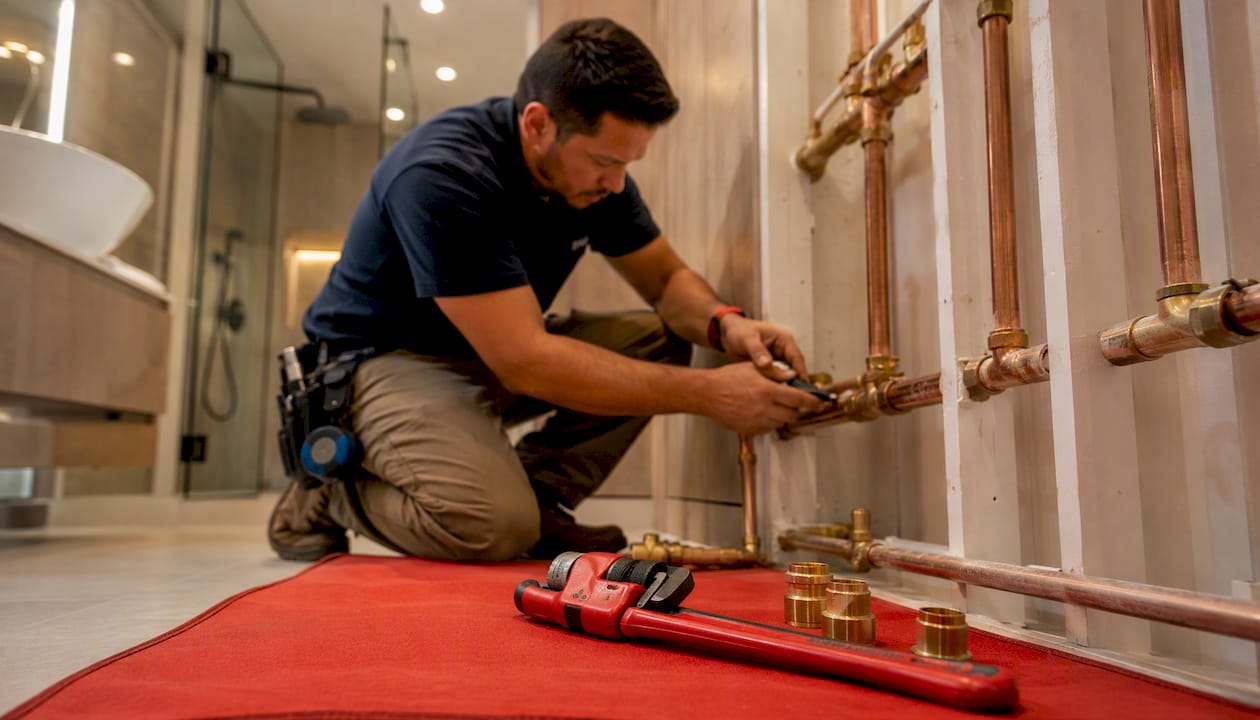
Type L vs. Type M: Type L has thicker walls and is the residential standard for interior supply. Type M is thinner and is restricted or not accepted for new interior supply work in some California jurisdictions. When in doubt, specify Type L.
Pros: Proven longevity, excellent high-temperature performance, strong resale value, universally code-accepted.
Cons: Installed cost runs 30–50% higher than PEX for the same home, soldered joints require more labor hours, and copper is vulnerable to pinhole leaks in homes with aggressive water chemistry.
The water-chemistry caveat deserves attention. Low-pH water and high chloramine concentrations accelerate copper corrosion and can produce pinhole leaks within years of a new install. A water-chemistry test before selecting copper is a low-cost diagnostic that can prevent expensive callbacks.
CPVC pipes (chlorinated polyvinyl chloride)
CPVC uses solvent-welded joints and handles hot water up to 200°F, making it technically suitable for supply repipes. Its material cost is lower than copper, and it carries no metallic corrosion risk. That said, CPVC’s market share is declining as PEX has taken over most of its use cases.
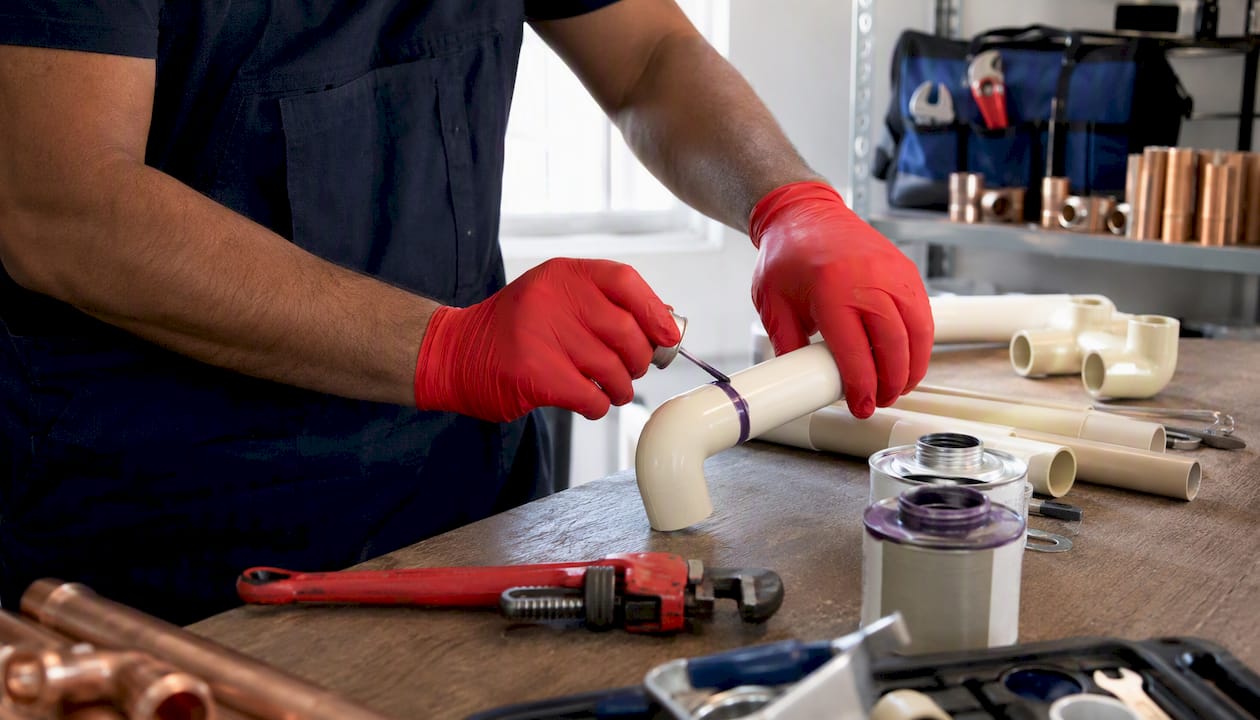
Pros: Lower material cost than copper, no internal corrosion, hot-water rated.
Cons: Brittle with age and in cold temperatures, solvent joints can fail if incompatible primers or sealants are used, and some formulations show sensitivity to chloramine-treated water over time. Not a good choice for freeze-prone climates.
CPVC remains a valid option where local code requires rigid pipe and budget is the primary constraint. For most Los Angeles homeowners, PEX is the more practical alternative.
PVC pipes (polyvinyl chloride)
PVC is not a supply pipe for hot water. Its role in a residential repipe is drain, waste, and vent (DWV) systems, where it excels: low cost, easy to cut and glue, and corrosion-proof. If your repipe includes replacing cast-iron or clay drain lines, PVC is the standard modern replacement material.
Pros: Very low cost, easy installation, excellent for DWV.
Cons: Not pressure-rated for hot supply, degrades under UV, and can warp under sustained heat.
Galvanized steel pipes
Galvanized steel was the standard supply pipe in homes built from roughly the 1900s through the 1960s. If you find it in your home, the conversation is about replacement, not reuse. Internal corrosion builds up over decades, restricting flow and eventually causing leaks at threaded joints. Rusty or discolored water and chronically low pressure in older homes are the clearest signs that galvanized supply lines have reached the end of their service life.
A correctly scoped repipe on a home with galvanized supply can increase resale value and remove insurance surcharges that some carriers attach to homes with known problem piping.
Stainless steel and HDPE pipes
Both materials appear in specialty contexts rather than standard residential repipes. Stainless steel offers exceptional corrosion resistance for exposed or corrosive-environment runs, but specialty fittings and high material cost make it impractical for whole-house supply work. HDPE uses heat-fused joints that create a continuous, low-leak system and performs well in underground exterior pressure runs, but the fusion equipment and skill required put it outside typical residential repipe scope. Neither is a realistic default for a Los Angeles homeowner replacing supply lines.
Note on polybutylene: If your home has gray polybutylene pipe, treat it as an automatic replacement target. Chlorine degradation and a history of systemic failures make it universally unsuitable for new installs, and most jurisdictions will not accept it for new work.
How to choose the right pipe material for your home
The decision is rarely just about the pipe itself. Work through these questions before your first contractor call.
- What is your primary constraint? Budget-first projects almost always land on PEX. Resale value or buyer-inspection concerns push toward copper. Code requirements in your municipality may narrow the field further.
- How old is your home and what pipe is currently installed? Homes built before 1970 likely have galvanized steel or copper. Homes from the 1980s–1990s may have polybutylene, which needs full replacement. The existing material affects how a plumber routes new lines and whether partial replacement is viable.
- How much disruption can you tolerate? PEX’s flexibility means fewer wall and ceiling cuts in a finished home. Copper and CPVC require more access points for rigid runs.
- Have you tested your water chemistry? A pH and chloramine test costs very little and can determine whether copper is a safe long-term choice for your specific water supply.
- What is your climate and freeze risk? Los Angeles homeowners rarely face freeze events, but properties in higher-elevation areas or with exposed exterior runs should factor in PEX-A’s freeze tolerance.
- How long do you plan to own the property? Long-term owners benefit most from copper’s lifespan. Owners planning to sell within five to ten years often find PEX’s lower cost and clean inspection report sufficient.
- What are your resale expectations? High-end buyers and their inspectors sometimes prefer copper. For most mid-market homes, a clean PEX repipe with permits and pressure-test documentation is fully acceptable.
Questions to ask your plumber during the estimate:
- Will you pull the required permits, and can you show me permit history on prior jobs?
- What pipe brand and fitting system will you use, and are they NSF/ANSI certified?
- How will you pressure-test the system before closing walls?
- What warranty do you provide on labor and materials?
- How do you handle wall and ceiling restoration after the rough-in?
Red flags that suggest a full repipe may not be necessary: a single isolated leak in otherwise sound pipe, a home under 20 years old with no systemic corrosion, or a situation where a camera inspection confirms only one failed section. Conversely, slab leaks with multiple failure points or a full cast-iron sewer collapse typically require a specialty approach beyond a standard supply repipe. For those situations, see Ez-plumbing’s sewer line repair services for what that scope of work involves.
Realistic costs and timeline for a whole-house repipe
A whole-house repipe runs between $4,500 and $15,000 for most U.S. residential properties, with the final number driven by four factors: material choice, home size and layout, access difficulty, and local labor rates.
Labor is the largest single cost driver in high-wage markets. PEX’s flexibility reduces joint count and install hours, which is why it consistently comes in at the lower end of the cost range even when material prices are similar.
Example: ~2,000 sq ft whole-house repipe
| Material | Estimated installed cost | Typical project timeline |
|---|---|---|
| PEX (PEX-A or PEX-B) typically costs less and installs faster than rigid pipes, often completing rough-in and test phases in a few days. | ||
| Copper (Type L) typically costs more and takes longer to install than PEX, with rough-in and test phases requiring several days. | ||
| CPVC pricing generally falls between PEX and copper, with installation timelines similar to PEX in many cases. |
Major cost drivers:
- Material (copper commands the highest premium per linear foot)
- Labor hours (rigid systems require more cuts, fittings, and soldering time)
- Access difficulty (finished walls, slab penetrations, and multi-story layouts add cost)
- Wall and ceiling restoration after rough-in (often a separate drywall contractor)
- Permit fees and inspection scheduling (vary by municipality)
Most repipes in a standard two-story home are complete within three to five business days from permit approval to final inspection. Delays typically come from permit processing times, inspection scheduling backlogs, or discovering additional issues (corroded shutoffs, failing fixtures) once walls are opened.
A repipe on a home with known problem piping can also improve resale value and remove insurance surcharges tied to galvanized or polybutylene systems, which adds a financial dimension beyond the repair itself.
Permits, water quality, and connection compatibility
Permits and code compliance
Every whole-house repipe in Los Angeles requires a permit. The permit process covers material approval, rough-in inspection, and final pressure-test sign-off. Skipping permits creates liability at resale and voids most manufacturer warranties. Common code considerations in California:
- Type L copper is required for interior potable supply in many jurisdictions; Type M may not be accepted
- PEX must carry NSF/ANSI 61 certification for potable water contact
- CPVC requires compatible primer and cement; some formulations are restricted under certain local amendments
- All penetrations through fire-rated assemblies require approved firestop materials
Water chemistry and material compatibility
Los Angeles water is treated with chloramines rather than free chlorine, which affects material selection. Chloramine-treated water is generally compatible with PEX and CPVC, but it can accelerate corrosion in copper systems where pH is also low. Before specifying copper for a full repipe, request a water-quality report from LADWP or have an independent test run. The EPA’s Lead and Copper Rule also governs acceptable lead content in fittings and solder, so confirm that all fittings used are lead-free certified.
Connection compatibility
Mixing metals without dielectric unions causes galvanic corrosion at the joint. When transitioning from copper to PEX or from galvanized to any new material, the correct transition fitting is not optional. For water heater connections, both PEX and copper connect reliably to standard tank and tankless units, but PEX requires a short copper or CPVC stub-out near the water heater to keep the flexible tubing away from radiant heat. Check the water heater installation guide for compatibility specifics before finalizing your pipe choice.
Pro Tip: PEX degrades under direct UV exposure. Any above-ground exterior run must be sheathed or insulated. In Los Angeles, this applies to exposed runs in garages, under eaves, or along exterior walls where sunlight reaches the pipe.
For a broader overview of how different pipe types interact with fixtures and shutoffs, the homeowner’s guide to plumbing pipe types covers compatibility in plain language.
Why a licensed plumber makes a real difference on a repipe
A whole-house repipe is not a project where cutting corners on the contractor pays off. The difference between a licensed professional and an unlicensed handyman shows up in permit documentation, pressure testing, and what happens when something fails two years later.
Here is what a reputable licensed contractor actually delivers on a whole-house repipe:
- Permit application and coordination with the local building department
- Proper pipe sizing based on fixture count and pressure requirements
- Pressure testing to a specified PSI before walls are closed
- Dielectric unions and correct transition fittings at material changes
- NSF/ANSI certified pipe and fittings throughout
- Written warranty on labor and materials
- Final inspection sign-off and documentation for your records
A licensed C-36 plumbing contractor carries the state-issued credential that authorizes them to pull permits, perform pressure tests, and certify the work to code. For homeowners, that credential is the difference between a repipe that closes escrow and one that creates a disclosure problem at resale. Ez-plumbing holds C-36 License #583868 and has served the greater Los Angeles area since 1989, handling permit coordination, pressure testing, and full system documentation on every repipe project.
When comparing bids, look past the bottom-line number. A bid that omits permit fees, uses undersized pipe, or skips pressure testing is not a bargain. Ask each contractor for their license number, proof of prior permit pulls, and a written scope that specifies the pipe brand, fitting system, and warranty terms. The contractor vetting checklist on Ez-plumbing’s site covers exactly what to verify before signing.
For homeowners in Pasadena, West Hills, Granada Hills, Silver Lake, and surrounding Los Angeles neighborhoods, Ez-plumbing’s repipe services page lists service areas and what to expect from the estimate process.
Key Takeaways
PEX is the best default material for most residential repipes, with copper reserved for high-end or exterior applications and PVC limited to drain and waste lines.
| Point | Details |
|---|---|
| PEX is the default pick | PEX-A or PEX-B suits most whole-house repipes, with lower installed cost and faster labor than copper. |
| Copper for specific cases | Use Type L copper for exterior risers, visible runs, and high-end resale properties where buyers expect metal. |
| Cost range: $4,500–$15,000 | Whole-house repipe costs depend on material, home size, access difficulty, and local labor rates, with PEX typically at the bottom end of the range and copper at the top. |
| Water chemistry matters | Test pH and chloramine levels before choosing copper; aggressive water accelerates pinhole corrosion. |
| Ez-plumbing for LA repipes | Ez-plumbing (C-36 License #583868) handles permits, pressure testing, and full documentation across greater Los Angeles. |
What licensed plumbers actually see on repipe jobs
The conventional wisdom says “just pick PEX and move on,” and for most homes that is correct. But the jobs that go sideways usually share one trait: the material decision was made before anyone looked at what was already in the walls.
Homes in older Los Angeles neighborhoods often have a mix of galvanized supply, copper branch lines, and original cast-iron drain stacks. A repipe that addresses only the supply lines while leaving corroded galvanized stubs at fixture connections is going to generate callbacks. The material choice matters less than a complete scope.
A few practical points worth keeping in mind:
- Prefer continuous PEX runs from a central manifold where possible; fewer joints mean fewer future leak points
- Insist on NSF/ANSI certified pipe and fittings regardless of material; it is the minimum standard for potable water contact
- Schedule the most disruptive rooms (kitchen, primary bath) first so the household can function during the project
- Avoid any bid that does not include permit work; unpermitted repipes create real problems at resale and with insurance carriers
- Low bids that use undersized pipe (3/8" where 1/2" is required, or 1/2" where 3/4" is needed at mains) will cost more to fix than the savings are worth
The one caution worth repeating: a repipe bid that comes in significantly below the others almost always reflects something missing from the scope. Permits, pressure testing, and correct pipe sizing are not optional line items.
Ez-plumbing handles the full repipe process in greater Los Angeles
Choosing the right pipe material is only half the decision. The other half is finding a contractor who pulls the permits, uses certified materials, and backs the work with a written warranty.
Ez-plumbing is a licensed plumbing company (C-36 License #583868) that has served the greater Los Angeles area since 1989. On every whole-house repipe, the team handles permit coordination with the local building department, complete supply line replacement using NSF/ANSI certified PEX or copper, pressure testing before walls are closed, water heater reconnection, and final inspection documentation. If your project also involves a water heater upgrade, the water heater installation services page covers what that scope includes.
Ready to get a clear estimate for your repipe? Contact Ez-plumbing to schedule an on-site assessment and receive a written bid that specifies materials, permit handling, and warranty terms. Reach the team through the repipe services page or call directly for same-week scheduling across Los Angeles, Pasadena, West Hills, Granada Hills, Silver Lake, and surrounding neighborhoods.
Useful sources for homeowners doing deeper research
These are the primary references behind the material comparisons and cost figures in this article.
- EPA Lead and Copper Rule: The federal standard governing lead content in plumbing materials and solder; essential reading for anyone specifying fittings for potable water systems.
- Whole-Home Repipe: The Complete Guide (Alert Plumber): Detailed contractor-level guide covering PEX-A vs PEX-B, copper trade-offs, and install methodology; one of the more thorough public resources on repipe scope.
- Whole-House Repipe Cost and Process (PermitDeck): Cost range data and permit process overview for U.S. homeowners; useful for budgeting and understanding what permit fees cover.
- PEX vs Copper vs PPR: Material Decision Matrix (IFANpro): Technical comparison of material properties and labor economics; good reference for understanding why labor cost drives the PEX vs copper decision.
- Whole-House Repiping (Bonded Plumbworks): Contractor perspective on water chemistry, resale value impact, and when a full repipe is warranted versus spot repair.
- Types of Plumbing Pipes: A Homeowner’s Practical Guide (NEIT): Plain-language overview of pipe materials including PVC, HDPE, and stainless steel for readers who want a broader material reference.
- What Is Repiping? A Homeowner’s Complete Guide (Ez-plumbing): Covers signs you need a repipe, permit basics, and contractor vetting criteria specific to the Los Angeles market.
- Pipe Relining vs Replacement: Cost Trade-offs (Priority Plus Plumbing): International perspective on pipe relining as an alternative to full replacement; useful context for homeowners weighing partial rehabilitation against a full repipe.