
Toilet Keeps Clogging? Plunge for 20–30 Seconds Before Escalating
If your toilet keeps clogging, the cause is almost always too much paper or non-flushable material, a weak flush from low tank water or blocked rim jets, or a narrowing trapway. Start with a flange plunger and give it a real try before reaching for anything else. Stop flushing the moment the bowl rises near the rim, and if other drains gurgle when you flush, you may be dealing with a shared-line problem rather than a simple clog.
TL;DR:
- Use a flange plunger, seal the drain, push gently to expel air, then pull firmly for 20 to 30 seconds to dislodge the clog.
- Half a cup of dish soap and a gallon of hot, never boiling, water may loosen soft clogs; wait 15 minutes before testing.
- If multiple fixtures gurgle, drain slowly, or back up together, suspect a branch line, main sewer restriction, or vent problem and call a licensed plumber.
- When a toilet clogs again within days of plunging or augering, request a camera inspection for roots, pipe damage, or buildup.
- Wipes labeled flushable still do not break down like toilet paper, so put them in the trash rather than flushing them.
Table of Contents
- Common causes of repeat toilet clogs
- Step-by-step fixes to try now
- Is it a single toilet or a whole-house drain issue?
- When to call a licensed plumber
- Prevention and maintenance to reduce repeat clogs
- What a licensed plumber checks that DIY tools miss
- Recurring clogs often point to a bigger repair
- How we can help with recurring toilet clogs
- FAQ
- Sources
Common causes of repeat toilet clogs
Most recurring clogs trace back to one of a handful of culprits, and figuring out which one applies to your toilet saves you from repeating fixes that were never going to work.
Flushing anything beyond human waste and toilet paper is the leading cause. The EPA’s septic care guidance lists wipes, paper towels, feminine-hygiene products, dental floss, diapers, and cat litter as items that should never go down a toilet, since a septic or sewer system is not built to break them down. Even toilets connected to municipal sewer lines clog on the same materials.
A weak flush can look exactly like a clog even when nothing is actually stuck. Low water in the tank, a misaligned refill tube, or mineral deposits clogging the rim jets all reduce the siphoning action that pulls waste through the trapway, according to American Standard’s troubleshooting guidance. Older low-flow models are especially prone to this.
Other common causes include:
- A narrowing trapway caused by gradual mineral buildup from hard water.
- A partial obstruction lodged in the bowl or trap that never fully clears.
- A blocked or undersized vent pipe that slows drainage and traps air, which can mimic a clog.
- A sewer-line restriction that affects more than one fixture at once.
Step-by-step fixes to try now
Work through these steps in order. Each one escalates only after the previous step fails, which keeps you from damaging the toilet or pushing a clog deeper.
- Stop and assess. If the bowl is nearly full, do not flush again. Close the shutoff valve behind the toilet if you’re worried about overflow, and put on gloves since you’ll likely be working near the bowl.
- Plunge properly. Use a flange (also called a beehive) plunger rather than a flat sink plunger. This Old House recommends forming a full seal over the drain opening, pushing in gently first to expel trapped air, then using firm, controlled pull strokes for about 20 to 30 seconds. The pull stroke matters more than the push, since it’s what actually dislodges the clog instead of compacting it further into the trapway.
- Try a home remedy for soft clogs. Pour about half a cup of dish soap into the bowl, followed by roughly a gallon of hot (never boiling) water, then wait 15 minutes before testing. This Old House notes this can loosen a soft paper or waste clog but won’t touch a toy, a wipe mass, or anything solid lodged in the trap.
- Use a closet auger if plunging fails. Feed the cable gently into the trapway, crank when you feel resistance, and work to retrieve the object rather than force it farther down the line. A closet auger’s protective sleeve is designed to avoid scratching porcelain, which makes it a safer next step than a standard drain snake.
- Stop before using chemical drain openers. Harsh chemical cleaners can damage pipes and, in septic systems, kill the organisms that break down waste.
Pro Tip: If the water level drops after plunging but the bowl still won’t flush fully, the clog has likely moved rather than cleared, which usually calls for an auger.
Is it a single toilet or a whole-house drain issue?
Before you keep working on the toilet itself, run a quick check to see whether the problem is isolated or shared across your plumbing.
- Flush every toilet in the house and note whether more than one struggles.
- Run sinks and showers nearby and listen for gurgling, which often signals trapped air from a blockage downstream.
- Check for slow drains or water backing up in a tub or floor drain when the toilet flushes.
- Look for sewage odor near multiple fixtures rather than just the bathroom.
If only one toilet is affected, the cause is likely local: a scaled trapway, a lodged object, or a weak flush from tank issues. If several fixtures act up together, you’re probably looking at a branch line, a main sewer restriction, or a vent problem, which our guide to sewer line warning signs covers in more detail. Avoid opening cleanouts or attempting any work on the main line yourself. That’s a job for proper equipment and training.
When to call a licensed plumber
Some situations call for a professional right away, and waiting only raises the risk of water damage or a larger repair bill.
- The bowl is overflowing or rising and won’t recede, even after you stop flushing.
- Sewage is backing up into a tub, shower, or floor drain.
- Multiple fixtures gurgle or drain slowly at the same time.
- You notice a persistent sewage smell inside the home.
- The same toilet keeps clogging within days of plunging or augering it clear.
- You suspect tree-root intrusion or a collapsed section of pipe based on repeated, worsening symptoms.
A plumber addressing recurring clogs typically starts with a camera inspection to see exactly what’s happening inside the line, then recommends hydro-jetting, a localized repair, or sewer lining depending on what the camera shows. Before the visit, it helps to know roughly when the clogging started and whether it’s gotten more frequent, since that timeline often points straight to the cause. Our overflowing toilet guide walks through what to do while you wait for help to arrive.
Prevention and maintenance to reduce repeat clogs
A few consistent habits go a long way toward keeping clogs from coming back.
- Flush only human waste and toilet paper. The EPA has specifically urged people to stop flushing wipes labeled “flushable,” since they don’t break down the way toilet paper does.
- Check your tank’s water level periodically and adjust it to the manufacturer’s fill line if it’s running low.
- Clear visible mineral scale from rim jets with a small brush or a descaling product made for toilets.
- If a toilet has weak flush performance even after adjustments, consider a higher-siphon model or professional descaling rather than living with recurring clogs.
- For households or buildings with a history of repeat clogs, a scheduled drain inspection or periodic hydro-jetting can catch buildup before it becomes a full blockage.
Pro Tip: Write the date on a sticky note inside the tank lid each time you adjust the water level. It makes it easy to track whether a fix actually held.
What a licensed plumber checks that DIY tools miss
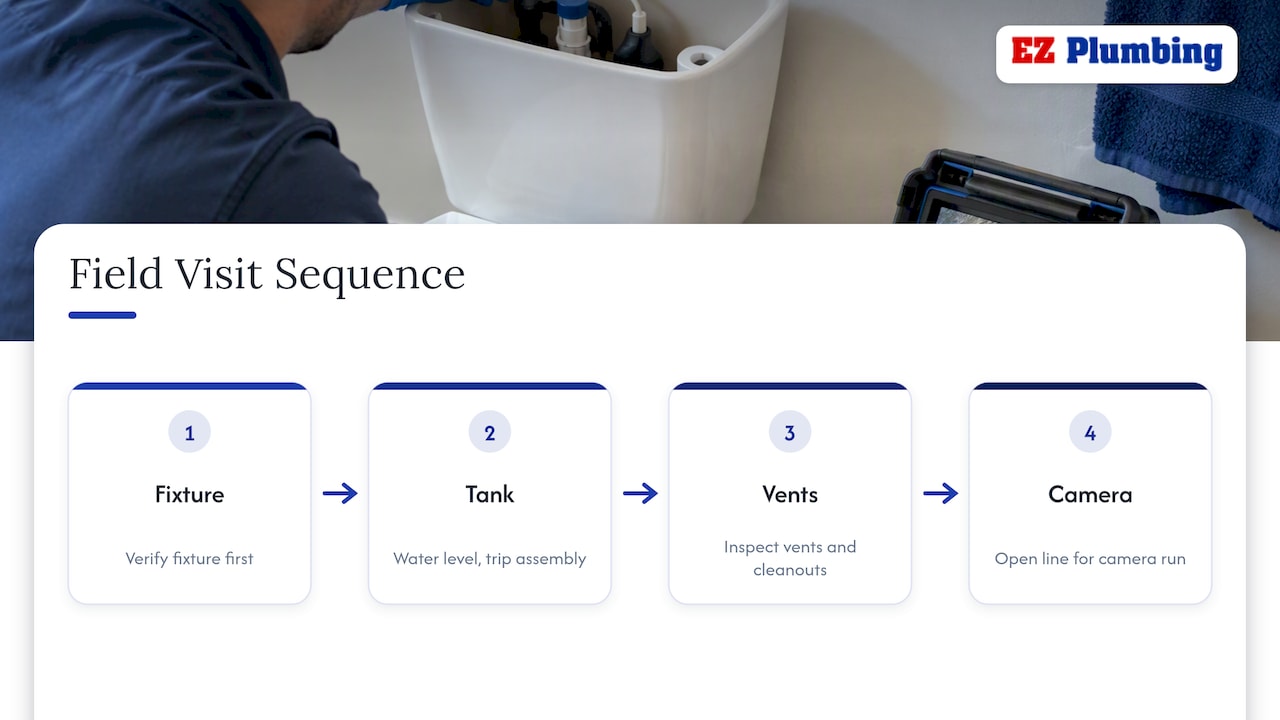
A thorough field visit for recurring clogs typically follows a set sequence: verify the fixture itself first, check the tank’s water level and trip assembly, then inspect vents and cleanouts before ever opening the line for a camera run.
The equipment makes the difference. A sewer camera shows root intrusion, pipe bellies, or cracks that no auger will ever reveal. A hydro-jet clears grease, scale, and root mass from the inside of the pipe wall rather than just punching a hole through the clog, which is what an electric drain machine or heavy-duty auger tends to do. These tools find problems that a homeowner’s plunger and auger simply can’t reach or diagnose.
A camera inspection quickly localizes the kind of cross-fixture gurgling and fast-return clogs that point to a downstream blockage or a venting issue, rather than something local to the toilet.
We are fully licensed and document every job for code compliance across the properties we serve.
Recurring clogs often point to a bigger repair
A toilet that clogs again and again after proper plunging and augering is usually telling you something about the pipe behind it, not the toilet itself. Root intrusion, a bellied pipe, or a partially collapsed section of sewer line won’t resolve with repeated DIY attempts, and every emergency call for the same symptom adds up faster than one proper diagnosis would have cost. For property managers and HOAs juggling multiple units, a standing maintenance plan tends to catch these problems before a tenant calls at 2 AM.
— EZ
How we can help with recurring toilet clogs
If you’ve plunged, augered, and adjusted the tank and the clog keeps coming back, that’s usually our cue to bring a camera into the line. We handle drain cleaning, hydro-jetting, sewer line repair, and emergency plumbing for households and businesses across the greater Los Angeles area, and we price diagnostic and repair work up front before any work begins.
A typical visit starts with a conversation about when the clogging started and how often it happens, followed by a camera inspection if the symptoms point to the main line. You can check our residential and commercial rates ahead of time, and if you’re dealing with an active overflow or sewage backup right now, our emergency plumbing line is the fastest way to reach us.
- Drain cleaning and hydro-jetting for recurring soft clogs and buildup.
- Camera inspection and sewer line repair for root intrusion or pipe damage.
- Emergency dispatch for overflow or sewage backup situations.
Reach out through our emergency plumbing page or book a diagnostic visit when you’re ready to stop guessing at the cause.
FAQ
Why does my toilet get blocked so easily?
A toilet clogs easily when there’s too much paper or non-flushable material going down at once, or when a weak flush from low tank water or scaled rim jets can’t generate enough force to clear waste on the first try. Older low-flow models are especially prone to this combination.
Can dish soap unclog a toilet?
Dish soap combined with hot, not boiling, water can help loosen a soft clog made of paper or waste, as This Old House describes. It won’t move a solid object, a wipe mass, or anything lodged deep in the trapway, so a plunger or closet auger is the next step if it doesn’t work.
Why does my toilet keep acting like it’s clogged?
A toilet that seems clogged but never has anything stuck in it often has a weak flush caused by low tank water, a misaligned refill tube, or mineral buildup in the rim jets. Checking and adjusting the tank components frequently resolves this without any plunging at all.
Why does my toilet keep getting clogged after I poop?
This usually points to insufficient flush power rather than excess paper, especially if the same thing happens even with light paper use. Check the tank water level and rim jets first, and if adjustments don’t help, a narrowing trapway or a toilet nearing the end of its useful life may be the cause.
Sources
- How to care for your septic system | US EPA
- How to use a plunger | This Old House
- American Standard troubleshooting guidance