
The Role of Plumbing Warranties for Homeowners
Plumbing warranties are service contracts that cover the cost of repairing or replacing defective plumbing components, protecting homeowners and property managers from unexpected out-of-pocket expenses. Providers like Choice Home Warranty and manufacturers like Banner Plumbing offer coverage across fixtures, pipes, water heaters, and labor, each with distinct terms and limits. The role of plumbing warranties goes beyond simple cost coverage. It creates a structured system for managing repairs, approving contractors, and maintaining property value over time. Understanding how these contracts work before you need them is the difference between a smooth claim and a denied one.
What do plumbing warranties typically cover?
Plumbing warranty coverage falls into three broad categories: manufacturer warranties, labor warranties, and home warranty plans. Each covers different costs, applies to different components, and carries its own set of conditions.
Manufacturer warranties cover defective parts and materials. If a water heater tank fails due to a factory defect within the warranty period, the manufacturer replaces the component. Labor warranties, like the one offered by Banner Plumbing, cover the cost of the technician’s work on eligible fixtures for up to two years from the purchase date, but only after the manufacturer confirms a product defect. This distinction matters because a failed part does not automatically trigger labor coverage. You need both confirmations to avoid paying out of pocket for installation time.
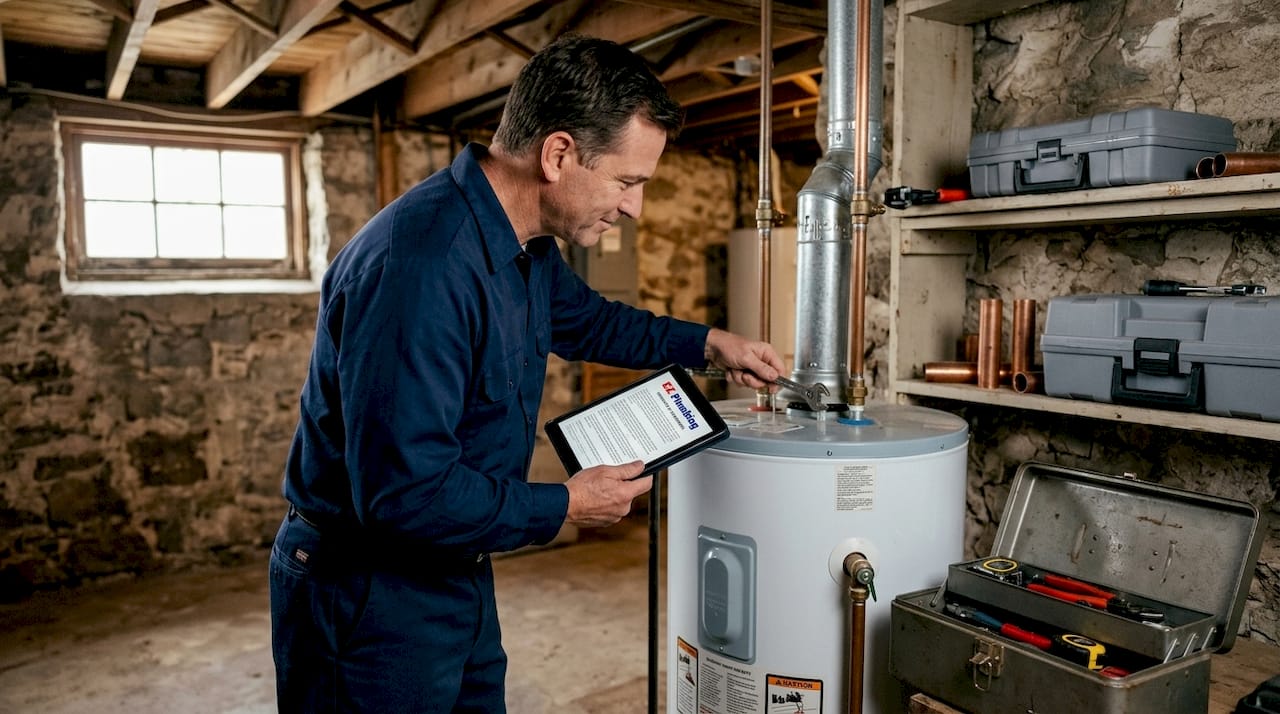
Home warranty plans from providers like Choice Home Warranty bundle coverage for multiple systems, including plumbing, HVAC, and electrical, under a single annual contract. Standard home warranty costs in 2026 range from $500 to $900 annually, with service fees added per dispatched claim. That means your actual cost per repair includes both the monthly premium and a per-visit fee, typically between $75 and $125.
The table below compares the three main coverage types side by side.
| Coverage type | What it covers | Typical duration | Common exclusions |
|---|---|---|---|
| Manufacturer warranty | Defective parts and materials | 1 to 10 years depending on product | Misuse, neglect, improper installation |
| Labor warranty | Technician time for confirmed defects | Up to 2 years from purchase | Defect not confirmed by manufacturer |
| Home warranty plan | Multiple systems including plumbing | Annual, renewable | Pre-existing conditions, cosmetic damage, code upgrades |
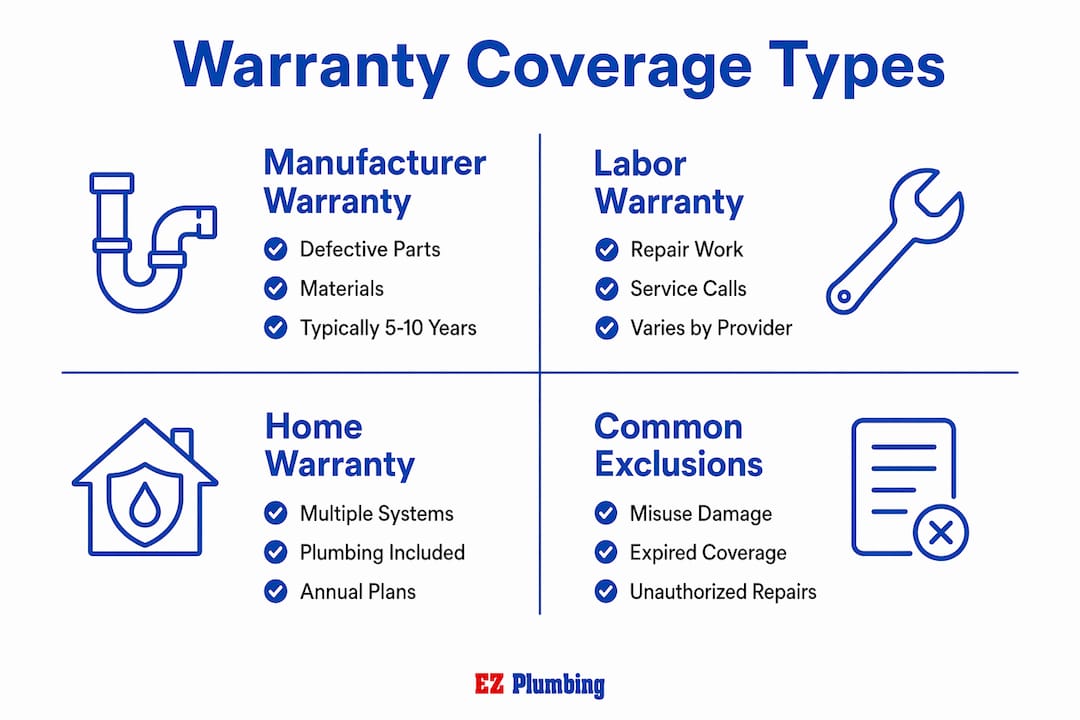
Common exclusions across all three types include damage caused by misuse, neglect, expired coverage periods, and repairs made by unapproved contractors. Coverage limits, service fees, waiting periods, and exclusions are the four factors that most frequently surprise homeowners who assumed they had full protection. Reading the exclusions section of any warranty contract before signing is not optional. It is the only way to know what you are actually buying.
How do plumbing warranties work in practice?
The claims process is where most homeowners encounter problems. Following the correct procedure is not a formality. It is a contractual requirement, and skipping any step can result in a denied claim.
Here is how a standard plumbing warranty claim works from start to finish.
- Identify the problem. Document the issue with photos and written notes, including when it started and what symptoms you observed. This record supports your claim and helps the assigned contractor diagnose faster.
- Contact your warranty provider first. Call or log into your provider’s portal before scheduling any repair. Home warranty providers require consumers to use approved contractors and follow claim processes. Hiring an outside repair person without prior approval is one of the most common reasons claims are denied.
- Wait for contractor assignment. The provider dispatches an approved contractor from their network. For boiler and heating systems, manufacturers like Weil-McLain require professional contractors to call the Warranty Call Center directly for claim initiation and approval before any work begins.
- Pay the service fee. Once the contractor arrives and confirms the issue, you pay the per-visit service fee. The warranty covers the remaining repair or replacement cost up to the plan’s cap.
- Confirm repair completion. Get written documentation of the work performed, parts replaced, and any warranty terms that now apply to the new components.
Property managers overseeing multi-unit buildings benefit from keeping a centralized repair log that tracks every claim, contractor visit, and outcome. This log serves as evidence if a provider disputes a claim and helps identify recurring issues that maintenance can address proactively.
Pro Tip: Before signing any warranty contract, call the provider’s claims line and ask how long contractor dispatch typically takes in your ZIP code. Response times vary significantly by region, and a 5-day wait for an emergency plumbing repair is not acceptable for most households.
What are the benefits and limitations of plumbing warranties?
The financial case for plumbing warranties is straightforward for older properties. Water heater repair or replacement costs often exceed annual warranty premiums, meaning a single mid-range repair can justify the entire year’s coverage cost. For a home with aging galvanized pipes, a water heater past its tenth year, or clay sewer laterals prone to root intrusion, the probability of a covered claim within any given year is high enough to make the math work clearly in the homeowner’s favor.
The convenience factor is equally real. When a pipe bursts at 11 p.m., having a warranty means one phone call instead of searching for an available licensed plumber, negotiating a price under pressure, and paying the full emergency rate upfront. The warranty provider handles contractor coordination, which removes a significant burden during a stressful situation.
That said, plumbing warranties carry real limitations that you need to weigh honestly.
Where warranties deliver strong value:
- Older homes with systems approaching or past their expected service life
- Properties with multiple plumbing systems where the probability of at least one failure per year is high
- Landlords managing tenant-occupied units who need a predictable repair cost structure
Where warranties may not deliver enough value:
- Newer homes with recent system replacements have lower claim probability, which reduces the financial return on the annual premium
- Homeowners who already have an emergency fund large enough to absorb a $2,000 to $4,000 repair without financial strain
- Situations where the coverage cap is too low to cover the actual repair cost in your market
“Homeowners often misunderstand warranties as full coverage. In reality, caps, fees, exclusions, and procedures limit benefits significantly.” — BBB consumer guidance on home warranties
The BBB’s observation reflects a pattern Ez-plumbing sees regularly in Los Angeles. Homeowners in older neighborhoods like Silver Lake or Boyle Heights, where cast iron drain lines and galvanized supply pipes are common, tend to get strong value from warranty coverage. Homeowners in newer developments in the San Fernando Valley, where PEX repiping and tankless water heaters are standard, often find the annual premium exceeds their actual repair costs.
How to choose and maximize the value of a plumbing warranty
Choosing the right warranty starts with an honest assessment of your property’s age, plumbing condition, and your financial tolerance for unexpected repair costs. A camera inspection of your sewer line and a professional assessment of your water heater’s condition give you concrete data to evaluate whether coverage makes financial sense before you commit to a premium.
When comparing warranty plans, focus on these four factors before price.
Coverage scope: Confirm that the specific systems in your home are listed explicitly in the contract. A plan that covers “plumbing systems” but excludes secondary drain lines or outdoor fixtures may leave your most vulnerable components unprotected.
Contractor network quality: Ask the provider which licensed plumbers serve your ZIP code. A strong network in Los Angeles means faster dispatch and contractors familiar with local code requirements, including LA Department of Building and Safety standards.
Service fee structure: Calculate your total annual cost as premium plus the service fee multiplied by your realistic claim frequency. A plan with a lower premium but a $125 service fee per visit can cost more than a higher-premium plan with a $65 fee if you file two or more claims per year.
Exclusion language: Read every exclusion clause. Pre-existing conditions, code upgrade requirements, and secondary damage are the three exclusions most likely to affect a real claim. Proactive maintenance and following approved warranty procedures improve claim success rates and reduce the risk of denial on technical grounds.
Pro Tip: Keep a dated maintenance log for every plumbing system in your home, including water heater flushes, drain cleanings, and any leak repairs. This documentation demonstrates that you maintained the system properly and strengthens your position if a provider attempts to deny a claim as a pre-existing condition.
For practical guidance on preventing plumbing emergencies before they become warranty claims, proactive steps like annual drain inspections and water heater maintenance extend system life and reduce claim frequency. You can also review plumbing upgrade options that may affect your coverage needs, particularly if you are considering repiping or fixture replacement.
Key takeaways
Plumbing warranties protect property owners from unexpected repair costs, but their real value depends on coverage scope, claims procedures, and how well the contract terms match your property’s actual risk profile.
| Point | Details |
|---|---|
| Coverage types differ significantly | Manufacturer, labor, and home warranty plans each cover different costs and require separate claim processes. |
| Claims procedures are contractual | Using unapproved contractors or skipping approval steps results in denied claims, not just delays. |
| Older homes get stronger value | Properties with aging pipes and water heaters are more likely to generate claims that exceed annual premium costs. |
| Exclusions determine real protection | Caps, service fees, pre-existing condition clauses, and code upgrade exclusions limit actual payout in many claims. |
| Maintenance records support claims | Documented maintenance history reduces the risk of a provider denying coverage on pre-existing condition grounds. |
What I’ve learned from years of working alongside warranty claims in LA
After years of working on plumbing systems across Los Angeles, from Koreatown apartment buildings to single-family homes in Pasadena, one pattern stands out clearly. The homeowners and property managers who get the most from their plumbing warranties are the ones who treat the contract as a managed system, not a safety net they pull out in a crisis.
The most common claim denial I see is not fraud or bad faith from the provider. It is a homeowner who called a plumber they trusted, got the repair done quickly, and then tried to file for reimbursement. The provider denied it because the contractor was not in their approved network. That repair was legitimate and necessary, but the procedural error made it uncoverable. Understanding the claims process before you have an emergency is the only way to avoid that outcome.
For property managers running multi-unit buildings, warranties genuinely standardize how repair requests get handled. You can point tenants to a single claims number, maintain a consistent contractor relationship, and track repair history by unit. The plumbing case studies from property management contexts show that claim denials cluster around two issues: unapproved contractors and undocumented maintenance. Both are preventable with the right systems in place.
My honest recommendation is this: pair your warranty with a preventive maintenance schedule. A warranty covers failures. Maintenance reduces how often failures happen. Together, they give you the financial protection and the operational control that neither provides alone.
— EZ
How Ez-plumbing supports your warranty coverage
Ez-plumbing holds a C-36 License (#583868) and serves the greater Los Angeles area with residential and commercial plumbing services that directly support warranty claims and installations. Professional installation by a licensed contractor is a requirement for most manufacturer and labor warranties to remain valid. When Ez-plumbing installs your water heater replacement, the work meets manufacturer specifications and LA municipal code, which protects your warranty from the start. Our leak detection services identify problems early, before they escalate into warranty claims or uncovered secondary damage. For homeowners and property managers who want repairs done right the first time, contact Ez-plumbing at (833) 439-7586 or visit ez-plumbing.com.
FAQ
What does a plumbing warranty typically cover?
A plumbing warranty covers the cost of repairing or replacing defective components such as pipes, fixtures, and water heaters, depending on the plan type. Coverage scope varies between manufacturer warranties, labor warranties, and home warranty plans, each with its own exclusions and limits.
How do I file a plumbing warranty claim?
Contact your warranty provider before scheduling any repair and use only contractors from their approved network. Hiring an outside plumber without prior approval is the most common reason claims are denied.
Are plumbing warranties worth the cost?
For older homes with aging systems, a single water heater repair or pipe replacement often exceeds the annual premium, making coverage cost-effective. Newer homes with recently replaced systems have lower claim probability, which reduces the financial return on the premium.
What voids a plumbing warranty?
Damage caused by misuse, neglect, improper installation, or repairs made by unapproved contractors typically voids coverage. Pre-existing conditions and failure to follow the required claims process are also common grounds for denial.
How long does a plumbing labor warranty last?
Labor warranty duration varies by provider. Banner Plumbing, for example, offers labor coverage on eligible fixtures for up to two years from the purchase date, contingent on manufacturer confirmation of a product defect.