
Solve common plumbing problems: practical tips for LA homes
A slow drain or a dripping faucet might seem like a minor annoyance, but left unaddressed, these small issues can quietly drive up your water bill and set the stage for expensive repairs. Los Angeles homeowners and renters face a specific set of plumbing challenges, from aging galvanized pipes in older neighborhoods to hard water buildup that shortens the life of fixtures and appliances. This guide covers the four most common residential plumbing problems in LA, walks you through practical troubleshooting steps, and helps you decide when a DIY fix is enough and when calling a licensed plumber is the smarter move.
Table of Contents
- 1. Leaky faucets and running toilets
- 2. Slow or clogged drains
- 3. Water heater troubles
- 4. Hidden leaks and slab leaks
- What most homeowners get wrong about plumbing repairs
- Get expert help for every plumbing problem
- Frequently asked questions
Key Takeaways
| Point | Details |
|---|---|
| Fix small leaks fast | Addressing small faucet and toilet leaks prevents water waste and high bills. |
| Prevent clogs with habits | Use drain screens and avoid pouring grease to reduce slow or clogged drains. |
| Know your water heater | Recognize warning signs and compare repair vs. replacement for best value. |
| Detect and fix hidden leaks | Stay alert for high bills and moisture to catch serious leaks early. |
| DIY isn’t always enough | Regular maintenance is essential, but persistent issues need expert attention. |
1. Leaky faucets and running toilets
Leaky faucets and running toilets are the most widespread plumbing problems in residential properties, and they cost far more than most people realize. A leaky faucet wastes up to 3,000 gallons per year, and a running toilet can waste up to 200 gallons per day. In a city where water rates continue to climb, that waste adds real dollars to your monthly bill.
Spotting the problem early is the key to keeping costs manageable. A dripping faucet is obvious, but a running toilet often goes undetected because the sound can be subtle or intermittent. The most reliable test is the dye test: drop a few food coloring drops into the toilet tank, wait 15 minutes without flushing, and check the bowl. If color appears in the bowl, water is leaking past the flapper, which is the rubber seal at the bottom of the tank that controls water flow.
For faucets, the fix often depends on the type. Cartridge faucets, which are common in modern LA homes, typically need a cartridge replacement. Older compression faucets, still found in pre-1980s properties in neighborhoods like Silver Lake or Echo Park, usually just need new rubber washers. Both repairs are manageable for a confident DIYer with basic tools and a parts kit from any hardware store.
For toilets, the two most common culprits are a worn flapper and a faulty fill valve. The fill valve controls how water refills the tank after each flush. Replacing either part costs under $20 at most hardware stores and takes about 30 minutes. If you replace both and the toilet still runs, the issue may be a cracked overflow tube or a problem with the flush valve seat, at which point a professional inspection is the right call.
Pro Tip: Clean your faucet aerators monthly by unscrewing the tip of the faucet and soaking it in white vinegar for 30 minutes. Mineral buildup from LA’s hard water is a leading cause of reduced flow and seal wear, both of which can contribute to leaks over time.
Renters should document any leak with photos and notify their landlord in writing as soon as they notice it. In California, landlords are legally required to maintain habitable conditions, and a running toilet or leaking faucet qualifies as a maintenance issue. Staying proactive protects both your living conditions and your relationship with your landlord. For more guidance on maintaining your home’s plumbing system, review these home plumbing tips from our team.
2. Slow or clogged drains
After leaks, slow or clogged drains are the next most common call we receive from LA homeowners and renters. The problem usually builds gradually. Water drains slowly at first, then stops draining altogether. By the time a drain is fully blocked, the clog has often been forming for weeks or months.
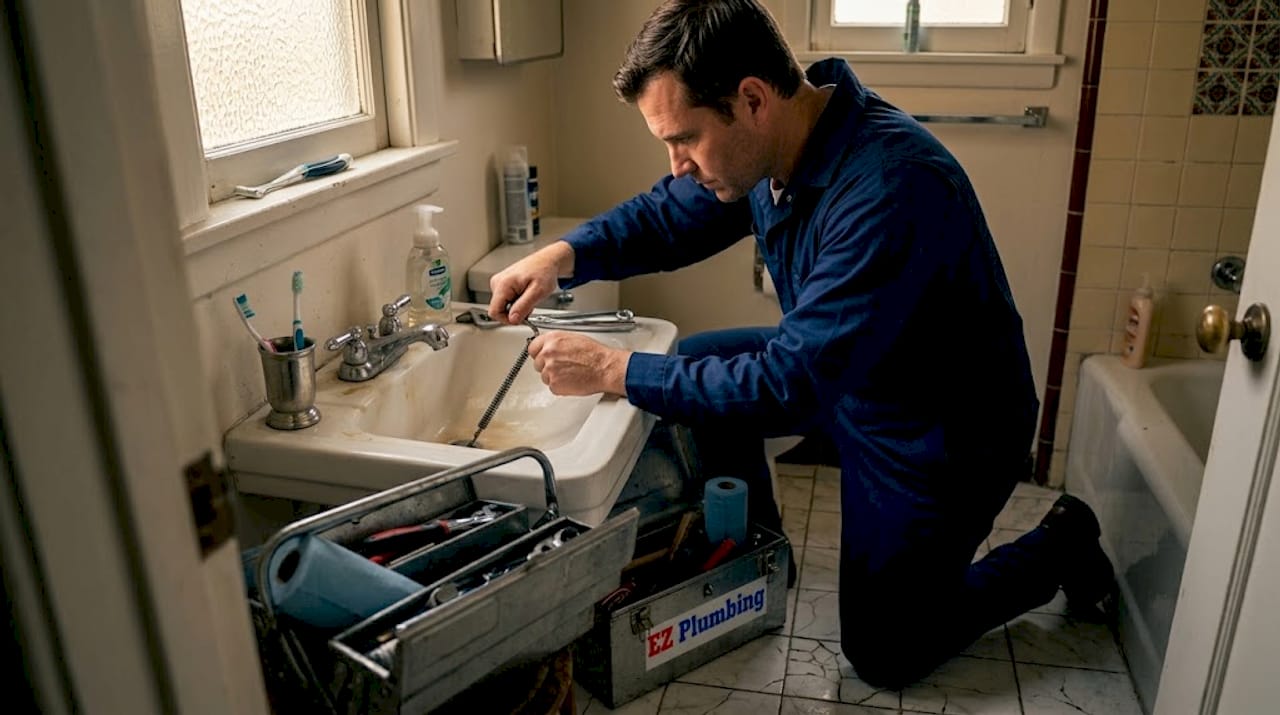
The most common culprits depend on the drain location. In bathroom sinks and showers, hair and soap residue are the primary offenders. Hair binds with soap scum to form dense clogs that cling to pipe walls and are difficult to dislodge with water pressure alone. In kitchen sinks, grease is the main problem. Grease poured down the drain while hot solidifies as it cools, coating the inside of pipes and gradually narrowing the flow path.
Here is a straightforward approach to clearing a slow drain before calling a professional:
- Remove and clean the drain stopper or strainer. Soap residue and hair collect here first, and cleaning it takes less than five minutes.
- Pour a kettle of boiling water slowly down the drain in two or three stages. This works well for grease-based clogs in kitchen drains.
- Follow with a baking soda and white vinegar treatment. Pour half a cup of baking soda into the drain, then half a cup of white vinegar. Cover the drain, wait 15 minutes, and flush with hot water.
- Use a cup plunger with a firm seal over the drain. Apply steady, rhythmic pressure for 30 to 60 seconds.
- If the clog persists, use a drain snake (also called an auger) to physically break up or retrieve the obstruction.
Important: Avoid chemical drain cleaners like those containing sulfuric acid or lye. These products can corrode older pipes, particularly the galvanized steel pipes common in pre-1970s LA homes, and they create hazardous conditions if you later need a plumber to work on the line.
If none of these steps resolve the issue, or if multiple drains in your home are slow at the same time, the problem is likely deeper in your main drain line. Tree roots are a significant issue in LA, particularly in older neighborhoods with large ficus or eucalyptus trees whose roots seek out sewer lines. In these cases, professional drain cleaning services including hydro-jetting (a high-pressure water cleaning method) or camera inspection are the most effective solutions. Drain cleaning in LA costs between $150 and $600 depending on the severity and method used.
Pro Tip: Install mesh drain screens in every shower, tub, and sink in your home. They cost less than $5 each and can prevent the majority of hair and debris clogs from forming in the first place.
3. Water heater troubles
Your water heater works every day, and most people don’t think about it until something goes wrong. In Los Angeles, where many homes still have tank-style water heaters that are 10 to 15 years old, the signs of trouble tend to appear gradually before a complete failure occurs.
The most common warning signs include no hot water or inconsistent temperature, a rumbling or popping noise from the tank, and rusty or discolored water from the hot tap. Rumbling sounds are typically caused by sediment buildup at the bottom of the tank. Over time, minerals from LA’s hard water settle and harden, forcing the heating element to work harder and reducing efficiency. Rusty water often signals internal corrosion, which means the tank itself may be failing.
When to try a basic fix first: If you have a gas water heater and suddenly have no hot water, check whether the pilot light has gone out. Most modern units have clear relighting instructions on the label. Also check the thermostat setting, which should be at 120°F for most households. If the unit is electric, check whether the circuit breaker has tripped.
When to consider replacement: The general rule is that a water heater older than 10 years with recurring issues is a better candidate for replacement than repair. Newer units, particularly tankless water heaters, offer significantly better energy efficiency and can reduce water heating costs by 20 to 30 percent. For guidance on your specific unit, our water heater troubleshooting page covers common issues by model type.
| Factor | Repair | Replace |
|---|---|---|
| Unit age | Under 8 years | Over 10 years |
| Estimated cost | $150 to $500 | $900 to $2,000 in LA |
| Energy efficiency | No improvement | Significant improvement with new unit |
| Warranty remaining | Yes | Start fresh with new warranty |
| Frequency of issues | First occurrence | Recurring problems |
Annual maintenance makes a real difference in the life of your water heater. Flushing the tank once a year removes sediment buildup and helps the unit run more efficiently. Wrapping the tank with an insulation blanket (available at hardware stores for around $30) reduces heat loss and lowers energy costs, particularly in older homes with uninsulated garage installations.
4. Hidden leaks and slab leaks
Hidden leaks are the most damaging plumbing problems precisely because they are not visible. Water can leak inside walls, under flooring, or beneath the concrete foundation of your home for weeks before any obvious sign appears. By that point, the damage to drywall, insulation, flooring, and even structural elements can be significant.
Signs that point to a hidden leak:
- A sudden, unexplained increase in your water bill with no change in usage habits
- Damp or warm spots on floors, particularly on concrete slab floors
- Mold growth or a persistent musty odor in areas that should be dry
- The sound of running water when all fixtures are turned off
- Cracks in walls or flooring that appear without an obvious cause
Slab leaks are a specific type of hidden leak that occurs in the water lines running beneath the concrete slab foundation of a home. They are more common in LA than in many other cities because of the region’s expansive soil, which shifts with seasonal moisture changes and puts stress on underground pipes. Older copper and galvanized pipes are particularly vulnerable.
| Leak type | Location | Detection method | Typical repair cost |
|---|---|---|---|
| Standard hidden leak | Walls or ceiling | Visual inspection, moisture meter | $300 to $1,500 |
| Slab leak | Under foundation | Electronic detection, camera inspection | $2,000 to $6,000+ |
Knowing the signs of slab leaks early gives you the best chance of limiting repair costs. If you suspect a hidden leak of any kind, the first step is to turn off all water in the home and check your water meter. If the meter continues to move, water is escaping somewhere in the system. From there, professional leak detection methods such as electronic listening devices and thermal imaging can pinpoint the source without unnecessary demolition.
For renters, a suspected slab leak or hidden leak is an urgent matter. Notify your landlord immediately in writing, and if the landlord does not respond within a reasonable time, you may have grounds to escalate through LA’s local housing authority. Mold resulting from an unaddressed leak is a habitability issue under California law.
What most homeowners get wrong about plumbing repairs
Most homeowners treat plumbing reactively. Something breaks, they fix it, and they move on. The problem with that approach is that plumbing systems are interconnected, and a symptom in one area often points to a broader issue elsewhere in the system.
We see this regularly: a homeowner clears a clogged drain with a plunger and considers the problem solved. But if that drain clogs again within a few weeks, the real issue is likely buildup deeper in the line or a root intrusion that a plunger cannot address. DIY quick fixes like plunging and vinegar treatments are genuinely useful for minor, isolated clogs, but they are not substitutes for a professional camera inspection when a problem keeps returning.
The hidden cost of deferred professional help is real. A $200 drain cleaning today can prevent a $4,000 sewer line repair next year. A water heater inspection that catches a failing anode rod (the component that prevents internal corrosion) can extend the life of a unit by three to five years. Our view, shaped by years of work across LA neighborhoods from Burbank to Long Beach, is that the most cost-effective approach blends confident DIY maintenance with scheduled professional inspections every two to three years. That combination gives you control over the small stuff while ensuring a licensed eye catches what you cannot see. For practical guidance between service visits, our home maintenance advice covers what to check and when.
Get expert help for every plumbing problem
When a DIY fix does not hold, or when you are dealing with a water heater on its last legs, a recurring drain problem, or a suspected slab leak, professional diagnosis makes the difference between a manageable repair and a major emergency.
EZ Plumbing (C-36 License #583868) serves homeowners and renters across the greater Los Angeles area with fully licensed, insured, and code-compliant service. Our drain cleaning specialists use hydro-jetting and camera inspection to clear and diagnose drain issues at the source, not just the surface. Our water heater experts handle everything from pilot light resets to full tankless system installations. If you are seeing any of the warning signs covered in this guide, reach out today before a small issue becomes a costly one.
Frequently asked questions
How much water does a leaky faucet or running toilet waste?
A leaky faucet wastes up to 3,000 gallons per year, and a running toilet can waste up to 200 gallons per day, making both issues worth fixing promptly to protect your water bill.
How much does it cost to fix a clogged drain or water heater in LA?
Drain cleaning costs $150 to $600 and water heater replacement typically runs $900 to $2,000 in Los Angeles, depending on the unit type and complexity of the installation.
What plumbing maintenance should every renter do?
Clean faucet aerators monthly with white vinegar, use mesh drain screens in every drain, avoid flushing anything other than toilet paper, and report issues promptly to your landlord in writing to protect your rights under California habitability law.
When should you call a professional plumber?
Call a licensed plumber for any leak that recurs after a DIY fix, multiple slow drains throughout the home, signs of a slab leak, or a water heater showing rust, unusual noise, or inconsistent temperature, since these issues rarely resolve on their own.