
Small Business Plumbing Guide for Los Angeles Owners
Small business plumbing management is a proactive practice that prioritizes preventive maintenance, early issue detection, and code compliance to keep your operations running without costly interruptions. For Los Angeles business owners, this means understanding local municipal requirements, scheduling regular inspections, and knowing when to call a licensed commercial plumber. Ignoring plumbing upkeep leads to burst pipes, health code violations, and forced closures. This small business plumbing guide covers the maintenance tasks, LA regulations, technologies, and staff practices that protect your business from avoidable plumbing disasters.
1. What are the essential preventive plumbing maintenance tasks?
Preventive maintenance is insurance, not an expense. Scheduled quarterly maintenance costs significantly less than emergency repairs, and an annual full system audit with quarterly inspections for high-use fixtures greatly reduces emergency repair costs. Building a consistent maintenance calendar is the foundation of any sound plumbing strategy.
Monthly tasks keep small problems from growing. Walk through your facility and visually inspect all visible pipes, fixtures, and connections for drips or moisture. Use enzyme-based drain cleaners monthly rather than harsh chemical products. Chemical drain cleaners damage commercial-grade pipes over time, causing hidden failures that show up as expensive emergencies. Install manual drain strainers at every sink and floor drain to stop debris before it enters your system.
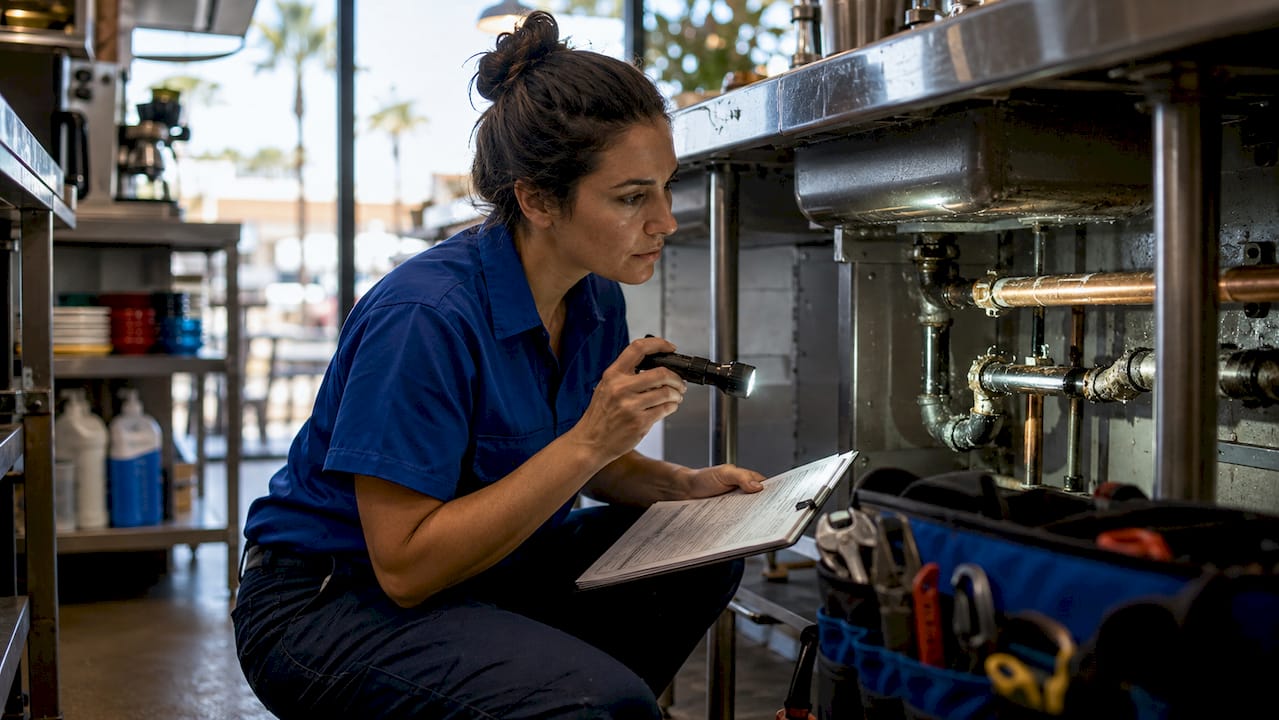
Quarterly tasks address system performance. Test water pressure at multiple points throughout your building. Commercial plumbing pressure should stay between 40 and 80 PSI. Pressure outside that range accelerates pipe fatigue and increases the risk of failures. Flush your water heater to remove sediment buildup, and inspect the anode rod for corrosion.
Annual tasks require a licensed professional. A full system audit covers backflow prevention devices, sewer line condition, water heater performance, and fixture integrity. Backflow prevention testing is not optional in Los Angeles. It is a code requirement for most commercial properties.
Pro Tip: Schedule your annual audit in january or february, before the spring rush. Plumbers have more availability, and you will get faster turnaround on any repairs identified during the inspection.
2. How do Los Angeles plumbing regulations affect your business?
Los Angeles plumbing regulations are governed by the Los Angeles Plumbing Code, which adopts and modifies the California Plumbing Code. Every small business operating in LA must comply with these standards or face fines, failed inspections, and potential shutdowns. Partnering with a licensed plumber familiar with LA codes is the most reliable way to stay compliant.
Key regulatory requirements for LA small businesses include:
- Backflow prevention devices must be installed and tested annually on any commercial property connected to the public water supply. The Los Angeles Department of Water and Power enforces this requirement.
- Water pressure compliance requires that your building’s pressure regulator keeps supply pressure within the 40–80 PSI range mandated by code.
- Grease interceptors are mandatory for food service businesses. The LA County Sanitation Districts require regular cleaning and maintenance records.
- Permit requirements apply to any plumbing modification, including fixture replacements and pipe repairs. Unpermitted work can void your business license.
- Inspection documentation must be kept on file. Inspectors can request records during routine health or building code checks.
Non-compliance carries real financial consequences. Fines for code violations in Los Angeles can accumulate quickly, and a failed inspection can trigger a temporary closure order. A licensed plumber holding a C-36 license, like Ez-plumbing (License #583868), understands these local requirements and can document work properly for your records.
3. What technologies and professional services deliver the best results?
Advanced plumbing technologies reduce the frequency and severity of plumbing failures in commercial settings. The right tools allow licensed technicians to find and fix problems before they become business-disrupting events.
Hydro-jetting is the most effective method for clearing grease, sludge, and mineral buildup from commercial drain lines. Hydro-jetting removes grease more effectively than traditional snaking, which only punches a hole through a clog rather than clearing the pipe walls. For restaurants and food service businesses, hydro-jetting every 3–6 months prevents the severe blockages that shut down kitchens. Ez-plumbing offers hydro-jetting in Pasadena and throughout the greater LA area.
Camera inspections give you a real-time view inside your main sewer line. Older LA commercial buildings often have clay sewer laterals that crack and allow root intrusion. A camera inspection identifies cracks, root growth, and offset joints before they cause a full sewer backup. This service is particularly valuable before signing a new commercial lease.
Leak detection sensors provide continuous monitoring at high-risk points like water heaters, under-sink areas, and near dishwashers. Smart leak detection sensors integrated with alerts give you early warning to avoid extensive water loss and damage. Water leaks can waste thousands of gallons annually, making early detection critical to both your water bill and your building’s structural integrity.
Trenchless pipe repair is an effective way to maintain commercial plumbing infrastructure with minimal disruption to your business operations. Rather than tearing up floors or walls, technicians repair or reline pipes from access points, keeping your business open during the work.
Pro Tip: Request a camera inspection report in digital format. Keep it on file with your lease documents. If a sewer problem develops later, the baseline footage proves the condition of the line when you took occupancy.
4. How can your staff help prevent plumbing emergencies?
Staff training multiplies the effectiveness of any plumbing maintenance program. Employees who recognize early warning signs catch problems before they escalate into facility shutdowns. This is one of the most cost-effective plumbing strategies available to small business owners.
Gurgling drains or sudden pressure changes are early warning signs that must be addressed quickly to avoid business disruption. Train every employee to report these symptoms immediately rather than waiting to see if the problem resolves on its own.
Practical steps to build a plumbing-aware team:
- Post clear signage in restrooms and kitchen areas listing what cannot go down drains. No paper towels, no wipes, no food solids, no grease.
- Establish a simple reporting protocol. A shared log or a direct line to your facilities contact removes the friction of reporting minor issues.
- Walk new employees through the location of emergency shutoff valves during onboarding. Every staff member should know how to stop water flow in a crisis.
- Conduct a brief annual review of shutoff valve locations and emergency procedures. Valve locations are easy to forget if staff turnover is high.
Pro Tip: Label every shutoff valve with a laminated tag showing the date it was last tested and what it controls. This takes 30 minutes once a year and saves significant time during an actual emergency.
5. What maintenance schedule fits your type of LA business?
Maintenance frequency depends on how much water your business uses and what goes down your drains. A restaurant in Silver Lake has very different plumbing demands than a two-person accounting office in Burbank. Matching your schedule to your business type prevents both under-maintenance and unnecessary spending.
| Business Type | Drain Cleaning | Grease Trap | Full System Audit | Fixture Inspection |
|---|---|---|---|---|
| Restaurant / Food Service | Every 3–6 months | Biweekly to monthly | Annual | Quarterly |
| Retail | Annual | Not applicable | Annual | Quarterly |
| Office | Annual | Not applicable | Annual | Quarterly |
| High-volume café or bar | Every 3 months | Monthly | Annual | Quarterly |
High-traffic commercial businesses like restaurants require professional drain cleaning every 3–6 months, while office buildings typically need annual inspections. High-volume establishments may require weekly drain service depending on local volume capacity. That frequency gap reflects the difference in grease load and daily water use between a full-service kitchen and a standard office break room.
Scheduling inspections after hours or off-peak times reduces disruption and allows access to commercial-grade parts for swift repairs. This approach also lowers emergency costs because technicians can work without rushing around open-for-business constraints. For LA restaurants, scheduling grease trap service before the morning prep shift keeps the kitchen compliant and operational.
Retail and office businesses benefit most from a preventive maintenance plan that combines an annual full audit with quarterly fixture checks. This combination catches slow leaks, failing supply lines, and corroding shut-off valves before they cause water damage to inventory or tenant improvements.
Key takeaways
Effective small business plumbing management in Los Angeles requires a scheduled maintenance program, local code compliance, and trained staff working together to prevent costly failures.
| Point | Details |
|---|---|
| Preventive maintenance saves money | Scheduled quarterly maintenance costs less than a single emergency repair call. |
| LA codes are non-negotiable | Backflow prevention testing and grease interceptor maintenance are legally required for most commercial properties. |
| Hydro-jetting outperforms snaking | For grease-heavy businesses, hydro-jetting clears pipe walls completely and prevents severe blockages. |
| Staff training is a force multiplier | Employees who recognize gurgling drains and pressure changes catch problems before they become shutdowns. |
| Match your schedule to your business type | Restaurants need drain service every 3–6 months; offices typically need only annual inspections. |
What I’ve learned from years of LA commercial plumbing work
The businesses that call us in a panic almost always share one thing in common: they treated plumbing as something to fix, not something to manage. A restaurant in the San Fernando Valley once went two years without a grease trap service because the owner assumed the drains were “working fine.” The resulting blockage backed up into the kitchen on a Friday night during dinner service. The repair cost, the lost revenue, and the health department visit added up to far more than two years of routine maintenance would have cost.
Los Angeles adds its own layer of complexity. Many commercial buildings in older neighborhoods still have clay sewer laterals and galvanized supply lines. These materials degrade in ways that modern PVC and copper do not. A camera inspection on a building that looks perfectly functional on the surface sometimes reveals lateral cracks or root intrusion that would cause a full backup within a year.
The other thing I consistently see underestimated is the value of staff awareness. A well-trained employee who reports a slow drain on monday morning gives you time to schedule a service call at a convenient time. An untrained employee who ignores it for two weeks gives you a sewer backup on a busy afternoon. The difference is a 20-minute training conversation.
My recommendation: build a relationship with a licensed local plumber before you need one urgently. Know who you are calling, know that they understand LA codes, and have a maintenance schedule in writing. That preparation is what separates businesses that manage plumbing costs from businesses that get managed by them.
— EZ
Ez-plumbing keeps your LA business running
Ez-plumbing is a licensed commercial plumbing company serving the greater Los Angeles area, holding C-36 License #583868. We specialize in the services small businesses rely on most: professional drain cleaning, hydro-jetting, camera inspections, leak detection, and water heater installation and repair.
Our technicians understand Los Angeles municipal codes and can document all work for your compliance records. We offer flexible scheduling, including after-hours service, to minimize disruption to your operations. Whether you need a water heater installation for your commercial kitchen or a full sewer line inspection before signing a new lease, Ez-plumbing provides transparent pricing and licensed work you can count on. Contact us to schedule a consultation or set up a preventive maintenance plan for your business.
FAQ
How often should a small business schedule plumbing inspections?
Most small businesses need a full system audit annually, with quarterly fixture inspections for high-use areas. Restaurants and food service operations require professional drain cleaning every 3–6 months due to grease load.
What are the most common plumbing code violations for LA businesses?
Missing or untested backflow prevention devices and unmaintained grease interceptors are the most frequent violations cited by Los Angeles inspectors. Both require documented annual service by a licensed plumber.
Is hydro-jetting worth the cost for a small business?
Hydro-jetting costs more per visit than traditional snaking but clears pipe walls completely rather than just opening a passage. For businesses with grease-heavy drains, it prevents the severe blockages that cause emergency shutdowns and far larger repair bills.
What early warning signs should staff watch for?
Gurgling sounds from drains, slow-draining sinks, unusual odors near floor drains, and sudden drops in water pressure all signal developing plumbing problems. Reporting these symptoms immediately allows for scheduled repairs rather than emergency responses.
Does a small business need a permit for plumbing repairs in Los Angeles?
Any modification to your plumbing system, including fixture replacements and pipe repairs, requires a permit under the Los Angeles Plumbing Code. Work done without a permit can void your business license and create liability during property inspections.