
Why Lining Usually Won’t Fix a Sewer Line Belly for Homeowners
A sewer line belly is a section of pipe that sags below the surrounding grade and holds standing water instead of draining it away. Most bellies merit prompt attention rather than panic: the deciding factor is whether it is causing repeated backups or worsening over time. The right first step is a cleaned line and a camera inspection, which we provide to confirm what is actually happening underground.
TL;DR:
- Clean the line before a camera inspection; confirm a belly by documenting the pipe’s descent and rise, water depth, measured distances, slope, and surface location.
- Call immediately if sewage backs up indoors or the same fixture blocks again within days; arrange prompt inspection for deepening water or new yard settlement.
- Excavation and regrading restore lost slope, while trenchless lining follows the existing pipe shape and generally cannot correct a confirmed belly.
- Consider periodic camera checks when a shallow belly causes no blockages and remains unchanged; repeated clogs after cleaning suggest solids are collecting there again.
Table of Contents
- What a Sewer Line Belly Is and Why Slope Matters
- Common Causes of Bellies in Installation and Ground Conditions
- Signs and Problems a Belly Can Produce
- How Professionals Diagnose a Belly
- Repair Options and Their Tradeoffs
- How Serious Is It and When to Call a Plumber Now
- Typical Timeline and Cost Drivers for Diagnosis and Repair
- What a Licensed Contractor Recommends: A Checklist for Homeowners
- A Cautious, Evidence-First Approach to Sewer Repairs
- How We Help: Sewer Inspection and Slope-Correcting Repair
- FAQ
- Sources
What a Sewer Line Belly Is and Why Slope Matters
A belly, also called a sag or a low spot, is a stretch of pipe that has dropped below the slope of the pipe on either side of it. Because gravity, not pressure, moves wastewater through a sewer lateral, that dip becomes a bowl where water and solids collect instead of continuing toward the main line.
Proper slope is usually described as a steady, consistent fall along the entire run, typically a small, consistent drop for every foot of pipe for smaller residential lines. When that fall is interrupted by even a few inches of sag, water pools at the low point. Solids settle out of that standing water, and over months or years the buildup narrows the usable channel.
Homeowners run into several terms for the same condition when talking with a plumber:
- Belly: the general term for a sagging low section of pipe.
- Sag or dip: informal terms that describe the same physical drop in grade.
- Low spot: often used interchangeably with belly in inspection reports.
Using consistent language when you describe the problem helps a plumber understand what you have already been told, especially if a previous inspection or report used one of these terms.
Common Causes of Bellies in Installation and Ground Conditions
Bellies rarely appear overnight. They usually develop from a combination of how the pipe was installed and what has happened to the soil around it since.
- Poor bedding or compaction: pipe installed without the right support material underneath settles unevenly over time.
- Soil washout or erosion: heavy rain, irrigation leaks, or a nearby plumbing leak can wash away the soil supporting the pipe.
- Surface loads: driveways, patios, or heavy equipment parked above a lateral add weight that can compress unstable soil.
- Tree roots: root growth can shift soil support even before roots intrude into the pipe itself.
- Joint drops or grade errors: a pipe installed with the wrong initial slope, or a joint that has shifted, creates a permanent low point.
Proper bedding material, such as clean coarse sand, pea gravel, or well-graded crushed rock, along with correct compaction, is considered fundamental to preventing the kind of settlement that creates a belly, according to engineering notes on trench and bedding design. When a lateral was installed decades ago under different standards, or backfilled quickly without that support, the odds of a future sag go up.
Pro Tip: If your home sits on a lot with a history of soil movement, a leaking irrigation line, or a driveway added after the sewer lateral was installed, mention that history to your plumber. It often points directly to the cause.
Signs and Problems a Belly Can Produce
A belly announces itself through patterns, not a single event. Watch for these signals:
- Backups at the same fixture or location repeatedly: a belly traps solids in one spot, so the same drain or the same section of line clogs again and again even after cleaning.
- Slow drains that don’t fully resolve: partial blockage from accumulated solids can leave drains sluggish even between full backups.
- Camera footage showing standing water: this is useful evidence, but footage of water alone can be misleading. A professional belly diagnosis should show the pipe descending into the water and rising back out, with measured distances, not just a still image of a wet pipe.
- Recurring clogs despite regular maintenance: if cleaning solves the symptom for a few weeks but the clog returns, solids are likely re-accumulating in a low spot rather than a one-time blockage.
Left unaddressed, a severe belly that keeps collecting solids can eventually lead to a full blockage, sewage backing up into the home, and the kind of water damage and sanitation risk that comes with that. For a broader rundown of warning signs, our guide to sewer line problems covers related symptoms worth knowing.
How Professionals Diagnose a Belly
A reliable belly diagnosis follows a specific sequence, and skipping steps is how homeowners end up with unnecessary excavation or a missed problem.
The line gets cleaned first, usually with hydro-jetting or targeted root clearing, so that camera footage shows actual pipe condition and water behavior rather than debris that could be mistaken for a structural problem. Inspecting a dirty line and calling what you see a belly is one of the most common ways a sag gets over-diagnosed.
With a clean line, a sewer camera inspection records the footage that actually confirms a belly:
- The camera descending into standing water and rising back out, with the distance traveled recorded at each point.
- The measured depth of the standing water at the low point, not just a visual impression.
- A slope or grade reading comparing the pipe’s fall before, through, and after the suspected belly.
- A surface locate that maps the low point to a specific spot in the yard or under a driveway, so any excavation plan is targeted rather than exploratory.
Comparing footage over time matters as much as the initial inspection. A belly that holds the same amount of water in a follow-up inspection months later is behaving differently than one that is visibly deepening, and that comparison often determines whether the right move is scheduled repair or continued monitoring, a point also raised in independent guidance on pipe bellies.
Repair Options and Their Tradeoffs
Once a belly is confirmed with measured evidence, the repair choice depends on how severe the sag is, how long the affected section runs, and what sits above it.
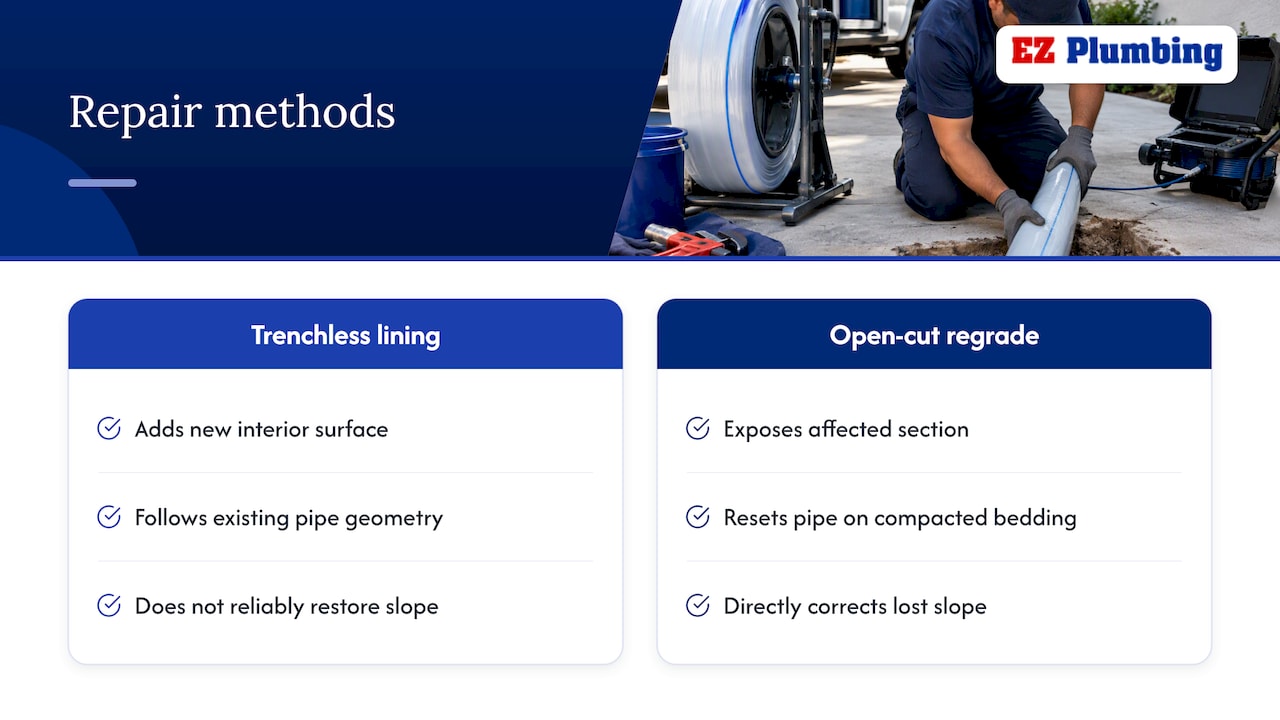
Open-cut excavation and regrade is the standard fix for a true slope problem. The affected section is exposed, the old bedding is removed, and the pipe is reset on properly compacted bedding material at the correct fall. This is the only method that directly corrects the lost slope rather than working around it.
Partial or full lateral replacement becomes necessary when the pipe itself is compromised, whether from age, material failure, or a run long enough that patching one section would leave adjacent weak points untouched. Replacing the full lateral at the same time as correcting the grade can be more efficient than returning to the same stretch of yard twice.
Trenchless lining, often called CIPP, has real limits here. Lining methods install a new interior surface inside the existing pipe, which means the new lining follows the existing geometry rather than resetting it. According to a detailed explanation of lining and bellies, this makes lining a reasonable option for channeling, which is bottom wear inside an otherwise correctly sloped pipe, but not a reliable fix for a confirmed belly that needs its slope restored. If a plumber proposes lining for a documented belly, it is worth asking directly how that addresses the loss of slope rather than just the surface wear. We cover the distinction further in our guide to sewer repair without digging.
Monitoring or temporary mitigation can be reasonable when a belly is shallow, not currently causing blockages, and stable across repeated inspections. Scheduling periodic camera checks instead of immediate excavation is a legitimate and often lower-cost path for a sag that isn’t actively causing problems.
Site conditions change scope substantially. Depth of the pipe, how far it runs under permanent structures, whether it’s under a driveway, patio, or mature landscaping, and the soil type all affect how much excavation and restoration a repair requires.
Pro Tip: Ask whether a proposed repair corrects the slope or works around it. If the answer only describes an interior lining with no mention of regrading, that repair is addressing a different problem than a true belly.
How Serious Is It and When to Call a Plumber Now
Urgency depends on what the evidence actually shows, not on the word “belly” itself.
- Call immediately if you have sewage backing up into the home or the same fixture is blocking repeatedly within days of being cleared.
- Arrange prompt inspection if camera footage shows standing water getting deeper between inspections, or if you notice new settlement in the yard or driveway above the suspected line.
- Schedule monitoring and reinspection if the belly is shallow, isn’t causing blockages, and has stayed the same depth across repeated checks.
- Before help arrives, avoid running large volumes of water, avoid additional drain cleaning chemicals, and keep the affected area clear so a technician can access it quickly.
For homeowners researching backup prevention more broadly, our partner resource on sewer backflow versus water backflow explains a related safety distinction worth understanding.
Typical Timeline and Cost Drivers for Diagnosis and Repair
Diagnosis is usually the fast part. Cleaning the line and running a camera inspection is typically a same-day or next-day service, since it doesn’t require permits or excavation planning.
Repair timelines vary more. A small, accessible excavation to regrade a short section can often be completed within a few days. A longer lateral replacement, especially one that requires a permit or runs beneath a driveway or hardscape, takes longer to schedule and complete.
Several factors drive the eventual cost:
- Run length and depth: longer and deeper sections require more excavation and more restoration.
- Surface restoration: replacing a paver patio or driveway surface adds cost beyond the pipe work itself.
- Soil conditions: rocky or unstable soil slows excavation and may require additional bedding material.
- Pipe material: older clay laterals are handled differently than modern PVC during replacement.
- Access issues: tight side yards, mature trees, or structures built close to the line limit equipment access and add labor time.
Detailed camera footage and a written, itemized quote are what let you evaluate whether a proposed repair matches the actual problem, rather than authorizing excavation based on a verbal description. Our breakdown of sewer line repair costs walks through these factors in more detail.
What a Licensed Contractor Recommends: A Checklist for Homeowners
Before authorizing any repair, ask for documented evidence: a cleaned line, camera footage showing descent into and rise out of the low point with measured distances, a recorded standing-water depth, a surface locate, and a written repair plan tied to that evidence.
Ask specifically how slope will be measured, what the excavation plan covers, what bedding and compaction method will be used on backfill, and what warranty applies to the finished work.
We document every sewer inspection with camera footage and measured findings before recommending excavation, hydro-jetting, or lateral replacement, and we build repairs to meet local code requirements.
A Cautious, Evidence-First Approach to Sewer Repairs
Our stance is that a single still frame of standing water doesn’t prove a belly needs excavation, and treating every low spot as an emergency leads to unnecessary digging. Camera-first inspection with measured evidence protects homeowners from that outcome and from the opposite mistake of ignoring a sag that’s genuinely worsening. We document findings before recommending work and build every repair to code.
— EZ
How We Help: Sewer Inspection and Slope-Correcting Repair
We offer camera inspection, hydro-jet cleaning, excavation and regrade, lateral replacement, and trenchless evaluation when it’s genuinely the right fit for the problem found on camera.

- Camera inspection: documented footage with measured depth and distance, not just a quick look.
- Hydro-jet cleaning: clears the line before inspection so footage is reliable.
- Excavation and regrade: the direct fix for a confirmed slope problem.
- Lateral replacement: full or partial, when pipe condition warrants it.
- Trenchless evaluation: an honest assessment of whether lining fits your specific situation.
When you book with us, expect a technician, footage you can review yourself, and a written quote before any excavation begins. You can check our sewer line repair services or get a rate estimate through our plumber rate calculator to start the process.
FAQ
How serious is a belly in a sewer line?
A belly ranges from a minor cosmetic sag to a serious, worsening problem, and severity depends on whether it’s causing repeated backups or deepening over time. A shallow, stable belly with no blockages often just needs periodic monitoring, while one causing recurring backups needs prompt repair.
How do you fix a belly in a sewer line?
The standard fix is open-cut excavation to expose the pipe, remove the old bedding, and reset the pipe on properly compacted material at the correct slope. Trenchless lining generally follows the existing pipe shape, so according to explanations of lining limits, it typically doesn’t correct a true belly’s lost slope.
What causes bellies in sewer lines?
Bellies commonly result from poor bedding or compaction during installation, soil washout or erosion after heavy rain or leaks, added surface loads like driveways, and joint drops or grading errors. Proper bedding material and compaction are considered fundamental to preventing this kind of settlement, per trench and bedding design notes.
What are the symptoms of a sewer belly?
The main symptoms are repeated backups at the same fixture, slow drains that don’t fully clear, and recurring clogs despite cleaning. Camera footage showing standing water supports the diagnosis, but according to guidance on confirming a belly, reliable confirmation requires footage showing the pipe’s descent and rise with measured distances, not just a still image.
Sources
- Bellied sewer line: what it means — SewerOwner
- Chapter 4 — Trench and bedding considerations (NJIT educational notes)
- What is a Sewer Line Belly? — ATX Inspect