
Plumbing Maintenance for Small Businesses: 2026 Guide
A plumbing failure at the wrong moment can shut down your business for hours or days, and the repair bill rarely comes alone. Lost revenue, water damage remediation, and potential code violations stack up fast. Plumbing maintenance for small businesses is not a luxury item on the budget; it’s a core operational requirement. Unlike residential systems, commercial plumbing handles higher daily usage, faces stricter regulatory requirements, and operates in spaces where a single clogged drain can disrupt an entire workflow. This guide covers the practical tasks, compliance obligations, and program tools that keep your plumbing running and your business protected.
Table of Contents
- Key Takeaways
- Plumbing maintenance for small businesses: the core tasks
- Building a plumbing maintenance program
- Backflow prevention compliance
- When to call a professional plumber
- My perspective on small business plumbing
- How Ez-plumbing supports your business plumbing
- FAQ
Key Takeaways
| Point | Details |
|---|---|
| Monthly checks prevent major failures | Inspecting leaks, valves, and toilet components monthly catches problems before they become costly emergencies. |
| Documentation protects your business | Detailed service logs support regulatory compliance, insurance claims, and code inspections. |
| Backflow testing is legally required | Annual backflow prevention testing by a certified tester is mandatory in most municipalities, including Los Angeles. |
| Maintenance programs cut emergency costs | Scheduled service agreements help predict costs and reduce surprise repair bills throughout the year. |
| Know when to call a professional | Recurring leaks, discolored water, or slow drains throughout the building are signals that require expert attention, not DIY fixes. |
Plumbing maintenance for small businesses: the core tasks
Most plumbing failures in small business settings do not happen overnight. They build gradually through ignored drips, slow drains, and valves that haven’t been tested in years. Monthly checks and annual inspections together form the highest-leverage maintenance habit you can build.
Monthly basics
Start with the simplest tasks, because they return the biggest value. Each month, inspect under every sink and around every toilet for visible moisture, mineral staining, or soft cabinet floors. A damp spot under a restroom sink is easy to dismiss, but left unchecked it signals a slow supply line failure that can eventually damage subfloors.
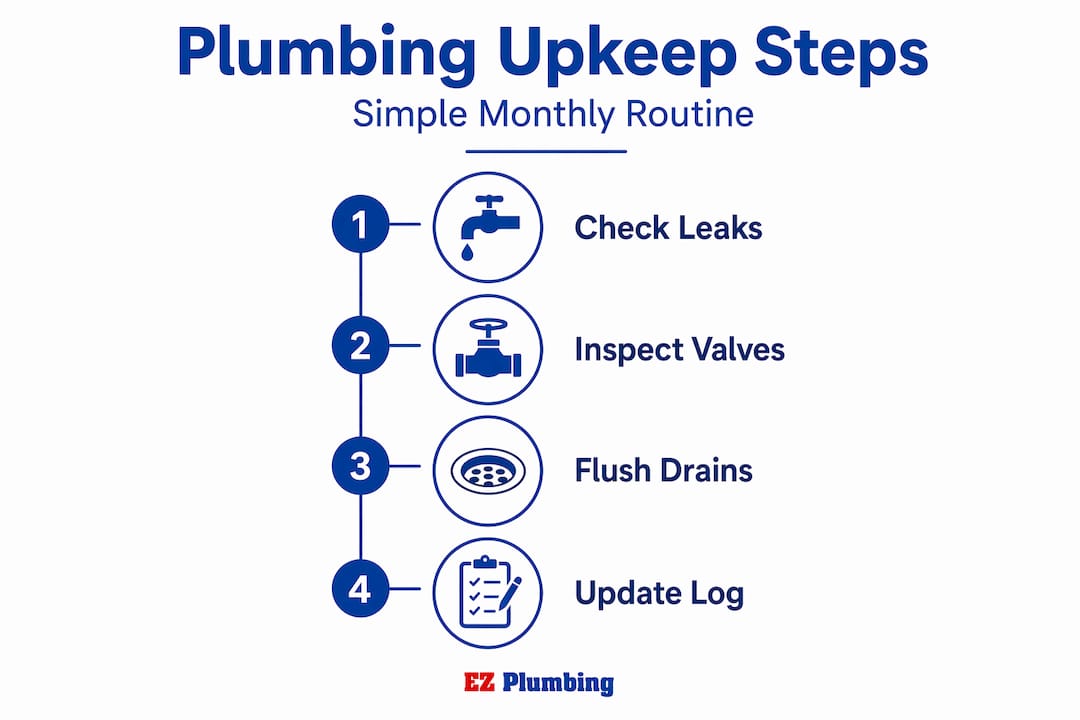
Test your shutoff valves by turning them fully off and then back on. Valves that haven’t moved in years can seize or crack when you actually need them during an emergency. Check toilet flappers by placing a few drops of food coloring in the tank; if color appears in the bowl without flushing, the flapper is leaking and wasting water around the clock. Small monthly leak checks catch early-stage problems before they produce the kind of downtime that empties a week’s revenue.
Seasonal preparations
Before winter, inspect any outdoor hose bibs and exposed pipes for insulation integrity, particularly if your business space has unheated storage areas or a garage bay. Check your sump pump by pouring water into the pit to confirm the float activates correctly. In Los Angeles, the seasonal concern is less about freezing and more about the heavy rain months, when sump pumps and storm drains take on their heaviest loads.
Spring is the right time to flush sediment from water heater tanks, clear debris from floor drains, and schedule a visual inspection of any rooftop plumbing vents for blockages caused by leaves or debris accumulation over winter.
Annual system checks
Once a year, invest in a professional water pressure test. Water pressure above 80 psi stresses fittings, supply lines, and appliances. In older commercial buildings with galvanized steel or clay sewer laterals, a camera inspection of the main drain line is worth the cost. Tree root intrusion is common in Los Angeles neighborhoods where mature street trees grow close to property lines, and roots can infiltrate clay sewer laterals silently for months before causing a full backup.
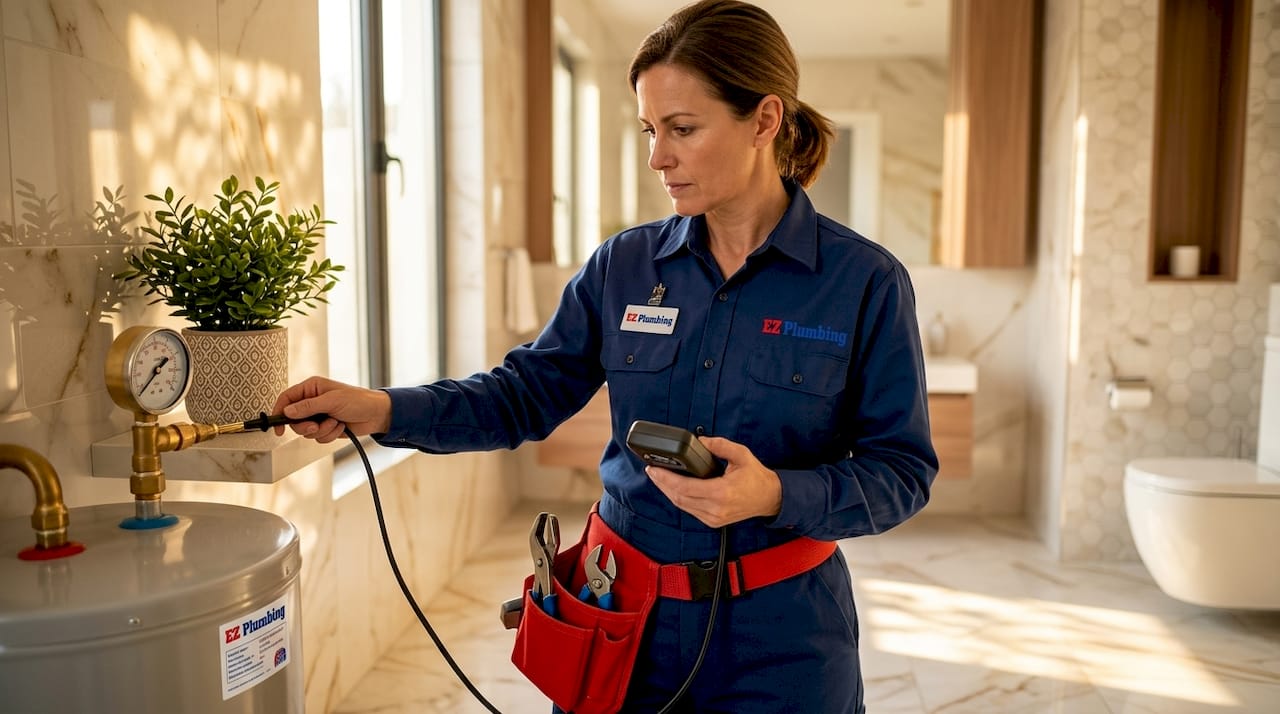
Annual water heater maintenance should include flushing the tank to remove sediment buildup, testing the pressure relief valve, and inspecting the anode rod. Sediment accumulation forces the heater to work harder, shortens its lifespan, and raises your energy costs.
Pro Tip: Keep a single maintenance log sheet at your utility closet or back-of-house area. Every time you run a monthly check or call a plumber, log the date, what you found, and what was done. You’ll thank yourself the next time an inspector asks for service history.
Building a plumbing maintenance program
Running spot checks informally works for a while, but as your business grows, inconsistency creates gaps. A structured maintenance program eliminates the “I thought someone else handled that” problem and gives you documentation that protects you during inspections and insurance reviews.
Scheduled inspections with documented records are the standard approach in commercial maintenance agreements, and for good reason. Here is a simple framework to implement one:
- Assign a point person. Even if you are a solo operator, designate yourself or a senior staff member to own the maintenance calendar and records.
- Create a task schedule. Divide tasks into monthly, seasonal, and annual categories. Put them on a recurring calendar with reminders.
- Use a service log. For every inspection or repair, record the date, the issue found or confirmed absent, the resolution, and the name of the technician or company.
- File certifications separately. Backflow test reports, licensed contractor invoices, and permit records should live in a dedicated folder, either physical or digital, for quick retrieval.
- Review annually. At the start of each year, review the prior year’s log to identify recurring issues, assess trends, and plan the budget for the coming months.
Maintenance agreements with scheduled service visits also help with cash flow predictability. Instead of facing a $4,000 emergency drain excavation in October with no budget for it, you spread costs across planned visits and address problems while they are still inexpensive.
| Task | Frequency | Who Performs It |
|---|---|---|
| Leak inspections under sinks and toilets | Monthly | Owner or staff |
| Shutoff valve testing | Monthly | Owner or staff |
| Drain cleaning for kitchen/floor drains | Quarterly | Licensed plumber |
| Water heater flush and inspection | Annually | Licensed plumber |
| Backflow prevention device testing | Annually | Certified tester |
| Camera inspection of main sewer line | Every 2 years | Licensed plumber |
Backflow prevention compliance
The role of plumbing for small businesses extends well beyond keeping water flowing. It includes protecting the public water supply. Backflow is what happens when water pressure reverses and pulls contaminated water backward into the municipal supply. The fix is a backflow prevention device, and in most cities, that device must be tested every year.
Backflow devices must be tested annually by a certified tester, and that means someone with a specific certification beyond a standard plumbing license. Most municipalities, including those throughout Los Angeles County, require the passing test report to be submitted to the local water authority. The physical test and the administrative paperwork both matter.
Backflow compliance is not optional. Failure to submit passing test reports can result in your water service being shut off, which is a business shutdown scenario with very little warning.
Here is what you should do to stay compliant:
- Confirm whether your business has a backflow prevention device installed. If you are unsure, a licensed plumber can identify it during a site visit.
- Verify with your local water authority what the annual testing deadline is and whether they send renewal notices.
- Hire only a certified backflow tester, not just any licensed plumber. Ask for their certification number before scheduling.
- Keep a copy of every passing test report in your maintenance folder. Reporting completion is legally mandated, so the paper trail is part of the compliance, not just good bookkeeping.
- If a device fails the test, it must be repaired or replaced and retested before the report can be submitted as passing.
To understand how these devices actually function and why they matter for water safety, Ez-plumbing’s guide on backflow prevention technology explains the mechanics in plain language.
When to call a professional plumber
Some plumbing issues are straightforward owner tasks. Others require a licensed plumber, and recognizing the difference saves you both money and risk. Schedule a professional inspection if no maintenance has occurred in 6 to 12 months, if you are experiencing recurring clogs, or if you notice pressure changes across your fixtures.
Specific warning signs that require professional attention include:
- Recurring leaks at the same location even after tightening or replacing a fixture. This suggests a supply line issue or corrosion deeper in the wall.
- Discolored water, particularly rusty brown or yellowish tones, which can indicate galvanized corrosion inside aging pipes.
- Slow drains in multiple locations at once, which points to a main sewer line blockage rather than a simple fixture clog.
- Unusual sounds like gurgling from drains after flushing toilets, which suggests a venting problem or partial sewer blockage.
- Unexplained spikes in your water bill, which often point to hidden leaks detectable only with pressure testing or moisture sensors.
For food service businesses in particular, drain maintenance cannot be treated casually. Preventive drain cleaning reduces failures during peak service hours, which is exactly when grease buildup tends to cause complete blockages. Hydro-jetting, which uses high-pressure water to clear the interior of drain pipes, is the most effective method for kitchen drain lines and should be scheduled at least twice a year in a restaurant environment.
When you do call a plumber, be prepared to share your service log. A good technician will use that history to diagnose faster and quote more accurately. Having records of the last camera inspection or pressure test eliminates redundant diagnostics.
Pro Tip: Ask your plumber whether they offer a maintenance agreement that covers a set number of annual visits. This locks in scheduling priority and often reduces per-visit costs compared to calling for emergency plumbing on short notice.
For a step-by-step approach to managing plumbing repairs and minimizing disruption to your business, Ez-plumbing has a dedicated resource worth reviewing before your next service call.
My perspective on small business plumbing
I’ve worked with dozens of small business owners across Los Angeles, and the pattern I see most often is not negligence. It’s misplaced confidence. Business owners assume that because nothing has visibly broken, the plumbing is fine. That assumption is exactly what turns a $200 valve replacement into a $6,000 water damage repair.
What I’ve learned is that the businesses with the fewest plumbing emergencies are not the ones with the newest pipes. They are the ones with a log. A simple notebook or spreadsheet that tracks every inspection, every repair, every technician visit. Documented maintenance records are not just good practice; they are the difference between a smooth insurance claim and a disputed one.
I also think the industry underestimates how much anxiety routine maintenance reduces for the business owner. When you know the water heater was serviced four months ago, the drains were cleaned in March, and the backflow test is on the calendar for June, you stop worrying about plumbing. That mental bandwidth goes back into your business.
The counterintuitive part is that preventive maintenance costs money upfront, and in the short term it can feel like spending on problems you don’t have yet. But the numbers are clear. Routine checks cost a fraction of what emergency repairs, water damage restoration, or a temporary business closure costs.
— EZ
How Ez-plumbing supports your business plumbing
Ez-plumbing serves commercial clients throughout the greater Los Angeles area with a full range of services designed specifically to support the kind of maintenance program outlined in this guide. Whether you need professional drain cleaning to prevent grease buildup in a restaurant kitchen or annual water heater maintenance to protect your hot water supply, Ez-plumbing’s licensed team handles the work correctly the first time.
For businesses that need reliable ongoing support, Ez-plumbing offers scheduled maintenance visits, backflow prevention testing coordination, and water leak detection using pressure testing and moisture sensing technology to catch hidden problems before they become expensive. All work is performed under C-36 License #583868 and meets Los Angeles municipal code requirements.
Contact Ez-plumbing to discuss a maintenance plan tailored to your business size, property type, and compliance requirements. A structured service agreement gives you scheduled visits, documented records, and a trusted team that already knows your building’s plumbing history when something unexpected comes up.
FAQ
What does plumbing maintenance for small businesses include?
It includes monthly leak checks, shutoff valve testing, seasonal sump pump and pipe inspections, annual water heater flushing, main drain camera inspections, and backflow prevention device testing. The frequency and scope depend on the type of business and local code requirements.
How often should a small business schedule professional plumbing inspections?
At a minimum, schedule a professional inspection once a year. If your business operates a commercial kitchen, handles high water volume, or has not had any maintenance in 6 to 12 months, twice-yearly inspections are the better standard.
Is annual backflow prevention testing legally required?
Yes. Most municipalities, including those in Los Angeles County, require annual backflow prevention testing by a certified tester. Failure to submit a passing test report can result in water service being suspended.
What are the signs that a business needs emergency plumbing?
Recurring leaks at the same fixture, discolored water, gurgling drains, multiple slow drains at once, or a sudden unexplained spike in the water bill all indicate a problem that needs professional evaluation without delay.
Can a maintenance agreement reduce emergency plumbing costs?
Yes. Scheduled maintenance agreements help predict costs over the year and reduce the frequency of emergency calls by catching developing issues early, before they escalate into failures that require urgent and expensive repairs.