
Orangeburg Pipe Replacement: 3 Bids, Permits, Asbestos Disposal
If your home still has Orangeburg sewer pipe, plan to replace it rather than patch it. Start with a sewer camera inspection, then compare bids built around excavation, pipe bursting, or in limited cases CIPP lining. Request three itemized, licensed bids before committing to a method.
TL;DR:
- Orangeburg pipe typically outlives its 50-year design life, with damage primarily caused by softening, root intrusion, and structural deformation under soil pressure.
- Camera inspections can reveal ovaling, collapsed sections, root intrusions, or standing water, which are crucial for determining the repair approach.
- Pipe bursting is often suitable for Orangeburg and less disruptive than excavation, while CIPP lining requires a near-circular host pipe to be effective.
- Replacement costs usually range from $4,000 to $30,000 depending on length, depth, and site conditions, making thorough bids essential.
- Homeowners should treat Orangeburg as a liability, plan proactive replacement, and demand proper documentation, including permits and disposal receipts.
Table of Contents
- What Orangeburg pipe is and why it fails
- How to spot Orangeburg problems: symptoms homeowners see
- How a sewer camera inspection works and what the report should tell you
- Excavation vs pipe bursting vs CIPP lining for Orangeburg
- Costs, timeline, and financing options
- Permits, asbestos concerns, and proper disposal practices
- How to evaluate bids and pick a contractor
- What professional documentation and service looks like
- Why proactive replacement usually costs less and causes less disruption
- How we help with inspection, permitting, and replacement
- FAQ
- Sources
What Orangeburg pipe is and why it fails
Orangeburg pipe is a bituminized fiber product made of compressed, asphalt-impregnated wood pulp, which gave it a dark color and a surprisingly light weight compared to clay or cast iron. Some production runs between 1946 and 1970 used asbestos as a filler material, while later batches switched to wollastonite, according to technical background from InspectApedia. Most of these lines went into the ground from the mid-1940s through the 1970s, which means any Orangeburg still in service today has already outlived the material’s practical working life.
The failure pattern is mechanical, not cosmetic. Constant moisture softens the fiber layers, tree roots exploit the seams, and the pipe gradually loses its round shape under soil pressure.
- The pipe ovals or “eggs” out of its circular shape as the walls soften.
- Sections sag or lose grade, creating low spots where waste collects.
- Full collapse follows once the deformed sections can no longer support the soil load above them.
Homeowners in homes built during that mid-century window should treat Orangeburg as a known liability rather than wait for a dramatic failure to force the issue.
How to spot Orangeburg problems: symptoms homeowners see
Orangeburg failure rarely announces itself with a single dramatic event. It shows up as a pattern of smaller annoyances that get worse over weeks or months.
- Backups that recur in the same drain or toilet despite clearing them once.
- Slow drainage throughout the house, not just at one fixture, which points to a main line issue rather than a local clog.
- Gurgling sounds from vents or drains when water runs elsewhere in the house.
- Soft, wet, or sinking patches in the yard along the suspected path of the lateral.
- Unusually lush grass or visible root growth concentrated in one strip of the yard, a sign of chronic leakage feeding tree roots.
Aggressive snaking or mechanical root cutting can do real damage to a pipe already in this condition. Orangeburg loses structural integrity from the inside out, so repeated cable work can tear through a wall that looks intact on a quick visual check but is actually paper-thin.
Pro Tip: If backups return within a few weeks of clearing them, stop scheduling repeat snaking visits and ask for a camera inspection instead; it saves money and avoids pushing a weak pipe toward collapse.
A single slow drain after a greasy meal is routine maintenance. A recurring pattern across multiple fixtures, especially paired with yard symptoms, is the signal to move from maintenance mode into diagnosis. Our guide to sewer line warning signs walks through how to tell the difference.
How a sewer camera inspection works and what the report should tell you
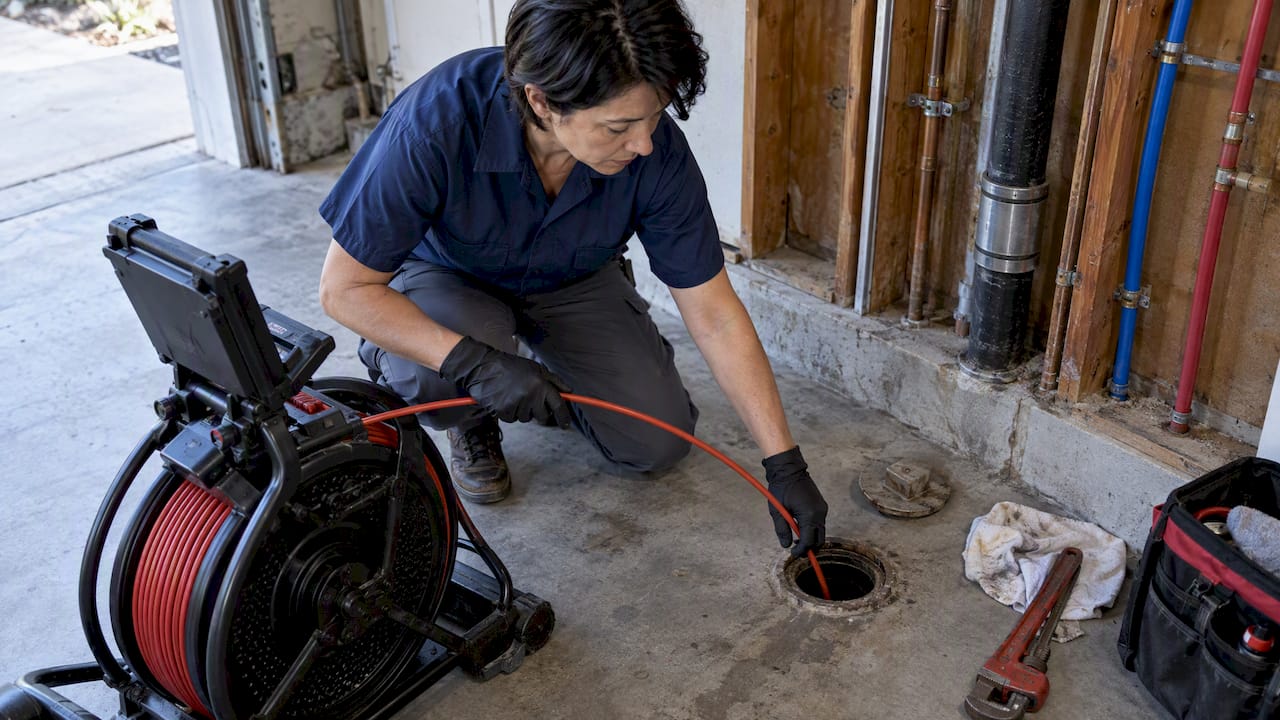
A camera inspection is the only reliable way to see what is actually happening inside an Orangeburg lateral before choosing a repair method. A technician feeds a waterproof camera on a flexible rod through a clean-out or access point, recording continuous video while locating equipment tracks the camera’s position from the surface. The result is a recorded path of the pipe’s interior, matched to physical distance and depth markers in the yard.
What the footage should reveal:
- Ovaling or egging, where the pipe cross-section has visibly deformed from round to oval.
- Collapsed or crushed sections where the camera cannot pass or the image shows caved walls.
- Root masses intruding through joints or cracks in the pipe wall.
- Standing water or sediment pooling, which indicates the line has lost its original grade.
- The overall condition of the host pipe, since a trenchless repair depends entirely on how round and intact the existing pipe remains.
This video is not just diagnostic information for your own peace of mind. It is the evidence a contractor needs to recommend excavation versus a trenchless method, and it should be delivered to you as part of any bid, not described secondhand. Our sewer camera inspection service includes a recorded video and written findings so you have documentation independent of whichever company ends up doing the replacement work.
Excavation vs pipe bursting vs CIPP lining for Orangeburg
Once you have camera footage, the condition of the pipe narrows your realistic options. Each method solves the problem differently, and Orangeburg’s brittleness rules some of them out depending on how far the deterioration has progressed.
- Excavation works regardless of pipe condition, since the old line is dug up and removed entirely. It is the only method that also corrects grade problems and lets a contractor fix any damaged connections along the way, but it carries the highest cost for surface restoration, especially under driveways, patios, or mature landscaping.
- Pipe bursting is often well suited to Orangeburg specifically, because the brittle host pipe shatters easily as a bursting head pulls a new HDPE pipe through the same path, according to a cost and methods overview from LegalClarity. It causes far less surface disruption than excavation, but it cannot be used where the pipe has fully collapsed with no clear path to pull through, or where the line runs too close to a foundation or other utilities.
- CIPP lining inserts a resin-saturated liner that cures in place inside the old pipe, leaving minimal surface disturbance. For Orangeburg, though, lining depends on the host pipe keeping a near-circular shape; once ovaling or sagging sets in, the liner cannot seat properly and the method often fails to deliver a lasting repair.
A common and practical compromise combines these approaches: excavating only the collapsed or badly deformed segments, then lining the stretches that remain round and structurally intact. Our overview of trenchless pipe lining options covers where this hybrid approach tends to make sense.
Pro Tip: Ask any contractor proposing CIPP lining on Orangeburg to show you the camera footage proving the host pipe is still round; without that, lining is a gamble rather than a fix.
Costs, timeline, and financing options
Orangeburg replacement costs typically fall somewhere between $4,000 and $30,000 for a full project, according to LegalClarity’s cost and methods overview. That range reflects real differences in scope rather than inconsistent pricing: a short, shallow line under a side yard costs far less to replace than a long run under a finished driveway and mature trees.
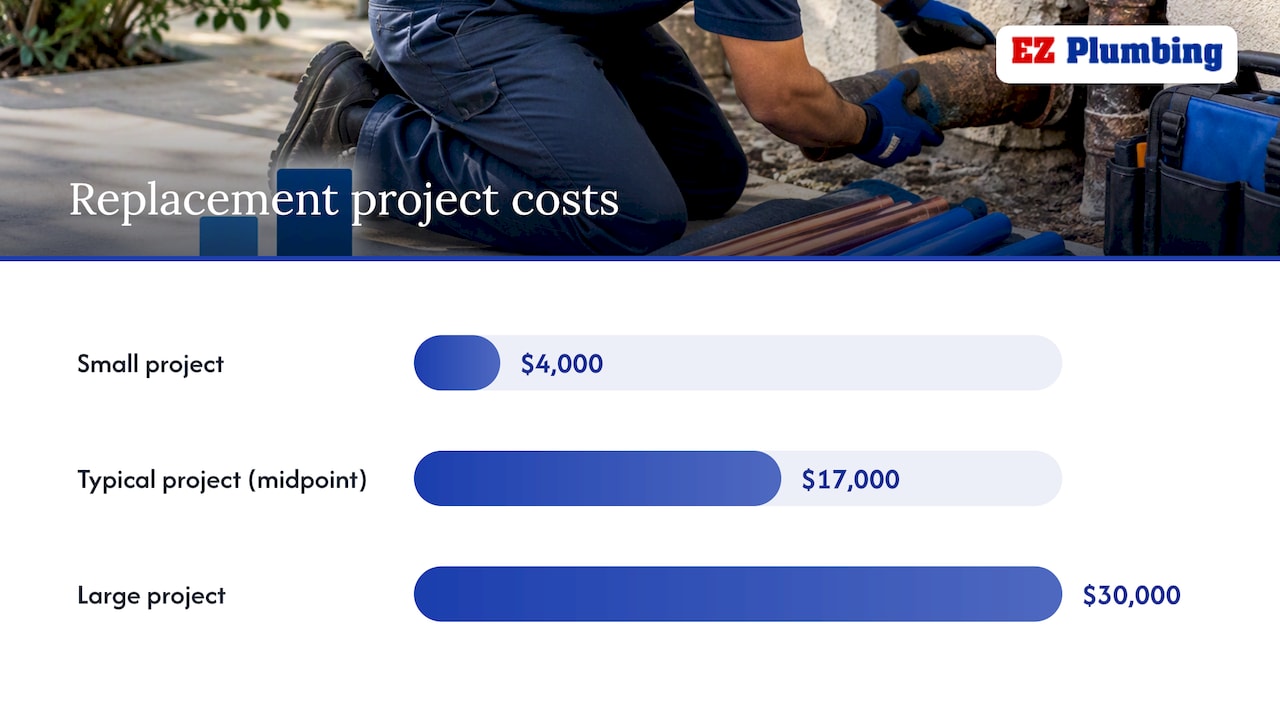
The per-foot cost of sewer line replacement in the United States typically runs from a few hundred to over a thousand dollars per foot depending on method and depth, according to the same cost overview, which is why a seemingly small difference in total pipe length can swing a bid by thousands of dollars.
Factors that drive the final number:
- Total length and depth of the lateral, since deeper trenches require more excavation and shoring.
- Soil type and site access, with rocky or heavily landscaped yards adding labor time.
- Surface restoration needs, from reseeding grass to replacing concrete or asphalt.
- Permit fees and required municipal inspections, which add both cost and calendar time.
Excavation projects commonly take several days from trenching to backfill and surface repair, while pipe bursting and lining can often be completed in a single day of active work, though permit review and inspection scheduling can add days or weeks regardless of method. On financing, homeowners typically draw on a HELOC or home equity loan, a personal home improvement loan, or financing offered directly by the contractor; some limited government programs exist in specific jurisdictions. Standard homeowners insurance rarely covers the cost of the pipe itself, though it may cover resulting interior damage depending on the policy’s specific endorsements, so it is worth reading your policy language before assuming coverage either way.
Permits, asbestos concerns, and proper disposal practices
Most municipalities require a permit and a follow-up inspection for sewer lateral replacement, and it matters who is responsible for pulling that permit. Confirm in writing whether the contractor handles the permit application or whether that falls to you, since an unpermitted repair can complicate a future home sale or insurance claim.
The asbestos question deserves a straight answer. Some Orangeburg manufactured between 1946 and 1970 contained asbestos as a filler, as noted in InspectApedia’s technical background. Intact pipe sitting undisturbed underground presents low risk, but excavation, cutting, or mechanical demolition can release fibers and triggers specific handling rules. Under EPA and NESHAP guidance, regulated asbestos-containing material must be kept wet during removal, handled to prevent fiber release, sealed in leak-tight labeled containers, and disposed of only at a landfill permitted to accept it, according to EPA asbestos guidance for homeowners.
Before work begins, confirm the following with any contractor:
- Who is pulling the permit and when the municipal inspection is scheduled.
- Whether the old pipe will be tested for asbestos before excavation, given its age and manufacture date.
- Where removed material will be disposed of, and whether that facility is permitted to accept asbestos or regulated construction waste.
- Whether you will receive a landfill receipt or waste manifest once disposal is complete.
Disposal documentation is one of the most common gaps in low bids, and asking for it up front is a simple way to avoid problems later.
How to evaluate bids and pick a contractor
A written bid should answer every practical question before work starts, not after. Use this checklist when comparing proposals from different contractors.
- Confirm the exact scope of work, including which sections of pipe are being replaced versus repaired.
- Get the proposed method in writing, whether excavation, pipe bursting, or lining, along with the reasoning tied to your camera inspection results.
- Clarify who is responsible for pulling permits and scheduling municipal inspections.
- Ask for a specific disposal plan, including which landfill will accept the removed material.
- Request details on surface restoration, such as matching existing concrete, repairing landscaping, or reseeding lawn areas.
- Review the payment schedule and any retainage held until final inspection sign-off.
- Verify the contractor’s license number and insurance coverage directly with your state’s licensing board rather than taking their word for it.
- Ask for references from recent, similar projects, including before-and-after photos where available.
A bid that skips the written detail and relies on verbal promises is a red flag on its own. So is a price that looks unusually low but has no line item for permits or disposal, since that cost tends to resurface later as a change order. Refusal to share camera footage before quoting a method is another sign to keep looking.
Pro Tip: Keep every bid, camera video, and permit document in one folder; it becomes valuable paperwork if you sell the house and a buyer’s inspector asks about the sewer lateral’s history.
What professional documentation and service looks like
We provide residential and commercial plumbing work. Our services include water heater installation and repair, drain cleaning, leak detection, repiping, sewer line repair, fixture installation, and emergency plumbing. We maintain dedicated pipe replacement resources for neighborhoods like Highland Park, reflecting how often local housing stock still carries Orangeburg laterals from its original construction era.
When we complete a replacement, documentation is part of the job rather than an afterthought. That means camera video of the original condition, copies of the pulled permit, disposal receipts where regulated material was involved, and confirmation of the final municipal inspection sign-off. Keeping that paperwork protects you if a question comes up later, whether from a future buyer, an inspector, or your own insurer.
Why proactive replacement usually costs less and causes less disruption
Waiting for an Orangeburg lateral to fail completely almost always costs more than replacing it on your own timeline. An emergency collapse means sewage backup cleanup, urgent excavation scheduled at premium rates, and often rushed surface restoration that gets redone properly later anyway. A planned replacement lets you compare bids calmly, choose the most appropriate method for your specific pipe condition, and schedule around your budget.
When full replacement funds are not available right away, prioritize the worst sections first using your camera inspection as the guide. Phasing the work, spot excavation of collapsed segments now and lining or bursting of intact stretches later, is a reasonable way to manage cost without ignoring the problem entirely.
— EZ
How we help with inspection, permitting, and replacement
We handle the full arc of an Orangeburg replacement project: sewer camera inspection to document existing conditions, pipe bursting or excavation depending on what the footage shows, an honest assessment of whether CIPP lining is realistic for your pipe, and permitting and asbestos-aware disposal handled as part of the job rather than left to you to coordinate.

When you schedule an on-site visit, you can expect a technician to review your symptoms, conduct a camera inspection if needed, and explain what the footage shows before recommending a method.
- Request an itemized written bid that separates labor, materials, permits, and surface restoration.
- Ask for copies of the permit and any disposal receipts once the work is complete.
- Confirm the municipal inspection has been scheduled and passed before considering the job finished.
If you are seeing the warning signs described above, our sewer line repair page is the right place to start a conversation about your options, or you can check current residential plumber rates before requesting a quote.
FAQ
Should I replace the Orangeburg pipe?
Yes. Orangeburg pipe installed decades ago has generally outlived its design life, and most municipal guidance now recommends replacement with code-compliant materials like PVC rather than ongoing repairs, according to Ann Arbor’s building department guidance. A camera inspection will confirm the pipe’s current condition and help you choose the right method.
Should I buy a house with Orangeburg pipe?
You can, but budget for replacement as part of your purchase decision rather than treating it as optional maintenance. Request a sewer camera inspection before closing so you know the pipe’s actual condition and can negotiate the cost into the sale price if needed.
Is Orangeburg pipe illegal?
Orangeburg pipe is not retroactively illegal in homes where it already exists, but it is no longer an approved material under most current building codes, according to Ann Arbor’s municipal guidance. Any new installation or permitted replacement work must use a currently approved material such as PVC.
How long do Orangeburg pipes last?
Under ideal conditions, Orangeburg had a design life of roughly 50 years, and many installations have already reached or exceeded that age, according to a Fairfax County briefing on lateral pipes. In practice, moisture exposure and root intrusion often shorten that lifespan well before the 50-year mark.
What does Orangeburg pipe replacement typically cost?
Replacement costs typically range from about $4,000 to $30,000 depending on pipe length, depth, chosen method, and surface restoration needs, according to LegalClarity’s cost and methods overview. Getting three itemized bids is the most reliable way to understand where your specific project falls within that range.
Sources
- Response to Questions on the 2016 LOBs (Fairfax County)
- Orangeburg pipe replacement cost and methods (LegalClarity)
- Orangeburg Pipe History, Uses, Failures, Asbestos, Identification, Life (InspectApedia)
- EPA asbestos rules: what homeowners need to know (InspectandTest)
- Orangeburg sewer piping guidance (City of Ann Arbor)