
Is Hydro Jetting Worth It: A Practical LA Guide
You've cleared the kitchen drain twice, and the slow water is already back. Then the bathtub starts holding water when the toilet flushes. That's when most Los Angeles homeowners ask, is hydro jetting worth it, or is a plumber recommending an expensive version of the same drain cleaning?
My answer is direct. Hydro jetting earns its cost when buildup is recurring and the pipe is structurally sound. It's the wrong first move when the line is cracked, badly corroded, displaced, or still undiagnosed. The decision isn't hydro jetting versus snaking alone. It's blockage diagnosis, pipe inspection, and then choosing the least aggressive method that solves the actual problem.
Table of Contents
- What Hydro Jetting Actually Does to Your Pipes
- Clear Signs Your LA Home Needs Hydro Jetting
- Hydro Jetting Compared to Snaking and Other Drain Cleaning Methods
- Hydro Jetting Cost and ROI for Los Angeles Property Owners
- Pipe Compatibility and Safety Risks You Should Know First
- What to Expect From a Professional Hydro Jetting Service Call
- How Often to Schedule Hydro Jetting and When to Call a Pro
What Hydro Jetting Actually Does to Your Pipes
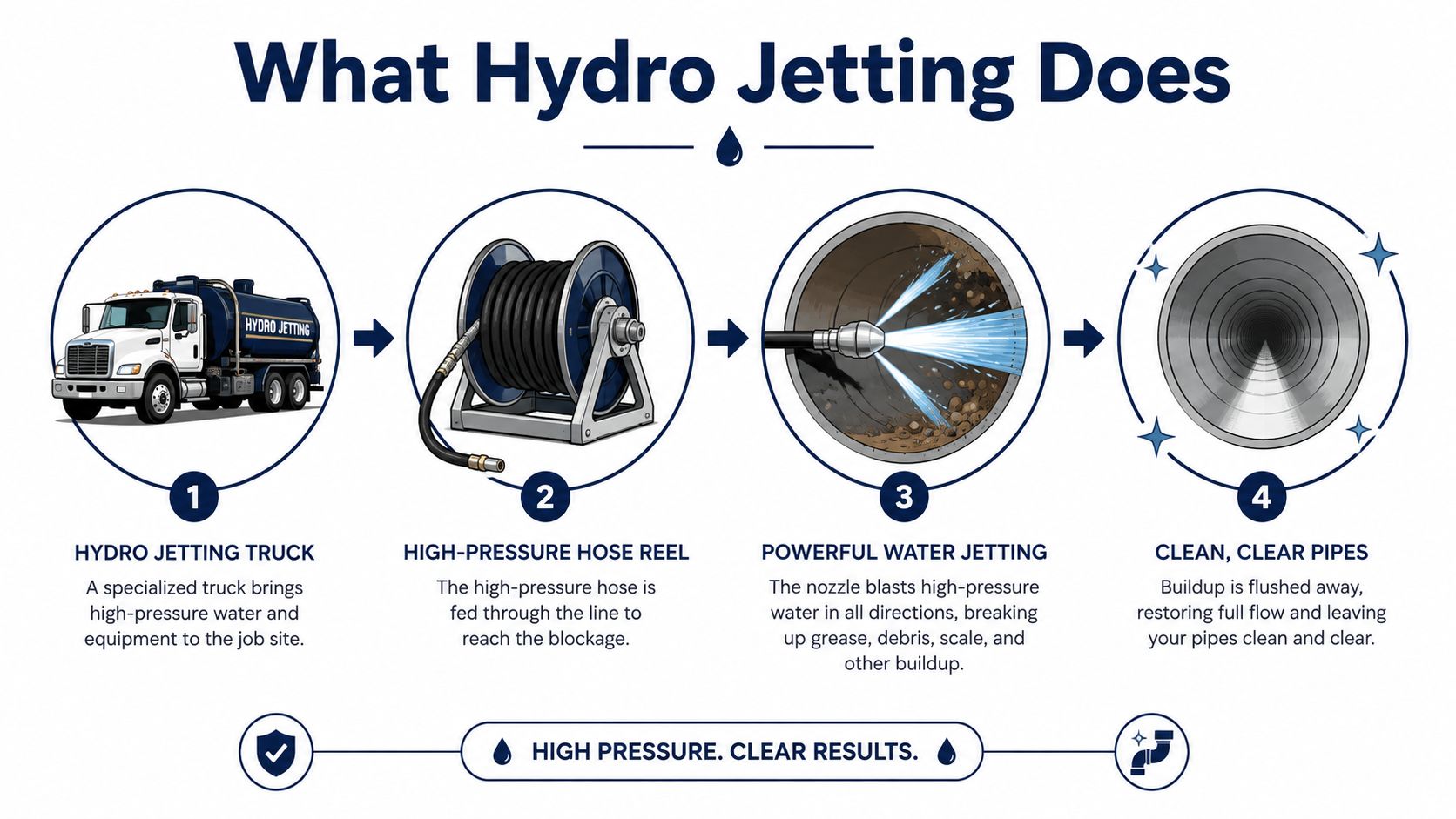
A hydro jetting service starts at an access point, usually an exterior sewer cleanout. The technician connects a hose from the jetter truck to the line, selects a nozzle, and feeds it into the pipe. The equipment combines a water tank, pump, flexible hose, and specialized nozzle. Rear-facing jets pull the hose forward while water scours the pipe walls.
The commonly cited residential equipment range is 3,000 to 4,000 PSI, as described in this hydro jetting cost and equipment guide. That figure isn't a target for every pipe. It's the machine's operating capability, while the technician must adjust pressure, flow, nozzle design, and hose movement to the line's size and condition.
The cleaning sequence
The nozzle's forward-facing opening helps break through an obstruction. Its rear-facing jets push the hose along and wash grease, sludge, mineral scale, paper residue, and loose root material away from the pipe walls. Unlike a snake, which generally opens a passage through the obstruction, jetting is intended to clean more of the pipe's interior circumference.
The operator usually works through controlled passes. Water loosens the material, carries it downstream, and restores usable space inside the line. A professional may change from a penetrating nozzle to a flushing or wall-cleaning nozzle once the blockage has been opened.
The homeowner's guide to hydro jetting is useful if you want a basic equipment overview before a technician arrives. The important point is that the nozzle isn't chosen by guesswork. Pipe diameter, blockage depth, material, and structural condition all affect the cleaning plan.
Why pressure isn't the whole story
Experimental sewer-cleansing work found that water-jet performance depends heavily on clogging depth and nozzle geometry. In that work, a 300 mm sewer pipe with a 5 m sediment deposit required the right nozzle and jet speed for efficient removal, according to the published sewer-cleansing study.
That same research indicates that 60 bar is typically sufficient for soft debris, while 80 to 120 bar may be needed for heavier buildup. It also presents 120 bar as a sufficient maximum nozzle pressure for plastics and other common pipe materials. So hydro jetting isn't "a stronger drain snake." It's a controllable cleaning method.
Don't confuse it with power-washing a driveway. The technician is directing water through a confined pipe, using a nozzle designed for traction, cutting, scouring, and flushing. The goal is to clean the line without turning a pressure adjustment into pipe damage.
Clear Signs Your LA Home Needs Hydro Jetting
A single slow sink doesn't automatically justify hydro jetting. That symptom may come from a localized obstruction, and a properly sized auger may solve it quickly. Jetting becomes more reasonable when the same line repeatedly collects material or several fixtures reveal a shared drainage problem.
Six symptoms that deserve attention
The same drain clogs again within weeks. A snake may have opened a narrow channel through grease, soap residue, or sludge. If the obstruction returns soon after clearing, the pipe wall likely needs cleaning rather than another puncture through the center.
Multiple fixtures back up together. A toilet and tub that respond to the same flush point toward a restriction farther down the branch or main line. Cleaning one fixture trap won't address that shared section.
Sinks gurgle or bubble when another fixture drains. Air and water are fighting for space in a restricted line. In an older Westside home, buildup inside cast iron can narrow the passage gradually.
The entire house drains slowly. Kitchen, bathroom, and laundry fixtures slowing together usually means the issue sits beyond one individual fixture. A main-line assessment should come before choosing a cleaning tool.
Drains or the yard smell like sewage. Odor can signal stagnant wastewater, a compromised trap, or a line that isn't carrying waste properly. It doesn't prove hydro jetting is needed, but it does justify professional diagnosis.
Water stands around an outdoor cleanout. This is a strong sign that the downstream line is restricted or holding wastewater. Don't open a pressurized cleanout casually. Have a plumber assess it first.
Match the symptom to Los Angeles conditions
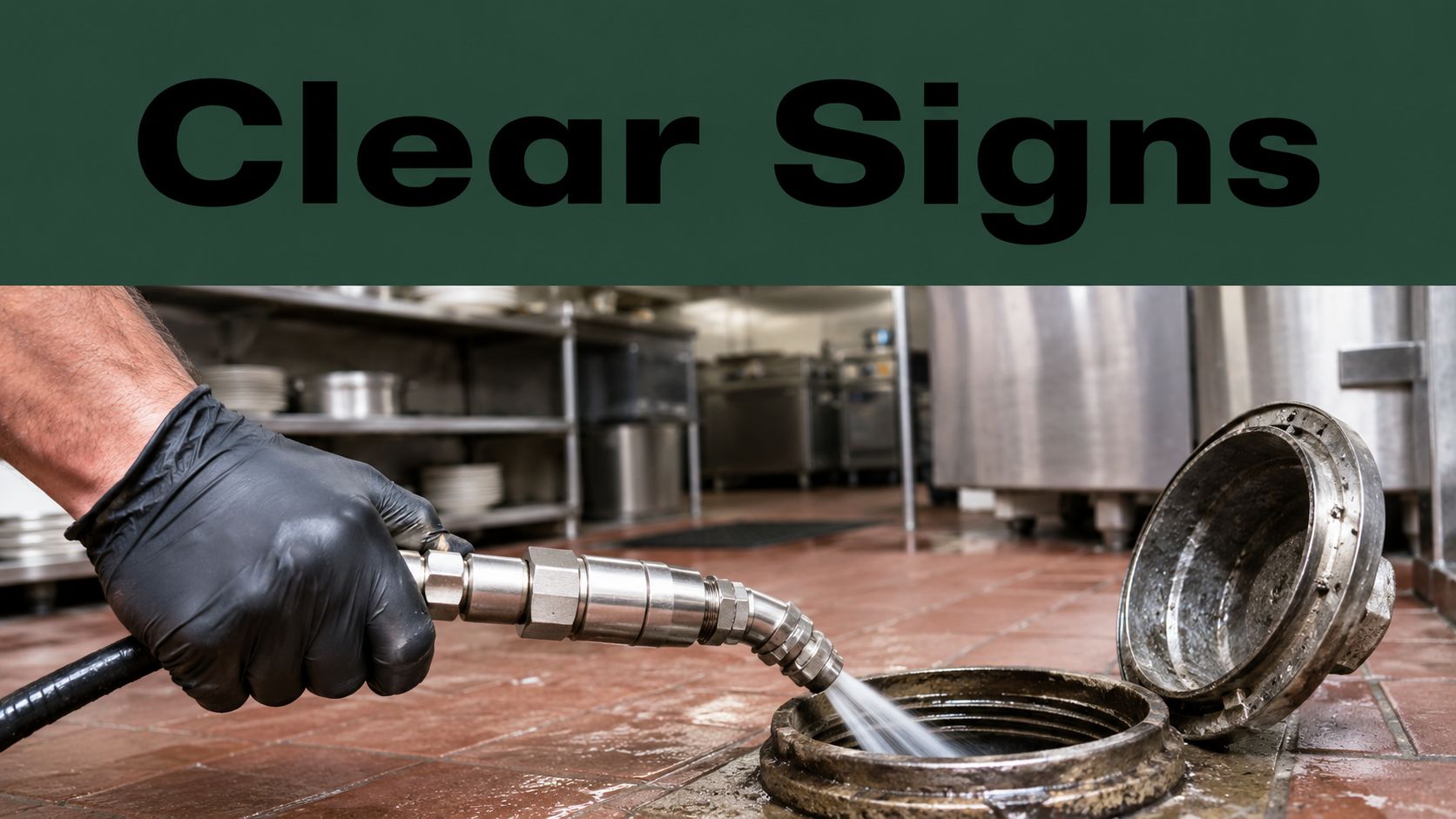
LA homes present different blockage patterns by neighborhood and property age. A restaurant-heavy commercial corridor or Echo Park kitchen may have grease entering a line. Mature trees around mid-century Eagle Rock properties can raise concern about root intrusion. San Fernando Valley homes may develop hard-water scale, while older cast-iron systems on the Westside can collect years of internal residue.
The location gives the technician useful context, but it doesn't replace a camera. One or two warning signs usually justify inspection before jetting, especially when the pipe's age, material, or repair history is unknown.
Hydro Jetting Compared to Snaking and Other Drain Cleaning Methods
The right tool depends on what is blocking the line and whether the pipe can safely handle cleaning pressure. A snake, auger, chemical product, and hydro jetter each solve a different version of a drainage problem.
| Method | Best For | Pipe Wall Cleaning | Average LA Cost | Risk to Old Pipes |
|---|---|---|---|---|
| Hydro jetting | Recurring grease, sludge, scale, and confirmed buildup | Thorough scouring and flushing | Higher than a basic clearing visit | Can be unsafe if pressure is mismatched to damaged pipe |
| Snaking | Localized soft stoppages and one-time clogs | Limited | Lower than hydro jetting | Generally lower, though poor technique can still cause damage |
| Augering | Mechanical opening of a stubborn obstruction | Limited | Lower than full jetting | Depends on cable size, force, and pipe condition |
| Chemical cleaners | Occasional minor household obstruction | Almost none | Low product cost | Can harm older metal systems and complicate later service |
A snake or auger is often the sensible first tool for a one-time stoppage. It breaks a path through the clog and gets water moving again. That's useful when the pipe is otherwise clean, the symptom is isolated, and there's no reason to suspect recurring wall buildup.
Hydro jetting wins when the pipe behaves like a dirty hose rather than a blocked plug. Grease, sludge, scale, and loose root material can remain attached after a cable passes through. The line may drain for a while, then collect more material on the same rough or sticky surface.
The practical distinction: A snake opens a route. Hydro jetting cleans the route's walls.
Chemical cleaners are the weakest choice for a recurring main-line problem. They don't mechanically remove the deposits, and harsh chemicals can create an added hazard for technicians working later on older metal piping. I wouldn't use them as a substitute for diagnosis in a pre-1970 home.
For a deeper side-by-side explanation, review hydro jetting versus snaking. The bottom line remains simple: don't pay for jetting when a basic isolated clog needs only a basic clearing, and don't keep paying for snaking when the same buildup keeps returning.
Hydro Jetting Cost and ROI for Los Angeles Property Owners
Hydro jetting costs more than a routine cable clearing because the service uses specialized equipment, additional setup, and a cleaning process that may involve camera work. Current pricing content places many residential jobs in a broad $300 to $800 range, with severe or main-line work reaching $1,000 or more, according to this 2026 hydro jetting pricing guide.
Treat those figures as a budgeting range, not a promise. Access, line length, blockage severity, roots, pipe diameter, and inspection requirements can change the quote. A short, accessible branch line is a different job from a long sewer lateral reached through a difficult cleanout.
What should be included in the quote
Ask the plumber to separate the cleaning from any diagnostic or repair work. A clear proposal should identify:
- Access: Whether the price assumes an existing, usable cleanout or additional access work.
- Inspection: Whether a pre-cleaning and post-cleaning camera review is included or billed separately.
- Blockage type: Whether the quote covers ordinary buildup or changes if roots, heavy scale, or foreign material appear.
- Cleanup: How the company handles water, removed debris, landscaping protection, and restoration.
- Timing: Whether after-hours service, difficult hillside access, or emergency dispatch changes the price.
The economic case is strongest when the line keeps demanding service. In England and Wales, water companies clean up nearly 280,000 sewer and drain blockages each year, costing more than £100 million annually, while UK guidance cites about 200,000 sewer blockages each year and says up to 75% are caused by fats, oils, and grease. Those figures are summarized in Unblocktober's blockage-cost overview.
A peer-reviewed analysis in the United States associated FOG deposits with about 25% of annual line blockages, 3 to 10 million gallons of untreated wastewater releases, and 47% of blockage-caused sanitary sewer overflows linked to FOG accumulation, as reported in the same cited overview. That doesn't calculate your personal payback, but it explains why jetting can make financial sense in grease-prone homes, restaurants, and multi-unit buildings.
| Service | Typical LA Price Range | Avg. Annual Calls Before Recurrence | Best Use Case |
|---|---|---|---|
| Basic snaking | Varies by access and urgency | No fixed interval | One-time localized clog |
| Hydro jetting | About $300 to $800 for many residential jobs, and $1,000 or more for severe or main-line work | No fixed interval | Recurring buildup in a sound line |
| Camera inspection | Varies by scope and access | No fixed interval | Unknown pipe condition or recurring failure |
For local service planning, Los Angeles drain cleaning options can help you request a quote based on the actual line rather than a vague package price. If a line keeps returning to the plumber, compare the accumulated clearing cost with one properly diagnosed cleaning.
Pipe Compatibility and Safety Risks You Should Know First
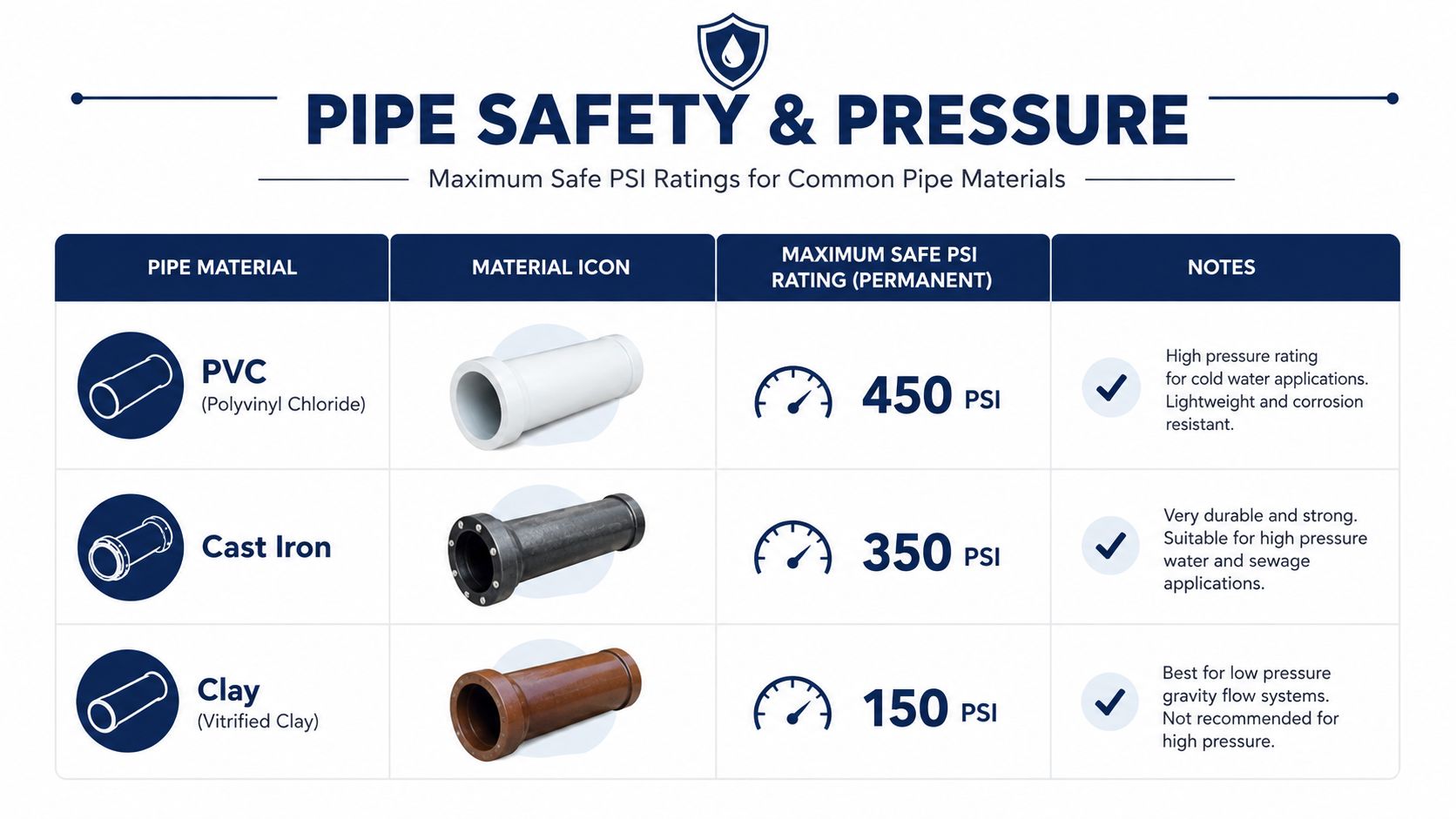
Higher pressure doesn't automatically produce a better result. On an intact plastic line, a professional may have more operating room than on fragile clay, deteriorated cast iron, Orangeburg, or aging galvanized pipe. The technician's job is to select the minimum effective pressure and nozzle combination, not to run the machine at its highest setting.
Industry guidance describes common sanitary sewer jetting around 2,000 to 3,000 PSI with 50 to 125 gallons per minute, while the maximum recommended pressure for plastic pipes in good condition is about 12,000 kPa, or 120 bar, according to this survey of sewer operational options. The same evidence supports lower pressure for soft debris and higher settings only when heavier buildup requires it.
Why the camera comes first
A camera can reveal a crack, offset joint, bellied section, root-damaged connection, or severe corrosion. Jetting a structurally compromised pipe may expose a defect that was already present, but the homeowner still faces the consequence, including flooding, loss of flow, or a failed lateral.
That's why I want the inspection before the cleaning when the pipe is old, the material is uncertain, or the symptoms suggest movement or collapse. If the line has a broken section, spot repair or replacement may be the correct first job. Cleaning a damaged pipe only gives you a temporarily open damaged pipe.
Watch for operational warning signs during service. A sudden pressure drop, unusual hose feedback, or water appearing at an unexpected cleanout can signal that the line isn't behaving normally. A careful technician stops, reassesses, and explains the finding instead of forcing the hose farther.
Pressure is a setting, not a sales feature. The safest successful cleaning uses enough force to remove the obstruction and no more.
What to Expect From a Professional Hydro Jetting Service Call
A competent company starts before the truck arrives. Dispatch should ask where the backup occurs, whether several fixtures are affected, what previous repairs were performed, and whether the property has an accessible cleanout. Pipe age and material matter because they determine whether inspection should precede cleaning.
At the property, the technician should locate the access point, protect nearby surfaces and landscaping, stage the hose, and confirm where wastewater and loosened debris will go. If the line's condition is unknown, expect a camera inspection before the jetter is put into operation.
The work should follow a controlled sequence
The technician selects a nozzle appropriate to the obstruction and pipe. Jetting may proceed in measured passes, often working from the downstream side toward the upstream access point so the water can carry loosened material away. The operator should monitor flow, pressure behavior, hose movement, and unexpected water movement rather than letting the pump run.
A final camera review is valuable because it shows whether buildup was removed and whether a structural problem remains. Ask for footage or a written report that identifies the pipe material, observed defects, cleaned areas, and recommended next step.
Before booking, ask these questions:
- Quote scope: Is the price all-inclusive, or can access, after-hours work, or difficult entry add charges?
- Camera pricing: Is the inspection included before and after cleaning?
- Damage procedure: What happens if the camera finds a broken, offset, or collapsed section?
- Cleanup: Who removes standing water and leaves the work area orderly?
- Warranty: What does the workmanship guarantee cover, and what does it exclude?
Plumbing companies also need dependable call handling when technicians are in the field. If you're evaluating that operational side of a service business, this guide to plumbing answering service pricing offers useful context for comparing coverage and fees.
A professional visit should end with more than a flowing drain. You should know what caused the restriction, what the camera showed, what the technician cleaned, and whether the pipe needs repair or future monitoring.
How Often to Schedule Hydro Jetting and When to Call a Pro
There isn't one universal hydro jetting calendar for every Los Angeles property. A home with recurring root intrusion needs a different plan from a restaurant kitchen, and a newer clean line may not need preventive jetting at all. Schedule based on blockage history, pipe condition, and usage, not on a salesperson's generic interval.
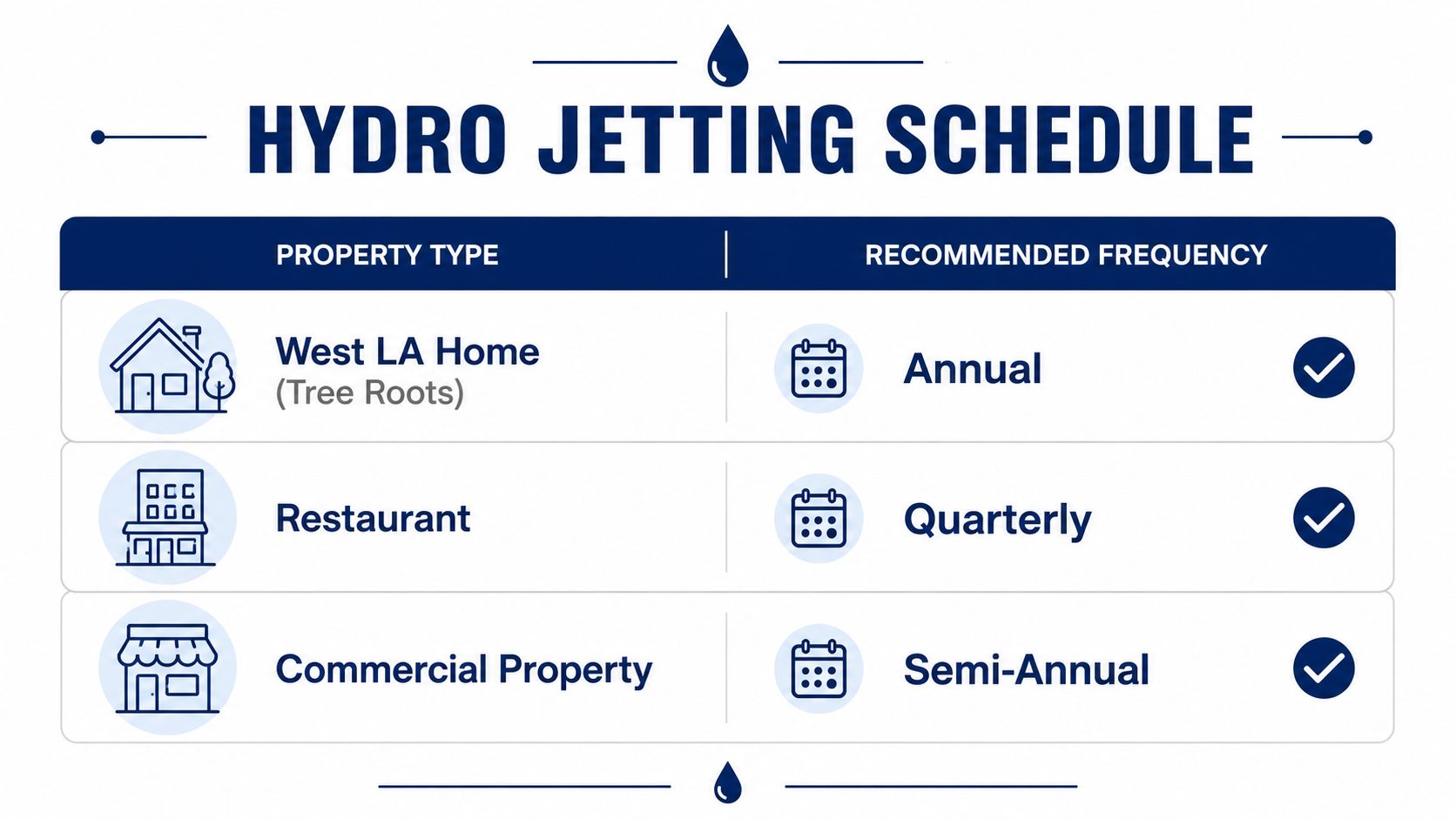
For planning purposes, the property types in the supplied maintenance guidance point to different rhythms:
- Older West LA home with mature trees: Annual preventive review may make sense when root intrusion has already been documented.
- Restaurant: Quarterly attention can be appropriate for grease-heavy drainage.
- Commercial or multi-unit property: Semi-annual service may fit a system with repeated buildup and high usage.
Use this decision test
Call a licensed plumber if multiple fixtures drain slowly, sewer odors persist, fixtures gurgle, or a backup returns after the line was recently cleared. Those symptoms point to a shared or recurring problem, and renting equipment without understanding the pipe can turn a stoppage into a flood.
Request a camera before jetting when the line is older than 25 years, the material is unknown, or the property has a history of breaks, offsets, roots, or repairs. That age threshold is a practical screening rule, not proof that every older pipe is unsafe.
Seek same-day service when wastewater backs up into a tub, basement drain, or other low fixture. Stop using fixtures until the line is assessed. Consumer jetters also rarely match the 3,500 to 4,000 PSI equipment range described for sewer-main work in the supplied research, but pressure alone still doesn't make DIY cleaning safe.
So, is hydro jetting worth it? Yes, for recurring buildup in a sound, inspected line. No, as a blind first step on an unknown or damaged pipe. EZ Plumbing can evaluate the line with camera-equipped drain and sewer service across greater Los Angeles, then recommend cleaning or repair based on what the pipe shows.
If your LA drain keeps backing up, EZ Plumbing can inspect the line, identify whether grease, roots, scale, or damage is driving the problem, and perform hydro jetting when the pipe can safely handle it. Visit EZ Plumbing to schedule an evaluation and get a clear recommendation before you pay for another temporary clearing.