
Which Hot Water Recirculation Pump Control Saves Energy for Homeowners?
A hot water recirculation pump keeps hot water moving through your pipes so it arrives at the tap in seconds instead of after 30 to 60 seconds of running cold water down the drain. It pays off fastest in homes with long pipe runs to bathrooms or kitchens, or households that use hot water constantly throughout the day. The catch: how well it performs, and how much energy it costs to run, depends almost entirely on the control method behind it.
TL;DR:
- Demand-based recirculation systems are most efficient because they activate only when hot water is needed, avoiding unnecessary energy consumption.
- Homes without a dedicated return line can retrofit using the cold line with a crossover valve, but proper check valve installation is critical to prevent hot-cold mixing issues.
- Proper pump sizing depends on fixture distance, flow rate, and pipe layout; undersized pumps wait longer, negating the system’s benefits.
- Installation typically requires site assessment, electrical connection, proper component placement, and pipe insulation, best handled by licensed professionals.
- Upfront costs include the pump, installation, permits, and electrical work, but savings on water and energy over time can justify the investment.
Table of Contents
- How Does a Hot Water Recirculation Pump Work?
- Which Types of Recirculation Systems Fit Your Plumbing?
- What Does Installing a Hot Water Pump Involve?
- Is a Recirculation Pump Worth the Energy Tradeoff?
- How Do You Pick the Right Pump and Control Method?
- What Does Recirculation Pump Installation Cost?
- How Do You Maintain and Troubleshoot a Recirculation Pump?
- Installer Perspective: When Ez-plumbing Recommends Professional Installation
- Get a Professional Recirculation Pump Installation
- Sources
- FAQ
How Does a Hot Water Recirculation Pump Work?
A recirculation pump creates a loop. Instead of hot water sitting in the pipe and cooling off between uses, the pump pulls that cooled water back toward the water heater and reheats it, rather than letting it drain down the sink while you wait. This is the core mechanic behind every hot water circulation system on the market, and it’s what ENERGY STAR means when it describes demand recirculating systems moving water between the heater and fixtures on request.
What actually triggers that loop varies by system:
- Continuous systems run the pump around the clock, keeping the loop hot at all times.
- Timer-based systems run on a programmed schedule, typically matching morning and evening usage windows.
- Temperature-sensor systems activate when the sensor detects the water in the loop has cooled below a setpoint.
- On-demand systems activate with a push button, motion sensor, or app command, run just long enough to bring hot water to the fixture, then shut off.
Demand systems are the most common configuration installers recommend today. You press a button or trigger a sensor near the fixture, the pump runs until the loop reaches temperature, and then it stops automatically. No standing loss, no wasted cycles.
Which Types of Recirculation Systems Fit Your Plumbing?
Not every home has the same plumbing behind the walls, and that changes which hot water recirculation system actually works.
- Dedicated return loop: A separate pipe runs from the farthest fixture back to the water heater, carrying cooled water home without touching the cold supply. This is the gold standard for performance, common in new construction where the return line gets roughed in before drywall goes up.
- Cold-line return (crossover retrofit): In homes without a dedicated loop, the pump uses the existing cold line as a return path through a crossover valve. It’s the most practical retrofit option, but it depends on a correctly sized check valve to keep hot water from bleeding into the cold supply.
- Demand pumps with digital controls: Manufacturers like Grundfos build models with AUTOADAPT and digital scheduling that learn household usage patterns and cut runtime automatically, a real upgrade over a basic mechanical timer, per PumpProducts’ buyer’s guide.
- Continuous/always-on systems: These deliver the fastest response at any fixture but run the highest risk of wasted energy if the loop isn’t well insulated.
Pro Tip: If your home wasn’t plumbed with a dedicated return, ask your installer specifically about crossover valve compatibility before you buy a pump. It’s the single most common mismatch in retrofit jobs.
What Does Installing a Hot Water Pump Involve?
Recirculation pump installation is not a weekend DIY project for most homes, and a licensed plumber typically handles it for good reason. Here’s what that visit usually covers:
- Site assessment. The plumber measures the distance to your farthest fixture, checks whether a dedicated return line exists, and decides whether a crossover retrofit or a new loop makes more sense.
- Component placement. The pump gets mounted near the water heater, a temperature sensor goes near the farthest fixture or on the return line, and a crossover valve and check valve get installed if you’re retrofitting through the cold line.
- Electrical work. Most pumps need a dedicated outlet or a hardwired connection; if your water heater closet doesn’t already have power nearby, expect an electrician or a licensed plumber pulling a permit for that circuit.
- Setpoint testing. According to A. O. Smith’s installation guidance, installers test temperature setpoints after installation and often program a backup timer as a failsafe.
- Pipe insulation. Installers insist on insulating the recirculation loop because bare pipe bleeds heat fast, undercutting the whole point of the system.
Skipping the check valve step is where most retrofit problems start. If you’re unsure whether your current water heater setup can support a crossover safely, that’s a question worth asking before signing off on a quote.
Is a Recirculation Pump Worth the Energy Tradeoff?
The honest answer: it depends on your control method more than almost anything else. A demand-based pump saves water and energy by only running when someone actually needs hot water. A poorly controlled continuous system can do the opposite, according to ENERGY STAR’s own guidance on demand recirculating systems, which notes that always-on systems can use more energy than they save because of constant pumping and heat loss through the pipe walls.
Armstrong Fluid Technology’s Astro 2 documentation reports that recirculation can save an average of water savings each year for a typical four-person household, a manufacturer estimate that gives a real sense of scale for what standing-water waste actually adds up to.
Advantages:
- Hot water at distant taps in seconds, not a minute or more
- Meaningful water savings on households that currently run the faucet to clear cold water
- Demand controls make the system efficient rather than wasteful
Disadvantages:
- Upfront installation cost, plus possible electrical work
- Continuous systems can increase water heater cycling and energy draw
- Some tankless and heat pump water heaters need specific sizing to handle the extra runtime
How Do You Pick the Right Pump and Control Method?
Sizing starts with three numbers: the distance to your farthest fixture, the flow rate you need in gallons per minute, and the head loss in your specific pipe layout. A pump undersized for that distance leaves you waiting almost as long as before.
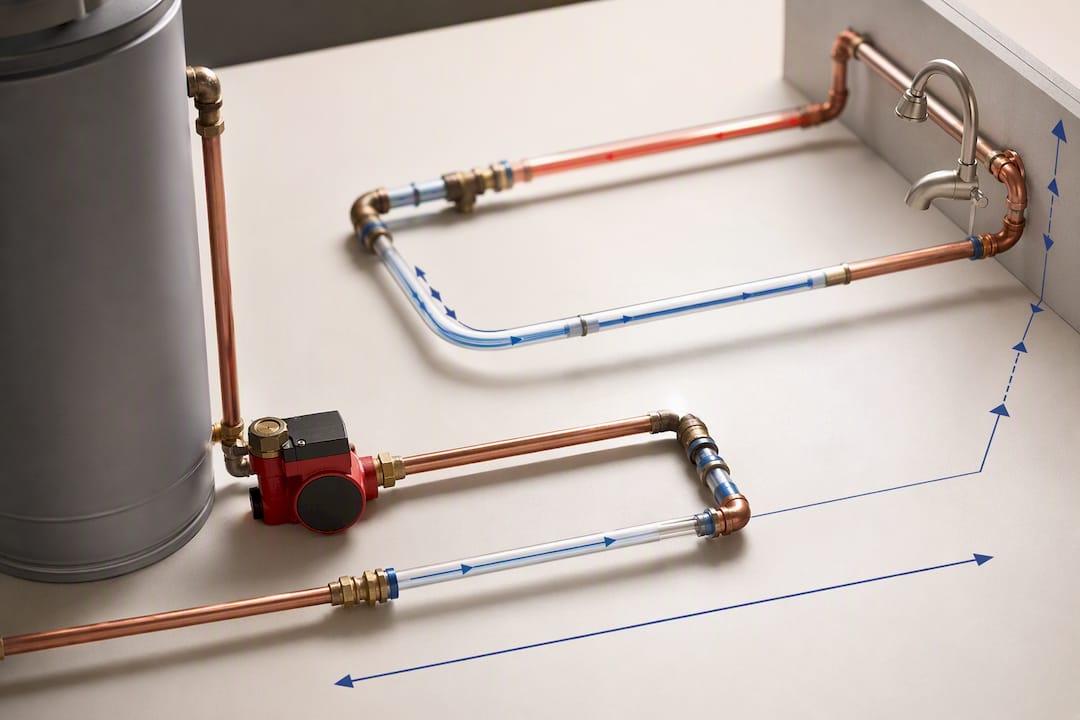
For control method, demand-based is the better choice for most households because it only runs on request. If your household’s hot water use follows a predictable daily rhythm, a scheduled system with digital programming can work almost as well.
Bring this checklist to every estimate:
- Does the quote include permits for the electrical circuit?
- Is there a clear plan for check valve and backflow protection?
- Is the pump sized for my actual fixture distance, or is it a generic recommendation?
- Is the pump compatible with my specific water heater, whether tank, tankless, or heat pump?
- What’s the warranty on the pump itself versus the labor?
Pro Tip: A quote that skips the check valve conversation or gives you a flat “one size fits all” pump recommendation without measuring your fixture distance is a red flag worth walking away from.
What Does Recirculation Pump Installation Cost?
A retrofit installation on an existing home with straightforward access usually takes a few hours in a single visit. New construction or a home requiring a dedicated return loop routed through walls can stretch into a multi-day job, especially if drywall needs to come down.
Your total cost adds up from several pieces:
- The pump and installation kit itself
- Labor for the plumber’s time on-site
- Permit fees, which vary by municipality
- An electrician’s visit, if your water heater area doesn’t already have power
- Insulation materials for the recirculation loop
Get at least two or three quotes before committing, and weigh the upfront number against water and energy savings over the life of the system, not just the installation invoice.
How Do You Maintain and Troubleshoot a Recirculation Pump?
Routine maintenance is light, but skipping it leads to bigger problems down the line.
- Listen for unusual pump noise, which often signals a failing motor or debris in the line.
- Check for leaks around the pump housing and valve connections every few months.
- Verify the sensor or push-button switch still triggers the pump reliably.
- If the pump runs constantly or flow feels weak at fixtures, suspect a stuck check valve or a miscalibrated sensor.
Poorly configured controls turn convenience into an energy liability fast, so if the pump won’t stop cycling, that’s worth a call rather than a guess. When you do call, have your water heater’s model information ready along with a description of when the problem started.
Installer Perspective: When Ez-plumbing Recommends Professional Installation
We see the same retrofit mistakes repeatedly: mis-sized pumps, skipped check valves, and heat pump water heaters pushed into extra cycling that nobody accounted for. A licensed installation avoids those failure points because it starts with an actual measurement of your fixture distance and heater type, not a guess. During an inspection, we document the return path option, the electrical situation, and the setpoint plan before recommending anything.
— EZ
Get a Professional Recirculation Pump Installation
A professional plumbing service handles hot water recirculation pump installation the way a job like this deserves: a real site assessment first, not a pump pulled off a shelf and hoped for the best. The installer evaluates fixture distances, checks whether a dedicated loop or crossover retrofit fits your plumbing, pulls the necessary permits, and tests setpoints before calling the job done.
If you’re comparing a recirculation pump against a broader water heater upgrade, our water heater installation services cover both new installs and integrating a pump into your current setup, tank or tankless. Have your water heater’s age, fixture distances, and current pain points ready when you call, and we’ll walk you through what a proper installation actually involves for your home. Request an estimate and we’ll schedule an inspection to give you a real number, not a guess.
Sources
For deeper technical detail, ENERGY STAR’s demand recirculating system overview covers efficiency standards, while Grundfos’s hot water recirculation resources and Armstrong Fluid Technology’s Astro 2 documentation detail product specifications and retrofit options.
- How to install a water heater circulating pump | A. O. Smith
- Grundfos ALPHA series circulator pumps buyers guide and review | PumpProducts
FAQ
Are Hot Water Recirculating Pumps Worth It?
For homes with long pipe runs or frequent hot water use, yes, especially with demand-based controls that only run on request. The math gets weaker in small homes with short runs, where the wait for hot water was never long to begin with.
What Are the Disadvantages of a Recirculating Pump?
The main downsides are installation cost, possible electrical work, and the risk that a continuous or poorly controlled system increases water heater cycling and energy use instead of saving it. Compatibility with certain heat pump water heaters also requires careful sizing.
Can You Add a Recirculating Pump to an Existing System?
Yes, most homes without a dedicated return line can retrofit a pump using the cold line as a return path through a crossover valve and check valve. A professional plumber evaluates whether your existing plumbing supports this before recommending a specific setup.
What Is a Hot Water Recirculation Pump?
It’s a pump that circulates water between your water heater and fixtures so hot water reaches the tap almost immediately instead of running to drain while the pipe clears of cooled standing water.