
Handle your Los Angeles plumbing emergency with confidence
Water is spreading across your kitchen floor, your toilet is overflowing, or a pipe just burst behind the wall. In those first few seconds, the stress is real and the urge to panic is completely understandable. What separates a manageable repair from thousands of dollars in water damage is usually one thing: a clear, practiced workflow that tells you exactly what to do, in what order, before you even pick up the phone. This guide gives you that workflow, step by step, so you can act fast and smart.
Table of Contents
- Identify the plumbing emergency and act fast
- Essential tools and preparation checklist
- Step-by-step emergency plumbing workflow
- When to call a licensed Los Angeles plumber
- Aftercare: Preventing future plumbing emergencies
- Our perspective: Why a clear workflow matters more than panic
- Need expert help? Contact EZ Plumbing for fast, reliable service
- Frequently asked questions
Key Takeaways
| Point | Details |
|---|---|
| Quick assessment is crucial | Identifying the type and severity of plumbing emergencies helps minimize long-term damage. |
| Preparation streamlines response | Access to basic tools and immediate prep can prevent the worst outcomes before help arrives. |
| Follow stepwise workflows | Executing a proven emergency plumbing workflow ensures safety and efficiency. |
| Know when to call a pro | Certain crises always need a licensed Los Angeles plumber to resolve the root cause. |
| Prevent future issues | Routine aftercare and proactive habits reduce the risk of repeat emergencies. |
Identify the plumbing emergency and act fast
Once the urgency is recognized, knowing what you’re facing is critical. Not every dripping faucet is a crisis, but several situations demand immediate action to protect your home and your family.
True plumbing emergencies include burst pipes, sewage backups, overflowing toilets that won’t stop, and major leaks near electrical panels or appliances. These situations involve either significant water volume, contamination risk, or both. A slow drip under a cabinet or a mildly running toilet is serious but can typically wait a few hours. A pipe spraying water into a wall cavity cannot.
Here is a quick breakdown of what qualifies as an emergency versus what can wait:
Immediate emergencies:
- Burst or cracked pipe with active water flow
- Sewage backup or overflow into living areas
- Flooding from a broken appliance supply line
- Any leak near an electrical panel, outlet, or appliance
- Complete loss of water pressure throughout the home
Can usually wait a few hours:
- Single dripping faucet
- Slow-draining sink or tub with no overflow risk
- Running toilet that is not overflowing
- Minor leak under a sink with a bucket in place
Your first physical action in any major emergency is to stop the water at its source. Every adult in your household should know where the local shut-off valves are, including the ones under sinks and behind toilets, as well as the main shut-off for the whole house. Turning off the water supply to the affected fixture is always the first move.
Safety first: Never wade through standing water if there are electrical outlets, appliances, or panels nearby. Water and electricity are a dangerous combination. If flooding is near any electrical source, shut off the circuit breaker for that area before entering the room.
Our emergency plumbing services page outlines the protocols we follow on every call, because a structured response from the moment you identify the problem is what limits damage. If you are unsure whether your situation qualifies as an emergency, reviewing common home plumbing repair scenarios can help you make that call quickly. You can also browse plumbing help topics for guidance on less urgent issues.
Essential tools and preparation checklist
With the emergency identified, the next step is to gather your tools and prepare the area to ensure a swift response. Having the right items on hand before a crisis happens is the difference between containing a problem and watching it grow.
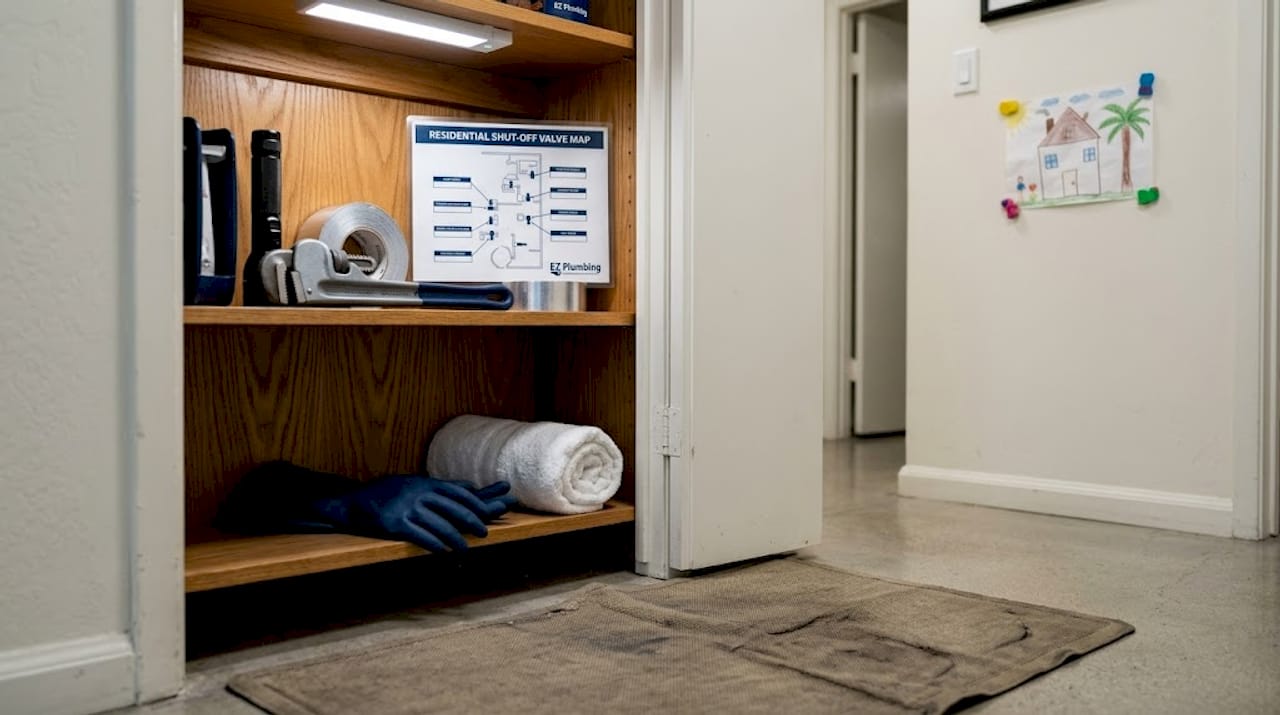
Every Los Angeles homeowner should keep a basic emergency plumbing kit somewhere accessible, such as a utility closet or garage shelf. Here is what belongs in it:
Your emergency plumbing kit:
- Adjustable wrench and channel-lock pliers
- Standard and flange plunger
- Pipe repair tape (also called plumber’s tape or silicone self-fusing tape)
- Bucket and several old towels or absorbent rags
- Flashlight or headlamp with fresh batteries
- Wet/dry vacuum if available
- Waterproof gloves
Beyond tools, preparation involves knowing your home’s plumbing layout. Locate and label your main water shut-off valve before an emergency happens. In most Los Angeles homes, it sits near the water meter, which is typically at the front of the property near the sidewalk or curb.
| Preparation task | Why it matters | When to do it |
|---|---|---|
| Label main shut-off valve | Saves critical minutes during a flood | Now, before any emergency |
| Note fixture shut-off locations | Allows targeted water stops | During a calm home walkthrough |
| Document appliance hose ages | Hoses over 5 years old are higher risk | Annually |
| Photograph current pipe condition | Supports insurance claims | After any repair or inspection |
| Save plumber’s contact number | Eliminates search time in a crisis | Today |
Pro Tip: When you call for emergency service, have three pieces of information ready: the location of the problem, whether the water is still running, and where the main shut-off valve is. This helps the dispatcher route the right technician with the right equipment and saves you time on the call.
Proper preparation for broken pipe repair also means documenting damage with photos as soon as it is safe to do so. Your insurance company will need that evidence. For more on staying safe during a plumbing event, check out our plumbing safety tips.
Step-by-step emergency plumbing workflow
Once you have the right tools and clear prep, it is time to act quickly but methodically. The following workflow applies to the most common plumbing emergencies in Los Angeles homes, from burst pipes to sewage backups.
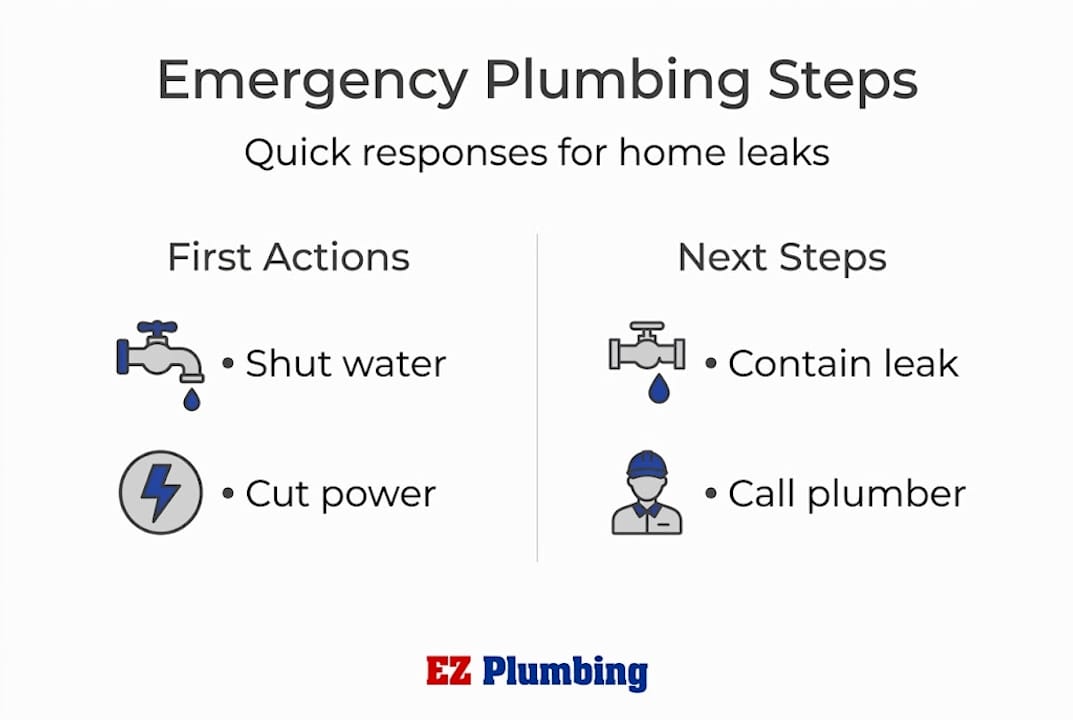
Step 1: Shut off the water supply. Turn off the fixture shut-off first. If you cannot isolate the problem to one fixture, shut off the main supply immediately.
Step 2: Cut power if needed. If water is near any electrical source, turn off the breaker for that zone before doing anything else.
Step 3: Contain the water. Place towels, buckets, and any absorbent materials to limit spread. Move furniture, rugs, and valuables out of the affected area.
Step 4: Assess the damage safely. Once the water is stopped and the area is safe, identify the source. Is it a visible pipe? A supply line? A toilet seal? Knowing the source determines your next move.
Step 5: Attempt a minor DIY fix only if appropriate. See the comparison below.
Step 6: Call a licensed plumber if the issue is beyond a simple fix. Provide the details you prepared: location, shut-off status, and what you observed.
Step 7: Document everything. Photograph the damage, the source, and any temporary repairs you made before the plumber arrives.
| Situation | DIY appropriate | Call a pro |
|---|---|---|
| Clogged toilet with plunger available | Yes | If plunging fails twice |
| Burst pipe with active water flow | Shut off only | Yes, immediately |
| Minor supply line drip, valve accessible | Tighten fitting | If leak persists |
| Sewage backup in multiple drains | No | Yes, immediately |
| Water heater leak | Shut off and power down | Yes, immediately |
Pro Tip: Pipe repair tape can buy you time on a small crack or pinhole leak, but it is not a permanent fix. Use it only to slow an active drip while you wait for 24-hour plumbing help. Never use it on a joint or fitting under high pressure.
The burst pipe repair process requires proper tools, replacement materials, and knowledge of local code requirements. Attempting a full pipe repair without that background can create a second problem on top of the first. When in doubt, the safest and most cost-effective move is to call professional plumbing repair services rather than risk compounding the damage.
When to call a licensed Los Angeles plumber
While some issues are manageable with quick action, knowing when to escalate to an expert is key to avoiding further headaches and costs. In Los Angeles, certain plumbing repairs also carry code compliance requirements that make professional involvement not just smart but legally necessary.
Situations that require a licensed plumber without exception:
- Any sewage backup or overflow into living spaces (contaminated water poses serious health risks)
- Burst pipes inside walls, floors, or ceilings where access requires opening the structure
- Water heater failures involving gas lines
- Persistent flooding that does not stop after the main shut-off is closed
- Any repair that requires a permit under Los Angeles building code
Los Angeles follows the California Plumbing Code, and certain repairs, including any work on sewer laterals, gas-connected water heaters, and major repiping, require a licensed contractor and in some cases a city permit. Unpermitted work can affect your homeowner’s insurance coverage and create problems when you sell the property.
Code compliance matters: In Los Angeles, plumbing work performed without the required permits can result in fines and may require you to undo and redo the work at your own expense. A licensed plumber handles the permit process for you.
Response time is another reason to call early. Reputable emergency plumbing services in Los Angeles operate 24 hours a day, 7 days a week, and can typically reach your property within 60 to 90 minutes. Every minute of active water flow adds to the damage, so calling sooner rather than later is always the right move. Water damage restoration costs in Los Angeles can range from a few hundred dollars for minor incidents to well over $10,000 for major flooding that saturates subfloors and drywall.
Aftercare: Preventing future plumbing emergencies
Once your home is safe and repairs are done, a little attention can help avoid a repeat emergency. The period immediately following a plumbing event is actually the best time to assess your home’s overall plumbing health, because you are already paying close attention.
Follow-up actions after any plumbing emergency:
- Inspect all surrounding areas for hidden moisture, including inside cabinets, under flooring, and inside wall cavities if accessible
- Run a dehumidifier in affected rooms for at least 48 to 72 hours to prevent mold growth
- Document all repairs with photos and written notes, including the plumber’s invoice and any permit numbers
- Monitor the repaired area daily for the first two weeks
- Review your homeowner’s insurance policy to understand what was covered and what was not
Longer-term maintenance habits make a significant difference in reducing emergency risk. Scheduling a plumbing inspection once a year allows a licensed plumber to identify early signs of corrosion, root intrusion in sewer laterals, and aging supply lines before they fail. In older Los Angeles neighborhoods like Silver Lake, Echo Park, and Boyle Heights, galvanized steel pipes from the mid-20th century are still common, and they corrode from the inside out, often with no visible warning until a pipe fails.
Pro Tip: Replace washing machine supply hoses every five years regardless of appearance. Rubber hoses can look fine on the outside while deteriorating internally, and a burst washing machine hose is one of the most common causes of sudden home flooding.
Checking appliance hoses, inspecting shut-off valves for stiffness or corrosion, and clearing slow drains before they back up completely are all low-effort habits that pay off significantly. For a full list of maintenance steps, our prevention tips for homeowners covers the most impactful actions you can take throughout the year.
Our perspective: Why a clear workflow matters more than panic
Here is something we see regularly in this industry: homeowners who act fast but without a plan often make the situation worse. We have arrived at jobs where the homeowner shut off the right valve but then attempted to cut open a wall to find the pipe, causing additional structural damage. We have also seen situations where someone skipped the shut-off entirely and spent 20 minutes trying to patch a pipe that was still under full pressure.
Panic is the real enemy in a plumbing emergency. It shortcuts decision-making and leads to actions that feel productive but actually delay resolution. The workflow in this guide is not complicated, but it requires you to slow down for about 30 seconds and think before you move. That pause is where the damage gets controlled.
We also want to address a common misconception: calling a plumber immediately is not a sign of helplessness. It is often the single most efficient action you can take. A licensed technician arriving within 90 minutes with the right tools will resolve most emergencies faster and more safely than hours of DIY attempts. The cost of a service call is almost always less than the cost of the secondary damage that accumulates during a delayed repair.
Our expert homeowner advice consistently points to one finding: the homeowners who fare best in plumbing emergencies are the ones who have thought through the steps in advance, not the ones who improvise under pressure. Preparation is not about being pessimistic. It is about being ready.
Need expert help? Contact EZ Plumbing for fast, reliable service
When a plumbing emergency hits your Los Angeles home, you need a team that is ready to respond immediately, knows local code requirements, and has the equipment to handle any situation.
EZ Plumbing (C-36 License #583868) provides 24-hour emergency plumbing across the greater Los Angeles area, including burst pipe repair services and professional leak detection using camera inspection technology. Our licensed technicians are fully insured, code-compliant, and experienced with the specific plumbing challenges that come with Los Angeles homes, from aging clay sewer laterals to galvanized supply lines. Call us any time, day or night, and we will be there.
Frequently asked questions
How do I find the water shut-off valve in an emergency?
The main shut-off valve is typically located where the water line enters your home, often near the water meter at the front of the property close to the sidewalk or curb. Individual fixture shut-offs are usually found directly behind or beneath toilets, sinks, and appliances.
Should I try to fix a burst pipe myself or always call a professional?
You can and should shut off the water and contain the immediate leak, but burst pipe repair itself requires a licensed plumber to ensure the repair is code-compliant and structurally sound.
How quickly can emergency plumbers in Los Angeles respond?
Most reputable services, including EZ Plumbing, offer 24/7 emergency response and can typically reach your property within 60 to 90 minutes of your call.
What should I do while waiting for the plumber to arrive?
Shut off the water supply, place towels or buckets to contain standing water, photograph the damage, and keep children and pets away from the affected area until the technician arrives.
Can emergency plumbing repairs be covered by insurance?
Homeowners insurance typically covers sudden, accidental water damage such as a burst pipe, but it generally does not cover gradual leaks or damage resulting from deferred maintenance. Review your specific policy and document all damage thoroughly before repairs begin.