
Floor Drain Clogged: Causes, Fixes, and Prevention
You finish a long shower, head downstairs, and find water spreading across the basement floor. The floor drain is right there, but it isn't carrying anything away. You remove the grate, pull out what you can reach, and the water barely moves.
That scene is often misdiagnosed as a dirty drain opening. The visible drain may be clear while a trap, branch line, or main sewer restriction is forcing wastewater to escape at the lowest point. Before you reach for a chemical cleaner or rent a machine, identify where the blockage is located. The drain you can see isn't always the drain that matters.
Table of Contents
- When Water Shows Up Where It Shouldn't
- Is It Really Your Floor Drain
- What You Can Safely Try Before Calling a Plumber
- How Professionals Decide Between Snaking and Hydro Jetting
- Warning Signs That Mean Stop and Call Now
- Preventing the Next Backup in Homes and Multi-Unit Buildings
- Putting It All Together and Knowing When to Make the Call
When Water Shows Up Where It Shouldn't
A floor drain is designed to receive incidental water from a basement, utility room, laundry area, or mechanical space. It normally sits still until water needs to leave the floor. When it backs up after a shower, toilet flush, dishwasher cycle, or washing-machine discharge, the drain may be the first opening the trapped water can reach.
That distinction changes the repair. A local obstruction under the grate may respond to basic cleaning, but a restriction farther along the line needs a different approach. If the floor drain rises whenever someone uses a fixture upstairs, the water is following the plumbing system to its lowest accessible point. Clearing the opening won't restore a blocked path beyond it.
The lowest drain often shows the problem first
A basement floor drain can act like a warning light for the entire drainage system. It sits lower than many other fixtures, so a downstream blockage may push water toward it before an upstairs sink or shower shows an obvious symptom. Gurgling toilets, slow tubs, and a laundry discharge that sends water across the basement floor all point away from a simple surface clog.
Stop using water until you know which pattern you're dealing with. Keep children and pets away from wastewater, especially if the backup may contain sewage. If contaminated water has reached finished flooring or stored belongings, planning the plumbing response alongside cleanup matters. This guide to Tampa Bay sewage cleanup costs can help you understand why a backup can become a property-damage issue, not just a drain-service call.
Field rule: A floor drain that backs up during normal fixture use deserves a line diagnosis, not just a harder push with a plunger.
The most useful question isn't “How do I unclog this grate?” It's “What other fixture caused the water to appear here?” That answer usually separates a manageable local clog from a branch-line or main-sewer problem.
Is It Really Your Floor Drain
A “floor drain clogged” complaint can describe three different failures. The opening, trap, branch line, or main sewer may be involved, and each one produces a different pattern around the house.
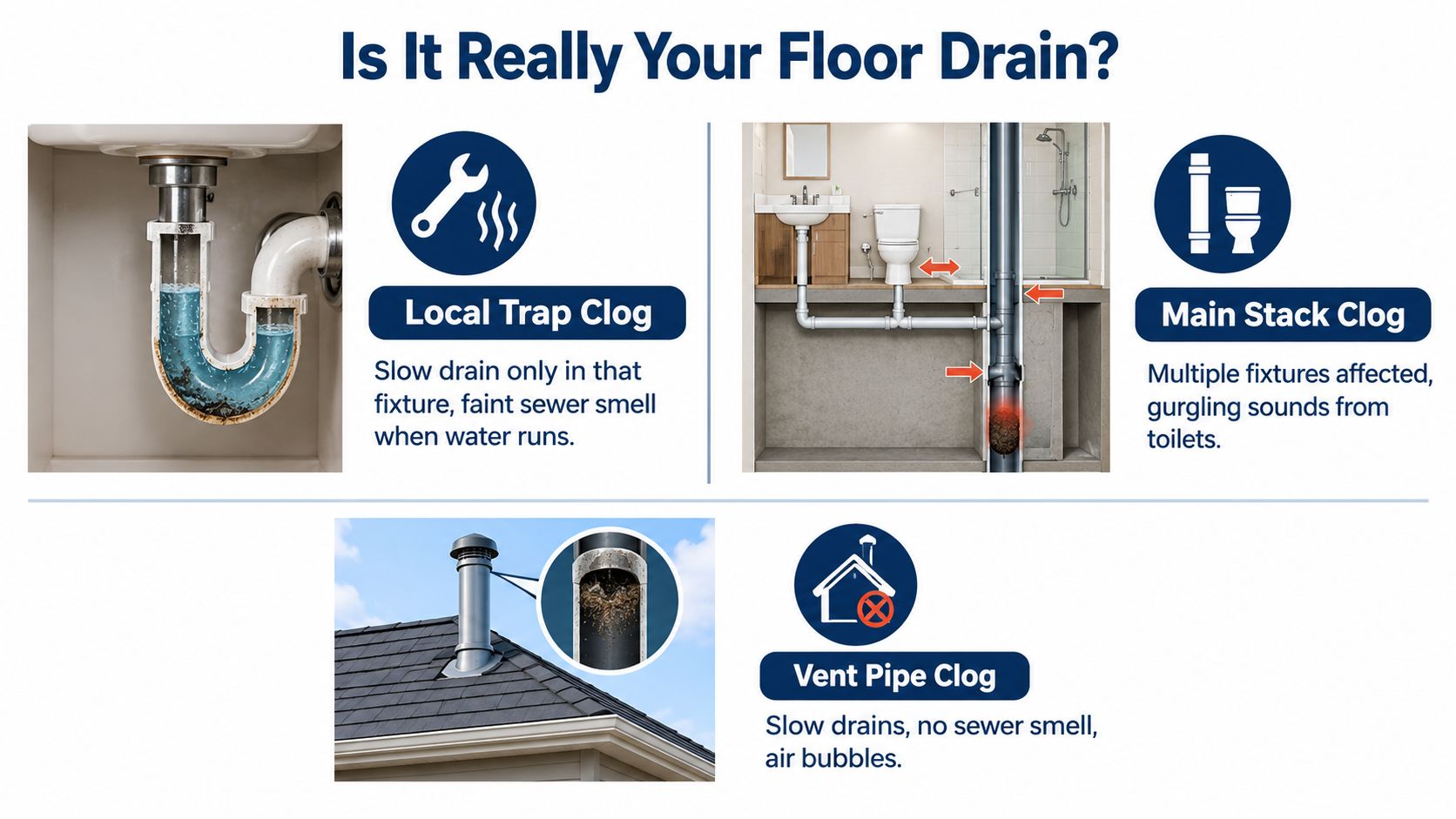
Check the local trap first
If only the floor drain is slow, start nearby. Remove the grate and inspect the strainer area for hair, lint, sediment, or visible debris. A faint sewer smell when the drain is dry can also point toward a trap problem or a loss of trap water, but smell alone doesn't prove the clog is local.
Run a small amount of water in the drain and watch how quickly the level responds. If nearby fixture use changes the floor-drain level immediately, the restriction may be close enough to affect the same trap or connection.
Look for a branch-line pattern
A branch line serves more than one fixture. If a basement sink, laundry standpipe, tub, and floor drain all slow together, suspect the shared route rather than one drain opening. A washing-machine discharge is especially revealing because it sends a substantial volume of water through the branch quickly. If that discharge causes the floor drain to rise, the blockage is likely farther downstream.
Recognize a main-sewer symptom
When several drains throughout the home slow or back up at once, the main sewer becomes the leading concern. The lowest fixtures often show it first because they provide the easiest escape point. A floor drain may be the visible symptom even though the obstruction sits beyond the branch connection.
A simple five-minute check can narrow the possibilities:
- One fixture only: Investigate the local grate, trap, or nearby connection.
- Several fixtures on one level: Suspect a shared branch line.
- Fixtures across the house: Stop running water and arrange a main-line diagnosis.
Which of those three patterns matches what you just saw? That answer should determine the next tool.
What You Can Safely Try Before Calling a Plumber
Start with the least aggressive work. Remove the floor-drain grate, wear gloves and eye protection, and pull out anything sitting in the strainer cup. Hair, lint, leaves, sediment, and sludge can collect at the opening, especially in a utility room that receives wash water or tracked-in debris.
Run water slowly after cleaning. If the level drops normally, the obstruction may have been local. If it rises again, don't keep flooding the floor to test it. You need to learn whether another fixture causes the rise, not add more water to an already restricted system.
Use a small auger without forcing it
A hand auger or compact drum snake can help with a short, accessible restriction. Feed it gradually through the drain or an accessible cleanout, paying attention to the feel of the cable. Soft resistance may indicate a wad of debris. Hard resistance may mean you're against a fitting, heavy scale, or a deeper obstruction.
Don't force the cable past solid resistance. Forcing a small tool can damage fittings, kink the cable, or push material farther into the line without solving the underlying restriction. If the cable clears a short blockage and water flows freely, flush cautiously and watch for a return of the symptom.
Skip caustic drain cleaner
Chemical drain cleaner is a poor choice for a backed-up floor drain. The product can remain in standing water, fail to reach a deeper obstruction, damage parts of the trap, and create a burn hazard for anyone who opens the line afterward. Mixing products can make the situation even more dangerous.
An enzyme-based or biological treatment is the only chemical category worth considering for routine organic buildup, and even that isn't a substitute for mechanical clearing. For a careful, non-chemical approach, this guide to unclogging a drain without chemicals offers useful context.
Stop point: If the snake meets solid resistance beyond the trap arm, or another fixture still makes the floor drain rise, DIY has reached its limit.
At that point, the obstruction has likely moved downstream, or the pipe has a condition that a hand tool can't identify. A plumber can access a cleanout, use a powered cable, and inspect the line rather than guessing from the grate.
How Professionals Decide Between Snaking and Hydro Jetting
A floor drain can be the visible symptom of a restriction farther down the line. Professionals do not begin by choosing equipment at random. They first trace the pipe route, identify connected fixtures, and, when access and conditions allow, inspect the interior with a camera. Soft debris in a branch line calls for a different response than grease, mineral scale, sludge, sediment, or roots reducing the pipe's usable opening.
When a powered snake is the right first move
A powered drain snake is often the sensible first treatment for a recent stoppage or a soft obstruction in a branch line. Its cutting head can break through the blockage and reopen the passage. Machine augering for many clogged floor drains takes 45 to 90 minutes, according to drain-cleaning guidance on average service times.
A cable restores flow by making a path through the obstruction. It does not necessarily clean the pipe wall, so heavy buildup can leave the line ready to clog again. The operator also has to match the head to the material. A penetrating head suits softer blockages, while a cutter or chain-style tool can address harder deposits when the pipe can safely tolerate that contact.
Where hydro jetting earns its place
Hydro jetting directs pressurized water against the pipe wall to scour away buildup. Professional systems commonly operate in the low thousands of PSI. That force can help where grease, mineral deposits, sludge, sediment, or recurring buildup has narrowed the passage.
High pressure is not automatically the better choice. Fragile, cracked, or badly corroded piping may worsen under jetting. A camera inspection helps the plumber judge whether the line can handle the selected pressure and nozzle, rather than treating the floor drain without checking the deeper cause.
The choice between these methods matters more than many homeowners expect. This hydro jetting versus snaking comparison explains the trade-offs in greater detail.
| Factor | Powered Drain Snake | Hydro Jetting |
|---|---|---|
| Main action | Breaks or pulls through an obstruction | Scours buildup from the pipe wall |
| Best fit | Recent, localized stoppages and soft blockages | Recurring clogs, grease, scale, sludge, and sediment |
| Typical role | Restore flow and test the line | Restore more of the pipe's usable diameter |
| Primary limitation | May leave wall buildup behind | Can damage compromised piping if used improperly |
| Assessment need | Access and resistance still matter | Pipe condition and nozzle choice are critical |
The practical sequence is clear: snake first when appropriate, restore flow, inspect the line, then jet when the pipe condition supports it. EZ Plumbing provides drain cleaning, sewer diagnostics, snaking, and hydro jetting for floor-drain and sewer restrictions, matching the service to the suspected cause instead of treating only the symptom.
Warning Signs That Mean Stop and Call Now
Sewage surfacing through a basement floor drain while other fixtures still seem to drain is not a good DIY experiment. It can indicate a main sewer restriction, and pouring chemical cleaner into standing wastewater adds a hazard without addressing the deeper blockage.
Stop troubleshooting and call a plumber the same day when any of these conditions appears:
- Laundry triggers a backup: Water rises at the floor drain or pushes into a tub when the washing machine discharges. The shared branch may be restricted.
- Several fixtures gurgle together: Gurgling toilets, sinks, tubs, and floor drains suggest air and water are fighting through a deeper obstruction.
- Raw sewage or strong sewer gas is indoors: Avoid contact, ventilate only if it is safe, and keep people and pets away. Contamination and gas exposure require prompt attention.
- The drain refills quickly: If bailing out the floor drain only buys a few minutes, water is still entering a restricted line or the source has not stopped.
- The problem follows heavy rain: A recurring weather-related backup can involve drainage capacity, stormwater, a sump-pump issue, or a sewer restriction, not merely the grate.
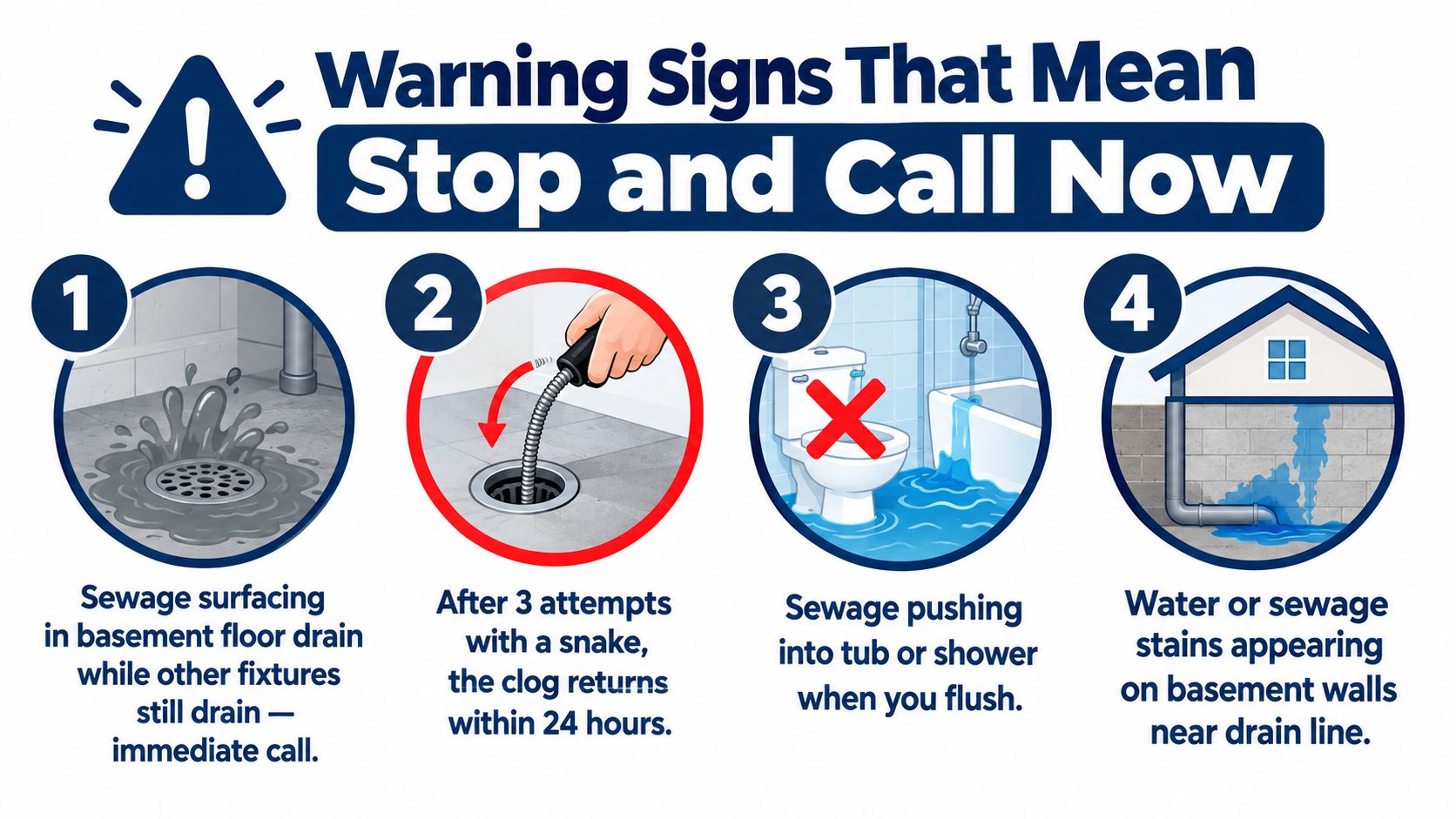
A camera-equipped emergency dispatch is justified when wastewater is rising, multiple fixtures are affected, or the cause can't be isolated quickly. Continuing to run toilets, showers, sinks, or appliances can spread the backup and increase damage to flooring, walls, and stored property.
A different problem can also look like poor drainage. If clean shower water pools because the surface doesn't slope correctly, the fix may involve the floor rather than the pipe. Guidance on how to fix shower water pooling is useful when the water stays on the shower surface instead of backing up through the drain.
Preventing the Next Backup in Homes and Multi-Unit Buildings
Most blockage prevention starts with what enters the plumbing. A UK drainage-industry survey reported that 83.1% of all blockages come from people using the system, while 15.3% are linked to structural problems such as broken or misaligned pipes and tree-root intrusion, according to DrainSafe's explanation of drain blockages. The survey's user-caused category included inappropriate items and fat, oil, and grease buildup.
That doesn't mean every floor-drain backup is the homeowner's fault. Older pipework, roots, storm conditions, and failed equipment still matter. It does mean routine source control and early maintenance address the dominant preventable pattern.
A workable home routine
Keep hair, lint, wipes, food waste, and grease out of drain lines. Use screens where appropriate, clean the floor-drain grate regularly, and deal with a slow fixture before it becomes a standing-water event. A monthly enzyme treatment may help maintain a line with organic buildup, but it won't repair a damaged pipe or remove heavy scale.
For older cast-iron stacks, a preventive camera inspection can reveal internal buildup, offsets, roots, or other conditions before the basement drain becomes the first visible symptom. After any backup, identify the cause and clean the affected drain area rather than returning to normal use.
The practical habits are simple:
- Monthly: Clean grates and screens, remove lint and hair, and check that floor-drain water moves freely.
- Annually: Review sump-pump operation, exterior drain covers, and any accessible cleanouts before severe weather.
- After a backup: Record which fixture was running, which drains reacted, and whether the issue followed rain or appliance discharge.
- For older systems: Arrange periodic camera assessment based on pipe condition and service history.
Shared buildings need shared rules
Multi-unit buildings magnify small mistakes. One resident's grease disposal or unsuitable item can affect a shared stack, and one neglected restriction can become a building-wide complaint. Property managers and HOAs need written drain-care notices, clear reporting procedures, and maintenance records that show when shared lines were inspected or cleaned.
Don't schedule aggressive jetting blindly. The right frequency depends on use, line condition, and history. A kitchen stack serving heavy cooking activity may need a different plan from a residential branch, while storm-exposed systems need attention to exterior covers and backwater protection.
For additional household and property-maintenance habits, this guide to preventing drain clogs provides a broader checklist. The goal is a documented routine, not a last-minute reaction after wastewater reaches the lowest floor.
Putting It All Together and Knowing When to Make the Call
Start with the pattern, not the product. Is only the floor drain slow, do several fixtures on one branch react together, or does the whole house show drainage trouble? That first distinction tells you whether to inspect the local trap, approach the branch line, or stop using water and call for a main-sewer assessment.
For a local issue, remove the grate, clear visible debris, and try a small hand auger carefully. For a short branch restriction, an enzyme treatment or hand snake may be reasonable when there is no wastewater and no evidence of other fixtures backing up.
One operational rule: If more than one fixture reacts, stop adding water and treat the floor drain as a symptom until a professional proves otherwise.
Don't continue DIY attempts when water rises in another fixture, several drains gurgle, sewage is visible, or the backup returns after clearing. Repeated failures also justify a camera inspection, because restoring flow without finding the cause leaves the same restriction in place.
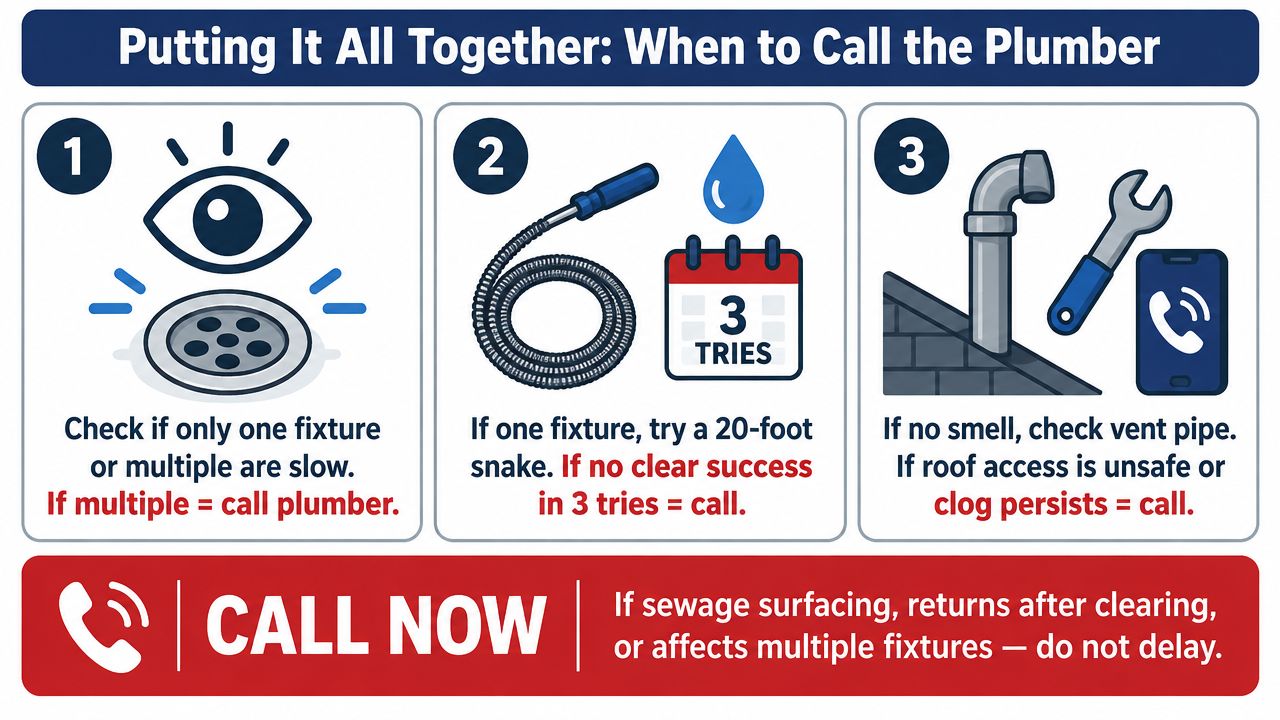
If your attempt cleared the drain, schedule follow-up maintenance when the line has a history of recurring trouble. If it didn't, stop running water until a licensed plumber can inspect the main line and determine whether snaking is enough or hydro jetting is safe.
If your floor drain is backing up, EZ Plumbing can diagnose the local trap, branch line, or main sewer with professional drain cleaning and camera-based recommendations, including snaking or hydro jetting when appropriate. Visit EZ Plumbing to schedule service or request help with an active backup in the Los Angeles area.