
How to Use Plumbing Tape: Steps for DIY Homeowners
Plumber’s tape, also called PTFE tape or Teflon tape, seals threaded pipe connections by filling the tiny gaps between male and female threads. Here’s the one-line version: clean the threads, wrap clockwise starting at the second thread, apply several wraps depending on pipe size, then hand-tighten and wrench-tighten the fitting. There’s no cure time, so you can test the joint the moment you finish.
A few quick rules make the difference between a dry joint and a callback:
- Wrap in the same direction the fitting tightens, which is clockwise on nearly every standard connection.
- Start one full thread in from the pipe end so loose fibers don’t shred into your water lines.
- Match the tape to the job: white PTFE for water, yellow gas-rated tape like Oatey® Yellow Gas Line Tape for fuel lines, never the reverse.
Oatey, one of the most cited manufacturers in the plumbing trade, backs this exact sequence, and products like Oatey® MegaTape are built specifically for tighter, fewer-wrap seals on professional jobs.
Key Takeaways
Plumber’s tape seals threaded connections without cure time when you clean the threads, start at the second thread, wrap clockwise, and match wrap count to pipe size.
| Point | Details |
|---|---|
| Clean before wrapping | Remove dirt, rust, or old tape residue so the new tape seats flush against the threads. |
| Start at the second thread | Skipping the first thread keeps loose fibers from shredding into valves or aerators. |
| Wrap clockwise, 2 to 3 times | Match wrap count to pipe size and tape density, following manufacturer guidance like Oatey’s. |
| Match tape type to the job | Use white PTFE for water and yellow gas-rated tape like Oatey® Yellow Gas Line Tape for fuel lines. |
| Call a pro for gas or repeat leaks | Ez-plumbing’s licensed, C-36 certified technicians handle gas connections and complex repairs code compliantly. |
Table of Contents
- How Do You Apply Plumbing Tape Correctly?
- Which Type of Plumbing Tape Should You Use?
- What Mistakes Ruin a Taped Connection?
- Should You Use Tape or Pipe Dope Instead?
- Sources
How Do You Apply Plumbing Tape Correctly?
Getting a threaded connection to seal on the first try comes down to sequence. Skip a step and you’ll be back under the sink with a wrench and a towel within a week.
1. Clean the threads first. Wipe away dirt, old pipe dope, or rust with a rag, and use a wire brush on stubborn corrosion. Tape applied over debris or old tape residue almost never seals right, since it can’t seat flush against the metal or plastic.
2. Position the tape at the second thread. Hold the roll so it unwinds toward you, then start wrapping one full thread in from the pipe’s end. Oatey specifically recommends this second-thread start because tape applied right at the tip can shred into shards that travel downstream and clog valves, aerators, or water heater components.
3. Wrap clockwise, under tension. Pull the tape taut as you go, wrapping in the same direction the fitting will turn when you tighten it, which is clockwise for nearly all standard threads. The Spruce confirms this direction matters because tape wrapped the wrong way unwinds instead of tightening as you thread the joint.
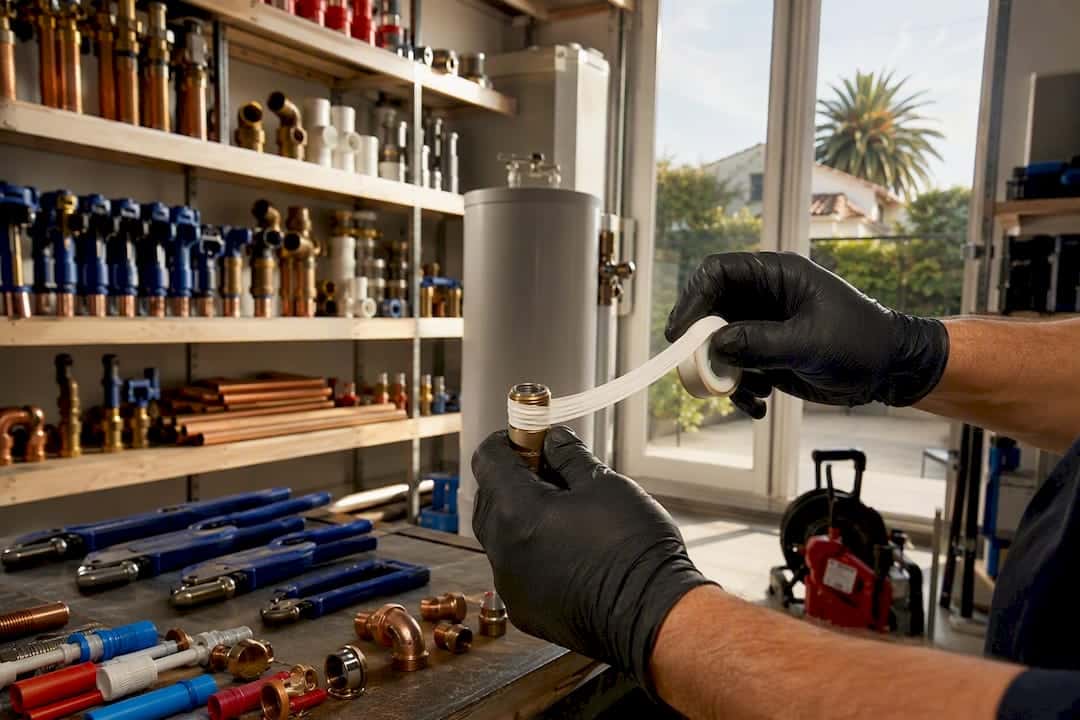
4. Count your wraps by pipe size. For small fittings like ½ inch supply lines, 2 to 3 wraps of standard tape usually does it. Medium ¾ inch to 1 inch pipe typically needs 3 to 5 wraps. Oatey’s own guidance lands at 3 to 5 wraps of standard white tape, or just 2 to 3 wraps if you’re using a dense professional-grade tape like Oatey® MegaTape, since the thicker material fills gaps faster.
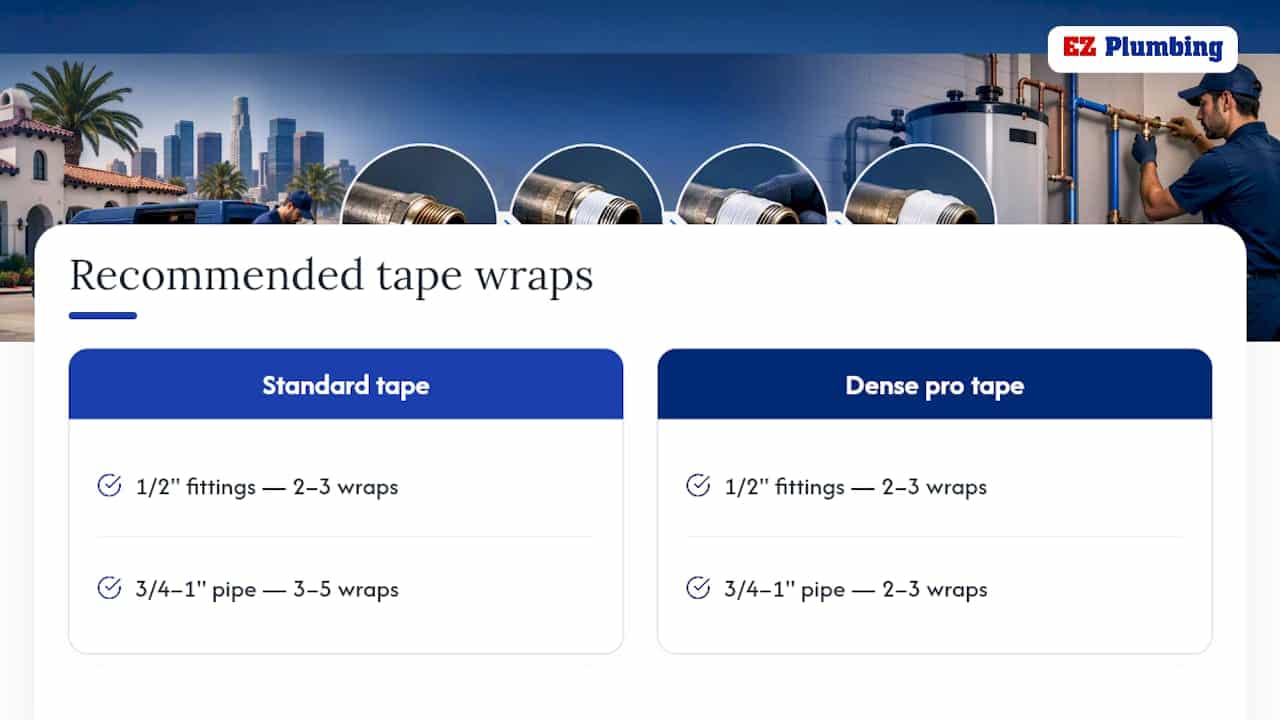
5. Finish and test immediately. Tear the tape cleanly, press it into the threads with your thumb so it beds down smooth, then hand-tighten the fitting before finishing with a wrench to the manufacturer’s torque spec. Because tape needs no cure time, you can turn the water or gas supply back on right away and watch for weeping at the joint.
If the tape frays, bunches, or tears mid-wrap, stop and start over. A damaged wrap won’t seal evenly no matter how hard you crank the wrench. Back the fitting off, strip the old tape completely, and reapply from scratch.
Pro Tip: The second-thread rule is the fastest way to spot an amateur job. Wrapping tape flush to the pipe’s end looks thorough, but it’s actually the number one cause of tape shreds working loose inside fixtures. Leave that first thread bare every time.
If you’re reworking a joint that’s already leaking, our guide on how to repair pipe joints walks through full disassembly before you retape.
Which Type of Plumbing Tape Should You Use?
Not all rolls in the hardware aisle do the same job, and using the wrong one is how small water fittings turn into gas-line hazards. PTFE tape (also called Teflon tape or thread seal tape) is the generic name for the material; Oatey is the brand most homeowners will recognize on the shelf, and its lineup covers most residential needs.
Color usually tells you the intended use before you even read the label. White is the standard for potable water lines and general household plumbing. Yellow, like Oatey® Yellow Gas Line Tape, is formulated and rated specifically for gas connections, and it should never be swapped for white tape on a fuel line. Pink or gray tape and denser variants such as Oatey® MegaTape are marketed toward stainless steel, oxygen, or heavy-duty commercial applications where a tighter seal in fewer wraps matters.
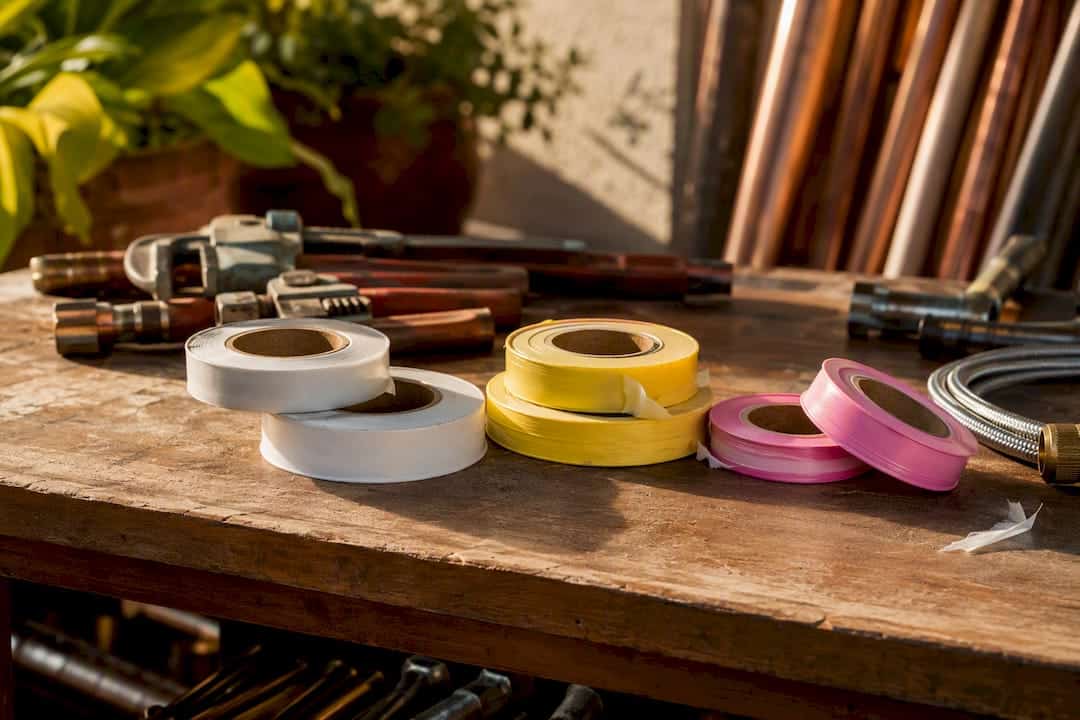
Width matters too. Half-inch tape suits small supply lines and fixture connections, while ¾ inch or 1 inch tape covers larger drain and supply pipe threads more efficiently.
| Use | Color | Notes |
|---|---|---|
| General water lines | White | Standard PTFE, 3 to 5 wraps typical |
| Gas connections | Yellow | Rated specifically for fuel lines, check local code |
| Stainless/heavy-duty | Pink, gray, or dense variants | Thicker density, often fewer wraps needed |
| High-precision professional seals | Dense tape (e.g., Oatey® MegaTape) | Tighter seal, 2 to 3 wraps |
Material compatibility matters as much as color. Tape works on metal threads (iron, brass, stainless) and plastic threads (PVC, PEX) alike, but it has no business on compression or flare fittings, which seal through metal-to-metal contact instead of threaded compression.
What Mistakes Ruin a Taped Connection?
The most common failure is wrapping tape counterclockwise, against the direction the fitting tightens, which causes it to bunch and unravel instead of compressing into the threads. Starting the wrap right at the pipe’s tip is a close second, since loose fibers can shred and clog downstream fixtures.
Other frequent errors:
- Over-wrapping, which can prevent the fitting from fully seating and puts unnecessary stress on the threads.
- Using white water-rated tape on a gas connection instead of a yellow, gas-rated product.
- Applying tape to compression or flare fittings, which seal by design without it.
- Wrapping new tape directly over old, degraded tape instead of stripping the joint clean first.
Manufacturer guidance is consistent here: excess tape doesn’t add extra sealing power. It just adds bulk that keeps threads from drawing together properly, which is often the real reason a “well-taped” joint still weeps. If a joint you tightened is leaking, disassemble it, remove every trace of old tape, clean the threads, and reapply following the second-thread and wrap-count rules above. For persistent leaks after a proper retape, check our warning signs of plumbing problems to rule out a bigger issue.
Never use standard PTFE tape on oxygen lines unless it’s specifically rated for that use, and if you’re working on a gas connection and have any doubt about local code requirements, that’s a call for a licensed plumber, not a weekend project.
Should You Use Tape or Pipe Dope Instead?
PTFE tape wins on convenience for most household jobs. It’s clean, fast, needs no cure time, and handles small to medium fittings without a mess.
Pipe dope, also called pipe joint compound, has its place too:
- Tape advantages: No drying time, easy cleanup, ideal for standard water and gas fittings you’ll test immediately.
- Pipe dope advantages: Thicker coverage suited to large-diameter or high-pressure industrial joints, often better long-term durability on those connections.
- The tradeoff: Dope takes longer to apply cleanly and needs time to set before you pressurize the line.
Oatey notes that many professionals reach for paste on large or high-pressure connections specifically for that durability edge, even though tape remains the faster everyday choice. If you’re unsure which material fits your setup, or the connection involves gas, unknown pipe materials, or high pressure, that uncertainty is itself a signal to call a licensed plumber. You can also compare tape against plumber’s putty if you’re deciding between sealing methods for a fixture rather than a threaded joint.
A Licensed Plumber’s Take on DIY Tape Jobs
As a licensed plumbing contractor working across Los Angeles, we see plenty of taping jobs go sideways from small, avoidable mistakes. Our rule of thumb: DIY with tape on small, straightforward water fittings, but call a licensed plumber for gas lines, complex systems, or a joint that’s leaked more than once.
Prefer to Skip the DIY? Call a Licensed Plumber Instead
Gas connections, older galvanized threads, and repeat leaks are exactly where a taping mistake turns into a safety issue instead of a minor inconvenience. Ez-plumbing carries a C-36 license (#583868) and handles the connections DIY tape jobs shouldn’t touch, from gas line work to full repiping, with every repair built to meet Los Angeles code.
If your water heater’s gas connection is the source of your leak, that’s not a tape-and-wrench afternoon. Our gas water heater repair guide covers what a licensed technician checks on-site, and it’s the safer next move if you’re smelling gas or seeing a joint that won’t stop weeping no matter how many times you retape it. Book a visit and we’ll diagnose the connection properly before it becomes a bigger repair.
Sources
- How to Use Plumber’s Tape: Step-by-Step | Oatey
- How to Use Plumber’s (Teflon) Tape on Pipes the Right Way | The Spruce
- How to Use Plumber’s Tape | BobVila